MARTYR – I’M NOT AND YOU AREN’T EITHER

Marilyn Armstrong’s SERENDIPITY piece on martyrs and not-martyrs brought smiles, a few chuckles, and nods of the head. I hope you enjoy it as much as we did.

Marilyn Armstrong's avatarSerendipity - Seeking Intelligent Life on Earth

I don’t know any martyrs. Historically, there are plenty to choose from, but in the context of “real life,” I don’t know any.

I’m not a martyr. Not even close. Whatever sacrifices I have made on behalf of my beliefs, they never came anywhere near martyrdom. Discomfort or disruption to your normal life does not make you a martyr. Taking care of your kids, working at jobs you don’t like, or struggling to survive? None of these make you a martyr.

This is one of those greatly overused words, along with “awesome,” “resonate,” and the ubiquitous “back in the day.”

72-martyr-flames

How many times have I read “I’m a martyr to housework.” Really? What strange belief system do you follow?

You are not a martyr, even if you are depressed and miserable. If merely being miserable were enough for martyrdom … well … who wouldn’t be one? These days, there…

View original post 234 more words

New Year’s Gift from the Lutherans

The First Quarter 2018 Issue of Currents in Theology and Mission published today a review of Be Still!. Currents is the quarterly theological journal of the Lutheran School of Theology at Chicago and Wartburg Theological Seminary in Dubuque, Iowa. Click Book Reviews for the review by Edward F. (Ted) Campbell, McCormick Theological Seminary Professor of Old Testament Emeritus.

ELCA-Logo-VerticalThanks to Currents in Theology and Mission editors Craig Nessan (Wartburg Theological Seminary) and Kathleen Billman (Lutheran Theological Seminary at Chicago), and “Book Reviews” editors Ralph Klein, Troy Troftgruben, and Craig Nessen for featuring Be Still! as the first among Currents‘ “Book Reviews” for the First Quarter 2018.

Prayers for grace, peace, stillness, and for small victories of “prophetic” madness over collective madness in 2018.

  • Gordon C. Stewart,  Chaska, MN, December 29, 2017.


Christmas 2017

Dsc_3861d70sm4

And so it came to pass that a child was born in a stalled car in Charlottesville. And the angels sang under the viaduct of joy and peace on earth, good will to all. And a squad car stopped to see what was the matter, and saw the child and his Mexican parents huddled in the car with an expired license.

And when the officer saw the scene, he didn’t ask for identification or give the parents a ticket or turn them over to ICE.  He held the child in his arms, invited the family into his warm squad car, and radioed ahead to his wife to prepare for them the room they had decorated for the infant child they had just lost.

And so it was that on Christmas in the year 2017, another child was born and cared for by strangers whose better angels ignored Herod’s reign of terror to make a home for the homeless God.

  • Gordon C. Stewart, Chaska, MN, Christmas Day, 2017.


The Paradox of Parables

parables-350-197-300x169

After finishing daily readings of Be Still! during Advent, Craig Nessen, Academic Dean and Professor of Contextual Theology at the Wartburg Theological Seminary, Dubuque, IA, posted a lovely five-star review of Be Still! on Amazon.

Parables to Transform the Ordinary into the Extraordinary

This book conveys challenging messages about the meaning of faith through reflections on the events of the day. The author writes with an economy of precise, colorful language to tell parables which transform the ordinary into the extraordinary. This is a timely message about the public vocation of the Christian movement to address this time of collective madness.The author assists the reader to remain centered in core convictions for living in resistance and hope.

Would be excellent for personal study, devotions, or group discussion!

The best of lives are humble. They don’t promote themselves. They don’t hawk their own goods. Authorship is its own kind of curse: self-promotion, self-deception, and the narcissistic illusion that you and your work are very, very important. It’s very un-Christ-like.

tissot-pardoning-thief300x232

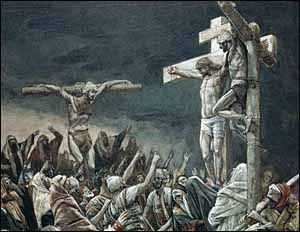
James J. Tissot, “Pardoning of the Good Thief” (1886-1894)

But perhaps you will forgive me as Christ forgave the thief from the cross, though, unlike the thief, I know what I’m doing: growing the sins and sorrows whose doom is secured and assured in the meekness of the child of Bethlehem and man of Golgotha.

No more let sins and sorrows grow
Nor thorns infest the ground
He comes to make His blessings flow
Far as the curse is found
Far as, far as, the curse is found.

Maybe in spite of the author’s sin and by the grace of God and people like Craig Nessan,  “Be Still! may become for someone else “parables to transform the ordinary into the extraordinary.”

parables_orig

With thanks to Craig Nessan,

Blessings and Peace,

Gordon, Chaska, MN, December 23, 2017.


The World at Christmas

“He rules the world with truth and grace, and makes the nations prove….” (“Joy to the World“) will ring out again this Christmas. But, does “He”?

Isaac Watts‘ Christmas carol celebrates faith in the future by looking back at the most unlikely of places: an animal feeding trough, a manger, in Bethlehem, on the outskirts of the Roman Empire.

He rules the world with truth and grace,
And makes the nations prove
The glories of His righteousness,
And wonders of His love,
And wonders, wonders, of His love.

In 2017 it’s hard to sing. In too many ways, it’s not true. Not yet. Herod’s search for the child, Herod’s lies and the slaughter of children that led Mary and Joseph to become refugees in Egypt feel more familiar than the rule of grace and truth. The nations do not prove the glories of His righteousness or the wonders of His love. The world continues to be ruled by deception and greed.

Even so, whether singing “Joy to the World” or listening to Handel’s Messiah, as Martha Ann Kennedy shared in her “The Messiah” post, we sometimes find ourselves going where only music takes us — the longing of the human heart whose aching seems to echo a promise that evokes it, a subjectivity inspired by a longer objectivity, as it were — the victory of goodness over evil, beauty over ugliness, and truth over falsehood.

The curse is not yet removed, but it is countered by a promise and a command: the hope for the rule of grace and truth over the nations.

No more let sins and sorrows grow,
Nor thorns infest the ground;
He comes to make His blessings flow
Far as the curse is found,
Far as, far as, the curse is found.

It falls to us to act responsibly in the face of the sins and sorrows that still grow, the thorns that infest the ground and threaten the planet; to be channels of truth and grace through which His blessings flow, far as the curse is found.

He rules the world with truth and grace
And makes the nations prove
The glories of His righteousness
And wonders of His love
And wonders, wonders, of His love.

  • Gordon C. Stewart, Chaska, MN, Dec. 22, 2017.

MISOGYNY FROM THE 1950’S TO TODAY – BY ELLIN CURLEY

Gallery

This gallery contains 9 photos.

Originally posted on Serendipity – Seeking Intelligent Life on Earth:
I was a child in the 1950’s and a teenager in the 1960’s. So I should be well versed in the misogynistic attitudes that were, and in some ways still…

Elijah asks Grandpa about taxes

taxreformGrandpa, do we like taxes?

Why are you asking about taxes, Elijah?

‘Cause they’re all over the news. I don’t get it. Are taxes bad or are they good, Grandpa?

It all depends, Elijah.

You always say stuff like that! Depends on what? I wear Huggies!

We’ve already talked about that. I don’t mean that kind of Depends. I mean it depends on what kind of taxes.

Yeah, like the tax of Caesar Augustus that made Joseph and Mary go to Bethlehem. Mom’s been getting me ready for my first Christmas. Look at this picture of Caesar Augustus, Grandpa. He did the same thing with his hand president You-Know-Who does! And he didn’t care about that little baby. Maybe that little baby is Jesus!

Statue-Augustus

And it came to pass in those days, that there went out a decree from Caesar Augustus that all the world should be taxed. (And this taxing was first made when Cyrenius was governor of Syria.)

And all went to be taxed, every one into his own city.

And Joseph also went up from Galilee, out of the city of Nazareth, into Judaea, unto the city of David, which is called Bethlehem; (because he was of the house and lineage of David:) to be taxed with Mary his espoused wife, being great with child.

And so it was, that, while they were there, the days were accomplished that she should be delivered. – Gospel According to Luke 2:1-6 KJV.

Yes, Elijah, it was because of a Roman census for purposes of levying Roman taxes on the country they occupied. The tax system wasn’t fair.

Hmmm. So taxes are bad!

No, they’re not. Like I said, Elijah, it all depends.

On what?

On whether the taxes are fair. Taxes are good so long as they fairly distribute the financial burden for maintaining life together in a good society: things like health care, roads, fire-fighters like the ones battling the fires in California, and economic assistance for the disabled, children, the poor, and retired people like Grandma and Grandpa who depend like Social Security.

So fair taxes are good? Unfair taxes are bad?

Yes, sort of. Tax systems that don’t require the wealthy to pay their fair share are like Roman taxes and like the British taxes that caused the American Revolution. The tax wasn’t fair. And tax systems measure what a country values. So even if the tax burden is fairly distributed, they can be bad if the money is used badly.

Yeah, just like Mary said, “He lifted up the lowly, and the rich he has sent empty away!” Liddle Bob Corker is lowly but he just voted for tax reform that Marissa says isn’t fair.

Yes, he did, Elijah. Senator Corker was a hold-out who agreed to vote for the tax bill after it was amended in a way that favored his real estate interests so he wouldn’t be so little anymore.

You own real estate, right? Are you going to vote for the tax bill, Grandpa?

No, Elijah, I really don’t own any real estate. The bank owns Grandma and Grandpa’s condo. We still make mortgage payments. And I don’t get to vote on it. Members of the House of Representatives and Senate represent us in Congress. Only they get to vote, and the president can then sign it or veto it.

Hmm. So you’re going to be liddler than liddle Bob Corker. But in my eyes, you’ll always be big, Grandpa. Remember Joseph and Mary and Jesus in liddle old Bethlehem.

I will, Elijah. Here’s a more hopeful picture for you to remember. Mary and the baby Jesus are at the top. At the bottom are prophetess named Sybil and Caesar Augustus, but it doesn’t look anything Caesar. It’s the Byzantine emperor Manuel II from the 15 Century that the artist viewed as the new Caesar. Every empire has its emperor, and every one of them is soon forgotten, but the story of Christmas is eternal.

©Photo. R.M.N. / R.-G. OjŽda

— Grandpa Gordon, Chaska, MN, Dec. 20, 2017.


Elijah on the seven words

Grandpa, what are the seven last words?

Oh, my, Elijah, that’s a strange question for this season.

Why? What’s a ‘season’?

A season is a period of days or weeks, a period of time. Right now we’re in the Advent season and Christmas season is almost here.

IMG_1889Okay, thanks. So . . .  why is a question about the seven words strange for this season?

Because the Seven Last Words are from Good Friday. This isn’t Holy Week; we’re getting ready for Christmas. 

That’s not what my baby-sitter says! She says the seven last words are diversity, fetus, transgender, vulnerable, entitlement, science-based, and evidence-based. We’re never ever supposed to use those words again. Are those curse words, Grandpa?

HHS_CDC_cmylogoNo, Elijah, they’re not curse words. But the ones who told the Center for Disease Control not to use seven words anymore are cursers. They’re substituting their seven words for Jesus’s seven last words.

The Centers for Disease Control and Prevention (CDC) reportedly received a list from the Trump administration on Dec. 14 consisting of seven words or phrases that will be banned in all official documents prepared for 2018’s budget. Many in the U.S., both those who work in public health and concerned citizens alike, are struggling to come to grips with the nature of the terms that are being censored.

The seven forbidden words or phrases are: “evidence-based,” “science-based,” “vulnerable,” “entitlement,” “diversity,” “transgender,” and “fetus.”– Futurism.com.

Grandpa, I was a fetus just seven months ago. Oops! I shouldn’t have used that word!

Yes, and you’re still very vulnerable. But, according to the You-Know-Who Administration, we’re not supposed to talk about that. 

So those are the ‘Seven Last Words’?

No, those are seven words that the CDC is not supposed to use anymore in its 2018 budget preparations, but the “Seven Last Words” are very different. We’re Christians, Elijah. We listen to the news with the Seven Last Words from the cross ringing in our ears.

So…we’re supposed to consider the ‘seven words’ of the You-Know-Who Administration in light of the ‘Seven Last Words’?

Yes, Elijah. Yes. And they’re very different.

So…was Jesus a scientist? What did he say from the cross, Grandpa, and what’s a cross?

No, Jesus wasn’t a scientist, but he loved the truth, just like real scientists do. A cross was the means of a state execution, Elijah. It was the way the Roman Empire killed people who got in the way of their agenda. Lots of people were executed during Jesus’s time. Jesus was executed. In our tradition, there are seven words he spoke from the cross.

Okay, I’m starting to get the picture. So what were the ‘Seven Last Words’?

Okay. Remember these and share them with Marissa tomorrow at day care.

  • Father, forgive them, for they know not what they do.
  • Today you will be with me in paradise.
  • Behold your son: behold your mother.
  • My God, my God, why have you forsaken me?
  • I thirst.
  • It is finished.
  • Father, into your hands I commit my spirit.
Brooklyn_Museum_-_What_Our_Lord_Saw_from_the_Cross_(Ce_que_voyait_Notre-Seigneur_sur_la_Croix)_-_James_Tissot

James Tissot, What Jesus Saw from the Cross, Brooklyn Museum of Art

So does God forgive the You-Know-Who Administration because they don’t know what they’re doing?

Hmmm. Good question, Elijah. Sure looks to me like they know exactly what they’re doing, but even when we think we know what we’re doing, I guess we really don’t. And “Behold your son; behold your mother” was a ‘word’ spoken to Jesus’s vulnerable mother and his best friend, but, according to the You-Know-Who Administration we can’t say ‘vulnerable’ any more. All those words are ‘finished’.

Yeah! And that’s not right! I’m still little but I pay attention to the ‘Seven Last Words’. I’m going to  be like Jesus’s friend. I’m going to take care of my vulnerable mother, Grandpa. Mom and I are vulnerable. Who’s going to take care of us if the You-Know-Who Administration doesn’t?

Like Jesus said, “into your hands I commit my spirit.” Remember, Elijah, the cross doesn’t have the last word. No one expected Easter. We live in resistance to cruelty with hope in a better tomorrow. It’s also the season of Chanuka, the Festival of Lights when our Jewish friends — always remember, Elijah, that Jesus was a Jew — light a new candle of hope every day to remember how an occupying power like the You-Know-Who Administration in the second century BCE was brought down by the Maccabean revolt. Thus us a season for hope, Elijah.

PanS9015968

Child lighting candle of Chanukah menorah

  • Gordon C. Stewart (Grandpa Gordon), Chaska, MN, Dec. 19, 2017

Police recruitment in New Zealand

Video

Some places and some police departments have a refreshing sense of humor. Places like this New Zealand and a New Zealand police recruitment video. Enjoy.

Elijah asks Grandpa about race

Grandpa, Grandma just called you a racist!

No, she didn’t, Elijah. She said I’m a Sadist. She was just kidding.

sadist

What’s a sadist?

It’s a husband who doesn’t do his fair share of the housework.

Is that like a racist?

Hmmm. I hadn’t thought of it, Elijah, but now that you mention it, I suppose it is.

How’s that?

Well, a Sadist is mean. So is a racist. They both demean others they regard as less important than themselves.

So you’re both.

Both what?

A sadist and a racist.

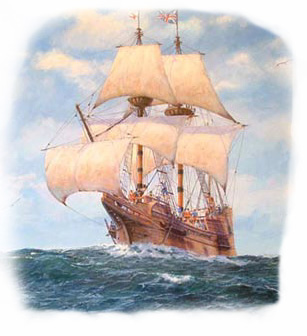
Now that you mention it, I suppose I am, Elijah. I’m a descendant of the Mayflower.

m1a

Voyage of the Mayflower

What’s a ‘Mayflower’, Grandpa? Is it the like the flowers you give Grandma?

No. What are you talking about? I only give flowers to Grandma on our anniversary.

Why? You may, if you want, and you should, Grandpa. But first you should help with the dishes and the housework. Otherwise you’ll be both a racist and a sadist. I feel bad for Grandma! You’re not only a sadist; you’re a misogynist!

Where’d you pick up that word?

I hear lots of stuff you don’t know about, Grandpa. I pick up a lot of words at Marissa’s house. She’s really mad at a bunch of guys. She watches lots of CNN and MSNBC — Harvey What’s-His-Name in Hollywood, Kevin Spacey, Roy Moore, and You Know Who. She really likes Rachel. She’s hoping that woman who got thrown out of the White House tells on the Chief Racist-Sadist-Mesogynist. Marissa says Omorosa could bring down You Know Who.

misogyny

I do know who Who is, Elijah, and Omorosa, and I love Marissa. But you need to be careful not to swallow everything other people says about others. You don’t want to be self-righteous, Elijah. None of us is righteous.

There you go again, Grandpa, slipping out of the noose. Excuses, excuses, excuses! You should be more righteous. Give Grandma some mayflowers, unload the dishwasher, and be a better husband around the house. Otherwise you’ll just be like You Know Who!

  • Grandpa Gordon, Chaska, MN, Dec. 16, 2017.