Elijah and Grandpa

“Grandpa,” asked six-month-old Elijah yesterday, “who’s George Bush?”

IMG_8782 Elijah

Elijah and Grandpa

“Which one, Elijah?”

“George!”

“Yes, but there are two Georges. Both were presidents of our country. There’s George H.W. Bush, who is now 94 years old, and there’s his son, George W. Bush. Which one do you mean?”

“The old one. The one like you, Grandpa.”

“Why are you asking about poor old George, Elijah? He’s not doing well. He’s gotten a little feeble.”

“What’s feeble? My baby sitter says George is a dirty old man like Garrison Keillor, Al Franken, President You-Know-Who — Marissa told me never to say the President’s name in her presence or she’d throw me out of day care — or that judge down in Alabama, but NOT like Jimmy Carter! Who’s Jimmy Carter?”

150708173829-jimmy-carter-on-donald-trump-intv-lead-00010108-large-169

Former President Jimmy Carter

“Oh, my, Jimmy Carter! I almost forgot. Jimmy was president too. Way back before George H.W. Bush. People made a big deal out of it when jimmy said he’d lusted in his heart. But, so far as we know, he didn’t harass anyone. That was a long time ago! Way before your time. It seems ages ago.”

“We want to be like Jimmy, right Grandpa?”

“Jimmy Carter would be a wonderful person to emulate, Elijah. But remember, even Jimmy’s not perfect. None of us is perfect. I want you to grow up to take responsibility for your own behavior and follow the Golden Rule: ‘Do unto others as you would have them do unto you’.”

“So Jimmy’s a lot different from President You-Know-Who, right Grandpa?”

“He’s pretty special, Elijah. A professor named Ted Gup wrote about the difference between President You-Know-Who and President Carter last year in New Republic. Here’s what he said, Elijah.

“Unlike Carter’s words, Trump’s suggest a man incapable of looking inward, of feeling shame, humility, or love. That such a purposefully divisive figure could represent the best hopes of tens of millions of Americans, even as he revolts and alienates tens of millions of others, speaks to the yawning chasm that divides the nation politically and culturally. What comes to mind is the question that once brought down another demagogue, Joe McCarthy, more than 60 years ago: ‘Have you no sense of decency, sir?'” [“On the Subject of Lust, Donald Trump Is no Jimmy Carter,” New Republic, Oct. 10, 2016].

“Hmmm. Grandpa, who was Joe?”

  • Grandpa Gordon, Chaska, MN, December 1, 2017.


Getting Older

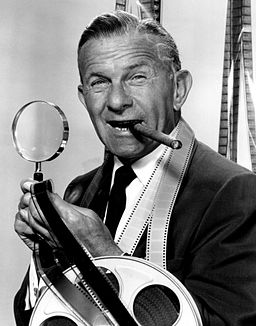
256px-George_Burns_1961INTRODUCTION: There’s nothing like an old friend when you have nothing worth saying, as though you ever really do, and are focused on getting back to writing a novel instead of your blog. One such old friend is the Rev. John M. Miller, or “the Least Reverent John Miller,” as I call him, whose sermon from The Chapel Without Walls arrived by email this morning. John remembers a Pickles comic strip. I think of George Burns.

FOR OLDER AMERICANS WHO ARE GETTING OLDER

Text – “For everything there is a season, and a time for every matter under heaven: a time to be born, and a time to die.” – Ecclesiastes 3:1-2 (RSV)

This sermon has taken many years to germinate. In one sense, it has taken almost seventy-nine years for it to come to full fruition. Thus the first reason for preaching this sermon is that the preacher himself is an older American who increasingly realizes he is getting older. The other reason which prompts this sermon is that Lois and I have lived in a retirement home for almost three years. That has given me the opportunity to have observed more than three hundred other older people getting older. That leads someone such as I to reflect on what all that means.

Hilton Head Island has a much older average population than the average American community. That has been true for at least the past fifty or sixty years. Over time we had three large retirement homes built here, plus several other smaller facilities of various types for various older people. The Seabrook, where we live, has 225 residents. Of those people, a hundred are ninety or older. We even have eight centenarians, people who are a hundred years of age or more.

Americans are getting older. Of course everybody is getting older, even newborns. However, by means of advancements in medical care, nutrition, and physical activity, many millions of Americans are going to make it into old age, whether they like it or not. Are we thinking about that? Are we consciously and conscientiously preparing for it? Or shall we just let it happen, come what may, with little or no thought given to it and what it might portend?

A member of The Chapel Without Walls sent me an email piece which he received as an email from someone else who no doubt received it as an email. It is called Ramblings of a tired mind. Among other things, it said these things: “I was thinking about old age and decided that old age is when you still have something on the ball, but you are just too tired to bounce it….The older you get the tougher it is to lose weight because by then your body and your fat have become really good friends….Aging: Eventually you will reach a point when you stop lying about your age and start bragging about it.”

But what happens if you realize you are old and you’re not bragging about it, or you fear it, or you wonder what is going to happen to you because of it? What if you’re older and not feeling well, and you think you are probably going to feel worse and worse, or you are fairly certain you’re going to run out of money because you lived too long and you see no way out of that heretofore unforeseen eventuality? Old age isn’t for sissies, they say, but must it be a severe trial for everyone who makes it into old age? For everyone, no, but for many, sadly, yes.

 When I was young, I didn’t like the Book of Ecclesiastes. I thought the writer, who is variously known as Ecclesiastes, Koheleth, or The Preacher, was too skeptical and cynical and sour. Now that I’m old I am more positively drawn to the unquestionably older person who wrote Ecclesiastes than to any other writer in the entire Bible. I suggest all of you take an hour or two this week to read this short book, and then ponder it and ruminate upon it. It is directed especially to older people who are getting older, and it has multitudes of golden nuggets for golden-agers. I’m serious. Read Ecclesiastes. Throughout this sermon I will use isolated quotes from Ecclesiastes. I won’t identify them as such, but if you listen closely, you’ll recognize them when you hear them, because you heard two readings earlier from this outstanding book.

I have said this before in several different ways, but I want to say it again: God does not determine when or how or why anyone dies. In my opinion, it is a serious mistake for anyone to believe God determines those things, because it can turn people into puppets or doormats. “Nature,” terminal illness, or longevity may terminate our lives, or we ourselves may do that, but it is never God who settles when anyone dies. Young or old, we die when we die. There is no explaining when or how or why it happens, other than medically or forensically. Theology can’t unveil why death happens when it happens. We die when we die, and faith cannot explain why.

That having been said, it behooves all of us, particularly as we get not only older but actually old, to contemplate everything we need to do to prepare for death. This may sound morbid, but what is really morbid is not to prepare for death by merely waiting passively for death to negate our existence. When we are living is the only time we have to prepare for death.

So what do we need to do? We need to have a written will, and a living will, and a medical power of attorney, whereby we designate someone to make medical decisions for us if we are physically and/or mentally incapable of expressing our own wishes for ourselves. We need to make sure somebody knows where all our important papers are, and to have access to them if they are under lock and key. We should establish a legal power of attorney for someone we trust who can handle our financial affairs if we are unable to handle them ourselves. We need to let our spouse or children or other relatives or attorney or somebody know what our wishes are concerning some sort of official recognition of our life soon after we have died.

I’m going to give you an opinion about which I have thought a great deal, probably more than most people. In my vocation, one is thrust into thinking about these things more than most other people. My advice? Please don’t tell your children or your lawyer that you don’t want any kind of service after you die. That is unfair to those who have known you and loved you, even if you are an irascible or ornery old coot, which of course no one here is. Everyone is a child of God, and as such, other children of God should be granted the opportunity and privilege to acknowledge and give thanks for the life of everyone who dies. Those who know they are going to die may not want a service, but a memorial service or celebration of life is for those who have lost the one who has died, and not for the deceased.  Everyone dies, and everyone else should have the  option of giving thanks to God for that person’s life when anyone dies. In my long-considered opinion, it is unseemly for a dying individual to prevent others from joining into a celebration of that person’s life, and also in a witness to the resurrection for those who are Christians.

Half a century in the ministry has convinced me that sadly, many people live too long. Most such people are not happy about that situation, but slowly or rather suddenly, there they are. For many oldsters, their quality of life declines into oblivion. It is my three years in a retirement home that have alerted me as nothing else could to the heart-wrenching reality of how relatively quickly too many Americans discover themselves to be living too long. Laws, customs, and faulty theology all contribute to their dilemma. The long-running British comedy on PBS called Waiting for God accurately describes this sober circumstance in a humorous but also telling manner.

Last Monday evening Turner Classic Movies showed a bittersweet film called Whales in August. It was about some elderly people on the Maine coast, and it starred Betty Davis in her final role, Lillian Gish, Ann Southern, Vincent Price and a couple of other loveable, colorful geezers. In the movie, Betty Davis and Lillian Gish play elderly sisters. The sister who is nearly blind says to her more positive and able-bodied sibling, “We have outlived our lives.” That was an honest, but sober, statement. We have outlived our lives. “So I hated life, because what is done under the sun is grievous to me, for all is vanity and a striving after wind” – Ecclesiastes 2:17).

Outliving one’s life in advanced age is a circumstance no one would ever choose. Nonetheless it is a situation confronted by increasing numbers of older people. Where once they were hale and hearty, now they are frail and weak. Where once their funds were sufficient, now they wonder which shall give out first, their money or them. Is it wise or prudent  — or ethical — to run out of money in old age? In any event, can it always be avoided? “In the day of prosperity be joyful, and in the day of adversity consider; God has made the one as well as the other, so that man will not find out anything that will be after him” Ecc. 7:14).

Countless older people have told me that wherever they are living is the last place in which they shall live. They say they are too old for another move. Don’t count on it. Circumstances may force older people to move to a nursing home or to be closer to children in other quarters or in a nursing home there. We like to think we are in control of our lives, but we may not be.

Thus far society has not made sufficient preparations for the legions of oldsters who are confronting the viability of the American health system. Social Security, pensions, and 401Ks cannot handle the costs of maintaining everyone who needs to be maintained. Here is an extremely sober and sobering question: Is it valid for any of us, if we are very old and sick, to keep on living? Voluntary, not mandatory answers to that question are the only valid ones.

Illness of any sort becomes a growing concern for older people. Dementia is a far greater concern. The older we get, the more likely we are to be afflicted with Alzheimer’s disease or some other form of dementia. Dementia requires more care than almost any other form of illness. If one spouse in a marriage begins to lose memory, demands inevitably shall increase for the other spouse who is still doing relatively well. Both can only try to make the best of it.

A few days ago I saw my longest-term close friend on the island. I hadn’t seen him for a couple of years. I was astonished at how much he had aged in that time. He has lost weight and is stooped and uncertain in his gait. His wife has had dementia for perhaps eight to ten years, and he is at the point where he simply is no longer able to give her the care she needs, but he has not found a suitable and affordable memory care facility for her. And so they both toddle along into a darker and ever more uncertain future. “Sorrow is better than laughter, for by sadness of countenance the heart is made glad” (Ecc. 7:3) Was Koheleth correct when he wrote that?

One of my favorite comic strips is Pickles. It features flinty Earl, his wife Gladys, and their grandson Nelson. Earl and Gladys look to be in their seventies, and Nelson is about six or seven. Last Monday Earl was in the kitchen with his hand on his chin. Gladys asked him what he was doing there. “I came here to get something,” he said. “To get what?” she asked. “I don’t know. It slipped my mind. But I’m not leaving until it comes to me!” Exasperated, Gladys disappears. Earl looks after her, saying, “How about bringing me a chair?” On Tuesday he was still in the kitchen, trying to remember why he came there. She offered him a cookie while he waited. “Now I know why I came here!” he said, happy that the mystery of his muddled memory had been solved.

It is wise for older people to do what they can while they can still do it. Take trips. Go on cruises. See relatives, or have relatives come to see you. Visit friends. Go to the movies. Walk.  Play games, especially “thoughty” games like bridge. Have fun. Enjoy life. “I have seen the business that God has given to the sons of men to be busy with. He has made everything beautiful in its time; also he has put eternity into man’s mind, yet so that he cannot find out what God has done from the beginning to the end” Ecc. 3:10-11). Life becomes more of a mystery in old age.

On the cover of the bulletin today is a quote from an article wisely entitled Old, frail, called by God (Christian Century July 17, 2017. It was written by Joyce Ann Mercer, who teaches pastoral theology at Yale Divinity School. The author quoted the psychologist Erik Erikson. “Old age in one’s eighties and nineties brings with it new demands, revelations, and daily difficulties.” He said it is the time of the struggle between integrity and what he ruefully identified as “despair and disgust.” He went on, “Loss of capacities and disintegration may demand almost all of one’s attention. One’s focus may become thoroughly circumscribed by concerns of daily functioning so that it is enough just to get through a day intact, however satisfied or dissatisfied one feels about one’s previous life history.” To me, Erik Erikson sounds a lot like Ecclesiastes, Koheleth, the Preacher.

Commenting on this, Dr. Mercer writes, “Perhaps at no other time…does the body occupy such a premier place in defining the contours of life….The heightened body consciousness of older adulthood critiques the cultural overvaluing of independence and autonomy.” How true that is! Why should anybody imagine, as we get older, that we should be physically able to do all the things we could do when we younger? Can a fifty-year-old Triumph sports car still do 140 miles per hour for four hours? Can a century-old clock still keep perfect time? Why do we think we can do what we always did? Why do younger people expect us to do more than we can do?

Joyce Ann Mercer ended her article with these words: “God’s call in older adulthood sometimes takes place in a receptive-dependent mode, a vocation of forming others in faith by evoking in them the practices, habits, and dispositions of faithful people….God’s call for older adults to receive care from others is also a call to experience the care and presence of God.” Or, as Koheleth put it, “That which is, already has been; that which is to be, already has been; and God seeks what has been driven away” (Ecclesiastes 3:15).   

 It has often been said that in old age people are “cramming for their finals.” That phrase is meant to be humorous, but it is also very serious. Many who are older feel closer to God. If that is true, we should make the most of it. Cram away! Carpe diem; Seize the day! If you didn’t do it before, do it now; get as close to God as you can, because God is getting ever closer to you.

Some of you have met my wife’s sister, Millie Ruhl. Millie has been visiting us for the past three weeks. In December, she will moving into The Seabrook. Lois has the second-best memory of anyone I have ever known, but Millie is the unquestionable Number One Rememberer.

When Loie and her two sisters were in grade school, their parents were the counselors for three summers at the Nottingham Camp in northern Maryland, near the headwaters of the Chesapeake Bay. It was a very fine camp which attracted girls and boys from wealthy families all over the Northeast. The three Seifried girls had a free ride there for those idyllic years. Millie was reminiscing about the prayer the entire camp recited every morning. It was composed by the camp director, Cal Burley, a remarkable man about whom I have heard much through the past twenty years. “O God, forasmuch as without Thee we are not able to please Thee in anything we may undertake, mercifully grant that Thy Holy Spirit will direct and rule our hearts and minds in all that we do this day, so that, at the end of the day we shall hear the eternal benediction: Well done, thou good and faithful servant.” He is now gone, but well done yourself, Calvin Burley.

“If a man begets a hundred children, and lives many years, so that the days of his years are many, but he does not enjoy life’s good things, and also has no burial, I say that an untimely birth is better off than he” (Ecc. 6:3). Mr. Burley taught values to his campers, and his life continues to live on in them. May we also live on in those who shall live after us long after we are gone.

miller

Rev. John M. Miller, Chapel Without Walls

The Rev. John M. Miller, Chapel Without Walls, Hilton Head, N.C., Nov. 12, 2017 sermon.

John Miller has written and published six books including The Irony of Christianity: A Pastor’s Appeal for a Higher Theology and a Lower Christology, which was published by The Institute for Religion in 2002. The book remains available thru Amazon.


Elijah reviews his Mom

Grandpa, what’s a ‘review’?

Where’d you get that word, Elijah? How are you spelling it? There are two spellings and they’re very different. One I can tell you about. The other I can’t until you’re old enough to handle it.

IMG_5767I don’t know how to spell yet! All I know is Mom picked me up from work this afternoon and she was really happy. She told Marissa she had a really good review.

That’s wonderful, Elijah! I knew her review was coming and that she was a little anxious about it. Everyone’s anxious before a review.

Sometimes I worry, Grandpa, that you’re not completely tuned in. You go off on tangents and forget the question. You don’t even remember. I asked you a QUESTION! Like I said — What’s a review?

Well, it’s a time when a boss and an employee sit down to discuss how work is going. How well the employee is doing at her job.

So which is Mom, the boss or an employee? I think Mom must be the boss.

No, she’s the employee. She works for the boss.

Okay, I think I get it. So Mom did really well?

She did, Elijah. She got a raise and the boss said all kinds of good things about your Mom.

Yeah, she’s the best Mom in the whole world, Grandpa! She’s really smart and she’s pretty and stuff but she’s also the best diaper-changer. Don’t tell Grandma I said that, okay? I don’t want to give Grandma a bad review. I don’t want to hurt Grandma’s feelings. But Mom knows me best. She knows just how I want my diapers changed. And she doesn’t get mad when I wake her up all night every hour ‘cause I’m hungry and can’t turn myself over and stuff like that. Well, sometimes, she gets maybe a little unhappy, but I bet she’s way more patient than any other Mom.

That’s a great review, Elijah. You’ve got the hang of it.

Okay! There’s one more thing, Grandpa, just between us guys.

IMG_8782 Elijah

Mom says she’s not pretty any more. She says none of her clothes fit and she thinks she’s fat. She’s not, Grandpa! She’s beautiful! She’s the most beautiful woman I’ve ever met. Don’t tell Grandma I said that, okay? She’s pretty too, and she’s Mom’s Mom, so I bet she was really pretty, too, before she got old and wrinkly like you. Don’t tell her I said that, okay? You can take it, ‘cause you’re a guy and you know you’re old and wrinkly and fat and you don’t care. Anyway, we’re reviewing Mom here, not Grandma. Grandma’s second best in the whole world. But Mom’s a superstar. As her boss, I’d give her a big raise!

IMG_7979You just did, Elijah. You just gave her the kind of big raise a mother lives for. Now, if you can just start sleeping through the night, that would be an even bigger raise you could give Mom. You’ll be her most favorite boss ever. Her one and only!



 

  • Grandpa Gordon with 5 month old Elijah, November 4, 2017.


Saint Giovanni of the Pillows

John Thomas Stewart appears on no other list of Saints but mine. I called him Grandpa.

He wasn’t famous like Saint John of the Gospel or Saint John of the Cross, but his life quietly bore witness. To sacred silence. And laughter.

By the time I came into his life he’d retired from driving his team of horses through the streets and alleys of east Boston to deliver fifty gallon drums of oil to the mostly Italian-speaking shop owners.

Grandpa Stewart was not Italian. But the shop owners wouldn’t have guessed. He learned to speak Italian while making his daily rounds. “Buongiorno, Giovanni!”

giovani

And so his day went until he drove the horses and his wagon back to the company barn, fed them, groomed them, put them in their stalls for the night, and walked home to #11 Tremont Street.

In retirement he had moved from Tremont Street to live in my Uncle Harold’s palatial home in Chestnut Hill across the street from Boston College. It was to the house on Hobart Road that my fondest memories return.

During the years my father was in the South Pacific, my mother and I lived with Grandpa and Grandma Stewart in the house of Hobart Road in Chestnut Hill. Uncle Harold, too, was in the war, somewhere on a ship. We never knew where.

We didn’t know much of anything in those years between 1943 and the end of the war. Everything was uncertain. But at least two things I could count on put my grandfather on the list of Saints worth remembering.

PILLOWS IS ONE.

throw_pillows_pillows_by_color-1

We played a game with pillows. On the floor with the Persian rug that filled the living room on Hobart Road, I’d cover Grandpa’s entire body with all the pillows we could gather from everywhere. Once I’d completely covered him — “no peeking, Grandpa — he’d lie there for various amounts of time until the time seemed just right. Then — “Boo!” — he’d say suddenly throwing off the the pillows. “Boo!” To a two year-old, his resurrection from the dead was always a surprise. We’d laugh and laugh and laugh. Then I would take my turn under the pillows to scare Grandpa: “Boo!” He’d act surprised every time. It never got old.

“Boo!” never sounded so good. Grandfathers are like that.

Otherwise, he didn’t say much. “Boo!” was one of the few words I remember Grandpa speaking. Most of the time, he didn’t say boo. He was quieter than quiet, like a rock to a family at the edge of quick sand — one news story from the radio away or a knock on the door that might tell us Harold or my father had been killed in the war.

CHURCH IS THE OTHER.

During the summers we lived in Uncle Harold’s cottage on Harridan Avenue in Rockport, Massachusetts, just a block up from Old Garden Beach and a mile from Dock Square, Bearskin Neck, and the First Congregational Church in the heart of Rockport.

My mother and Grandma failed in their first attempt to take me to church when the otherwise quiet two year-old suddenly interrupted the long sacred silence that followed the minister’s “Let us pray” with words of my own — “Mom!! Big grunt!!!” — sending the church into giggles that seemed to irk the minister by bringing everyone back to earth, so to speak. My older cousin Gina snatched my up and ushered me out. That was the end of church for awhile. They were not about to cause a scene again.

Grandpa was a different story.

I remember walking with him to church in Rockport. He didn’t say boo; he just walked. But it was the way he walked, and why he was walking on a Sunday morning, that puts him in my catalogue of saints. He walked with dignity and purpose.

Grandpa’s posture was erect. Perfectly straight. Dressed in a starched white shirt, tie, dark suit, and wearing a fedora, the man with a sixth grade education who’d run away from domestic abuse when he was 12 years old seemed like what I imagined President Roosevelt must look like. Dignity was everywhere: his posture, his gate, his attire — on the way to the place and time that gave substance, shape, and meaning to his life: Sunday morning worship, “The Lord’s Day,” as he called it.

Sunday morning was sacred time.

Fifty years after the walk to church with Grandpa in Rockport, I visit a small, white, wood-frame church on the Isle of Skye in Scotland, the land from which Grandpa’s father had emigrated to Prince Edward Island where Grandpa was born.

33900600110_1a54a346b1_z

I arrive ten minutes before the beginning of worship. The usher in the tiny 6’x8’vestibule welcomes me with a wordless smile, gives me a copy of The Book of Psalms and Paraphrases, opens the door to the large sanctuary that looks out on the natural beauty of Loch Snizort, and quietly ushers me to a pew among the silent members of the congregation. The man to my left smiles and nods. In a minute or two he offers his copy of The Book of Psalms and Paraphrases, opened to the first hymn posted on the small hymn board.

No one speaks in these minutes before worship. There is no prelude. No music plays. Even the children are quiet and seem at home in it. The silence is not empty. It is as full as any place I’d ever been or ever would be again: the fullness of faith, hope, and love waiting to break into song together as one voice in four-part harmony:

Praise God from Whom all blessings flow!
Praise Him all creatures here below!
Praise Him above, ye heavenly host!
Praise Father, Son, and Holy Ghost!

I stand erect, like Grandpa, to sing God’s praise and sense a faint echo of a joyful chuckle time cannot erase — “Boo!” — rising from under the pillows of the Communion of Saints.

  • Gordon C. Stewart, at the cabin, November 1, 2017, All Saints Day.


Elijah and his sitter’s text

Grandpa, my babysitter was crying today.

IMG_1779 E 5 months

Elijah (five months old)

I’m sorry, Elijah. Why was she crying?

Marissa’s cousin in Puerto Rico sent a text five days ago but Marissa didn’t get it until this morning. She was crying hard, Grandpa! It was really sad.

What did the text say, Elijah?

I thought you’d ask, so I asked Marissa to print it out ’cause you’re old. You don’t text so good.

‘Well’, Elijah, I want you to learn to speak proper English. You should say, “You don’t text so well” — not “you don’t text so good.”

Yeah, well, you say ‘well’ a lot. That’s not good. Well, here’s what Marissa’s text from Puerto Rico said. It’s not good.

Month 2. Day 1.

No power

We have running water

Telecommunications are fair on the best of days. I consider it successful if I can consistently get 2mb down. Today it’s about 0.13mb.

Traffic is insane

Fuel lines are better

Shopping takes hours

We are the lucky ones, the privileged ones. It’s not better, progress is slow, medical care is impossible for many.

We are here. We need your help. Keep pressure on news organizations, on elected officials, and aid organizations. Use your voice for people who have been silenced.

Grandpa! We’re gonna help, right? Are we ‘privileged’?

  • Grandpa Gordon, Chaska, MN, October 24, 2017

Liddle Elijah and Bumpa (Grandpa)

Bumpa, we’re supposed to respect people, right?

IMG_8373

Elijah asks about the president and senator corker

Yes, Elijah, that’s part of growing up.

Yeah, I’m not growed up yet. I’m liddle.

Well, yes, but it’s “grown” up, and you spell ‘little’ with two ‘t’s not two ‘d’s.

That’s not how the president spells it. Who am I supposed to respect more, you or the president?

Hmm. When it comes to spelling and not calling people names, I think Grandpa may deserve a little more respect. That’s just Grandpa’s opinion. But the president called Senator Bob Corker ‘liddle’ and meant it as an insult. Senator Corker is short; he’s little compared to the President. But a person’s physical stature shouldn’t matter to grown-ups. Do you understand?

And what about that IQ thing?  What’s an IQ?

Lots of people are asking that question these days.

Is having a higher IQ like being taller? I’m tall. Dr. Smith said I’m in the top 94 percentile of four-month-olds! What’s a percentile?

It’s a way of measuring, Elijah. It’s complicated. It’s just a statistic. But it gives me comfort that the percentage of people approving of the president seems to have become littler in all 50 states between last January and September.

We like little. Right Bumpa?

We do, Elijah. Sometimes we do.

“I look to a day when people will not be judged by [how tall they are]], but by the content of their character.” — Rev. Dr. Martin Luther King, Jr.

  • Grandpa Gordon, Chaska, MN, October 11, 2017.

Elijah: “Dear Mr. President”

Elijah’s Letter to the President

September 30 , 2017

Dear Mr. President,

I’m in my carseat for my first road trip to the cabin up north, but Grandpa shared with me the letter he just sent you. I’m proud of my grandpa and I want to be proud of you. Grandpa says you’re sort of like an uncle because you went through Presbyterian confirmation class like grandpa.

But my babysitter doesn’t like you. She speaks Spanish. During the day with Marissa, we’ve been watching CNN for news from Puerto Rico, and she’s said a lot of bad words about you.

She clapped when Mayor of San Juan Carmen Yulín Cruz called you out. Then, this morning, she cursed again after you admonished the Carmen. Marissa’s with Carmen.

I’m only 18 weeks old. I’m still trying to understand what’s real and what’s not. Right now I’m not sure of much of anything. I trust Grandpa and I trust Marissa. They both love me and take care of me. Both Grandpa and Marissa are as upset with you as the Mayor of San Juan in Puerto Rico.

I see the pictures from Puerto Rico and think you must, too, because you watch a lot of television, even if you consider CNN fake news. I’m little and don’t know much yet, but the pictures don’t look fake to me. And it’s not just pictures. It’s all over the radio. Marissa listens to NPR.

NPR’s Manadalit del Barco spoke to 8-year-old Yan Anthony Hernandez who is staying at a shelter in the city of Aguadilla on Puerto Ruco’s northwestern coast. The boy had a message for Trump.

“Stop tweeting and come help the people.”

Marissa wants to know whether you really care about Yan, the Mayor, and the rest of the people of Puerto Rico or just want them to go away like the undocumented workers you’re sending back to Mexico.

Sometimes Marissa sings to me. “Jesus loves the little children, all the children of the world — red and yellow, black and white — all are precious in his sight. Jesus loves the little children of the wold.” Grandpa says maybe your babysitter sang that song for you when you were little like me, but I wonder.

If you have time to write back, I’ll share your response with Marissa and Grandpa and have them make another copy to send to Carmen in Puerto Rico.

Respectfully,

Elijah (18 weeks old)

Grandson of Grandpa Stewart


Dear Brother Donald

Letter to President Donald J. Trump

September 30, 2017

Dear Don,

I hope you don’t mind me calling you Don. You can call me Gordy; only those close to me in grade school called me that, but, so did the kids in my confirmation class. Since we were both confirmed in Presbyterian churches, I think it makes sense to call each other Don and Gordy.

brown-psr-3-300-394After writing you yesterday, I wondered whether your confirmation class read the same book mine did. Did you read Robert McAffee Brown‘s The Bible Speaks to You? I have to confess I didn’t read much of it at the time. I faked it. Maybe you did, too. I think we were probably a lot alike that way, don’t you think?

Anyway, this morning I went online and found The Bible Speaks to You in Google Books — Google, like Twitter, is amazing, don’t you think? — to see what we were supposed to be reading and to get a sense again of what we were being taught. Even way back when we were in confirmation class, we were being taught that Jesus was killed by the coalescence of two mistakes that seem to be the opposite of each other: nationalism, on the one hand, and imperial rule, on the other. They went hand-in-hand in deciding Jesus has to go.

Do you remember that?

Jesus wasn’t big on either nationalism or or empire; he saw both as substitutes for God, idols manufactured by the human heart to provide a false sense of security and importance. I suspect you may have skipped those chapters of the New Testament, but this wouldn’t be the first time the crucifixion was erased from consciousness. It happened in the German Church in the 1930s when the majority Christian population blamed the Jews, the Gypsies, the communists, and homosexuals for Germany’s fall from greatness. Make Germany great again was the agenda back then and Jesus was weeping all the way through it — in the concentration camps and in the cattle cars of the trains that removed from the nation everyone who wasn’t of the Aryan race, an idol of exceptionalism that, like all idols, had no foothold in reality itself.

Do you remember how we hated Hitler and all that stuff in confirmation class, how we thought of ourselves as Christians who would never do that because we were disciples of Jesus, and as Americans who would never do that because … well, we were Americans? We were better than that!

Funny how things change sometimes if we don’t pay attention, don’t you think? Maybe we paid too much attention to that period of world history and not enough attention to Robert McAfee Brown and the Bible. Long after we finished confirmation class to become disciples of Jesus, Robert McAfee Brown said something I’m remembering now:

Who we listen to determines what we hear. Where we stand determines what we see. What we do determines who we are.

I wonder who you’re listening to, where you stand on all of this, and write you now because, as your brother in Christ, I went on to listen to Dietrich Bonhoeffer and his American friends,Paul Louis Lehmann, William Sloane Coffin, and, yes, our old confirmation class author Robert McAfee Brown, who all claimed that what we do determines who we are.

The Bible speaks to you

Original cover of The Bible Speaks to You used in Presbyterian church confirmation classes in the 1950s and ’60s.

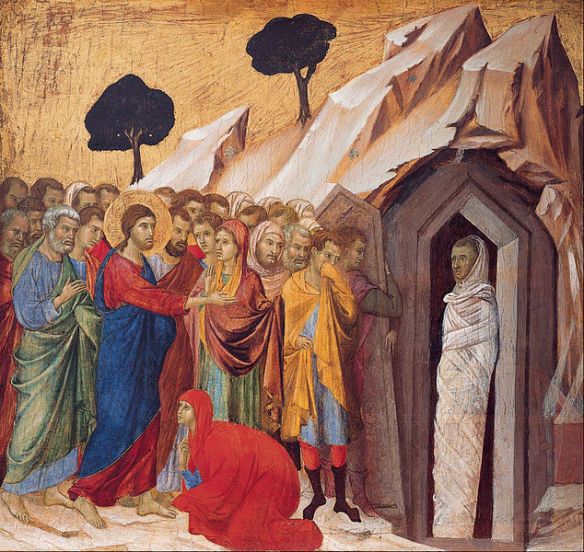
Don, if you can find a moment this morning, you can click this  Amazon LINK to The Bible Speaks to You, click “Look Inside” and scroll down to what neither of us can remembers now that we’re over 70 years old and forgetting much of what we learned. Take a look at pages 11 and 12 about the Marine Corporal following Robert McAfee Brown, the Marine Chaplain, back to his quarters after a Bible study on the Gospel of John story of Lazarus:

“Chaplain,” he said, “I felt as thought everything we read this morning was pointed right at me. I’ve been living in hell for the last six months, and for the first time I feel as though I’ve gotten free.”

You’ve been in the White House for nine months now, and I suspect it may feel like a hell you’ve never experienced. Maybe the same thing can happen with you as happened with the Marine.

634px-Duccio_di_Buoninsegna_-_The_Raising_of_Lazarus_-_Google_Art_Project

“The Raising of Lazarus” — Duccio di Buoninsegna (c. 1318-1319)

Remember, Don, every one of us has had at least a taste of hell these last nine months, but I’m looking to you for something different to rise from the ashes of our confirmations: a refutation of nationalism and empire. As Robert McAfee Brown said when he was much older, “What you do determines not only who you are but who we are. ” Take a close look at the picture of Robert McAfee Brown and at . It feels as though he’s looking at us to see whether we’re with Jesus and Lazarus.

Grace and Peace,

Gordon C. Stewart (“Gordy”), Your Brother in Christ

Chaska, Minnesota

Grandpa, did the president say that?

Elijah and HarveyElijah and I were watching the President’s speech to the United Nations General Assembly when suddenly Elijah sat bolt upright.

Grandpa, did he really say that?

Say what, Elijah? He’s said a lot of things.

Trump at United NationsDid he just call Kim Jung Un “Rocket Man”?
Yes, he did, Elijah.

That’s not right! You told me never to call people names. Then he said he would destroy his country! He sounds like a bully. You taught me bullying’s bad, right Grandpa?

Right. Bullying is bad. It’s always bad. The president just embarrassed every American.

And then he insulted all our allies whose countries are socialist. All our European allies are socialist, right Grandpa? Israel’s socialist, right Grandpa?

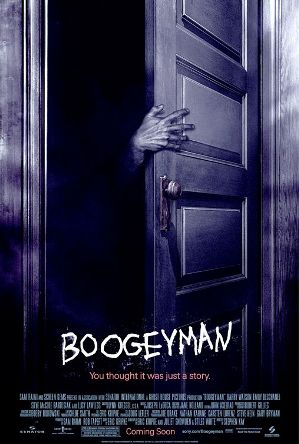
That’s right, Elijah. He doesn’t know what he’s talking about. He still believes in the Boogeyman.

Boogeyman_posterWell, I think he’s acting like the Boogeyman. Don’t ever leave me in the same room with the president, Grandpa. He’s mean. He’s scary!

Don’t worry, Elijah, President Trump will never take care of you. Mom will. Grandma and I will. Your baby sitter will. And the world leaders will babysit Mr. Trump.

  • Grandpa Gordon, Chaska, MN, September 21, 2017.


Grandpa, I’m special, right?

On his 14th (week) birthday Elijah was watching Mr Rogers’ Neighborhood this morning.

51IO0pzdoqL._AC_UL320_SR226,320_Grandpa, Mr. Rogers says I’m special! I love Mr. Rogers!

We all love Mr. Rogers, Elijah. We all do!

Yeah! He’s a Presbyterian minister just like you, right Grandpa?

Yes, he was. And, like all Presbyterian ministers, Rev. Rogers made mistakes.

Like what?

Like telling you you’re ‘special’.

What you talking’ about? I AM special. Mr. Rogers makes me feel good.

I understand that and I’m glad. I just wish he’d used a different word than ‘special’ because none of us is ‘special’. You’re unique, Elijah. No one will ever be just like you. But that doesn’t mean you’re ‘special’.

You don’t like Mr. Rogers! I don’t like you! You’re a poop-head!

Sometimes I am, Elijah. I know I’m a poop-head sometimes. We all are, and that’s my point. We’re all in this together. None of us is special. Each of us is precious. Each of us is loved. I just wish he’d said ‘precious’ instead of ‘special’ because ‘special’ leads people to think they’re ‘exceptional’. You know, better than anyone else.

Mr. Rogers doesn’t mean that! Everyone’s welcome in Mr. Rogers’ neighborhood, even Mr. McFeely!

Well, even Mr. Rogers is a sinner, Elijah. He should never have named the mailman Mr. McFeely.

enhanced-buzz-6528-1363800770-6

  • Grandpa Gordon, Chaska, MN, August 28, 2017.