To Initiate a Contemplative Mood

Thom Hickey’s The Immortal Jukebox is like no other jukebox. Tune out the noise and turn up the volume. Enjoy this gift for the season from a blogger in Surrey, England. Click the link at the bottom for all the music of this lovely post.

https://youtube.com/watch?v=GiKNUma4dY0%3Fversion%3D3%26rel%3D1%26fs%3D1%26autohide%3D2%26showsearch%3D0%26showinfo%3D1%26iv_load_policy%3D1%26wmode%3Dtransparent

And breathe! To initiate the contemplative mood I turn to the contemporary Estonian Composer, Arvo Part with his luminous, liminal setting of Mary’s eternal prayer, ‘The Magnificat’. Part has been labelled a Minimalist and a retro Medievalist. I prefer to think of him as having the gift to make time past, time present and time […]

via Contemplative Christmas 1 — The Immortal Jukebox

The Infinite Interior (Dennis Aubrey)

dennis-boscherville

Dennis Aubrey of Via Lucis Photography

Dennis Aubrey’s Via Lucis photographic reflection on the different between Gothic and Romanesque architecture opens the Infinite Interior I needed this morning.

If you, too, are looking for light in the midst of darkness of whatever sort, this is for you. If you read nothing else, scroll down to the last paragraph and ponder our own infinite interior.

Dennis Aubrey, PJ McKey and Via Lucis are Views from the Edge‘s favorite companions on the way.

Gordon C. Stewart, Chaska, MN, Dec. 21, 2017

Dennis Aubrey's avatar

The subconscious is ceaselessly murmuring, and it is by listening to these murmurs that one hears the truth. ― Gaston Bachelard, The Poetics of Reverie

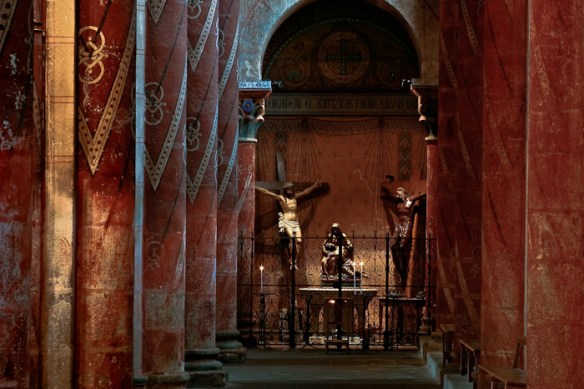
Basilique Saint Austremoine, Issoire (Puy-de-Dôme) Photo by PJ McKey Basilique Saint Austremoine, Issoire (Puy-de-Dôme) Photo by PJ McKey

There is a conceptual difference between Gothic and Romanesque churches and cathedrals. While the Romanesque builders paved the way for the Gothic, there is a deep and wide chasm between the two worlds. It starts on the outside – Gothic cathedrals make you want to sit on a bench and admire the exterior. One enters later and experiences the wonders of the soaring internal architecture.

The exterior of Romanesque church architecture is different, much simpler. It is dominated by three features – the clocher, west front, and the chevet. The clocher (or belltower), like the contemporary church steeple, identifies the structure from the distance as a church.

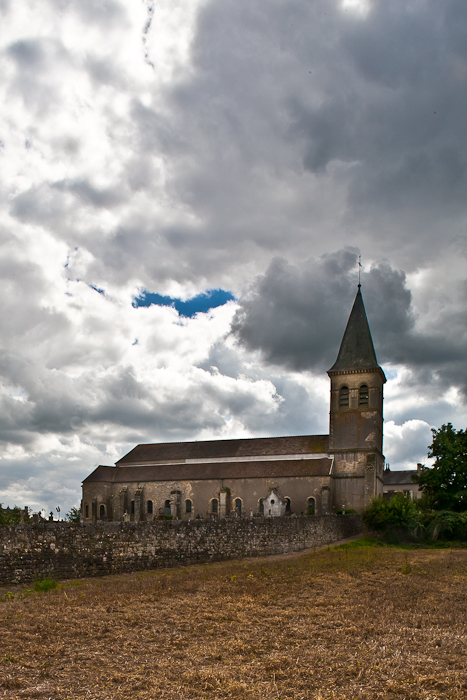
Église Saint-Révérien, Saint-Révérien (Nièvre) Photo by PJ McKey Église Saint-Révérien, Saint-Révérien (Nièvre) Photo by PJ…

View original post 383 more words

Grandpa, what’s joy?

Video

Grandpa, what’s joy? Is it like happiness?

Good morning, Elijah! What brought that up?

Mom keeps singing “Joy to the world”! What’s joy? What’s the world?

Joy is deep gladness, Elijah. Happiness is like joy, but joy is deeper. It has to do with who you and and an inexplainable assurance about you, your Mom, and the world. It’s a deep inner gladness. You show it to me every day.  Don’t let the world take away your gladness, Elijah!

Okay, Grandpa! But what’s with that third stanza, that thing about the curse?

Oh, that! “No more let sins and sorrows grow, Nor thorns infest the ground; He comes to make his blessings flow Far as the curse is found, Far as the curse is found, Far as, far as, the curse is found.”

Yeah, that. What’s the curse, Grandpa? We’re not supposed to curse, right?

Right. But this is a different kind of curse. It’s the curse of selfishness and greed that bring sorrow to the world.

Isaac Watts — he’s the one who wrote the words to “Joy to the World” for Christmas — knew all about selfishness and greed when he wrote “Joy to the World” way back in 1719. Isaac was English. He knew all about colonialism and the nations.

Yeah, my baby-sitter really loves that last stanza about the nations! She says American exceptionalism is a curse. She really likes that fourth stanza. “He rules the world with truth and grace, And makes the nations prove The glories of His righteousness, And wonders of His love, And wonders of His love, And wonders, wonders, of His love.”

  • Grandpa Gordon, Chaska, MN, December 20, 2017.


Darwinian Creationism

original-545728-1Irony is the word for this out-of-sorts time where the anti-Darwinian creationists are the proponents of the survival of the fittest. Think net neutrality. Think tax policy that favors the strongest. Think disregard for the weak, those less able to survive if left to the forces of a survival of the fittest free market. Think selective readings of the Bible.

Think rabbits and owls. Not the way we usually think of them, but the way I thought of them the other night after hearing what I thought was a child screaming. It was a blood-curdling cry from the sidewalk just outside our home.

Going outside to see what had happened, what did I see but a large bird (an owl) flying from the tree overhead, dropping the rabbit it had just attacked for dinner. The rabbit never had a  chance. Aside from its kin somewhere in a nearby briar patch and the “superior species” who heard the screams, the rabbit’s disappearance was without consequence. It’s nature doing its thing.
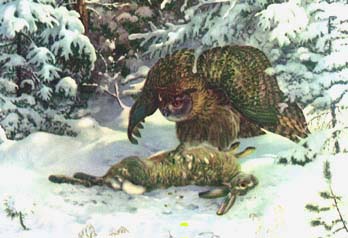
buboLike the economy of Darwinian creationists. There is a mindset beneath the surface of the socio-economic policies being enacted into law by Congress. Creation versus science when it comes to climate change. Creation versus compassion when it comes to the human equivalents of rabbits and owls, hawks and field mice, coyotes and puppies. The strongest will survive. The weak will not. And it’s all part of God’s plan. It must be. Or it wouldn’t be. And, as for the Hebrew prophets who say otherwise — Amos, who thundered divine judgment of the rich who slept of beds of ivory made from the tusks of slaughtered elephants while they trampled on the poor; Micah, who summarized good religion as doing justice, loving kindness/mercy, and walking humbly; and Jesus of Nazareth, who gathered 5,000 hungry people for a free lunch, lifted up the poor, reached out to the maimed, the sick, the leper, the foreigner, and declared “Woe to you are rich!”and ““Watch out! Be on your guard against all kinds of greed; life does not consist in an abundance of possessions” — their cries on behalf of the rabbits fall on the deaf ears of the Darwinian creationists.
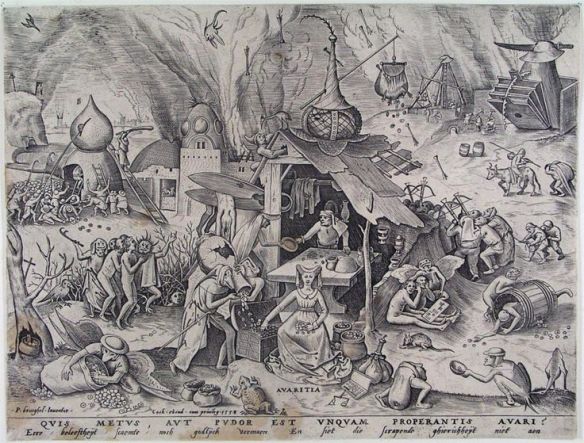
88120203c812a87027efbec192958e8a--pieter-bruegel-the-elder-seven-deadly-sins

Pieter Bruegel the Elder (ca. 1525–1569) – Greed

“Let those with ears hear,” said Jesus. Who among us has ears to hear and eyes to see?

“Pieter Bruegel Bruegel . . .  castigated  human weakness . . .  with avarice and greed as the main targets of his criticism that was ingeniously expressed in the engraving The Battle Between the Money Bags and Strong Boxes” (Encyclopedia Britannica).

The great irony of the theological creationist-economic Darwinians is that the human species has developed talons but lost our ears as the strong who are meant to have dominion over the weak and over nature itself.


So long as we avoid the faith issue here, the rabbit will lose. It fall to those of us who espouse the Judeo-Christian faith and biblical tradition, to do in our time what Pieter Bruegel the Elder did in his: engage the discussion with those within the same tradition whose hearing seems impaired.

Without that discussion, the rabbits in America and around the globe will be left to predators whose ironic Darwinian economics have nothing to do with informed biblical faith, the survival of anything worth saving, or reality itself. All will be left to the battle between empty money bags and rusted strong boxes.

26.72.40

Pieter Bruegel the Elder, The Battle of the Money Bags and the Strong Box

— Gordon C. Stewart, Chaska, MN, December 15, 2017.



Only the Splendor of Light

What we now see through the Hubble telescope is poetry written on a grand scale much larger than our mortal minds can fathom.

A deep infrared view of the Orion Nebula from HAWK-ILong before the Hubble and long before the onset of climate departure that rocks our illusion of the human species’ exception to nature, Walter Chalmers Smith‘s poetry gave voice to the sense the Hubble elicits, the sense of mortal awe looking at what we cannot fathom.

How do you express the inexpressible mystery of the Creator whose name was unutterable in Hebrew Scriptures, save the self-described “I AM”? How do you put into words what cannot be known? How do you sing about the One who is ineffable — beyond all words? —  Professor C. Michael Hawn, Perkins School of Theology, “History: ‘Immortal, Invisible, God Only Wise’.”

Poetry is the language of faith. Perhaps it is also the language of God, the Ineffable.

To all, life Thou givest, to both great and small,
in all life Thou livest, the true life of all;
we blossom and flourish as leaves on the tree,
and wither and perish, but naught changeth Thee.

Great Father of glory, pure Father of light,
Thine angels adore Thee, all veiling their sight;
all praise we would render, O help us to see
’tis only the splendor of light hideth Thee!

— Walter Chambers Smith (1824-1908), “Immortal, Invisible God Only Wise” (1867), stanzas three and four.

  • Gordon C. Stewart, Chaska, MN, October 30, 2017.

Elijah: Grandpa, what’s surreal mean?

The_Elephant_Celebes

The Elephant Celebes by Max Ernst. Oil on canvas. 125.4 x 107.9 cm. Tate Gallery, London.

Grandpa, what’s surreal?

Where’d you get that word? You’re only five months old!

I heard it on the news. Some flake from Arizona said it.

1200px-Jeff_Flake_official_Senate_photo_(cropped)

Senator Jeff Flake (R-AZ)

Well, it wasn’t “some flake,” Elijah! It was Senator Jeff Flake, and he’s not a flake. Flakes are like snowflakes. You haven’t seen snowflakes yet but it’s supposed to snow tomorrow. You’ll see. Snowflakes fall from the sky, turn everything white, and then they disappear.

Did Jeff Flake disappear? He’s white. Is he surreal?

No, Elijah, he hasn’t disappeared and he’s not about to disappear.

So…what are you talking about? You’re not making sense, Grandpa!

Well, Jeff Flake was saying what thinking people know: what’s happening in the world right now is surreal.

That’s what I asked you!!! What’s ‘surreal’?

Life is, Elijah! You’re only five months old.  You’ve never known anything but the surreal world. It’s the world that has “the disorienting, hallucinatory quality of dream; unreal; fantastic” (Dictionary.com). Life itself has become surreal.

Grandpa, are elephants real?

Yes, why?

‘Cause Marissa doesn’t’ like elephants. She says they’re mean and out of touch with reality. Are elephants like snowflakes?

No, Elijah. Elephants are real. But some elephants, like the one Marissa is talking about, are . . .  well . . .  surreal and deranged. They want the whole world to be white. They’re snowflakes.

Yeah, but not like Jeff Flake. Jeff Flake’s no flake!

Right, Elijah. He’s like Max Ernst and the Surrealists who exposed the underlying insanity by painting it. Jeff Flake painted it with words.

IMG_1779 E 5 monthsThanks, Grandpa. This whole conversation has been surreal. I love words!
  • Grandpa Gordon, Chaska, MN, Oct. 26, 2017.


Double Vision

Thomas and Peter are this writer’s favorite apostles. Thomas because he refused to believe unless he saw with his own eyes and confirmed “an idle tale” with his own hand; Peter because he was impetuous, quickly stepping onto the sea at Christ’s invitation only to plunge like a stone when his faith failed him.

It was through these two very different eyes — one of Thomas, the other of Peter — that we viewed Dennis Aubrey and PJ McKey’s Two Churches in the Cliffs on Via Lucis this morning.

The two churches on the cliffs appeared differently to these different eyes of faith.

3L1A5132

Apse, Église Notre-Dame-de-l’Assomption (Alpes-de-Haute-Provence) Photo by PJ McKey

The apse of Église Notre-Dame-de-l’Assomption with its narrow vertical window immediately elicited a Petrine sense of immediate belief. It held Peter’s eye for a long time.

Perhaps it was held by the yearning for the vertical, that which transcends the horizontal banality to which a mass culture has shrunk everything not of its own making. Perhaps it is the delight of hope from above that trembles the spine of the despairing. Or perhaps it’s the beauty of the apse’s proportionality, the genius of the central Christian symbol: the intersection of the horizontal by the more gracious vertical — the horror of human cruelty interrupted and transformed by the unexpected shaft of light and the still small Voice heard by Elijah in his cave.  Or all of the above and more.

But Thomas is never far beyond Peter. It is the Thomas in us that asks the hard questions, insists on separating fact from fiction, reality from illusion, good faith from what Sartre called bad faith. It is Thomas whose faith couldn’t make itself piggy-back on the shoulders of the other apostles’ story of having met the risen Christ. It was Thomas who insisted that he see for himself the evidence for “seeing” or believing in hope beyond the horror of the suffering, cruelty, and death his eyes had seen days before on the Hill of Skulls.

800px-Chapelle_Notre-Dame_de_Beauvoir

Chapelle Notre Dame de Beauvoir, Moustiers-Sainte-Marie (Alpes-de-Haute-Provence ) Photo by ICE-Marseille, courtesy of Wikipedia Commons


Which brings us to the second church on the cliff — the story of the stillborn in Via Lucis‘ post that awakens Thomas’ skepticism.

“Notre Dame de Beauvoir was known for its suscitations – stillborn children were carried up and baptised there, at which time they would immediately come to life and would be granted a place in heaven. This was a well-known phenomenon in the region and also known at two neighboring churches.”

While the thought of stillborn children immediately coming back to life appeals to Peter, it offends Thomas as an idle tale for the feeble of heart and mind. It’s either true or it’s not. And, if it’s true, what kind of cruel God would deny the same to the stillborn children and grieving parents who have not carried them up the steps to Notre Dame de Beauvoir for suscitations? Or is the tradition of Notre Dame de Beauvoir a sacred story of love and hope beyond what the empiricist eye of Thomas can see?

We have a left brain and a right brain, and sometimes it is true that never the twain shall meet. Likewise, faith has two eyes: Peter the believer, and Thomas the doubter — its own kind of double vision — looking out and up from one small brain.

  • Gordon C. Stewart, Chaska, MN, July 6, 2017.


Who’s taking the pictures? Who’s singing?

Re-blogging Dennis Aubrey’s photographic essay today (see previous post) took me back to the sermon Dennis inspired years ago with his experience in the basilica dedicated to Mary Magdalene in Vizelay, France.

At the end of a week in Chaska when my cup has been overflowing with reasons to touch again the power of the non-rational that is deeper than what goes on in my spinning head, we republish “The Stones Are Singing” in thanksgiving for Dennis’s and PJ McKee’s influence on me and Dom Angelico’s influence on them.

Gordon C. Stewart, Chaska, MN, June 11, 2017.

The Monk in the Morvan Forest (Dennis Aubrey)

We post Dennis Aubrey’s latest epistle for a number of reasons. Readers of Views from the Edge may recall that the Via Lucis photographic essay on the stones singing at Vizelay inspired a sermon on the stones singing. Here the monk who wrote the history of these Romanesque churches comes out from the shadows in a lovely tribute by Dennis, complete with pictures of PC and Dom Angelico Surchamp.

Dennis Aubrey's avatar

We are finally home again after two months photographing in France, Spain, and even a little bit of Italy. We drove 6,960 kilometers during that time at an arrive speed of 51 kilometers an hour, which translates to 4,344 miles and a dazzling 32 miles per hour. This demonstrates the narrowness of the country roads where we drive and the amount of time we spent in the Pyrénées and Alps. Until we hit the highway returning to Paris, the average speed was 48 kilometers per hour!

The trip ended in Vézelay at the Crispol hotel, which is almost like home to us. The Schori family is always so welcoming and the addition of the two children Max and Clémence makes it even brighter. It is always bittersweet leaving France. We love it there but we are always anxious to return home, this time to our new house amidst the Amish

View original post 521 more words