Our Common Home: Pope Francis and Bernie Sanders

Pope Francis’s Encyclical Laudato Si‘: On Care for Our Common Home has caught the world’s attention. (Scroll down for the Encyclical Letter’s opening paragraphs.)

In our view, Pope Francis and Bill McKibben of 350.org are prophetic figures, i.e., they seem to utter a Word not totally their own. So does Sen. Bernie Sanders (I, VT), who is, not by accident, Bill McKibben’s close friend from Vermont, and the ONLY candidate to place climate change action among the top priorites of his presidential campaign. He speaks boldly, and his message echoes the cry of Luudato Si‘ for action now for the sake of the planet. There is no obfuscation.

“The United States must lead the world in tackling climate change, if we are to make certain that this planet is habitable for our children and grandchildren. We must transform our energy system away from polluting fossil fuels, and towards energy efficiency and sustainability.” – Excerpt from Sen. Bernie Sanders’s campaign priority on Climate Change and the Environment.

Religion, science, and politics each deal with reality, superstition, and obfuscation. The Pope’s call for global action requires political legs to make it walk. Political engagement is not optional at this moment in the history of planetary development. In that regard, no other presidential candidate is so clear on climate change and sustainability as Bernie Sanders. No other candidate speaks with such passionate conviction or knowledge. Pope Francis is a man of God, a modern John the Baptizer appearing in the wilderness, following the lead of Bill McKibben, the scientific consensus, and The Pontifical Academy of Sciences’s research and counsel.

The Pope’s position on nature, born of a more ancient wisdom than the mechanistic “man over nature” view of postindustrial society, is thoroughly catholic, the0logically classical, and steeped in scientific research.  “Man over nature” and “history over nature” are figments of our imagination. Nature always wins. We ARE nature and nature is us.

1. “LAUDATO SI’, mi’ Signore” – “Praise be to you, my Lord”. In the words of this beautiful canticle, Saint Francis of Assisi reminds us that our common home is like a sister with whom we share our life and a beautiful mother who opens her arms to embrace us. “Praise be to you, my Lord, through our Sister, Mother Earth, who sustains and governs us, and who produces various fruit with coloured flowers and herbs”.[1]

2. This sister now cries out to us because of the harm we have inflicted on her by our irresponsible use and abuse of the goods with which God has endowed her. We have come to see ourselves as her lords and masters, entitled to plunder her at will. The violence present in our hearts, wounded by sin, is also reflected in the symptoms of sickness evident in the soil, in the water, in the air and in all forms of life. This is why the earth herself, burdened and laid waste, is among the most abandoned and maltreated of our poor; she “groans in travail” (Rom 8:22). We have forgotten that we ourselves are dust of the earth (cf. Gen 2:7); our very bodies are made up of her elements, we breathe her air and we receive life and refreshment from her waters.

[1] Canticle of the Creatures, in Francis of Assisi: Early Documents, vol. 1, New York-London-Manila, 1999, 113-114.

– Gordon C. Stewart, Chaska, MN. July 28, 2015

Verse – I’m Still a Presbyterian

I have made a new “Friend” on my FaceBook:
It is Francis, the Pope–you can look;
But he never will “Comment”,
Or will “Like” what I present,
He just Pronounces and quotes the Good Book.

– Steve Shoemaker, Urbana, IL, July 14, 2015

Not your typical ho-hum Bible!

A Sermon preached July 12, 2015 at St. Timothy’s Memorial Chapel, Southern Cross, MT.

Reading the Bible is not easy. Sometimes the very mention of reading the Bible causes eyes to glaze over and yawns to break out, like the time Howard, a poor soul suffering from early dementia, but still driving to church, leaving dents and scratches on the other cars in the church parking lot without ever noticing he hit them, interrupted a sermonic pregnant pause with a loud “Ho-hum!” True story!

But the Bible is far from a Ho-Hum book.  The Bible’s staunchest defenders are often its worst enemies because they read it so poorly that potential thoughtful readers looking for something more interesting than painting by numbers are turned away before they give it a try.

The story of Jesus walking in the water is a story like that. The story has many layers discovered by mining the text for the rich metals that lie just below the surface with clues in the words and the Hebrew Bible material out of which the story is carefully crafted. Often, like Marcus Daly, you find something far richer than you’d imagine.

The last thee weeks here at St. Timothy’s we’ve read passages from the Gospel of Mark, the earliest of the four Gospels of the New Testament. Each of these biblical texts from Mark’s Gospel is like that. They all have hidden, and not so hidden, references to the economic-political-cultural-religious context of the life of the historical Jesus and the struggles of the early church. The hints of a clash between the Kingdom of God and the claims of the Roman Empire, the Kingdom of Caesar, are there for trained eyes to see. They glimmer like nuggets of gold in a panhandler’s stream; once you see them, you want more of what’s there. These are not just any old rocks, any old stories, these are powerful stories filled with both conflict and comfort, despair and hope, doubt and faith.

We see the clues in the previous weeks’ texts in words and phrases that triggered the deeper recognition of value and meaning beneath the surface understood by the New Testament’s original readers. Before moving to today’s Gospel reading, take a look at the no “ho-hum” allusions to the collision between the Kingdom of God and the Kingdom of Caesar in the twin stories of the Stilling of the Storm and the healing of the demon-possessed man who lived among the tombs, the Gerasene Demoniac.

The casual reader of Mark 4 and 5 will not see the deeper meanings of the stories. They will not know, without help of biblical research and scholarship, that the Stilling of the Storm and the Gerasene Demoniac stories are told during the time when the Roman 10th Legion, (“the 10th Fretensis”) occupied the streets and alleys of Jerusalem at the end of the Jewish-Roman War in 70 A.D. They will not know what the earliest readers knew: that the occupation forces –  10th Fretensis – wore two insignia on their helmets, shields, and the bricks of their barracks.

One insignium was a ship. The other was a wild boar. The occupants of Jerusalem and Palestine were under the heel of the Roman Legion – the legion that sailed the seas and acted as ferociously as a wild boar. The people for whom the first Gospel was written are living under Roman occupation, totally defeated. They had hoped for and expected the coming of the Kingdom of God. Instead they got the Roman Legion. The whole community is living, you might say, among the tombs, possessed by the Legion. “What is your name?” asks Jesus of the man who lives among the tombs. “My name is Legion (a LATIN world in a Greek text, a clue to the heart of the story), “for we are many.” Jesus calls the demons of the Legion to leave the man; the demons cease to occupy him; they go into the swine/boars (an anti-Semitic symbol without parallel), and rush headlong toward the sea where they plunge into the sea, all 2,000 pigs, the exact size of a Roman Legion’s battalion.

Mark has taken the old Exodus story and done with it what the Hebrew Bible and Rabbi Jesus had done so often. He has resurrected the original story of the Exodus where the Hebrew slaves in Pharaoh’s Kingdom safely pass through the sea, as if on dry land, and Pharaoh’s armies (the Roman Legion) drown in the sea.

Which brings us to this morning’s reading of the endangered disciples alone in the boat on the sea, and Jesus coming to them walking on the sea.

As biblical scholar J.J. Von Allman notes, along with others, that the sea in biblical cosmogony is not what it is to us. The sea is a place “thought to harbor the enemies of God, and the impression is received that in speaking of it one is assured on each occasion that God is the stronger; it is so dangerous with its tempests…and with its monsters…that it is important to state, with expressions of thankfulness, that God is its Master: He is its creator.”

Thus, at the end of the Stilling of the Storm, the disciples ask of Jesus, “Who can this be that wind and waves obey him?”

Just so, again in today’s reading, there is a tempest on the sea, the haunt of demons from which the nations come. But this is not just any sea. It has a name. This is the Sea of Galilee, as the indigenous population called it. But in the time the story was written, the Sea of Galilee had been renamed with a Roman Imperial name. So the text says that it all took place on the Sea of Galilee – parenthesis, “the Sea of Tiberias.”

So, is this just another Ho-Hum sermon that leaves dents in the cars of the parking lot, or does it have something to do with our lives in 2015?

Were it not for a preacher’s vanity, I’d leave it to you and Howard to decide. But things as they are, it seems to me the deeper significance is everywhere to be found, and you don’t need to be Marcus Daly to recognize the treasure.

Whatever waves your personal world is making, God is the redeemer yet. Whatever storms batter your little boat, God is the Master still. However lonely, sad, or forsaken you may feel or be in the wake of some great tragedy, there is yet One who comes to you walking on the sea of terrorism, the sea of drones, the haunt of demons, the enemies of God. However much we live in the kingdoms of domination and violence, the community and peace of Christ are with us. And, as the disciples of Jesus, imperiled on the sea, we look to Jesus to show us the way.

Is your boat on the Sea of Galilee or on the Sea of Tiberias? Are you rowing on the Seas of Domination or are you pulling on the oars toward the Kingdom of God

Let us pray.

O, God of sea and wind and wave, who stills the stormed-tossed sea and treads upon the waters of the demonic powers of national divisions and imperial aspirations, grant us the  courage and peace of Your Spirit to live as disciples of Your Son Jesus Christ, our Way, our deepest Truth, our Life. Amen.

– Gordon C. Stewart, Southern Cross, MT, July 12, 2015

Daily Riches: Pimping Religion, Confronting Empire – Part I (Dan Clendenin)

Bill Britton's avatarRicher By Far

“Amos wrote 2,800 years ago, but his prophecy reads like today’s newspaper. He lived under king Jeroboam [whose] kingdom was characterized by territorial expansion, aggressive militarism, and unprecedented economic prosperity. Times were good. Or so people thought. The people of the day interpreted their good fortune as God’s favor. Amos says that the people were intensely and sincerely religious. But theirs was a privatized religion of personal benefit. They ignored the poor, the widow, the alien, and the orphan. …Making things worse, Israel’s religious leaders sanctioned the political and economic status quo. They pimped their religion for Jeroboam’s empire. Enter Amos. Amos preached from the pessimistic and unpatriotic fringe. He was blue collar … neither a prophet nor even the son of a prophet in the professional sense of the term. Amos was a shepherd, a farmer, and a tender of fig trees. He was a small town boy who…

View original post 314 more words

Verse – Wasp Leg

WASP LEG
(How to remember
the 7 Deadly Sins)

Wrath is unrighteous indignation
Avarice is wanting more than enough
Sloth kept me from doing what I should
Pride has I in the middle
Lust will do it no matter what
Envy hates that you have more than I do
Gluttony is as American as apple pie

– Steve Shoemaker, Urbana, IL, July 13, 2015

Verse – Lillian Weaver

Lillian Weaver’s
College Class

Her eyes would glint below grey hair,
she’d lift the book so we could see
the Fine Art illustration. Her
gold wedding ring was a ruby,
even though her spouse ran a bank.
“A diamond seems so cold,” she’d say.

The Matisse to her point she’d link:
her Bible lesson for Sunday.
We students would set our alarms,
and even though we’d stayed out late
the night before, her wit, her charms
with words, her humor, made us wait

impatiently for Sunday School.

– Steve Shoemaker, Urbana, IL, July 6, 2015

When Religion Becomes Sinful

Mark H Miller's avatarMark H. Miller's Blog

My clergy colleague, Mike Murray, recommended a new book that builds bridges between right and left-wingers, between those who are conservative/fundamentalist and liberal/progressives. Have started it, The Righteous Mind by Jonathan Haidt.

But was interrupted this morning when reading a Huffington Post article about someone with whom I have next to nothing in common theologically, Evangelist Pat Robertson. I’m pretty sure a bridge between the two of can never be built—especially on his version of the purpose for God to kill children. Even the more general indictment that God “kills children.”

I’m pretty sure clergy, no matter their tilt theologically, would find it reprehensible that “God takes the life of a child.” Yes, I’ve had grieving parents and relatives tell me about a young girl’s death, “God needs her for God’s Children’s Choir in heaven.” Or, “All death is God’s Will.” Or, “This is the fault of the parents for…

View original post 455 more words

What was I thinking?

Ever have one of those days when you wonder what in the world you were thinking?

After eating at The India Spice House, I stopped in at the adjoining grocery store. A box of Bourbon-flavored biscuits made in Oran caught my eye.  They looked good. I confused Oran (in Algeria) with Oromo, the identity of the Ethiopian Muslim men who had prayed for my friend Phil in the ICU Waiting Room two nights before. “That’s great,” I thought to myself. “The biscuits will make a nice gift.”

Gift to Muslim prayers

Gift to Muslim prayers

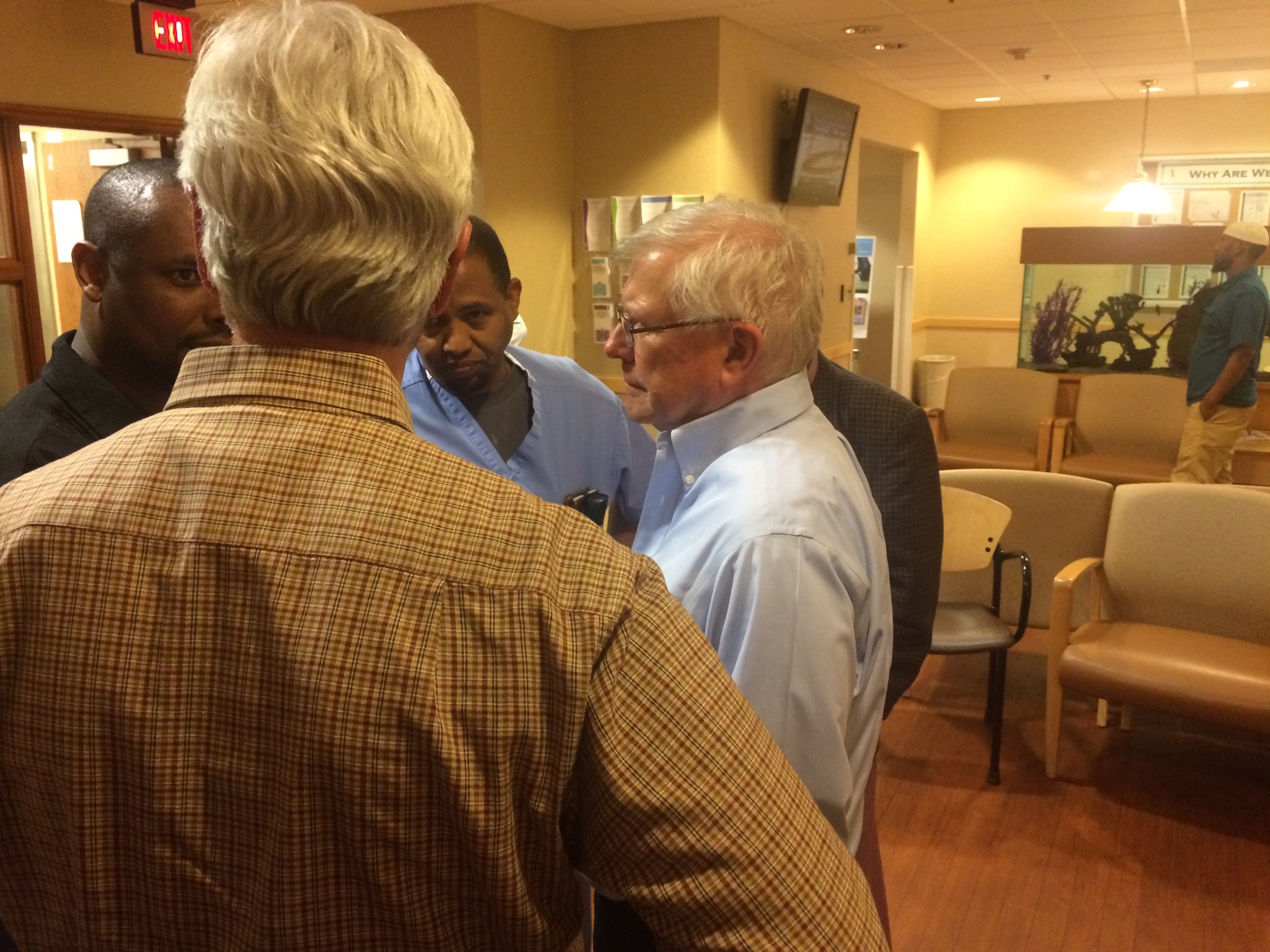
At the hospital I handed the box to two Oromo brothers holding vigil in the ICU Waiting Room. No words were exchanged. They accepted the gift, smiled, and nodded.

Only on my way to visit Phil in the ICU did it dawn on me. Muslims don’t drink! Even if the biscuits were made in Oromo instead of Oran, Bourbon-flavored anything is unacceptable, even disrespectful, however unintentional.

I returned to the Waiting Room. They smiled broadly. “Good!” said the one who speaks English. The other repeated his word with raised eyebrows. “Good!” We shook hands the way brothers do on the street in the hood. All was well! Salaam, Shalom, Peace was everywhere in the room.

Grace covers a multitude of sins!

The Waiting Room

The surgery went “as well as could be expected” after two months of undiagnosed illness, but Sepsis is taking over his body, threatening his survival. The next two hours are critical.

His loved ones and friends are gathered in the ICU Waiting Room at Abbott-Northwestern Hospital in Minneapolis.

Several hours earlier, I had observed six Muslim men praying the evening prayer at sundown at the far side of the Waiting Room. Oromo (Ethiopia) men had prayed the evening prayers at sundown, off to the far side of the large Waiting Room.

The men from Orono (Ethiopia), whom I had assumed to be Somali, are now gathered in chairs in the center of the Waiting Room, talking among themselves in Oromo.

When I approach them, intruding into their space, they recognize my presence. They stop talking. “Salaam,” I say. “Salaam,” they respond as if with a single voice and smile. “My friend is very sick. The next two hours are critical. I ask your prayers. His name is Phil.”

They respond as one would expect compassionate people to respond. “We will pray for him.”

I return to the small family area where my fellow Christians are gathered. I tell them the Muslims are praying for Phil. They’re pleased. We chat. Phil and Faith’s pastor eventually leads us in a Christian prayer.

Muslim prayer visitors

Muslim prayer visitors

An hour or so later three of the Oromo men come to our little room. They have come to tell us they have finished their prayers for Phil.

The voices and eyes of the men, led by their Imam, are kind, pastoral, as we say in the church. Full of compassion and concern for us. They have prayed in Arabic a Muslim prayer for healing on behalf of a stranger about whom they know nothing but his need:

“Remove the harm, O Lord of humankind and heal [Phil], for You are the Healer and there is no healing except Your healing, with a healing which does not leave any disease behind.” [narrated into English by al-Bukhaar]

Sometimes we have no choice but to wait. The Muslims from Oromo are waiting with us actively. Would that we all would wait so kindly, so patiently, so actively, and so wisely.

For a split second, I imagine the world as a Waiting Room.

– Gordon C. Stewart, Abbott-Northwester Hospital, Minneapolis, MN, June 12, 2015

The Socialist Jew

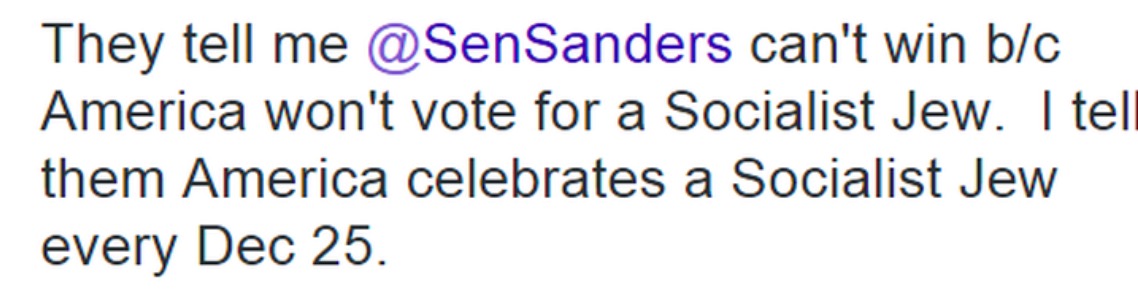
This tweet caught Steve’s attention, as well it should!

Socialist Jew Quote

Socialist Jew Quote