Hearing and not hearing the Hearing

Introduction: When the rooster crows, GCS

photo of rooster on car in Key West

Last night the House Select Committee investigating January 6, 2021 held its first public hearing. Responsible news outlets chose to air the hearing in prime time as a matter of national interest. Fox News did not. The Fox News audience did not hear the rooster crowing at daybreak.

Heather Cox-Richardson’s Letters from an American offers the following review of the hearing. The letter’s opening quotation of Committee Vice Chair Liz Cheney (R-Wy) has been highlighted by Views from the Edge.


Heather Cox Richardson, Letters from an American, Jun 10, 2022

“Tonight, I say this to my Republican colleagues who are defending the indefensible: There will come a day when Donald Trump is gone, but your dishonor will remain.

Rep. Liz Cheney (R-Wyoming), Select committee public hearing, june 9, 2022

So Representative Liz Cheney (R-WY), vice chair of the House Select Committee to Investigate the January 6th Attack on the U.S. Capitol, damned her Republican colleagues at tonight’s first hearing on the January 6 insurrection.

And that was only a piece of what we heard tonight.

Calmly, carefully, convincingly, and in plain, easy to understand language, committee leaders Bennie Thompson (D-MS) and Cheney placed former president Donald Trump at the center of an attempt to overturn our democracy. They were very clear that what happened on January 6 was an attempted coup, an “attempt to undermine the will of the people.” All Americans should remember, they reminded us, that on the morning of January 6, Donald Trump intended to remain president, despite his loss in the 2020 election and his constitutional obligation to step down in favor of President-elect Joseph R. Biden, as every president before him had done.

The committee established that there was no fraud in the 2020 election that would have changed the results of the election, showing testimony from Trump’s attorney general Bill Barr that the argument that Trump had won was “bullsh*t.” The committee presented testimony from other administration figures, including Trump’s chief of staff Mark Meadows and his daughter Ivanka, that Trump had been told repeatedly that he had lost. And yet, even with his inner circle telling him he had lost, and even with more than 60 failed lawsuits over the election, Trump continued to lie that he had been cheated of victory.

It was Trump who “summoned the mob, assembled the mob, and lit the flame” for January 6, the committee says. Unable to accept his loss and determined to remain in power, Trump organized and deployed an attack on our democracy.

The committee established that the attack on the Capitol was not a random, spontaneous uprising. The rioters came at Trump’s invitation. While they had been muttering about the results since immediately after the election, it was Trump’s tweet of December 19, 2020, that lit the fuse. That night, the former president met with lawyers Sidney Powell and Rudy Giuliani, former national security advisor Michael Flynn, and others at the White House. Shortly after the meeting, Trump tweeted that it was “[s]tatistically impossible to have lost the 2020 election. Big protest in D.C. on January 6th. Be there, will be wild!”

Members of the extremist organizations the Proud Boys and the Oath Keepers took Trump’s December 19th tweet as a call to arms. On December 20, they began to organize to go to Washington. These radical white supremacists had taken great pride in Trump’s shout-out in a presidential debate on September 29 that the Proud Boys should “stand back and stand by.” After that comment, membership in the Proud Boys had tripled.

Members of the Proud Boys and the Oath Keepers testified that they went to Washington because Trump personally asked them to. “Trump has only asked me for two things,” one man testified: “my vote, and he asked me to come on January 6.”

The committee provided evidence that 250 to 300 Proud Boys arrived in Washington to stop the counting of the electoral votes. Nick Quested, a documentary filmmaker working to film the gang, testified that the riot was not spontaneous: the Proud Boys, who were allegedly in Washington to hear Trump speak, walked away from the rally at the Ellipse even before then-president Trump spoke, walking to the Capitol and checking out the police presence there. The Oath Keepers, too, were in Washington to stop the count and were expecting Trump to invoke the Insurrection Act, enabling them to fight for him to remain president.

The groups quite deliberately fought their way into the Capitol in a planned and coordinated attack. Meanwhile, Trump continued to stoke the crowd’s fury at then–vice president Mike Pence for refusing to overturn the election in his role as the person in charge of counting the certified electoral votes. The rioters stormed the Capitol and went in search of Pence and House Speaker Nancy Pelosi (D-CA), their calls for “Oh, Nancy,” echoing like the singsong chant from a horror movie. When he learned that the rioters were chanting “Hang Mike Pence,” the president said: “Maybe our supporters have the right idea.” He said that Pence “deserves it.”

Videos of the violence outside the Capitol further undercut the attempt of Republicans to downplay the rioters as “tourists.” Asked by Thompson if any one memory from January 6 stood out to her, Officer Caroline Edwards, who fought to protect the Capitol, said yes: the scene of “carnage” and “chaos.” It was like a war scene from the movies, she said, with officers bleeding on the ground, vomiting. She was slipping in people’s blood, catching people as they fell. “Never in my wildest dreams did I think… I would find myself in the middle of a battle,” she said. More than 100 police officers were wounded in the fighting, attacked with cudgels and bear spray, and at least nine people died then and immediately after.

House Minority Leader Kevin McCarthy (R-CA) was only one of many people caught up in the violence to contact Trump and beg him to call off the rioters. Clearly, Republicans as well as Democrats knew the mob were his people and that they would respond to his instructions. And yet, he refused. He did nothing to call out the military or the National Guard to defend the Capitol.

Ultimately, those requests came from Vice President Pence, in what appears so far to be an unexplained breakdown in the usual chain of command. Chairman of the Joint Chiefs of Staff Mark Milley testified that Pence was very clear that the military needed to turn up and fast to “put down this situation.” In contrast, Meadows talked to Milley not about protecting the Capitol, but to say “we have to kill the narrative that the vice president is making all the decisions.” Milley said he saw this as “politics, politics, politics.”

After the attempt to overturn the election and keep Trump in power had failed, according to Cheney, Representative Scott Perry (R-PA) and “multiple other Republican congressmen” tried to get Trump to pardon them for their participation. While they are now insisting they did nothing wrong, the requests for a presidential pardon show that they were aware that they were in trouble.

After the hearing, CNN congressional correspondent Ryan Nobles talked to Representative Adam Schiff (D-CA), who is on the committee. “It’s actually a pretty simple story of a president who lost, who couldn’t stand losing, who cared nothing about the constitution and was determined to hold on to power and who incited a mob when everything else failed,” Schiff said.

The hearing provided some new information about the January 6 coup attempt that had not previously been publicly available. It also put what we already knew into a clear and compelling narrative using the words of Trump’s own advisors, including his daughter, and video previously unseen by the public. That story singled Trump out as the author of an attack on our democracy and isolated him even from those in his inner circle in a way that could weaken his influence in his party.

At the same time, the committee’s presentation was horrifying, reviving the pain of January 6 and clarifying it by bringing together the many different storylines that we have previously seen only in isolation. The timeline juxtaposed the mob violence with Trump’s own statements about how Pence was letting them down, for example. It showed Officer Edwards being knocked unconscious while Trump claimed the mob was made up of “peaceful people… great people,” and described “the love in the air, I’ve never seen anything like it.”

Pundits had speculated before tonight’s televised hearing that it would not make compelling television, but they could not have been more wrong. The Fox News Channel, some of whose personalities were involved in the events surrounding January 6, refused to air the proceedings. Nonetheless, that channel inadvertently proved just how powerful the hearing was when it ran Tucker Carlson’s show without commercial breaks, apparently afraid that if anyone began to channel surf they might be drawn in by the hearing on other channels.

Veteran reporter Bob Woodward called the evening “historic.” Looking back at the 1954 hearings that destroyed the career of Senator Joe McCarthy by revealing that he was lying to the American public, Woodward said that tonight’s event “was the equivalent of the Army-McCarthy hearings.”

Thanks for subscribing to Letters from an American. This post is public, so feel free to share it.
© 2022 Heather Cox Richardson

Copied and republished on Views from the Edge by Gordon C. Stewart, public theologian, author of Be Still! Departure from Collective Madness (2017 Wipf and Stock), writing from Brooklyn Park, MN, June 10, 2022.


A Pastoral Letter after Uvalde

Moments ago Andrew Long gave Views from the Edge permission to re-publish his pastoral letter to the people of First Presbyterian Church of Watertown, NY. If you read nothing else, I call attention to the fourth and fifth paragraphs that offer a peek into the new world of his five year old son and his peers.

Dear Friends in Christ, 

I had a hard time getting out of bed this morning. I didn’t sleep very well last night. The smallest sound in the cool evening air through our open bedroom widows roused me. And these words from Scripture kept circling my mind: 

A voice is heard in Ramah,
   lamentation and bitter weeping.
Rachel is weeping for her children;
   she refuses to be comforted for her children,
   because they are no more.–Jeremiah 31:15


We wept last night watching the news from Uvalde, Texas. We wept at the sight of parents frantically searching for their children. We wept for the dead. We wept over the immediate shenanigans coming from the talking heads. 

And we wept because we have an elementary-aged son who has told us about the shelter-in-place, active-shooter drills they routinely have at school.

I wish I was exaggerating. God, I wish I was exaggerating. It almost sounds comical. I had fire drills when I was in school and was told not to pick the paint off the radiator because it likely had lead in it. Our son has had to learn, before age five, how to hide and keep silent so that an active shooter in his school won’t find him. 

Are you OK with that? I’m not.

Frankly, I don’t think God is OK with it either. I know Jesus isn’t. He nearly excommunicated one his disciples when that disciple tried to keep children from coming to him. And in a society where laws are made and/or reversed to ‘protect’ the unborn, but only ‘thoughts and prayers’ are given to the families of children who are gunned-down at school, we must look at ourselves deeply and question what we truly value in life. Right now, sadly, life for every one of God’s children does not seem to be at the top of the list. 

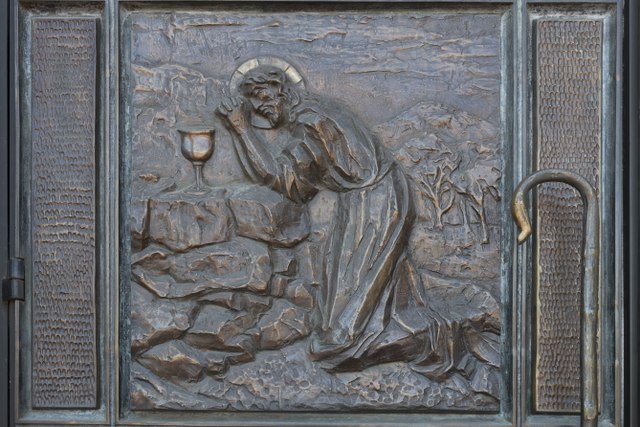
Right now I’m thinking of the statue of Jesus that stands across the street from the Oklahoma City Bombing Memorial. Jesus has his head in his hands and his back turned to the site of the bombing. He stands on a pedestal made from the same number of polished marble stones as the number of children who were murdered in the bombing. Jesus weeps. 

We should, too. 

Feel deeply the intense sadness of this moment. As people of faith, we do not have the luxury of turning away. Our faith is founded on the truth that all people are created equally in the sacred image of God. When one of those beloved image-bearers is taken from this earth, all of us are diminished. It is no longer ‘out there’ or ‘somewhere else’; it is right here, right now. We must not turn away. 

And in our weeping, maybe the Lord will fill us with just the right amount of righteous anger to truly work for a more just and peaceful world.

A world where children can learn their ABC’s before they learn about active shooters. 

A world where thoughts and prayers are followed by action and policy. 

A world where idolatry gives way to true, robust faith in God. 

A world where every person can fully access the abundant life Jesus Christ came to give us all. 

Come, Lord Jesus. Make it so! 
 +andrew

P.S.–Secondary Traumatic Stress is a real concern in times such as these. STS happens when we witness the first-hand trauma of others. Please know that I stand ready to pray with you, visit with you, even sit with you in silence if you are struggling right now. Please reach out to me at (Phone numbers and emails deleted by Views from the Edge) if I can be of assistance.
Copyright © 2022 First Presbyterian Watertown, All rights reserved. 

Thanks for coming by Views from the Edge, May 26, 2022

The day prayers set off the hospital fire alarm

Featured

Some memories blur over time. Others, like the hospital visit with Nee-gon-we-way-we-dun (Clyde Bellecourt, Jr), still ring the fire alarm.

Photo of Clyde F. Bellecourt, co-founder of the American Movement (AIM) and the Legal Rights Center.

I had come to visit Clyde — Nee-gon-we-way-we-dun (“Thunder Before the Storm”) — in the cardiac care unit after he had suffered a minor heart attack. It had been Clyde and the Legal Rights Center (LRC) Board who invited me to step in as LRC’s interim executive director. LRC and I were in the same boat: our boats were sinking. I stayed at LRC for the next seven years.

LRC is the creation of Black and American Indian community civil right leaders as an “outside the system” community-based public defense corporation belonging to, managed by, and serving low-income African-American and American Indian defendants in the courts of Hennepin County.

I had been in Clyde’s room in the cardiac care unit no more than 10 minutes when an Anishinabe Midew arrived to offer prayers for healing to Gitche Manitou (the Great Spirit). She brought sage and sweetgrass, the herbs for ‘smudging’ in preparation for prayer. Smudging serves the purposes of cleansing, keeping evil away, and providing a spirit of calm and peacefulness.

The Midew had, of course, come with matches to bring the herbs to a smolder to create the smoke for smudging. She lit the match, and the smoke triggered the hospital fire alarm throughout Hennepin County Medical Center. The alarm stopped a few minutes later when an attending nurse smelled the sweet smell of smudging, and sent the word that stopped the alarms. We never did get to the prayers.

If we had gotten beyond the preparation for prayer, the Midew would have offered something like this Ojibwe prayer for the healing of each other and the healing of the planet:

Grandfather,
 look at our brokenness.
 We know that in all creation
 only the human family
 has strayed from the Sacred Way.
 We know that we are the ones
 who are divided
 and we are the ones
 who must come back together
 to walk the Sacred Way.
 Grandfather, 
 Sacred One,
 teach us love, compassion, and honor
 that we may heal the earth
 and heal each other. 
 (Ojibwe prayer)

The Legacy of Thunder Before the Storm

Clyde is gone now (RIP), but his legacy will live on. Though he could not end the racism or heal America of the trail of broken promises, he did what a human being is called to do. Because he did, his thunder is still heard. Professional sports teams no longer bear the names or wear the logos that dehumanize America’s first peoples. Although fans of the Cleveland ‘Guardians’ (MLB) and the Washington ‘Commanders’ (NFL) may not know or care why, when, and how their teams took their names, those who know will not forget the persistence that blew away the insults. Soon no one will remember, with a chuckle, the day preparation for prayer set off the fire alarms. No one will know that security systems can’t be smudged.

Gordon C. Stewart, public theologian, host of Views from the Edge, Author of Be Still! Departure from Collective Madness (2017 Wipf and Stock), writing from Brooklyn Park, Minnesota, December 19, 2022.

A Life Between: First in a Series

The Moral Power of Death

When I first heard anyone speak of “the moral power of death,” I thought I must have been mistaken. Morality is one thing; moral power might describe the morally responsible use of power; death is something else altogether.

“Death is not a power,” I said to myself. “Death has no power. Death is the total absence of power. Death is what happens at the end; it is passive — an outcome of death-dealing powers in life. It has no morality. Death makes no distinctions among the powers that delivers every one of us all into its final keeping — e.g., a cardiac arrest, a traffic accident, cancer, ALS, old age, a gun shot, a murder, a war, or suicide — death doesn’t know the difference. The variety of means that deliver us to the end are varied, but death is always the same. It takes us when life is gone. It has no power of its own. Why, then, speak of death as a moral power? Who would talk like that?”

A Strange Man Named Stringfellow

William Stringfellow saw things differently. Forgoing Wall Street law firms’ lucrative offers, he rented a small tenement apartment in East Harlem after graduation from Harvard Law School. “The stairway smelled of piss,” he write.

“The smells inside the tenement — number 18, 342 East 100th Street, Manhattan — were somewhat more ambiguous. They were a suffocating mixture of rotting food, rancid mattresses, dead rodents, dirt, and the stale odors of human life.”

William Stringfellow, My People Is the Enemy: An Autobiographical Polemic (1964, Holt, Rinehart, and Winston).

Though I never had lived in a place like East Harlem, Stringfellow’s autobiographical polemic read like a personal letter. During the summers of 1961 and 1962, the hour-long daily commute between my suburban home and my summer internship on the streets of north Philadelphia put me in a dense fog between two different realities that had once seemed a world apart. The commutes became cognitive pauses that begged the fog to lift, but it didn’t . . . until three years later.

My People Is the Enemy became the text for the small group of seminarians engaged in bar ministry at Poor Richard’s in Chicago’s Old Town. Each Wednesday morning the seven of us convened at 6:00 a.m. to reflect on our experience at Poor Richard’s in light of Stringfellow’s book and to share a bare-bones Agape Meal.

My People Is the Enemy was transformative. I began to understand the title of Stringfellow’s book. Corinthian Avenue and Opal Street were not an accident. My people, not theirs, was the enemy. My people owned the tenements, evicted tenants, bribed the cops, provided the drugs, and red-lined property in Philadelphia, Broomall, and most everywhere else. My people, not the poor folks welfare, was the leach sucking blood from the ghetto we created and maintained. “My people” were the spillers and the sponges dependent on keeping the milk and hope spilling.

Stay tuned

Thanks for coming by.

Gordon C. Stewart, public theologian, author of Be Still! Departure from Collective Madness (2017 Wipf and Stock), 49 brief social commentaries on the news of the day, writing from Brooklyn Park, Minnesota, April 27, 2022. 

Between the Image and Reality 2

NOTE: “Between the Image and Reality” first appeared as a podcast by the same name. Here’s the printed text.

Letters from an American

The latest gift from the “best friend” I’ve never met greets me most mornings. Letters from an American is Heather Cox Richardson’s daily news summary. Heather does what I cannot do. She collects the information on current events from a host of sources, swallows it, digests it, and brings it back to the nest to feed fledglings like me.

Heather Cox Richardson

Her succinct self-description resonates with me in this moment when marketing strategies and images continue to dig the mass graves of what little remains of reality:

I’m a history professor interested in the contrast between image and reality in American politics, I believe in American democracy, despite its frequent failures. — Heather Cox Richardson

Daniel J. Boorstin

In this era of American culture and politics we need the historians. Among them is Daniel Boorstin, the historian of the Library of Congress, whose controversial, ground-breaking book, The Image (1962), focused a laser beam on the emerging dominance of new image-making media and technology over American public life.

“The deeper problems connected with advertising,” wrote Boorstin, “come less from the unscrupulousness of our ‘deceivers’ than from our pleasure in being deceived, less from the desire to seduce than from desire to be seduced.

“We Americans suffer primarily not from our vices or our weaknesses, but from our illusions. We are haunted, not by reality, but by those images we have put in the place of reality.”

Daniel J. Boorstin, the image: Or, What happened to the American Dream (1962)

If you’re a fledgling waiting for the arrival of real food; if you take no pleasure in being deceived or seduced, if you are haunted by images we have put in the place of reality, Heather Cox Richardson may be the best friend you’ve never met. Click Letters from an American to welcome Heather to your nest. She’ll help you fly.

Follow-up coming soon: The Bubble of Pretend.

Gordon C. Stewart, public theologian, author of Be Still! Departure from Collective Madness (2017 Wipf and Stock), forty-nine brief reflections on faith and the news, Brooklyn Park, Minnesota, April 10, 2022.

Between The Image and Reality

Thanks for listening.

Gordon C. Stewart, public theologian, author of Be Still! Departure from Collective Madness, 49 two to four page social commentaries on faith and the news (2017 Wipf and Stock), writing from Brooklyn Park, Minnesota. April 16, 2022.

When the bough breaks

Featured

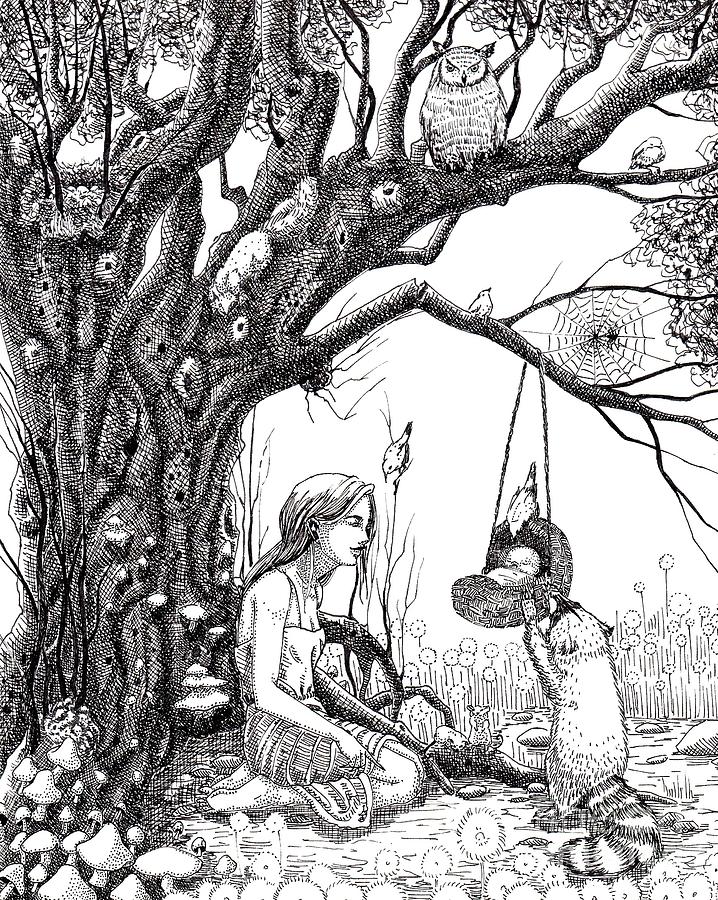
Rock a bye baby on the tree top,
When the wind blows the cradle will rock,
When the bough breaks the cradle will fall,
And down will come baby, cradle and all.

Multiple drafts of a reflection on “Rock a reflection on the Baby” missed the mark. I was aiming at humor, but I’m no Andy Borowitz. None of them was funny. Some I ripped up. They’re on the floor of my office.

The drafts had been attempts to take “Rock a Bye Baby” as the template for a commentary on American public life in February, 2022. When the baby on the tree top is rocked by gale force winds, we hear the boughs of the old oak tree creaking. If and when the bough breaks and Baby and cradle do fall, we can only hope the chain-saw rescue crew doesn’t cut down the tree and turn it into sawdust.

The Origins of “Rock a Bye Baby”

"This may serve as a warning to the proud and ambitious, who climb so high that they generally fall at last."

That hope feels farther away after a perplexing presidential debate and the Supreme Court’s 6-3 ruling interpretation of the meaning and boundaries of the U.S. Constitution’s provision of Presidential Immunity. Drip by drip, bucket after bucket, I shudder at the erosion of democracy. I scream, watching a Narcissistic entertainer move closer to the White House, and ask again whose shoulders lifted him to the tree, and why they have. Then I remember Daniel Boorstin who now seems like the Greek seers of classical Greece and the Greek.

The Reign of the Image

Daniel Boorstin’s book, The Image: A Guide to Pseudo-events in America (1662), was a ground-breaker. Historian and Librarian of the Library of Congress. Here are a few excerpts from Daniel Boorstin’s The Image in 1962.

“We [Americans] suffer primarily not from our vices or our weaknesses, but from our illusions. We are haunted, not by reality, but by those images we have put in their place.”

“Celebrity-worship and hero-worship should not be confused. Yet we confuse them every day, and by doing so we come dangerously close to depriving ourselves of all real models. We lose sight of the men and women who do not simply seem great because they are famous but are famous because they are great. We come closer and closer to degrading all fame into notoriety.”

photo of Trump baby balloon over a crowd in London.

The American citizen thus lives in a world where fantasy is more real than reality, where the image has more dignity than its original. We hardly dare face our bewilderment, because our ambiguous experience is so pleasantly iridescent, and the solace of belief in contrived reality is so thoroughly real. We have become eager accessories to the great hoaxes of the age. These are the hoaxes we play on ourselves.

Thanks for coming by.

Have courage; hold to the good; refuse to return evil for evil; love your enemies,

Gordon

Gordon C. Stewart, public theologian, author of Be Still! Departure from Collective Madness (2017 Wipf and Stock), Brooklyn Park, MN, July 1, 2024. Originally published on VFTE, February 12, 2022.

The Maus That Squealed

A crowd of students gathers on the university plaza at 11:00 p.m. for a parade to a bonfire. They walk by torch-light with drums drumming through the streets of the city, followed by a truck, on their way to the Opera House where a huge pile of wood is waiting. By the time they arrive, the crowd has grown to 30,000, eager for the match to be struck.

A voice thunders across the plaza:

The age of arrogant Jewish intellectualism is now at an end! . . . You are doing the right thing at this midnight hour — to consign to the flames the unclean spirit of the past. This is a great, powerful, and symbolic act. . . . Out of these ashes the phoenix will rise. . . . O Century! O Science! It is a joy to be alive!

The date was May 10 of 1933. The speaker was newly appointed Reich Ministry of Public Enlightenment and Propaganda, Joseph Goebbels. The event was part of “Action Against the un-German Spirit,” a program developed in April by the German Student Union’s Office of Press and Propaganda. At midnight of May 10, 1933, the sights, sounds, and scent of bonfires filled the air of every university town in Germany.

A member of the SA throws confiscated books into the bonfire during the public burning of “un-German” books on the Opernplatz in Berlin.” — United States Holocaust Museum.

The Twelve Theses

“Action against the un-German Spirit” was accompanied by another product of the Student Union leader gathering on April 8. “Twelve Theses,” 12 short statements designed to appeal to German Lutherans’ celebration of Martin Luther’s posting of 95 thesis on the Wittenburg Church door. The “Twelve Theses” were published and posted everywhere. In spirit and tone the “Twelve Theses” was the fitting companion of “Action Against the un-German Spirit.”


The students described their action as a “response to a worldwide Jewish smear campaign against Germany and an affirmation of traditional German values.” The following excerpts illustrate the tone.

"Language and literature have their roots in the people. It is the German people’s responsibility to assure that its language and literature are the pure and unadulterated expression of its Folk traditions.” “Purity of language is your responsibility!” “Our most dangerous enemy is the Jew and those who are his slaves…. "A Jew can only think Jewish. If he writes in German, he is lying. The German who writes in German, but thinks un-German, is a traitor!”
“We want to regard the Jew as alien… The unGerman spirit is to be eradicated from public libraries.” "At present there is a chasm between literature and German tradition. This situation is a disgrace." “We demand of German students the desire and capability to overcome Jewish intellectualism and the resulting liberal decay in the German spirit.” 

On the List

The list of “unclean spirit”…”un-German”… or “anti-German” literature was long. Among the 4,000 books to be purged were the works of Albert Einstein and Thomas Mann, Hellen Keller, Jack London, H.G. Wells, Karl Marx, Erich Maria Remarque, Sigmund Freud, and Heinrich Heine.

Heinrich Heine was a widely-read 19th Century German poet, journalist and essayist whose prescient line in Almansor: A Tragedy, published a century before in 1823, hit too close for comfort in 1933.

“Where they have burned books, they will, in the end, burn people, too.”

–Poet Heinrich Heine, 1823

February 1, 2022, Brooklyn Park, Minnesota in the U.S.A.

At dawn I take the dog out and bring in the paper. “Campaign to ban books spreads across the U.S.” leaps from the front page, as had a report two days ago —“School Board in Tennessee Bans Teaching of Holocaust Novel ‘Maus’” NYT, Jan. 27.” The Tennessee school board had voted to remove the novel “Maus” by Pulitzer Prize-winning author Art Spiegelman because it contains swear words, according to the board minutes. The vote was unanimous.

When Art Spiegelman learned that “Maus” — his Pulitzer Prize-winning graphic novel about his family’s experience during the Holocaust — had been banned by a Tennessee school board, he told the Washington Post exactly what he thought of the antisemitic decision:

“It’s part of a continuum, and just a harbinger of things to come. This is a red alert.”

Art Spiegelman to Washington post re: censorship

Book burnings, censorship and purging have a history. Most often the books are judged as unclean, not pure, unpatriotic, unChristian, un-this and anti-that, un-American and anti-American, etc. Yesterday’s NYTimes article (Jan. 31, 2022) on book-banning cites a poignant quote by Lauri Halsi Anderson, contemporary author of young adult books.

"By attacking these books, by attacking these authors, by attacking the subject matter, what they are doing is removing the possibility for conversation. You are laying the groundwork for increasing bullying, disrespect, violence and attacks."

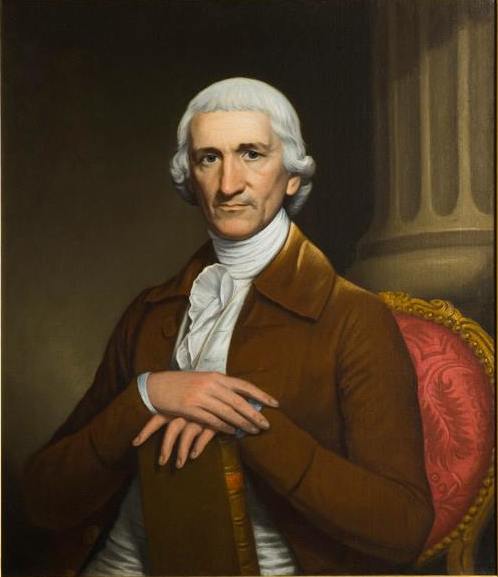
Letter to Benjamin Franklin, September 24, 1765

Correspondence between “Founding Fathers” Charles Thomson and Benjamin Franklin is preserved in the National Archives. Thomson’s letter to Franklin now feels as prescient in the U.S.A. as Heinrich Heine’s line was for Germany.

“The Sun of Liberty is indeed fast setting, if not down already, in the American colonies: But I much fear instead of the candles you mention being lighted, you will hear of the works of darkness.” — Charles Thomson: letter to Benjamin Franklin, September 24, 1765 .

At the time of Thompson’s letter, “the Sons of Liberty” were turning to violence and intimidation in response to the Stamp Act. Franklin was a principled Quaker committed to reason, civility and non-violence. Franklin would likely have chuckled at Thomson’s play on words, but not at the warning of the works of darkness.

Conroe, Texas, U.S.A – January 30, 2022

“If I run and if I win,” declares Donald Trump to a cheering crowd in Conroe Texas,”we will treat those people from January 6 fairly. And if it requires pardons, we will give them pardons because they are being treated so unfairly.”

He accuses Black prosecutors of racism. “These prosecutors are vicious, horrible people. They’re racists and they’re very sick, they’re mentally sick. They’re going after me without any protection of my rights from the Supreme Court or most other courts. In reality, they’re not after me, they’re after you…. If these radical, vicious, racist prosecutors do anything wrong or illegal, I hope we are going to have in this country the biggest protest we have ever had in Washington, D.C, in New York, in Atlanta and elsewhere.”

A little gray Maus who’d been shooed off the stage quivers and squeals to the audience, “This is a red alert!”

Gordon C. Stewart, public theologian, author of “Be Still! Departure from Collective Madness” (2017 Wipf and Stock), Brooklyn Park, MN, Feb. 3, 2022.

The Gospel of the Loser

The beginning of this commentary will sound familiar to those who have read “The Counterfeit Gospel” (Jan. 29, 2022). The beginning through “The Gospel of Jesus the Loser” is edited and amplified. Everything from the rubric “From Prosperity to QAnon” is original to this post.

A Question of Glory

Donald Trump and I each claim a footing in the Presbyterian Church and its Reformed theological tradition. It’s hard to remember much of what happened in Confirmation Class. But it’s hard to forget the first article of the Shorter Catechism. The way to a meaningful life is “to glorify God, and enjoy Him forever.” None of us understood it, of course. But one thing was clear: We are not to glorify ourselves.

The Workshop for Cranking Out Idols

The Reformed faith tradition focuses on the majesty of God and our propensity to bow before an infinite variety of substitutes for the Infinite. The issue for faith is not belief or unbelief. The issue is idolatry. Earth is the theatre of God’s glory. Yet human nature is a perpetual factory of idols. –Jean Calvin, Institutes of the Christian Religion,1556.

Author theologian William Stringfellow described idols as “imposters of God,” — the finite, manageable works we crank out that take the place of the Ineffable and Infinite.

There are gods and there is God. There is the finite and there is the Infinite. The gods are nearer-to-hand stand-ins, substitutes that promise what they cannot deliver. The world is beautiful and filled with goodness, yet the underlying goodness is twisted against itself. The idols are endless and varied. Nation, work, money, status, race, religion, political party, ideology take center stage in “the theater of God’s glory.”

The Gospel of Jesus the Loser

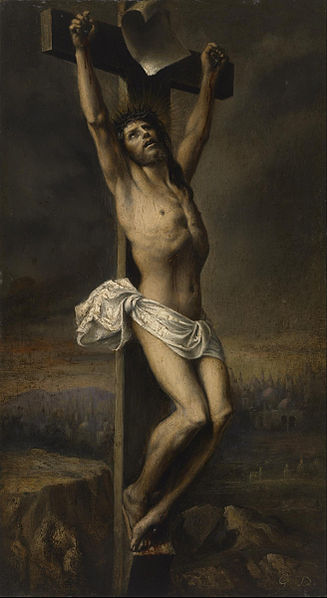
By the standards of the Prosperity Gospel, Jesus of Nazareth was a loser. Yet the loser will not go away. The loser executed on a Roman cross was raised as the archetype of authentic humanity. Unless the church gets that straight, everything it gains is loss. In spite of all attempts to circumvent, delete, or deny it, the cross remains the primary symbol for those who seek to follow Jesus. Whoever spends time looking at Gustav Doré’s painting of the crucifixion cannot dismiss the horror of it, the cruelty of it, the god-forsakenness of it.

From Prosperity to QAnon

It’s a short distance from the Prosperity Gospel to QAnon. Neither pays attention to Matthew or Luke’s vivid narratives of Jesus in the wilderness. Is Satan real? Yes and no. Satan is not someone’s name. It’s a title — the Shatan, the Diabolos — for the diabolical. It has no other home than our hearts and minds, the blacksmith shop that never ceases. The factory that cranks out idols. Satan is the Adversary of the Divine. QAnon says little about God but sees Satan everywhere. QAnon is the latest metastasis of a simplistic theology that divides the world between God and Satan, good and evil, saved and damned, elect and non-elect, heaven and hell, soldiers and cowards. If those characteristics sound familiar, it’s because they are.

“You people seem normal”

Thanksgiving is a day of mostly cheerful moments, but some Thanksgivings are also epiphanies. My younger son’s college friend opened a window to his experience of Christian faith and practice. During a light-hearted conversation around the Thanksgiving table, the student guest took what seems like a risk, but it landed on ears that understood how he felt. “I don’t know quite how to say this,” he said with eyebrows rising, “but you people seem normal.” The conversation the followed focused on his view of Christians as whackos. The whackos held the worldview described in the previous paragraph. Why did he think so? While changing channels he had stopped in on Jimmy and Tammie Baker, Jimmy Swaggert, and other televangelists who had not seemed normal. They were abnormal by almost any standards mental health, reason and sanity.

The Lure of Prosperity

The Prosperity Gospel preachers proclaim it can all be yours, if… If you accept Jesus Christ as your Savior, if you stop thinking negatively, it can all be yours. It can all be yours in a secure gated community. It can be yours if you climb to the top. It can all be yours if you just close your eyes to the homeless who disturb an otherwise beautiful day. It can all be yours, if you stop thinking of yourself as a school drop-out ditch digger and think of yourself as (fill in the blank).

Flights from Ambigiuity

What is missing in the Prosperity Gospel and QAnon are the biblical stories of Jesus in the wilderness with Satan. Any study of the Gospel of Matthew’s or Gospel of Luke’s narratives lead to a conclusion that life is more ambiguous than we would like it to be. It is good that our material needs are met. It’s not good when we turn needs into greed. In the same way, religion can go either way. It is good to praise God and practice a tradition’s wisdom, but religion can become, and often is, a form of idolatry that substitutes itself for the Eternal and Ineffable it claims to worship. But the third scene in the wilderness narratives that leaps from the page in America today, is the one about power and authority described below.

Satan

You may or may not hear much about Satan from Prosperity Gospel preachers or, for that matter, from the pulpits of traditional churches. It’s either because it’s not popular. It won’t attract new adherents. Or it’s an embarrassment. Or the biblical texts that speak of Satan or the Devil require an inordinately long explanation than a sermon allows. Not so for QAnon where the talk is all about Satan.

What has been lost is a literary and emotional understanding of the complex and confounding character of the biblical Satan. Satan is the personification of the diabolical. The Trickster, the Deceiver, the Twister, the Half-Truth Teller, the Liar. Beauty, truth, and goodness are given lip service, but beneath the talk of beauty lies ugliness, beneath the tributes to truth lies deceit, beneath the salute to goodness lies a tornado twisting goodness into its opposite.

The most poignant of the three wilderness scenes

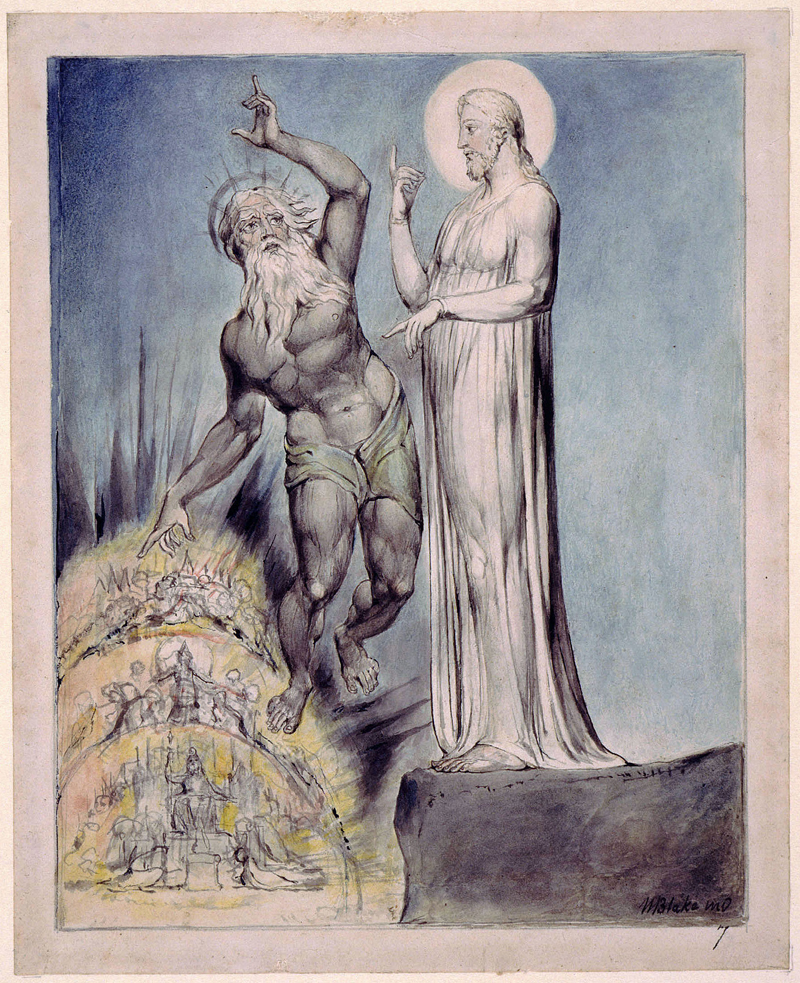
William Blake paints the most poignant of the three episodes of Jesus’s 40 days with the Diabolos in the wilderness. The scene is a mountaintop where Satan and Jesus the Christ have in view all the nations and kingdoms of the word. Blake’s painting gives visual expression to the narcissistic lure of political power and authority. “Then the devil took him to a very high mountain and showed him all the kingdoms of the world and their glory. ‘All this I will give you,’ he says, ‘if you will bow down and worship me.’ Jesus says to him, ‘Begone, Satan, for it is written ‘you shall worship the Lord your God, and serve him only.'” (Matthew 4:10 NIV and NRSV combined)

Where was God?

Those who see the countenance of God in the face of Jesus the Loser face a challenge that won’t go away. Where was God when America’s First People were being stripped of their homeland, slaughtered, stripped of their religion and culture, and consigned to reservations and Christian boarding schools? Where was God when White hoods with torches burned their crosses and formed a congregation gathered around the lynching tree? Where was God at the whipping post? Where was God during the Holocaust, the “Final Solution”? Where was God at the gun massacres at Columbine, Sandy Hook, and Parkland? Where was God when Narcissus was dying of dehydration at the edge of the pond?

You will find God there

Jesus the Loser tells us where. God was among those who were robbed of their homeland. God was shuttled off to the reservations. God was hanging from the lynching tree. God was whipped at the whipping post. God was on the trains to Auschwitz; God was among the children, teachers, and parents at Sandy Hook. God was among the Losers — the tortured, the poor, the starving, the dying and the dead. God was in the pond inviting Narcissus to drink. We will find God there.

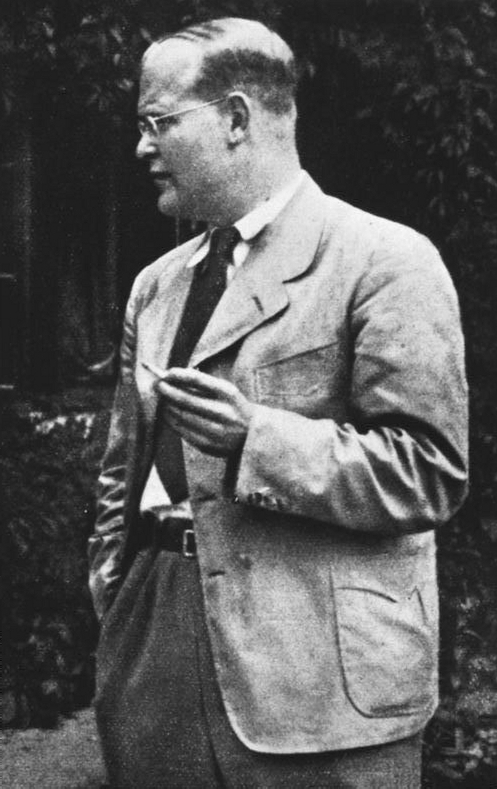
Letters and Papers from Prison preserves a poem from the cell of a pastor, theologian, professor, and resistor of the German Third Reich. Dietrich Bonhoeffer was hanged at Flossenburg Concentration Camp April 9, 1945 as the Nazi regime was collapsing.

CHRISTIANS AND UNBELIEVERS

  • Dietrich Bonhoeffer, July, 1944

Men go to God when they are sore bestead,
Pray to him for succour, for his peace, for bread,
For mercy for them sick, sinning or dead:
All men do so, Christian and unbelieving.

Men go to God when he is sore bestead,
Find him poor and scorned, without shelter or bread,
Whelmed under weight of the wicked, the weak, the dead:
Christians stand by God in his hour of grieving.

God goeth to every man when sore bestead,
Feedeth body and spirit with his bread,
For Christians, heathens alike he hangeth dead:
And both alike forgiving.

Gordon C. Stewart, Presbyterian minister (H.R.) and public theologian, Brooklyn Park, MN, author of Be Still! Departure from Collective Madness (2017, Wipf and Stock), available in kindle and paperback.

The Counterfeit Gospel

Donald and I

I often have wondered whether Donald Trump would disturb me less if we did not both claim a footing in the Presbyterian Church and the Reformed theological tradition. I have asked what happened to Donald after Confirmation Class.

To glorify God — Not Ourselves

If we remembered nothing else from confirmation class, it was the first and most important question of the Shorter Catechism. “What is the chief end of man (human beings)? Answer: The chief end of man (human beings) is to glorify God and enjoy God forever.” Whatever questions remained, one thing was clear. We are called to glorify God, not ourselves.

In the Reformed tradition of faith and practice the issue in life is not belief or unbelief. The perennial daily issue is idolatry understood as the substitution of what is finite and manageable for the “I AM” the Name too holy to name. Valuing humility and modesty in spirit and lifestyle, the Reformed tradition shuns extravagance, arrogance, and ostentatious living as gates to a world swirling toward self-destruction.

The Gospel of the Winner

The Prosperity Gospel is the impostor gospel on whose shoulders America hoisted a hologram to the Office of President and continues to insist Mr. Trump could not have been defeated. While greed knows no time limits, the Prosperity Gospel is the latest spiritual product of consumer capitalism which divides humankind into the elect and the damned, the materially privileged and the “less fortunate” for whom alike, amassing a fortune is life’s purpose and goal. Donald Trump is not just Donald Trump. He is the embodiment of privilege in all its forms: prestige, power, tower, country clubs for the rich and famous, a beautiful wife or two or three, a winner free to put his hands wherever his urges lead him with no evidence of guilt or shame. Donald is the symbol of success. Donald is a winner who cannot lose.

Paula White’s prayer service for Donald Trump offers a good look at what this impostor for God looks and sounds like. Paul White became a spiritual advisor in the Trump White House. Listen carefully.

President Trump White House spiritual advisor Paula White

Those who observe the prayer service for the president’s re-election in the aftermath of the January 6, 2021 Capitol insurrection must not forget or ignore how fascists rose to power in the 1920s and ’30s by inciting violence against leftist protesters. The Nazis sent Brownshirts to left-wing gatherings to provoke street fights and wreak havoc which they blamed on leftists. When more than 100 people were injured at the Red Wedding rally in 1927, the Nazis claimed they, the Nazis, were the victims of leftist anarchists. Hitler may have been a victim, but Hitler would never be a loser.

The Gospel of Jesus the Loser

By the standards of the Prosperity Gospel, Jesus of Nazareth was a loser. He did not prosper. He did not accumulate. He didn’t win. Yet the loser whose cry Eloi, Eloi, lama sabachtani? — “My God, my God, why have you forsaken me?” — rang out from the executioner’s cross was, according to Christian faith, raised as the archetype of authentic humanity. Unless the church gets that straight, everything it may gain will be loss. Jesus was not and is not a winner.

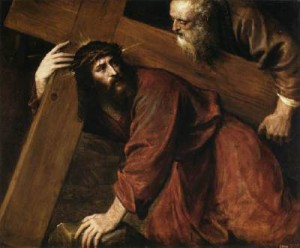
In spite of all attempts to circumvent, delete, or deny it, the cross remains the primary symbol for those who seek to follow Jesus. Whoever spends time looking at Caravaggio’s painting of the crucifixion cannot dismiss the horror of it, the cruelty of it, the god-forsakenness of it, or the helping hand of Simon of Cyene.

Like every other religious institution and faith tradition, the church which Donald and I once held in common is a failure. Lord knows how often the Presbyterian Church (USA) has stood on the other side of the fence from Jesus, Moses, and the prophets. Even so, like the Friends (“Quakers”), the voice of conscience lies near the heart of who we seek to be. We are taught to listen for “the still small voice” (the whisper) that calls us “to do justice, love kindness, and walk humbly with our God” (Micah 6:8).

From the Counterfeit Gospel of Prosperity to QAnon and Fascism

It’s a short distance from the winner or loser, good vs. evil, us/them theology of the Prosperity Gospel to QAnon and fascism. All these years after Edward R. Murrow called Joseph McCarthy’s search for communist conspirators to a screeching halt, a nameless figure who goes by “Q” gathers a following by uncovering a Satanic cabal working in high places of “the Deep State.” The enemy in 2022 is still leftists, as it was with the Third Reich and Joe McCarthy, but far worse and ludicrous — an underground Leftist cabal of child kidnapping, molestation, sex trafficking, pederasty, and cannibalism conspiring to take away our freedom. QAnon followers still make invoke the old fear of communist, but the culprits now are called Democrats.

QAnon’s view of Satan is fueled by the biblical literalist mindset of far-right fundamentalist and conservative Christian theology that turns Satan into an independent, identifiable being. If only it were that simple. The biblical Satan is the personification of the diabolical dimension of human nature. In the Bible Satan stands for the Trickster who twists Earth’s essential goodness against itself and its Creator. Satan’s workshop is the human mind and heart that cranks out impostors of God.

Responsibility and Ambiguity

Charles Thomson, a quiet member of America’s Founders, the first and only Secretary of the Continental Congress, wrote his friend Benjamin Franklin of his concern about “the cursed schemes dragging us into civil war, and national ruin.” The American experiment was “teetering at the edge of the cliff.” That was 1774, two years before the Declaration of Independence was issued. The threat of yearning for a king is as real now as it was then. Are we mature enough to turn back from the road to ruin? Will we remember, forget, ignore, or oppose the question and answer Donald and I learned in confirmation class? You don’t need a Presbyterian confirmation class to conclude that self-glorification is glory misplaced. Whatever happens, we do well to remember Charles Thomson’s wisdom and look at the diabolical dimension within ourselves and find the factory that cranks out substitutes for God. The search for glory always ends badly.

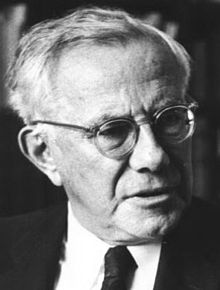
“The character of human life,” observed Paul Tillich, “like the character of the human condition, like the character of all life, is ‘ambiguity’: the inescapable mixture of good and evil, the true and the false, the creative and the destructive forces –both individual and social” — Time, May 17, 1963.

Gordon C. Stewart, Presbyterian minister (HR), and public theologian, Brooklyn Park, MN, author of Be Still! Departure from Collective Madness (2017, Wipf and Stock), available in kindle and paperback.