The Varieties of Religious Appearance

Pulpits and lecterns are “One size fits all!”
Visiting preachers will cover the wall.
A very short woman,
She carries her step in
I’m very tall, so I carry a hole…

  • Steve Shoemaker, Urbana, IL, January 25, 2016

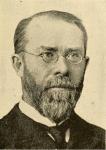
NOTE: These photographs of Steve kneeling (l) and standing (r) were taken several years ago at the historic pulpit of Sheldon Jackson in Colorado.Sheldon_Jackson Sheldon was a smaller guy with a big heart. Steve’s has the same heart and is likely much more humorous than Sheldon, but who’s to say?

America’s Original Sin?

Jim Wallace’s new book America’s Original Sin: Race and White Privilege & the Bridge to New America takes a hard look at the origins of the Euro-transplant nation that supplanted America’s indigenous people. Jim Wallace argues that the United States was born of White Privilege. It is the nation’s original sin: it’s America’s first and enduring sin.

It seems no matter how much things progress, or seem to progress, the original sin is always crouching at our door, as the Genesis story of Cain and Abel puts it. “Sin is crouching at your door, and you must master it”.

But is the issue race? Or is it class? Or something else, a fatal flaw in the human psyche and the social psyche? Are racism and White Privilege what they seem, or are they manifestations of something more basic?

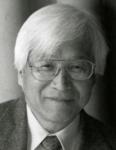
“There is only one sin, said Kosuke Koyama, and it is exceptionalism.” Born in Tokyo in 1929, Koyama saw in the Japanese Empire the myth of exceptionalism. To his great sorrow, he saw the same myth in the United States, the second home where he finished a distinguished career as John D. Rockefeller, Jr. Professor of World Christiankosuke-koyama-2ity at Union Theological Seminary in the City of New York.

Beneath White Privilege lies the election doctrine that arrived on these shores with America’s European settlers. Their theology was wrapped around the belief that the true believers, the elect, were exceptional to the rest of humankind. The result was genocide against America’s indigenous peoples followed shortly by the institution of chattel slavery, both the racial sins of White Privilege of which Jim Wallis writes.

In the larger scheme of things in 2016, one can argue convincingly that exceptionalism has been a primary contributor to climate change. The sin of exceptionalism is the illusion that we, the human species, are superior to nature. In  honor of Koyama: Could it be that there is only one sin: exceptionalism?

I wish Jim and Ko could have spent time with each other. It would have been so enlightening to have sat in not their conversations.

  • Gordon C. Stewart, Chaska, MN, January 25, 2016.

No Problem!

When was the last time you heard “You’re welcome” or “I’m sorry”?  “No problem” used to mean there was a problem. Someone had made a mistake or had inconvenienced you. 

The Restaurant

Would you like a refill?
Yes, please. That’d be great.
NO PROBLEM.
Thank you.
NO PROBLEM.

Can you tell me where I might find the Rest Room?
NO PROBLEM. [Wait person gives directions.]
Thank you.
NO PROBLEM.

I’m sorry. I ordered the ribeye medium rare. This is a NY strip well-done.
NO PROBLEM.

Vacation Rentals

I just checked out the rental car. It’s a mess. There are dents and scratches everywhere.
NO PROBLEM.

We have a reservation. We’d like to check in.
NO PROBLEM.

I’m sorry. I have a hearing problem.
NO PROBLEM.

The plastic deck chair on the balcony just broke apart. I’m lucky my hip’s not broken.
NO PROBLEM.

The handle on the toilet just broke.
NO PROBLEM.

The Supermarket

Can you please help me find the Splenda. It’s not next to the coffee and CoffeeMate.
NO PROBLEM.  [Employee says it’s in Aisle 4.]
Thanks so much.
NO PROBLEM.

I hate to butt in, but I think it’s your son who just tipped over a row of canned fruit in Aisle #8.
NO PROBLEM.

Do you have a _____ Reward Card?
No.
NO PROBLEM.

The Airlines

Um. I don’t mean to be an alarmist. But the pilot just boarded the plane with dark sunglasses, a white cane, and a seeing eye dog.
NO PROBLEM.

Would you like coffee, water, Sprite, Diet Coke, regular Coke, orange juice, or tomato juice?
Coffee please, with two Splendas and cream.
NO PROBLEM.
Thank you.
NO PROBLEM.

_____________________________________________________

Gordon: Thank you very much for coming by Views from the Edge!”

Steve: NO PROBLEM!

Pops Warfel and the School Playground

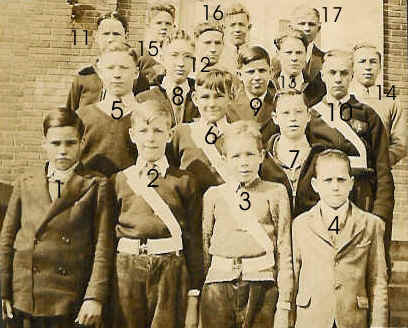
“Pops” Warfel, the Principal at Marple Elementary School in Broomall, PA, was like a prison warden. Every prison warden has his guards, his ‘goons’, as the prisoners call them. Every school back in the 1950s had its Safeties, the Principal’s goons who wandered the Yard during recess to keep the students in line. Real guys. Like Sammy Peacock.

schools_trainer_safeties_1935-36

School Safeties

In the 3rd Grade Sammy, attired in his Safety outfit, “arrested” his classmate Gordon during recess for cursing. “I DIDN’T curse,” said I.

“You did, too,” said Sam. “You said a bad word. I’m taking you to the Principal’s Office!”

Pops Wafel asked his Goon what happened out in the Yard. “Gordon, you know better than that. You father’s a minister! He wouldn’t approve of you using language like that. We’ll keep this between us just this once. But if it happens again, I’ll have to tell your father.”

Long before I read Kafka’s The Trial, I experienced existential guilt – the feeling of guilt for something I never did – the guilt of being alive. I was Josef K in The Trial.

Meanwhile, Pops Warfel was violating one of the prison rules daily: no eating in class. Pops often reached into his desk drawer, and, pretending to cough, would pop in a jelly bean. No one dared say a word.

  • Gordon C. Stewart, Marple Elementary Inmate #00056789, Jan. 22, 2016

1-The-Trial


Two Guys from Corinth

The students at Liberty University heard about the two guys from Corinth yesterday. Guest speaker Donald Trump quoted 2 Corinthians, confirming his Christian credentials to the scripture-based evangelical Christian audience at Liberty University.

There were snickers. People who know the New Testament don’t call Paul’s Second Letter to the Corinthians “TWO Corinthians”; they use the short hand “Second Corinthians.”

Most other places Trump’s mention of Two Corinthians would make a great opening line for a story.

A guy walks into a bar and says, “‘Hey, listen up. Two Corinthians were walking in mid-Manhattan, and the one guy says to the other, ‘You know what? This Trump guy comes up to me at 86th and Fifth Avenue and starts talking like he knows our town.’

“‘Yeah?’says the second guy from Corinth. ‘He did the same with me. But does he speak Greek?’

“‘What’s the matter with you! As long as he tells stories about Two Corinthians, I don’t care. The guy’s makin’ us famous. The people at Liberty love us. Besides, Greece is in big trouble. Maybe Trump can fix Greece, too!'”


The Way We Eat

A prompt on Modern Families got me to thinking. 

“If one of your late ancestors were to come back from the dead and join you for dinner, what things about your family would this person find the most shocking?” 

How would you answer? Here’s my shot at the question. 

Well…for starters, most folks don’t join each other for dinner anymore.

My grandparents and parents honored a long-standing family tradition.  They ate dinner around the dining room table. ALL of them. At the same time. In the same place.

But we didn’t just eat together. We lingered together. We served each other. We passed the food in large bowls – mashed potatoes, green beans, peas, stuffing, salad – family style. No one ate until all had been served.

In their generations, the roles were clearly defined. Mom wore and apron and cooked the meal. She sat at one end of the table. Dad, sitting  at the opposite end (the head of the table) with the carving knife served the entree on plates to the other members of the family. If it was a turkey, for instance, he carved the bird in front of us at the table.

“Skip, you like dark meat.” He’d carve from the thigh or the leg. “Don, you like both white and dark.” “Bob, you like the leg and a wing.” And so it went, until we all had been served according to our liking, and we all had served each other.

Mom and Dad lived long enough to see the change in their children’s family eating habits and graciously, if sadly, accepted the fact that there was no longer a set time for dinner, there were soccer games, Little League games, concerts, and the demands of this, that, and the other that tore apart the cherished hour when the kids and parents all checked in on the day and discussed the big issues of the news.

My grandparents would be shocked by the fraying of common life, the loss of careful attentiveness to each member of the family’s preferences, likes and dislikes, the substitution of the automat for the dining room table.

If they came back from the dead, they would wonder how and why sharing and serving around the table and nightly dinner conversations have vanished, replaced by family members staring at their iPhones, texting people who aren’t in the room. They might re-frame Shakespeare’s question in Hamlet, “To be, or not to be?” They might say:

“To eat alone, quickly, or to eat at the dinner table with others, slowly?” – that is the question.

I think I’ll turn on the TV, go to the fridge to see what’s there, send a text or two, and enjoy the ballgame.

  • Gordon C. Stewart, Chaska, MN, January 18, 2016

 

Link

Last Monday I learned of a student’s tragic death in Saint Paul. This morning I read this remarkable reflection. The writer and blog are new to me. I’ve chose to “follow” this site.

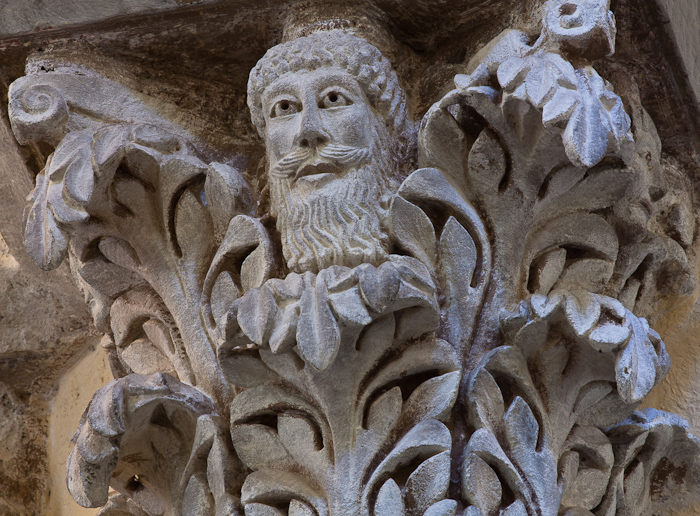
The Green Man

Every generation tends to think of itself as superior to its predecessors. Ours is no different. Sometimes we’re right. Often, we’re wrong. We ignore or don’t know history.

Take, for example, the consciousness of green and climate change – the discovery, or is it the re-discovery, of nature as the context of human life. We tend to think it’s a new consciousness that sets aside the longer consciousness by which the human race justified ravaging the earth.

The Green Man in Clermont-Ferrant, Photo by Dennis Aubrey, Via Lucis Photography

The Green Man in Clermont-Ferrant, Photo by Dennis Aubrey, Via Lucis Photography

But, then, along comes the forgotten Green Man of Romanesque churches build in the Medieval Period, one version of which is featured in Dennis Aubrey’s post “A Green Man in Clermont-Ferrand” on Via Lucis Photography of Religious Architecture.

I turn to Via Lucis whenever I feel the need to get out of my skin, to shed the ignorant arrogance of the 21st Century presumption of progress and superiority.

The whole human story is captured in the various Medieval renderings of The Green Man, the human race fatally mis-perceived as “man over nature” and properly conceived as “man within nature”. 

Gordon C. Stewart, Chaska, MN, January 13, 2016

Four Big Questions – I don’t “get” it

I don’t get it. Or maybe I do, but don’t want to.

Some things jade a person’s spirit.  Like the poisonous, partisan punditry that made a lot of noise responding to last night’s State of the Union Address. Blah, blah, blah; blah, blah, blah!

“I don’t get” why, or how, a thoughtful listener could disparage the FOUR BIG QUESTIONS that framed the President’s speech. 

► “How do we give everyone a fair shot at opportunity and security in this new economy?”

► “How do we make technology work for us, and not against us – especially when it comes to solving urgent challenges like climate change?”

► “How do we keep America safe and lead the world without becoming its policeman?”

► “How can we make our politics reflect what’s best in us, and not what’s worst?”

In the run up to the 2016 Presidential Election, President Obama’s last State of the Union Address spelled out the philosophical-ethical questions that every candidate should be asking and answering. Will we, the citizens – the voters – take the cue? Will we test every candidate for President, the Senate, and House of Representatives to assure ourselves that they “get it”: governing in the United States of America requires thoughtful reflection on complex matters that do not lend themselves to simple solutions or demonizing an opponent.

If we, the people,  don’t “get that”, it won’t be because we can’t. It will be because we prefer the poison of partisan blah, blah, blah.

  • Gordon C. Stewart, Jan. 13, 2016.


A New Government of National Concentration

Video

Adolf Hitler rose to power by playing to the fears, anxieties, and anger of the German people. His strategy was to play the strongman who would fix it, make Germany great again. A nation that had regarded itself as exceptional had lost its way, humiliated by defeat in World War I. Hitler focused that anger at the weakness of the post-World War I Weimar Republic whose inept Chancellor and Reichstag (i.e. Congress) he blamed for the nation’s drift. He blames Marxist thinking and Communists. He declares Christianity to be the religion of the German state. By narrowing and scapegoating, he focuses the people’s fears and anxieties on visible targets. It was only a matter of time before Jews, homosexuals, and gypsies joined the ranks of those to be eliminated in a purified Aryan state.

Notice how quietly, how slowly this speech begins. He waits for the crowd to be quiet before he continues to speak. He is taming them. Mesmerizing them. Training them for Fascism. And when he has brought them to heel, he unleashes a tirade that taps into the people’s volcanic desire for a return to national exceptionalism.

“Those who cannot remember the past are condemned to repeat it.” – George Santayana, The Life of Reason, 1905.

  • Gordon C. Stewart, Chaska, MN, Jan. 11, 2016.