A Prayer for Courts & Legislators

The language is from an earlier time in America culture. Monday, October 8, 2018, the sentiment is on the cutting-edge.

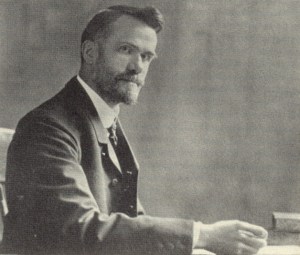
walter rauschenbush

Walter Rauschenbusch, “father of the Social Gospel Movement”

 We beseech thee for those who are set to make and interpret the laws of our nation. Grant to all lawyers a deep consciousness that they are called of God to see justice done, and that they prostitute a holy duty if ever they connive in its defeat. Fill them with a high determination to make the courts of our land a strong fortress of defense of the poor and weak, and never a castle of oppression for the hard and cunning. [Walter Rauschenbusch, Prayers of the Social Awakening, 1910].

–Gordon C. Stewart, Chaska, MN, October 7, 2018

Government by Minority Rule

512px-115th_United_States_Congress_Senators

115th Congress Senate party membership by state. Vermont and Maine have one independent senator each, Bernie Sanders and Angus King respectively. [Wikipedia]

INTRODUCTION: Views from the Edge publishes “Government by Minority Rule” with the kind permission of its author, Constitutional law scholar David Rudenstine.

“A minority of the national population now controls all three branches of the nation’s government. Or, in other words, in a democracy where the majority presumably rules, current American politics has turned this basic rule upside down and permits the minority to control the majority.

“The president lost the popular vote. The senate is in the hands of senators representing a minority of the overall population. While one-person-one vote requires that the election districts in the house be equal in population, gerrymandering permits the minority party — the Republicans — to control the house. And now the Supreme Court is in the hands of justices four of whom were nominated by presidents who lost the popular vote and who were confirmed by an undemocratic institution — the senate.

“The US constitution was designed to be anti-democratic in nature. Every state regardless of its population has two votes in the senate; the electoral college selects the president without constraints imposed by the majority vote; a majority of the Supreme Court justices invalidates legislation adopted by politically accountable legislators. The intention was to build safe-guards into the governing system to counter the effects of populism and the mobilized public mob.

“But it is unlikely that anyone who designed the system in the 18th century had the current radically distorted allocation of political power in mind, and I cannot recall the last time the current condition existed — perhaps in the 1920s and1930s. Certainly not since Hoover lost to FDR in 1932.

“And now Kavanaugh will be on the high court joining Roberts, Thomas, Alito, and Gorsuch, to make a conservative majority that will more than likely be pro-business, anti-environmental laws, against abortion, hostile to climate change laws and rules, opposed to rights of the LBGT community, rejecting of affirmative action, favoring of the entanglement of religion and government, favoring presidential power, rejecting of the rights of immigrants, and more.

“But after his screed on the left wing Democratic Party political conspiracy Kavanaugh claimed was out to destroy him, his career, and his family, how can Kavanaugh possibly participate in these and other cases which are laced with divisions that mirror Kavanaugh’s own conspiratorial views?

“That was the point that former Justice Stevens made a few days ago. The Supreme Court is possibly hog-tied if one of the nine frequently must recuse himself because of the appearance of a conflict of interest, and it would seem that is what Kavanaugh must do if finally confirmed — not participate in any case that his political screed encompased.

“Unfortunately, the answer may be that Kavanaugh may just tough it out. Scalia did that in a case involving Cheney after Scalia and Cheney went duck hunting together. Rehnquist participated in the design of an Army surveillance program aimed at domestic civilian political dissidents and refused to recuse himself in a 5 to 4 vote almost a half century ago.

“Impeachable? Not likely. Activities that are impeachable are four — treason, bribery, and high crimes and misdemeanors. Of course, Jerry Ford famously stated that those words mean whatever congress says they mean. But then we don’t want Democrats paying games with the impeachment power.

“Now it is true that Kavanaugh’s situation is different from Scalia and Rehnquist’s. In his screed, he has taken on the Democratic Party establishment, and, properly understood, that should cause him to recuse himself in many cases that will be routinely on the Supreme Court’s docket. That in turn will greatly injure the Supreme Court.

“But I doubt if Kavanaugh will recuse himself, and his failure to do so will do great damage to the Court’s legitimacy, as did its 5 to 4 decision in Bush v. Gore.

“Is there a remedy if Kavanaugh does not recuse himself? Perhaps, but I cannot now point to one with any confidence except to secure preferred political outcomes in 2018 and 2020, and then assess matters when Democrats may hold political remedial power.”

— David Rudenstine, Sheldon H. Solow Professor of Law, Benjamin N. Cardozo School of Law, author of The Age of Deference: The Supreme Court, National Security, and the Constitutional Order (2016, Oxford University Press).

 

I’m mad as hell and…

There! I said it!

  • Gordon C. Stewart, Chaska, MN, October 6, 2018


What’s at Stake in the Kavanaugh Decision?

The Senate’s vote on the confirmation of the President’s appointment to the Supreme Court is more than a partisan matter. At stake is the trust of the American public in its most basic institutions.

Reasons to consider irrespective of partisan interests and loyalties:

John Jay portrait

First Supreme Court Chief Justice John Jay (1785-1789) — Gilbert Stuart portrait

1. Public confidence in the foundational institutions of the American republic has plummeted. The success of a democratic republic depends on its citizens’ faith in the integrity of the Senate, the Presidency, and, most of all, the U.S. Supreme Court.

2. Any appointment to the Supreme Court should increase rather than erode public confidence in the Court as the final arbiter and interpreter of the law.

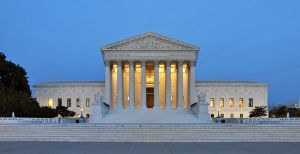
512px-Panorama_of_United_States_Supreme_Court_Building_at_Dusk3. The myth of the Supreme Court as standing on the lofty heights of objectivity is a myth, but it is a myth and aspiration worth preserving. Without public trust in the Justices’ commitment and disposition to rule without prejudice, the Rule of Law is viewed as the partisan Rule of Power and Prejudice.
4. Judge Kavanaugh’s behavior during last week’s hearing violated the standards of judicial ethics re: nonpartisanship and calm judicial temperament. Judge Kavanaugh’s appointment will further erode trust in the Supreme Court as an objective arbiter and interpreter of the law.

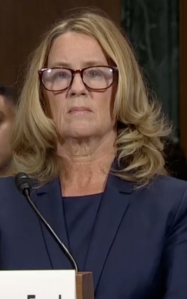
Dr_Christine_Blasey_Ford

Dr. Christine Ford

5. While the President declared publicly to the press that the FBI was free to go wherever it needed — with no restrictions placed on its background check — the White House already had limited the FBI to a handful of people. The President’s statements were duplicitous and deceptive.

6. Names of corroborating witnesses provided during the FBI interviews with the nine people the White House had authorized were ignored. They include high school and college classmates who publicly refute Judge Kavanaugh’s testimony regarding excessive drinking and allegations of sexual misconduct.

7. The majority party’s and the president’s shifts from belief in Dr. Ford’s credibility to public mockings of Dr. Ford and angry allegations of a partisan plot to destroy Judge Kavanaugh raise red flags about a predominantly male Senate’s ability to take women seriously.

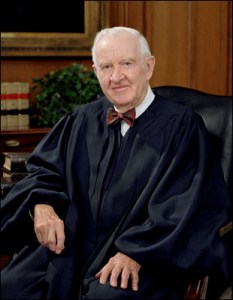
John_Paul_Stevens portrait

Supreme Court Justice John Paul Stevens official portrait

8. Supreme Court Justice John Paul Stevens (Ret.) yesterday urged disapproval of confirmation based on the nominee’s partisan and aggressive testimony before the Judiciary Committee. Retired Justices don’t do that. Stevens did, for the sake of the Court’s reputation and integrity.

9. Senate confirmation of a Supreme Court nominee who has declared his position that the law prevents a sitting president from being indicted, and who, in his testimony, refused to say he would recuse himself on such a case, gives the appearance of prejudicing the Court in favor of any case that might come before it.

Brett_Kavanaugh_Yale_Yearbook_(cropped)

Yale yearbook photo of Brett Kavanaugh


10. Judge  Kavanaugh’s op-ed in The Wall Street Journal is welcome. The admission of inappropriate conduct before the Senate Judiciary Committee last week neither erases the behavior nor qualifies him for appointment to the Supreme Court.

– Gordon C. Stewart, Chaska, MN, October 5, 2018.

A Responsible Electorate

256px-Jeff_Flake,_official_portrait,_113th_Congress

Sen. Jeff Flake (R-AZ)

During last Sunday’s “60 Minutes” interview, Sen. Jeff Flake was asked if he could have done what he did last week in the Supreme Court confirmation process if her were running for re-election. He was quick to respond. “No!” He and his colleague from the other side of aisle, Chris Coons, confirmed what many Americans have come to lament: the tar and feathering of compromise — the art on which a democratic republic depends.

In the simplified mindset of good versus evil, there is no room for compromise. The Judiciary hearing room was a room like that. But the behavior we saw in the hearing room wasn’t really about good versus evil. Jeff Flake’s “No” tore off the mask. It’s about money — the ability of candidates to secure financing for their campaigns on both sides of the aisle. Any candidate running for election in 2018 would be foolish to reach across the aisle, even though conscience might lead to do so. Sen. Mitch McConnell later put it bluntly: any Republican who votes not to confirm Kavanaugh will no longer receive campaign money. The Republican National Committee (RNC) will turn off the faucet.

256px-GOP_SquareMeanwhile, RNC money and dark money pours into the race in Minnesota’s 3rd Congressional District. I’ve waded through mud many times over the years, but this is the dirtiest campaign I’ve ever experienced. Yesterday’s snail mail, for example, contained TWO slick negative ads funded by the Republican National Committee, slandering the Democratic candidate. These same ads leap out from my computer monitor whenever I open a YouTube video. Someone has mastered cyber analytics, and it’s not the Russians. The RNC-sponsored, complete with “I [Erik Paulsen] approve this message,” approved by Erik  paint Dean Phillips, as a monster, A hypocrite. They twist facts. The real message? Erik is the “good guy”; Dean is the “bad guy”.
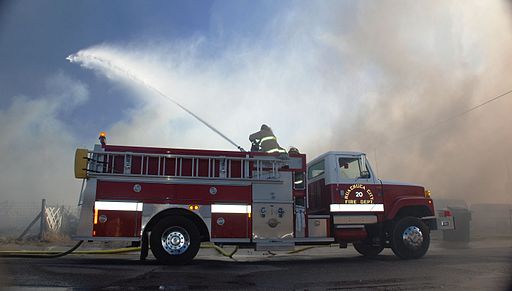
Yet only Dean Phillips refuses to accept money from the PACs, special interests, and lobbyists that elects partisan loyalists who surrender conscience and the courage to compromise. The “good guy” refused to join the “bad guy” in that pledge. The money is pouring into the 3rd District from outside Minnesota — like fire trucks and rescue squads responding to a 5-alarm fire. The hoses spew mud.

512px-Huachuca_City_Fire_-_2010-03-16_-_06

It’s the responsibility of the electorate to slog through the mud and take off our waders before entering the voting booth.

Gordon C. Stewart, Minnesota 3rd Congressional District, October 3, 2018.

No one can burn the truth

The most telling point in yesterday’s Senate Judiciary Committee hearing was the sudden shift away from Rachel Mitchell, the experienced prosecutor of sex crimes whom the Republican all male majority had appointed to examine the accuser and the accused on their behalf. It was an unprecedented protocol.

Dr_Christine_Blasey_Ford

Professor Christine Blasey Ford

All morning, during the testimony of Professor Christine Blasey Ford, the members of the majority ceded their five-minutes to Ms. Mitchell. She, not they, did all the questioning. Then, early in the afternoon session with Kavanaugh, the protocol disappeared.

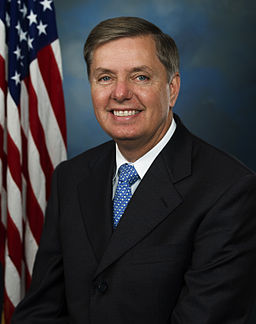
Ms. Mitchell’s impartial inquiry came to a sudden end when Sen. Lindsay Graham lit the match that shifted the focus from Ms. Mitchell’s methodical inquiry. The protocol for “getting at the truth” went up in flames. Ms. Mitchell never was called upon again. The men who had brought her from Arizona to Washington, D.C. brushed her aside without explanation or comment by anyone of the committee. She was no longer useful to the majority’s purposes.

256px-Lindsey_Graham,_Official_Portrait_2006

Sen. Lindsay Graham (R)

Experts in the field of sexual violence have eyes and ears — and a sixth sense — most of us don’t have. They know the typical behaviors of victims and perpetrators. Belligerence is one of the behaviors of perpetrators. Judge Kavanaugh’s less than judicial demeanor — his unrestrained anger and belligerent attack on Sen. Klobuchar’s legitimate, pertinent  questions about the use of alcohol — would have rung a familiar bell. Ms. Mitchell’s attempt to get at the truth had gotten too close.

The Judiciary Committee appears ready to recommend confirmation. Majority Leader McConnell has pledged to push it through the full Senate.

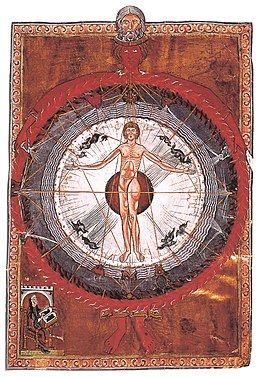
Hildegard_von_Bingen_Liber_Divinorum_Operum

The Universal Man, Liber Divinorum Operum of St. Hildegard of Bingen (1165)

Last night the American Bar Association, which endorsed Judge Kavanaugh as highly qualified, called for what the chair, majority members, and the nominee himself have steadfastly refused to do: suspend the process and call for the FBI to re-open its independent investigation of the facts.

It’s enough to make me hope that Mechtild von Magdeburg, the lesser known medieval mystic contemporary of Hildegard von Bingen was right:

“No one can burn the truth.”

  • Gordon C. Stewart, Chaska, MN, September 28, 2018.

The Kavanaugh Nomination and the Founders’ Hope

512px-Panorama_of_United_States_Supreme_Court_Building_at_DuskMost deeply at stake in the decision regarding Judge Kavanaugh’s confirmation is the further erosion of public trust in the institutions on which this democratic republic was founded. The Supreme Court was the one institution intended to do its work high above the cock fights of special interest, prevailing winds, and partisanship.

256px-Constitution_of_the_United_States,_page_1Democratic republics are built on trust. The American people’s trust in the republic’s institutions was the bedrock on which the U.S. Constitution was framed and adopted. The genesis of American independence and sovereignty lay in a hope yet to be tested: whether the American experiment would meet the test of being a nation “of the people, by the people, and for the people.” The experiment would depend on the American people’s readiness to trust — and the trustworthiness of those institutions.
No institution of government was more important than the U.S. Supreme Court. While the legislative and executive branches are blown by the winds of the American electorate, the Supreme Court was to more objective, above the influence of partisan agendas and popular winds. The Supreme Court was the guardian of the Constitution, the final decision-maker of cases of that came to it from disputed cases in the lower courts.

In previous eras of the American republic, the justices of the Supreme Court worked behind the screen of public scrutiny. As America morphed into an entertainment culture, the justices’ personal lives and views came out from behind the screen of the legal holy of holies onto the stage of public scrutiny. They made speeches. They heard applause. They became either heros or villains. Like the Wizard of Oz, their humanity frailty came was eposed. A sacred hope — the trust in the Court to stand above the cockfights down the in the valley — died.

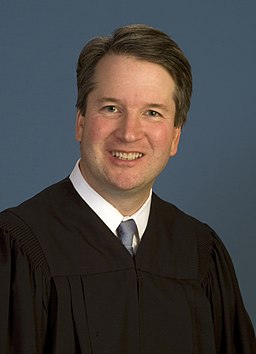
Judge_Brett_KavanaughTomorrow (Thursday) the Senate Judiciary Committee’s hearing will be at the top of the news. One of the three women who accuse Judge Kavanaugh of sexual assault or abuse will be examined by an prosecuting attorney selected by the ruling party majority. The cameras will then turn to Judge Kavanaugh expected denial, the equivalent of a court rebuttal. Senate Majority Leader McConnell has scheduled a vote Friday morning.

One need not be a partisan to object to the process. One need only think of the bedrocks of the people’s trust in their government’s institutions and our perception of their trust-worthiness. The founders’ hope for the American experiment is at risk because of the very institutions established by the U.S. Constitution.

Finding Bigfoot

“Americans are the best entertained and least informed people in the world.” – Neil Postman.

AmusinghknI still watch football. I’m sorry — mea culpa — but I do. Always have. But it’s different this season. Though my hopes for my teams have always been subject to injuries, something worse gets injured every two years: truth.

Watching the Gophers (University of Minnesota) and Minnesota Vikings (NFL) last weekend, most of the ads were what we’ve come to expect. They sell us products by entertaining ads that create our appetites for what we don’t need.

But there were other well-placed ads during breaks in the action: “information” ads meant to stir my righteous anger by painting Dean Phillips (D) — the candidate running against Congressman Erik Paulsen (R) in my district (Minnesota’s 3rd Congressional District) — as an immoral hypocrite. It’s not information; it’s carefully crafted disinformation meant to evoke outrage and fear. The campaign season and football season are a lot alike with one big difference: football has penalties. There are referees and umpires.

Neil Postman’s Amusing Ourselves to Death: Public Discourse in the Age of Show Business appeared way back in 1985, years before Citizens United uncorked the tightly secured laboratory vile containing the life-threatening, infectious virus of unaccountable slander, and released the contents into electoral stream of a democratic republic.

We Americans pride ourselves in being a nation “under the rule of Law.” Everyone is equal “under the rule of law.” Citizens United exposed the dirty little secret that we’re not. Slowly over time, the American democratic republic has become an oligarchy. Dark money — big money from unnamed deep-pockets, vested interest sources — was legitimized under the rule of law by the U.S. Supreme Court’s 5-4 Citizens United decision. The rule of law became more explicitly the rule of oligarchs, who buy presidencies and congresses with their campaign contributions, and who spend big money for ads like the one they hope will keep Rep. Erik Paulsen in the House of Representatives.

Congressman Paulsen represents my district. I know him. Well, I don’t really know him. I’ve never had the opportunity to meet him face-to-face. During his eight year tenure in Congress, he never held a town hall meeting before candidate Dean Phillips made an issue of his inaccessibility to the people who elected him to represent us. While others across the country held town hall forums in their districts, Rep. Paulsen refused to hold one. Finally, after increasingly public criticism, Rep. Paulsen offered an alternative: a telephone conference call. My phone would ring at 7:00 P.M. “Hello, This is Congressman Erik Paulsen inviting you to join me in a live conversation . . . Press 1 to participate….” I couldn’t bring myself to press the button lest I contribute to his claim of accessibility. Finally, after his unwillingness became a bigger issue in the Paulsen-Phillips debate, Erik Paulsen held his first face-to-face town hall meeting in eight years.

Yesterday we shared the ads that interrupt my football watching. The Paulsen ads interrupt far more often than the Phillips ads. There’s a reason for that. Money. The Paulsen campaign is well-funded by the unaccountable deep pockets uncorked by Citizens United. The Paulsen ad we posted yesterday is dark in tone and slanderous in content. The Phillips campaign refuses PAC, special interest, or federal lobbyist money. They too are carefully crafted to tell the truth with humor.

Football couch potatoes in MN District 3 are the best entertained voters in the country.

  • Gordon C. Stewart, Chaska, MN, September 20, 2018.

9/11/18: A Defining Moment

WTCmemorialJune2012Today, the 17th anniversary of 9/11, the subway station that was buried by the fall of the World Trade Center towers, has reopened to loud cheers. Hope survives! So does the question “What have we learned since we trembled in horror and disbelief 17 years ago?”

The 9/11 Anniversary in 2018 coincides with the release of Bob Woodward’s FEAR exposing the moral abyss that is the White House; National Security Advisor John Bolton’s “America First” attack of the legitimacy of the international court; and United Nations Secretary-General Antonio Guterres’s statement urging immediate action on climate change.

António_Guterres_in_London_-_2018_(41099390345)_(cropped)

U.N Secretary General Antonio Guterres

Climate change is the defining issue of our time, and we are at a defining moment. … Far too many of leaders have refused to listen.

If we do not change course by 2020, we risk missing the point where we can avoid runaway climate change. [Antonio Guterres]

The collapse of the World Trade Center brought us to a dead stop. We could see it. First responders touched it. NYC Mayor Rudy Giuliani became “America’s mayor”.

We Americans wondered what sense of morality would lead someone to highjack commercial aircrafts and turn them into weapons of mass destruction. All these years later, morality is still the question. “America’s mayor” today declares that truth is not truth, while we ignore a greater threat, less visible to the naked eye — climate change — exceeds the geographically limited horror of 9/11. 9/11/18 is a defining moment in a sea of moral amnesia requiring a voice from beyond the spiritual-moral morass America has become.

256px-Vaclav_Havel_cropped

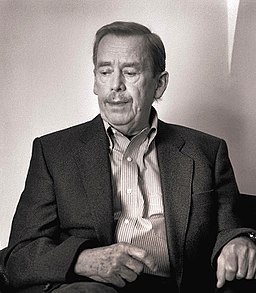
Václav Havel

“The worst thing,” wrote the Czech writer and former President Václav Havel, as though peering ahead into the American of 9/11/18, “is that we live in a contaminated moral environment. We feel morally ill because we became used to saying something different from what we thought. Concepts such as love, friendship, compassion, humility or forgiveness lost their depth and dimension” (bold added by Views from the Edge).

In this defining moment, hope again rises against hope with its own kind of prayer for the end of the planetary moral madness:

“There is only one thing I will not concede: that it might be meaningless to strive in a good cause.”
― Vaclav Havel, Summer Meditations

  • Gordon C. Stewart, Chaska, MN, 9/11/18.


A Window of Opportunity: Rosh Hashanah

Today is Rosh Hashanah, the Jewish New Year that celebrates the birth of humankind with the blowing of the shofar (AUDIO LINK).

Jemenittisk_sjofar_av_kuduhorn

Rosh Hashanah’s meaning takes me back to last week’s Jewish wedding in Boston Symphony Hall, the kind of joyful occasion that’s good for the weary soul. Although I might have anticipated meeting a Holocaust survivor in his/her 90s, I did not expect the survivor to be my age.

Stephen and I were born two months apart in very different words — the Warsaw ghetto under Nazi occupation, and the U.S.A., respectively. Stephen and his mother survived. His father and the rest of his family died in the gas ovens of Auschwitz. His father arranged for two-year-old Steve and his mother’s to escape and survive under the clandestine protection of Polish Christian. How Stephen’s father made the arrangements is a mystery lost in time and the ashes of Auschwitz.

Rosh Hashanah is marked by the blowing of the shofar that starts the 10 High Holy Days leading up to Yom Kippur, the Day of Atonement.

What is Rosh Hashanah all about? In addition to its meaning as the “head of the year”, we also refer to it as the “Day of Judgment”. What, in fact, did the Rabbis tell us to do on Rosh Hashanah? Curiously, there is virtually no mention of our own personal judgment in the Rosh Hashanah prayers. Instead, the prayers are all about the general condition of the world. – Rabbi Asher Resnick.

The Jewish sense of time is different from the dominant understanding of time in the West. Time spirals. It loops back and forward. Rosh Hashanah cycles back in order to spiral forward. It is, like every other Jewish holiday, “a metaphysical window of opportunity” (Rabbi Asher Resnick).

Meeting Stephen, the retired doctor in Princeton, New Jersey, in Boston at a Jewish wedding opened a different kind of metaphysical window of opportunity. The rapport was immediate, the window of opportunity opened between us as if we were long-lost friends. Such times redefine time. They spiral back to fetch hope for a new humanity and carry it forward in another dark time. This Rosh Hashanah I sound the shofar for Stephen, his family, all victims and survivors of the Holocaust, and the Polish Christian family that protected Stephen and his mother until the horror was (more or less) over and a mad world repents.

512px-Frank-oil-shofar_(14088680963)

the shofar (ram’s horn)

Shana Tova!

  • Gordon C. Stewart, Chaska, MN, September 10, 2018.