Daily Riches: Religion and Established Privilege (Thomas Merton)

Thomas Merton’s quotation on religion and privilege arrived following a national campaign with loud cheers and boisterous rallies that turn Christianity into white nationalism. “…Faith in God . . . becomes in fact faith in [one’s] own nation, class or race.”

Bill Britton's avatarRicher By Far

“Of course, it is true that religion on a superficial level, religion that is untrue to itself and to God, easily comes to serve as the ‘opium of the people.’ And this takes place whenever religion and prayer invoke the name of God for reasons and ends that have nothing to do with him. When religion becomes a mere artificial facade to justify a social or economic system–when religion hands over its rites and language completely to the political propagandists, and when prayer becomes the vehicle for a purely secular ideological program, then religion does tend to become an opiate. It deadens the spirit enough to permit the substitution of a superficial fiction and mythology for this truth of life. And this brings about the alienation of the believer, so that his religious zeal becomes political fanaticism. His faith in God, while preserving its traditional formulas, becomes in fact faith…

View original post 291 more words

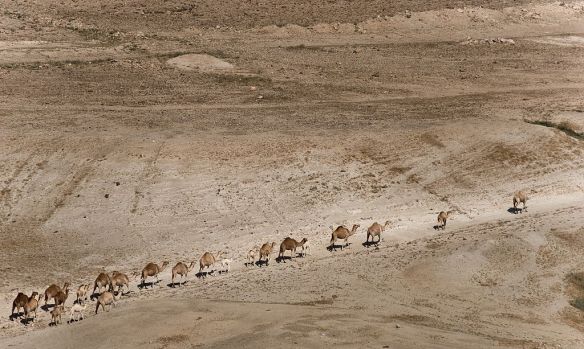
It’s not a Caravan

Camel caravan

Caravan in the Jordan Valley

Does anything seem strange about ‘caravan’ as the word to describe the migrants now moving on foot toward the United States’s southern border? ‘Caravan’ is the word used everywhere without a second thought.

The etymology of the word ‘caravan’ is Persian. “From Middle French caravane, from Old French carvane, from Persian کاروان (kârvân), from Middle Persian kʾlwʾn’(kārawān), ultimately from Proto-Indo-European *ker- (army) (whence Old English here). The word was used to designate a group of people who were travelling by camel or horse on the Silk Road.” (Wiktionary)

Language matters. Words matter. “Language: A Mechanism of Social Control” — Newt Gingrich’s GOPAC tutorial for political candidates — knows this better than most. Words like ‘caravan’ have overtones and undertones. They allude to things that awaken hope or fear. There’s nothing like the warning of a caravan to awaken associations with Middle Easterners coming to our Southern border.

Have you ever heard of a Christian caravan? Or a Jewish caravan? Caravans in the American mind have nothing to do with the western hemisphere or western culture. Caravans belong to Persians (Iran) and the Arabs we have come to fear. No American fears a camel caravan! But we do remember the Crusades. We remember the waging of religious war between Christians and Muslims. We call to mind Al Qaida and the Islamic State (ISIS).

The linguistic manipulators of language use such emotive allusions as weapons in election campaigns and underscore the words by sending U.S. Army troops to the border — to keep us safe – to beat back the barbarian Middle Eastern terrorists from Honduras, Guatemala, and El Salvador now walking slowly several hundred miles from the border in hopes of a better life. They know fear works. They know that threats to our freedom and national security will take our imaginations back in time to Arabian desert nomads whose camels carried them — fathers, mothers, sons, daughters, grandparents — from here to there without settling anywhere. They know we will think of a caravan as an army, not a caravan of nomads.

Language matters. Words matter. Don’t let the dispatch of troops to the Mexican border and the language of social control make fools of those who have never met a camel or walked on bandaged feet with bloodied hands pushing broken baby-strollers in hopes for as terror-less life. It’s not a caravan!

  • Gordon C. Stewart, Chaska, MN, November 5, 2018.


Tikkun Olam

Fourth Presbyterian chicago

Fourth Presbyterian Church – Chicago

John Buchanan looks to the Jewish concept “tikkun olam” amid the alarms of 2018. Dr. Buchanan is Pastor Emeritus of Fourth Presbyterian Church-Chicago, past Moderator of the Presbyterian Church (USA), and former editor of the The Christian Century. “Hold to the Good” is now his pulpit in retirement.

Family of John M. Buchanan's avatarHold to the Good

For years, at the conclusion of public worship, I have used words that come from St. Paul, written 2,000 years ago.

“Go into the world in peace and courage.
Hold to the Good.
Honor all God’s children.
Love and serve the Lord,
Rejoicing in the power of the Spirit.”

Last Sunday, as a guest preacher at Westminster Presbyterian Church, Grand Rapids, Michigan, when I came to the words “Hold to the Good” I almost couldn’t go on. The news from Pittsburgh Saturday morning stood as a contradiction to those words and to everything I hold dear and regard as essential to our life together….

…the trust that in the eternal struggle between good and evil, good will ultimately prevail,

…the trust that the heart of the nation I love, its government and politicians, is essentially fair, honest and good,

…the hope that the long arc of history bends, as Martin…

View original post 521 more words

The Press and the People


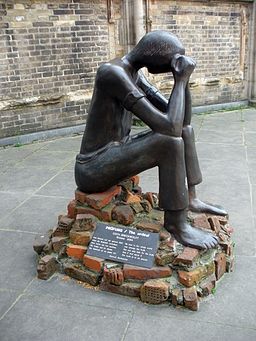
Breckwoldt prüfung

The Ordeal – Sculpture by Edith Beckwoldt, St. Nikolai, Hamburg, Germany.

“No man in the whole world can change the truth. One can only look for the truth, find it and serve it. The truth is in all places.” —  Dietrich Bonhoeffer quotation inscribed on Edith Beckwoldt’s sculpture “The Ordeal”.

“There is great anger in our Country caused in part by inaccurate, and even fraudulent, reporting of the news. The Fake News Media, the true Enemy of the People, must stop the open & obvious hostility & report the news accurately & fairly. That will do much to put out the flame…” — Donald J. Trump tweet, 6:03 AM – 29 Oct 2018.


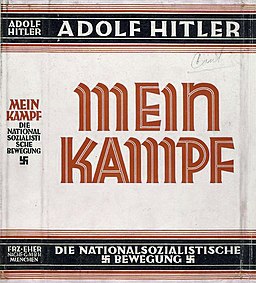
Mein Kampf dust jacket“It is the press, above all, which wages a positively fanatical and slanderous struggle, tearing down everything which can be regarded as a support of national independence, cultural elevation, and the economic independence of the nation.” ― Adolf Hitler, Mein Kampf.

Many advise against any and all such comparisons. As a public theologian raised on Bonhoeffer’s witness, theology and ethics, I ask, “How, in good conscience, can we not?” The playbook today is the same as it was in Bonhoeffer’s time. According to The Art of the Deal’s ghost writer, the speeches of Hitler were prominent in the penthouse bedroom of Trump Tower.

Enter Charlie Chaplin’s parody of the unlikely rise of the Fuhrer and the call to national unity.

“Silence in the face of evil is itself evil: God will not hold us guiltless. Not to speak is to speak. Not to act is to act.” – Dietrich Bonhoeffer.

“We are not to simply bandage the wounds of victims beneath the wheels of injustice, we are to drive a spoke into the wheel itself.” – Dietrich Bonhoeffer.

— Gordon C. Stewart, Chaska, MN, October 31, 2018

What do politics have to do with me?

It’s a serious question. Comedian Nato Green answers it with humor. Have a look.

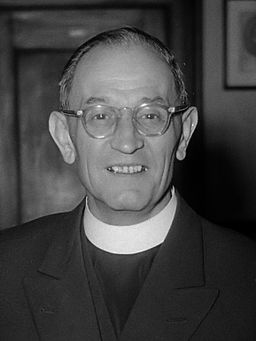
Martin Niemöller (1952)

Rev. Dr. Martin Niemoeller (1952)

“First they came for the communists, and I did not speak out—because I was not a communist.

Then they came for the trade unionists, and I did not speak out— because I was not a trade unionist.

Then they came for the Jews, and I did not speak out—because I was not a Jew.

Then they came for me—and there was no one left to speak for me.”

— German pastor Martin Niemoller looking back on the rise of fascism.

What does politics have to do with you? VOTE next Tuesday!

Gordon C. Stewart, Chaska, MN, October 31, 2018.


Unspeakable Speech: 2018

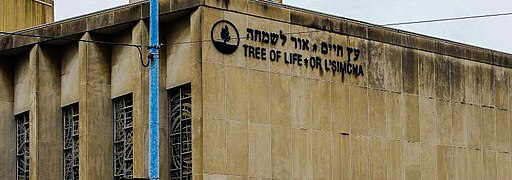
What happened across America last week is unspeakable. But these unspeakable acts of violence have a long history in speech itself. The bombs mailed from Florida did not come out of a speechless void. Nor did Saturday’s attack on Tree of Life Synagogue in Pittsburgh.

Tree of Life

Tree of Life*Or L’Simcha Congregation

If ever the Hebrew proverb was true that those with a pure heart and gracious speech will have the king for their friend (Book of Proverbs 22:11), it is true no longer in 2018. The massacre of Jewish worshipers on Shabbat does not come out of a vacuum. Hate speech once uttered cannot be put back. It has a murderous history we dare not forget, and casts a long dark shadow into the future we dare not abide.

Words are powerful. Speech is powerful. Silence is powerful. Acquiescence is powerful. When the words come from the President of the United States — or when they do not come, or when they come only in part — they contribute to the worst in us. They cast their shadow far into the American future. White nationalism/Christian nationalism is the forbidden fruit of the tree from which we must not eat. It is not the fruit of the Tree of Life (Genesis 3). It is the fruit of the tree of death.

As the city officials and Jewish leaders in Pittsburgh prepare for the President’s controversial visit the day they begin burying their loved ones, we offer a rabbi’s voice to help the rest of us understand.

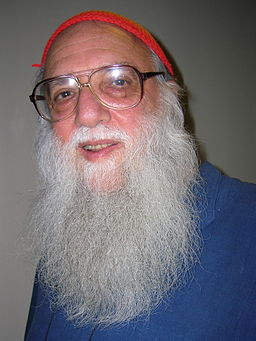
Reb Arthur WaskowHealing for the Stricken Community,
for the Shaken Jewish People,
and for Our Deeply Wounded Country

Dear friends,

There are many disastrous levels to the murderous massacre at Tree of Life synagogue in Pittsburgh.

There is the immediate personal disaster of eleven lives destroyed, others wounded, families and friends bereft, a neighborhood traumatized.  To all these, The Shalom Center as a body and I individually send blessings of swift refuah (healing) for the wounded,  deep respect and grief for the dead, and loving care for those bereaved.

There is the broader disaster of shock to the American Jewish community, until now so profoundly joyful to have found full acceptance in America these last several generations, after millennia of persecution elsewhere and elsewhen.
Some of us took from that safety acceptance in becoming affluent, even wealthy, even powerful. Some of us took from that safety acceptance in becoming social critics, progressives, even radicals.

Less comfort as critics than as powerful, of course – but comfortable that all the clauses of the First Amendment affirmed our worth as Jews, as sacred fringes on conventional assumptions, as challengers who could wrestle not only with God (as our name “Yisrael” describes us) but with the rigidified habits of ourselves and others.

And even worse, the broader disaster of facing an American government that our immigrant forebears who came here for freedom’s sake could not have fathomed:

A government honeycombed with white supremacism, moving into neofascism,  calling forth from the shadows into boastful visibility those who concoct bombs to enforce their racism, who can openly revel in their contempt for women, who can turn hatred of foreigners into willingness to rip babies from their mothers’ breasts,  who can turn their greed for hyperwealth into willingness to torch the Earth that is our common home, our only home  — and who can turn their latent anti-Semitism into mass murder.

How do we respond to these layered levels of disaster?

-Rabbi Arthur Waskow, Shalom Center, Philadelphia, PA

Following a week of unspeakable violence, Rabbi Waskow’s question addresses all of us. Today in Pittsburgh is a day to keep silence before a Word of comfort and direction deeper than our own. Tomorrow and November 6 is time for all of us to speak.

  • Gordon C. Stewart, Chaska, MN, October 30, 2018

A New Heart and a New Spirit

“Darkness cannot cast out darkness. Only light can do that” — Martin Luther King, Jr.

If you’re longing for some light and for change, watch and listen to Buddy Guy leading Playing for Change. Skip the ad, and think of Ezekiel’s hope for a nation of the dry bones.

The story of Ezekiel’s vision for the valley of the dry bones is timeless and timely 10 days before the American electorate goes to the polls November 6.

“I will give you a new heart and put a new spirit in you; I will remove from you your heart of stone and give you a heart of flesh.” – The promise for the dry bones in the Valley of the Bones (Ezekiel 36:26).

  • Gordon C. Stewart, Chaska, MN, October 27, 2018.


Over and Over, We Forget

wall-street-bull

The Wall Street Bull

The public’s memory is very short. The panic of near economic collapse 10 years ago is all but wiped from public memory two weeks before the Nov. 6 American national election. We publish the following chapter from Be Still! Departure from Collective Madness (2017, Wipf & Stock), which first appeared as a guest column on MinnPost.com September 10, 2009.

SORROW FLOATS

Concepts, like individuals, have their histories

and are just as incapable of withstanding

the ravages of time as individuals. But in and

through all this they retain a kind of homesickness

for the scenes of their childhood 

[Soren Kierkegaard]

“Sorrow floats.”

Perhaps the line from John Irving’s The Hotel New Hampshire in which “Sorrow,” the stuffed family dog preserved by a taxidermist, floats to the surface of the lake after a plane crash, helps explain what is happening in America.

Something dear to the American family died in September/October, 2008. Prior to the series of chilling events of that period, most of us had lived with the illusion of relative economic and financial health. Then, suddenly, Sorrow was rushed to the emergency room for government resuscitation.

Since then our memories of that pre-October 2008 world have taken a turn that families often take at funerals when the eulogies bear little resemblance to the reality of the deceased. We’re quarreling over what was real and what is mythical reconstruction.

Following the plane wreck that takes the lives of the Berry family parents in Irving’s The Hotel New Hampshire, the stuffed family pet bobs to the surface of the lake, floating among the wreckage. Sorrow floats. So does the thing we lost last fall.

What died? A ruling assumption

What died last year was the ruling assumption that an unregulated free-market system was the best way to organize an economy and that laissez-faire capitalism is democracy’s natural ally. The market almost crashed. It didn’t crash only because the federal government intervened to prevent a repeat of the crash of 1929. Sometime between mid-September and October seventh, when Congress passed its bill to stabilize the financial markets, the myth of the virtue of deregulated capitalism died. It was stuffed by the taxidermy of government intervention, but it still floats.

When a conviction or a myth dies, it doesn’t go away. It continues to bob to the surface. Sometimes, as in the case of the Berry family, the old dog is much easier to love after it is dead. Sorrow—obese, lethargic, and persistently flatulent in its old age—no longer waddles through the dining room to foul the air and ruin everyone’s dinner. In the public psyche, the unpleasant memories of the real life Sorrow give way to the stuffed Sorrow, a thing of nostalgia that lives on . . . even after it’s dead, and long after the plane has crashed.

Over and over, we forget

Sorrow and its old illusions float every time the reconstructed memory, forgetting the real Sorrow, barks about “socialism.” Sorrow floats every time we shout each other down in town-hall meetings. Sorrow floats every time nostalgia forgets that it was only by government intervention with our tax dollars that Sorrow is still around. Sorrow floats every time we forget the voracious appetite, unscrupulous predatory practices, insatiable greed, and the obesity that led to the deaths of Lehmann Brothers, Merrill Lynch, and Bear Stearns, not to mention insurance giant AIG and all the banks that had taken the plunge into a market of deregulated derivatives and mortgages that led to the epidemic of home foreclosures, bankruptcies, pension-fund collapses, and job losses. Sorrow, the old dog that failed us, still floats and still barks a year after the crash when the mind forgets and nostalgia remembers a system we thought was working in our interest.

Old ideas and convictions die hard. The powerful economic forces that grew fat during the years when government was viewed as the people’s enemy will stoke the fires of public anxiety and anger, taking advantage of the floating Sorrow that reminds us of something that we love more in retrospect than we did the day it died of its own obesity.

  • Gordon C. Stewart, Chaska, MN, October 21, 2018.

Though the cause of evil prosper…

No one holds the patent right on lying. At some point everyone is a liar. Little white lies or hug lies; they’re lies just the same. But truth is my judge and yours.

I cannot recall a moment in the America of my lifetime when truth been as scorned as it is today. I remember presidents who lied. Some more than others. But never was truth itself under assault as it is in America today. As a child I asked how Germany could have fallen for the rhetoric and incivility of a madman. Finally I’m coming to understand.

I was raised on the great hymns of the church. Among them was Once to Every Man and Nation with lyrics by James Russell Lowell (1845). The newer hymnals have excluded it, most likely because of the black and white thinking between good and evil or because it’s language is not gender inclusive. But I turn to it today in ways I never have before, and I’m left to wonder whether somethings are just plain evil.

Gordon C. Stewart, Chaska, MN, October 18, 2018.

Supreme Court Chief Justice refers Kavanaugh ethics questions

256px-Official_roberts_CJ

Chief Justice Roberts

A friend drew our attention to this article in Forbes  — IMHO, worth the read. Click the link below.

Chief Justice Roberts requests tenth circuit investigate Kavanaugh ethics questions.

“Hope is being able to see that there is light despite all the darkness” — Desmond Tutu.

  • Gordon C. Stewart, Chaska, MN, October 13, 2018