Unknown's avatar

About Gordon C. Stewart

I've always liked quiet. And, like most people, I've experienced the world's madness. "Be Still! Departure from Collective Madness" (Wipf and Stock Publishers, Jan. 2017) distills 47 years of experiencing stillness and madness as a campus minister and Presbyterian pastor (IL, WI, NY, OH, and MN), poverty criminal law firm executive director, and social commentator. Our cat Lady Barclay reminds me to calm down and be much more still than I would be without her.

A Red Leather Gift

At daybreak far from the maddening world on CNN, MSNBC, Politico or — God fobid! . . .FOXNews — I’m alone with The Book of Common Prayer. I’ve come here for the silence interrupted only by the calls of the loons and the pair of trumpeter swans that return every spring. For generations the swans’ inner compasses have brought them back to this unspoiled place to hatch their young before flying south again for winter. The swans and I are a lot alike; we both come back when the ice is almost gone.

Back home in the Twin Cities, the shouting turns me ice-cold or red-hot, depending on the moment. Here ice and heat are natural: the ice on the wetland pond is almost gone; the only red-hot thing is the fire in the wood stove. There’s something sacred about the synchronicity of the fire inside and the melting ice just outside the A-frame. It’s peaceful here.

I settle into the hickory Amish rocker Jacob Miller crafted to fit my slim dimensions 40 years ago back in Millersburg, Ohio. Though its measurements are the same, It feels narrower. But we’re still made for each other. The rocker is where I rock awhile, like Jacob on his front porch after a hard day’s work, until going inside to make the fire or light the kerosene lamps. Jacob Miller’s Amish rocking chair is where the world slows down.

I reach to the lamp table next to the rocker for my copy of the Book of Common Prayer. It hasn’t always been mine. It belonged to Sue Kahn, a lifelong Episcopalian, before the day she gave it to me. Sue had suffered the inelegance of Presbyterian language after failing eye sight had led her to Cincinnati to be with her Presbyterian daughter. She could no longer read her prayerbook, but had committed to memory many of its prayers. After two years of worshiping with the Presbyterians, Sue began to refer to me as an ‘Episcoterian” — a high Presbyterian — who appreciated fine language. Looking back at it, I think she may have hoped it would improve my pastoral prayers Sunday mornings. “I want you to have this,” she said, placing her small red leather-bound Book of Common Prayer in my hands. “I know you’ll treasure it.” Sue sits beside me in Jacob’s rocker every morning.

I open to the appointed psalm Sue would have contemplated today, this Wednesday of Holy Week, Psalm 55.

Hear my prayer, O God;
do not hide yourself from my petition.

It’s the day before release of the redacted report of Special Counsel Robert Mueller III, a report that may answer my prayer for full disclosure of the truth I suspect has been hidden.

Listen to me and answer me;
I have no peace because of my cares.

The arrogance — “listen to me; answer me!” — disturbs me. Prayer is not an exercise in telling God what to do! The psalmist is arrogant and selfish, more than a little Narcissistic, like the man in the Oval Office who might push the button on the red phone after typing the letters into the unsecured iPhone he uses to tweet.

But I have come to the wilderness because I have no peace watching Ari and Rachel and waiting for the nightmare to end.

I am shaken by the noise of the enemy;
and by the pressure of the wicked…

I don’t like talk of ‘enemies’; it puts me off. “Love your ememies and do good to them who persecute you.” Framing one’s opponents as ‘wicked’ is the less developed morality that has not yet recognized the intertwining of good and evil. But the psalms express the vicseral feelings of the heart unfiltered by the cerebral cortex. Like the psalmist, I am shaken to the core by the noise of an enemy; the pressure of the wicked. The noise hurts me ears.

For they have cast an evil spirit upon me,
and are set against me in fury.

l do not stand on solid ground. The cloud of evil and wickedness I routinely ascribe to ‘them’ hangs over me. I cannot claim to be righteous, right, or good as opposed to the unrighteous, wrong, and evil. I live under an ‘evil spell’ – the fall from essential goodness that comes with the presumption of the knowledge of good and evil — the knowledge that belongs to God alone. There is no escape from the pressure and the fury.

My heart quakes within me,
and the terrors of death have befallen upon me.
Fear and trembling have come over me,
and horror overwhelms me.

I quake as a fish caught in a net. I thrash and tremble in darkness at noon as at midnight. The snare of terrors encompasses me.

And I said “Oh, that I had wings like a dove!
I would fly away and be at rest.
I would flee to a far off place
and make my lodging in the wilderness.”

Before ending the morning prayer time made possible by the gifts from Sue and Jacob, I turn again to the back page of Sue’s red-leather prayer book to read again the words she had written in her own hand before she gave it to me:

Christ was the Word who spake it. He took the bread and broke it. And what his Word did make it – that I believe. . . and take it.

The crackling of the fire and the trumpeting of the trumpeter swans from the far side of the wetland break into the fading darkness at dawn. I fly away again to where I really live — a far-off place — and make my lodging in the wilderness beyond the snare and blare of right and wrong, good and evil, us and them.

— Gordon C. Stewart by the thawing weland, April 18, 2019

A Memorial Day Memory Re-visited

Today my brother Bob and sister-in-law Janice will drive to Indiantown Gap National Cemetery to lay flowers on Dad’s grave.

Protestant Service on Saipan led by my father, Kenneth Campbell Stewart, end of WWII.

Our father served as the Army Air Force chaplain for troops in the South Pacific before, during, and after the bombing of Tokyo. During Dad’s absence, my mother and I lived with my grandparents in Boston and South Paris, Maine, where Dad’s safe return was foremost in prayers before every meal.

I was three-and-a-half when Dad came home at the end of the war. The memory is clear as a bell. I watched as my father emerge from the B-29 bomber, walked down the ramp and across the tarmac at Boston’s Logan Airport. When he picked me up and took me in his arms, I reared back and asked “Are you really my Daddy?” “I am,” he said, “and I’m never going away again.”

All these years later, my hair has turned white, my skin is wrinkled, the world is mute without the hearing aids, my bones ache, and my head hurts most days. But I’m still the three year-old who felt the heavy weight of concern around my grandparents’ table listening for news from the South Pacific

It takes a lifetime for some memories to become clear. “Memorial Day and the Soldier’s Helmet,” published two years ago in Be Still! Departure from Collective Madness (2017 Wipf and Stock), offers a Memorial Day example.

Today I’m remembering again that night when the burly WWII Marine veteran unburdened himself of the locked box of hidden artifacts from the Japanese soldier he’d killed in hand-to-hand combat during the American invasion of Saipan. The ending of the story written just a few years ago is sorely incomplete.

So…today I observe Memorial Day by returning to the original sense of Memorial Day as a day to remember the fallen – ALL of them – but even more, a day to re-commit to ending the insanity of war itself. It’s a day when I remember the in-breaking of sacredness – three men in the living room – two live Americans and one Japanese – and pray for something better for us all.

Be Still! Departure from Collective Madness, p.12

This Memorial Day the three-year-old who waited for his father’s return remembers how strange memory is. As Bob and Janice lay flowers on Dad’s grave today, I am more conscious of a glaring omission. There were not three men in the living room that night. There were four. Dad was the first man there. Bless you, Dad. RIP.

photo of Indiantown Gap National Cemetery
Entrance to Indiantown Gap National Cemetery, East Hanover Township, PA

Grace and Peace,

Gordon

Gordon C. Stewart, Chaska, MN, May 31, 2019

Commentary Published Today

Publication of Views from the Edge social commentary

Thanks to MinnPost.com for today’s publication of Views from the Edge commentary on impeachment. Click Impeach or Wait? It’s an Oath-of-Office Question to read the piece and reader comments.

About MinnPost

MinnPost is a nonprofit online newspaper in Minneapolis, founded in 2007, with a focus on Minnesota news. “MinnPost is a nonprofit, nonpartisan enterprise whose mission is to provide high-quality journalism for people who care about Minnesota. We publish online at http://www.minnpost.com Monday through Friday with a limited edition on Saturday and a Sunday Review.” Wikipedia’s description adds further information.The site does not endorse candidates for office or publish unsigned editorials representing an institutional position. MinnPost encourages broad-ranging, civil discussion from many points of view, subject to the discretion of a moderator.

Thanks for visiting,

Gordon

May 30. 2019, Chaska, MN

Elijah and Mom’s iPhone

Good morning, Elijah!

Morning, Bumpa!

Whatcha doin’ there?

Just playin’.

But we’re on FaceTime!

Yeah, we’re on the way to work and daycare.

Aha! You’re playing with Mom’s iPhone?

Yeah. Playin’ with Mom’s fone is fun. Mom doesn’t need it. She doesn’t need the GPS. We do this every day.

I see. How long’s the drive?

You k n o w, Bumpa! You’re playing’ with me! Forty-five minutes ’til Mom drops me off at day care. Depends on traffic.

That’s a long time to be alone in the back seat strapped in your car seat.

Yeah, but it’s fun! I get to play! Mom just drives. I have to bigger before I can drive, right, Bumbpa?

Right. You just turned two last Wednesday.

Yeah, I’m two! Two YEARS this time, not two months.

Yes, and we’re so proud of you!

Yeah, I get to do adult stuff like you and Mom.

I hope you won’t take this as an insult, Elijah, but how did you get me on FaceTime?

Don’t ya know, Bumbpa? I push the buttons on Mom’s iPhone. I love talking with people! It’s fun. They’re always surprised! Sometimes they come up on FaceTime. That’s really fun!

So. . . You’re just scrolling through Mom’s contact list?

We don’t use the stroller anymore! I’m two!

I’m sorry. I didn’t say ‘stroller‘. I said ‘scroller‘ with a ‘c’.

Yup. And I’m only through the ‘C’s! ABCDEFG, HIJKLMNOP. QRS TUV! Hold it, Bumpa. I got another call coming’ in. Can I put you on hold?

— Gordon C. Stewart (Bump) with Elijah, May 28, 2019.

What’s happening to us: Postman, Orwell, and Huxley

INTRODUCTION

Funny how things come together, crisscross, intersect, lead us down roads no one has ever walked before. Neil Postman offers insight into what’s happening. I read it one morning last week at the cabin, away from everything that entertains and distracts me from that little plot of land on the edge of the wetland in Central Minnesota.

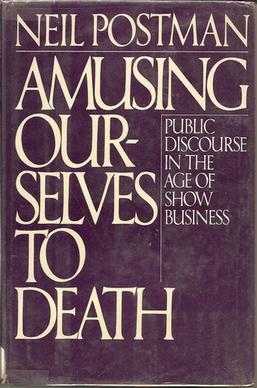
William Britton’s Wisdom from the Margins: Daily Readingsexcerpts from Neil Postman’s Amusing Ourselves to Death: Public Discourse in the Age of Show Business painted a picture that felt true, like a revelation pealing back the curtain to find that Lewis Carroll’s walk down the yellow brick road with Alice, the lion, the tin man, and the scarecrow is outdated. Oz is no longer a harmless little old man.

Neil Postman on Orwell and Huxley

Contrary to popular belief. . . Huxley [Brave New World] and Orwell [1984] did not prophesy the same thing. Orwell warns that we will be overcome by an externally imposed oppression. But in Huxley’s vision, no Big Brother is required to deprive people of their autonomy, maturity and history. As he saw it, people will come to love oppression, to adore the technologies that undo their capacity to think.

What Orwell feared were those who would ban books. What Huxley fears was that there would be no reason to ban a book, for there would be no one who wanted to read one. Orwell feared those who would deprive us of information. Huxley feared those who would give us so much those that we would be reduced to passivity and egoism. Orwell feared that the truth would be concealed from us. Huxley feared the truth would be drowned in a sea of irrelevance. Orwell feared we would become a captive culture. Huxley feared we would become a trivial culture, preoccupied with some equivalent of feelies, the orgy porgy, and the centripetal bumblepuppy . . . . In 1984, Huxley added, people are controlled by inflicting pain. In Brave New World, they are controlled by inflicting pleasure. In short, Orwell feared that what we hate will ruin us. Huxley feared that what we love will ruin us. This book is about the possibility that Huxley, not Orwell, was right.
—Neil Postman, Amusing Ourselves to Death

Neil Postman, Amusing Ourselves to Death

The wetland pond, the flyway, and return home

At the cabin, the water in the wetland is unusually high this year because of record-breaking rainfall. The flocks of Buffleheads and other non-diving ducks have by-passed their familiar stop on the flyway; the water is too deep to for them to reach the food sources below. Only the long-necked Trumpeter Swans, Sandhill Cranes, and Canadian Geese, and the diving Loons and Mergansers that can reach the bottom have stopped by this year.

Leaving the cabin and the wetland lead home to the world Huxley feared where the truth is drowned in a sea of irrelevance. We settle back into the lounge chairs in front of the television and flip through Netflix, YouTube, and other means of entertainment in what Postman later called the Technopolis in which our capacity for critical thought is numbed.

The new normal

We turn on the evening news and see two very different versions of Speaker of the House Nancy Pelosi speaking to the press. One is real. The other is altered by technology that deceives viewers into believing the Speaker is drunk, on drugs, or mentally impaired by slowing and altering the pace of her speech. The culture of amusing ourselves to death in the Technopolis distorts truth into propaganda, the first wave of what will become the new normal.

The culture of amusing ourselves to death in the Technopolis distorts truth into propaganda, the first wave of ... the new normal.

We’re not in make-believe Mayberry anymore. What we love — entertainment — is drowning us. In the world foreseen by Huxley, Orwell, and Postman, truth is hard to find. “Where there is no critical perspective, no detached observation, no time to ask the pertinent questions, how can one avoid being deluded and confused?” wrote Thomas Merton in Faith and Violence: Christian Teaching and Christian Practice.

Only the long-necked Trumpeter Swans, Sandhill Cranes, and Canadian Geese, and the smaller, deep-diving Loons and Mergansers can reach or swim to the bottom to see what’s real and what’s not in the Technopolis. William Britton’s Wisdom from the Margins with Neil Postman, Aldous Huxley, George Orwell, and Thomas Merton took me there this morning.

— Gordon C. Stewart, Chaska, MN, May 26, 2019

In the Twinkling of an Eye: Impeach or Wait?

A Constitutional Republic

It’s no longer a partisan question. It becomes clearer every day. It’s not a strategic question. It’s no longer a question of how much more, or when is enough enough. It’s a constitutional question. It’s an oath of office question, the oath taken by every member of Congress under the U.S. Constitution.

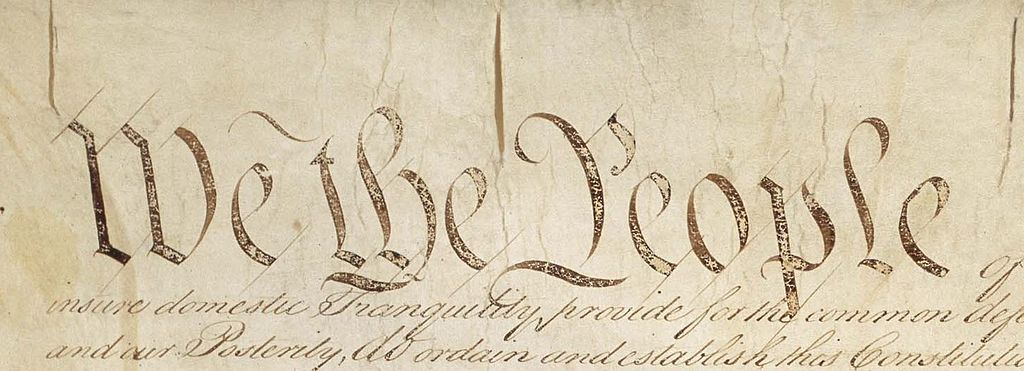
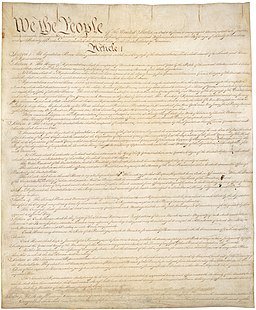
Image "We the People" from original U.S. Constitution

U.S. Constitution Article VI. clause 3

“The Senators and Representatives … and the Members of the several State Legislatures, and all executive and judicial Officers, both of the United States and of the several States, shall be bound by Oath or Affirmation, to support this Constitution . . .”— U.S. Constitution, Article VI, clause 3.

U.S. Constitution, Article VI, clause 3

Oath of Office, Article VI, clause 3

“I, __, do solemnly swear (or affirm) that I will support and defend the Constitution of the United States against all enemies, foreign and domestic; that I will bear true faith and allegiance to the same; that I take this obligation freely, without any mental reservation or purpose of evasion, and that I will well and faithfully discharge the duties of the office on which I am about to enter. So help me God.”

The Integrity of Office and Democratic Republic

With every passing day, some who have taken the oath of office side-step the duties of their offices by “purpose of evasion” in the face of the growing constitutional crisis. It is no longer a question of which side of the aisle you are on. Supporting and defending the U.S. Constitution means, at very least, upholding the constitutional checks and balances among executive, congressional, and judicial branches designed to protect a democratic republic from its implosion. Assaults and circumventions around that division of powers are assaults on the Constitution and the rule of law it protects.

Purpose of evasion

EVASION. A subtle device to set aside the truth, or escape the punishment of the law; as if a man should tempt another to strike him first, in order that he might have an opportunity of returning the blow with impunity. He is nevertheless punishable, because he becomes himself the aggressor in such a case. Wishard, 1 H. P. C. 81 Hawk. P. C. c. 31, Sec. 24, 25; Bac. Ab. Fraud,

Loyal Opposition and Loyal Majority

The British idea of “loyal opposition” — loyalty to the nation and to the oath to “support and defend” the Constitution — is a long-standing tradition. The loyalty is to the Constitution. Faithfulness to one’s oath of office, not loyalty to a person. Loyal opposition holds the party in power accountable. Loyal opposition infers loyalty to the Constitution by members of whatever party is the majority.

Patisan stone-walling against the Constitutional duty of Constitutional oversight — whether by a President, the House of Representatives, or the U.S. Senator — constitutes violation of the oath of office by “purpose of evasion”.

The Twinkling of an Eye: No time to blink

Some argue that an impeachment inquiry by the House of Representatives, regardless of its findings, is destined to fail because the majority party in the Senate will exonerate the President of the majority party.

We do well to remember the wisdom of an earlier American President:

Democracy… while it lasts is more bloody than either aristocracy or monarchy. Remember, democracy never lasts long. It soon wastes, exhausts, and murders itself. There is never a democracy that did not commit suicide.

John Adams

Some things cannot wait. Some things have time limits. Constitutions, the rule of law, and democratic republics can disappear in the twinkling of an eye.

This is no time to blink.

— Gordon C. Stewart, Chaska, MN, May 25, 2019

Synchronizing tolerance and intolerance

Holding together two opposite thoughts and feelings is a challenge these days.

I’m trying to synchronize very different things I “know” to be true.

So far, I’m failing –one is almost always taller and stronger than the other.

Or maybe being out of sync isn’t a failure. Perhaps insisting on synchronicity is childish. Maybe being all grown up and stuff means being able to listen to Beethoven while watching a baseball game. Some things you don’t have to synchronize. Some contrasts don’t have to be resolved. Some opposites are worth maintaining for one’s mental health.

Take, for instance, tolerance and intolerance. Is it possible, or morally permissible, to be tolerant or intolerant, or do we have to synchronize them, and, if we do, what would that look like? You can’t be tolerant and intolerant of everything! Some decisions must be made. But maybe you still can synchronize them according some deeper sense of self and world — like the search for beauty, truth, and goodness.

Intolerant people whip up my intolerance for intolerance.

It’s very hard to synchronize when you feel like your country is drowning!

Gordon C. Stewart, May 24, 2019, “drowning in Chaska” MN.

The Inland Sea

Black-eyed Susans

Do the Black-eyed Susans
above the seawall hear
the pounding of the waves
or do they only see the
tumult of the Inland Sea?

Do they know their October
eyes are only for a season
while they themselves abide
through winter storms to
bloom again in summer?

Do they resent the coming
freeze that buries them all
above the wall or do they
wait in a Black-eyed Susan
Inland Sea for eyes to see?

— Gordon C. Stewart, North Shore of Lake Superior, Two Harbors, MN, copyright, 2014

Elijah’s Second Birthday . . . Again

Happy Birthday, Elijah!

Thanks, Bumpa! I’m two again for the first time!

I know. Grandma and I are coming over to celebrate your second birthday with you and Mom.

Right now?

First I have to finish cooking the bacon.

Why?

Why what?

I was already two!

I know. You were. You were two MONTHS old. It’s confusing. Today you’re two YEARS!

Yeah, I don’t know stuff like that yet. I’m still liddle. But I’m not a baby!!!

So . . . Whatcha doin’, Elijah?

Baking cookies!

You’re baking cookies?

Well . . . Mom’s baking the cookies. I’m helping. I love Mom!

That makes me happy. How are you helping?

I’m gonna take the cookies out of the oven, Bumpa! You’ll see when you come over.

Wow! You couldn’t do that the first time you were two. Be careful, okay?

I am, Bumpa. HOT, HOT! I’ll put my mittens on. Happy Birthday to me!!!

Elijah and Mom baking cookies for Elijah’s second birthday party

Gordon C. Stewart (Bumpa), Chaska, MN, May 19, 2019

Smiling on the Way Home

Readers of Views from the Edge know we’ve been offline for a while. There’s enough gloom in the world, and I’ve been feeling kind of gloomy. No one needs one more Gloomy Gus. So I’ve kept the words to myself, reading and writing for edification and a character adjustment.

You might say, I haven’t been home lately. Except for moments with grandson Elijah, whose latest word is ‘home’, laughter has come harder than words. Elijah sends me home to the self I’d almost lost — the childlike self not yet weighed down by adult concerns. Then, this morning, something akin to Elijah’s joy hit me. Turning again to William Britton’s Wisdom from the Margins: Daily Readings, it was almost as though I had been commanded home to joy.

The Laughing Christ

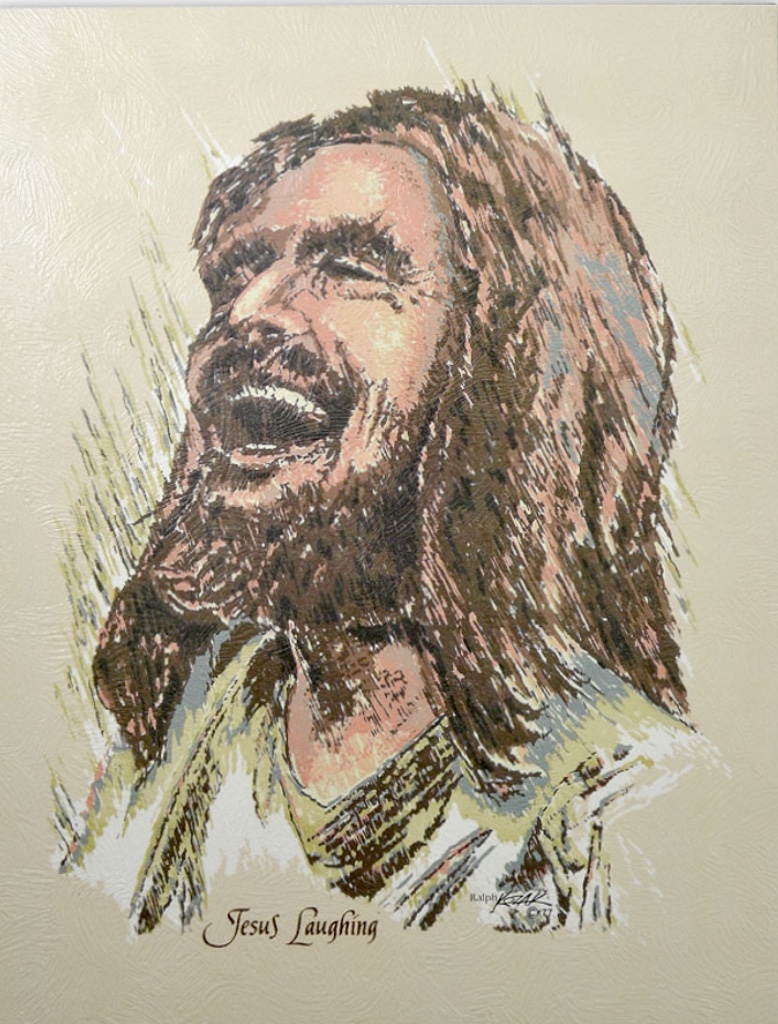
“When I imagine Jesus, it is not simply as a person who heals the sick, raises the dead, stills the storm, and preaches good news. It’s also as a man of great goodwill and compassion, with a zest for life . . . brimming with generous good humor. Full of high spirits. Playful. Even fun. Interestingly, in the past few decades two images of a joyful Jesus have enjoyed some popularity. The first is The Laughing Christ by Willis Wheatley, a sketch that shows Jesus’s head throw back in open-mouthed laughter. The second is The Risen Christ by the Sea, a colorful portrait of Jesus wearing a broad smile and standing beside a fishing net, painted by Jack Jewell, a seascape artist in the 1990s. These two paintings, among others, serve to counteract countless images of the gloomy Messiah. . . . But I wonder if some eschew these portraits because of . . . their subject material. Is there something about a smiling Jesus that threatens our understanding of the man?”

James Martin, Between Heaven and Mirth

“Okay, “I said. I’ve been AWOL for a while, painting myself in the likeness of the faithful man of sorrows who weeps over the city, a serious, joyless man who didn’t smile much and laughed rarely, if at all, on the way to the cross.

Reading Jesus’ response to his critics gives a clue to a different character more like The Laughing Christ. Jesus’s rebuke to his critics — “The Son of Man came eating and drinking, and they say, ‘Here is a a glutton and a drunkard, a friend of tax collectors and sinners “(Mt 11:18 NIV) — offers a clue to a laughing Jesus. There’s a glimpse of truth in most criticisms. Many Christians quickly rise to Jesus defense. We’re okay with the criticism that he ate and drank with sinners; we’re not okay with the accusation that he was a glutton and a drunkard. We become like my six year-old cousin and I charging up the stairs to tell Aunt Gertrude (Dennis’s mother) we’d discovered a six-pack in the basement refrigerator we were forbidden to go near: “I didn’t know my father was a drinkin’ man!” said Dennis. Surely Jesus was not a drinking man! “ There was never any beer in Jesus’s refrigerator. “Jesus was not a glutton and a drunkard!”

Both criticisms must have had a hint of truth to them. “Why do the disciples of John fast often, and make prayers, and likewise the disciples of the Pharises; but yours eat and drink?” (Luke 5:13.) Jesus must have savored the taste of a home-cooked meal, and lifted a glass or two in light-hearted moments at a party, not just at the Last Supper. The alternative to Jesus’s critics is not that Jesus never got a little tipsy or ate too much at a party. It would be ludicrous to criticize a tea-totaller on Weight Watchers for being “a glutton and a drunkard”! Jesus was no Gloomy Gus who never laughed. He wasn’t solemn or holy enough for his critics.

So here I am today, back online, opening my eyes to “The Laughing Christ” and “The Risen Christ by the Sea” that challenge the gloomy spirituality of gloom and doom, on my way home to a more buoyant joyful spirit the news can’t take away.

— Gordon C. Stewart, Chaska, MN, May 17, 2019.