
Unknown's avatar

About Gordon C. Stewart

I've always liked quiet. And, like most people, I've experienced the world's madness. "Be Still! Departure from Collective Madness" (Wipf and Stock Publishers, Jan. 2017) distills 47 years of experiencing stillness and madness as a campus minister and Presbyterian pastor (IL, WI, NY, OH, and MN), poverty criminal law firm executive director, and social commentator. Our cat Lady Barclay reminds me to calm down and be much more still than I would be without her.

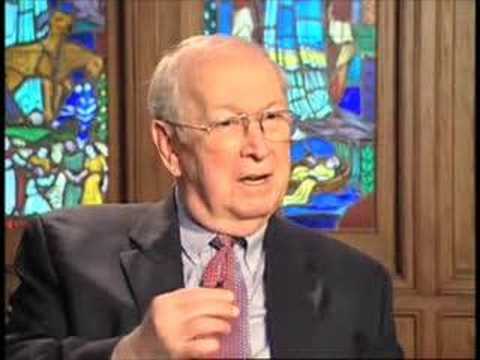
“Wait a minute!” – Tributes to Fred Craddock

Fred Craddock

Fred Craddock

Fred Craddock, one of America’s great preachers who died last Friday, was honored Sunday by CNN. Click HERE to see the CNN video and written tribute.

In this post on Views from the edge, two other preachers influenced by Fred Craddock share their stories.  The first came by email from McCormick Theological Seminary classmates and friend Harry Strong, recently retired, in Prescott, Arizona:

Fred may have been small in stature, but he was truly a homiletical giant! I still remember sitting with him and Barbara Brown Taylor in a preaching seminar back in 1985 at Kirkridge in eastern Pennsylvania. Fred was talking about the texts in Mark that made you want to interrupt Mark’s narrative and say, “Wait a minute … wait a minute! Mark, you can’t drop that sentence to the middle of the story and then move on!” One I especially remember was Mark 6:48  — “When (Jesus) saw that they were straining at the oars against an adverse wind, he came towards them early in the morning, walking on the sea. He intended to pass them by …” And Fred interjected: “Mark! Wait a minute! Wait a minute! ‘He saw them straining at oars … he came towards them, walking on the sea – and HE INTENDED TO PASS THEM BY???’  Where the heck was he GOING??!!

A second email arrived from Bob Young who once served as Pastor First Presbyterian Church in Enid, Oklahoma. Bob is no retired in Corsicana, Texas:

Fred Craddock lived a block away from me in Enid. I chaired the Fall Festival of Faith for the Council of Churches one year. Fred was our preacher. It was a treat to work with him. We met several times to prepare the liturgy for the services. He often preached at the chapel services of Phillips Theological Seminary where I was an adjunct. He ALWAYS — and I mean ALWAYS — left us as people who knew we had overheard the Gospel again. We laughed and cried and listened with wrapt attention. I hate to admit this, but one time, as he began to preach, I said to myself “I will not let him hook me today. I will just sit here and be stoic.” By the end of the sermon I had tears in my eyes. In my experience he simply could not be ignored. When he preached, barely visible behind a pulpit in that squeaky little voice, everyone listened. Amazing just amazing.

I was at the funeral he preached for a Phillips faculty member who had battled cancer for years. Still gives me goose bumps. A very fine, humble, amazingly gifted and faith-filled gentle man. I have been rereading Cherry Log Sermons and the book of his “parables.” Whew!

Quite independently of each other, Harry and Bob each ended his email by calling attention to Fred Craddock’s Cherry Log Sermons.

Thank you, Fred, for your long ministry of thoughtful humor and tears. “Well done, good and faithful servant….Enter into the joy of your Lord” [Matthew 25:23].

– Gordon C. Stewart, Chaska, MN, March 11, 2015.

Shall the meek inherit the earth?

The meek shall inherit the earth, according to the fourth Beatitude of Jesus’ Sermon on the Mount: “Blessed are the meek; for they shall inherit the earth” [ Gospel of Matthew 5:5].

Will they?

And, if they will, what kind of earth will they inherit? Will it be worth inheriting?

Will there be….

As in the rest of Jesus’ teachings, the contrary value system of the powerful, the rapacious, and the vested interests is turned on its head. The prevailing fourth beatitude then and now is different, the beatitude that parades under the cover of freedom from government interference:

“Blessed are the indomitable, for they will have title to the planet.”

This morning’s story “Dayton, safety rules get blasted” [StarTribune, p. 1], is a local illustration of the two sets of beatitudes playing themselves out in American public life.

The Minnesota Legislature is muscling in on the power of state agencies in a broad effort to assume more influence on everything from from water quality to health and safety regulations.

A  coalition of Republicans and DFLers from the Iron Range and rural districts say regulators are socking businesses and cities with burdensome, expensive rules in order to keep Minnesota’s water clean of sulfates, phosphorus and other contaminants.

What will be left of the Earth by the indomitable may not be worth inheriting. The StarTribune article goes on to quote a South Saint Paul legislator at a recent hearing, which makes the connection between the need environmental protection and the need for campaign finance reform. “The pollution in the system is money.”

However that may be, one thing is clear. No one owns a planet.

Only the meek deserve the inheritance we’re now wasting — the Earth to which no one owns title.

– Gordon C. Stewart, Chaska, Minnesota, March 11, 2015


Aruba

flat dry island
cactus aloe yucca
wind blown waves
wind blown trees
always 80 degrees
white sand beaches
cruise ships dock
sails boats yachts
many tropical fish
scuba dive snorkel
tourists shops stores
resturants bars cigars
brightly painted houses
free schools hospitals
hotels windmills golf
time share condos
above ground cemeteries
brightly painted tombs
one happy island

– Steve Shoemaker, Urbana, IL, March 11, 2015

February in America

Our Subaru left Chicago
and used each wheel of 4-wheel drive
to navigate 2 feet of snow.

The ice we saw off Lake Shore Drive
got worse as we drove by Sox Park,
but after 97th Street

the Interstate was dry. We mark
the trip-o-meter: it is set
at zero–so is temperature.

We take I-57 south–
by Memphis the results are clear:
one degree warmer on the route

for every 13 miles we drive.
By Florida (smile!) it’s 75!

– Steve Shoemaker, Urbana, IL [written from Central and South America without cell phone access]

Like beads on a string

This morning’s StarTribune carries a number of stories Views from the Edge ties together like beads on a string. The string is our culture’s addiction to violence.

Bead #1: Madison students protest shooting [Section A,  p. 1 & 5, reprint from Milwaukee Journal Sentinel]

Students from the University of Wisconsin-Madison and local Madison high school students marched to the State Capitol where “about 1,500 protested the death of Tony Robinson, 19, who was shot and killed by a Madison Police Officer Friday night.” Tony Robinson was black; the officer is white.

“Madison Police Chief Mike Koval issued an apology on his blog,

Reconciliation cannot begin without my stating ‘I am sorry’, and I don’t think I can say this enough. I am sorry. I hope that, with time, Tony’s family and friends can search their hearts to render some measure of forgiveness.

Protesters honored the urging of the Robinson family that protests be peaceful.

Bead #2: U of Oklahoma kicks fraternity off campus for racial chants [p. 3, re-print from the New York Times]

No sooner had that nation observed the 50th Anniversary of “Bloody Sunday” in Selma, Alabama than University President David Boren shut down the local chapter of Sigma Alpha Epsilon at the University of Oklahoma. Boren ordered members of the fraternity to remove their things from the frat house by midnight at which time the house would be closed.

The closing came after videos showed a group of young men in formal attire “riding a bus and singing a chant laden with anti-black slurs and at least one reference to lynching.”  A student group calling itself the Unheard Movement had posted the video on YouTube and identified the men as members of the local SAE chapter.

The video contains this message: “This video contains language that is offensive, disrespectful and unacceptable. Even after 50 years after the events that occurred in Selma, Alabama, we will have a reason to march. We as a people have come a long way, but yet still have so far to go.”

Bead #3: Boy shoots girlfriend, kills self  [Twin Cities & Region Section, p. 1]

The 14 year-old girlfriend, who’d been shot in the chest and face, was later alert enough to tell investigators her 15 year-old boyfriend had been “playing” with the gun when it went off accidentally.  After the gun went off, the distraught boyfriend ran outside with the handgun. He was found face down with the gun nearby. According to the Anoka County Sheriff’s Office “there are no additional suspects being sought and no specific concern to public safety with regard to this incident.”

The string: American culture’s addition to violence, racism, and guns, and the increasing number of Americans who are joining “the Unheard Movement” to say “Enough!”


The Church on the Bridge

Pettus Bridge, Selma to Montgomery

Pettus Bridge, Selma to Montgomery

If some churches are like opium dens, others are like Pettus Bridge, the bridge over the Alabama River you must cross to get from Selma to Montgomery, Alabama.

In the history of America’s civil rights movement, Pettus Bridge and the events of “Bloody Saturday” represent a crossing over from the society addicted to violence, hatred, and war to “the peaceable kingdom” of Isaiah. Think Jesus. Think Martin Luther King, Jr. Think Congressman John Lewis. Think all the anonymous souls who dared to cross the bridge from here to there.

“Have we not come to such an impasse in the modern world that we must love our enemies — or else? The chain reaction of evil — hate begetting hate, wars producing more wars – must be broken, or else we shall be plunged into the dark abyss of annihilation.” [The Rev. Dr. Martin Luther King, Jr.]

I suspect Karl Marx never knew a church like that. What he saw was religion as a tool of the powerful, an ideological overlay on reality to keep their subjects compliant with the existing social order.

The church of the bridge is no opium den. No one is doped up. No one is in a stupor. People don’t go there to hide. It is by nature a place that calls for commitment and action. The Church as Pettus Bridge is spiritually, economically, politically, and culturally revolutionary. It requires far-reaching transformation of people, structures, and systems. It’s a risky place. The church on the bridge requires you to put your whole body, mind, and soul on the line – on the  bridge – fully conscious that the troops the old social order will come after you. It is the church of Jesus and the prophets, and of Paul at his best:

I appeal to you therefore, brothers and sisters, by the mercies of God, to present your bodies as a living sacrifice, holy and acceptable to God, which is your spiritual worship. Do not be conformed to this world, but be transformed by the renewing of your minds, so that you may discern what is the will of God—what is good and acceptable and perfect. [Epistle to the Romans 12: 1-2, NRSV]

Every time the Church of the Bridge gathers for worship, the pews are filled with people wearing crash helmets. They expect something real to happen. They expect to make it happen. When they gather around the Lord’s Table for Eucharist, they know what they are celebrating: “the peaceable kingdom”, the City of God on the other side of violence, hatred, and war that puts them on the bridge.


The Church as Opium Den

Opium Den, Manila, Philippines

Opium Den, Manila, Philippines

In our previous post “Just a Bunch of Hypocrites” we promised further commentary on the American religious landscape. Randy Beckum’s sermon — posted earlier today as “American Sniper, Selma, and Jesus” — followed the courageous preaching examples of William Sloane Coffin and Martin Luther King, Jr. He turned the Chapel of MidAmerica Nazarene University into Annie Dillard’s kind of place where worshipers are learning they’d better bring their crash helmets to church.

Chaplain Beckum’s body language communicates that he knew his sermon wasn’t meeting the standard expectations of the worshipers. There are moments where his hands take the lapel of his sport coat to draw his coat like a shield around him against the arrows coming his way. “He will cover you with His pinions, And under His wings you may seek refuge; His faithfulness is a shield and bulwark. You will not be afraid of the terror by night, Or of the arrow that flies by day.” [Psalm 91:5]

So, one wonders, what might they, or other chapels and churches where a certain kind of American-Christian gospel, expect when they gather?

Imagine the Opium Den

The real world is hard. It’s disturbing, if you pay attention to all the bad news, and it’s often personally painful. Sorrowful. We need to be lifted up. Given a reprieve. Assured that all is as it should be, that “God’s in his heaven and all’s right with the world.”

In many evangelical Protestant churches the messages from the pulpit, the music, and the prayers put people into a Christian nationalist stupor. God, America, Christianity, and Capitalism are like strands of a ball of yarn, indivisibly entangled.

These are the forms of religion the exemplify Karl Marx description of religion as “the opiate of the people.” The opium dens are places folks went to smoke themselves into another world, the temporary illusory high manufactured by the human mind under the influence of opium. The Opium Den – the flights into another world – are escapes from real life that allow the systems and sources of human suffering to continue without conscious criticism and the actions necessary to overcome them.

Religious suffering is, at one and the same time, the expression of real suffering and a protest against real suffering. Religion is the sigh of the oppressed creature, the heart of a heartless world, and the soul of soulless conditions. It is the opium of the people.

The abolition of religion as the illusory happiness of the people is the demand for their real happiness. To call on them to give up their illusions about their condition is to call on them to give up a condition that requires illusions. The criticism of religion is, therefore, in embryo, the criticism of that vale of tears of which religion is the halo.

Criticism has plucked the imaginary flowers on the chain not in order that man shall continue to bear that chain without fantasy or consolation, but so that he shall throw off the chain and pluck the living flower. The criticism of religion disillusions man, so that he will think, act, and fashion his reality like a man who has discarded his illusions and regained his senses, so that he will move around himself as his own true Sun. Religion is only the illusory Sun which revolves around man as long as he does not revolve around himself.

It is, therefore, the task of history, once the other-world of truth has vanished, to establish the truth of this world. It is the immediate task of philosophy, which is in the service of history, to unmask self-estrangement in its unholy forms once the holy form of human self-estrangement has been unmasked. Thus, the criticism of Heaven turns into the criticism of Earth, the criticism of religion into the criticism of law, and the criticism of theology into the criticism of politics.

– Karl Marx, 1843, A Contribution to the Critique of Hegel’s Philosophy of Right

To the extent that a church serves as a relief valve for the suffering of its adherents and substitutes the amelioration of suffering through charitable programs for addressing the root causes of social suffering, it qualifies for Marx’s critique. Jesus and the Hebrew prophets didn’t fall for the opium den. They turned  to the criticism of Earth, of law, snd of politics…in the name of the God Who is beyond religion itself.  Like the psalmist,they rose above the fear of the terror of the night and the arrow that flies by day. They sound more like Marx than the sermons in the opium den, and they expect the same of their followers.

American Sniper, Selma, and Jesus

Sometimes, as the saying goes, a preacher goes from preaching to “meddling”. The sermon disturbs the listeners. Chaplain Randy Beckum preached a sermon like that in the Chapel of MidAmerica Nazarene University, a conservative evangelical college in Kansas. Focusing on the way of Jesus and American culture’s addiction to violence, Beckum’s sermon included comparison of the exceeding popularity, according to box office receipts, of American Sniper compared with Selma, the story of the Rev.Dr. Martin Luther King and the non-violent way of Jesus.

Views from the Edge had never heard of Randy Beckum or MidAmerica Nazarene University until this sermon went viral after the university president relieved the preacher of his additional role as Vice President of the MNU Foundation. Some sermons are hard to give and, apparently, they’re even harder to hear. That’s when you know a preacher’s worth his/her salt.


Just a bunch of hypocrites

“It is a poor sermon that gives no offense; that neither makes the hearer displeased with himself nor with the preacher.” – George Whitefield (1714-1770)

Many folks who remain in the churches have learned to live with poor sermons. Others have heard them and moved on.

William Sloane Coffin memorial photo

William Sloane Coffin memorial photo

One of those who had given up met one of America’s great preachers one day in a casual encounter.

“I don’t go to church any more.” he said, “They’re just a bunch of hypocrites!” To which William Sloane Coffin replied, “You bet. We are! And there’s always room for one more.”

William Sloan Coffin’s sermons always gave offense. As Chaplain at Yale, it was his pulpit that sparked and led the campus civil rights movement and protests against the Vietnam War. It was Coffin who presiding at the burning of draft cards. It was this offensive preacher who co-founded Clergy and Laity Concerned about Vietnam and served as leader of SANE/FREEZE, America’s largest movement for global nuclear disarmament. Coffin became Senior Minister of Riverside Church in NYC, one of the nation’s great preaching churches built for Harry Emerson Fosdick, the pacifist preacher thrown out of his previous congregation for sermons that status quo maintainers found offensive.

In the parlance of William Sloane Coffin, the well known statement that “the church is a hospital for sinners; not a museum for saints” [variously attributed to Augustine of Hippo, St. John Chrysostom, Abigail van Buren, and others] might be re-rendered “the church is a hospital for hypocrites; not a museum or a mutual congratulations society for the sinless.”

In a future post Views from the Edge will reflect on the American religious landscape in light of Whitefield’s observation and this retired preacher’s search for a new church home.

– Gordon C. Stewart, Chaska, MN, March 7, 2015.

Their Blood Runs in Mine

Our friend Dennis Aubrey posted “The Destruction of History” today on Via Lucis, lamenting the latest in the sordid history of religion destroying history and art.

Dennis Aubrey and P.J. McKey love beauty, history, and the religious architecture of Gothic and Romanesque churches they photograph in Europe. Sometimes, like today, they express a profound despair over the destruction done in the name of religion.

“Now we have word that ISIS has defaced and destroyed artifacts in Mosul, including Assyrian statues of winged bulls from the Mesopotamian cities of Ninevah and Nimrud. Video released by the newest barbarians to assault the cultural history of humanity shows a man using a power drill to deface the works.

“As so often throughout history, the excuse was religion. ‘The Prophet ordered us to get rid of statues and relics, and his companions did the same when they conquered countries after him.’  How many times in our work at Via Lucis have we read variations of these words from Catholics, Huguenots, Calvinists, revolutionaries, counter-revolutionaries, and military leaders?”

Years ago during a sabbatical in St. Andrews, Scotland, the destruction wrought there by my Scottish reformation forebear John Knox and his followers chilled my soul. The people who bred and raised me – Presbyterians of Scottish descent and religious sentiment – did this. They took the commandment to have no other gods as license to destroy, maim, and burn church art and heretics. Their blood runs in mine. Their DNA is mine. And, if confession has any meaning or merit whatsoever, the children of such crimes must say we’re sorry. Really sorry. Repentant. No more destruction. No more following the orders of bully prophets, no matter whose name they claim to honor.

Thank you, Dennis, for your post. On behalf of my ancestors and in the spirit of spirituality of beauty, love, and peace on the other side of destruction, thank you for your artist’s eyes. Thank you for your courage. Thank you for the hope in something better in a barbaric time.

– Rev. Gordon C. Stewart, Presbyterian minister Honorably Retired, Chaska, MN, March 4, 2015.