The Varieties of Religious Appearance

Pulpits and lecterns are “One size fits all!”
Visiting preachers will cover the wall.
A very short woman,
She carries her step in
I’m very tall, so I carry a hole…

  • Steve Shoemaker, Urbana, IL, January 25, 2016

NOTE: These photographs of Steve kneeling (l) and standing (r) were taken several years ago at the historic pulpit of Sheldon Jackson in Colorado.Sheldon_Jackson Sheldon was a smaller guy with a big heart. Steve’s has the same heart and is likely much more humorous than Sheldon, but who’s to say?

America’s Original Sin?

Jim Wallace’s new book America’s Original Sin: Race and White Privilege & the Bridge to New America takes a hard look at the origins of the Euro-transplant nation that supplanted America’s indigenous people. Jim Wallace argues that the United States was born of White Privilege. It is the nation’s original sin: it’s America’s first and enduring sin.

It seems no matter how much things progress, or seem to progress, the original sin is always crouching at our door, as the Genesis story of Cain and Abel puts it. “Sin is crouching at your door, and you must master it”.

But is the issue race? Or is it class? Or something else, a fatal flaw in the human psyche and the social psyche? Are racism and White Privilege what they seem, or are they manifestations of something more basic?

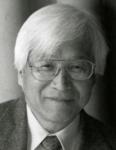
“There is only one sin, said Kosuke Koyama, and it is exceptionalism.” Born in Tokyo in 1929, Koyama saw in the Japanese Empire the myth of exceptionalism. To his great sorrow, he saw the same myth in the United States, the second home where he finished a distinguished career as John D. Rockefeller, Jr. Professor of World Christiankosuke-koyama-2ity at Union Theological Seminary in the City of New York.

Beneath White Privilege lies the election doctrine that arrived on these shores with America’s European settlers. Their theology was wrapped around the belief that the true believers, the elect, were exceptional to the rest of humankind. The result was genocide against America’s indigenous peoples followed shortly by the institution of chattel slavery, both the racial sins of White Privilege of which Jim Wallis writes.

In the larger scheme of things in 2016, one can argue convincingly that exceptionalism has been a primary contributor to climate change. The sin of exceptionalism is the illusion that we, the human species, are superior to nature. In  honor of Koyama: Could it be that there is only one sin: exceptionalism?

I wish Jim and Ko could have spent time with each other. It would have been so enlightening to have sat in not their conversations.

  • Gordon C. Stewart, Chaska, MN, January 25, 2016.

No Problem!

When was the last time you heard “You’re welcome” or “I’m sorry”?  “No problem” used to mean there was a problem. Someone had made a mistake or had inconvenienced you. 

The Restaurant

Would you like a refill?
Yes, please. That’d be great.
NO PROBLEM.
Thank you.
NO PROBLEM.

Can you tell me where I might find the Rest Room?
NO PROBLEM. [Wait person gives directions.]
Thank you.
NO PROBLEM.

I’m sorry. I ordered the ribeye medium rare. This is a NY strip well-done.
NO PROBLEM.

Vacation Rentals

I just checked out the rental car. It’s a mess. There are dents and scratches everywhere.
NO PROBLEM.

We have a reservation. We’d like to check in.
NO PROBLEM.

I’m sorry. I have a hearing problem.
NO PROBLEM.

The plastic deck chair on the balcony just broke apart. I’m lucky my hip’s not broken.
NO PROBLEM.

The handle on the toilet just broke.
NO PROBLEM.

The Supermarket

Can you please help me find the Splenda. It’s not next to the coffee and CoffeeMate.
NO PROBLEM.  [Employee says it’s in Aisle 4.]
Thanks so much.
NO PROBLEM.

I hate to butt in, but I think it’s your son who just tipped over a row of canned fruit in Aisle #8.
NO PROBLEM.

Do you have a _____ Reward Card?
No.
NO PROBLEM.

The Airlines

Um. I don’t mean to be an alarmist. But the pilot just boarded the plane with dark sunglasses, a white cane, and a seeing eye dog.
NO PROBLEM.

Would you like coffee, water, Sprite, Diet Coke, regular Coke, orange juice, or tomato juice?
Coffee please, with two Splendas and cream.
NO PROBLEM.
Thank you.
NO PROBLEM.

_____________________________________________________

Gordon: Thank you very much for coming by Views from the Edge!”

Steve: NO PROBLEM!

Pops Warfel and the School Playground

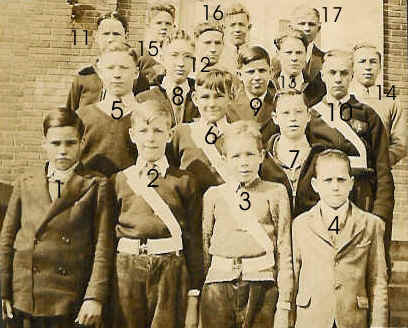
“Pops” Warfel, the Principal at Marple Elementary School in Broomall, PA, was like a prison warden. Every prison warden has his guards, his ‘goons’, as the prisoners call them. Every school back in the 1950s had its Safeties, the Principal’s goons who wandered the Yard during recess to keep the students in line. Real guys. Like Sammy Peacock.

schools_trainer_safeties_1935-36

School Safeties

In the 3rd Grade Sammy, attired in his Safety outfit, “arrested” his classmate Gordon during recess for cursing. “I DIDN’T curse,” said I.

“You did, too,” said Sam. “You said a bad word. I’m taking you to the Principal’s Office!”

Pops Wafel asked his Goon what happened out in the Yard. “Gordon, you know better than that. You father’s a minister! He wouldn’t approve of you using language like that. We’ll keep this between us just this once. But if it happens again, I’ll have to tell your father.”

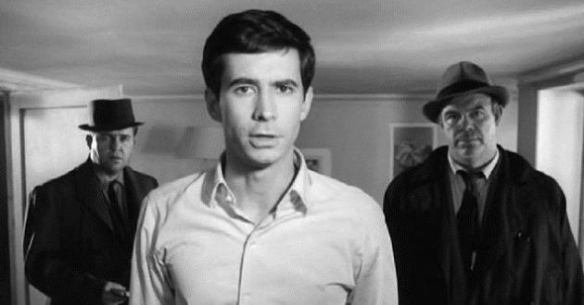
Long before I read Kafka’s The Trial, I experienced existential guilt – the feeling of guilt for something I never did – the guilt of being alive. I was Josef K in The Trial.

Meanwhile, Pops Warfel was violating one of the prison rules daily: no eating in class. Pops often reached into his desk drawer, and, pretending to cough, would pop in a jelly bean. No one dared say a word.

  • Gordon C. Stewart, Marple Elementary Inmate #00056789, Jan. 22, 2016

1-The-Trial


Ah, Finally a Florida Vacation!

Three couples rented a house this week in Florida. We selected the place after an extensive search using criteria of natural setting, water-front, quiet, three bedrooms, fully-equipped kitchen, views, kayaks/canoes provided, cost with a no-smoking policy. The house is on an estuary with manatees, ospreys, pelicans, egrets, Great Blue Herons, oyster-catchers, and advertised a million dollar view. It was too cool for the manatees, but that’s understandable. All 10 of the renters who rated their experience gave it ***** out of five. Hmmm.

QUESTIONS YOU MIGHT WANT TO ASK BEFORE BOOKING A VACATION RENTAL.

Do the owners live on the lower level?

  1. Do the owners smoke?
  2. If they smoke, how many packs/day do they smoke?
  3. Does the smoke seep up through the floors into the closets of the rental unit?
  4. Do they smoke anything else?
  5. How do we get up to the rental unit?
  6. Are the steps inside or outside?
  7. If outside, are they protected from high winds and torrential rains?
  8. Do the beds squeak?
  9. Is there an odor and standing water around the house that’s related to nature, but not the estuary?
  10. Are you on the city sewer system, or do you have a septic tank?
  11. If septic tank, has it been pumped out in the last year or two?
  12. Is there a limit on the number of showers we can take per day?
  13. What’s the meaning of a “quick” shower?
  14. Is there a limit on the number of times we can flush the toilet before it runs down the driveway?
  15. What kind of deck and balcony furniture is provided?
  16. If it’s made of plastic, how long has it been weathering?
  17. Has any of the plastic chairs on the balcony crumbled underneath a renter recently?
  18. chair on balcony
  19. Do you have drinking glasses? How many?
  20. Do you have coffee cups? How many?
  21. Do you have enough forks, knives, and spoons for six people to all eat at the same time or must we eat in shifts?
  22. Do you have a dishwasher?
  23. Will we need to buy Imodium because of the drinking water?
  24. When it rains, does the rain pour through the top of the west-facing window frames?
  25. Does the wind echo through the house like a freight train?
  26. Once you lower yourself the kayak from the deck, is there a way to get out without injuring yourself?
  27. Did you build the house yourself with the proper building permits?
  28. Was the house built with salvaged materials?

On the plus side, when we asked the owner for more plates, bowls, and coffee cups – there were four or five of each – he said he’d go downstairs and tell his wife. Nothing happened. Later in the day, before dinner, we asked again. “Oh,” he said “I’ll be back in 20 minutes.” He returned from Marshalls with newly purchased plates and glasses. We were grateful. He went back for the coffee cups, and everyone was happy! 

Now…about that  broken plastic chair that still sits the bedroom balcony!

  • Gordon C. Stewart, FL, January 22, 2016


Word for the Day: Semiotics

The word for the day was suggested by a former Kindergarten classmate. Carolyn, a retired university music librarian, brought Semiotics to our attention after reading yesterday’s posts on hermeneutics. She knew the word but had had to look it up at least seven times, but could no longer remember what it meant.

The request took us online to the Encyclopaedia Britannica entry on Semiotics.

Semiotics, also called Semiology, the study of signs and sign-using behaviour. It was defined by one of its founders, the Swiss linguist Ferdinand de Saussure, as the study of “the life of signs within society.” Although the word was used in this sense in the 17th century by the English philosopher John Locke, the idea of semiotics as an interdisciplinary mode for examining phenomena in different fields emerged only in the late 19th and early 20th centuries with the independent work of Saussure and of the American philosopher Charles Sanders Peirce.

Click HERE for the Encyclopaedia Britannica‘s one page entry, ending with references and links to the influence of Semiotics in the fields of aesthetics, anthropology, psychoanalysis, communications, and semantics. The Britannica doesn’t mention hermeneutics, although the relation between them is that of kissing cousins. Both understand us humans as meaning-makers who create meaning by means of signs and language.

Most students of hermeneutics and semiotics disagree with religious fundamentalism’s view that meaning already exists and that the human task is to find it, as in the statement often made at times of death that “God has a better plan.” The role of the divine, if one supposes it, is as creative Spirit beneath the human spirit, always creating, never finished, never pre-determined. Scholars in theology, philosophy, anthropology, and linguistics can no longer do their work honestly without going through the Semiotics door of Claude Lévi-Strauss, Jacques Lacan, Michel Foucault, and Jacques Derrida.

  • Gordon C. Stewart, Tampa, FL, January 22, 2016

Verse – The Word-Supple Couple

OR “THE BIRTH OF HERMENEUTICS”

There once was a dissatisfied couple
whose way with words was quite supple.
An Ermine was he; a Eunice was she.
“I hate being “Ermine,” said he;
“I hate being Eunice,” said she.
With Plato in hand, they looked
and they looked for a new name
to couple the word-supple couple,
so it was that Ermine and Eunice gave
birth to the world’s first Hermeneutics.

  • Gordon (with apologies!), Tampa, FL, Jan. 21, 2016

NOTE: Read “Hermeneutics” posted moments ago.


Hermeneutics

Never heard of it? It’s not one of the big words we hear every day. But ‘hermeneutics’ is a basic activity we’re engaged in every day. It’s like breathing – one of those basic things we don’t notice until someone disagrees with us.

The word’s origins date back to Greek philosophy, long before Peewee Herman, Herman Goehring, or George Herman (“Babe”) Ruth did it. But I digress. Their names were spelled with an ‘a’; there was no ancestor named Hermen.

But Peewee, Herman, and George each engaged in hermeneutics, the theory and practice of interpretation. They interpreted life, respectively, as comedy, tragedy, and sport. They looked at the human experience through their own interpretative lenses.

Every time we read a text, watch a film, listen to a speech, or view a painting, we interpret it. We are doing hermeneutics. We put into practice the largely unconscious principles that shape how we experience the world.

The study of hermeneutics, a Latinized version of the Greek hermeneutice, reaching back to Plato and Aristotle, has been part of the great thinkers of Western civilization down to our own times. Click The Stanford Encyclopedia of Philosophy for the history of the term.

  • Gordon C. Stewart, Tampa, FL, January 21, 2016.

Thanks to Wonderfulwordsblog for inviting readers to create a post on a lesser known word.


Two Guys from Corinth

The students at Liberty University heard about the two guys from Corinth yesterday. Guest speaker Donald Trump quoted 2 Corinthians, confirming his Christian credentials to the scripture-based evangelical Christian audience at Liberty University.

There were snickers. People who know the New Testament don’t call Paul’s Second Letter to the Corinthians “TWO Corinthians”; they use the short hand “Second Corinthians.”

Most other places Trump’s mention of Two Corinthians would make a great opening line for a story.

A guy walks into a bar and says, “‘Hey, listen up. Two Corinthians were walking in mid-Manhattan, and the one guy says to the other, ‘You know what? This Trump guy comes up to me at 86th and Fifth Avenue and starts talking like he knows our town.’

“‘Yeah?’says the second guy from Corinth. ‘He did the same with me. But does he speak Greek?’

“‘What’s the matter with you! As long as he tells stories about Two Corinthians, I don’t care. The guy’s makin’ us famous. The people at Liberty love us. Besides, Greece is in big trouble. Maybe Trump can fix Greece, too!'”


Looking and Seeing – Thoreau


What you see, not what you look at, is what you get. Or is it?

Is something there you don’t see? Is what you see there because you put it there?

The relation between subject and object is an ancient philosophical question that’s not about to go away.

When I saw the Thoreau poster, I saw the darkness behind the words. Then it drew me to the light – the sunrise or sunset. But, which is it: a sunset preceding darkness, or sunrise bringing the light? Or are we seeing cars, pavement, poles, and signs? What would Thoreau see?