Clouds

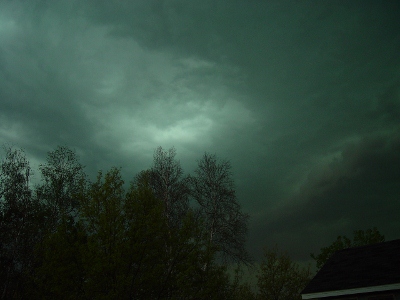
green storm clouds – Kay Stewart photography

Tonight the storm blew in

Darkness covering the deep.

Green-sky funnel clouds

threatening everything that is

passed over, passed over

blew on past

while beauty rarely seen swept in

as morning follows night.

yellow puffs of mercy,

puffs of wonder,

yellow cotton-candy light

puffed across the sky

pushed by first-light breeze

that cooled the skin

refreshed the air and

took my breath away!

– Gordon C. Stewart, Mother’s Day, 2004

Yellow cotton-candy clouds – Kay Stewart Photography

Latest “All Things Considered” commentary

During campaign season, maintaining serenity is a good trick

by Gordon C. Stewart, “All Things Considered” guest commentary (MPR)

Aired August 20, 2012

Click HERE for the Minnesota Public Radio publication, including an Audio link. Here’s the text.
.

Some days are brightened by a trip to the nursing home.

Take last Monday, for instance.

The members of the group that meets every Monday at 10 a.m. shuffle in on their walkers, or roll in, in their wheel chairs.

Ninety-seven-year-old Frances (not her real name; nor are the others to follow) walks in without assistance. Her 78-year-old son is dying of cancer. Another relative, 30 years younger than she, is next door in the memory care unit. “Good morning!” she says.

Georgana has been confined to a wheelchair all her life. But her mind is as sharp as her sense of humor. Gwen, who’ll be 90 this week, is coming to the end with hospice care. Pat, recently moved from Assisted Living to the Care Center, is in a wheelchair. All 12 of them smile and offer each other greetings: “Good morning!”

This morning I’ve watched too many campaign ads brought to my computer by Unedited Politics, a website that republishes campaign ads and political speeches without editorial comment. I’m all stirred up.

The 12 people from the nursing home have been drawn here by their desire for light. “Rejoice!” says the reading for the morning. “I have learned the secret of being content in any and every situation ….”

I ask: How do you rejoice in a nursing home? What is the secret of being content when your body and your mind don’t do what they once did?

Listening to their reflections reminds me of how small our footprint is on the larger world. They share my distress about the news, but their years have taught them to recognize light wherever it meets them and to relish the little things of daily life: a smile, a kind word, the cardinal and the squirrels playing outside their windows, a sense of inner peace, a strange contentment. I hope to be more like them — to pay more attention to the things that are beautiful, admirable and lovely.

While they shuffle out on their walkers and roll out in their wheelchairs, Frances, Georgana, Gwen, Pat and the rest of the ad hoc community at the nursing home thank me for coming and wish me a good week. They have lightened my step. I’ll still pay attention to the news, but I’ll listen and watch with a greater lightness of being.

In remembrance of Leah Thomas

Leah Thomas was an attorney at the Legal Rights Center. Born and raised in southside Chicago, Leah’s older brother had been a member of the Black Panthers. She was raised with the cry for social justice in her bones, full of faith, smiles, laughter, and steadiness, a sturdy legal advocate and “mother” to the juvenile clients she defended in Hennepin County District Court.

She fainted one morning getting her coffee at Panera Bread. Days later she was gone. The funeral was held at her African-American church in Minneapolis. As Executive Director of the Legal Rights Center and Leah’s colleague and friend, I offered the following Tribute to Leah at the funeral.

Like light

Like joy

Like sun breaking through a storm

Her laughter

Brightens the room

Breaks the ice

Fills it with peace.

Mama walks lightly

Amid the trials and the cares

Quick as a black panther

Steady as a turtle

She coos with the tenderness

of the turtle-dove

walks with the strength of a lion.

With steady hand

With sturdy faith

And clarity of mind

She laughs

And soars her craft

Through clouds and storms

To lead us on and through.

Like light,

Like joy,

Like sun breaking through a storm,

She laughs,

She brightens the room,

She wipes our tears

She fills us with her peace.

– Gordon C. Stewart, Legal Rights Center, Inc., Feb. 1, 2005.

Take Away our Numbness – A Memorial to Sydney Mahkuk

These words were spoken on the sidewalk where 12-year-old Sydney Mahkuk died. Community leaders and Sydney’s family asked me to bring some kind of meaning and hope to the sidewalk where Sydney had been dumped from a car by the side of the funeral home.

November 4, 2005

Gordon C. Stewart

Executive Director, Legal Rights Center, Inc.

Once upon a time a proud people lived on this land. They called themselves Ojibwe, Anishinabe, Dakota, Lakota, and Winnebago. Occasionally a Menominee would visit.  They lived close to the land.  They hunted. They fished. They gave thanks to the Great Spirit for every day.  They saw themselves as part of nature. They rose with the sun. When the sun went down, they gathered in a circle by the light of the campfire.  By the light of the campfire, they listened to the elders, whose stories broke the silence to told the children who they were.  The children went to bed in safety.
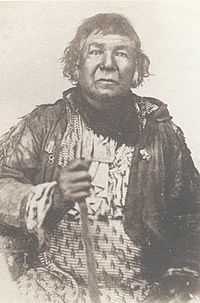
Shabbona, Potawatami Chief, c. 1775 – 1859

They were people of great dignity.  Their ways were good ways.  They respected the land. They respected each other.  They honored their elders.  They cared for the children.  They trained their youth to become adults.  They died with dignity.  They were buried with honor. Earth was their mother. Gitchi Manitu, Wakan Tonka, the Great Spirit, was the common Grandfather of them all.

Then something terrible happened.  A plague came across their land.  It took their land.  It stole their culture.  It laughed at their spiritual practices.  It called them names.  It tore down their tepees, their longhouses and their sweat lodges.  And in their places the plague built big buildings – tall buildings, arrogant buildings, skyscrapers, they called them, that invaded the sky, turning the land into something it is not.  The Ojibwe and Dakota who lived here no longer rose with the sun.  They no longer gathered around the campfire.  They no longer heard the stories of who they were.  They knew only what the white plague had taught them – that unless they joined the plague, they were nobody, and that if they challenged it, they would lose.  They would die.

And so they lived in grief.  A sorrow too hard to bear.  A loss too great to carry.  And the plague offered them relief to numb the pain – firewater that would make them happy in spite of their despair.  Drugs to drive away the memories of who they were.  Escapes to make them numb.  To numb the pain.  Opiates to freeze their tongues.

The elders no longer acted like elders.  The parents were numb with grief.  There were no aunts.  No uncles. No cousins.  No grandparents.  Nobody dared to be a neighbor.  The children were left with no campfire at night – no community to tell them the stories of who they were and who they were not – and so the children and the youth drifted out into the night in search of themselves.  Locked in lonely prisons of confusion, the youth no longer knew Mother Earth as their Mother; they no longer knew how to give thanks to the Great Spirit for the day.  They no longer went to bed with the sun.  They wandered the night in search of the community they had lost and never known.  And the gangs and the drugs and the alcohol offered them the promises of a better life that was the kiss of death.  Ecstasy was no longer a way of life – it was a pill that would make them higher than the skyscrapers that ruined the once humble landscape.  And sometimes the alcohol and the drugs and the gangs that had promised to numb their pain took their lives and they were found in the morning as the sun came up.  They were found by strangers.

Sydney Mahkuk, RIP

Then one day a girl named Sidney, a 12 year-old Menominee-Portawatami, was found beside a funeral home on Columbus Avenue. How she got there nobody knew.  How she died, nobody knew.  But everybody knew why.

The community had unravelled.  It had become dry bones in the valley.

But on that day that the people gathered on the sidewalk on Columbus Avenue to mourn her death, there was a sound from heaven – a rattling, the sound of dry bones coming together, a resurrection of the once proud community. And as a result Sidney Mahkuk’s tragic death the community came together as it had not come together since the plague had begun.

On the day they gathered on Columbus Avenue – a street named after the European explorer who had not discovered their land – on that day, the community woke from its sleep.  It came together – Ojibwe, Dakota, Menominee, Potawatami, Lakota, African-American, Somali, Hispanic, Hmong …and, yes, even the descendants of Columbus.  And on that day, because of a little girl’s unexplained death, they stood together arm in arm and said “Enough” to the plague.  “Enough” to numbness.  They said, “No more. No more. No more death on Columbus’s Avenue.”  And it was more than words.  They looked up at the sun again and really saw it…as if for the first time. They looked down at Mother Earth and saw it, as if for the first time.  And they gave thanks.  Then they looked at each other and they said, “We are a proud people.  We will take back this land.  We will be the people who honor our elders.  We will be the people who support the parents and care for the children.  We will be the people who guide the youth.  We will be a people of hope, not despair.  We will be a people of love, not hate.  We are all Menominee-Potawatami. We are all grandchildren of one Grandfather.  We are the people who care for each other.  We are the people who refuse to go numb.  We are the people who will teach the children of Columbus – starting right here, right now… on Columbus Avenue – how to live in a good way with Mother Earth, in a good way with Iraq, in a good way with the rivers and the sky, the ozone and the sun.  We are the people whose spirituality will help to cure the cancer of the spiritual and economic plague that has left our people in despair.

From that day on, November 4, 2005 at twelve noon, 12 year-old Sidney Mahkuk – our daughter, our granddaughter, our little sister, our friend, our neighbor – would be forever remembered as the one whose deadly silence on this sidewalk spoke so loudly that we could not stay numb.  And we took the city back and brought it back to life.

Merciful God – Wakon Tonka, Gitchi Manitu, God and Father of our Lord Jesus Christ, Jehovah, Allah, Grandfather, Great Spirit who breathes life into all things and receives all life at the end – Your’s is the air we breath, the land on which we walk.  Assure us that your love is stronger than every power to divide or hurt us.  Receive your child Sidney into your eternal care.  Wrap your arms around Glenda, around Sidney’s brothers and sisters, around all the defenseless children of the night, around all of us who mourn their plight and mourn Sidney’s death.  Re-kindle the light of faith and hope. Take from our souls the plague of hate, self-hatred and despair.  Take away the numbness and the apathy.  Make us a people of healing.  A humble and quiet people, but a proud people of love and spiritual strength. A people who are not afraid to feel the pain, who really feel the loss, who feel our feelings and do not fear them.  A people who dare to believe that every tear that falls from our eyes flows into the common stream of human suffering that leads into the ocean of community restored.  A people secure in the knowledge of your love.  Amen.

Heaven on the Bridge at Big Sur

Sometimes the present is heavenly. Click HERE for one of those times. This photo of the Bixby Bridge, Big Sur, California, by Max Granz posted on Photobotos.com is ethereal…and Eartlhy real. Leave the photo up for a few minutes to relax your day…or bring calm to your night.

You cover Yourself with a garment,

who has stretched out the heavens like a tent,

who has laid the beams of Your chambers on the waters    …who makes the winds Your messengers,

fire and flame (and headlights?) Your ministers.”

– Psalm 104

Leave a comment here or on the Photobotos site, as I did, to appreciate the photograph and to thank the patient photographer.

Doubting Thomas

Thomas “the doubter” – Thomas “the Twin” – is my favorite Apostle. He is I. I am he.

Why do I love Thomas?  He’s slow to believe. There are many doubts, too much conflicting evidence that begs the questions. The questions come easily. The answers come harder and are few. “Unless I see the nail prints in his hands and place my own hand where the soldier’s sword had pierced his side,” said Thomas to the too credulous others in the Upper Room, “I will not believe.”

This Holy Thursday “I believe. Lord, help my unbelief.”

Poem “THOMAS THE TWIN” – Steve Shoemaker, Urbana, IL, April 4, 2012

To be a twin is to prove every day

How seeing is not believing.  And so,

Of course, I doubted when my friends would say

Many had seen the Lord.  I said, “If so,

A finger in his nail-pierced hand or where

Sword cut his side will prove he lives for sure.”

Then Jesus came into the room and said

He would let me touch him!  My doubt then was

Overcome by his presence.  And he said

Many would be blessed who believed he was

Alive without the benefit of sight…

Seeing may not lead us into the light.

Tonight, Holy Thursday, at 7:00 p.m. Shepherd of the Hill we will gather around the Lord’s Table. Ruth Janousek has drawn us at the Table.

God's Table at Shepherd of the Hill

God's Table at Shepherd of the Hill

Following the simplest Service of Holy Communion, the church will be darkened, lit only by candles held by individual worshiper representing the light of faith. As the Gospel narratives are read aloud … with long silences between them…the candles will be blown out, one by one, as the worshipers recognize ourselves in the story of the betrayal, denial, and flight of the Jesus’ closest friends and followers. It’s an ancient service called Tenebrae, the service of light and shadow.  By the end of the readings, the room will be dark. The only light will be from the Christ candle – the light of God’s faithful mercy and grace that cannot be extinguished.

“Easter Morning”

Steve Shoemaker

It’s Monday of Holy Week. I’m walking with Jesus as best I can toward the cross and  toward the celebration of Easter. This year I’m walking with members of the congregation who are  suffering, in great pain, sick, dying people, trying the best I can to be with them fully in ways that, by the grace of God, might help. This is not head stuff. It’s heart stuff. I get tangled in my head too often. I open the morning email. There’s this double acrostic poem from my old friend Steve Shoemaker, the 6’8″ and shrinking Ph.D. kite-flyer theologian and poet. Thank you, Steve.EASTER MORNING

Either Jesus really did rise or

All his followers made up the worst

Series of lies in history…  Poor

Thomas certainly was right to doubt

Even after hearing tales:  what four

Reached the tomb (or five?)  Who saw him first?


Matthew says two women, Mark says three;

Or was it just one, as said by John?

Reports of what eye-witnesses can see

Never can be trusted.  Luke said one

In the road joined two who could not see–

Not until he broke the bread…  No one

Got the story straight! Conspiracy?


Even grade school kids could do as well.

And Luke throws in Peter saw him too–

Somewhere unreported…  Who could tell

That this jumble of accounts could do

Enough to give faith and hope to all.

Resurrection?  Who could think it true?


Maybe just the simple:  those whose eyes

Open to the light through grief, through tears…

Reminded of love, of truth, of grace…

Needing to be fed, hands out for bread…

Inspired by the scriptures, in whose head

Grow visions:  life can come from the dead.

I’m adding this visual: “Disciples John and Peter on their way to the tomb”:

Disciples John and Peter Run to the Tomb

Burnand, Eugène, 1850-1921. Disciples John and Peter on their way to the tomb on Easter morning, from Art in the Christian Tradition, a project of the Vanderbilt Divinity Library, Nashville, TN.  http://diglib.library.vanderbilt.edu/act-imagelink.pl?RC=55038 [retrieved April 2, 2012].

Steve and I would love to hear your reflections and responses to Steve’s poem or Burnand’s painting. Thanks for coming by.