
The Paradox of Pentecost — Presence and Absence

A stranger than strange text for today’s Feast of Pentecost, the day the Church celebrates the coming of the Spirit, the Advocate, reads:

“I tell you the truth: it is to your advantage that I go away, for if I do not go away, the Advocate will not come to you…” [Gospel according to John 16:7].

It is Jesus in John’s Gospel who speaks these words to his disciples. They scratch their heads, like confused children being dropped off at camp against their will. They already sense the homesickness that will come. The thought of being abandoned brings anguish, the foreboding of oncoming forlornness.

The experience of absence, endemic to the human condition, is essential to faith. The feeling of anguished forlornness builds courage, and faith, of one sort or another, with or without an advocate.

Enter Jean-Paul Sartre’s reflections on anguish and forlornness. Fully conscious without religious crutches, I experience the anguish of my responsibility for myself and others, and the forlornness that realizes that I am alone in my decision-making. The decisions are mine along. No one but I am responsible.

Like the disciples, we want it to be otherwise. Some of us pray as though the feelings were a hoax, the Devil’s trickery or God’s pre-ordaining, as though our course were charted by another decision-maker disbelieved by Sartre. But regardless of our faith or faith denials, the truth is that to be human is to know this sense of anguish and forlornness.

Dietrich Bonhoeffer, the brilliant theologian imprisoned and executed by the Third Reich, caught the sense of it in a letter he wrote from a prison cell.

“The only way to be honest is to recognize that we have to live in the world etsi deus non daretur. And this is just what we do see — before God! So our coming of age forces us to a true recognition of our situation visa a vis God. God is teaching us that we must live as [people] who can get along very well without him. The God who is with us is the God who forsakes us (Mark 15:34). God who makes us live in the world without using him as a working hypothesis is the God before whom we are ever standing. Before God and with him we live without God. God allows himself to be edged out of the world and onto the cross. God is weak and powerless in the world, which is exactly the way, the only way, in which he can be with us and help us. Mark 8:17 makes it crystal clear that it is not by his omnipotence that Christ helps us, but by his weakness and his suffering.” [Dietrich Bonhoeffer, Letters and Papers from Prison, pp 219-220, McMillan Company, 1953, translated from German by Reginald H. Fuller.]

Bonhoeffer’s writing acknowledges the anguish and forlornness that precede the disappearance of the divine usurper of human freedom and responsibility. In place of the bad-faith God who keeps her children in diapers, there comes the advantage of Christ’s going away — the arrival of the Advocate who brings the unexpected joy of coming of age.

“I tell you the truth: it is to your advantage that I go away, for if I do not go away, the Advocate will not come to you; but if I go, I will send him to you” [Gospel according to John 16:7].

– Gordon C. Stewart, Chaska, MN, May 24, 2015 – Feast of Pentecost.
Don and Jesus in the Hospital

Word came this morning that a dear friend, Don, was rushed to the emergency room yesterday with internal bleeding. His hemoglobin count had dropped to a woefully low 5.5. Don is one of six classmates who gather each year for renewal of friendship, reflection, good food, a game of softball, and morning prayers.

Don’s hospitalization drew me back to an as yet unpublished follow up to the “Jesus in the Hospital” post from several weeks back on the weird dream of Jesus as a patient in the hospital.

Some readers stop reading when they see the name Jesus. Others like the name Jesus and are curious to read the story. Yet another group is distraught or confused by the thought of Jesus as a patient in the hospital. He might be the doctor or the healer, but not the patient.

This brief post is written for the latter group of readers.

Biblical scholars and theologians interpret the church’s sacred writings (Holy Scripture) according to the different genres of literature. They also differentiate between Jesus of history (Jesus of Nazareth), and the Jesus of faith (the crucified-risen Christ of believers). In Christian scripture the two are welded together. The Jesus story is told by four Gospels: Matthew, Mark, Luke, and John. A gospel is by its very nature a witness to faith, written by faith to elicit faith in the reader, not an objective eye-witness account of events in the life of Jesus as a video camera might have given us. The only access we have to Jesus of Nazareth is through the eyes of faith.

The theological tradition of the church has always insisted on the full humanity of Jesus. His humanity was only half the Chaledonian Formula (fully divine, fully man), but Jesus’ humanity is the starting place for any claim to the Formula’s other half: the divinity of Jesus Christ. Time after time there have arisen fanciful representations of Jesus. In some of these, the historical Jesus is, for all intents, obliterated.  He wears flesh and blood the way an actor playing a part assumes a costume to draw into audience into the play. In these versions of Christian faith, the bodily Jesus is a disguise for God.

But a Jesus who was never sick a day in his life, a Jesus without bodily functions, pains, and hungers, a Jesus who didn’t feel the hammer slam his thumb at his carpenter’s bench, a Jesus who couldn’t be admitted to the emergency room with 5.5 hemoglobin and the need for transfusions is a not one of us. That Jesus is a figment of imagination.

Why I dreamt of Jesus in the hospital remains a mystery. What I know is that the dream wouldn’t have come without a deep sense of Jesus, the Jesus of history and the Jesus of faith. The only way I know to love Jesus is to love those who could end up in the hospital or hospice care. They are Jesus. Jesus is us.

One of the six friends who call ourselves the Old Dogs wrote a prayer for Don:

O Great and Merciful God, hold our brother Don in Your strong and loving hands. Lift him. O Jesus, Lord of the universe, as you did so often and so naturally to the sick and infirm in ancient Palestine, bring new health and healing to Don. And Holy Spirit of Power that tombs cannot contain, be with the Dog we all wish we were with right now, with him, with him. Amen.

– Gordon C. Stewart, Chaska, MN, May 2, 2015.

Jesus and Indiana’s Religious Freedom law

Yesterday, March 31, Christian Theological Seminary released President Matthew Myer Boultons statement on Indiana’s Religious Freedom Restoration Act (RFRA). The statement represents the official position of the CTS Board of Trustees. Views from the Edge is pleased to re-print it today:

“Christian Theology Seminary (CTS) believes deeply in religious liberty. But we witness to the fact that Jesus of Nazareth — the one every Christian disciple seeks to follow — calls us not to a freedom to exclude, or a freedom to discriminate, or a freedom to create an atmosphere where prejudice may flourish. On the contrary, again and again, Jesus calls us to a freedom of inclusion, equality, justice, and profound respect for the dignity of all.

“CTS opposes this act, then, not only because it represents an offense to the spirit of civil rights; not only because it cuts against the best of Hoosier hospitality; and not only because it has created a public relations crisis for the state of Indiana. CTS opposes RFRA primarily because it violates the Christian values we hold dear: values of inclusion, equality, justice, and the dignity of all people, including our LGBTQ brothers and sisters.

“The Christian Gospels are replete with examples of these values. In the Gospel According to Luke, in response to the command to ‘love your neighbor as yourself,’ a lawyer asks Jesus, ‘And who is my neighbor?’ It is a clannish question, a question that seeks to draw a circle around one group we are required to love and serve, creating another group we supposedly may exclude as outsiders.

“But Jesus will have none of it. In his response — the parable of the Good Samaritan — Jesus flips the question on its head, as if to say, ‘Don’t waste your time asking the clannish question of who your neighbor is; instead, go and BE an excellent neighbor, serving all with mercy and justice.’

“Three weeks ago, I was a keynote speaker at a church service rallying against RFRA. In conversations afterward, many of us who attended, including some of the event’s organizers, lamented that it appeared the bill was headed for passage. I take heart today at the bipartisan, statewide, nationwide outcry against this unwise, unjust legislation. And I continue to be inspired by the many Christians and other religious people who stand against RFRA as a matter of faith, conviction, and genuine religious liberty.

“Real damage has been done, but together we can and must begin the work of repair. Indeed, for Christians, as we move ever deeper into Holy Week, we can only be challenged and encouraged that God is a God of hope and resurrection.”

Matthew Myer Boulton
President and Professor of Theology
Christian Theological Seminary

NOTE: Christian Theological Seminary, an ecumenical seminary of the Christian Church (Disciples of Christ), and its neighbor, Butler University, founded and co-host the Desmond Tutu Center.  The Desmond Tutu Center is North America’s only academic center in a university and seminary context named for Archbishop Emeritus Tutu. The center, launched on September 12, 2013, focuses on leadership development in social justice and reconciliation, international relationships, and interreligious bridge-building. South African churchman, theologian, and anti-Aparteid leader Rev. Dr. Allan Boesak is the Tutu Center’s Executive Director.

FURTHER PERSONAL NOTE: Matthew Myer Boulton is the son of  Wayne and Vicki Boulton whose friendship has blessed us since Wayne and I met as roommates in 1964 at McCormick Theological Seminary in Chicago.  Steve and I  could not be prouder of Matt’s leadership and witness for justice and peace.


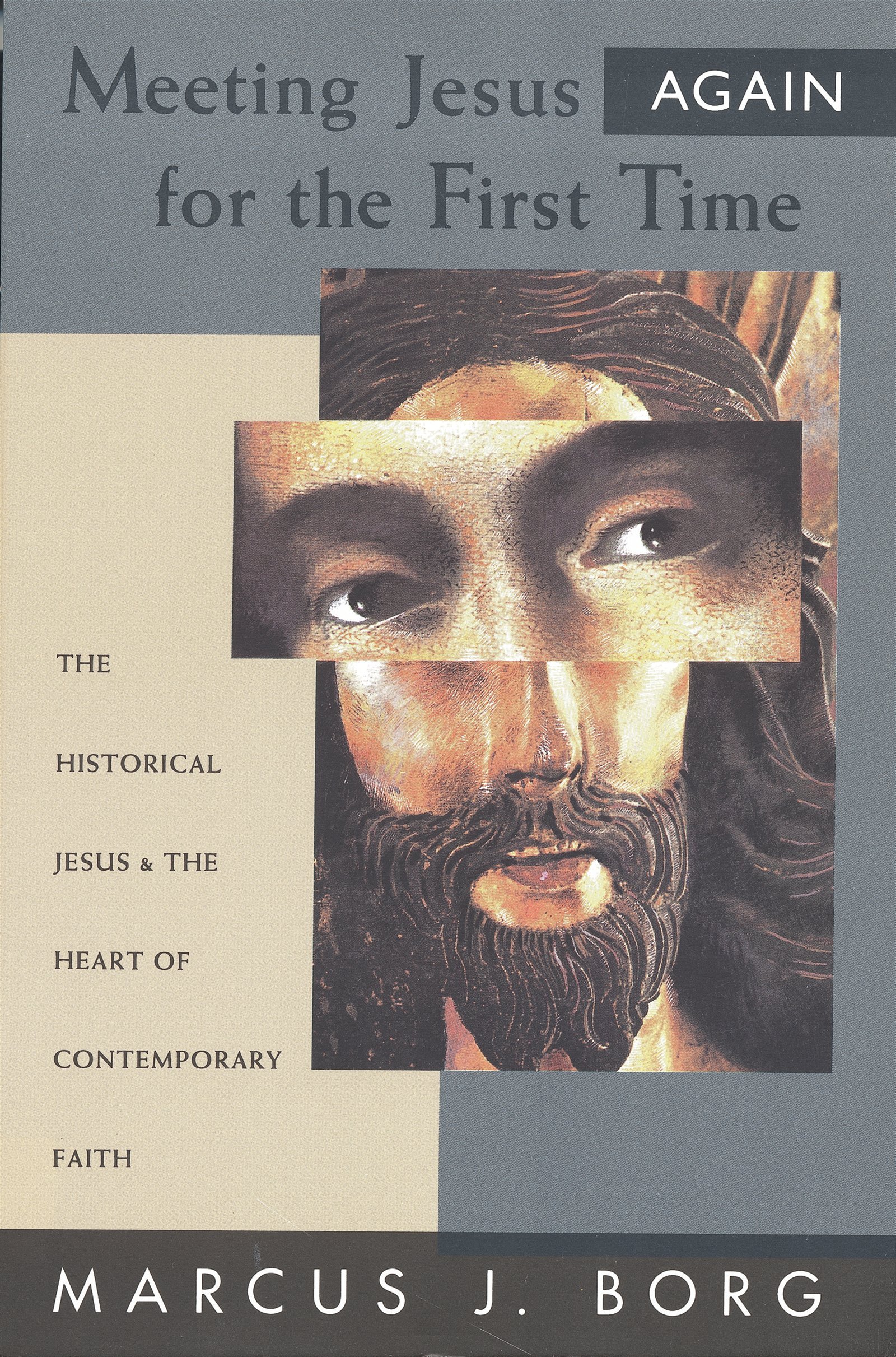
Tribute to Marcus Borg (1942 – 2015)

Cover of Marcus Borg book

Cover of Marcus Borg book

Marcus Borg’s writing and teaching affected millions.  Steve Shoemaker received an email of Marcus’s death yesterday from Barkley Thompson, who had quickly writtten the following tribute to Marcus on his blog “God in the Midst of the City“.

My friend, Marcus Borg
WEDNESDAY, JANUARY 21, 2015 / THE VERY REVEREND BARKLEY THOMPSON

Marcus Borg died this morning after a prolonged illness. I received a phone call this afternoon from a Cathedral parishioner and friend of Marcus, relaying the news to me.

I first became aware of Marcus Borg when I was a sophomore at Hendrix College. His landmark book, Jesus: A New Vision had just been released. It hit me at exactly the right time. I was a philosophy & religion major who knew God and increasingly knew about God, but I had little room or need for Jesus. Marcus’ book gave me an entirely new access point: to consider Jesus as Jesus had been historically, as a wisdom teacher, a healer, a social prophet, and more.

Marcus Borg

Marcus Borg

I first heard Marcus speak at Hendrix. He was the epitome of a college professor, right down to the cardigan sweater and pipe. He spoke calmly and with passion, and the first time I heard him in person was also the first time I understood how those tho things–calm and passion–could coincide.

I heard Marcus speak several other times over the years, but it was after I’d become a priest that I came to know him personally. When he was the annual Dodson Lecturer at St. John’s-Roanoke, he and I went to dinner. I was starstruck and wanted to quiz him about his research and his approach to Christianity. He’d have none of it. Marcus wanted only to talk about me, about St. John’s, about our ministry, and about my experience as a young priest in the Episcopal Church. He was solely interested in me, and I’ve never forgotten it.

Several shared meals and opportunities for fellowship later, my Christology has become higher and higher as the years have gone by. In ways I could not have done all those years ago in college, I now attest without hesitation that Jesus the Christ is God Incarnate, the hinge of history, the defeater of death, and the fulfillment in a single human life of God’s hopes for the whole world. And yet, my approach to Holy Scripture, my social convictions, and my love for the Episcopal Church mirror Marcus’ own perspectives quite closely. I once introduced Marcus to a church audience by saying, “I agree with roughly 75% of what Marcus will say to you this evening.” When he stepped into the pulpit, Marcus quipped, “I’m tempted to forego my notes and discuss with Barkley the other 25%!”

Unlike so many other writers in the field of religion (on both ends of the spectrum), Marcus was humble. Once one of my parishioners asked him during Q&A, “But how do you know that you’re right?” He paused, looked at her thoughtfully, and said, “I don’t know. I don’t know that I’m right.”

Very many people who had left the Christian faith have returned to it through Marcus’ evangelism (though he would grimace at my use of the word, I suspect). Marcus was a Christian, a follower of Jesus Christ in word and in deed. He understood Jesus (and especially the Resurrection) differently than I do. But the veracity of his faith was clear. And calm. And passionate.

Marcus and I last corresponded in late November. I’d asked how he was doing, and he responded, “I may have ten years left. Not sure I want more. There comes a time to let go. And I could, with gratitude, sooner than that. My life has been very blessed.”

Like Abraham, Marcus was blessed so that he could be a blessing. He blessed my life, and I am grateful.

NOTE: Since February 2013, Barkley serves as the eighth dean and twentieth rector of historic Christ Church Cathedral in Houston, Texas.  Click HERE for more information about the him.


Keep Awake – Undelivered sermon #1

KEEP AWAKE!

First Sunday in Advent, 2014
Texts: Isaiah 64:1-9
Mark 13:24-37

“And what I say to you I say to all: Keep awake.” [attributed to Jesus, Gospel of Mark 13:37].

It’s hard to stay awake in times like these. To be conscious means grief, helplessness, anger at the state of the world.

“Heaven and earth will pass away, but my words will not pass away” is supposed to bring comfort but it doesn’t, unless the heaven and earth of which Jesus speaks are the ones our pride has created. The imaginary ones. The heavenly and earthly projects that rise out of human insecurity as in the Genesis story of Babel, the story of what never was but always is, according to which the building of the ideal city is interrupted and the tower “with its top in the heavens” is “left off”.

But the word – the story about it – has not passed away. It endures. As fresh today as it was when first shared around a campfire as a way of telling each generation the respective places of God and man (humankind).

The Tower of Babel by Pieter Bruegel.

The Tower of Babel by Pieter Bruegel.

Fourteen years after the World Trade Towers collapsed in NYC, a new tower, “One World Trade Center” – taller, stronger, bolder – stands where the old towers fell on 9/11.

One World Trade Center, symbolizes a resurrection of the crashed myth. Standing a few blocks from Wall Street, where the global economy is reconstructed every day, One World Trade Center re-erects the myth of national supremacy, benign goodness, and the virtue of the American economic system. Which is different from a resurrection.

We could have left Ground Zero empty, void of monoliths and phallic symbols. We could have turned it into a plaza, a memorial to the error of pride, a turning away from global arrogance. A repentance from the economic-military-religious complex that expropriated the oil fields in the Middle East, assassinated the elected President of Iran in 1958, installed the Shah in his place, ignored the human rights of Palestinians, supported and installed western-friendly oligarchies and strong men in Saudi Arabia, Iraq (Saddam Hussein), Libya (Muammar Gaddafi), and Egypt (Hosni Mubarak) until, except for Saudi Arabia, they turned against us.

Instead of listening to the word that does not pass away, we Americans, to the sorrow of New Yorkers like Michael Kimmelman (” A Soaring Emblem of New York, and Its Upside-Down Priorities, NY Times, Nov. 29, 2014), opted for the old words and worn-out scripts that have failed us.

The Arab Spring in Libya, Egypt, and Tunisia did not do what the NeoCon exporters of Western democracy had imagined. It unleashed a seething volcano of anti-American resentment. Meanwhile, Afghanistan, Iraq, and now Syria, have become desert quagmires – Vietnams without jungles.

One World Trade Center

One World Trade Center

Eisenhower’s last speech to the nation warning of an emerging military-industrial complex is all but forgotten as One World Trade Center stands like a phoenix raised up…and up…and up from the ashes, the world’s tallest building, symbol of global dominance re-erected from the horrifying deadly collapse of 9/11.

Words and symbols are everything in this world.

As Mr. Kimmelman put,

“…[The World Trade Center Twin Towers] never really connected with the rest of Lower Manhattan. There had been talk after Sept. 11 about the World Trade Center re-development including housing, culture and retail, capitalizing on urban trends and the growing desire for a truer neighborhood, at a human scale, where the windswept plaza at the foot of the twin towers had been.”

It’s all about human scale. A plaza. Not a tower with its top in the heavens.

Staying awake is hard. Being attuned to what is not passing away takes faith. It takes hope. I takes courage. Maybe even love.

“From the fig tree learn its lesson: as soon as its branch becomes tender and puts forth its leaves, you know that summer is near.” [Mark 13:28]

Jesus often seems to have said that the word we need to hear is spoken by nature. Learn from the fig tree. It waits through the dormant season to become tender again, to put forth its leaves toward summer when it produces its sweet figs.

Nature is calling. Nature is our home. Nature is what is – the real heaven and earth – the word that will not pass away, the word that will survive when we are gone. We need to love nature again. Awaken to nature. Re-imagine ourselves as part of nature, “creatures” like all the other creatures. Our words will pass away, even the best of them. Our Creator’s word will not.

During Advent – this most puzzling of seasons, the season of wakeful, wait-ful anticipation of a Coming in fullness – I find myself crying out like Isaiah. “You have hidden your face from us, and have delivered us into the hand of our iniquity.” [Isaiah 64:7]

“O that you would tear open the heavens and come down, so that the mountains would quake at your presence—as when fire kindles brushwood and the fire causes water to boil– to make your name known to your adversaries, so that the nations [the ‘ethnoi’ in New Testament Greek, i.e.” the peoples”] might tremble at your presence!” [Isaiah 64:1-2]

The “nations” have always been God’s adversaries, closed in on themselves, puffed up, defensive against intruders foreign and domestic, plunderers of nature and other nations, hostile to the foreigner, both human and Divine.

In this season of “economic recovery” when the poor continue to get poorer, the rich get richer, and the middle class shrinks, I pray “Good Lord, deliver us, from ‘the hand of our own iniquity’. Remember, ‘O LORD, you are our Father; we are the clay, and you are our potter; we are all the work of your hand.’ [Isaiah 64:8]”

This word is the only word that lasts.

Stay awake, my soul. Stay awake to the whole of it, all of it – the sorrow and the grief of it, the loneliness of it, the anger in it, the guilt of it, the finger pointing out and away and the finger pointing back at me, a nation to myself, and the presence of the Potter – and my soul will be well.

Verse – A Dream of True Communion

It may have been the National
Cathedral–it was some great pile
of stones, some high Episcopal
Church where little me was the pale
imitation of a real Priest
for the day. I could not find pants,
or robe, and that was just the least
fatal of my embarrassments.
I did not have the words to say
for Mass, for Holy Communion —
my mind had left to go and play
in some old grade school reunion.
“Just take this bread,” I said, “and eat.
Remember Jesus–have a treat!”

– Steve Shoemaker, Urbana, IL, October 14, 2014

The Tender Voice of Frederick Buechner

In the aftermath of Robin Williams’ death I turned to author Frederick Buechner who has reached me in the dark times of my life. Fred here preaches on Thomas, the Twin, whom he identifies as his twin, my twin, your twin. Like Anne Lamott’s piece posted on Views from the Edge last week, this is the life of faith at its best. Peace!

Sermon – Faith and Patriotism

Jesus and Economics

Fear and Faith

The resurrected
Jesus was a man
and not a Zombie.
He was raised to be
alive, and not both
dead and living when
God seized him by his soul
and set him free.

He was not thirsting
after blood, was no
Vampire, did not become
immortal, but eternally
had life–there is, you know,
a difference… Jesus
spoke and drank and ate

with all his students,
the Disciples, though
they had all run away
when those with sword
and club, the Roman
soldiers, came to show
this upstart Rabbi
Caesar still was Lord.

The undead try to scare,
but Jesus said
“Have peace–you do not need
to be afraid.”

– Steve Shoemaker, Urbana, IL, April 21, 2014