A personal reflection on God’s word to Sennacherib
I know your sitting down and your going out and coming in, and your raging against Me
Isaiah 37:28
19th-century wood engraving by Gustave Doré depicting the destroying of Sennacherib’s army outside Jerusalem.
You cannot hide. You plot and scheme as though unseen, not noticed, secure in the dark places of public life. You rise. You sit. You go out among the shadows, declaring innocence and impunity. You mislead. You cheat. You lie. You bear false witness and concoct stories to assail your neighbors. You connive, conspire, and assassinate. You poison your opponents and flood the public with fear and hate. You threaten your critics, and pay, or refuse to pay, legal fees for sycophants who have placed their trust in you. You rant and rage and rouse the people with a voice that feigns righteous indignation.
Because you have raged against Me and your insolence has come to My ears, I will put My hook in your nose and My bit in your mouth; I will turn you back on the way by which you came.
Isaiah 37:29
Uncivil, insolent, resistant, unhinged, kicking up dust on everyone around you, you mock whatever would restrict you, restrain you, expose you to the light of day, but darkness is not dark to Me. I hear you snorting, braying and bellowing. I see you bucking against all attempts to rein in your whims and schemes, your defamations and slander, your arrogance and threats, your schemes of terror, your treasonous justifications of insurrection, invasion, and assassination.
Gordon C. Stewart, public theologian, author of Be Still!: Departure from Collective Madness (2017, Wipf and Stock), 49 brief (two to four page) reflections on faith and public life; Brooklyn Park. MN, Feb. 22, 2024.
Pull down thy vanity, it is not man Made courage, or made order, or made grace Pull down thy vanity, I say pull down. Learn of the green world that can be thy place .
Ezra Pound, Canto LXXLI
They’re not after me. They’re after you. I’m just standing in the way.
There’s been a mistake
There’s been a mistake. I don’t know you; you don’t know me. No one is coming after me. I’m not that important. Neither are you. No one with their wits about them could believe you are the only one who keeps “them” from getting to me. But the pitch has a familiar ring.
The old, old story?
It sounds like “the old, old story of Jesus and his glory, of Jesus and his love,” but this story is a far cry from the one in the New Testament. The Biblical story includes a warning, attributed to Jesus: “Many will come in my name, saying, ‘I am the Messiah,’ and they will lead many astray.”
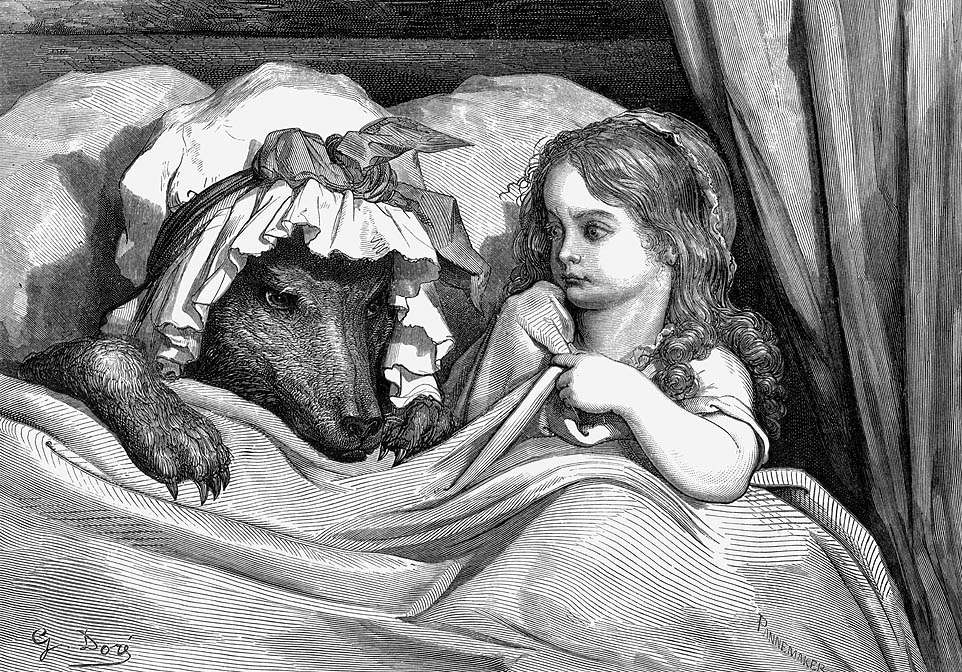
It’s a biblical way of saying, “Don’t mistake a wolf disguised as Little Red Riding Hood’s Grandma for the Good Shepherd who lays down his life for the sheep.
Life with Buddy
Even a parrot can quote scripture. But there’s a difference: the parrot has no idea what it’s saying. Human beings do. Take Buddy, for example. Shortly after arriving for a visit with old friends, the phone rang. Harry stayed put. Knowing that any call to Harry could be an emergency, we encouraged Harry or Anna to feel free to take the call.
Harry raised his finger to his lips. Anna smiled and whispered, “Shhhh!
The phone continued to ring. When it stopped, a voice from an adjacent room yelled, “Harry! It’s for you! Harry. . . it’s for you!”
If imitation is the highest form of flattery, an African Grey Parrot doesn’t know it. After Buddy had fooled us with his imitation of the phone ringing, with precise intervals between the rings, and calling Harry to the phone, Buddy went on to recite the 23rd Psalm. “The Lord is my shepherd; I shall not want…” before imitating the sounds of Anna he’d heard every morning: brushing her teeth, gargling, and other sounds not fit to print.
Shakespeare: “O, what a goodly outside falsehood hath!”
“The devil can cite Scripture for his purpose,” wrote Shakespeare in The Merchant of Venice. “An evil soul producing holy witness Is like a villain with a smiling cheek, a goodly apple rotten at the heart. O, what a goodly outside falsehood hath!”
Gordon C. Stewart, public theologian, host of Views from the Edge: To See More Clearly, and author of Be Still! Departure from Collective Madness (2017 Wipf & Stock), Brooklyn Park, MN.
In the eyes of QAnon and Christian fundamentalism, I’m a heretic. I don’t believe in Satan. Not that Satan, the devilish opponent of God. But trying to make some sense of life these days has led me to take another look at Satan.
The biblical Satan is the personification of trickery and the reptilian impulses that lie in wait in every mortal psyche. Satan is a con artist. “You will not die,” whispers the serpent to the mortals in the Genesis story of humanity’s fall from paradisaical innocence. Likewise, in the wilderness temptations of Matthew and Luke, it is Satan who lures “the man for others” (Dietrich Bonhoeffer’s description of Christ) to being a man who cares only for himself. Satin is the personification of the lies that flips reality on its head. Satan is a Con Artist.
Con artistry is never far away. Sometimes we come face-to-face with it. I see it inside the courtroom in New York City where a jury wrestles to disentangling truth from falsehood, evidence from sham, honesty from fraudulence, in full view national figures, members of the U.S. House of Representatives take their seats in room as visiting dignitaries who are surely recognizable to at least one member of the jury. Their physical presence is intimidating; it strikes me as its own kind of witness and jury tampering, a violation of the defendant’s gag order.
Outside the courtroom, I see these same Members of the United States House of Representatives, each of whom has sworn the Constitutional oath of office, line up take their turns behind the microphone and media cameras to denounce the judicial system, malign court personnel, the judge, prosecutors and their families, and read aloud. Up is down and down is up; right is wrong and wrong is right; truth-telling is out; conning is in. I hear Pinocchio’s surrogates betray their oaths of office in hopes of becoming Pinocchio’s right hand. Jiminy Cricket is a distant memory. Conscience is nowhere to be found.
Yesterday confirmed what I know of the biblical Satan who never was but always is wherever there’s an Achilles’ Heel – the vulnerability of mortals to the Con that I and we can do no wrong.
Gordon C. Stewart, public theologian, host of Views from the Edge, author of Be Still! Departure from Collective Madness (2017 Wipf and Stock), Brooklyn Park, MN, May15, 2024.
I didn’t feel like shouting Hosannas and waving palm branches this Palm Sunday. So I did something else. Harry Emerson Fosdick’s hymn, “God of Grace and God of Glory,” written in 1930, a time as uncertain as this, cried out for attention. “Grant us wisdom, grant us courage, for the facing of this hour.” The title of this sermon was ready before the sermon had been written. Fosdick’s lyrics led me to Psalm 82 addressing “the great assembly of the gods . . . by which all the foundations of the earth are shaken.” Here’s the sermon at Shepherd of the Hill Presbyterian Church in Chaska, MN, the loving congregation that welcomed me for nine years (2005-2014) on the way to retirement.
Thanks to Shepherd of the Hill Elder Chuck Lieber for taping this long-winded sermon on Palm Sunday at Shepherd of the Hill Presbyterian Church in Chaska, MN.
PSALM 82 NIV
God presides in the great assembly; he renders judgment among the “gods”:
“How long will you defend the unjust and show partiality to the wicked?
Defend the weak and the fatherless; uphold the cause of the poor and the oppressed. Rescue the weak and the needy; deliver them from the hand of the wicked.
“The ‘gods’ know nothing, they understand nothing. They walk about in darkness; all the foundations of the earth are shaken.
“I said, ‘You are “gods”; you are all sons of the Most High.’ But you will die like mere mortals; you will fall like every other ruler.”
Arise, God, judge the world, for all nations belong to you.
Psalm 82 niv
Rev. Gordon C. Stewart, public theologian and social commentator, author of Be Still! Departure from Collective Madness (2017, Wipf and Stock Publishers), 49 brief (2-4 pages) on faith and life; Brooklyn Park, MN, April 7, 2024.
Who but a sociopath on his way to trial on charges of buying a porn star’s silence would think the American people would fall for a stunt like this? It’s a short step from selling gold sneakers for $399/ pair to selling another first of its kind, the “God Bless the USA Bible,” complete with a copy of the U.S. Constitution.
Happy Holy Week! Let’s Make America Pray Again. As we lead into Good Friday and Easter, I encourage you to get a copy of the God Bless The USA Bible….
All Americans need a Bible in their home, and I have many. It’s my favorite book,” Trump said in his video posted on Truth Social. “I’m proud to endorse and encourage you to get this Bible. We must make America pray again.”
Donald J. Trump,
Those who practice their Christian faith know that “Happy Holy Week!” is a sign of the greeter’s unfamiliarity with the faith. We don’t wish each other a “Happy Holy Week.” Tears of joy (not happiness) well up only after tears of our own participation in the horror and sadness of Maundy Thursday, Good Friday, and in the haunting silence of god-forsakenness on Holy Saturday.
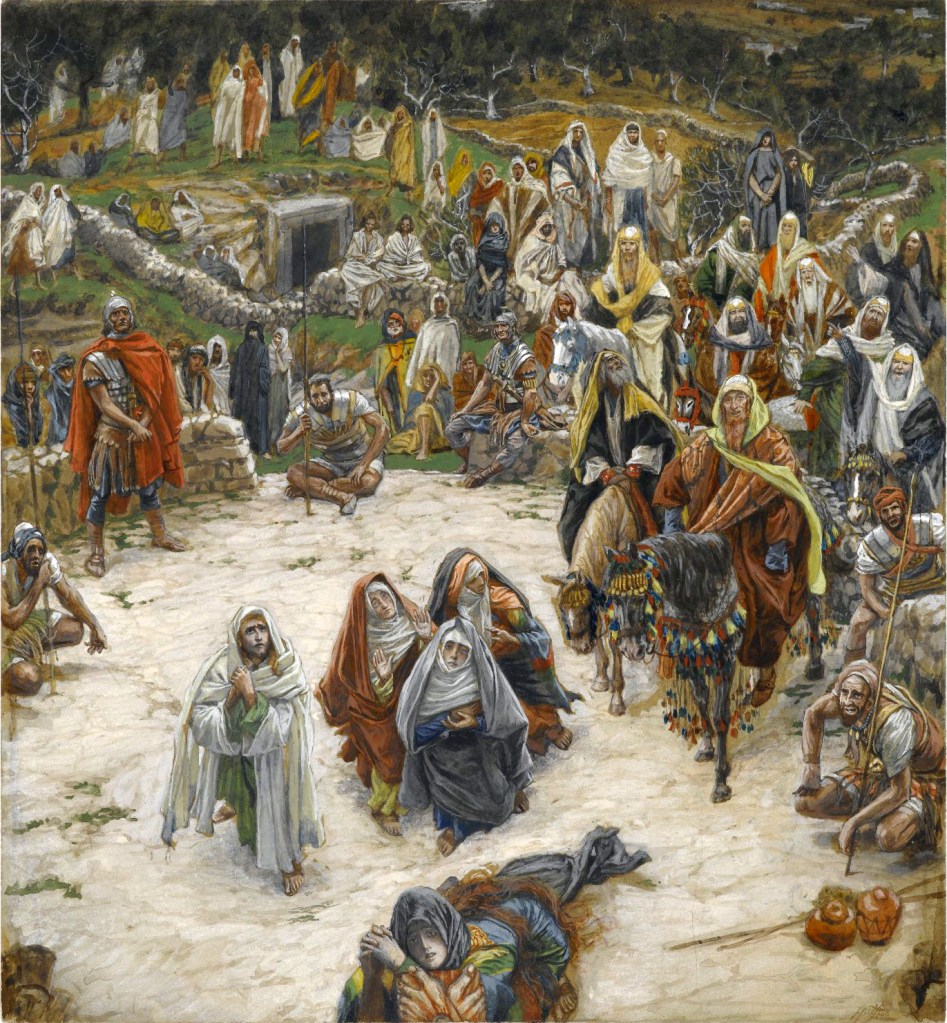
What Jesus Saw from the Cross by James Tissot
“Then said Jesus, ‘Father, forgive them; for they know not what they do.’ And they parted his raiment, and cast lots.”
Gospel of Luke 23:34 NRSV
Rev. Gordon C. Stewart, Presbyterian pastor (H.R.), public theologian, author of Be Still! Departure from Collective Madness (2017 Wipf and Stock Publishers), Brooklyn Park, MN, March 27, 2024, Wednesday of Holy Week.
“God Made Trump” is a masterpiece of cunning. Borrowing creation images from the Book of Genesis 1-3 and the Good Shepherd of fPsalm 23, Ezekiel 34:2-34, John 10:1-2), the three-minute video posted on Donald Trump’s social media platform Truth Social, goes like this:
“And on June 14th, 1946, God looked down on his planned paradise and said, 'I need a caretaker,' so God gave us Trump," the narrator says in the same style that the Book of Genesis in the Bible is written, while a video of Earth from space flashes to a photo of a young Trump.

"God said, 'I need somebody willing to get up before dawn, fix this country, work all day, fight the Marxists, eat supper, then go to the Oval Office, and stay past midnight at a meeting of the state, so God made Trump," the narrator says.

Trump is shown interacting with world leaders, signing executive orders, posing for photos with his supporters, hugging the American flag, and walking onto Air Force One, with former First Lady Melania Trump as the narrator describes God's "need" for the former president.

"God said, 'I need somebody who will be strong and courageous. Who will not be afraid or terrified of the wolves when they attack," says the narrator, while the viewer sees a wolf baring its teeth and Rep. Alexandria Ocasio-Cortez (D-N.Y.), "a man who cares for the flock. A shepherd to mankind who won't ever leave or forsake them."
Personal Reflection: ‘God’ and ‘the gods’
The Reform tradition of Christianity in which I stand views the Bible as a pair of spectacles through which to see God, the world, and oneself more clearly. Looking more clearly at “God Made Trump,” you will see something missing — the letter ‘s’, as in, “You shall have no other gods before Me.” We live among the gods that become God for us. A fitting title would be “The gods Made Trump.”
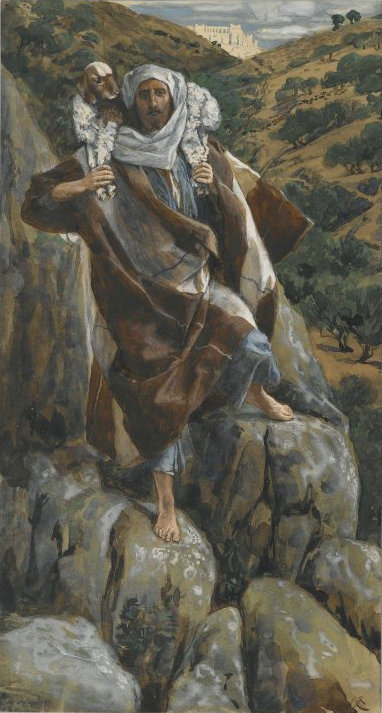
James Tissot, “The Good Shepherd.”
Mr. Magoo
“God Made Trump” is a rip off that takes off our glasses and turns it viewers into Mr. Magoo. It takes advantage of impaired eyesight. It blurs the ability to differentiate between hype and reality, fraud and truth, pretence and piety, subterfuge and honesty. We are all easily confused. “A little learning,” wrote Alexander Pope, “is a dangerous thing; Drink deep, or taste not the Pierian spring: There shallow draughts intoxicate the brain, and drinking largely sobers us again.”
Impostors of God
A cursory reading of the biblical creation and Good Shepherd stories is a shallow draught. A deeper drink guides the reader into what Karl Barth called “the strange new world of the Bible,” in which we see more clearly. Though monotheists, atheists, and agnostics are of diverse opinions about the one God, they agree that there is not more than one, i.e., the gods do not exist. Those who claim the Bible as their source of truth and life should know better.
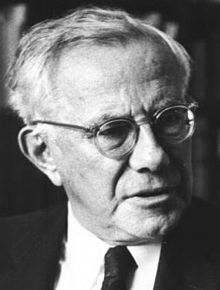
Constitutional lawyer, lay theologian William Stringfellow describes the gods as “imposters of God,” which the great theologian and philosopher of culture Paul Tillich saw as substitutes for the “God above god” (life’s Ultimate Concern) and the gods of real but penultimate concern among which all of us live in daily life, e.g. religion, work, money, family, status, sex, patriotism, which, although part of the fabric of human life, become substitutes for that which concerns us ultimately. Living anxiously among the gods leaves us restless – “Our hearts are restless,” said St. Augustine, “until they find their rest in Thee.”
Jacket of An Ethic for Christians and Other Aliens in a Strange LandPaul Johannes Tillich (1886-1965)
Serious study of the Bible leads a reader to notice something missing in “God Made Trump.” The gods of the First Commandment have been deleted – “I am the LORD your God. You shall have no other gods before Me. No longer are their other gods before God. Cut in half, the First Commandment is castrated, but, in reality, only the gods remain.
Seen through the eyes of the First Commandment, Stringfellow, and Tillich, the real question is not whether God made Trump; the question is two-fold: “Which gods made Trump?” and “Which gods are making us in their images?
The Incarnation of the gods
On June 14th, 1946, the gods look looked up and said, “Let us make a creature in our images who will incarnate all of us,” and, so they did. For six days the gods who aspired to be God laid aside their competitive urges to work together as a consortium. They would be godlier than “the God above god” (Paul Tillich), Maker of heaven and earth, whose fatal flaw was to grant the gods freedom to do their mischief.

So, the gods of Pride, Greed, Wrath, Envy, Lust, Gluttony, and Sloth laid aside their several powers for the sake of greater effectiveness. They put their heads together to craft an Immaculate Conception suited to their purposes.

Their creation would be the Incarnation of themselves and would embody all that the less-blessed creatures wanted for themselves: freedom from anxiety, absolute certainty, security, safety, and wealth. So, the gods found a virgin in Queens, and Mary Anne gave birth to her fourth-born child and named him Donald. The things the lesser creatures envied and desired for themselves – his unshakeable self-confidence, freedom to have any woman he wanted, his mastery of the arts of entertainment, prevarication, hypocrisy and greed, exemption from legal restraint and pangs of conscience, fearlessness in the valley of the shadow of death and prosecution, and palaces of silver and gold – would be theirs, just like him.
“God Made Trump” is an adaptation of “God Made a Farmer,” Paul Harvey’s speech to the 1978 Future Farmers of America convention that paid tribute to the American farmer’s dedication to caring for the land, plowing the fields, caring for animals. “God Made a Farmer” honored the farmer without idolizing him. It did not make wrongful use of the Name of God.
Gordon C. Stewart, public theologian and social critic, author of “Be Still! Departure from Collective Madness” (2017 Wipf and Stock), 49 short commentaries on faith and life. Writing from Brooklyn Park, MN, Feb. 7, 2024.
There is no such thing as Christian nationalism. It’s an oxymoron. Come to think of it, so are Jesus and those who confuse Jesus with power. “You are a king, then?” asks Pilate. Jesus responds, “You have said so!” You, not I, say so. The Gospels of Matthew and Luke paint pictures of Jesus alone in the wilderness, where the Satan (the Twister/the Liar) puts him to the test. “All these (nations) I will give you, if you fall down and worship me,” says the Twister. Jesus does not bow down, and for that, he is crucified. Jesus refuses to be a king. “I have come to bear witness to the truth,” says Jesus to Pilate. The idea of a Christian nation has no biblical footing. It’s a hoax. It’s a lie.
Refusal of Special Privileges
My faith tradition has no desire to achieve religious supremacy or special privilege. The organizational meeting of the Presbyterian Church in this country adopted eight Preliminary Principles. The FIRST principle declared the following views about religion and the civil authorities:
We consider the rights of private judgment, in all matters that respect religion, as universal, and unalienable: we do not even wish to see any religious constitution aided by the civil power, further than may be necessary for protection and security, and, at the same time, equal and common to all others.
First preliminary principle, adopted in 1789 by the first general Assembly of the Presbyterian Church in America
Parable about Here and Now: the Last Judgment
In Jesus’ parable of the last judgment, the King (the Sovereign) will gather all the nations and separate the goats from the sheep. It is no accident that national identity plays no part in the division between sheep and goats. The only thing that matters to the Sovereign is compassion. Period!
It’s a parable, of course, not a peek into the end of time. It’s about now. Jesus’ parable turns every nationalist claim on its head. The question is the same for all the nations: what are you doing for “the least” among you — the hurting among you, people in the cellar of the tower?
The sheep have no idea there is a reward. They just do it. The goats complain that, if only the Sovereign had told them the rules of the game, they would have fed the hungry, given drink to the thirsty, welcomed the stranger, clothed the naked, visited the sick and imprisoned. If you had just told us, we would have done it.
No claim to national exceptionalism stands the test. Christian nationalism is an oxymoron. No questions are asked about belief or religion. There is no, “Have you accepted Jesus Christ as your Lord and Savior?” No, “What church do you belong to. No, “What’s your religion, your belief system?” There is one criterion. Only one: COMPASSION. “Insofar as you have done it to the least of these….”
Robb Elementary School, Uvalde, Texas, May 26, 2022
The anguish keeps coming. Ukraine, Buffalo, Uvalde. There are no words. Only screams, gasps and tears in a Good Friday world. The crucifixion, then and now, stops the chatter, the distractions, and the illusion that positive thinking will save us.
On Good Friday hope is gone. There are no empty tombs, no resurrections, no hosannas, no palms, no lilies, no chocolate bunnies, no jelly beans, no Easter egg hunts, no Fabergé Easter eggs from Russia or Ukraine. Goodness has been nailed to a cross.
God-forsaken
The good man who hangs there screams a desperate cry religious people do not expect to hear: Eloi, Eloi, lama sabachtani?— “My God, my God, why have you forsaken me?” — the cry of the forlorn psalmist of Psalm 22. The lament is heard in our living rooms on TV, our androids and iPhones. Although the New Testament Gospels do not complete the first verse of Psalm 22, the sense of the words would have pounded the ears of the three Mary’s who stayed at the foot of the cross: “Why are You so far from helping me, from the words of my groaning?”
On Good Friday we come face-to-face with god-forsakenness. Not just the fear of it, the loneliness of it or the terror of it. The body on the cross bursts every bubble of denial, illusion, suppression, fancy, or flight.
The Hydra and the Savages
It’s a huge leap from John Calvin to Franz Kafka, but they saw the same thing hiding in every bubble. Calvin used the metaphor of the hydra. There is a hydra, said Calvin, lurking in the breast of every human being. Lop off the head of the hydra? Two new heads grow in its place. Lop off two? Two will become four and four will be replaced by eight. “We acknowledge and confess before You our sinful nature — prone to evil and slothful in good,” I remember praying as a child, wondering what it meant. Now I know.
Franz Kafka spoke of our nature in parables like The Savages:
The savages of whom it is recounted that
they have no other longing than to die,
or rather, they no longer have even that
longing, but death has a longing for them,
and they abandon themselves to it, or rather
they do not even abandon themselves,
but fall into the sand on the shore
and never get up again -- those savages
I much resemble, and indeed I have fellow
clansmen round about, but the confusion
in these territories  is so great,
the tumult is like waves rising and falling
by day and by night, and the brothers
let themselves be borne upon it . . .
. . . . .

And yet the fear! How people do carry their own enemy,
however powerless he is, within themselves.
Becoming children again
The public enemy hanging from the cross had spoken in ways that had offended:
He called a little child to him, and placed the child among them. And he said: “Truly I tell you, unless you change and become like little children, you will never enter the kingdom of heaven. Therefore, whoever takes the lowly position of this child is the greatest in the kingdom of heaven. -- Gospel According to Matthew 18:2-4 NIV.
When Easter eggs break in Uvalde, Ukraine, and Buffalo, the god-forsaken cry from Golgotha (“the Hill of Skulls”) echoes in our hearts. The broken eggs and burst bubbles of 2022 reveal what we prefer not to see: the enemy we carry in ourselves, the hydra that lurks in every breast.
Gordon C. Stewart, public theologian, author of Be Still! Departure from Collective Madness (2017 Wipf and Stock), Brooklyn Park, MN, May 29, 2022.
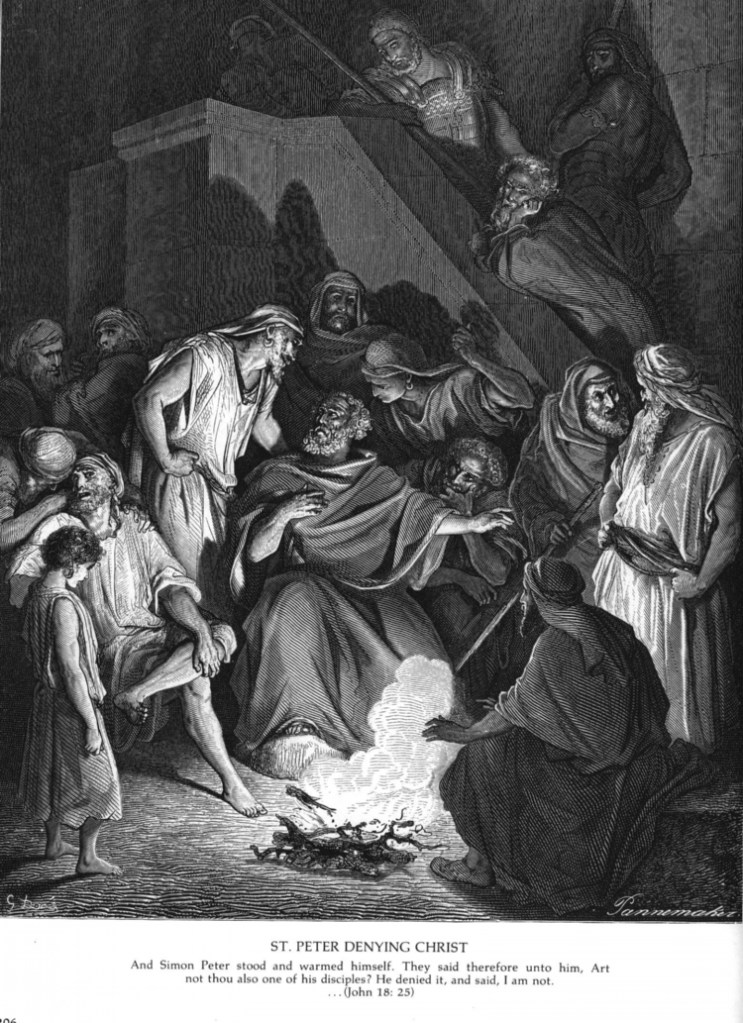
As the sun rose this [Easter] morning, a few of us warmed ourselves around a fire outside the church. Two charcoal fires were recalled, involving Peter, “the Rock” who crumbled like a piece of shale, and the risen Christ, who would re-create the scene to change the story from denial to welcome, forgiveness, and a commissioning to love.
Steve Shoemaker Verse, “The Charcoal Fire”
THE CHARCOAL FIRE

Charcoal Fire
Three times
Denial:

I do not know the man
I do not know the man
I do not know the man

Charcoal Fire
Three times
Forgiveness:

Do you love me?
Do you love me?
Do you love me?

Charcoal Fire
Three Times
Commission:

Feed my sheep
Feed my sheep
Feed my sheep

Steve Shoemaker
Urbana, IL
April 8, 2012
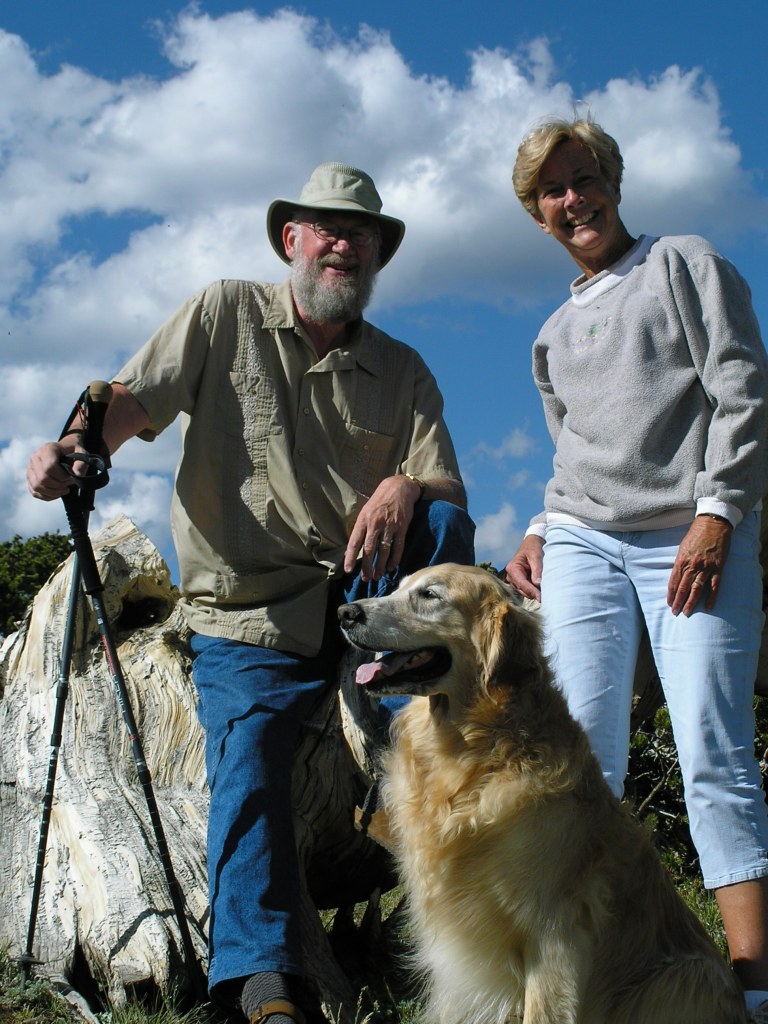
Gordon C. Stewart, author of Be Still! Departure from Collective Madness (2017 Wipf and Stock), April 23, 2022. This piece from 2012 is edited and republished in memory of Steve Shoemaker. Steve is sitting on a Bristlecone Pine stump above the tree line in Colorado during a gathering of seminary friends. Mutual friend Anna Strong and canine companion stand by him.
I write with great respect for your offices as President of the Russian Federation and as the Russian Orthodox Patriarch of Moscow and All Russia. My words to the two of you are confidential. Few people dare to speak candidly with you.
We haven’t met, but that’s not unusual; lots of people I’ve never met say I’m their closest friend. Many of them have made me up. They delete what they don’t like about me or my story, or do end-runs around my words. Take, for instance, my cry from the cross, “Abba, forgive them, for they do not know what they’re doing.” Forgiveness is real, but it’s not cheap. It’s not an excuse to sin.
Russian Orthodox Patriarch Kirill and Russian Federation President Vladimir Putin.
Clean Monday was only three weeks ago. On Clean Monday you and Eastern Orthodox Christians on both sides of the Russian-Ukrainian border marked the beginning of “The Great Lent” with a service that features something a bit odd and humbling. Every worshiper bows down before another worshipper to ask for forgiveness with the intent of walking through the six weeks of the Great Lent with clean hearts and a clear conscience. I like that. I’ll return to the subject of bowing later.
Do you remember the parable of the Last Judgment? My parable isn’t about an End Time when the wicked will be punished and the good rewarded. It’s not about Then; it’s about the Now, the ever-recurring Now of daily life. The parable is about how to live your life now as a neighbor.
I told that parable not to scare people; I told it so the listeners would pause, reflect, and turn around when they are living like goats pleading innocence because they never see the suffering. The parable is the Beatitudes in story form. You may remember those: Blessed are the poor, the grieving, the meek, the merciful, the peace-makers, and those who yearn for righteousness. The Beatitudes and the parable of the sheep and the goats are meant to turn the popular winner-loser perception on its head. The sheep feed the hungry; the goats don’t see them. The sheep “see” the naked and clothe them; the goats don’t notice. It’s the same with the homeless, the sick, and the imprisoned. The goats would have “seen” if only they had known there was a reward at the end. The sheep have no knowledge of reward and punishment. It is the sheep that break the popular myth of reward and punishment.
The parable goes to the heart of my reason for writing. You have great authority and power. One of you is the latest “king” of the Russian Federation; the other is the latest “king” of Russia’s spiritual affairs, Patriarch Kirill, Patriarch of Moscow and All Russia. You are said to have a good relationship. But I tell you, if the sheep and goats were separated in real time at this moment, the two of you would be bleating billygoats leading the line of those who plead innocence.
It is not by accident that the parable is not about individuals. The sheep and goats gathered for judgment are not individuals. They are the nations, all of them. Russia is no exception. Ukraine is no exception. Poland is no exception. The United States is no exception. There is no exception.
Every nation is capable of great compassion and of astonishing cruelty. A nation can be peace-loving or war-mongering, merciful or cruel, loving or hateful, seeing or not seeing. Whenever a nation sees itself as exceptional or superior among the global community of neighbors, things always turn out badly, as is happening now in Ukraine. The sun shines and the rains fall without respect for borders.
As president of the Russian Federation you hold the power and authority of Russia’s head of state and commander-in-chief. You have exceeded all boundaries of moral restraint. The weight of the cruelty, suffering, devastation, and death unleashed on Ukrainian rests on your shoulders. Yet you do not see. You take no responsibility for the suffering imposed on Ukraine.
Patriarch Kirill, you also bear responsibility. The day after Clean Monday, your Ukrainian and Polish peers met in Kyiv. Aware of public criticism of your relationship with Mr. Putin, they appealed to you to meet with Putin to stop the war, and asked you to break your public silence about the war as the cause of suffering. Clean Monday was not clean this year. There can be no pleas of ignorance.
Finally, I leave you with another parable. This one was told by those who thought they saw divinity in my humanity. It was told of me, not by me. Whoever created the parable packed every challenge I faced during my life, which you also face now. Like the parable of the Last Judgment, It’s a work of imagination that puts everything in a nutshell, but its meaning is pretty simple really. It’s about bowing.
Then the devil took him to a very high mountain, and showed him all the kingdoms of the world and their glory; and [the devil] said to him, “All these I will give you, if you will bow down and worship me.”
The question of faith is about Now. The question is pointed. It draws no line between the political and the spiritual. It’s simple:
“To whom are you bowing now?”
— Jesus of Nazareth
Gordon C. Stewart, public theologian, author of Be Still! Departure from Collective Madness, Brooklyn Park, MN, March 18,2022.








 Views from the Edge