American ICE and a BURNING COAL from the Altar

“Here am I,” says Isaiah, ”Send me,” in reply to the question of the Holy One,” “Whom shall I send? Who will go for us?”––Young’s Literal Translation

Christian Nationalism is a Parasite

Propaganda is a parasite. It can’t live without a host. ‘Christian Nationalism’ sucks the blood out of sacred texts. Few biblical texts are as beloved as the calling of Isaiah. In the original Hebrew text, Isaiah speaks in the present tense: “In the year that king Uzziah died, I see the Lord, high and lifted up, and his train is filling the temple.” He sees the seraphs flying above the throne, singing “Holy, holy holy, [is] Jehovah of hosts, the fullness of all the earth [is] his glory.”

A Homeland Security promotional recently featured an ICE recruit attributing his sense of call to become an ICE agent to Isaiah in the temple, “Hear am I, Send me.” The Homeland Security promotional [since taken down from X] turns Isaiah’s call into a parasite that sucks the blood of compassion from its host. “We will cut you down,” the voice-over of a helicopter sighting two migrants moving through the night toward the U.S. southern border, displaces the “Holly, holy, holy.” The whole earth that is full of God’s glory is shrunk to the parcel of earth.

An Autobiographical Reflection

It was in college that the calling of Isaiah took hold of me. I don’t remember who put Frederick Buechner’s The Hungering Dark in my hands, but I’ve never forgotten the impact of Buechner’s reflection on the call of Isaiah (Isaiah 6:1-8). I was not in the Temple in Jerusalem; my dormitory room was not filling with smoke; I knew nothing of seraphim, let alone seen them flying overhead or heard them calling to each other their song of praise for God’s holiness. No seraph had touched my lips with a hot coal from the altar. Even so, I knew this story the way a child ‘knows’ a story before the codes of reason ridicule its sense of wonder. Like Isaiah in the year that King Uzziah died, the foundations of what I once thought to be solid were trembling. The world was a mess. So was I. I was a man of ‘unclean lips’ living among ‘a people’ of unclean lips.

The summer before reading The Hungering Dark, my foundations had been shaken by the daily trips on the Red Arrow bus and Philadelphia subway that took me back and forth between where I lived and the squalor of Opal Street in north Philadelphia. Two landmark institutions gave stability to north Philadelphia: the Pennsylvania State Penitentiary and Corinthian Avenue Chapel. The eight homeless men with whom I had spent the afternoons that summer had been guests of the penitentiary before they were released to the streets. Corinthian Avenue Chapel, the empty shell of a once thriving Presbyterian church, vacated by white flight, was three blocks north of the prison.

It was a game of dodgeball with the kids who lived in the tenements on Uber Street that introduced me to the men of Opal Street and set the course for the rest of the summer. There was no traffic on Opal Street. My focus shifted from working with kids to an altogether unexpected summer with “the Brothers of Opal Street.”

An errant throw sent the dodgeball through the circle of ‘winos’ (their designation, not mine) who gathered every afternoon, seated on wooden orange crates, in the middle of Opal Street . After apologizing for interfering, I continued walking to the far end of the block. Like the condemned tenements that lined the east side of Opal Street, the far end of the street was blocked by a boarded-up fence. The chalk outline of a body was still fresh on the pavement

When I returned with the ball, the men asked what I was doing there. When I spoke of games for the kids, one of them drew laughter when he asked, “Do you have any games for us?” “I do,” I said. “Any of you ever play quoits?“ “Quoits?” Again there was an uproar of laughter. “Well, how about horseshoes?” Corky had played horseshoes in the Army. The next day I set up the Quoit stakes on the street. Every afternoon, we played Quoits until the men could no longer stand.

On my last day with them, the men wanted to have “a little talk.” I had expected the sharing of good-byes. What happened was something else. In retrospect it was life-changing, A one-of-its-kind Isaiah in-the-Temple moment. No seraphim flew above us, singing “Holy, holy, holy.” But there was smoke, a red-hot coal striking my lips, and a realization that I was a man of unclean lips among ‘a people of unclean lips’.

“Why did you come here?” they asked. “Don’t come back here. ‘Your people’ own this place. Look around. You don’t see any white faces. Your people never show up around here, but they own this place. It’s too late to help us. But the kids? If you want to make a difference here, go back to ‘your people’ and change things there.”

I had come to Opal Street as a disciple of Jesus, wanting to be of service among the “less fortunate,” like the good Samaritan who crossed the road to show compassion to the man who’d been left half-dead in the ditch. It had seemed that simple at first. I had assumed the western Main-line suburbs and Opal Street were worlds apart. One was wealthy, the other was poor. One was white, the other was black.

Now, after a long, hot summer, the ‘winos’ and ‘junkies’ of Opal Street had shattered the myth of separate worlds. Power and powerlessness, parasites and hosts live in the same world. I returned to college, confused, at sea, questioning everything I had been taught, and threw myself into contemporary philosophy and political science in search of answers to questions that have lasted a lifetime.

Years later, Kai Erikson’s Wayward Puritans provided a sociological framework that deepened my understanding of why and how we human beings ‘other’ each other. Cultures need deviants, outsiders, stereotypes who threaten the majority’s view of itself. Witches became the scapegoats that served to define what the majority was not. The Massachusetts Bay Colony was Christian and moral; witches were neither. The witches of Salem, the banishment of Mr.s Anne Hutchinson and the execution of Mary Dyer, served to save the Bay Colony’s religious–racial consensus from fraying further.


A BURNING COAL melts ICE

The Department of Homeland Security likening the call of Isaiah to a call to join ICE is chilling. It’s bad theology, bad faith, and bad patriotism. But heat always melts ice. Isaiah’s calling is remarkable for its sense of holiness and wonder. The Homeland Security rendering of “Here am I, Send me” is a call to cruelty and unmatched power over the ‘other’. It confuses divine calling with a call to dominate. In the ICE propaganda, there is no sense of the young man feeling lost, no sense of woe, no awareness of unclean lips or of one’s own people as a people with unclean lips, no hot coal from the altar burns away the sin. ICE’s adaptation of Isaiah is a parasite. It replaces the burning coal with an ice cube. Where the seraphim sang of the whole earth filled with God’s glory, border patrol helicopters buzz overhead migrants seeking a better life with the message, “We will cut you down!”

Every person of honest faith and good will is being called in this moment of American history to answer “Here am I, Send me!” Isaiah’s call is not past tense. It is now.

Gordon C. Stewart, Presbyterian Church (USA) pastor and public theologian, author of Be Still! Departure from Collective Madness (2017 Wipf and Stock), writing from Brooklyn Park, Minnesota, August 6, 2025.
Remember me according to …

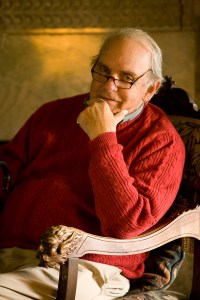
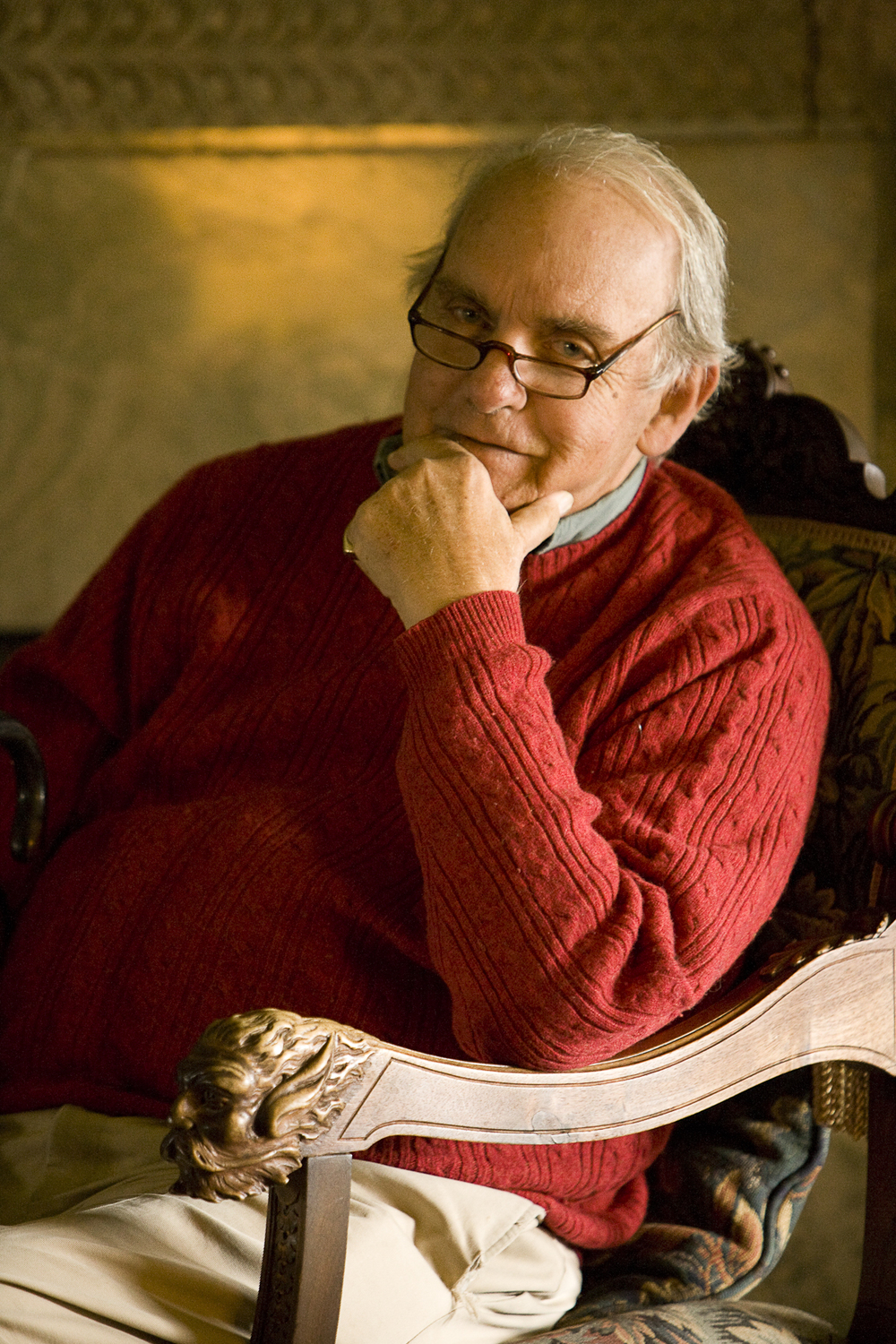
Frederick Buechner

Frederick Buechner

Frederick Buechner’s invitation to “listen to your life” is wise counsel any day, but especially the day after a jarring dream has screamed about what the psalmist called “the sins of my youth.” 

The psalmist was lucky. The sins for which he prayed for release happened in his youth; mine are the less innocent ones of adulthood. But the final plea is the same: “Remember not the sins of my youth and my transgressions; remember me according to Your love, and for the sake of Your goodness…” (Psalm 25:6).

Dreams have a different way of remembering. They have a logic of their own, a logic of the unconscious fetching from the hidden reservoir of past experience the guilts and griefs we sought to drown from conscious awareness. Dreams remind us that nothing is lost. Sometimes a dream is its own kind of prayer — the Spirit bearing witness within our spirits; a kind of holy groaning — to be remembered “according to Your love, and for the sake of Your goodness” rather than according to our sins and transgressions.

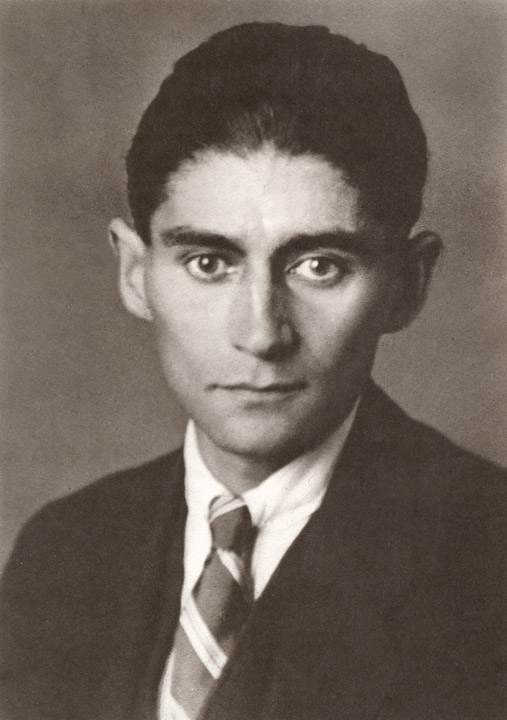
FranzKafka

Franz Kafka

Franz Kafka wrote in a letter to his father, “Life is more than a Chinese puzzle.” Kafka knew that life is at least that — a perplexing puzzle. The pieces of one’s life are hard to fit together into a cohesive whole, perhaps because some of them have shapes and sharp edges we can’t remember or refuse to recognize.

Sometimes these pieces appear in a dream according to a different logic of the deeper listening that remembers us according to a Goodness greater than our own. Only by such grace could the psalmist imagine the recovery of integrity, i.e., the re-integration of the disparate parts of his life history: “Let integrity and uprightness preserve me, for my hope has been in You” (Psalm 25:20).

“Listen to your life…because in the last analysis, all moments are key moments, and life itself is grace” (Frederick Buechner, Now and Then).

  • Gordon C. Stewart, on the wetland, July 16, 2018.

Jacob’s Ladder at almost 75

Sometimes I can’t get it out of my head. I go to sleep with it. Wake up with it. Walk the dog with it. It’s been over a month now.

“We are climbing Jacob’s ladder” begs for my attention.

So this morning I surrender. What will come out on the page is a mystery until it’s written.

I ask myself, “Why this song?”

This stretch of time has been anxious. Unsettling, restless, down, bored, and struggling with my own inner demons and the bigger demons of human madness around the world.

Jacob’s Ladder has been with me my whole life, like an old friend who shows up when I need her. Like her cousins “Sometimes I Feel Like a Motherless Child” and “Swing Low, Sweet Chariot,” and “Joshua Fit the Battle of Jericho,” there’s something about the tune that brings comfort, placing me in the good company of the slaves whose faith and hope are timeless though they themselves are long gone.

It’s the melody, the music – the language of the soul – that gets me. But it’s also the words. Words like ‘climbing, ‘higher’, ‘soldier’, ‘cross’, ’sinner’, ‘love’, ‘Jesus’, ‘serve’. Words that have stuck in my throat at different times in my life journey as either highly objectionable or as deeply expressive of what I know and feel to be ‘true’. “Jacob’s Ladder” feels like a summary of where I’ve been, where I am now, and a strange kind of invitation to resolve the contradictions as I move forward after three-quarters of a century.

So this morning and in the days to come I will have a conversation with Jacob and his ladder, stopping at each stanza and phrase to dig deeper into what is crying for attention.

Chagall_jacobs-ladder2_Nice-medium

Chagall, Marc, 1887-1985. Jacob’s Dream, from Art in the Christian Tradition, a project of the Vanderbilt Divinity Library, Nashville, TN. http://diglib.library.vanderbilt.edu/act-imagelink.pl?RC=54650 [retrieved August 6, 2017]. Original source: http://www.flickr.com/photos/abeppu/.

“Listen to your life,” wrote Frederick Buechner in Now and Then: A Memoir of Vocation. “See it for the fathomless mystery that it is. In the boredom and pain of it no less than in the excitement and gladness: touch, taste, smell your way to the holy and hidden heart of it because in the last analysis all moments are key moments, and life itself is grace.”

At almost 75 and no longer climbing, I’ve been pondering grace itself.

  • Gordon C. Stewart, Chaska, MN, August 6, 2017.


Thank you, Frederick Buechner

Today Day1.org features “The Seagull and the Rainbow” right beside Frederick Buechner, whose writings influenced me as a young preacher and pastor.

Frederick Buechner

Frederick Buechner

Thanks to Peter Wallace of Day1 for putting the student next to a man he unconsciously aspired to be. I’m older now . . .  and the distant iconic mentor who had no reason to know his mentee’s name is older still but no less alive to faith and life!

Years ago the Council of Churches in Cincinnati invited a Canadian publisher to publish “The Cincinnati Prayer Book,” a collection of prayers for the year by Cincinnati religious leaders. I was Pastor of Knox Presbyterian Church at the time. The publisher asked whether I would be interested in publishing a collection of sermons.

I recall the conversation in my office as if it were yesterday. I thought I smelled a rat.

“Are you a vanity press?” I asked.

They assurance me they were not. “The Startling Kindness of God” moved forward, including an endorsement from Frederick Buechner. But Fred’s letter to me included a private comment that changed how I preached and wrote. The sermons were good, he said, followed by a devastating “but”: “but I find them rather bloodless. I want to see some of your blood in them.”

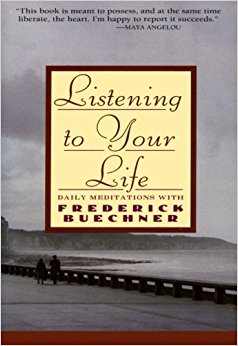
Listening to your lifeI learned laster that he was working on Listening to Your Life. Reading my sermons, he seemed to sense I was not listening to mine. I wasn’t.

When the final contract appeared, the publisher required that I sell 300 copies of the sermon collection. I tore up the contract. The bloodless sermons are in a box in my closet, wondering why they were never published.

I have no reason to believe Fred Buechner has any recollection of that or that he remembers my name. But his combination of affirmation and warning began to change the way I preach and write. To appear next to Frederick Buechner today is a serendipitous occasion of joy and thanks. Thank you, Fred. I’m holding out a goldfish after all these years.

Thank you, Peter, for posting “The Seagull and the Rainbow” on Day1.

  • Gordon C. Stewart, May 20, 2017, Chaska, MN.


An Obvious Conclusion

Author Frederick Buechner puts into words the feeling at the 55th high school reunion last weekend.

ON AGING

As time goes by, you start picking [your contemporaries] out in crowds. There aren’t as many of them around as there used to be. More likely than not, you don’t say anything, and neither do they, but something seems to pass between you anyhow. They have come from the same beginning. They have seen the same sights along the way. They are bound for the same end and will get there about the same time you do. There are some who by the looks of them you wouldn’t invite home for dinner on a bet, but they are your companons de voyage even so. You wish them well.

It is sad to think that it has taken you so many years to reach so obvious a conclusion.

– Frederick Buechner, originally published in Whistling in the Dark. Re-published today by The Frederick Buechner Center.

55th class reunion

55th class reunion

The Song in My Head

Sometimes I can’t get it out of my head. I go to sleep with it. Wake up with it. Walk the dog with it. It’s been over a month now.

“We are climbing Jacob’s ladder” seems to be begging for my attention. So this morning I surrender. What will come out on the page is a mystery until it’s written.

I ask myself, Why this song?

This stretch of time has been anxious. Unsettling. I’ve been restless, down, bored, and struggling with my own inner demons and the bigger demons of human madness around the world. Jacob’s Ladder has been with me my whole life, like an old friend who shows up when I need her. Like her cousins Sometimes I Feel Like a Motherless Child and Swing Low, Sweet Chariot, there’s something about the tune that brings me comfort, placing me in the good company of the slaves whose faith and hope are timeless though they are long gone.

It’s the melody, the music – the language of the soul – that gets me. But it’s also the words. Words like ‘climbing, ‘higher’, ‘soldier’, ‘cross’, ’sinner’, ‘love’, ‘Jesus’, ‘serve’. Words that have stuck in my throat at different times in my life journey as either highly objectionable or as deeply expressive of what I know and feel to be ‘true’. Jacob’s Ladder feels like a summary of where I’ve been, where I am now, and a strange kind of invitation to resolve the contradictions as i move forward in this precarious time.

So this morning and in the days to come I will have a conversation with Jacob’s Ladder, stopping at each stanza and each phrase to dig deeper into what is crying out in my soul.

“Listen to your life,” wrote Frederick Buechner in Now and Then: A Memoir of Vocation. “See it for the fathomless mystery that it is. In the boredom and pain of it no less than in the excitement and gladness: touch, taste, smell your way to the holy and hidden heart of it because in the last analysis all moments are key moments, and life itself is grace.”

The Tender Voice of Frederick Buechner

In the aftermath of Robin Williams’ death I turned to author Frederick Buechner who has reached me in the dark times of my life. Fred here preaches on Thomas, the Twin, whom he identifies as his twin, my twin, your twin. Like Anne Lamott’s piece posted on Views from the Edge last week, this is the life of faith at its best. Peace!

Sermon: Creating a Picture from a Whirlamajig