Tomorrow’s 2022 election is about reality. Some appearances are real, others are not. Some things are fixable, other are not. Some illnesses are curable, others are terminal.
Which is climate change? Which is democracy? Though the ballots do not ask these questions, the results of this election will tell us what we think is real, fIxable, and curable or unreal, unfixable, and terminal.
Priorities: a habitable planet
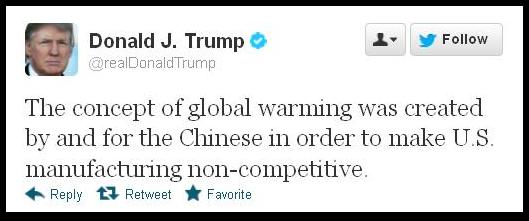
Climate change belongs at the top of every ballot. Check one: climate change is real/not real. Check one: A habitable planet is/is not more important than everything else on this ballot. Check one: My vote does/does not matter.
All other legitimate concerns, irrespective of partisan perspectives — the economy, capitalism or socialism, taxation, race, nation, human rights, war, peace, women’s rights, end of life decisions, agriculture, integrity, truth, qualifications for office, religion, crime, integrity, distribution of wealth, poverty, hunger, ability, and energy — count for nothing without a habitable planet.
Fame is not a qualification for public office
Fame/infamy does not qualify or disqualify a candidate for public service. Personal integrity, character, experience, a sense of humility, and vision for the future — not media visibility or public popularity — are appropriate considerations for a voters decisions.
If media visibility and popularity qualify people for public office, I’d bet on Oprah. Odds would be lower for Kanye West, Elon Musk, Eric Zuckerberg, or Jeff Bozos.
Celebrities on the 2022 ballot include a Hall of Fame football player in Georgia; a retired cardiovascular surgeon-television entertainer in Pennsylvania; a high-profile Phoenix TV news anchor in Arizona. All of them join a higher profile entertainer in denying the legitimacy of the 2020 election, denying that climate change is real, and defending the continuance of fossil fuel producers.
Crocodiles can’t fly or lie
If you believe crocodiles are harmless, and that crocodiles can fly, take a deep breath before you vote. What most distinguishes crocodiles from humans is simple. Crocodiles can have you for lunch, but can’t get their heads around climate change or democracy, and they can’t lie any more than they can fly.
Gordon C. Stewart, public theologian, writer and author of Be Still! Departure from CollectiveMadness (2017 Wipf and Stock), Brooklyn Park, MN, Nov.6, 2022.
Truth has stumbled in the streets, honesty cannot enter. Truth is nowhere to be found, and whoever shuns evil becomes a prey.
Isaiah 59:15 NIV
Eighty-two year old Paul Pelosi, hit in the head by an intruder’s hammer, undergoes emergency surgery for a fractured skull. An intruder admits to breaking into the Pelosi home and hitting Mr. Pelosi with a hammer. He is looking for Nancy.
I read the morning paper, “Right-wing figures rush to spread Pelosi lies,” is the lead story. “The push is on to sow doubt, distrust over attack.”
The same defense-by-offense attack machine whose Willie Horton ad hit the bull’s-eye of white fear to smear Democratic presidential candidate Michael Dukakis as “soft on crime” kicks into gear again in an election year. Fox News’ quickly shifts into another gear, deflecting attention from the specifics of the attack — this was the home of the Speaker of the House for whom the January 6 “tourists” had shouted, “Where’s Nancy?” — to launch into the same mode that produced the Horton ad. It could have happen to any of us!
Steve Bannon’s War Room plants seeds of doubt and deceit: “Very strange new details on Paul Pelosi attack,” says the War Room, knowing the 78,000 War Room subscribers are likely to respond: “Gosh, I wonder what those strange new details could be?” Roger Stone weighs in on Telegram, referring to the attack as an “alleged attack” and calls readers to smell the “stench” of mainstream news reporting. Elon Musk posts on Twitter “There is a tiny possibility there might be more to this story than meets the eye,” pointing his readers’ to a far right source known for spreading far right disinformation. Elon Musk has 112,000,000 Twitter followers. Hours later, with no explanation, he takes down the post.
Donald Trump stays silent…sort of. On “Truth Social” there is no mention of the event, no expression of sorrow and request for prayers for Mr. Pelosi’s full recovery, no word of sympathy for the Speaker of the House or the rest of a traumatized family, no condemnation of violence, no call for the Proud Boys, Oath Keepers, and other militias to stop the violence, no reference to the rule of law, no recognition of responsibility for unleashing the beasts of hate and terror. Truth Social repeatedly repeats narcissistic lamentations, blaming the Left for conspiring against him.
A numbing detachment and destructive disposition
Not even news of a cracked skull breaks through some skulls. We live, one might argue, in a web of narcissism and nihilism. “[W]e are coping with a life of horrifying meaninglessness, hopelessness, and (most important of all) lovelessness,” wrote Cornel West in Race Matters.
The frightening result is a numbing detachment from others and a self-destructive disposition toward the world.

Life without meaning, hope, and love breeds a cold-hearted, mean-spirited outlook that destroys both the individual and others.
Cornel West, Race Matters (1993, Vintage Press)
A disease and cure of the soul
“Is there really any hope,” asks West,”given our shattered civil society, market-driven corporate enterprises, and white supremacy? If one begins with concrete narcissism, one must talk about some kind of politics of conversion…Narcissism is a disease of the soul.”
It will take something more than partisan politics to change it. Even so, we are not without Even so, we are not without sources of wisdom, hope, and guidance. Neither truth nor honesty is dead, nor is the way to recover of the public square. An ancient collection of wisdom offers a way forward. The Book of Proverbs names seven things that are detestable to God:
haughty eyes,
a lying tongue,
hands that shed innocent blood,
a heart that devises wicked schemes,
feet that are quick to rush into evil,
a false witness who pours out lies, and
a person who stirs up dissension among brothers and sister.
Flip the proverbs to the other side of the coin, and consider the practices that keep a society from falling.
Gordon C. Stewart, public theologian and author of Be Still! Departure from Collective Madness (2017 Wipf and Stock), a collection of social commentaries through eyes of faith; Brooklyn Park, MN, November 2, 2022.
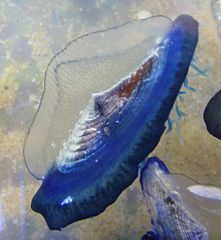
Apologies to By-the-Wind Sailors for calling them jellyfish. They are not jellyfish. A by-the wind sailor has a sail. Jellyfish have no sail; they just bob around.
My life is blown up and down in all directions. Right-side up, down-side-up north, east, south, west. But I am not a jellyfish. I am not a gelatinous blob.
Like the by-the-wind sailors along the Pacific coast, I have a sail that catches the wind. But what use is a sail without a keel and rudder?
I am not a by-the-wind sailor: I don’t get to choose my neighbor
The winds of time blow in different directions and are forever shifting. When it comes from the south, it blows me north. When it comes from the north, it blows me south. Most often it’s the west wind that pushes me and my by-the-sea sailors community east. No one can break ranks! Did I mention that by-the-wind sailors live in colonies. Like members of a political party in 2022, they live in colonies at the mercy of the wind.
But I have a mind that can, and does, make decisions. “Don’t just do something,” said Fr. Dan Berrigan, “stand there!” Sometimes I’m feel torn the Golden Rule (Do to others as you would have them to you) and “standing there” on things that matter, even at the risk of driving a wedge between my neighbor and me. To be loving does not mean becoming a by-the-wind sailor or a jellyfish. It takes a keel and rudder to tack against the wind. By-the-wind sailors have neither the heart to love nor the courage to move against the wind.
Don’t just do something. Stand there!
He [Jesus] said to him [the lawyer], “‘You shall love the Lord your God with all your heart, and with all your soul, and with all your mind.' This is the greatest and first commandment. And a second is like it: ‘You shall love your neighbor as yourself.’ On these two commandments hang all the law and the prophets.”
Stand Firm
I have what no by-the-wind sailor or jelly fish has. I have a rudder. I can go with the wind, or, by trimming the sail, tacking, or putting down anchor, I can go with, or resist, whatever wind is blowing. I can go with the flow or tack to a distant shore when the wind would drive me back, or I can put down anchor. I can do nothing but stand there.
"For freedom Christ has set you free; stand fast, therefore, and do not submit again to a yoke of slavery." [Letter to the Galatians 5: 1].
To move with the wind is neither free nor responsible. It is a peculiar form of slavery. The freedom of Christ breaks the yoke of slavery. Slavery to what? The 59th chapter of the Book of Isaiah expresses in vivid metaphors the anguished heart of God over how poorly we treat each other. How do I love those “who rely on empty arguments and speak lies,” when they “conceive trouble and give birth to evil, when they hatch the eggs of vipers and spin the spider’s web”? How do I love those who seem like by-the-wind sailors, going with a colony blown toward destruction by storms of misinformation, disinformation, lies, misplaced faith, and certainty?
Prayer as Political
A recent week on Block Island, Rhode Island, the home of theologian, lawyer, civil rights and peace activist, author, and friend, William (Bill) Stringfellow and poet Anthony Towne, drew me back to A Simplicity of Faith: My Experience in Mourning when Bill, at the invitation of the Block Island Writers Workshop, remembered Anthony:
I consider that Anthony regarded the use of the languages the distinguishing feature between that which is civil and human and that which is brutal and dehumanized. The culture, he had noticed long since, had gone the latter way, and its debasement of language, indeed, its promotion of jargon, verbosity, redundancy, deceit, doublespeak and similar babel is evidence of a profound decadence.

His vocation -- as distinguished from his occupation -- was, in principle, monastic, as is my own. (That is the explanation of our relationship.) That is, he and I have understood that we had been called to a life of prayer, and that the practice of prayer is essentially political -- a matter of attention to events and of advocacy for the  needs of human life and of the life of the whole Creation. Prayer, in this sense, is not pietistic, but, on the contrary, radical involvement in the world as it is, prompted in the Word of God. -- William Stringfellow, A Simplicity of Faith (Wipf and Stock), p. 51-2.
November 8 and the Practice of Prayer
The 2022 national election is its own kind of prayer. Either we will vote to surrender our humanity to the prevailing wind of brutality, deceit, nationalism, authoritarianism, violence and hate, or we will choose to tack against the wind toward the horizon only prayer as politics can take us.
Gordon C. Stewart, public theologian, author of Be Still! Departure from Collective Madness (2017, Wipf and Stock, Eugene, OR), Brooklyn Park, MN, October 21, 2022.
This morning is filled with emptiness. Those who have had to say good-bye to the dog in the family understand. Others may wonder how a pet’s death can cause such deep grief and sadness.
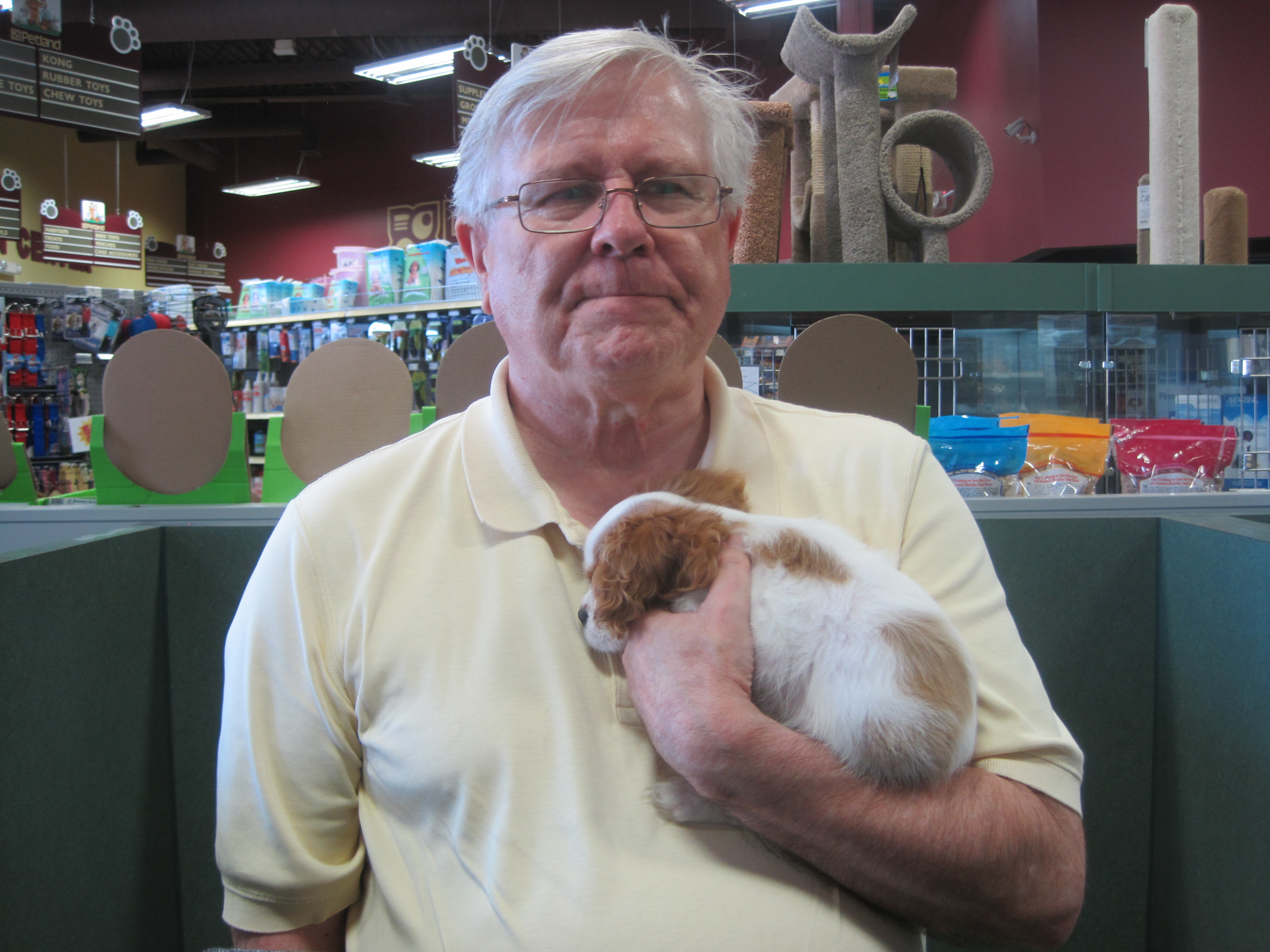
Barclay as a puppy
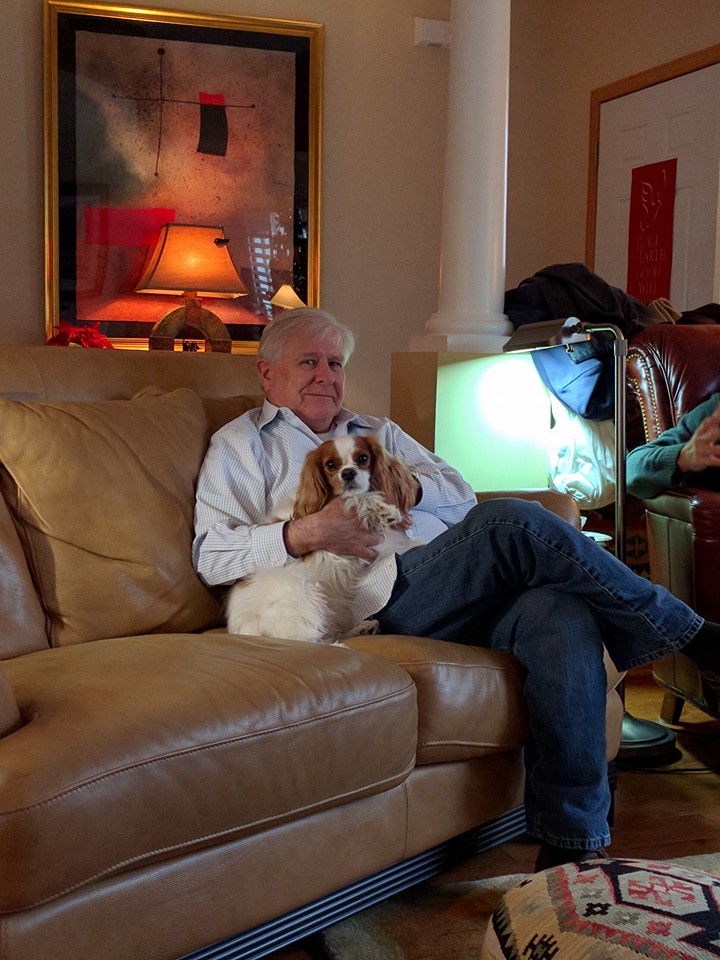
Yesterday morning it became clear that Barclay, our nine year-old Cavalier King Charles Spaniel, was laboring and less able to enjoy life. He took his last ride in the car, wagged his tail going into the veterinary clinic, and sat on my lap while Kay and I faced the decision we did not want to make. As he did the first time I held him — he was (3.5 lbs.), he licked my face and nibbled my left ear, expressing that same love and trust with Kay before they gave him the first shot that tranquillized him.
Five days later
The feeling now is emptiness, and, of course, the irrational sense of guilt for “putting him down,” as they say. Kay and I are teary and sad. I have a flood of tears and gasps about to break through the dam. The absence of daily routines — the morning kiss and gentle nibble on my left ear, wiping his eyes, taking him out to do his business (he NEVER had an accident in the house; never, ever), watching him chasing light and shadow, moths and butterflies at the cabin next to the wetland where the Trumpeter Swans live, barking at the deer, the sound of lapping from his water dish, telling us when he needed or wanted something —usually his ball and a playful game of soccer (he was a goalie! You couldn’t get the ball by him), his presence one step behind me going down the stairs (never beside or in front) like an on-site paramedic ready for an accident, sitting patiently to lick peanut butter from our fingers or from the table knife, rolling over on his back for a tummy rub, his complete stillness when Kay groomed him, herding us downstairs when it was time to watch Ari, have a cocktail, play ball, and replenish his prescription dog food, licking the dishes as they were placed in the dishwasher, running and leaping, unencumbered by a leash (“run, run, run!”) at the cabin, his sheer delight with Elijah, following the commands he liked from training — sit, down, heel, leave it — while regarding the rest as suggestions to consider.
To call Barclay “precious” understates his sweetness and goodness.
Six days later
It’s been six days since Barclay died. I haven’t been able to shake the sorrow. The tears remain locked up behind the dam in the reservoir of tears kept over a lifetime. The feelings are particular to this moment in time, but the reservoir feels deeper and darker than the loss of Barclay. The picture of his last moment — lying on the veterinarian’s table with his paws hanging over the edge, trusting us with his life — still haunts me. The feelings are what they always are: neither rational nor irrational. Reason can measure the width and depth of things, but it has no access to the depths of the non-rational which only the heart knows.
If my DNA follows my parents’ lifespan, I have six or eight years left to release the tears of sorrow, guilt, and shame, and to re-fill the reservoir with the tears of joy and thanksgiving for the gift of Barclay and of life itself.
Those who have had to say good-bye to the dog in the family understand. Others may wonder how a pet’s death can cause such deep sadness.
August 22, 2020
Yesterday morning it became clear that Barclay, our nine year-old Cavalier King Charles Spaniel, was laboring and less able to enjoy life. We knew he has the heart condition many Cavalier King Charles Spaniels develop and have seen signs Barclay is slowing down. He isn’t his playful self.
Barclay took his last ride in the car, wagged his tail going into the veterinary clinic, and sat on my lap while Kay and I faced the decision we did not want to make. As he did the first time I held him — he was (3.5 lbs.), he licked my face and nibbled my left ear, expressing that same love and trust with Kay before they gave him the first shot that tranquillized him.
Five days later, August 27
The feeling now is emptiness and the irrational sense of guilt for “putting him down,” as they say. Kay and I are teary and sad. I have a flood of tears behind the dam of denial. I miss his presence: the morning kiss and nibble on my ear; walking one step behind me going down the stairs, like a paramedic ready for a rescue; his delight chasing light and shadows, moths and butterflies; throwing his ball at our feet for a game of soccer (he was a goalie; you couldn’t get the ball past him); alerting us when it was time to watch Ari, have a cocktail, and play two or three minutes of soccer; his gentleness with grandson Elijah; practicing the training commands he liked — sit, down, heel, leave it — while regarding the rest as suggestions to consider; sitting patiently to lick the peanut butter from our fingers.
To call Barclay “precious” understates his sweetness and goodness.
Six days later, August 28
It’s been six days since Barclay died. I haven’t been able to shake the sorrow. The tears remain locked behind the dam in the reservoir of sorrow filled by the tears a lifetime. These feelings are particular to this moment in time, but the reservoir feels deeper and darker than the loss of Barclay. The picture of his last moment —lying on the veterinarian’s table with his paws hanging over the edge, trusting us with his life — still haunts me.
These feelings are what they always are: neither rational nor irrational. Reason can measure the width and depth of things, but it has no access to the depths of the non-rational, known only to the heart.
Twelve Days Later, September 3
It’s time for the evening news. Barclay is missing; Donald Trump is not. I’m struck by the contrast. Barclay never lied. There was no pretense in him. Lying and pretense were as far from Barclay’s character as honesty and humility are from the former president. During Barclay’s nine years with us, he never had an accident. Not once. Donald Trump made a mess of the White House, and continues to smear the media with his excreta every day. There is no good reason one would confuse the stench from a pigsty with the aroma wafting from a bakery. When everything is shaking, reason does not stop the quivering. Shaking and calmness are matters of the heart.
At my age, the reservoir has its share of grief and sadness. Much of the sorrow is of my own making, things I have done and left undone that hurt others and myself. Mixed with those tears are the gasps of a global lament: the mess we are leaving to our grandchildren; the horror of January 6 and the relentless disinformation that erodes the public trust on which the survival of democratic republic depends; the Big Lie swallowed and promoted by those who know it’s not true; the return of the hangman’s noose and the hanging tree, weapons of mass destruction, war, and guns concealed and carried freely in public; the insanity of the Strong Man pummeling Ukraine into submission, and the former American president who, like Putin, knows no other words than MINE; the fundamentalist churches’ exchange of the gospel of the crucified Jesus, the Loser, for the prosperity gospel for winners.
How much the reservoir is personal and how much is public is hard to tell, but I also know there are tears of joy and love in my deepest self. All that’s left at the end is love. If my DNA follows my parents’ lifespans, I have six or eight years left to release the sorrow, guilt, and shame, and re-fill the reservoir with tears of joyful thanksgiving for the gift of Barclay and of life itself. Love never ends.
Gordon C. Stewart, Brooklyn Park, MN, September 7, 2022
The House Select Committee hearings are studies of character. What we have seen seems courageous. It takes courage to bear witness to the truth when thugs are threatening your life over and over and over again, and when you can’t use your name any longer because it might bring harm to your mother, your grandmother, and yourself. But what we are looking at goes deeper than courage.
Integrity in high and low places
We have been looking at the integrity of those who did the right thing under pressure from the highest rung of American power. Integrity is the still point from which courage comes. Character that is true to itself was once expressed in the adage, “A man’s (sic) word is his (sic) bond.” Integrity is the alignment of word and deed, the plumb-line of conscience and responsibility. Almost two centuries ago, American writer Charles Caleb Colton wrote,
“Nothing so completely baffles one who is full of trick and duplicity…as straightforward and simple integrity in another.”
Charles Caleb Colton, Lacon (1985), 2.14.
Straightforward and Simple Integrity
We have witnessed straightforward and simple integrity in high places — Secretaries of State Rusty Bowers (AZ) and Brad Raffensperger (GA); former Attorney General Bill Barr; the President’s daughter, Ivanka; leaders of the US Department of Justice, the White House Attorney — and in low places where most of us live and do our jobs without public recognition, people like Ms Shaye Moss and her mother, “Lady Ruby,” in Fulton County (GA).
Integrity and trustworthiness are the brick and mortar that keep a house from falling. Tricks and duplicity, like termites and carpenter ants, slowly destroy the foundations and eat away the framework of the house we take for granted. The infestation — Donald Trump’s Constitutional mischief; the once-upon-a-time Grand Old Party’s steadfast complicity in promoting of the Big Lie; three Supreme Court justices who were confirmed only after well-scripted assurances that they regarded Roe v Wade as settled precedent, and, as such, would not overturn Roe v Wade— is eating away the trust and respect without which a house creaks and crumbles.
Securing the House: “I will not play with laws I swore allegiance to”
Moments before Rep. Bennie Thomson gaveled the June 21 hearing to order, Republican Arizona House Speaker Rusty Bower received a letter from the 45th President of the United States of America “remind” Mr. Bower of something he never said. Speaker Bower testified under oath that he had never, ever, at any time, anywhere, under any circumstances said the election was rigged. The reminder was a lie.
Mr. Bower’s resistance to repeated pressure from the White House was an act of integrity. “It’s a central tenet of my faith,” he said.” Violating the Constitution is foreign to my very being. I will not do it.” In his diary he had written, “It is painful to have friends…turn on me with such rancor.” But “I do not want to be a winner by cheating. I will not play with laws I swore allegiance to.”
“I know sage, wormwood, and hyssop, but I can’t smell character unless it stinks.
edward dahlberg, “On Human Nature,” Reasons of the Heart, 1965.
The View from Above and the View from Below
Some people view the world from above. They see through eyes of power, possession and privilege. Most of us see life from the lower places of the dis-enfranchised, the dispossessed, the powerless, the forgotten, and those who feed their children, struggle to make the month’s rent, pay the utility bills, find a doctor or a warm blanket in a homeless shelter. They do not call attention to themselves.
Among those who see the world from below are Ms. Shaye Moss, an election worker for the past 10 years in Fulton County, Georgia, and her mother “Lady Ruby,” whose lives were turned upside down by a phone call from the President to Georgia Secretary of State Brad Raffensperger.
Video of Ruby Freeman’s testimony from below and the phone call from the top.
When asked what had passed between them at the poling site, Shaye Moss, looking over her shoulder at Lady Ruby and smiled. She answered, “A ginger mint.”
Gordon C. Stewart, public theologian, author of Be Still! Departure from Collective Madness (2017 Wipf and Stock), writing from Brooklyn Park, MN, June 22, 2022.
I had never heard of the Faith and Freedom (F&F) Coalition before hearing Donald Trump would be the keynote speaker for F&F’s “Road to Majority” conference in Nashville, TN.
Did the Faith and Freedom organizers remember the 2016 presidential candidate’s unintended exposure of biblical ignorance when he called Second Corinthians “Two Corinthians” at Liberty University? Liberty is the Bible-believing school founded by Jerry Falwell, Sr., as a Christian counter-weight to the godless universities that were eroding America’s foundations. And, if Faith and Freedom is about freedom, why invite the president who drove a lawful peaceful Black Lives Matter demonstration from Lafayette Park with tear gas — in order to pose in front of an historic Episcopal Church holding a borrowed Bible upside down?
Wisdom calls aloud in the street,
      she raises her voice in the public squares;
at the head of the noisy streets she cries out,
     in the gateways of the city she makes her speech:

“How long will you simple ones love
    your simple ways?
How long will mockers delight in mockery
   and fools hate knowledge?’” — Book of Proverbs 1:20-22.
What would Donald Trump say after the House Select Committee on January 6 had held its first three public hearings, providing irrefutable evidence of intense pressure on Vice President Pence? What would he say to the sworn testimony of former Attorney General Bill Barr and others that there was no evidence of fraud, that the election had not been stolen? What would he say about Ivanka’s sworn testimony that she believed the Attorney General because she trusted him. How would Mr. Trump respond to Barr’s sworn testimony that the president appeared to be “out of touch with reality”?
A clear and present danger
How would he rebut Conservative Republican retired federal Judge J. Michael Luttig’s live testimony? The judge testified that the January 6 attack on the Capitol was part of a “well-developed plan by the former president to overturn the 2020 election at any cost, so that he could cling to power that the American people has decided to confer upon his successor,” and that he considers Trump and his “Big Lie” legitimizers “a clear and present danger”?
The Speech for “Road to Majority”
From the podium of the Faith and Freedom convention, he practiced what Roy Cohn and Roger Stone had taught him. Always go on offense; never go to the defensive side of the line of scrimmage. “Mike Pence had a chance to be great,” he said. “He had a chance to be historic. Mike Pence did not have the courage to act!” He said nothing about his last phone call with the vice president on January 6 in which he called Pence a “wimp” and worse, according to the sworn testimony of his daughter Ivanka, the White House Attorney, and White House staff who were in the Oval Office. In his speech to the Faith and Freedom convention, Trump disparaged the vice president as a “human conveyor belt” for going forward with counting the votes that would certify results of the election. He had considered calling Pence a “robot.”
Historical Flashback by historian Heather Cox-Richardson
On August 9, 1974, Nixon became the first president in American history to resign.
[Barry} Goldwater, along with House Republican Leader John Jacob Rhodes and Senate Republican Leader Hugh Scott, entered the Oval Office around 5 p.m. The Arizona senator sat directly in front of Nixon’s desk, the others to the side. Goldwater told Nixon he had perhaps 16 to 18 Senate supporters left – too few to avoid ouster. Congressman Rhodes said House support was just as soft.
Rather than admit guilt, though, he told the American people he had to step down because he no longer had the support he needed in Congress to advance the national interest. He blamed the press, whose “leaks and accusations and innuendo” had been designed to destroy him. His disappointed supporters embraced the idea that there was a “liberal” conspiracy, spearheaded by the press, to bring down any Republican president.
When his replacement, Gerald Ford, issued a preemptive blanket pardon for any crimes the former president might have committed against the United States, he guaranteed that Nixon would never have to account for his illegal attempt to undermine his Democratic opponent, and that those who thought like Nixon could come to think they were above the law.
“What I admire about Nixon was his resilience,” one of Nixon’s 1972 operatives told a reporter decades later, ‘It’s attack, attack, attack!’ “
That operative, who sports a tattoo of Nixon on his back, was Roger Stone, who went on to advise Donald Trump’s political career.
Heather Cox Richardson, Letters from and American, June 17,2022
Leave no Stone unturned
Not every resilient thing is worthy of praise. Roger Stone is resilient. Nuclear waste is resilient. Attack, attack, attack is resilient. Never defend! “Repeat, repeat, repeat. Attack, attack, attack! Never show weakness. Only show strength!
Who will remove the Stone? What congressional delegation will do for America what John Jacob Rhodes, Hugh Scott, and Barry Goldwater did when they walked into the Oval Office to tell President Richard Nixon it was time to resign? Who will go to Mar-a-Largo to tell Donald Trump that his game is over, that he can no longer lie his way out of the sand trap, that they will not pull him out to put him back on the course? When and how will the Republican National Committee (RNC) re-gain enough respect for the U.S. Constitution to tell the world that the “Big Lie” was a lie? When will Faith and Freedom become faithful to the Lord it professes?
Gordon C. Stewart, public theologian, author of Be Still! Departure from Collective Madness (2017 Wipf and Stock), Brooklyn Park, MN, June 21, 2022.
Recent talk of “Willful blindness” in reference to the House Select Committee on January 6 public hearings leaves the door ajar to re-publish “Two Universities: Paris and Liberty” from Be Still! Departure from Collective Madness (2017 Wipf and Stock), p.101-2.
Two Universities: Paris and Liberty
“Let’s teach them (i.e., Muslims)
a lesson if they ever show up here,”
Falwell told thousands of students here
Dec. 4, with an unsubtle reference to
a pistol in his back pocket. Five days
later, he announced plans to let
qualified students store guns
in residence halls for the first time.

—Nick Anderson, “For Many at Liberty University”
When the president of “the largest Christian university in the world” in Lynchburg, Virginia urges every student to buy a gun and get a permit to carry a concealed weapon, for whatever reasons, it seems a little oxymoronic and moronic. It’s neither Christian nor smart. It’s not what people do in college. They buy books, not guns. It’s not consistent with the traditions and standards of higher learning. Scholars and presidents of real universities don’t talk like that.
In the thirteenth century CE, a young Thomas Aquinas enrolled as a student of Christian theology and philosophy at one of the world’s first universities, the University of Paris. His professors introduced him to the writings of Aristotle, Plato, and Maimonides in their original Greek and Latin languages, and to the Christian scriptures.
Lynchburg, Virginia in the twenty-first century is long way from Paris in the 13th Century, and that’s too bad for all of us in America where what Aquinas later called “willful ignorance” has become the order of the day.
Thomas Aquinas wrote,
It is clear that not every kind of ignorance is the cause of a sin, but that alone which removes the knowledge which would prevent the sinful act. …This may happen on the part of the ignorance itself, because, to wit, this ignorance is voluntary. … For such like negligence renders the ignorance itself voluntary and sinful, provided it be about matters one is *bound and able to know.
Thomas aquinas,Summa Theologica, I-II, q. 76, a. 1, a. 3.]
The sin that comprehends all others
Thomas Aquinas quoted St. Augustine, upon whose work his thinking drew, with a statement about willful ignorance. “Hoc et peccatum quo tenentur cuncta peccata” (This is the sin which comprehends all other sins).
Liberty University is not a thirteenth century Catholic university. It’s Protestant and fundamentalist. It prides itself on its knowledge of the Bible.
But don’t we have to suppose that somewhere in that auditorium in Lynchburg, there was a professor who cringed? Someone there who resonated with the old student at the University of Paris? Someone there who thought that telling young professing Christians to arm themselves was a deliberate act of willful ignorance, a sin against faith, the sin that comprehends all others? Someone who knew Matthew 26:52 by heart — Jesus’s words to Peter when Peter had cut off the high priest’s servant’s ear at Jesus’s arrest –“Put away your sword. Those who live by the sword will perish by the sword” — and wanted to scream out loud about willful ignorance?
Gordon C. Stewart, public theologian, author of Be Still! Departure from Collective Madness (2017 Wipf and Stock), Brooklyn Park, MN, June 13, 2022.
The clock of climate catastrophe continues to tick closer to midnight. If anyone is still around on Earth Day 2122, they would likely ask how we could have been so foolish. “What were you thinking? What distracted your attention from the five-alarm fire that turned our Home to ashes?”
Earth Day 2022 Answer
“Well,” we might answer, “lots of things. Important things; really important things. Too many worries to number. Like Ukraine. Like bullies in Russia and America and Uvalde. Like weapons of war that slaughtered children learning their ABC’s and the teachers who were teaching them. Like the resurgence of nationalism that drove us deeper into caves we assumed to be secure. Like the assaults on truth, the sudden appearance of ‘alternative facts’ and ‘fake news.’ Like our unwillingness to discuss what is real.
“Most everywhere we turned, things were not good. Here at home, violence paraded through the streets of crowded neighborhoods. Guns and automatic weapons were killing civilians in shopping malls, schools, synagogues, mosques, churches, roadsides, and public squares. Misinformation and disinformation eroded public trust in the institutions essential to a democratic republic. A major television network promoted the former president’s certainty that the American election was stolen. Members of Congress advocated conspiracy theories that blaming our troubles on Satan operating in the Deep State. In Florida Mickey and Minnie, Donald Duck, and Goofy and Democrats were scorned as cannibals, sex traffickers, and pedophiles because they continued to say the word ‘gay’.
How could you be so foolish?
“All of that was important,” the 2122 Earth Day survivor might say. “But even the most worthy of those concerns was penultimate. They distracted your attention from the over-arching threat to everyone and everything, everywhere on the good Green Earth. Every day was Earth Day, You ignored it.
“You were not the first generation with a chronic inability to focus, but you are the last. There were no safe rooms in the one House. No nation, no race, no clan, no caste, creed, ideology, gender, politics, tradition survives when its inhabitants become arsonists who burn their own House to the ground. The temperature was rising, the sea levels were rising, the oceans heating, the manatees dying for lack of clean water, the skies over Ukraine were black and filled with smoke and toxins. How could you have been so stupid?”
What was wise did not suit our tastes
“We had little taste for reality. We mistook a smorgasbord of tastes for reality itself. We took the table for granted. Everything was reduced to personal preference. Freedom without guardrails was the god we served. Few of us had the good sense to step back from the feast to wonder, ponder, gasp, or ask what was real and what was not. What is truth? Is anything really real? Everything became subjective. Everything was a matter of opinion. Truth? Whose truth? Reality? According to whom?
“When the legs of the smorgasbord table began to crack, we continued to stuff ourselves. When the table legs began to creek, few of us noticed. Everything else might break, but not the smorgasbord table. Climate change? The end of Nature as we had known it? The Corona pandemic? Everything became fake news. We thought the table could not break.”
Masters of Illusion
The masses have never thirsted after truth. They turn aside from evidence that is not to their taste, preferring to deify error, if error seduce them. Whoever can supply the illusions is easily their master; whoever attempts to destroy their illusions is always their victim.
— Gustave Le Bon (1841-1931) French author and polymath, quoted by L.K. Hanson in “You Don’t Say” in April 18, 2022 Star Tribune.
“When it came to things that mattered most, we had become the seducers and the seduced who en masse mistook personal freedom for Ultimate Reality. The Smorgasbord Table would never end.”
Gordon C. Stewart, public theologian, author of Be Still! Departure from Collective Madness (2017 Wipf and Stock), Brooklyn Park, MN, June 12, 2022.








 Views from the Edge