Pope Francis gets it!

I love this Pope. I’m a non-hierarchical Presbyterian, but I love Pope Francis.

TOPSHOT – Members of the faithful take photos of Pope Francis, as he arrives to lead the Liturgy of Penance in St Peter’s basilica at the Vatican on March 17, 2017. / AFP PHOTO / VINCENZO PINTO (Photo credit should read VINCENZO PINTO/AFP/Getty Images)

He “gets” relationships as well as he “gets” worship. He “gets” distraction and what a “60 Minutes” investigative report exposed: a form of technological addiction built into cell phones to make the user as anxious as a nursing infant torn away from its mother when you’ve put down your cell phone for more than eight minutes.

Lift up your hearts,” he said, not “Lift up your cell phones to take a picture,” referring to the use of cell phones in worship. “Mass is not a show!”

Francis is not an abstainer. He has a cell phone and he uses it.

Susan Hogan of The Washington Post reminds readers of Pope Francis’s Amoris Laetitia (The Joy of Love) in which he urged Catholics last year to use discretion in using electronic devices. “We know that sometimes they can keep people apart, rather than together, as when at dinner time everyone is surfing on a mobile phone, or when one spouse falls asleep waiting for the other who spends hours playing with an electronic device.”

Pope Francis might have added the fact that we humans are mammals, not invisible spirits. Mammals are flesh and blood creatures who use all five senses. For tactile creatures who live in a single place in real time, cyberspace relationships and distractions are no substitute for face-to-face, body-to-body, eye-to-eye, hand-in-hand physical presence to each other. Whales don’t take pictures. Neither do dogs, cats, or chimpanzees.

“Lift up your hearts! Not your cell phones!” says the author of The Joy of Love.

Three cheers for the pope who took the name of Francis of Assisi whose community included other mammals — whales, dogs, cats, chimps, and humans — and, of course, birds who found a resting place on his shoulder.

  • Gordon C. Stewart, Chaska, MN, Nov. 10, 2017.


Stepping Up: Running for Congress

Moments ago Tabitha Isner, a highly respected friend and ministerial colleague, sent an email announcing she’s running for Congress.

You can meet Tabitha and learn why she’s running on her campaign website Tabitha Isner for Congress, on FaceBook, or that thing that issues early morning messages that make us groan: Twitter.

Tabitha is the only Tabitha I’ve ever met in person. I do remember another Tabitha whose Bewitched TV  sit-com daughter Samantha could change the world with the twitch of her nose. Tabitha is no Samantha! knows it will take more than the twitch of a nose to make democracy work in America.

Thank you, Tabitha, for stepping up and stepping out.

  • Gordon C. Stewart, Chaska, MN


The Pruitt Bible and The Jefferson Bible

You’ve heard of the Jefferson Bible. But you may not have heard of the Pruitt Bible.

Today’s Daily Beast brings the Pruitt Bible to the public’s attention. It’s well worth the read.

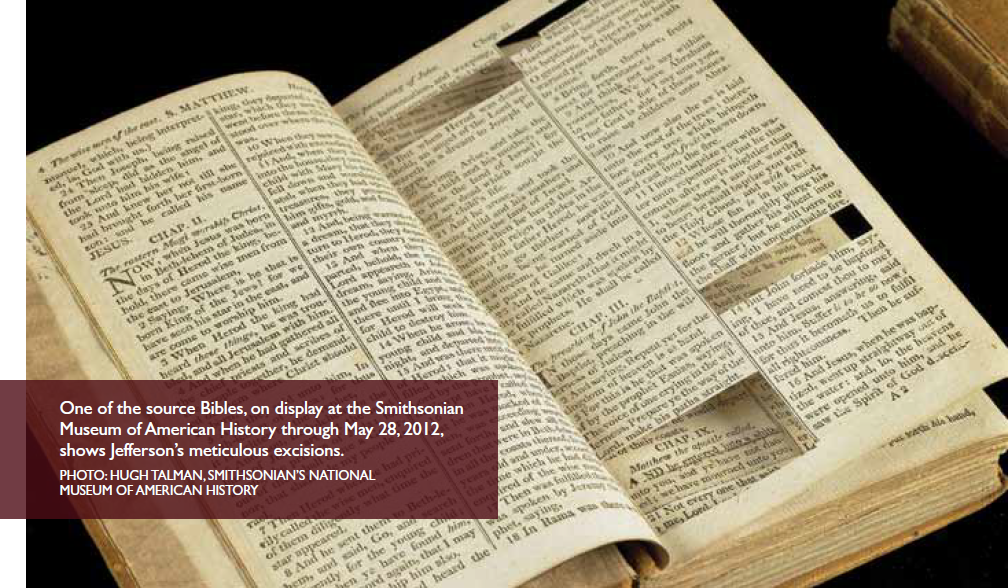
The Jefferson Bible is missing whole sections. Thomas Jefferson, a produce of the Age of Enlightenment, a Deist who believed in science, took a penknife or some other sharp instrument and cut out passages of the four Gospels that made no sense to him. He didn’t twist their meanings. He just cut them. But he did so only after studiously comparing six different copies of the New Testament in King James English, Latin, French . . .  and Greek, the language of the New Testament.

The Pruitt Bible is different. It’s the bible of twisted meanings that serves the interests of eliminating real scientists from serving at the EPA. Here’s Jay Michaelson’s “EPA Director Scott Pruitt Sites Bible for Industry-Led Science Boards and Gets the Bible Exactly Wrong in today’s Daily Beast.

There’s a big difference between the Pruitt Bible and the Jefferson Bible. One of them took the texts seriously. The other twisted them.

We may also suggest that only one of the authors read Shakespeare’s Richard III, or F. Jacox:

Shakespeare embodies in Richard of Gloucester a type of the political intriguer; as where the usurper thus answers the gulled associates who urge him to be avenged on the opposite faction: —

“But then I sigh, and with a piece of Scripture

Tell them that God bids us do good for evil.

And thus I clothe my naked villainy

With old odd ends, stolen forth of holy writ;

And seem a saint when most I play the devil.”

An unmitigated scoundrel in one of Mr. Dickens’s books is represented as openly grudging his old father the scant remnant of his days (on the ground that “Three-score and ten’s the Bible-mark”); whereupon the author interposes this parenthetical comment: “Is any one surprised at Mr. Jonas making such a reference to such a book for such a purpose? Does any one doubt the old saw that the devil quotes Scripture for his own ends? If he will take the trouble to look about him, he may find a greater number of confirmations of the fact in the occurrences of a single day than the steam-gun can discharge balls in a minute.”

 – F. Jacox


  • Gordon C. Stewart, Chaska, MN, Nov. 6, 2017.

Elijah reviews his Mom

Grandpa, what’s a ‘review’?

Where’d you get that word, Elijah? How are you spelling it? There are two spellings and they’re very different. One I can tell you about. The other I can’t until you’re old enough to handle it.

IMG_5767I don’t know how to spell yet! All I know is Mom picked me up from work this afternoon and she was really happy. She told Marissa she had a really good review.

That’s wonderful, Elijah! I knew her review was coming and that she was a little anxious about it. Everyone’s anxious before a review.

Sometimes I worry, Grandpa, that you’re not completely tuned in. You go off on tangents and forget the question. You don’t even remember. I asked you a QUESTION! Like I said — What’s a review?

Well, it’s a time when a boss and an employee sit down to discuss how work is going. How well the employee is doing at her job.

So which is Mom, the boss or an employee? I think Mom must be the boss.

No, she’s the employee. She works for the boss.

Okay, I think I get it. So Mom did really well?

She did, Elijah. She got a raise and the boss said all kinds of good things about your Mom.

Yeah, she’s the best Mom in the whole world, Grandpa! She’s really smart and she’s pretty and stuff but she’s also the best diaper-changer. Don’t tell Grandma I said that, okay? I don’t want to give Grandma a bad review. I don’t want to hurt Grandma’s feelings. But Mom knows me best. She knows just how I want my diapers changed. And she doesn’t get mad when I wake her up all night every hour ‘cause I’m hungry and can’t turn myself over and stuff like that. Well, sometimes, she gets maybe a little unhappy, but I bet she’s way more patient than any other Mom.

That’s a great review, Elijah. You’ve got the hang of it.

Okay! There’s one more thing, Grandpa, just between us guys.

IMG_8782 Elijah

Mom says she’s not pretty any more. She says none of her clothes fit and she thinks she’s fat. She’s not, Grandpa! She’s beautiful! She’s the most beautiful woman I’ve ever met. Don’t tell Grandma I said that, okay? She’s pretty too, and she’s Mom’s Mom, so I bet she was really pretty, too, before she got old and wrinkly like you. Don’t tell her I said that, okay? You can take it, ‘cause you’re a guy and you know you’re old and wrinkly and fat and you don’t care. Anyway, we’re reviewing Mom here, not Grandma. Grandma’s second best in the whole world. But Mom’s a superstar. As her boss, I’d give her a big raise!

IMG_7979You just did, Elijah. You just gave her the kind of big raise a mother lives for. Now, if you can just start sleeping through the night, that would be an even bigger raise you could give Mom. You’ll be her most favorite boss ever. Her one and only!


  • Grandpa Gordon with 5 month old Elijah, November 4, 2017.


Giovanni’s Buffet Mirror

“Buffet Lunch: All You Can Eat” says the sign.

I decide to try it. “Eight dollars with soda; $7 with water,” says the woman at the counter.

Sugar makes me fat and frantic. I choose the water.

salad-bar-min

The buffet is loaded. Full salad bar. Spaghetti with meatballs and your choice of meat or meatless marinara sauce. Garlic toast. And four kinds of pizza – fattening … and more fattening.

I pass up the salad bar and load up on spaghetti with meatballs, meat sauce, and, of course, garlic toast. I love garlic toast.

Since I’m alone, there’s plenty of time to look around while I eat. You’re not supposed to stare at people, so I don’t. I’m careful not to stare. But I can’t help but look. There’s no one to talk with. My dog’s outside in the car. So is my MacBook Air. There are no distractions. So my eyes scan the room for something of interest.

Eventually I realize a common characteristic to the buffet diners — obesity. I think of Richard Simmons, Oprah, and Michelle Obama, and their attempts to get people to eat better and less.

I fill up my plate with a second helping of spaghetti, and add two slices of pizza. It’s good. Really good! All that gooey cheese, and a great crust — just like the pizza I’d had as a child at Fonzo’s Pizzeria in Philadelphia, Pennsylvania. But this isn’t Philadelphia and this isn’t the 1950s. I’m at Giovanni’s Pizza in Staples, Minnesota almost a year after Michelle’s White House school obesity initiative went the way of all flesh.

“They’re all fat!” I think to myself. I take another sip of water before getting up to pay my bill.

Next to the cash register is somebody’s idea of a joke: a full-length mirror. I see an ugly guy with a belly staring back at me and think I hear a voice scream: “You’re fat too!”

aHR0cDovL3d3dy5saXZlc2NpZW5jZS5jb20vaW1hZ2VzL2kvMDAwLzAyNC82MTcvb3JpZ2luYWwvZGlldC1zY2FsZS0xMTAxMjUtMDIuanBn

I pay the $7 with tip, swallow hard, and begin to digest an old biblical teaching:

“Before you criticize the pounds on others, first remove the ton from your own abdomen.”

  • Gordon C. Stewart, November 3, 2017.

I want to be an olive tree

I love olives. I love the Psalms. Well . . . some of them . . . some times. Partly. Like the Psalm that greeted me this morning at the cabin far from the news.

Old_olive_tree_in_Karystos,_Euboia,_Greece

Old olive tree in Karystos, Euboia, Greece

Maybe you’ll like it too.

Why do you boast of evil, you mighty man?
Why do you boast all day long,
you who are a disgrace in the eyes of God?
Your tongue plots destruction;
it is like a sharpened razor,
you who practice deceit.
You love evil rather than good,
falsehood rather than speaking the truth;

You love every harmful word,
O you deceitful tongue!

Surely God will bring you
down to everlasting ruin:
He will snatch you up and
tear you from your tent:
He will uproot you from
the land of the living.

The righteous will see and fear;
they will laugh at him, saying
“Here now is the man
who did not make God his stronghold
but trusted in his wealth
and grew strong by
destroying others!”

But I am like an olive tree
flourishing in the house of God . . . .
(Psalm 52:1-8a, NIV)

I am not righteous. But I do fear.

I just want to be an olive tree. Like the olive tree that produced the twig the dove brought back to the ark signaling to Noah that the flood was over.

  • Gordon C. Stewart, truck stop near cabin in northern MN, November 3, 2017.


Saint Giovanni of the Pillows

John Thomas Stewart appears on no other list of Saints but mine. I called him Grandpa.

He wasn’t famous like Saint John of the Gospel or Saint John of the Cross, but his life quietly bore witness. To sacred silence. And laughter.

By the time I came into his life he’d retired from driving his team of horses through the streets and alleys of east Boston to deliver fifty gallon drums of oil to the mostly Italian-speaking shop owners.

Grandpa Stewart was not Italian. But the shop owners wouldn’t have guessed. He learned to speak Italian while making his daily rounds. “Buongiorno, Giovanni!”

giovani

And so his day went until he drove the horses and his wagon back to the company barn, fed them, groomed them, put them in their stalls for the night, and walked home to #11 Tremont Street.

In retirement he had moved from Tremont Street to live in my Uncle Harold’s palatial home in Chestnut Hill across the street from Boston College. It was to the house on Hobart Road that my fondest memories return.

During the years my father was in the South Pacific, my mother and I lived with Grandpa and Grandma Stewart in the house of Hobart Road in Chestnut Hill. Uncle Harold, too, was in the war, somewhere on a ship. We never knew where.

We didn’t know much of anything in those years between 1943 and the end of the war. Everything was uncertain. But at least two things I could count on put my grandfather on the list of Saints worth remembering.

PILLOWS IS ONE.

throw_pillows_pillows_by_color-1

We played a game with pillows. On the floor with the Persian rug that filled the living room on Hobart Road, I’d cover Grandpa’s entire body with all the pillows we could gather from everywhere. Once I’d completely covered him — “no peeking, Grandpa — he’d lie there for various amounts of time until the time seemed just right. Then — “Boo!” — he’d say suddenly throwing off the the pillows. “Boo!” To a two year-old, his resurrection from the dead was always a surprise. We’d laugh and laugh and laugh. Then I would take my turn under the pillows to scare Grandpa: “Boo!” He’d act surprised every time. It never got old.

“Boo!” never sounded so good. Grandfathers are like that.

Otherwise, he didn’t say much. “Boo!” was one of the few words I remember Grandpa speaking. Most of the time, he didn’t say boo. He was quieter than quiet, like a rock to a family at the edge of quick sand — one news story from the radio away or a knock on the door that might tell us Harold or my father had been killed in the war.

CHURCH IS THE OTHER.

During the summers we lived in Uncle Harold’s cottage on Harridan Avenue in Rockport, Massachusetts, just a block up from Old Garden Beach and a mile from Dock Square, Bearskin Neck, and the First Congregational Church in the heart of Rockport.

My mother and Grandma failed in their first attempt to take me to church when the otherwise quiet two year-old suddenly interrupted the long sacred silence that followed the minister’s “Let us pray” with words of my own — “Mom!! Big grunt!!!” — sending the church into giggles that seemed to irk the minister by bringing everyone back to earth, so to speak. My older cousin Gina snatched my up and ushered me out. That was the end of church for awhile. They were not about to cause a scene again.

Grandpa was a different story.

I remember walking with him to church in Rockport. He didn’t say boo; he just walked. But it was the way he walked, and why he was walking on a Sunday morning, that puts him in my catalogue of saints. He walked with dignity and purpose.

Grandpa’s posture was erect. Perfectly straight. Dressed in a starched white shirt, tie, dark suit, and wearing a fedora, the man with a sixth grade education who’d run away from domestic abuse when he was 12 years old seemed like what I imagined President Roosevelt must look like. Dignity was everywhere: his posture, his gate, his attire — on the way to the place and time that gave substance, shape, and meaning to his life: Sunday morning worship, “The Lord’s Day,” as he called it.

Sunday morning was sacred time.

Fifty years after the walk to church with Grandpa in Rockport, I visit a small, white, wood-frame church on the Isle of Skye in Scotland, the land from which Grandpa’s father had emigrated to Prince Edward Island where Grandpa was born.

33900600110_1a54a346b1_z

I arrive ten minutes before the beginning of worship. The usher in the tiny 6’x8’vestibule welcomes me with a wordless smile, gives me a copy of The Book of Psalms and Paraphrases, opens the door to the large sanctuary that looks out on the natural beauty of Loch Snizort, and quietly ushers me to a pew among the silent members of the congregation. The man to my left smiles and nods. In a minute or two he offers his copy of The Book of Psalms and Paraphrases, opened to the first hymn posted on the small hymn board.

No one speaks in these minutes before worship. There is no prelude. No music plays. Even the children are quiet and seem at home in it. The silence is not empty. It is as full as any place I’d ever been or ever would be again: the fullness of faith, hope, and love waiting to break into song together as one voice in four-part harmony:

Praise God from Whom all blessings flow!
Praise Him all creatures here below!
Praise Him above, ye heavenly host!
Praise Father, Son, and Holy Ghost!

I stand erect, like Grandpa, to sing God’s praise and sense a faint echo of a joyful chuckle time cannot erase — “Boo!” — rising from under the pillows of the Communion of Saints.

  • Gordon C. Stewart, at the cabin, November 1, 2017, All Saints Day.


Sermon: You shall see My back

A sermon on The Book of Exodus 33:12-23 for Reformation Day celebrating the 500th Anniversary of the 16th Century Reformation, preached at Central Presbyterian Church, St. Paul, Minnesota.

With all that’s happening in the world these days, many thoughtful people wonder about the nature of God, or conclude there is no God, that the whole thing is a made-up story to serve our own purposes rather than seeing something real that cannot be seen.

“See, there is a place by Me” [says God to Moses in the wilderness] “where you shall stand on the rock; and while My glory passes by I will put you in a cleft of the rock, and I will cover you with My hand until I have passed by; then I will take away My hand, and you shall see My back; but My face shall not be seen” (Ex. 33:22-23).

This strange reading from the Book of Exodus which puts a face on God —  God has no face, no hands, no feet — may just be the text to help us get reality straighter than we had before the crisis that imperils the human species itself: the onset of climate departure. Not just climate change, but climate departure, the point of no return to nature as we have known it. Maybe God has put us again in the cleft of the rock and is passing by. We only get to see God’s back.

While our hearts and minds are reeling on the edge of the abyss of despair over the rise of the KKK and the alt-right in Charlottesville, the hurricanes, floods, fires, and earthquakes in Houston, Puerto Rico, northern California, and Mexico City to say nothing of the inexplicable massacre of more than 500 concert-goers in Las Vegas while two little boys with matches in Washington and Phnom-pen play chicken with nuclear toys, we are like Moses in the wilderness pleading to see God’s glory. We are teetering on the edge of an abyss into which we dare not look.

“To clasp the hands in prayer is the beginning of an uprising against the disorder of the world,” wrote Karl Barth. Elsewhere he insisted that the God we know in Jesus Christ is essentially unknowable. So today we clasp our hands again asking about God, asking about what, if anything, is ultimately and finally Real. We only see God from the back, clasping our hands in prayer — the beginning of an uprising against the present disorder of the world.

Like Moses in the cleft of the rock — between a rock and a hard place — in the wilderness where nothing is certain — we have forgotten, to paraphrase our Lord, that “Humankind does not live by tweets alone…but by every word that comes forth from the mouth of God.”

In the Hebrew mind, to see someone’s face is to know them. But God says to Moses, “You cannot see My face and live. I will put you in the cleft of the rock, cover you with My hand and passed by. Only after I have passed by can you see My back.”

Why the back? Why not the face?

We are mortals who don’t want to be mortal, mammals who don’t want to be mammals. We are part of nature, not the masters of nature, not the exception to it. “You are dust,” says the Creator in Genesis, “and to dust you shall return.” Mammals are not meant to wake up with morning tweets from a mortal who can’t sleep and needs to hear Echo’s voice before breakfast and coffee.

We are living in the period of Narcissus of the Greek myth who dies because he cannot take his eyes off his reflection in the pond — his own face, his own image, his own glory.  A mere a mortal who must eat and drink to survive, Narcissus dies because to drink would have disturbed the pond in which he sees only himself. And, when he dies, a flower blooms on that very spot.

On this Reformation Sunday and the 500th Anniversary of the Reformation, we do well to pay heed to a declaration that may strike us as curious: “Human nature is, so to speak, a perpetual factory of idols.”

Wait! Wait! Don’t tell me!     Who said that:

Bill Maher, Christopher Hitchens, or someone else?

Would you believe it was John Calvin, the much misunderstood 16th century reformer whose work was turned into stone by the Calvinists who mistook his face for God’s, turning his work into an idol?

The issue for Calvin and the Reformed theological tradition which is Central’s tradition, was not atheism. It wasn’t unbelief. It was idolatry. It was misplaced worship of the products, phantasms and fantasies produced by the human heart and mind, the substitutes for ultimate reality that command our worship.

Wait! Wait! Don’t tell me! Who said:

“The human mind, stuffed as it is with presumptuous rashness, dares to imagine a god suited to its own capacity; as it labors under dullness, nay, is sunk in the grossest ignorance, it substitutes vanity and an empty phantom in the place of God. To these evils another is added. The god whom man has thus conceived inwardly he attempts to embody outwardly. The mind, in this way, conceives the idol, and the hand gives it birth” —

Bill Maher, Christopher Hitchens, William Barber II, Cornel West, Elizabeth Warren, or John Calvin?

“I will cover you with My hand while I pass by. You can see me from the back.”

There is in the Hebrew Bible, and in the writings of Holocaust survivor Eli Wiesel, a profound sense of God’s absence as well as presence. By the time Moses gets to see God from the back, God has already passed by.

In the Lutheran and Reformed tradition from Luther to Calvin to Bonhoeffer to Bill McKibben, there is a long-standing recognition of God’s absence or hiddenness.  Listen to Dietrich Bonhoeffer:

The God who is with us is the God who forsakes us. The God who makes us live in this world without using God as a working hypothesis is the god before whom we are standing. Before God and with God we live without God. God allows Himself to be edged out of the world and on to the cross. God is weak and powerless in the world, and that is exactly the way, the only way, in which God can be with us and help us. …

 Man’s religiosity makes him look in his distress to the power of God in the world; he uses God as a deus ex machina. The Bible, however, directs us to the powerlessness and suffering of God; only a suffering God can help. To this extent we may say that the process we have described by which the world came of age was an abandonment of the false conception of God, and a clearing of the decks for the God of the Bible, who conquers power and space in the world by his weakness. . .

 Humans are challenged to participate in the sufferings of God at the hands of a godless world. One must therefore plunge oneself into the life of a godless world, without attempting to gloss over its ungodliness with a veneer of religion or trying to transform it. . . To be a Christian does not mean to be religious in a particular way, to cultivate some particular form of asceticism. . . but to be a human being. It is not some religious act which makes a Christian what he is, but participation in the suffering of God in the life of the world.. . .

One must abandon every attempt to make something of oneself, whether it be a saint, a converted sinner, a churchman . . . This is what I mean by worldliness—taking life in stride, with all its duties and problems, its successes and failures, its experiences and helplessness. It is in such a life that we throw ourselves utterly in the arms of God and participate in his sufferings in the world and watch with Christ in Gethsemane. That is faith, and that is what makes a human and a Christian. —Dietrich Bonhoeffer, Letters and Papers from Prison.

 The world may be God-less, but it is not without gods. The idols are everywhere. And the chief idol of our time is the prosperity gospel: the gospel of greed that escapes all suffering.

These small gods our hearts have manufactured are not real but they are no less powerful. When they are unmasked, we see their ashen faces – the faces we have created because we refuse to live as mortals who cannot see God’s face, discontent to spend time in the cleft of the rock in order to see God from the back, the scarred back of God, whipped and lashed by the hands of Narcissus’s god-filled world.

Presbyterians and others of the Reformed theological tradition often ask why our membership is declining. Are we dying?

On this Reformation Sunday in the year of the 500 Anniversary of the Reformation, could it be not because we haven’t kept up with the latest cultural trends and fads but because we’ve forgotten our identity? Could it be, in part, not because other churches have bands and are better at entertainment, and make God more accessible to a tweeting culture, but because we have surrendered the one thing that makes us Reformed Christians: humility before God — a profound sense of awe before the holiness of God whose face we cannot see?

Could it be that we have mis-translated the rallying call of the Reformed tradition to mean that the church must always be changing itself, that we are the agents of our own change. Ecclesia reformata, semper reformanda! is properly translated “The church reformed and always being reformed!” Which is to say, under the judgment and guidance of the Holy Spirit of the Living God, not changing our image in Narcissus’s reflecting pond. It is a theological-ethical perspective which, as McCormick Theological Seminary’s Anna Case-Winter wrote in Presbyterians Today (May, 2017), “neither blesses preservation for preservation’s sake nor change for change’s sake.”

Ecclesia reformata, semper reformanda . . . calls us to something more radical than we have imagined. It challenges both liberal and conservative impulses and the habits and agendas we have lately fallen into. It brings a prophetic critique to our cultural accommodation—either to the past or to the present—and calls us to communal and institutional repentance. It invites us, as people who worship and serve a living God, to be open to being “re-formed” according to the Word of God and the call of the Spirit.”

“Holy, holy, holy! Lord God Almighty! All the saints adore Thee, Casting down their golden crowns around the glassy sea; Holy, holy, holy!  Though the darkness hide Thee; Though the eye of sinfulness Thy glory cannot see, Holy, holy, holy! All Thy works shall praise Thy Name in earth and sky and sea!”

We don’t get to see God’s face. We cannot see God’s full glory.  But, as the disciples of Jesus Christ, we do see God’s back! And for mortals, that’s plenty good enough! And from the darkness of this cleft in the rock, we join with Luther in trembling before the Holy One, and join Barth and Bonhoeffer by clasping our hands together in the dark as the beginning of an uprising against the disorder of the world.

And though this world, with devils filled,

Should threaten to undo us,

We will not fear, for God hath willed

His truth to triumph through us:

The Prince of Darkness grim,

We tremble not for him;

His rage we can endure,

For lo! his doom is sure,

One little word shall fell him.


That word above all earthly powers,

No thanks to them, abideth;

The Spirit and the gifts are ours

Through Him who with us sideth:

Let goods and kindred go,

This mortal life also;

The body they may kill:

God’s truth abideth still,

His Kingdom is for ever.

  • Gordon C. Stewart, Chaska, MN, October 29, 201

Only the Splendor of Light

What we now see through the Hubble telescope is poetry written on a grand scale much larger than our mortal minds can fathom.

A deep infrared view of the Orion Nebula from HAWK-ILong before the Hubble and long before the onset of climate departure that rocks our illusion of the human species’ exception to nature, Walter Chalmers Smith‘s poetry gave voice to the sense the Hubble elicits, the sense of mortal awe looking at what we cannot fathom.

How do you express the inexpressible mystery of the Creator whose name was unutterable in Hebrew Scriptures, save the self-described “I AM”? How do you put into words what cannot be known? How do you sing about the One who is ineffable — beyond all words? —  Professor C. Michael Hawn, Perkins School of Theology, “History: ‘Immortal, Invisible, God Only Wise’.”

Poetry is the language of faith. Perhaps it is also the language of God, the Ineffable.

To all, life Thou givest, to both great and small,
in all life Thou livest, the true life of all;
we blossom and flourish as leaves on the tree,
and wither and perish, but naught changeth Thee.

Great Father of glory, pure Father of light,
Thine angels adore Thee, all veiling their sight;
all praise we would render, O help us to see
’tis only the splendor of light hideth Thee!

— Walter Chambers Smith (1824-1908), “Immortal, Invisible God Only Wise” (1867), stanzas three and four.

  • Gordon C. Stewart, Chaska, MN, October 30, 2017.

H.L. Mencken — American prophet

H.L. Mencken wrote it in The Baltimore Evening Sun, Sunday, July 26, 1920:
“As democracy is perfected, the office of the President represents, more and more closely, the inner soul of the people. On some great and glorious day, the plain folks of the land will reach their heart’s desire at last and the White House will be occupied by a downright fool and complete narcissistic moron.”
23353-004-D77B30AD Mencken

Henry Louis Mencken @The Baltimore Evening Sun

Mencken was known as “the Sage of Baltimore.” These days, I listen to Bill Moyers, Christopher Hedges, and watch the PBS News Hour Friday nights with Mark Shields and David Brooks.
David Brooks’ “The Week Trump Won” (Oct. 26 NYT) confirms — in chilling detail  — H.L. Mencken’s status as a prophet. Yet it ends with the faint hope that the better angels of the American character still lie buried in the people’s DNA, waiting for a spokesperson, a leader, to give voice to sanity and vision.
– Gordon C. Stewart, Chaska, MN, Oct. 28, 2017.