The Oath: “I do solemnly swear….”

Interview in the Oval Office

George Stephanopoulos’ Oval Office interview with President Trump is going viral. For the first time in history an American president sees nothing wrong with a candidate for public office accepting a foreign government’s dirt on an opponent.

Oaths of office

Every member of Congress knows that’s illegal. However how wide the chasm between Republicans and Democrats on this president or the Report on the Investigation into Russian Interference in the 2016 Presidential Election (“Mueller Report”), there should be no question about this one. President Trump handed Congress an issue on which its members are sworn to act. Either the President was ignorant of the federal law that protects the integrity of the American electoral system or he was consciously defying the rule of law.

Republicans for the rule of law and the Constitution

Today Republicans for the Rule of Law begins airing “THE OATH” — a TV ad calling on Congress to act. Click HERE for more on THE OATH. Bill Kristol, serves as director of Republicans for the Rule of Law

photo go Bill Kristol, Director of Republicans for the Rule of Law

Today Republicans for the Rule of Law begins airing “THE OATH” — a TV ad calling on Congress to take action. Click HERE for more on THE OATH.

Bill Kristol, a conservative highly respected in Republican Party circles, is director of Republicans for the Rule of Law.

Previous Views from the Edge commentaries on impeachment

As always, leave a comment to join the conversation, if you wish.

If you’ve come by Views from the Edge, you know where we stand. If you haven’t visited us before today, Click our May 25 commentary In the winkling of an Eye: Impeach or Wait? Or click Impeach or Wait: It’s an Oath of Office Question for MinPost’s republication and reader comments.

  • Gordon C. Stewart, Chaska, MN, June 14, 2019.

That the Rabbits Might Live

This morning’s headlines drew me back to the conversation with Psalm 55. Reflecting on the Psalm led to think of myself as a rabbit. Thinking of the rabbit brought to mind Brer Rabbit. Brer Rabbit led to think of the Africans, Cherokees, and African-Americans who identified with Brer Rabbit in the briar patch.

And I said, “O that I had wings like a dove!
    I would fly away and be at rest;
truly, I would flee far away;
    I would lodge in the wilderness;Selah
I would hurry to find a shelter for myself
    from the raging wind and tempest.”

I am not at rest. I want to get away. To another place. Another time when the wind is not raging and I am not enraged. A place and time that no longer hurts my ears and my eyes red. Like a rabbit, I freeze, hoping I will not be seen. When they see me on the sidewalk of their civilization, I scurry away in search of the briar patch.

Confuse, O Lord, confound their speech;
    for I see violence and strife in the city.

I love words. I know the power of words. They heal, and they destroy. They honor truth and trust; they lie and deceive, and boast of what they have. The preponderance of words are not civil. They are not kind. They dish out strife with a smile. They keep us in turmoil. They despise the rabbits. They erase the line between truth and falsehood, reality and hallucination, America the beautiful and America the ugly. “O Lord, confound their speech.”

10 Day and night they go around it
    on its walls,

The Lady in the harbor and Emma Lazarus are weeping. “Give me your tired, your poor, your huddled masses yearning to breathe free, the wretched refuse of your teeming shore, Send these, the homeless, tempest-tossed to me, I lift my lamp beside the golden door!”” The lamp burns dimly. ICE and the border patrol walk the walls like prison guards.

and iniquity and trouble are within it;
11     ruin is in its midst;
oppression and fraud
    do not depart from its marketplace.

The walls where the lamp once stood beside the golden door are not built to keep others out. Nor do they protect us. They protect the market of oppression and fraud. A system gone awry. The road of generous compassion is paved over with fear and greed, iniquity and fraud, inside imaginary walls patrolled by guards of wealth and power. Oppression and fraud are not outside the walls. They are within them. They never leave the marketplace of Wall Street and Washington where commercial entertainment displaces the traditional landmarks of character. The human city is a mess mesmerized by the lies we mistake for truth, the delusional reality for reality itself. The ruin is in the city’s midst. “We have seen the enemy, and he is us,” said Pogo.

It is not enemies who taunt me—
    I could bear that;
it is not adversaries who deal insolently with me—

If it were those from beyond the city walls that were intent on doing us harm, I could bear that. But It’s what’s happening within the walls — the rule of entertainment and nihilism across all divisions; the loud applause for what is insolent and vile — that taunt me, drip by drip, tweet by tweet, byte by byte. We all know what Pogo said, but we don’t believe it: “We have met the enemy, and he is us.”

I would lodge in the wilderness;
I would hurry to find a shelter for myself
    from the raging wind and tempest.”

Hope cannot be overcome. Like a cork on water, hope always bobs to the surface. Brer Rabbit lives in the briar patch.

  • Gordon C. Stewart, Chaska, MN, June 11, 2019

Old Mrs. Thomas and the Goslings

The three trumpeter swan goslings are a sight to behold. I look through the field glasses for a closer look. The parents are huge; they are tiny. Their parents are protectors; they need protection. The parents are trustworthy; the goslings are trusting.

Watching the trumpeter swan family slowly paddling on the wetland’s open water next to the cabin makes me stop my restless paddling. I come to a dead stop to drink in the serene beauty of the swans on the wetland waters.

photo of the wetland pond viewed from the cabin in the wilderness.
View from the cabin in autumn

Later in the day I remember Mrs. Thomas. Ninety-one years old Mrs. Thomas who introduced my kindergarten Vacation Bible School to the Psalm 100. David, Alex, Woody, Teddy, Ronnie, Bobby, Dottie, Carolyn and I were the goslings. Old Mrs. Thomas was not our parent, and she knew it. She was building our trust in what would endure long after she was gone.

Make a joyful noise to the LORD, all ye lands.
Serve the LORD with gladness:
Come before his presence with singing.

It’s ‘the lands’ — all the lands, not just the lands’ human inhabitants, red and yellow, black and white — that are summoned to sing and give praise. The LORD — in upper case LORD is speaking, the LORD whom our Lord (lower case) Jesus revealed and served. It’s every square inch of Earth that is called to be joyful and to serve the One who cannot be seen but must be trusted.

Know ye that the LORD, he is God:
It is he that hath made us, and not we ourselves:
We are his people, and the sheep of his pasture.

“Ninety-one year old Mrs. Thomas, the old lady with a big hat and a dead mink with its head still on draped around her shoulders like Grandma, talks funny! Nobody says ‘ye’ or ‘hath’ anymore. We say ‘you’, not ‘ye’. We know more than Mrs. Thomas”. But something gets lost when ‘ye’ becomes ‘you’. ‘You’ doesn’t distinguish between singular and plural, the way Hebrew does. ’Ye’ makes it clear the psalmist is talking to ‘us’, not just ‘I’, not just ‘me’.

“Know ye” — David, Alex, Woody, Teddy, Ronnie, Bobby, Dottie, Carolyn and Gordy! — what Mrs. Thomas knows: that the LORD is God, and that we didn’t make ourselves. The LORD is the Creator; we are among the creatures of the land. Like sheep safely grazing in the shepherd’s pasture, or goslings paddling under their parents’ watchful care.

Enter into his gates with thanksgiving,
And into his courts with praise:
Be thankful unto him, and bless his name.

Mrs. Thomas calms our fears. She assures us we’re not going to jail, and that God is not mean like the school principal or his ‘safety patrol’ prowling the schoolyard at recess to find the rule-breakers.

School Safeties

God wasn’t sending us to Pops Warfel’s office and we weren’t going to prison. The “courts of the LORD” are not courtrooms; they’re something else. What they are remains a mystery, like heaven! Or maybe they’re not a mystery. Maybe the ‘lands’ — the nations and places of Earth — are the courts of the LORD. Who really knows? Who can know the Breath that blows the breath of life into every living creature and land and sea everywhere all the time?

For the LORD is good: his mercy is everlasting:
And his truth endureth through all generations.

The goslings place their trust in their parents. It does not occur to them to distrust them. We kindergartners paddle along by Mrs. Thomas’ side, learning the difference between ‘us’ and ‘me, ‘we’ and ‘I’, and the mercy that is much older and much longer-lasting than Mrs. Thomas.

  • Gordon C. Stewart by the wetland, June 6, 2019

A Feel Good Story: It’s not about me anymore

The grateful nine year-old

Devin Smeltzer had never expected to pitch in the Major Leagues. He was diagnosed with cancer at the age of nine. A softball-sized tumor required surgery, chemotherapy, and a feeding tube. Since leaving Philadelphia’s St. Christopher Hospital for Children, wrote Ben Rohrbach after Devin started pitching in the minor leagues two years ago,

he’s scrawled the names of those who have inspired him on his cap — friends and family members diagnosed with cancer and the many children he’s seen pass through the doors at St. Christopher’s upon volunteering each month.

Ben Rohrbach

Then it happened. The Twins called him up from the Pensacola Wahoos, the Twins’ Double-A affiliate in Florida, to stand in for the fifth member of their pitching rotation who’d been placed on the Disabled List for a short while.

Twenty-three year-old lefty Devin Smeltzer, the cancer patient in remission, blew through six innings against the Milwaukee Brewers, one of the toughest lineups in the League. He performed like an Ace — think Sandy Koufax, Ryan Nolan, Steve Carleton — allowing no runs, just three hits, and seven strikeouts in six full innings.

A second start

Tonight in Cleveland, Devin Smeltzer will take the mound for a second start in a Minnesota Twins uniform. As he has done since rejoining his Little League team following his release from St. Christopher’s Hospital for Children, Devin will not take the mound alone. The cancer patients, his family, and medical staff will go with him under the bill of his cap.

Devin Smeltzer is a singularly remarkable life story. Equally remarkable, no matter how he pitches tonight or whether he makes it as a major league pitcher, is his humility and gratitude.

“My story’s not about me anymore.”

“My story isn’t about me anymore,” he told CBS Philadelphia this past spring. “My story is about giving hope to other people. There was a kid almost the same age as me. He didn’t make it. The hardest thing about going through cancer is meeting all these amazing people, and those people passing away and you moving on. I remember Frankie. There was Baby Lea, and it was hard to hear when she passed away. She was under 2. That’s the hard part. I beat cancer, but the battle is still there. I’ll always have it. You have to help the people that have helped you — and there are a lot of people that have been there for me.”

Ben Rohrbach, Yahoo Sports

Not many of us write the names of others under the bills of our caps or make it to the Big Leagues. But there are more like him. Mostly unseen. Behind the scenes showing the same gratitude, humility, courage, and compassion that quietly bless others every day without the cheering of the crowd.

  • Gordon C. Stewart, Chaska, MN, June 2, 2019

A Red Leather Gift

At daybreak far from the maddening world on CNN, MSNBC, Politico or — God fobid! . . .FOXNews — I’m alone with The Book of Common Prayer. I’ve come here for the silence interrupted only by the calls of the loons and the pair of trumpeter swans that return every spring. For generations the swans’ inner compasses have brought them back to this unspoiled place to hatch their young before flying south again for winter. The swans and I are a lot alike; we both come back when the ice is almost gone.

Back home in the Twin Cities, the shouting turns me ice-cold or red-hot, depending on the moment. Here ice and heat are natural: the ice on the wetland pond is almost gone; the only red-hot thing is the fire in the wood stove. There’s something sacred about the synchronicity of the fire inside and the melting ice just outside the A-frame. It’s peaceful here.

I settle into the hickory Amish rocker Jacob Miller crafted to fit my slim dimensions 40 years ago back in Millersburg, Ohio. Though its measurements are the same, It feels narrower. But we’re still made for each other. The rocker is where I rock awhile, like Jacob on his front porch after a hard day’s work, until going inside to make the fire or light the kerosene lamps. Jacob Miller’s Amish rocking chair is where the world slows down.

I reach to the lamp table next to the rocker for my copy of the Book of Common Prayer. It hasn’t always been mine. It belonged to Sue Kahn, a lifelong Episcopalian, before the day she gave it to me. Sue had suffered the inelegance of Presbyterian language after failing eye sight had led her to Cincinnati to be with her Presbyterian daughter. She could no longer read her prayerbook, but had committed to memory many of its prayers. After two years of worshiping with the Presbyterians, Sue began to refer to me as an ‘Episcoterian” — a high Presbyterian — who appreciated fine language. Looking back at it, I think she may have hoped it would improve my pastoral prayers Sunday mornings. “I want you to have this,” she said, placing her small red leather-bound Book of Common Prayer in my hands. “I know you’ll treasure it.” Sue sits beside me in Jacob’s rocker every morning.

I open to the appointed psalm Sue would have contemplated today, this Wednesday of Holy Week, Psalm 55.

Hear my prayer, O God;
do not hide yourself from my petition.

It’s the day before release of the redacted report of Special Counsel Robert Mueller III, a report that may answer my prayer for full disclosure of the truth I suspect has been hidden.

Listen to me and answer me;
I have no peace because of my cares.

The arrogance — “listen to me; answer me!” — disturbs me. Prayer is not an exercise in telling God what to do! The psalmist is arrogant and selfish, more than a little Narcissistic, like the man in the Oval Office who might push the button on the red phone after typing the letters into the unsecured iPhone he uses to tweet.

But I have come to the wilderness because I have no peace watching Ari and Rachel and waiting for the nightmare to end.

I am shaken by the noise of the enemy;
and by the pressure of the wicked…

I don’t like talk of ‘enemies’; it puts me off. “Love your ememies and do good to them who persecute you.” Framing one’s opponents as ‘wicked’ is the less developed morality that has not yet recognized the intertwining of good and evil. But the psalms express the vicseral feelings of the heart unfiltered by the cerebral cortex. Like the psalmist, I am shaken to the core by the noise of an enemy; the pressure of the wicked. The noise hurts me ears.

For they have cast an evil spirit upon me,
and are set against me in fury.

l do not stand on solid ground. The cloud of evil and wickedness I routinely ascribe to ‘them’ hangs over me. I cannot claim to be righteous, right, or good as opposed to the unrighteous, wrong, and evil. I live under an ‘evil spell’ – the fall from essential goodness that comes with the presumption of the knowledge of good and evil — the knowledge that belongs to God alone. There is no escape from the pressure and the fury.

My heart quakes within me,
and the terrors of death have befallen upon me.
Fear and trembling have come over me,
and horror overwhelms me.

I quake as a fish caught in a net. I thrash and tremble in darkness at noon as at midnight. The snare of terrors encompasses me.

And I said “Oh, that I had wings like a dove!
I would fly away and be at rest.
I would flee to a far off place
and make my lodging in the wilderness.”

Before ending the morning prayer time made possible by the gifts from Sue and Jacob, I turn again to the back page of Sue’s red-leather prayer book to read again the words she had written in her own hand before she gave it to me:

Christ was the Word who spake it. He took the bread and broke it. And what his Word did make it – that I believe. . . and take it.

The crackling of the fire and the trumpeting of the trumpeter swans from the far side of the wetland break into the fading darkness at dawn. I fly away again to where I really live — a far-off place — and make my lodging in the wilderness beyond the snare and blare of right and wrong, good and evil, us and them.

— Gordon C. Stewart by the thawing weland, April 18, 2019

A Memorial Day Memory Re-visited

Today my brother Bob and sister-in-law Janice will drive to Indiantown Gap National Cemetery to lay flowers on Dad’s grave.

Protestant Service on Saipan led by my father, Kenneth Campbell Stewart, end of WWII.

Our father served as the Army Air Force chaplain for troops in the South Pacific before, during, and after the bombing of Tokyo. During Dad’s absence, my mother and I lived with my grandparents in Boston and South Paris, Maine, where Dad’s safe return was foremost in prayers before every meal.

I was three-and-a-half when Dad came home at the end of the war. The memory is clear as a bell. I watched as my father emerge from the B-29 bomber, walked down the ramp and across the tarmac at Boston’s Logan Airport. When he picked me up and took me in his arms, I reared back and asked “Are you really my Daddy?” “I am,” he said, “and I’m never going away again.”

All these years later, my hair has turned white, my skin is wrinkled, the world is mute without the hearing aids, my bones ache, and my head hurts most days. But I’m still the three year-old who felt the heavy weight of concern around my grandparents’ table listening for news from the South Pacific

It takes a lifetime for some memories to become clear. “Memorial Day and the Soldier’s Helmet,” published two years ago in Be Still! Departure from Collective Madness (2017 Wipf and Stock), offers a Memorial Day example.

Today I’m remembering again that night when the burly WWII Marine veteran unburdened himself of the locked box of hidden artifacts from the Japanese soldier he’d killed in hand-to-hand combat during the American invasion of Saipan. The ending of the story written just a few years ago is sorely incomplete.

So…today I observe Memorial Day by returning to the original sense of Memorial Day as a day to remember the fallen – ALL of them – but even more, a day to re-commit to ending the insanity of war itself. It’s a day when I remember the in-breaking of sacredness – three men in the living room – two live Americans and one Japanese – and pray for something better for us all.

Be Still! Departure from Collective Madness, p.12

This Memorial Day the three-year-old who waited for his father’s return remembers how strange memory is. As Bob and Janice lay flowers on Dad’s grave today, I am more conscious of a glaring omission. There were not three men in the living room that night. There were four. Dad was the first man there. Bless you, Dad. RIP.

photo of Indiantown Gap National Cemetery
Entrance to Indiantown Gap National Cemetery, East Hanover Township, PA

Grace and Peace,

Gordon

Gordon C. Stewart, Chaska, MN, May 31, 2019

Commentary Published Today

Publication of Views from the Edge social commentary

Thanks to MinnPost.com for today’s publication of Views from the Edge commentary on impeachment. Click Impeach or Wait? It’s an Oath-of-Office Question to read the piece and reader comments.

About MinnPost

MinnPost is a nonprofit online newspaper in Minneapolis, founded in 2007, with a focus on Minnesota news. “MinnPost is a nonprofit, nonpartisan enterprise whose mission is to provide high-quality journalism for people who care about Minnesota. We publish online at http://www.minnpost.com Monday through Friday with a limited edition on Saturday and a Sunday Review.” Wikipedia’s description adds further information.The site does not endorse candidates for office or publish unsigned editorials representing an institutional position. MinnPost encourages broad-ranging, civil discussion from many points of view, subject to the discretion of a moderator.

Thanks for visiting,

Gordon

May 30. 2019, Chaska, MN

Elijah and Mom’s iPhone

Good morning, Elijah!

Morning, Bumpa!

Whatcha doin’ there?

Just playin’.

But we’re on FaceTime!

Yeah, we’re on the way to work and daycare.

Aha! You’re playing with Mom’s iPhone?

Yeah. Playin’ with Mom’s fone is fun. Mom doesn’t need it. She doesn’t need the GPS. We do this every day.

I see. How long’s the drive?

You k n o w, Bumpa! You’re playing’ with me! Forty-five minutes ’til Mom drops me off at day care. Depends on traffic.

That’s a long time to be alone in the back seat strapped in your car seat.

Yeah, but it’s fun! I get to play! Mom just drives. I have to bigger before I can drive, right, Bumbpa?

Right. You just turned two last Wednesday.

Yeah, I’m two! Two YEARS this time, not two months.

Yes, and we’re so proud of you!

Yeah, I get to do adult stuff like you and Mom.

I hope you won’t take this as an insult, Elijah, but how did you get me on FaceTime?

Don’t ya know, Bumbpa? I push the buttons on Mom’s iPhone. I love talking with people! It’s fun. They’re always surprised! Sometimes they come up on FaceTime. That’s really fun!

So. . . You’re just scrolling through Mom’s contact list?

We don’t use the stroller anymore! I’m two!

I’m sorry. I didn’t say ‘stroller‘. I said ‘scroller‘ with a ‘c’.

Yup. And I’m only through the ‘C’s! ABCDEFG, HIJKLMNOP. QRS TUV! Hold it, Bumpa. I got another call coming’ in. Can I put you on hold?

— Gordon C. Stewart (Bump) with Elijah, May 28, 2019.

What’s happening to us: Postman, Orwell, and Huxley

INTRODUCTION

Funny how things come together, crisscross, intersect, lead us down roads no one has ever walked before. Neil Postman offers insight into what’s happening. I read it one morning last week at the cabin, away from everything that entertains and distracts me from that little plot of land on the edge of the wetland in Central Minnesota.

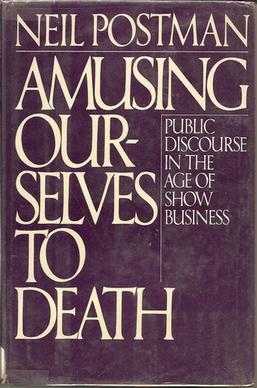
William Britton’s Wisdom from the Margins: Daily Readingsexcerpts from Neil Postman’s Amusing Ourselves to Death: Public Discourse in the Age of Show Business painted a picture that felt true, like a revelation pealing back the curtain to find that Lewis Carroll’s walk down the yellow brick road with Alice, the lion, the tin man, and the scarecrow is outdated. Oz is no longer a harmless little old man.

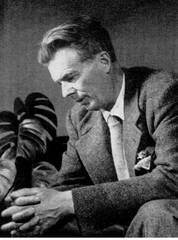
Neil Postman on Orwell and Huxley

Contrary to popular belief. . . Huxley [Brave New World] and Orwell [1984] did not prophesy the same thing. Orwell warns that we will be overcome by an externally imposed oppression. But in Huxley’s vision, no Big Brother is required to deprive people of their autonomy, maturity and history. As he saw it, people will come to love oppression, to adore the technologies that undo their capacity to think.

What Orwell feared were those who would ban books. What Huxley fears was that there would be no reason to ban a book, for there would be no one who wanted to read one. Orwell feared those who would deprive us of information. Huxley feared those who would give us so much those that we would be reduced to passivity and egoism. Orwell feared that the truth would be concealed from us. Huxley feared the truth would be drowned in a sea of irrelevance. Orwell feared we would become a captive culture. Huxley feared we would become a trivial culture, preoccupied with some equivalent of feelies, the orgy porgy, and the centripetal bumblepuppy . . . . In 1984, Huxley added, people are controlled by inflicting pain. In Brave New World, they are controlled by inflicting pleasure. In short, Orwell feared that what we hate will ruin us. Huxley feared that what we love will ruin us. This book is about the possibility that Huxley, not Orwell, was right.
—Neil Postman, Amusing Ourselves to Death

Neil Postman, Amusing Ourselves to Death

The wetland pond, the flyway, and return home

At the cabin, the water in the wetland is unusually high this year because of record-breaking rainfall. The flocks of Buffleheads and other non-diving ducks have by-passed their familiar stop on the flyway; the water is too deep to for them to reach the food sources below. Only the long-necked Trumpeter Swans, Sandhill Cranes, and Canadian Geese, and the diving Loons and Mergansers that can reach the bottom have stopped by this year.

Leaving the cabin and the wetland lead home to the world Huxley feared where the truth is drowned in a sea of irrelevance. We settle back into the lounge chairs in front of the television and flip through Netflix, YouTube, and other means of entertainment in what Postman later called the Technopolis in which our capacity for critical thought is numbed.

The new normal

We turn on the evening news and see two very different versions of Speaker of the House Nancy Pelosi speaking to the press. One is real. The other is altered by technology that deceives viewers into believing the Speaker is drunk, on drugs, or mentally impaired by slowing and altering the pace of her speech. The culture of amusing ourselves to death in the Technopolis distorts truth into propaganda, the first wave of what will become the new normal.

The culture of amusing ourselves to death in the Technopolis distorts truth into propaganda, the first wave of ... the new normal.

We’re not in make-believe Mayberry anymore. What we love — entertainment — is drowning us. In the world foreseen by Huxley, Orwell, and Postman, truth is hard to find. “Where there is no critical perspective, no detached observation, no time to ask the pertinent questions, how can one avoid being deluded and confused?” wrote Thomas Merton in Faith and Violence: Christian Teaching and Christian Practice.

Only the long-necked Trumpeter Swans, Sandhill Cranes, and Canadian Geese, and the smaller, deep-diving Loons and Mergansers can reach or swim to the bottom to see what’s real and what’s not in the Technopolis. William Britton’s Wisdom from the Margins with Neil Postman, Aldous Huxley, George Orwell, and Thomas Merton took me there this morning.

— Gordon C. Stewart, Chaska, MN, May 26, 2019

In the Twinkling of an Eye: Impeach or Wait?

A Constitutional Republic

It’s no longer a partisan question. It becomes clearer every day. It’s not a strategic question. It’s no longer a question of how much more, or when is enough enough. It’s a constitutional question. It’s an oath of office question, the oath taken by every member of Congress under the U.S. Constitution.

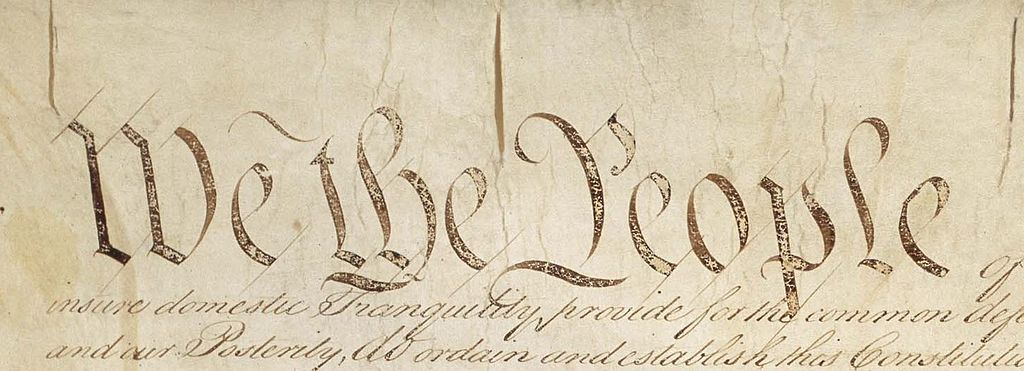
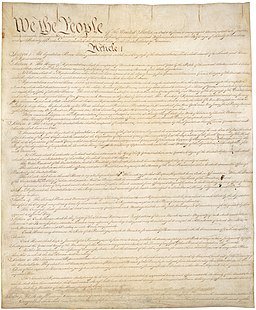
Image "We the People" from original U.S. Constitution

U.S. Constitution Article VI. clause 3

“The Senators and Representatives … and the Members of the several State Legislatures, and all executive and judicial Officers, both of the United States and of the several States, shall be bound by Oath or Affirmation, to support this Constitution . . .”— U.S. Constitution, Article VI, clause 3.

U.S. Constitution, Article VI, clause 3

Oath of Office, Article VI, clause 3

“I, __, do solemnly swear (or affirm) that I will support and defend the Constitution of the United States against all enemies, foreign and domestic; that I will bear true faith and allegiance to the same; that I take this obligation freely, without any mental reservation or purpose of evasion, and that I will well and faithfully discharge the duties of the office on which I am about to enter. So help me God.”

The Integrity of Office and Democratic Republic

With every passing day, some who have taken the oath of office side-step the duties of their offices by “purpose of evasion” in the face of the growing constitutional crisis. It is no longer a question of which side of the aisle you are on. Supporting and defending the U.S. Constitution means, at very least, upholding the constitutional checks and balances among executive, congressional, and judicial branches designed to protect a democratic republic from its implosion. Assaults and circumventions around that division of powers are assaults on the Constitution and the rule of law it protects.

Purpose of evasion

EVASION. A subtle device to set aside the truth, or escape the punishment of the law; as if a man should tempt another to strike him first, in order that he might have an opportunity of returning the blow with impunity. He is nevertheless punishable, because he becomes himself the aggressor in such a case. Wishard, 1 H. P. C. 81 Hawk. P. C. c. 31, Sec. 24, 25; Bac. Ab. Fraud,

Loyal Opposition and Loyal Majority

The British idea of “loyal opposition” — loyalty to the nation and to the oath to “support and defend” the Constitution — is a long-standing tradition. The loyalty is to the Constitution. Faithfulness to one’s oath of office, not loyalty to a person. Loyal opposition holds the party in power accountable. Loyal opposition infers loyalty to the Constitution by members of whatever party is the majority.

Patisan stone-walling against the Constitutional duty of Constitutional oversight — whether by a President, the House of Representatives, or the U.S. Senator — constitutes violation of the oath of office by “purpose of evasion”.

The Twinkling of an Eye: No time to blink

Some argue that an impeachment inquiry by the House of Representatives, regardless of its findings, is destined to fail because the majority party in the Senate will exonerate the President of the majority party.

We do well to remember the wisdom of an earlier American President:

Democracy… while it lasts is more bloody than either aristocracy or monarchy. Remember, democracy never lasts long. It soon wastes, exhausts, and murders itself. There is never a democracy that did not commit suicide.

John Adams

Some things cannot wait. Some things have time limits. Constitutions, the rule of law, and democratic republics can disappear in the twinkling of an eye.

This is no time to blink.

— Gordon C. Stewart, Chaska, MN, May 25, 2019