Verse – “Sleeping Beauty”

How can the woman in my life,
and in my bed, sleep placidly
while lying next to her is ME-
so sexy, handsome–any wife
should toss and turn, moan now and then
just from the pure proximity!

Or better yet, talk in her sleep!
My darling, sweetheart, you’re the man!
Please wake me now with a deep kiss,
my dreams of you fill me with bliss…

Surely now she’ll beg for MOAR!
But instead she starts to snore…

[Consult an urban dictionary for the meaning of “MOAR”]

– Steve Shoemaker, Urbana, IL, Jan. 15, 2014

“70+”

I’ve always loved her touches when in bed –
But now she touches to see if I’m dead.

– Steve Shoemaker, Urbana, IL, January 13, 2014

NOTE: “70+” just arrived. Must mean Nadja and “nature-boy” have another day to love and be loved in return.


The 10 Commandments according to Barclay and the Peanuts

It was so cold last Sunday that your breath froze in mid-air. It called for a lighter touch and for compliments for those who braved the cold. Here’s the sermon at Shepherd of the Hill Presbyterian Church in Chaska, MN.

Verse on Snow

I only know three
(Expurgated Version)

I only know three of the Inuit words
for snow, and they are, in translation, “the-snow-
that-falls-light-and-fluffy-and-can-be-ignored;”
“the-snow-wet-enough-to-make-two-obscene-snow-
folks-frolicking-out-in-the-yard;” and then last,
“the-white-stuff-that-falls-so-darn-wet-thick-and-fast-
that-shoveling-is-required-just-to-go-out-
for-beer.” (And that last word is said as a SHOUT!)

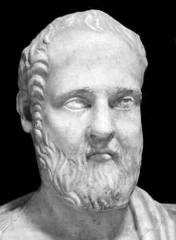
Isocrates, Greek teacher and rhetorician

Isocrates, Greek teacher and rhetorician

Steve (Isocrates) Shoemaker, Urbana, IL, January 9, 2014.

Barclay preparing to go to school

All schools in Minnesota will be closed Monday out of concern for children’s safety. Governor Dayton wants no child left behind freezing at a bus stop. The prediction is 50 degrees below zero with wind chill. Meanwhile, seven-month old Barclay is practicing for his first trip outside in booties. He’s a champ, despite the slur in the narration. He’s attending his first obedience class Monday night in New Germany, MN. Unless they call school off.

Oceans of Acid

The acid smog in the air
rains into rivers
and joins factory sludge
and field chemicals
on their way to the sea.

The obscene slime
spreads from ocean
to ocean and from coast
to oily coast.

The air cannot wash its
hair because trees and shrubs
have not been replanted
most places by most people.

Wood and coal and oil burn on,
rivers are damned, mostly
unfresh water remains
turning a blue planet brown.

We humans might see
our world changing,
but we see screens
and windshields more
than we see our skies.

[Thanks to Elizabeth Kolbert for her
two recent New Yorker articles
reporting on the research for this.]

Steve Shoemaker, Urbana, IL, January 4, 2014

It’s all there in the Christmas story

Wonder in the Culture of Possession

Tillich Park - "Man & nature belong together..."

Tillich Park – “Man and nature belong together…”

Do you sense the heart’s yearning for wonder?

Our hearts in the West are well-trained in possessing, controlling, and cajoling reality, bending it to suit our wants. The spiritual culture that accompanies “free market” economics is the drive to acquire and possess. Could our training in the culture of acquisition and possession be like the wall through which the flower breaks in Tennyson’s poem “Flower in the Crannied Wall”?

Flower in the crannied wall,
I pluck you out of the crannies,
I hold you here, root and all, in my hand,
Little flower—but if I could understand
What you are, root and all, and all in all,
I should know what God and man is.

– Alfred Lord Tennyson, 1863

The flower lures him. Yet seeking to possess it, he destines its death. Having to possess it, analyze it “root and all”, he destroys the magnificent beauty that had drawn his eye.

Having and being are not the same. Only being is filled with wonder. Perhaps that is why Christmas Eve Candlelight services are packed with people who otherwise are not drawn there. There is a beauty to the story and the natural light which lifts yearning hearts from the wintry chill of an having into the warmth of wonder beyond our control or possession.

Verse – Sonnet

A sonnet is made up of fourteen lines
With just ten syllables in each of them–
Which means for people reading on their phones
Some lines are split–which really is a shame.

Almost all of old sonnets had a rhyme
On every other line for the first twelve.
Which works just fine almost all of the time,
But sometimes words are very hard to melve…

The first four lines of this end with “half-rhyme.”
This is a trick that helps a poet make
More choices–not repeating all the time
The same old rhyme… A sonnet may then take

An image to go far beyond the words–
Though some seem quite forced: two flying birds!

– Steve Shoemaker, Urbana, IL, New Years Day, 2014

On the Cusp of Wonder

New Year’s Eve.

Every calendar with its years is a culture’s invention, a way of breaking the eternal rolling of sunrises and sunsets into an order that suits our needs for what?

For celebration? For budgets? For control? For forgiveness? For hope?

All of the above and more?

Between the passing of one year and the dawning of another we sense a shifting, the movement of something that does not exist: time, the human way of marking turf in the eternal rolling of the spheres.

The tides of time pay no attention because, like time itself, the tides are timeless. They know nothing of us. They ebb and flow in ceaseless rounds of who knows what. And we, standing on the shore’s edge between two tides awaken again to the sense of wonder before what we do not control.

Perhaps Isaac Watts had something like that in mind when he paraphrased Psalm 90:

Before the hills in order stood,
or earth received its frame,
from everlasting thou art God
to endless years the same.

A thousand ages in thy sight
are like an evening gone,
short as the watch that ends the night
before the rising sun.

Time, like an ever rolling stream,
bears all its sons away;
they fly forgotten as a dream
dies at the opening day.

Our God, our help in ages past,
our hope for years to come,
be thou our guard while life shall last,
and our eternal home.

– Isaac Watts, 1719

Since the middle of the 19th century, Watt’s paraphrase has been sung to the tune of St. Anne, named after the London parish where Watts was organist. Click HERE for more on Sir Isaac Watts.