Click HERE to listen to the brief interview with Steve about his newly published book, 52 Sins, on the University of Illinois Public Radio station.
Steve Shoemaker Interview
4

Click HERE to listen to the brief interview with Steve about his newly published book, 52 Sins, on the University of Illinois Public Radio station.
A Sin a Week:
52 sins described in loving detail for folks with the inclination and ability to sin,
but who have run out of bad ideas.
ILLUSTRATED!
To order: email sshoem3636@gmail.com
$ 19.30 incl tax
I began writing poetry in Urbana High School. I continued the questionable practice in college. Ten years later my first poem was published in a reputable journal.
Twenty years after grad school, I believed a collection of my poems could be made around the theme of sin. I hired an undergraduate cartoonist, T. Brian Kelly, who had a weekly strip in the Daily Illini student newspaper to illustrate them. At $20 a poem I could afford it, and he needed the money.
“A Sin a Week” became the title and I sent the manuscript to finally a total of five unimpressed NY publishers. They said few books of poetry sold well. Then I put it in a drawer for 25 years.
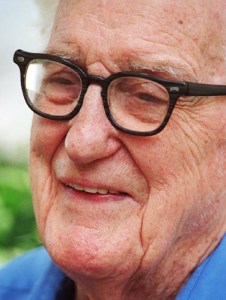
A month ago Doris Wenzell of Mayhaven Publishing asked me if I had a collection of my poems she could see. She had heard I had readers of my poems on FaceBook, especially since I had been diagnosed with pancreatic cancer. Two days later I handed her my manuscript with my newly added subtitle. (See above.)
She loved it, we signed a contract, she rushed through the editing and printing because of my predicted shortness of time, and the book has now been selling for a week. Reviews from early readers have been good.
Notice the book says it describes sins, not that it is poetry. The first sin described is “Lying.” Ancient writers referred to the Devil as “the Father of lies.” This theme continues throughout the book, notably in my never revealing the book is poetry.
This is my confession–if you choose to order a copy, you’ve been warned.
Otis Moss III, successor to the Rev. Jeremiah Wright as Pastor of Trinity United Church of Christ in Southside Chicago, is a rare national treasure. So is Blue Note Preaching in a Post-Soul World: Finding Hope in an Age of Despair, his latest contribution to the discussion of religion in America.
Steeped in the African-American tradition of Sojourner Truth, Martin Luther King, Jr., James Cone, Howard Thurman, Gardner Taylor, his father, and other black preachers, Otis Moss invites his readers to “sing the Blues” as a way of moving through the blues to the beat of the good news of the Gospel of the crucified-risen Jesus. Only when the Blues are sung — named and spoken or sung aloud in the moans of suffering — does the Gospel shout make sense.
In a world where the “prosperity gospel” ( the con-job gospel which promises that, if you just believe, God will make your rich and happy) and the exclusivist myopic forms of religion that blame, train, and maim in the name of God, Blue Note Preaching offers a Balm in Gilead to make the wounded whole.
As one who has preached primarily among the forlorn children of the Mayflower and former slave-owners, I find myself strangely envious of my African-American colleagues and the Blue Note communities among which they minister. Those who serve the congregations whose Christianity was born out of the degradation of slavery inherit something ready-made and ironically precious which the children of the Mayflower and the slave-blicks do not: a shared, conscious history of dehumanization to which the gospel speaks when it turns the blue history into the Blue Note gospel shout of joyful emancipation.
For the past two weeks an uninvited memory has surfaced during my sleep and during the early morning hours when I’m unsure whether I’m awake or still asleep, that twilight zone when the brain does whatever the brain does to move the soul toward healing the broken pieces of the past.
The memory is of Snoopy, the pet hamster who brought such joy to everyone in the family. He was a special creature — a lovely white tan, like a palomino horse, who very quickly learned to please us all. At dinner I’d bring Snoopy up from my bedroom in the basement and sit him on my shoulder, or my Dad’s, the way Twinkle the parakeet used to do in an earlier iteration of pets we humans thought we owned. Even my mother, who loved birds but was the first one up on a chair whenever a mouse appeared, fell in love with Snoopy and our love for him.
Until the week I moved from the basement bedroom to the one on the second floor after Jeanine moved out of our home. Snoopy stayed in the basement. I have no idea now why I forgot him — or why the family didn’t miss him — but the next time I saw Snoopy he had starved to death. I’d forgotten to feed him. The picture of Snoopy lying on his back with his mouth open has returned repeatedly, a message, perhaps, about paying attention to when and where I am.
I was maybe 14 at the time. The hormones were raging back then. Not so much anymore at 73, but I easily find distractions from responsibility toward the likes of Snoopy — family who in some way deserve or need the sustenance I’m still in position to provide: Kay, John, Doug, Kristin, Andrew, and Christopher, my brothers Don and Bob, and old dogs hanging on to the pack while the clock runs out on us one by one.
And then there is the need for confession, for repentance, and for forgiveness that will never come from those I’ve hurt, ignored, forgotten, betrayed, denied—and animals I’ve killed, like Snoopy.
Then, during the run-up to the week when six seminary friends will gather in Chicago to focus on the Hebrew prophets, I remember a poem of Yuli Daniel, written from a Soviet labor camp published in Rabbi Jonathan Magonet‘s Returning: Exercises in Repentance in the chapter CHESHBON HANEFESH — Self-Judgment.
When your life is tumbling downhill head over heels,
Thrashing and foaming like an epileptic,
Don’ pray and offer up repentance,
Don’t be afraid of jail or ruin.
Study your past with concentration,
Evaluate your days without self-flattery,
Grind the fag* ends of illusion underfoot,
But open up to all that’s bright and clear.
Don’t surrender to impotence and bitterness,
Don’t give in to disbelief and lies,
Not everyone’s a cringing bastard,
Not everyone’s a bigot who informs.
And while you walk along the alien roads
To lands that do not figure on your maps,
Count out the names of all your friends
As you would do with pearls on prayer-beads.
Be on the look-out, cheerful and ferocious
And you’ll manage to stand up, yes, stand up
Under your many-layered load of misery,
Under the burden of your being right.
*i.e., unwelcome work.
Yuli Markovich Daniel was a heroic figure who bore the burden of being right. I bear the burden of being wrong. Yuri stood up. I sat down, or stayed upstairs, ignoring the basement and the attic where the work needs to be done “without self-flattery” at age 73.
My mind isn’t what it used to be. The synapses are shrinking. The short-term memory is fading. But the longer-term memory of the likes of Snoopy is a call from Beyond to pay attention to and give thanks for this moment within the Eternal Now.
The New York Times published Austrian Election Is a Warning to the West drawing attention to the rising right-wing tide sweeping across Europe and the U.S.A. It’s chilling, and most of the time we don’t like to be chilled. But sometimes the truth is chilling, and only the truth will set us free from our worst selves.
Both of us – Steve and Gordon – recently received good news from publishers.
Last month Steve received word that Mayhaven Publishing will publish a collection of poems under the title “A Sin a Week: 52 sins described in loving detail, for those who have the inclination and ability to sin, but have run out of bad ideas”
Sinners can order the Steve’s book @ mayhavenpublishing@mchsi.com.
Yesterday Wipf & Stock Publications notified Gordon of its acceptance of “Be Still! Departure from Collective Madness” to be published sometime in the next year.
Steve’s work is done. Gordon’s is not, which is the bad news, if work can be called ‘bad’, which both of us think it can’t, except when it becomes obsessive, which, in one of our cases, it often has been – one of the 52 sins described in loving detail perhaps!
We’re glad to report to Views readers that Steve is doing remarkably well with chemo treatments having stabilized or shrunk the tumors that by all early reports were expected to take him by mid-February. To the best of our knowledge, Gordon has no tumors but reports that the few remaining brain cells he still has are shrinking fast with age.
All in all, life is beautiful! Sin boldly, and if you’ve run out of ideas, order Steve’s book!
This post by John Buchanan’s “Hold to the Good” is well worth the read IMHO. John is Pastor Emeritus of Fourth Presbyterian Church-Chicago, past Moderator of the Presbyterian Church, and recently retired Publisher of The Christian Century.
Thank you, John, for your fine work than and now.
- Gordon and Steve
I simply do not know what to say about Donald Trump. I grew up in a home where what was going on in the world and in the nation was talked about regularly at the dinner table. Politics was often a spirited discussion between my father, a dyed-in-the-wool Republican and conservative in almost all his opinions and positions, and my mother who I realized was a lot less ideological and more liberal. He didn’t have much good to say about President Roosevelt and Eleanor but she liked them a lot. Dad used to brag that the first words I spoke as a toddler were “Wendell Wilkie”, the Republican presidential candidate in the 1940 election, an election FDR won handily. I still have his Republican campaign lapel pin bearing Wilkie’s picture from that election. Robert Taft, Harold Stassen, Earl Warren, Dwight Eisenhower, Richard Nixon, and Nelson Rockefeller, were familiar names to…
View original post 775 more words
Copyright 1996 The Cincinnati Enquirer
A sermonic reflection on Luke 13:1-9
Ordinary citizens are not terrorists, are we? We didn’t bring down the World Trade Center, kill and maim marathon runners and spectators at the Boston Marathon, or kill innocent co-workers in San Bernadino. The Rev. Maurice McCrackin answered that we are and we have, for reasons we’ll explain later.
Mac was informed by today’s Gospel reading (Luke 13:1-9) where Jesus addresses terrorism and urges his hearers to turn. “Unless you all repent, you will all … perish.”
It happens when some people inform Jesus “about the Galileans whose blood Pilate has mingled with their sacrifices.” The speakers seem to be contrasting the Galileans – known for their armed resistance to Roman rule, i.e. guerilla warfare – and the Jerusalemites.
Remember, Jesus himself is a Galilean!
The non-Galileans are putting him to the test. As he so often does so ably, Jesus, the Galilean Jewish rabbi, begins strangely by appearing to agree with their anti-Galilean prejudice. He asks whether these violent Galileans were any different from the rest of the Galileans. One can almost hear the applause from the more sophisticated, non-terroristic Jerusalemites.
Then he quickly shifts their attention to a scene in Jerusalem. He asks them if the eighteen saboteurs “upon whom the tower of Siloam fell, and slew them, do you think they were worse sinners than all others in Jerusalem?”
“No,” he says, “but unless you (plural) repent, you will all likewise perish.”
Sometimes reading a familiar text in a form much closer to the original context of Jesus’ linguistic-religious-cultural-political-economic context serves to awaken us to hear it differently.
Now … there were some present reporting to Rebbe, Melech HaMoshiach about the men of the Galil whose blood Pilate mixed with their zevakhim (sacrifices).
And, in reply, Moshiach said, Do you think that these men of the Galil were greater chote’im (sinners) than all others of the Galil, because they suffered this shud (misfortune)?
Lo (no), I say, but unless you make teshuva, you will all likewise perish.
Or do you think that those shmonah asar (eighteen) upon whom the migdal (tower) in Shiloach fell and killed them, do you think that they were greater chote’im (sinners) than all the Bnei Adam living in Yerushalayim?Lo (no), I tell you, but unless you make teshuva, you will all likewise perish.
And Rebbe, Melech HaMoshiach was speaking this mashal. A certain man had an etz te’enah (fig tree) which had been planted in his kerem, and he came seeking pri (fruit) on it, and he did not find any. [YESHAYAH 5:2; YIRMEYAH 8:13]So he said to the keeper of the kerem, Hinei shalosh shanim (three years) I come seeking pri on this etz te’enah (fig tree) and I do not find any. Therefore, cut it down! Why is it even using up the adamah (ground)?
But in reply he says to him, Adoni, leave it also this year, until I may dig around it and may throw fertilizer [dung] on it,
And if indeed it produces pri in the future, tov me’od (very well); otherwise, you will cut down it [Ro 11:23].
– The Orthodox Jewish Bible (OJB) Copyright © 2002, 2003, 2008, 2010, 2011 by Artists for Israel International.
The ‘mashal’ (a familiar proverb or parable) he re-interprets is already part of his and his hearers’ self-understanding from Isaiah 5:2 and Jeremiah 8:13:
Jesus is speaking about collective social life – politics, economics, religion, resistance, keeping the faith – a whole society, a culture, a nation. He is calling for thorough-going societal transformation – turning from blaming others (the Galileans) to looking in the mirror to see the log that is in every eye: the underlying pervasive violence in our way of being in the world, taking up “ground” on this beautiful planet.
In Hebrew Scripture the human species, Adam, is derived from Adamah – earth, soil, dirt, ground. Humans, created in the image of God, are to produce sweet figs. But the Owner of the vineyard with the barren fig tree shows two traits: deep disappointment – “Why is it even using up the ground?” – and an over-riding patience that allows it more time to produce the sweet figs it was intended to bring forth from the dirt (adamah).
As I look out the window this morning to the world outside, I feel a tiny shiver of God’s frustration and long-suffering. I read the paper, read my emails, look in the mirror, and take my morning shower wondering what it will take before we see the violence of terrorists in ourselves.
The Rev. Maurice McCrackin is the one soul I know who really dared to live what Rabbi Jesus preached about teshuvah (repentance). Mac was Pastor of St. Barnabas Presbyterian Church, by far the poorest church in the poorest section of Cincinnati, until he was removed. But it wasn’t his daily work among the poor that brought him attention. Mac was a war tax resister. He refused to pay federal taxes -not because he didn’t believe in taxes. He did! In the name of crucified Jesus, the Prince of Peace, Mac refused to join in funding a “defense” budget that was, in fact, a war budget that supported state-sponsored international terrorism. “Ordinary citizens aren’t terrorists, are we?” Mac said we are, and, in the name of Jesus, the Prince of Peace, and he was carried off to jail again and again and again. “To give financial support to war while at the same time preaching against it is, to me, no longer a tenable position.” His spirit was as free as anyone I’ve ever known.
Now … there were some present reporting to Rebbe, Melech HaMoshiach about the men of the Galil whose blood Pilate mixed with their zevakhim (sacrifices).
And, in reply, Moshiach said, Do you think that these men of the Galil were greater chote’im (sinners) than all others of the Galil, because they suffered this shud (misfortune)?
Lo (no), I say, but unless you make teshuva, you will all likewise perish.
How shall we make teshuvah?
The nurse said I had “Chemo Brain”,
From writing, I just should refrain;
But I have the notion
That writing’s the potion
To retrain the brain to be sane.
Would setting limits to the number of terms a Congressperson can hold office help solve the problem in Washington, D.C.? Term limits is one proposed remedy for fixing Congress. Get rid of the career politicians! Fresh faces would be closer to the people they represent, set a new tone, and get things done.The idea has its appeal.
We’re tired of gridlock,but is putting fresh faces in the U.S. Congress – or the White House – all it’s cracked to be?

Sen. Tom Cotton, R-Ark. (AP Photo/Carolyn Kaster)
Senator Tom Cotton (R-AK) rode into the Senate on a high horse, penned a letter to the government of Iran opposing the Obama Administration’s diplomatic efforts with Iran, and secured the signatures of 46 of the 53 Republican Senatorial colleagues. In March 2015 the newly elected Senator appeared on Face the Nation to make his case for Iran’s creeping influence in the Middle East, declaring,
“They [the Iranians] already control Tehran.”
Did he say “Tehran” – the capitol of Iran, the Tehran of the Persian Empire dating back 5,000 years?
Yes, he did. Either the Senator came to the Senate clueless about geography, history, the sensitivities of a tense geopolitical world, and the traditions of how foreign policy is conducted in the United States, or, worse, he just doesn’t care. Neither is acceptable for a member of the United States Senate. The Senate is the body with the longer terms (six years compared to 2 for the House of Representatives) because of the Founders’ wisdom. Those who wrote the Constitution knew the value of continuity, as well as change.
In the much more complex world of the 21st Century, the case for longevity, not term limits, is an argument for wisdom.
Citizens who have served as city councilors, state legislators, or board members of local organizations, colleges and universities know how long it takes to get up to speed. Those who are most effective learn to keep their mouths shut while learning how to drive a vehicle they’ve never driven before in the company of more experienced drivers who know the rules of the road.
The advantage of long-standing service in the U.S. Congress or of a Presidential candidate with longer experience and long-term memory is that they’ve been around long enough to know the history, however differently they interpret it on different sides of the political aisle.
And then…there’s Donald Trump who has NO experience in elected office. If you need a nudge to think about it, remember the ambitious Senator Cotton on Face the Nation.

 Views from the Edge