REALITY
The book of flesh and
Blood hangs by a
Slender thread we cut
To shred the pages
We wish were not —
The days and nights of
sadness, fear and dread
Where death is realReality is now a holo-
Gram for us who live
In cyberspace and Sci-
Fi worlds that wipe
The Black board clean
And White again
As it was before the
Black birds came
The hollow holograms
Float on air they never
Breathe while we and
All that is or ever was
In flesh and blood shine
Light and bright andWhite again but miss
Clouds and rainbows
GCS
2.2.2022
Rainbow over the IL prairie.
Between Substance and Illusion
“The line between substance and illusion is as thin as the line between reality and appearance. The history of humankind is a tale of an idiot, humankind’s conscious preference for the ‘sweet illusions’ that glimmer from tinsel, broken glass, and oily rags for the colors of a rainbow.
“It seems to be the contention of the Trump campaign that nothing is really true,” wrote Jack Holmes in the September 26, 2016 issue of Esquire; “it only matters what enough people believe, and whether you can dangle enough shiny objects in front of them until the clock runs out on November 8.” -- Jack Holmes, Esquire, September 26, 2016
Gordon C. Stewart, Brooklyn Park, MN, Feb. 1, 2022
After an extended period of dismay and bewilderment, Psalm 39 opened a vein to write again.
Hermit Crab crawling into an abandoned shell
A Psalmic Meditation of a Hermit Crab
I said, “I will be careful how I act and will not sin by what I say.
I have been careful. A hermit crab at low tide, I sidle into a borrowed shell, not too big and not too small, to hide from birds of prey. I stuff myself inside. When the tide comes in, I may leave this shell. But not now. The sand is hot. The gulls are feeding.
I will be careful what I say around wicked people.”
It’s not just the birds of prey that keep me here. Whatever I say outside will make it hotter for crabs like me. I’m crabby and cranky. “Keep your words to yourself! The world doesn’t need more heat. We all need to cool down.”
So I kept very quiet. I didn’t even say anything good, but I became even more upset.
Despair is a horrible thing. “If you can’t say something nice, don’t say it. Stay in your room until you have something nice to say. You have to be positive.” I have nothing good to say. Nothing calm. Nothing of value. Nothing to cool the beach at noon. Nothing to lower the blistering heat rising in me.
I became very angry inside, and as I thought about it, my anger burned.
Glass shattering, Stop the Steal, Hang Mike Pence, Execute Nancy, Make America Great Again, sounds of threats and violence, cries for help, and the silence from the White House still hurt my ears.
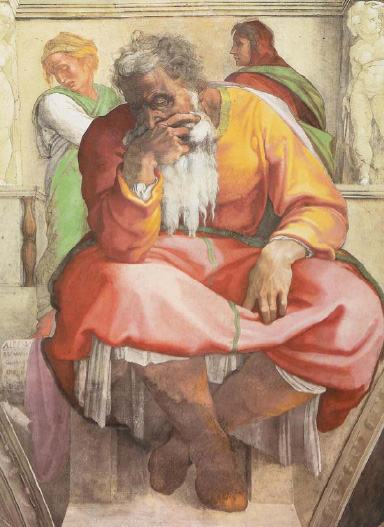
Then I remember how Jeremiah wept. Truth, he said, was dark and deep, and bought a worthless plot of land where hope could live.
The prophet Jeremiah, Michelangelo fresco, Sistine Chapel
So I spoke:
“Lord, tell me when the end will come and how long I will live. Let me know how long I have.
You have given me only a short life; my lifetime is as nothing in your sight; Even those who stand erect arebut a puff of wind.
It’s hard alone outside the shell. The wind is stiff. The sky is dark. Light is White and right; Black is dark and wronged again. Truth sways by a noose from the lynching tree.
When will this end? When will it stop? How will it stop? I’m an old man; my time is short, this short puff of air, soon to disappear.
People are like shadows moving about. All their work is for nothing; they collect things but don’t know who will get them.
My kind and I are like ghosts sidling along the wall of shadows we faintly see in Plato’s cave. We find no respite from the heat and clamor into which we once could crawl — or thought we could. We leave behind a scorched gift to generations yet to come.
“So, Lord, what hope do I have? You are my hope.”
Sea levels have rise, the tides are higher, the forests burning, the rivers drying, fields once lush and green now parched and brown, the planet spinning out of control, like a top our hands have spun. These mortal selves, this factory of gods our hearts conceive, cannot hide from Thee, O Lord, the “I AM” without end, the Breath of Life that breathes a breath through me.
Gordon C. Stewart, author of Be Still! Departure from Collective Madness (2017, Wipf and Stock), host of Views from the Edge: To see More Clearly, Brooklyn Park, MN, January 23, 2023.
“To what shall I compare this generation? It is like children sitting in the market places and calling to their playmates, ‘We piped to you, and you did not dance; we wailed, and you did not mourn.'”
Gospel according to Matthew 11:16-17.
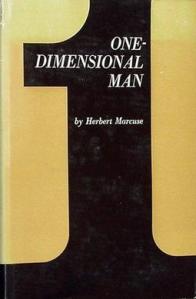
Having nothing new to say on Martin Luther King, Jr. Day, I scrolled back to this sermon on Faith and Patriotism which re-awakened my appreciation for Herbert Marcuse’s One Dimensional Man and his analysis of a culture of “administered consciousness”.
“Patriotism is the last refuge of the scoundrel” — Eugene Debs/Thomas Paine?
Love of country is a good thing. Worshiping it is not. In the hands of a scoundrel, patriotism becomes an idol.
Faith and Patriotism
Gordon C. Stewart, Brooklyn Park, Minnesota, January 19, 2022
Adam Fronczek’s “Star of Wonder” sermon at Knox Church – Cincinnati comes as healing balm after a year when truth and wonder have been hard to come by. I needed this. Perhaps you do, too. You are not alone. Thank you, Adam. Thank you Knox.
Scroll forward to 22:58 to listen.
YouTube broadcast of Knox Church-Cincinnati, OH, Fourth Sunday of Advent, 2021
Best wishes for a truthful, wonder-filled Christmas,
Gordon. C. Stewart, Brooklyn Park, MN, December 24, 2021.
He felt at peace only in the hour before dawn, when the darkness seemed to give way slowly to a mist, and it was at this hour that he would wake and sit by his window.
Photo: DK @ Daybreak. 6:35 a.m. Sunday, August 25, 2021. Cove Island Park, Stamford, CT.
Post Title & Inspiration: Aldous Huxley: “It’s dark because you are trying too hard. Lightly child, lightly. Learn to do everything lightly. Yes, feel lightly even though you’re feeling deeply. Just lightly let things happen and lightly cope with them.”
Thanks for dropping by Views From the Edge and Live & Learn — Gordon (Sitting by the window before dawn)
Reverence is an ennobling sentiment; it is felt to be degrading only by the vulgar mind, which would escape the sense of its own littleness by elevating itself into an antagonist of what is above it. He that has no pleasure in looking up is not fit so much as to look down.
Washington Allston (1779—1843)
Human Beings and Being Human
Not everyone believes in God, and those of us who do call the Ineffable different names. But doing justice, loving kindness, and walking humbly (Micah 6:8) expresses in a few words the shared moral foundation of healthy common life. Some treasures — soul-sized things that neither moth nor rust consume — cannot be bought or stolen by wealth, privilege, or power. An economy and culture that enshrine greed, ownership and domination bow before and dance around a Golden Calf.
Jesus’s question about treasures is front and center in 2021. “What profit is there if a person [or nation] gains the world but loses its soul?” What difference does it make if we’re standing in quicksand? “The rain fell dow, and the floods came up, and the winds blew and beat against that house, and it fell–and great was its fall!”
It has taken a lifetime to see more clearly what I believe and why I believe it. Some stories are so deeply embedded in our psyches that we are barely conscious of them until experience brings them back into focus. The parable of the wise and foolish builders has been bedrock for me as far back as memory can reach. I heard it as a child. I sang it as a child. I moved my arms and hands to the rain pouring down and the flood coming up. Mrs. Thomas, our 90-year-old Vacation Bible School teacher laid out the choice between standing on the firm foundations of wisdom or sinking on the quicksands of foolishness.
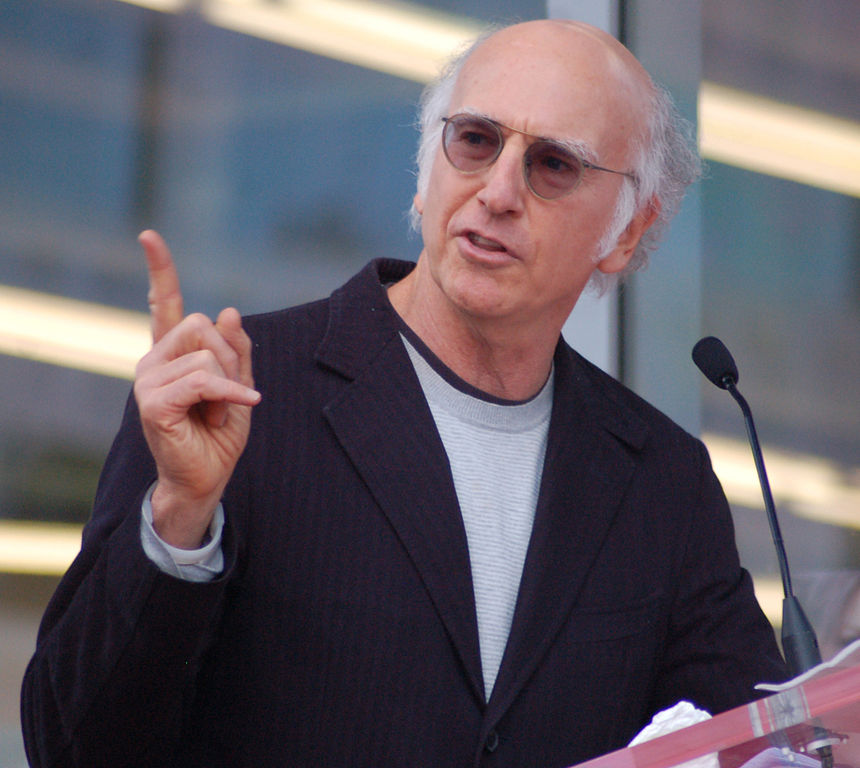
A Larry David Teaching Moment
Jesus’ parable meant more to old Mrs. Thomas than it did to wide-eyed kindergartners with our whole lives ahead of us. Closer now to Mrs. Thomas’ age, experience has taught me that I am never far from foolishness.
But I didn’t quite “get it” until this year watching an old episode of “Curb Your Enthusiasm” in which a clueless Larry David insults a Korean shop owner with his bow. Bowing has a protocol of who bows lower.
A child bows lower to an adult; the younger of two adults bows lower to an elder. A student bows lower to a teacher as the outward sign of respect and honor. Larry had his purchases; what he didn’t have was his wallet. He couldn’t buy a thing.
The honorable Korean shop owner trusts Larry to take the goods and to return later to cover the cost. When Larry returns, the shop owner bows to Larry. Larry mirrors the shop owner’s bow. The two exchange bows repeatedly, but the shop owner grows angry with Larry’s persistent mirroring. Larry insulted the shop owner. Out of respect, Larry should have bowed lower.
My Clueless Insult of Kosuke Koyama
My own Larry David insult took place as Professor Emeritus theologian of World Christianity Kosuke Koyama and I moved to our places behind the communion table at Shepherd of the Hill Church in Chaska, Minnesota to celebrate the Sacrament of Holy Communion. I’m not used to bowing. I shake hands, but we Americans don’t bow. We bow to no one.
Professor Koyama’s greeting caught me by surprise. He honored me with a bow. The internationally respected Japanese liberation theologian twenty years my senior, author of 100+ books and scholarly articles, bowed low to his lesser colleague. I did what I thought was good and right. I returned the bow. But I did not bow lower! If my superior was offended, he never showed it. He never shamed me. Ten years after Ko’s death, Larry David’s “Curb Your Enthusiasm” taught me what I had done. have been a to reflect on faith itself as bowing lower, to the Highest, the God of Mount Fiji and Mount Sinai, and Golgotha, the Hill of Skulls.
If Kosuke had taken offense, he never showed it. He never shamed me. Ten years after Ko’s death, Larry David’s “Curb Your Enthusiasm” taught me what I had done.
The years since have been a reflection on faith itself as bowing lower, to the Highest, the God of Mount Fiji and Mount Sinai, and Golgotha, the Hill of Skulls.
Bowing while Refusing to Bow
To be human is to bow. Before whom or what we are bowing — not whether we will bow —is a different rendering of Jesus’s challenging question. What is happening today in the United States and across the world — the storms that turn democratic republics into footstools for totalitarians hoisted to their thrones by myths of racial and national exceptionalism — widens the chasm between guarded white communities and the homeless shelters and detention camps at our southern border; and builds more prisons that house a disproportionally low percentage of people who look like me, the people of white privilege.
But most important is the ravaging of nature — unprecedented forest fires reducing natural habitats to ash heaps, homes and towns in Washington, Oregon, and California, New Orleans, and Texas; hurricanes, tornadoes and straight-line winds — puts the parable of the wise and foolish builders squarely before us We are the species that always bows to someone or something, but refuses to bow lower. “Evil is in antagonism with the entire creation,” wrote German-Swiss author and civil servant Heinrich Zschokke (1771-1848). What is humankind that you are mindful of us, asked the Hebrew psalmist.
Bowing with Jesus to the Origin and End of Life Itself
“The God and Father of our Lord Jesus Christ” is the traditional shorthand for Christian faith. The Jewish Jesus bows before that which is greater than he: the Creator and Sustainer of life.
The “I AM” of the burning bush — YHWH, a Name/Reality so holy, so Other, so far beyond human comprehension that the children of Moses would not speak the Name aloud — is the Origin and End of life itself. It was I AM — the source and end of life itself — before whom Jesus of Nazareth bowed in prayer and daily decision-making. Jesus was a faithful member of the covenant community born at the burning bush that dropped Moses to his knees.
Bowing before the Ineffable
The Jesus of history and the Jesus of faith cannot be understood apart from this bowing. Jesus bows before his Lord and Father, the Holy One of the First Commandment and the Shema of his Jewish faith tradition. The Christian confession “Jesus Christ is my Lord and Savior” is a one-line cliff note for “the Jesus who bowed low in reverence and humility before the Eternal and Ineffable” is the human one people like me seek to follow. The bowing Jesus is for Christians called Lord and Savior — because he bows lower to the Origin and End of life itself, the I Am of the bush that burns but is not consumed.
Let More of Reverence in Us Dwell
Let knowledge grow from more to more, But more of reverence in us dwell; That mind and soul, according well, May make one music as before.
Alfred, Lord Tennyson, In Memoriam Prologue, st. 7
Gordon C. Stewart, Public Theologian, Brooklyn Park, MN, Dec. 9, 2021
All good thing come to an end, they say. Harry Strong’s series on biases is one of them. Thank you, my old friend, for introducing us to Brian McLaren’s framework and the building blocks of a more honest, compassionate, and useful way to identify and seek understanding of our own biases and the those biases of relatives, friends, and, “dare I say it?,” threats and enemies. Harry’s series led me to reflect on belly-buttons. Every human being has a belly-button! — Gordon
Blind Biases 4 by friend and colleague Harry Strong
“People can’t see what they can’t see.”
Brian mclaren
Quick Review. Brian D. McLaren has identified thirteen (13) Biases which partially explain why we see thing so differently from one another: Confirmation Bias; Complexity Bias; Community Bias; Complementarity Bias; Competency Bias; Consciousness Bias; Comfort or Complacency Bias; Conservative/Liberal Bias; and Confidence Bias; Catastrophic or Normalcy Bias; Contact Bias; Ca$h Bia$; and Conspiracy Bias. [1] All of these can dramatically impact our views of life and the world.
An Email from Mitch
As our Blind Bias “class” draws to a close I’d like to share with you an email I received recently from my friend, Mitch. He wrote this:
“I am at a loss as to how to bridge the gap to a better understanding between myself (and MY strongly held political positions) and my friends (and THEIR strongly held political positions) when our positions on critical issues are at such opposite poles of the political spectrum. I am finding it is putting a real cramp on what used to be casual and friendly conversations among us. I AM SURE my opinions are right. But when I come down off of that perch of righteousness – I have to concede that JUST MAYBE if I learn to be a better listener JUST PERHAPS my friend is not my enemy – but an ally. If we work TOGETHER (the hard part indeed) we can identify how to move forward in ways that promote understanding of the importance of each person’s position to each individual yet the need to accommodate at least a little bit of the other person’s position so the greater good is achieved. My challenge is I am not yet that person and I would welcome learning how to become better at achieving that goal.”
email from Mitch
Frankly, it was Mitch’s honest and vulnerable testimony that motivated me to read Brian McLaren’s e-book. [1]
Shifting Attention
As Brian McLaren shifts our attention from Recognizing Biases to Overcoming Biases, he offers this disclaimer regarding the above quotation which introduced each of the first three “classes” we’ve shared together: “When I said earlier ‘People can’t see what they can’t see …,’ I was telling the truth, but not the whole truth. Here’s how that sentence should be completed to be more fair and full: ‘People can’t see what they can’t see unless someone helps them see it.’” To that end, McLaren offers the following recommendations:
Five Ways We Can Help Others to See What They Can’t See
SURPRISE PEOPLE WITH WHO YOU ARE. Show kindness, empathy, curiosity, fairness, acceptance, patience, decency, boldness, and humility. Put understanding and acceptance before agreement, making it safe for people to confront their biases. Tell stories about times when you failed to face your biases and misconceptions. Demonstrate fairness by admitting (and addressing) the downsides of yourposition and the upsides (as well as the downsides) of other positions. Seek to win friends instead of arguments, since people would rather learn from friends than critics, opponents, or enemies. People will not believe your message until they find you, the messenger, believable. In the last analysis, what we arecommunicates far moreeloquently than anything we sayor do. — Stephen Covey
SHOW BEFORE YOU TELL. Use experiential learning (field trips, introductions to “the other,” immersive artistic experiences, simulations, demonstrations, learning games, etc.) whenever possible, helping people step into the shoes of others and see from new vantage points, and following up the experience with honest reflection and conversation.
KEEP IT SIMPLE AND DOABLE. Whenever possible, find one simple point of agreement or make one simple proposal for consideration or offer one simple, doable, immediate step thatcan be taken in the right direction, followed by questions and conversation.
CONNECT EMOTIONALLY. If a person is afraid or angry, don’t shame them or tell them not to feel asthey do. Instead, try to understand their emotion, and then convey, withemotion, that you can see why they feel as they do.
EXPECT THIS TO BE HARD. Remember that the human brain is structured for safety, efficiency, ease,and comfort, so biases are working against accepting messages that areperceived as unfamiliar, complicated, dangerous, inconvenient, oruncomfortable. Don’t expect people to be other than human. Show patienceand persistence. And take advantage of research to help you learn what ismost likely to work. [1]
Where Do We Go From Here?
So, deep breath! Are we willing to move beyond appreciating McLaren’s analysis of our Biases to the more important and challenging phase of trying to make some changes in our own lives and the lives of others? That is the $64,000 question, isn’t it? What is our next step? I guess we’ll each have to answer that question for ourselves.
My Next Steps
I’ll tell you my next steps. First, I’m going to send a copy of Why Don’t They Get It? Overcoming Bias in Others (and Yourself) to Mitch for a Thanksgiving present. Second, I’m going to invite my neighbor, Larry, over to the house for an adult beverage. (Some of you will recall Larry from my Blind Bias 2 post. Remember, Larry told me: “I’m not biased or prejudiced about anything. I have my opinions and my perspectives, but I try to be as objective as possible about everything.”) I’ll tell Larry about how hard it was for me to overcome the racism implanted in me as a child by my Uncle Herb who lived on Chicago’s south side and every Thanksgiving would rail against the encroaching “African Americans” (not Uncle Herb’s words) who were destroying the value of his home. I’ll ask Larry if he ever had to unlearn anything. I’ll listen. Then, Larry may need a second drink, because next I’m giving him a copy of McLaren’s book as well. Baby steps, I know. I pledge to continue “working the program.”
Thanks so very much for the privilege of your company during our time with Brian McLaren.
Whatever your next steps, may they be grounded in listening, leveling, and loving. Harry
[1] Brian McLaren, Why Don’t They Get It? Overcoming Bias in Others (and Yourself) (Self-published: 2019), e-book.
Second in a four-part series on BLIND BIASES 2 by Harry L. Strong
If you joined me for “Biases 1,” welcome back!
If you didn’t, you may be wondering: “So then, why should I keep reading?
Not a Problem. Let me “catch you up” in a hurry.
“People can’t see what they can’t see.” Brian D. McLaren
Catching Up
Author, activist, and public theologian Brian D. McLaren has created a remarkably helpful way of assisting us in understanding what makes us see things so differently from one another. McLaren has identified thirteen (13) biases that contribute to the way people view life and the world and lead them to such polarizing conclusions from one another. For our convenience, he has managed to categorize them, each beginning with the letter “C.”
Previously, we took a quick look at how McLaren labels Biases 1 through 5: Confirmation Bias; Complexity Bias; Community Bias; Complementarity Bias; & Competency Bias. In a moment we’ll consider Biases 6-9. I’ll choose one and tell you what I learned about myself as I considered my own reflection in my “Bias Mirror.” Then, if you so choose, you may do the same. Chances are, we’ll be much more charitable and effective in inviting another into a conversation about why we view a topic so differently if we’ve tried to remove our own “blinders” first.
A Conversation with Larry
But before I share with you Brian’s second set of Biases, let me tell you about a brief conversation I had with a neighbor last week. While I was out walking my dog, I ran into Larry who asked me what I’d been up to lately. I told him I was writing a series of articles about “Biases.” Can you guess what he said next? “I’m not biased or prejudiced about anything. I have my opinions and my perspectives, but I try to be as objective as possible about everything!”
I don’t think Larry is alone. I’m guessing most folks become defensive if someone insinuates they are biased or prejudiced. The conversation prompted me to come home and “ask Mr. Webster” [1} how he would define all four of Larry’s words. Here’s what I learned:
Bias: “a mental leaning or inclination; partiality; bent.”
Prejudice: “a judgment or opinion formed before the facts are known (or in disregard of facts that contradict it); preconceived idea, favorable, or, more usually, unfavorable; unreasonable bias.”
Opinion: “a belief not based on absolute certainty or positive knowledge but on what seems true, valid, or probable to one’s own mind.”
Perspective: “a specific point of view in understanding or judging things or events, especially one that shows them in their true relations to one another.”
Fascinating! I couldn’t help but notice the phrase “unreasonable bias” in the definition of prejudice. That would seem to suggest that there IS such a thing as “reasonable bias.” Granted, most of us, as we ponder our conclusions about life and the world, are far more comfortable with the less judgmental and less inflammatory terms “opinion” and “perspective.”
McLaren’s Biases Six through Nine
I’ve likely devoted far too much time to this little grammar-aside. Let’s invite Brian McLaren back to the lectern to tell us about Biases 6 through 9 that he has identified.
Consciousness Bias: Some things simply can’t be seen from where I am right now. But if I keep growing, maturing, and developing, someday I will be able to see what is now inaccessible to me.
Comfort or Complacency Bias: I prefer not to have my comfort disturbed.
Conservative/Liberal Bias: I lean toward nurturing fairness and kindness, or towards strictly enforcing purity, loyalty, liberty, and authority, as an expression of my political identity.
Confidence Bias: I am attracted to confidence, even if it is false. I often prefer the bold lie to the hesitant truth. [2]
I’m choosing to confess what I perceive to be the most potentially controversial and explosive bias of the four: Conservative/Liberal Bias. I concede, without apology, that I bring a “Liberal Bias” to my keyboard. Having said that, I want to underscore McLaren’s phrase “lean toward.” (Remember, Mr. Webster used the same term.) To quote my neighbor, Larry, in trying to be “as objective as possible,” the Conservative/Liberal Bias definition may seem to imply that if I champion fairness and kindness, I discount, purity, loyalty, liberty, and authority OR that if I focus my attention on purity, loyalty, liberty, and authority, I’m unfair and unkind! Remember, McLaren is about building bridges, not walls! He clarifies this point in Chapter 24 on Conservative/Liberal Bias, when he discusses how Jesus might have wrestled with this issue: “Jesus neither absolutized nor ignored the four primarily conservative moral values, but instead, he included them and integrated them with the values of fairness and kindness, or justice and compassion … all in service of love.”
It’s BOTH/AND – not EITHER/OR! Again, it’s “lean toward.” It’s a matter of “where do you put the accent?”
My Conservative/Liberal Bias
I spend a lot more time viewing CNN and MSNBC than I do watching Fox News or the 700 Club. I subscribe to Christian Century and Sojourners. I do not subscribe to Christianity Today or Christian Living. I realize that puts me at odds with a number of my sisters and brothers in the evangelical Christian community as well as those in the Republican Party. It also means that many of them have access to “opinions” and “perspectives” that I do not. If, bravely and vulnerably, we risk entering into a conversation with one another to try to build a bridge of understanding, I won’t say neither of us is “playing with a full deck,” but we definitely are not “playing with the same deck.”
Invitation to Lean Forward
If you’re willing and able to spend the time, would you please take one more look at those above Biases (Consciousness; Comfort or Complacency; Conservative/Liberal; and Confidence Bias) and then ask yourself: “Does that sound like me?” The next step is even harder. In quest of peace and understanding, would you be willing to share what you learned with someone you know who may not view the world quite the same way that you do?
If not, maybe one of McLaren’s “final four” Biases might be easier to address. Could we make a date to sit down together again in Blind Biases 3? Harry
——————————————
[1] Webster’s New World College Dictionary: Third Edition; Macmillan USA, 1997.
[2] Brian McLaren, Why Don’t They Get It? Overcoming Bias in Others (and Yourself) (Self-published: 2019), e-book.
Most of us are having a hard time talking with people on the other side of fence from us. A conversation with classmate, colleague, and friend Harry Strong led to this series on Blind Biases. Thanks to Harry for his willingness to do what I could not. — Gordon
Harry L. Strong is a retired Presbyterian Church USA pastor, originally from Chicago. Over the past 50 years, since his graduation from Blackburn College and McCormick Theological Seminary, he has served congregations in Iowa, Pennsylvania, New Jersey, Tennessee, and Colorado. Harry and his wife, Anna, currently make their home in Montrose, Colorado.
BLIND BIASES #1
“People can’t see what they can’t see.” Brian D. McLaren
Former English teacher, pastor and current author, activist, and public theologian, Brian D. McLaren, has created a thoughtful and remarkably helpful way of assisting us in understanding what makes us see things so differently from one another. Given the intensity of hatred, hostility, and violence in our society today, rarely have such tools for bridge-building and healing been so desperately needed.
A Time-Machine Vexation
Perhaps if we had a time machine to take us back to the 1860s, we would be able to observe a similar, or even greater, degree of polarization among the citizens of our nation; however, since none of us was alive during the “Civil War” (or what the Confederacy called the “War of Northern Aggression”), our current divisions provide ample evidence of the need for increased understanding and reconciliation.
Come to think of it, those two different ways of labeling our mid-19th century national conflict (Civil War vs. War of Northern Aggression) provide an ideal opportunity for me to reintroduce Brian McLaren, because those “different ways of seeing” what happened in The United States of America between 1861 and 1865 illustrate our “biases.”
Inside the Walls of Bias
Says McLaren:
“People’s biases get in the way, surrounding them like a high wall, trapping them in ignorance, deception, and illusion. No amount of reasoning and argument will get through to them, unless we first learn how to break down the walls of bias.”
Brian McLaren, Why Don’t They Get It? Overcoming Bias in Others (and Yourself) (Self-published: 2019), e-book.
McLaren has identified thirteen (13) biases that contribute to the way people view life and the world. For our convenience, he has managed to categorize them, each beginning with the letter “C.”
A Window and a Mirror
Before I invite Brian to share these with us, I’d like to propose that we try to “look and listen” with a window in one hand and a mirror in the other.
In other words, as we ponder these various biases that (other) people bring to their perspective on life and the world, let us be open, honest, and vulnerable enough to recognize that we do the same thing.
At the conclusion of this post, I have provided the reference to Brian McLaren’s e-book, Why Don’t They Get It? Overcoming Bias in Others (and Yourself). I highly recommend Brian’s book if you’d like to explore this topic at more depth! Before he introduces the 13 biases, McLaren quotes these wise words from Francois Fenelon: “Nothing will make us so charitable and tender to the faults of others, as, by self-examination, thoroughly to know our own.”
As your host and guide for this blog and the three to follow, I pledge to try to remember that, and also to trust you with a few less-than-flattering discoveries that I have made about my own biases. In so doing, perhaps, I’ll expose a reflection in your mirror that you had not previously considered.
Thirteen (13) biases seem a bit overwhelming, don’t they? That’s why I’d like to distribute them over three separate posts, and then add a fourth and final piece to try to address what is probably the most important dimension of this subject: What issues do YOU care about? Where do you want to make a positive difference? Where do you want to help others “get it?” And what are your next steps in quest of understanding and reconciliation?
Sounds ambitious, doesn’t it? Indeed – but I hope it will be worth our time together. So – here are McLaren’s first five (5) biases. Then, I’ll close with a personal note.
Introducing McLaren’s bias framework
Confirmation Bias: We judge new ideas based on the ease with which they fit in with and confirm the only standard we have: old ideas, old information, and trusted authorities. As a result, our framing story, belief system, or paradigm excludes whatever doesn’t fit.
Complexity Bias: Our brains prefer a simple falsehood to a complex truth.
Community Bias: It’s almost impossible to see what our community doesn’t, can’t, or won’t see.
Complementarity Bias: If you are hostile to my ideas, I’ll be hostile to yours. If you are curious and respectful toward my ideas, I’ll respond in kind.
Competency Bias: We don’t know how much (or little) we know because we don’t know how much (or little) others know. In other words, incompetent people assume that most other people are about as incompetent as they are. As a result, they underestimate their [own] incompetence, and consider themselves at least of average competence. [1]
As promised, before we conclude our first “class” on Blind Biases, let me show you what I saw in MY Confirmation Bias mirror. Soon I’ll be entering my 9th decade on this planet. I’ve been an ordained minister in the Presbyterian Church USA for over 5 of those decades, but I continue to read and learn and be challenged. Almost daily, I’m introduced to new perspectives by names like Bass and Borg, Bourgeault and Delio, Greenway, Rohr, and Wilber, and others. I confess the “new ideas” don’t always “fit in with and confirm” the ones I gleaned from many of my “trusted authorities,” professors, mentors, and role models. Yes, I get it. I can appreciate why my sisters and brothers frequently are confronted by new ideas that don’t confirm their “framing story” and that those ideas are jarring, troubling, offensive, and can evoke resistance and even hostility!
So, which form of “bias” do you choose to reflect on? CONFIRMATION, or one of the others? Remember, if you’d like a “sneak peek” at Biases 6-9, you can always access Brian’s e-book! I’ll “see you” in Blind Biases 2. — Harry
[1] Brian McLaren, Why Don’t They Get It? Overcoming Bias in Others (and Yourself) (Self-published: 2019), e-book.
Elijah was Spider-Man this Halloween. No one was fooled. Everyone knows Spider-Man isn’t a four years-old and that Spider-Man exists only in the comics. As It turned out, Elijah’s head was too big for the mask! Elijah’s not the only one whose head is too big for its mask. Facebook is trick-or-treating with a new mask, hoping we won’t see or remember what’s under it.
Rebranding
Re-branding has a history. Not every company is as lucky as Apple. Who doesn’t like apples? Facebook’s new name — Meta — doesn’t change what’s under the mask any more than Xe Services changed Blackwater U.S.A two years after Blackwater “security” guards killed 17 un-armed Iraqi civilians and injured 20 more in Baghdad in 2007. When Blackwater changed its name to Xe in 2009, Views from the Edge highlighted the danger of a privately-owned standing army for-hire on American soil. Click herefor the article re-published by Minnpost.com.
From Blackwater to Academi
Changing a name doesn’t change a thing. In 2011, Xe Services was rebranded “Academi”– a training center for military and police special operations. In 2014, Academi merged with Triple Canopy, a rival security company owned by the Constellis Group. But it was and still is a “private security company” of well-trained Army Special Operations personnel, Green Berets, Rangers, SEALs, MARSOC Critical Skills Operators, and other retired armed forces personnel, operating away from public scrutiny in the black waters of its 6,000-acre training ground in North Carolina.
From Facebook to Meta
The same is true of Facebook. Rebranded last week after a whistleblower exposed Facebook and the founder with an ego is too big to hide behind a mask, Facebook is still what it was before it re-presented itself as “Meta”. The rebranding doesn’t remove the spider or erase the algorithm spiderweb in which Facebook users are forever trapped. You can put a mask on a spider but it’s still a spider. In fact, it makes it worse. It “creates” a “metaverse” of “avatars,” and “afterparties” that bring users closer than we dared imagine. “Horrison” is the name of the new “Meta” platform.
Time will tell
If rebranding Blackwater as Academi and Facebook as Meta succeeds in fooling us, it will be because they know better than we how short the American memory is. The companies founded by Erik Prince and Mark Zuckerberg have placed their bets that the American public won’t remember what’s behind the masks. They believe we’re stupid. Only time will tell.
Gordon C. Stewart, public theologian, author of Be Still! Departure from Collective Madness (2017 Wipf and Stock), November 2, 2020.









 Views from the Edge