The Urgent First Priority

This morning I went back to see what we’ve said about climate change. Here’s an audio guest commentary from June, 2010 on All Things Considered. Click the red link below for  the Minnesota Public Radio (MPR) site with the commentary.

Skipjack_EPA

A lesson learned out on the Gulf of Mexico. Then click LISTEN to hear the three minute reflection prompted by the day on the skipjack with Earl, the oysterman.

November 6 mid-term election opens the door for the American electorate — irrespective of party affiliation — to demand of candidates that they their parties, and the nation itself make climate change action their urgent first priority.

  • Gordon C. Stewart, Chaska, MN, October

A Prayer for Courts & Legislators

The language is from an earlier time in America culture. Monday, October 8, 2018, the sentiment is on the cutting-edge.

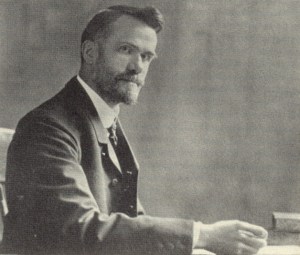
walter rauschenbush

Walter Rauschenbusch, “father of the Social Gospel Movement”

 We beseech thee for those who are set to make and interpret the laws of our nation. Grant to all lawyers a deep consciousness that they are called of God to see justice done, and that they prostitute a holy duty if ever they connive in its defeat. Fill them with a high determination to make the courts of our land a strong fortress of defense of the poor and weak, and never a castle of oppression for the hard and cunning. [Walter Rauschenbusch, Prayers of the Social Awakening, 1910].

–Gordon C. Stewart, Chaska, MN, October 7, 2018

Faith, Patriotism, and the Administered Consciousness

After a week of contentious struggle in the U.S. Senate that left the nation not just red and blue, but black-and-blue, I harkened back to “the administered consciousness” (Herbert Marcuse, One Dimensional Man) that mutes Cain’s question after he had slain his brother Abel: “Am I, or am I not, my neighbor’s keeper?” And “who is my neighbor?”

Government by Minority Rule

512px-115th_United_States_Congress_Senators

115th Congress Senate party membership by state. Vermont and Maine have one independent senator each, Bernie Sanders and Angus King respectively. [Wikipedia]

INTRODUCTION: Views from the Edge publishes “Government by Minority Rule” with the kind permission of its author, Constitutional law scholar David Rudenstine.

“A minority of the national population now controls all three branches of the nation’s government. Or, in other words, in a democracy where the majority presumably rules, current American politics has turned this basic rule upside down and permits the minority to control the majority.

“The president lost the popular vote. The senate is in the hands of senators representing a minority of the overall population. While one-person-one vote requires that the election districts in the house be equal in population, gerrymandering permits the minority party — the Republicans — to control the house. And now the Supreme Court is in the hands of justices four of whom were nominated by presidents who lost the popular vote and who were confirmed by an undemocratic institution — the senate.

“The US constitution was designed to be anti-democratic in nature. Every state regardless of its population has two votes in the senate; the electoral college selects the president without constraints imposed by the majority vote; a majority of the Supreme Court justices invalidates legislation adopted by politically accountable legislators. The intention was to build safe-guards into the governing system to counter the effects of populism and the mobilized public mob.

“But it is unlikely that anyone who designed the system in the 18th century had the current radically distorted allocation of political power in mind, and I cannot recall the last time the current condition existed — perhaps in the 1920s and1930s. Certainly not since Hoover lost to FDR in 1932.

“And now Kavanaugh will be on the high court joining Roberts, Thomas, Alito, and Gorsuch, to make a conservative majority that will more than likely be pro-business, anti-environmental laws, against abortion, hostile to climate change laws and rules, opposed to rights of the LBGT community, rejecting of affirmative action, favoring of the entanglement of religion and government, favoring presidential power, rejecting of the rights of immigrants, and more.

“But after his screed on the left wing Democratic Party political conspiracy Kavanaugh claimed was out to destroy him, his career, and his family, how can Kavanaugh possibly participate in these and other cases which are laced with divisions that mirror Kavanaugh’s own conspiratorial views?

“That was the point that former Justice Stevens made a few days ago. The Supreme Court is possibly hog-tied if one of the nine frequently must recuse himself because of the appearance of a conflict of interest, and it would seem that is what Kavanaugh must do if finally confirmed — not participate in any case that his political screed encompased.

“Unfortunately, the answer may be that Kavanaugh may just tough it out. Scalia did that in a case involving Cheney after Scalia and Cheney went duck hunting together. Rehnquist participated in the design of an Army surveillance program aimed at domestic civilian political dissidents and refused to recuse himself in a 5 to 4 vote almost a half century ago.

“Impeachable? Not likely. Activities that are impeachable are four — treason, bribery, and high crimes and misdemeanors. Of course, Jerry Ford famously stated that those words mean whatever congress says they mean. But then we don’t want Democrats paying games with the impeachment power.

“Now it is true that Kavanaugh’s situation is different from Scalia and Rehnquist’s. In his screed, he has taken on the Democratic Party establishment, and, properly understood, that should cause him to recuse himself in many cases that will be routinely on the Supreme Court’s docket. That in turn will greatly injure the Supreme Court.

“But I doubt if Kavanaugh will recuse himself, and his failure to do so will do great damage to the Court’s legitimacy, as did its 5 to 4 decision in Bush v. Gore.

“Is there a remedy if Kavanaugh does not recuse himself? Perhaps, but I cannot now point to one with any confidence except to secure preferred political outcomes in 2018 and 2020, and then assess matters when Democrats may hold political remedial power.”

— David Rudenstine, Sheldon H. Solow Professor of Law, Benjamin N. Cardozo School of Law, author of The Age of Deference: The Supreme Court, National Security, and the Constitutional Order (2016, Oxford University Press).

 

Hope in dark times

In times like these, I often turn to the hymn “O God, Our Help in Ages Past,” Isaac Watts’ paraphrase of Psalm 90 from 1719. Today I turned to it again for solace and hope. All the singers are white, but, hey, so am I, and there is hope even for the likes of I.

Psalm 90 in its entirety is a song of lament, but hope — and a call to personal responsibility — rise from despair.

Years ago I was given a copy of The Book of Psalms and Scottish Hymnal (1879) with the cursive signature of the man who used it: “John Campbell, Blair Mill, 1886.” (My middle name is Campbell.) I dusted it off this morning to read it through. The rendition of Psalm 90 John Campbell sang in 1886 ends with a prayer that recognizes our own responsibility for “the works of our hands”:

“And let the beauty of the Lord our God be upon us: Our handy-work establish Thou, establish them each one” (Psalm 90:17).

  • Gordon Campbell Stewart, Chaska, MN, October 7, 2018.

I’m mad as hell and…

There! I said it!

  • Gordon C. Stewart, Chaska, MN, October 6, 2018


Elijah plays Peek-a-Boo!

Video

256px-Kou-Kou_by_Georgios_Iakovidis

BOO! And a good day to you. Sixteen-month-old Elijah’s strapped in his carseat for the drive to day care. Mom initiates some fun. Elijah imitates her babbling. Then, on his own initiative, he suddenly takes off his knit cap to play Peek-a-Boo, like the children in Georgios Jakovides‘s 1895 Peek-a-Boo painting from Germany. Some games are timeless and ubiquitous. Peek-a-Boo!🤗

  • Gordon C. Stewart, Chaska, MN, October 6, 2018

Lightly Child, Lightly

David Kanigan’s post arrived this morning. I’m turning to it after events this afternoon. P.S. David writes from Canada.

Live & Learn's avatarLive & Learn

I pause under that summer tree, the one that feels like a friend, as my dog wonders why we’ve stopped. She was trotting in such rhythm. But when this still, I wonder what part of me, way down, remains untouched by dream or memory? What drop of being remains out of reach of the opinions of others? When up close, each thing reveals its shimmer. And it’s the unexpected closeness that holds everything together. The light spreads across my dog’s face, her eyes so devoted to wherever I want to go.

Can I be this devoted to the pull of life?  

Mark Nepo, from “Speechless” in Things That Join the Sea and the Sky: Field Notes on Living


Notes:

  • Photo: Bill Leslie with Groovy Times
  • Prior “Lightly child, lightly” Posts? Connect here.
  • Post Title & Inspiration: Aldous Huxley: “It’s dark because you are trying…

View original post 28 more words

What’s at Stake in the Kavanaugh Decision?

The Senate’s vote on the confirmation of the President’s appointment to the Supreme Court is more than a partisan matter. At stake is the trust of the American public in its most basic institutions.

Reasons to consider irrespective of partisan interests and loyalties:

John Jay portrait

First Supreme Court Chief Justice John Jay (1785-1789) — Gilbert Stuart portrait

1. Public confidence in the foundational institutions of the American republic has plummeted. The success of a democratic republic depends on its citizens’ faith in the integrity of the Senate, the Presidency, and, most of all, the U.S. Supreme Court.

2. Any appointment to the Supreme Court should increase rather than erode public confidence in the Court as the final arbiter and interpreter of the law.

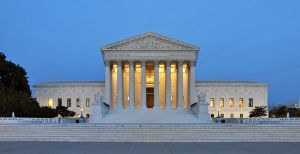
512px-Panorama_of_United_States_Supreme_Court_Building_at_Dusk3. The myth of the Supreme Court as standing on the lofty heights of objectivity is a myth, but it is a myth and aspiration worth preserving. Without public trust in the Justices’ commitment and disposition to rule without prejudice, the Rule of Law is viewed as the partisan Rule of Power and Prejudice.
4. Judge Kavanaugh’s behavior during last week’s hearing violated the standards of judicial ethics re: nonpartisanship and calm judicial temperament. Judge Kavanaugh’s appointment will further erode trust in the Supreme Court as an objective arbiter and interpreter of the law.

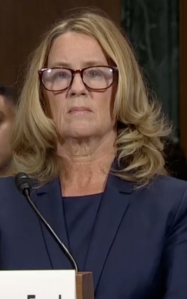
Dr_Christine_Blasey_Ford

Dr. Christine Ford

5. While the President declared publicly to the press that the FBI was free to go wherever it needed — with no restrictions placed on its background check — the White House already had limited the FBI to a handful of people. The President’s statements were duplicitous and deceptive.

6. Names of corroborating witnesses provided during the FBI interviews with the nine people the White House had authorized were ignored. They include high school and college classmates who publicly refute Judge Kavanaugh’s testimony regarding excessive drinking and allegations of sexual misconduct.

7. The majority party’s and the president’s shifts from belief in Dr. Ford’s credibility to public mockings of Dr. Ford and angry allegations of a partisan plot to destroy Judge Kavanaugh raise red flags about a predominantly male Senate’s ability to take women seriously.

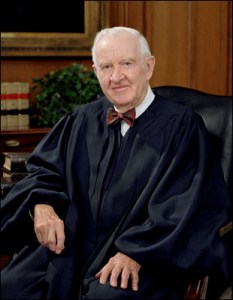
John_Paul_Stevens portrait

Supreme Court Justice John Paul Stevens official portrait

8. Supreme Court Justice John Paul Stevens (Ret.) yesterday urged disapproval of confirmation based on the nominee’s partisan and aggressive testimony before the Judiciary Committee. Retired Justices don’t do that. Stevens did, for the sake of the Court’s reputation and integrity.

9. Senate confirmation of a Supreme Court nominee who has declared his position that the law prevents a sitting president from being indicted, and who, in his testimony, refused to say he would recuse himself on such a case, gives the appearance of prejudicing the Court in favor of any case that might come before it.

Brett_Kavanaugh_Yale_Yearbook_(cropped)

Yale yearbook photo of Brett Kavanaugh


10. Judge  Kavanaugh’s op-ed in The Wall Street Journal is welcome. The admission of inappropriate conduct before the Senate Judiciary Committee last week neither erases the behavior nor qualifies him for appointment to the Supreme Court.

– Gordon C. Stewart, Chaska, MN, October 5, 2018.

Elijah asks for Bumpa

During a recent visit to our house, Elijah’s mother had taped a moment between grandson and grandpa. Yesterday, Kristin wanted to show Elijah the video. He calls Grandpa Gordon “Bumpa” — take a peek.


  • Grandpa Gordon (Bumpa), Chaska, MN, October 4, 2018.