Baseball as a Road to God

The Gathering minus Steve

The Gathering minus Steve

On Monday six seminary friends come together from Indiana, Texas, Colorado, Illinois, and Minnesota for an annual “Old Dogs’ Gathering” at our alma mater, McCormick Theological Seminary, in Chicago.

Years ago four of us cut Professor Boling’s Hebrew class to take our homiletics (i.e., preaching) professor, Herb King, to the Opening Day Cubs game at Wrigley Field. We were VERY serious students!

In preparation for this year’s annual gathering, we’ve been reading John Sexton’s marvelous book, Baseball as a Road to God: Seeing Beyond the Game, and we’ll return to Wrigley Field where two of the Old Dogs’ hearts are perpetually broken. Steve Shoemaker, one of the Old Dogs, sent this to us this morning.

Seminary Reunion

Here we would each learn to preach
a sermon–going from the Greek,
Hebrew, to the common speech
of folks today. Here we would seek
answers to all questions: old,
or new, conundrums from a child,
screams of pain from a grey head
that’s waiting for a grave. Reviled
scorned, by former college friends
who now run businesses, our mild
Biblical response pretends
to follow One who like a lamb
went to the slaughter. We damn
ourselves in not forgiving them.

This year we lost one of the original seven old friends, Dale Hartwig, who grew old too soon and faster than the rest of us. John Sexton reminds us of the difference between beginnings and endings, and the need for a vantage point:

“While the teams and players on the field may change each autumn, the game’s evocative power is continuous. Opening Day in the spring and the World Series in the fall are the bookends of baseball’s liturgical time…. Vantage point is critical.”

Baseball as a Road to God: Seeing Beyond the Game, Penguin Group, NY, NY, 2013.

Everyone should be so blessed as to have friends like these and a vantage point of continuing thanksgiving.

Andrew Lloyd Webber’s “Pie Jesu” in a Child’s Voice

Akim Camara

Akim Camara

This child’s innocence – his eyes, his voice, his face, his courage, his trust – takes us to our deepest selves in the presence of the Sacred. Sit back and watch Akim Camara, hand-in-hand with Carla Maffioletti, singing Andrew Lloyd Webber’s “Pie Jesu”.

“Pie Jesu” means “Merciful/kind Jesus”; in its context in the Latin Requiem Mass, it calls on “the Lamb of God” to show mercy to the suffering. Kindness and mercy are at the heart of spirituality.

The text has an interesting history. The “Pie Jesu” is an ancient motet based on the last couplet of the “Dies Irae” (“Day of Wrath”) that was part of the old Latin Requiem Mass. The Vatican II liturgical reforms removed the “Dies Irae” from the Mass in order to emphasize Christian hope. A number of composers, among them Andrew Lloyd Webber – influenced by Gabriel Faure’s “Pie Jesu” – gave new musical expression to the prayer: “Kind/merciful Lord Jesus, grant them rest. Kind/merciful Lord Jesus, grant them rest eternal.” BTW, Faure’s Requiem includes the “Dies Irae” which has become part of the Good Friday period of meditation at Shepherd of the Hill, not because God is wrathful, but because we so often have reason to cry out “Libera Me!” from the depths of terror and desolation.

The Prison Church of the Good Thief

The Church of the Good Thief, Clinton Correctional Facility, Dannemora, NY

The Church of the Good Thief, Clinton Correctional Facility, Dannemora, NY

Dannemora, New York, home of Clinton Correctional Facility

Dannemora, New York, home of Clinton Correctional Facility

Within the forbiddingly high walls of the NY State Prison in the village of Dannemora stands a remarkable structure: The Church of St. Dismas (the Good Thief).

The prison is now known as “Clinton Correctional Facility,” but to the inmates across the state of New York it is known as “the Hell Hole” of the New York prison system – “New York’s Siberia” – because it is cold in the northeast corner of New York. The inmates of Attica think of Dannemora the way people outside the system think of Attica – the most dreaded place in the New York prison system.

The Church of St. Dismas was built by the prisoners between the years of 1939 and 1941 as a witness to God’s presence within the walls of the prison. Its name pays homage to the thief next to Jesus of Nazareth, the political criminal who was pardoned and promised Paradise.

On the Wednesday evenings between 1974 and 1977 I drove across the Adirondacks from our home in Canton, New York to Dennemora where a group of church members, college students, and university faculty put on programs and visited with prisoners. The times with the inmates confirmed what I had read in Kai Erickson’s incisive book Wayward Puritans: a Study in the Sociology of Deviance in which he argued that society creates and maintains deviance as a means to identifying itself as the opposite of “the other”.

Leaving Dannemora those Wednesday nights, the sound of the iron prison gates clanging shut marked the clear difference between inside and outside the walls. I drove back across the mountains, remembering the conversations with “Blue” and other men I’d just left inside. Like those who built the Church of St. Dismas with their own hands, I remembered the criminal crucified with Jesus, and drove home from the prison “yard” to the yards we mowed back home in Canton where the walls were invisible.

Later I learned the Taize Community (France) chanted prayer of “the penitent thief’ set to music: “Jesus, remember me when you come into your Kingdom”.

April 16, 2012

For the Grieving Parents of Moore

In times of great tragedy and sorrow, I often turn to the “Pie Jesu” of Gabriel Faure’s Requiem. Our hearts are broken with you.

Prayers for the people of Moore, Oklahoma

Social reformers Frank Mason North in foreground, Walter Rauschenbusch behind.

Social reformers Frank Mason North in foreground, Walter Rauschenbusch behind.

There are no original words today. Tears. Sighs. Stunned silence.

But an old prayer for Passion Sunday from the Riverside Church in New York City came to mind. It was the prayer of The Rev’d Dr. Ernest (“Ernie”) Campbell for the workers most of us take for granted daily in good times. Today it applies to all the first responders who labor to care for the people of Moore.

Bless with Thy power and presence, gracious God, those who do the menial chores and thankless tasks behind our city’s bright façade:
those who rise early to bring fresh food and produce from the marketplace;
those who clean our halls and offices through the night;
those who work our switchboards and see that messages get through;
those who load and unload trucks;
those who stock the shelves and work the back rooms of our stores;
those who fire boilers and provide maintenance in the heat and noise of basements that we seldom visit;
those who clean our windows and mend our masonry and keep our flagpoles in repair;
those who set tables, bus dishes, and work in our many kitchens.

In following our several callings, make us aware of what we owe to unnamed thousands whose work is indispensable to our well-being. And give them to know, O God, that in Thy sight, if not in ours, the least of the earth are very big indeed.

– Ernest Campbell (Click HERE for Ernest Campbell’s obituary.)

The hymn “Where Cross the Crowded Ways of Life” (music by Ludwig von Beethoven; lyrics by Frank Mason North, pictured above) meant so much to him that he used it for the title of one of his three books. Below are the lyrics. Click HERE for an organist’s rendition of “Where Cross the Crowded Ways of Life”.

Where cross the crowded ways of life,
Where sound the cries of race and clan
Above the noise of selfish strife,
We hear your voice, O Son of man.

In haunts of wretchedness and need,
On shadowed thresholds dark with fears,
From paths where hide the lures of greed,
We catch the vision of Your tears.

From tender childhood’s helplessness,
From woman’s grief, man’s burdened toil,
From famished souls, from sorrow’s stress,
Your heart has never known recoil.

The cup of water given for You,
Still holds the freshness of Your grace;
Yet long these multitudes to view
The sweet compassion of Your face.

O Master, from the mountainside
Make haste to heal these hearts of pain;
Among these restless throngs abide;
O tread the city’s streets again.

Till all the world shall learn Your love
And follow where Your feet have trod,
Till, glorious from Your Heaven above,
Shall come the city of our God!

Mumblety-peg

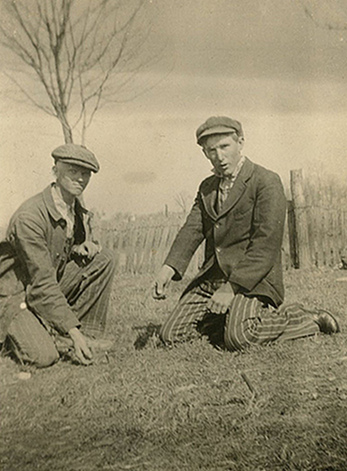
Mumblety-peg playersSteve Shoemaker’s friends call him “Shoe” to this day. Shoe is 6’8″ with huge feet and shoes.

Mumblety-peg

When we played “Stretch” we used our feet,
and not some “candy” wooden stick
stuck in the ground. From my pocket
the folded Barlow knife I’d pick
up by the blade and spin into
the ground. My grade school friend would yell
if it would land anywhere too
close to his tenny-runner shoe,
“Shoe, you can go straight down to hell!”
Then I would have to stand while he
taught me strict reciprocity.

– Steve (“Shoe”) Shoemaker, Urbana, IL, May 19., 2013

You say you’ve never heard of Mumblety-peg? Click HERE for a “manly” definition on “The Art of Manliness” website :-).

Play: a Tribute to Maggie and Sebastian

Maggie with red toy

Maggie with red toy

This YouTube video reminds us of Maggie, our 3/4 Westie – 1/4 Bichon Frise, AND Sebastian, 1/2 Shih Tzu – 1/2 Bichon Frise, who kept us laughing by playing hide-and-seek, chase-and-be-chased every day. The mannerisms of the Westies in this video are Maggie’s precisely.

What the Book of Revelation was REALLY about

No book has been more abused and abusive than the Book of Revelation.
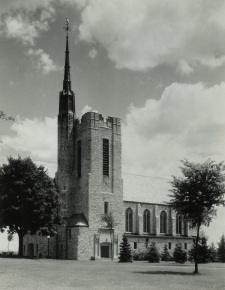
Gunnison Memorial Chapel, St. Lawrence University, Canton, NY
Gunnison Memorial Chapel, St. Lawrence University, Canton, NY

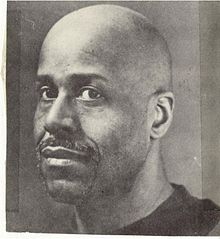
Martin Ramirez Sostre. inmate held in solitary confinement, later pardoned.

Martin Ramirez Sostre. inmate held in solitary confinement, later granted clemency by NY Gov. Carey..

Below are excerpts from a sermon preached at the Gunnison Memorial Chapel of St. Lawrence University in Canton, NY inspired by Martin Sostre and re-reading the Book of Revelation. The sermon was published by The Christian Century (March, 1974).

The first half of the “Worship and Resistance: The Exercise of Freedom” introduces the hearer/ reader to the case of Martin Sostre’s resistance as a political prisoner incarcerated in solitary confinement at Clinton Correctional Facility in Dannemora, NY, known as “New York’s Siberia” or, as the inmates refer to it, “the Hell Hole of the New York Prison system”.

It was during my weekly Wednesday evening program and visits with prisoners there that I learned about the case of Martin Sostre, held in solitary confinement in resistance to dehumanizing prison practices, and joined the campaign for his pardon.

Excerpts from “Worship and Resistance: The Exercise of Freedom:

“Incarcerated on the Aegean Island of Patmos, a penal settlement of the Roman Empire in the first century A.D., was a political prisoner named John. He wrote a political-religious manifesto declaring open resistance to the Roman Empire. The Revelation to John – the Apocalypse, the last book of the Bible – is the earliest extant Christian tract deliberately and openly directed against the pretensions of the world’s greatest power. In the Revelation to John, resistance to Roman power and authority is so inextricably bound together with worship of God that they constitute two sides of the same coin. Worship and resistance are the twin sides of faith’s freedom to celebrate God’s gift of life. The unity of resistance and worship is expressed with notable clarity in the passage where the fall of mighty Babylon occasions a celebration in heaven. The destruction of Babylon is joined to the salvation of the world itself and is the sign of God’s power and righteous rule over the nations. Only those who profit by Babylon’s wealth, power and injustice have reason to mourn her fall, while those who have ‘come out of her’ – who have disentangled themselves from her oppression, corruption and imperial claims – have cause to worship God and sing joyful hymns of praise.”

….

“Babylon is the state or nation in its presumption to be God. Babylon is any state, nation, or constellation of principalities and powers, which attempts to rule as final judge of persons and nations. Babylon is any such power – in any time or place – which makes its people subjects, calling them into idolatry of the nations, and any state or nation that persecutes its prophets of righteousness, peace and justice while rewarding the aggressive supporters and the silent ones who acquiesce. America is Babylon.”

….

“Envision once more a visit to Clinton Correctional Facility. Remember the disorienting sensation of having left everything familiar on the other side of the wall, the feeling of walking out of a real world into a nightmare, the shock induced by the size of the walls and the presence of the guards – strange and terrifying.

“But the closer one gets to the prison reality, the more one comes to realize that it is not so strange, that it is simply a more exaggerated and visible form of our own everyday reality in the face of death. Here on the outside, the walls are not visible, but they are much higher. Out here the guards do not stand poised with machine guns, but they are real and far more powerful – the guards our own fears provide.”
….
“Then I heard another voice from heaven ssying, ‘Come out of her, my people, lest you take part in her sins…’” (Rev. 18:4 RSV).

A commentary will follow soon on my experience of visiting Martin during the time he was transferred to the Federal Detention Center in NYC where he was held as a witness in someone else’s trial. Prior to that visit, none of us in Northern New York had been able to meet with Martin because of his refusal to see visitors on the principle that the rectal “searches” required before and after visits violated his human rights.

NY Governor Carey eventually issued a pardon.

Reading my own obituary!

It’s startling when you see your own name on the obituary page!

But there it is, right there, posted on the internet.

Published in the The Argus on 10 May 13

STEWART Gordon On 3rd May 2013, Gordon aged 86 years. Resident of Sussex Heights sadly missed by family and friends. Funeral Service at Hove Cemetery on Wednesday, 22nd May at 10.00 a.m. (Graveside service) Flowers or if desired donations for the Martlets Hospice may be sent to S.E Skinner and Sons, 145 Lewes Road, Brighton, BN2 3LG Tel. 01273 607446.

Condolences to the family of the older Gordon in Sussex Heights this Wednesday. Some day it will be this Gordon Stewart…with the middle initial ‘C’ on the obituary page, but I won’t be reading it. For Gordon’s family and for all who will eventually stands at the grave, this lovely graveside prayer from The Book of Common Prayer offers consolation and call us to live our days with meaning, thanksgiving, and hope:

O Lord, support us all the day long
until the shadows lengthen, and the busy world is hushed,
and the fever of life is over, and our work is done.

Then, in Your mercy, grant us a safe lodging
and peace at the last.

✚ The Artist (PJ McKey) ✚

This piece was published today by Via Lucis Photography: Photography of Religious Architecture. Click the blue link to view P.J. McKey’s lovely post.

✚ The Artist (PJ McKey) ✚.

Tomorrow is the Feast of Pentecost. At Vespers on Pentecost, the monks sang Veni Creator Spiritus in Latin (here translated into English), attributed to Rabanus Maurus (776-856 CE). Click HERE to hear the sounds of prayer.

Come, Holy Spirit, Creator blest,
and in our hearts take up Thy rest;
come with Thy grace and heav’nly aid,
to fill the hearts which Thou hast made.

O Finger of the hand divine,
the sevenfold gifts of grace are Thine
….
Thy light to every sense impart,
and shed Thy love in every heart,
….
Praise we the Father and the Son
and Holy Spirit with them One;
and may the Son on us bestow
the gifts that from the Spirit flow.