A Man and His Dog

Barclay and Gordon

Barclay and Gordon

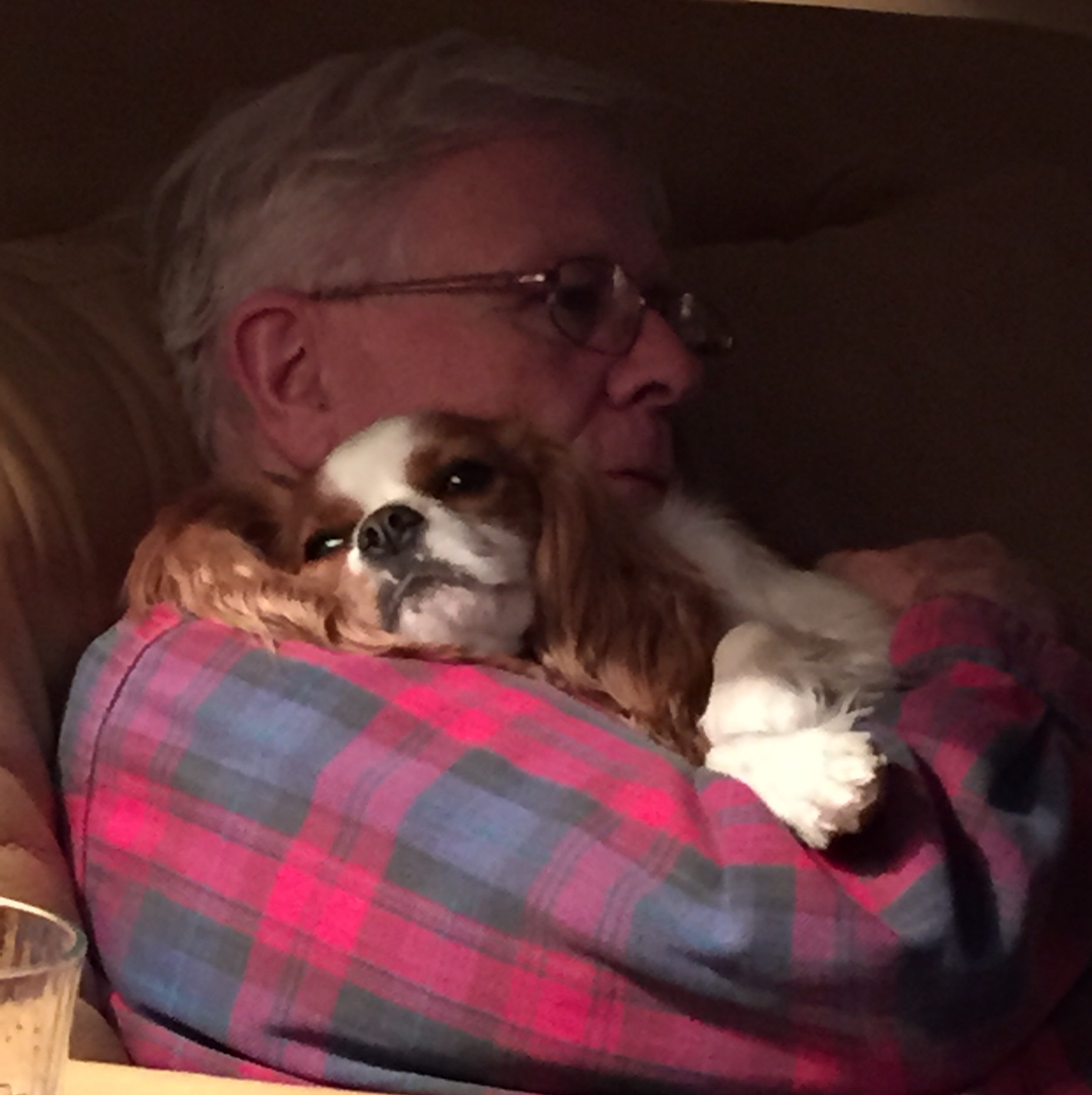
Few bonds are as close as a man and his dog. I sorely miss Barclay, the soccer dog, who’s living with his “sister” Kristin while Kay and I are “somewhere else” for a long time.

Kristin reports he’s doing well, eating all his food, taking his medicine, and happily playing goalie with his ball.

I wonder if Robert Frost had a dog. After writing “Mending Wall,” – Something there is that doesn’t love a wall….”, he might have thought, “Something there is that loves…a dog.”


Happy New Year Under the Boardwalk

“Under the boardwalk” came the New Year’s Eve reply from the guy at Union Station in NYC 52 years ago. He was responding to two 19 year-0ld college students who’d taken the bus from Philadelphia to experience Times Square on New Year’s Eve.

“Hey, buddy!  Happy New Year!” they’d yelled to the inebriated man staggering though Union Station’s main floor.

“Hey,” he’d yelled back. “Happy New Year!” looking up at us. “Where ya from?”

“Philadelphia. How about you?”

“Under the boardwalk,” he said. “Come visit sometime.”

“Where?” we asked, both laughing.  “What boardwalk?”

“Atlantic City,” he said.

We made the visit to Atlantic City but never saw him again.

Age has a way of maturing us, if we’re lucky. We come to realize that any one of us could be the man who lived under the boardwalk. Lots of people do. Happy New Year, bother, and thanks for the kind invitation.”

God as Policeman or Lover

Sebastian Moore, OSB

Sebastian Moore, OSB

In the eyes of Views from the Edge, the  late Dom Sebastian Moore, O.S.B. (12.17.1917 – 02.21-2014) of Downside Abbey, England, is one of our time’s more interesting thinkers.

Steeped in the psychology of Carl Jung, the spiritual discipline of the Benedictine Order, the theology of Bernard Lonergan, S.J., and the mimetic theory of Rene Girard, his eyes were penetrating, his vision both deep and far-reaching. During a long life os spiritual searching, he wrote in his book The Inner Loneliness:

[O]nce you see the self as naturally self-centered, you deny that the self wants God above all things, and you degrade God from being the fulfiller, the lover, into being the policeman. Paul’s conversion, through the stunning vision of Jesus he had on the road to Damascus, was from God the policeman to God the lover.

[The Inner Loneliness, Crossroads Press, 1982, p.49]

We met briefly in 1971 at a meeting of campus ministers in Milwaukee. He was chaplain at Marquette University at the same time I served as campus minister at the University of Wisconsin-Whitewater. Gathered at the Episcopal Campus Ministry Center at UW-Milwaukee, I wondered who this strange monk was who seemed to observe everyone very closely without saying more than a word or two. I’m not sure I even knew his name. I just knew he was unusual.

Twenty-six years later, during a period of personal and professional turmoil, a therapist mentioned the name Sebastian Moore. I purchased The Crucified Jesus Is No Stranger and saw his picture on the jacket. His perspective left me in awe and anchors me still. I’ve been knocked off my horse on the way to way to Damascus. Every real conversion is the turning from God the policeman to God the Lover.

Cuba: The Embargo Wall

“SOMETHING there is that doesn’t love a wall,

That sends the frozen-ground-swell under it,

And spills the upper boulders in the sun;

And makes gaps even two can pass abreast.”

Robert Frost, “Mending Wall”

Two human beings passed abreast through a wall yesterday: the invisible wall between the U.S. and Cuba.

The wall was built by human hands. It’s coming down by human hands. Like the Berlin Wall and “the Iron Curtain” that went up during the Cold War between the East and West.

Here in the States the story was that the wall and the curtain had gone up to keep people in. And that’s what I thought until the summer of 1966 while living “behind” the wall with the Schulz family in Bratislava as The Experiment in International Living’s Chicago Ambassador to Czechoslovakia.

A visitor from the West was immediately struck by the absence of bill boards. There were no advertisements like in Chicago. Bratislava struck me at first glance as a gray place, a dull place, a colorless place, a depressing place. But depression and beauty are in the eye of the beholder.

“The wall isn’t there to keep us in,” said my hosts at the third floor walk-up apartment at #7 Legionarska Street. “It’s there to keep you OUT.” Their story was altogether different. They were trying to keep Western materialism, Western greed and commercialism on the other side of the wall.

They built the wall, they said, to make possible the building of a new character: a more generous, less predatory, more social community beyond the old disparities of wealth and poverty.

“Today Robert Fronts-Diaz, who owns a Twin Cities translation and communications business, says the U.S. embargo was ‘an opportunity for Cuba to build character… Since I was a little kid, I wanted the Cuban embargo to be lifted,’ Fonts-Diaz said, his voice breaking with emotion. ‘I am very deeply touched that my request has been fulfilled,’” [“For state’s Cuban, change was a long time coming,” StarTribune, Dec. 18, 2014]

“SOMETHING there is that doesn’t love a wall….” In the end, over time, they all come down

[Eternity] “spills the upper boulders in the sun;

And makes gaps even two can pass abreast.”

Cuba – Finally a Breakthrough

Goliath’s bullying is almost over. After 53 years, by the good offices of Pope Francis and Canada, and  by order of U.S. President Barack Obama and Cuban President Raúl Castro, the U.S.A. and Cuba are taking steps to normalize relations. At long last, Cuba and we will be neighbors again.

FLASHBACK:

It’s later afternoon in 1979. A 37-year-old minister/college pastor from Wooster, Ohio is mixing with other guests from all over the world at a social hour on the veranda of the residence of the Rev. Dr. Jose Arce Martinez, Dean of the ecumenical Protestant seminary in Matanzas, Cuba.

Thirteen years earlier, the young minister, then a seminarian, had been sent by the City of Chicago Chapter of the Experiment in International Living to live for three months in Bratislava, Czechoslovakia. There he had participated in the Christian-Marxist Dialogue founded by Czech theologian and former Princeton Theological Seminary Professor of Theology Josef Hromadka. In Bratislava he had lived with the Schulz family.Mr. and Mrs. Schulz were employed by the Department of Economics and the Department of Justice. Pan (Mr.) Schulz, after welcoming him to their home with a shot of Slivovitz (plum brandy), had said with a a smile, “I’m a whole lot Marxist…but still a little bit Lutheran.”

The 75 international guests at the Matanzas seminary are Christian theologians, bishops, and pastors from Angola, Mozambique, Zimbabwe, South Africa, Argentina, Venezuela, Chile, Mexico, Uruguay, Peru, the U.S.S.R, East and West Germany, France, and the U.S.A. They’ve been convened at the invitation of the seminary with the consent of the government of Cuba following the Pope’s conference on human development at Puebla, Mexico.

Earlier that day the guests had stood on the lonely beach of Playa Girón, site of the Bay of Pigs invasion, where the air was still heavy from the deaths of the CIA-led invasion of Cuba that had failed. Being at Playa Playa Girón had been chilling. A Cuban Pentecostal minister who lost a leg in the battle at Playa Girón explained the scene of the American invasion to his North America visitor.

That afternoon, they return to the seminary for the social hour where they are joined by a small number of members of the Cuba government. The young minister engages in a conversation with someone named Raúl who asks him what it means to him to be a Christian. He answers that to be a Christian is to be a disciple of Jesus, and that to be a disciple of Jesus means to give oneself to the Kingdom of God. He tells Raul that Marx’s classless society is borrowed from Jesus’s teaching and that he shares that vision.

Raúl smiles and says that they will have to see whether it is of God or of Man that it comes. Only time will tell. They shake hands as brothers in a common cause to end human misery and agree that only time will tell.

Today Raúl Castro and Barack Obama agreed to pursue normal relations between little David and the giant Goliath.

Thanks you, Barack. Thank you, Raúl. Thank you, Canada. Thank you, Pope Francis. Thank you, God!

 

Poem #5 – Dale Hartwig (1940-2012)

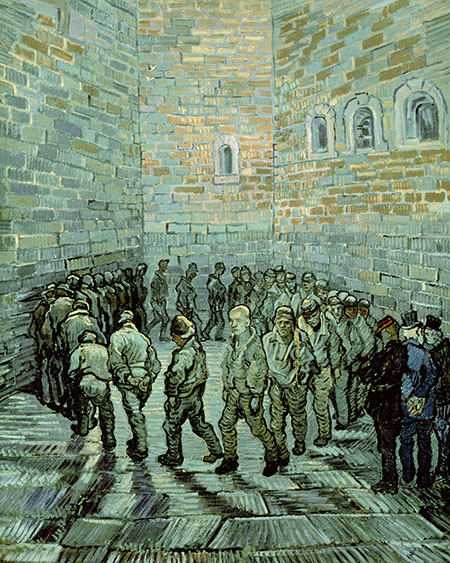
Prisoners Exercising, Vincent Van Gogh, 1890  with Van Gogh looking out and beyond.

Prisoners Exercising, Vincent Van Gogh, 1890 with Van Gogh looking out and beyond.

Dale Hartwig stood out from the crowd. He wrote for himself. His was a rich inner world, a necessity for survival as Parkinson’s shrank his world to the size of his room at the care center. His writings, shared with a group of six close friends, deserve a larger audience.

Dale’s verses and poetry often echo the Hebrew psalmists. They are visceral, sometimes crying out  like Vincent Van Gogh exercising in his asylum at Saint-Remy, and at other times delighting at the sight of a fluttering leaf or falling snowflake outside his care center window. None of Dale’s pieces have titles.

Like prisoners, they only have numbers – the order in which he wrote them, as best we can tell.

Poem #5

Behind and before, Thou goest, O Lord.
Like the wind I cannot see.
But why so silent in ways of my need?
To let you but walk to trust in me.
O my steps are oft frozen from fear,
And my thoughts locked to the darkness around.
O God, only You can move me beyond
The prison that seems to abound.
Come, Lord, and move me, just one small step
Toward the One who would give me so much.
I am who I am, so little sometimes
But, with You, so much, so much.

The last time Dale joined the annual Gathering of classmates in Chicago, he surprised us. He wasn’t supposed to leave “home” – but he did. He somehow managed to get himself to the train station in Grand Rapids, Michigan, board a train for Chicago, and make his way from Union Station to Hyde Park by public transportation carrying a suitcase on the stiffening legs he still exercised daily.

When it came his time to share what had been happening in his life, he handed me a sheaf of papers and pointed to the number 5 on one of the pages he had typed. I read it aloud for him. Every face was wet. “I am who I am, so little sometimes But, with You, so much, so much.”


What salesmen do for a living

This story is told by my cousin Dennis, originally from South Paris, Maine. Our grandmother was a tea-totaler, a member of the Women’s Christian Temperance Union (WCTU) that struck fear in every drinking man! Here’s the story in his own words.

Every Christmas our family would have our tree in the morning, go to church and then go to grandma’s house on Main St. All the Titus uncles and aunts would be there with their children. We would nosh on pastries baked by Aunt Muriel and then do the tree.

The aunts and uncles plus us children would get two or three gifts from each family and be done with opening our gifts in 15 minutes. Then our grand parents would methodically open each gift from all of us there and all their far flung friends and relatives. There would be mounds of gifts for them. Grandma was very precise, she would cut off all the bows and have a box to put them in for next year. Likewise all the wrapping paper. Then she would write in a book who gave the present and what it was. This process meant that everybody sat for hours watching them open all their gifts. You would see everybody nodding off or going to the dining room to get pastries and coffee.

After about an hour of this gift opening by Grandma, I noticed one of more of my uncles would get up and disappear for a half hour or so. Being the curious person that I am, I followed my Uncle Roy. I noticed that he went through the kitchen out into the barn. [Note to the reader: the barn was attached to the house through a pantry by the kitchen].

So I waited a few minutes and went out into the barn too. They were all gathered in a separate room with the door shut.

I opened the door and surprised them. They were drinking beer and smoking. They quickly tried to hide the beer cans and butt their cigarettes hoping I didn’t notice. I just stood there frozen in my tracks. Finally Uncle Roy said this was not place for me and I should return to living room.  As I turned to leave, Uncle Alva said “Wait a minute.” He came over to me and asked what had I seen. I told them I saw that they had been smoking and drinking, in a smug sort of way.

Uncle Alva was building a boat at that time, so he asked if I would like to go fishing with him and Bill [i.e. Alva’s son; Dennis’ cousin] next spring? Of course I said I sure would. Being the salesman he is, he proposed a deal to me. If I go back to the living room and keep my mouth shut, he would take me on the maiden voyage of his boat on Thompson Lake and we would go fishing for Lake Trout. I looked at him with wide eyes and a big smile and said “Uncle Alva you got a deal!” My other uncles pulled their beer out and took a big swallow and laughed. I shook hands with all of them and left with a grin that didn’t come off until I went home that night (laughing to myself all the next day).

When my mother asked where I had been as I returned to the living room, I told her in front of everybody I had to go to the bathroom real bad. No one was ever the wiser…. I went fishing with Bill and Uncle Alva on their maiden voyage laughing all the way. That’s when I learned what salesmen do for a living!

Dennis Smith, Whitewater, WI, December 10, 2014

The Human Menagerie

The reference is to Carl Sandberg’s poem.

O, I got a zoo, I got a menagerie, inside my ribs, under my bony head, under my red-valve heart—and I got something else: it is a man-child heart, a woman-child heart: it is a father and mother and lover: it came from God-Knows-Where; it is going to God-Knows-Where—For I am the keeper of the zoo: I say yes and no: I sing and kill and work: I am a pal of the world: I came from the wilderness.

After 14 years of living at home,  my cousin Alan was institutionalized. His Cerebral Palsy had finally come to the point of seizures at all hours of the day and night.

For 14 years Alan’s bed was just outside the open door between his room and his parents, my Aunt Gertrude and Uncle Bob in South Paris, Maine. His mother slept with an ear open for any change in Alan’s breathing pattern. She had come to learn the breathing changes that preceded a seizure. She would hear the change and rush to Alan’s side.

Alan required round-the-clock care. The years when my Aunt and Uncle felt secure in leaving him alone for shopping or running an errand had now become a wistful memory. My cousin Gwen remembers that their mother could no longer go outside to hang the laundry without calling a neighbor to stay with Alan for 10 minutes. Alan’s care became the all-consuming center of family life to the neglect of Alan’s younger siblings, Dennis (11) and Gwen (7) and the deteriorating health of Uncle Bob and Aunt Gertrude.

In the 14 year of Alan’s life, when things had gone beyond the point where they could care for him adequately, they made the hardest decision of their lives. They admitted him to the Pownal State School and Training Center in New Gloucester, Maine where he spent the last five years of his life with other severely disabled residents. Members of the family made the hour-and-a-half trip to New Gloucester twice a week to be with Alan at Pineland. During those next five years Alan’s friends at Pineland became friends to the entire Smith family.

My cousin Dennis describes the scene at Pownal in words of his own:

These were children with Downs Syndrome, dwarfs of all kinds, microcephalics, hydrocephalics, people we used to call morons, idiots, and imbeciles, and non-ambulatory people like Alan. All of natures mistakes in one big room.

When my mother and I would do concerts for them, they would bring Alan in on a gurney. They would sway to and fro to the music trying to sing or moan to the melody. At first their responses raised the hackles on the back of my neck. It was like a scene out of a Hollywood movie.

Some of the residents assisted in Alan’s care. In his room they would talk to him like dear friends and Alan would respond to them with his familiar ‘ah’s and laughter. I grew to understand he was in his element there with constant attention by those he knew and trusted…. I’m convinced he died a happy, contented young man who was free at last to be himself. Just another human being surrounded with friends who loved him.

The human species itself is what Carl Sandburg said each one of its members is: a menagerie.  We are all in the menagerie, the most ‘abled’ and the least ‘abled’ of us. Every attempt to engineer a species without “mistakes” – a purified race, a super race, a genetically modified species – is a mistake doomed to fail. The wilderness always prevails.

Those who have met the zoo within themselves come to understand that we all come from the wilderness just outside the castle walls and moats of human pride and self-deception:

“…it [i.e., the zoo inside my ribs] came from God-Knows-Where; it is going to God-Knows-Where….I am a pal of the world: I came from the wilderness.”

Voices

NOTE: This e-mail was shared among friends from my wife Kay’s high school days. When asked how best to introduce her, Kathy replied, “just another person seeking to understand how to respond.”

“It’s so hard to make sense sometimes of all the voices, the messages, that break into a usual day.

“Downtown, I heard the sound of a ragtag bunch of demonstrators on the next block, chanting in one voice, ‘Hands up, don’t shoot’, in solidarity with protesters all around the country. I saw an armored police vehicle, moving quietly, on the next block, seemingly trying to get ahead of where the protesters would be coming next. There was no sound at all coming from the twelve or fifteen police who were mounted around the outside of the vehicle, like so many tin soldiers, with protective gear and plexiglas shields. If they were speaking, it wasn’t for us to hear. On the next block, at least two dozen police on bicycles were making their way up a crowded sidewalk; probably more in total than the group of protesters.

“Somewhat shaken, and wondering, as I often do, whether I belong out there with the marchers, and where is my place in the confusing discussion. What does my own voice need to say? I made my way back home. After all, there was no place to leave my car in our crowded downtown if I wanted to join the marchers. I was not “dressed” for a protest. I said to myself, “a walk in the park is what I need, even though it is getting dark. It’s not raining, and it’s mild and not windy”.

“As I walked up the slope around the corner from our house, I heard chanting again, this time happy voices. I couldn’t quite make out the words at first, but soon I realized it was three girls singing “Come on down to our holiday sale, our holiday sale, our holiday sale”. Of course, that group was much easier for me to join, and there were most certainly no police in sight. The girls had hot cocoa, gingerbread cookies, and origami birds for sale. Conversation was easy. One girl told me she was raising money for ‘cancer’, the next for the ‘pet shelter,’ and the last for ‘homeless’.

“I had to offer a prayer of gratitude for everyone who is working to make this longing world a more just and welcome place.”

Kathy Elliott
Portland, Oregon
December 7, 2014

Joy and Gratitude – my cousin Alan

Over lunch today my 89 year-old friend asked what had drawn my attention to my paralyzed first cousin Alan who never spoke a word due to Cerebral Palsy (see Views from the Edge’s  post “Father and Son – Bob and Alan”).

Alan was completely helpless. His body was rigid. He had no control over his bodily functions or anything else. He was utterly dependent on his family. He could not feed himself. He couldn’t speak. Even so, his eyes communicated joy.

The joy of kinship and love came from inside himself in spite of all.  I want the joy and gratitude that emanated from Alan’s eyes and smile whenever we came into each other’s presence. Control is a debilitating disability – an isolating illusion – among the “abled”.