Our Anxious Time

Ours is an anxious time, a fearful time, an insecure time. We feel it in our bellies.

This morning we’re moved to consider anxiety, fear, and insecurity. For that purpose we turn to philosophical theologian Paul Tillich* (scroll down) and philosopher of religion Willem Zuurdeeg** for whom the questions were passionate and all-consuming over their lifetimes. Even so, they were not the best of friends.

Zuurdeeg was a severe critic of Tillich’s attempts to create a theological system. He saw every system as a flight from finitude and ambiguity into what he called “Ordered World Homes” that make sense of, and defend against, the anxiety intrinsic to finitude. For Zuurdeeg, to be human is to be thrown into chaos and every philosophy from Plato to Hegel to Tillich is “born of a cry” – the cry for help, for sense, for protection, for a security that lies beyond one’s powers.

Reading Tillich’s Systematic Theology again after reading the news this morning leads to the conclusion that Zuurdeeg and Tillich were very close, as is often the case between critics of one another. One thinks, for example, of Sigmund Freud and Carl Jung in a similar manner.

For all their differences, Zuurdeeg and Tillich were joined at the hip by their shared experience with madness in society and the demise of once-trusted foundations of western civilization. The rise of the German Third Reich led them to a lifelong search not only for answers but for the questions that might lead to insight into the existential situation into which Hitler’s madness threw the world headlong into chaos and destruction.

Anxiety, said Tillich, is distinct from fear. Fear has an object. We fear an enemy. We fear Iran; Iran fears us. Israel fears the Palestinians; The Palestinians fear the Israelis. “Objects are feared,” said Tillich.

A danger, a pain, an enemy, may be feared, but fear can be conquered by action. Anxiety cannot, for no finite being can conquer its finitude. Anxiety is always present, although often it is latent. Therefore, it can become manifest at any moment, even in situations where nothing is to be feared….. Anxiety is ontological; fear, psychological… Anxiety is the self-awareness of the finite self as finite. [Paul Tillich, Systematic Theology, Vol. 1,  p. 191-192, University of Chicago Press, 1951]

Anxiety is the self-awareness that we are mortal. We are excluded from an infinite future. We were born and we will die and we know it. Despite every flight into denial, we know it in our bones. We have no secure space and no secure time. “To be finite is to be insecure” (Tillich, p. 195). In the face of this insecurity, said Zuurdeeg, the individual and the human species itself seek “to establish their existence” in time and space, though we know we can not secure it. The threat we experience in 2015 is the threat of nothingness. Politicians pander to it. Preachers pander to it. Advertisers prey on it. They eat anxiety for breakfast, lunch and dinner. Again, Tillich, writing as if for our time:

The desire for security becomes dominant in special periods and in special social and psychological situations. Men create systems of security in order to protect their space. But they can only repress their anxiety; they cannot banish it, for this anxiety anticipates the final “spacelessness” which is implied in finitude. [Tillich, p. 195]

So this morning I sip my coffee aware of and thankful for this moment of finitude, and determined that I will not turn over my anxiety into the hands of those who promise security from every fear. Willem Zuurdeeg and Paul Tillich looked directly into the heart of human darkness and saw a light greater than the darkness. I want to live in the light of their courage and wisdom.
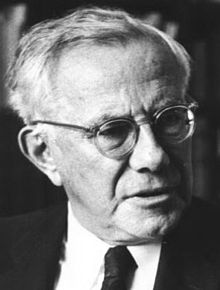
Paul Johannes Tillich (1886-1965)

Paul Johannes Tillich (1886-1965)

*Born and raised in Germany, Paul Johannes Tillich was the first professor to be dismissed from his teaching position in 1933 following the election of Adolf Hitler as Chancellor of Germany for his outspoken criticism of the Nazi movement. At the invitation of Reinhold Niebuhr, he and his family moved to New York where Tillich joined the faculty of Union Theological Seminary. He went on to become one of the best-known philosopher-theologians of the 20th century, publishing widely from teaching from chairs at Union, Harvard University, and the University of Chicago. His best know works are The Courage to Be, The Shaking of the Foundations (a collection of sermons),and his three-volume Systematic Theology.
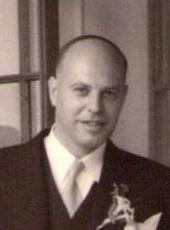
Willem Frederik Zuurdeeg (1906-1963)

Willem Frederik Zuurdeeg (1906-1963)

**Born and raised in the Netherlands in a family that served as part of the underground resistance to Hitler’s pogrom, Willem Frederik Zuurdeeg spent his life asking how western civilization’s most sophisticated culture (Germany), could fall so easily into the hands of a madman. His Analytical Philosophy of Religion became a major text for undergraduate and graduate philosophy of religion classes. When Professor Zuurdeeg died of cancer as Professor of the Philosophy of Religion at McCormick Theological Seminary in Chicago, he left behind an unfinished manuscript later completed by his friend and colleague Esther Cornelius Swenson, the title of which is Man Before Chaos: Philosophy Is Born in a Cry. Click HERE for photographs of Willem Zuurdeeg and the family that gave Jews sanctuary in the Netherlands.

Ted Cruze and The Liberty Way

Sen. Ted Cruze (R-TX)

Sen. Ted Cruze (R-TX)

Yesterday Senator Ted Cruze (R-TX) chose to announce his candidacy for the Republican Party presidential nomination at Liberty University, home of “The Liberty Way” (see below).

Liberty University is a telling choice.  Liberty has grown to become the largest university in Virginia. But, as universities go… well, Liberty is not what Thomas Jefferson or the University of Virginia would recognize as a place of higher education.

Liberty is the creation of the late Jerry Falwell (1933-2007), the televangelist host of “The Old Time Gospel Hour” and father of “the Moral Majority,” the right-wing evangelical political movement that became a national platform for the Religious Right. In the 1950s and ’60s, Falwell was a severe critic of Martin Lutber King, Jr., the civil rights movement and school desegregation. Later, in 1993, he declared

“AIDs is not just God’s punishment of homosexuals; it is God’s punishment for a society that tolerates homosexuals.”

Liberty was not always Liberty. Jerry Falwell founded Lynchburg Baptist College 1971. The name was changed to Liberty Baptist College, and finally became Liberty University in 1984. Falwell. A graduated in 1958 from Baptist Bible College, an unaccredited Bible college in Springfield, MO, named himself Chancellor. His alma mater was later granted preliminary academic accreditation 43 years later in 2001. When Falwell died in 2007, his son, Jerry Falwell, Jr., followed in his father’s footsteps, much as Franklin Graham did with the Billy Graham Evangelistic Association.

So, why would someone kick off a presidential campaign at Liberty University?

Liberty is the largest Christian university in the world, largely because of the more than 100,000 on-line students along with the roughly 13,000 who attend classes at one of Liberty’s three sites.

Liberty University’s colors are red, white, and blue. It’s patriotic. The cross and the flag go together at Liberty. And it’s hard to tell the difference between the two. Their on-line website’s tagline is “Training Champions for Christ since 1971.”

Senator Ted Cruz is a Texan. He could have chosen to announce his mission to take back “the promise of America” at the Alamo or the University of Texas, but he didn’t. He chose Liberty in Virginia.

Liberty requires students to abide by “The Liberty Way” code of conduct but doesn’t tell students what it is until after they’ve enrolled. Here’s all Liberty says about “The Liberty Way” on its website. The Daily Kos published “Liberty University’s The Liberty Way’ Exposed“. I wonder if the Senator signed before he chose Liberty.

We at Views from the Edge view “the way” a bit differently. A little Bible reading goes a long way:

“What does the LORD require of you, but to do justice, love mercy, and walk HUMBLY with your God?” [Micah 6:8]

– Gordon C. Stewart, Chaska, MN, March 24, 2015.


Think for yourself – Selective Fundamentalism

The biblical texts a church chooses by which to govern its life say more about the church than the texts it selects.

Critics of the Presbyterian Church (U.S.A.)’s policy of full inclusion of GLBT members – and its newly adopted definition of marriage as between “two people” – quote biblical texts they claim declare homosexuality itself as sinful.

An anonymous comment by a Views from the Edge reader advised people to read the Bible and think for themselves. “I think anyone reading the comments from Mr. Stewart should read the Bible and think for themselves. For example read 1 Timonthy 8-11.”

We don’t usually reply to anonymous sources, but this one deserves consideration because it asks us to do both things: read the text and think for ourselves.

Here’s the text about which the writer invites us to think for ourselves:

“Now we know that the law is good, if one uses it legitimately. This means understanding that the law is laid down not for the innocent but for the lawless and disobedient, for the godless and sinful, for the unholy and profane, for those who kill their father or mother, for murderers,  fornicators, sodomites, slave traders, liars, perjurers, and whatever else is contrary to the sound teaching that conforms to the glorious gospel of the blessed God, which he entrusted to me” [I Timothy 8-11]. Color added by VFTE for emphasis

Texts such as I Timothy are used to identify same-sex relations as sin, albeit in a longer list that names liars and perjurers, among others. But “sodomites” are not consensual lovers; they are rapists so named from the Genesis story of Sodom and Gomorrah from which we get the words ‘sodomy’ and ‘sodomize’.

The story of Sodom and Gomorrah is not about sexuality. It’s about assault, violence and humiliation. The tragedy of Sodom and Gomorrah was not consensual sexual relations. It was gang rape by a group of men intruding into Lot’s house to have their way with Lot’s house guests. Such male behavior was not unfamiliar to the partriarchal world of Hebrew Scripture when victorious soldiers humiliated their vanquished enemies by treating them like females.

While conservative evangelical and fundamentalist biblical interpreters condemn consensual love between two members of the same gender, they ignore the much clearer biblical position on adultery and divorce.

On divorce:Everyone who divorces his wife and marries another commits adultery, and he who marries a woman divorced from her husband commits adultery” [Luke 16:18); and “if [a wife] divorces her husband and marries another, she commits adultery” [Mark 10:12].

On adultery: “You shall not commit adultery” [Exodus 20:14]; and “If a man is found lying with the wife of another man, both of them shall die, the man who lay with the woman, and the woman. So you shall purge the evil from Israel [Deuteronomy 22:22].

Many conservative evangelical and fundamentalist Christians and churches say they do not interpret Scripture. They obey it. But they don’t. They can’t. Because every reader has to think. One always has to decide which biblical texts take primacy over others. Presumably we would all agree – orthodox, conservative, evangelical, fundamentalist, liberal, and progressive – that Jesus’ command to the men who had encircled the woman “caught in adultery” to drop their stones takes primacy over a harsher approach to divorce and adultery.

But that’s a conclusion of interpretation, of selective primacy. For conservative evangelical and fundamentalist Christian churches to remain true to their objection to all biblical interpretation as undermining biblical authority, they should exclude all divorced persons from positions of leadership. That would exclude 50% of the American marital population.

We all think for ourselves. Conservative evangelical and fundamentalist Christians are as selective as the Presbyterian Church (U.S.A.) and others they declare have forsaken biblical authority.

For the sake of “the glorious gospel of the blessed God, which he entrusted to [Timothy and us],” may the Spirit guide us and conform us all according to the rule of love.

– Rev. Gordon C. Stewart, Honorably Retired, Presbyterian Church (U.S.A.), Chaska, MN, March 21, 2015.


American Sniper, Selma, and Jesus

Sometimes, as the saying goes, a preacher goes from preaching to “meddling”. The sermon disturbs the listeners. Chaplain Randy Beckum preached a sermon like that in the Chapel of MidAmerica Nazarene University, a conservative evangelical college in Kansas. Focusing on the way of Jesus and American culture’s addiction to violence, Beckum’s sermon included comparison of the exceeding popularity, according to box office receipts, of American Sniper compared with Selma, the story of the Rev.Dr. Martin Luther King and the non-violent way of Jesus.

Views from the Edge had never heard of Randy Beckum or MidAmerica Nazarene University until this sermon went viral after the university president relieved the preacher of his additional role as Vice President of the MNU Foundation. Some sermons are hard to give and, apparently, they’re even harder to hear. That’s when you know a preacher’s worth his/her salt.


Verse – The Trinity?

One form, but multiplicity…
Motion, immutability…
Can we glimpse God.
So weird, so odd,
In limerick theology?!

Is the Divine One one or three?
Is He a he or She a she?
A comedy!
A mystery!
One was and is and Three will be!

Steve Shoemaker, Urbana, IL, Sunday, Feb. 22, 2015

Life begins on the other side of despair

It was Jean-Paul Sartre, the French existentialist novelist, philosopher, and playwright, who declined the Nobel Peace Price for Literature in 1964, who said it. “Life begins on the other side of despair.”

Sartre’s statement resonates with those who have stood at the edge of the abyss of the loss of life’s meaning. Some don’t make it to the other side. Some move to the other side of the abyss with no faith but faith in themselves to create meaning they once ascribed to God or some objective moral order. Others arrive on the other side with their inherited faith not only deconstructed, but re-constructed. I am one of the latter.

Reading of the shooting suicide of a 27-year-old Iraq War veteran philosophy student in the library at Mankato State University takes me back to Sartre’s statement about life and despair. Timothy Lee Anderson was an honorably discharged U.S. Army gunner in Iraq. His picture in The Daily Mail shows him in an Iraqi combat zone with his weapon. In the background of the photo, Iraqi women in traditional Muslim dress appear to be crossing the street. How, I ask, does a guy who served as a gunner in the Iraq War choose philosophy as his major when he comes home to the U.S.A.?

Philosophy is not a popular choice these days. Unlike computer science, it’s not job- related. The word ‘philosophy’ derives from two Greek words meaning love (philo) and wisdom (sophia). Philosophy is the love of, and the search for, wisdom.

Wisdom is born of experience, not inheritance. It’s not hard to imagine the dashed, unexamined, inherited convictions of a young Army recruit: a world dependent on American goodness and might; an America with a manifest destiny in the global order; an exceptional nation privileged and responsible, whether by religious or political creed, to bring its blessings to the rest of an ignorant, unenlightened, uncivilized, and sometimes terroristic and defiant world.

Nor is it hard to imagine a soldier’s despair upon return, reflecting on his experience in search of greater wisdom among the philosophers. The early reports of Timothy Lee Anderson’s life experience point to a less than comfortable homecoming with arrests for marijuana and violation of an order for protection. The gun shot he fired at himself on the second floor of the Mankato State University library was a shot of despair, whatever the immediate reasons or circumstances.

The great sorrow is a life that ended too early on the despair side of the yawning abyss of collapsed meaning. It remains to the survivors and the rest of us who look with sadness on Timothy’s tragic departure to learn that claims to religious-national exceptionalism and wisdom go together about as well as bombs and day-care, guns and libraries.

– Gordon C. Stewart, February 3, 2015.


In Memoriam: the MSU Philosophy Student

“The life of the dead is placed in the memory of the living.” – Cicero

The philosophy student who shot himself in the library at Mankato State University yesterday could have been me many years ago. Or is it “could have been ‘I’”? I or me is a question of grammar without much consequence. Philosophy is a question of meaning. Grammarians don’t shoot themselves. Some philosophers do.

I know nothing about the 27-year-old philosophy major at MSU. I don’t need to know more for tears to fall while reading the Star Tribune news report over morning coffee.

A Minnesota State University Mankato student shot and killed himself Monday afternoon in the campus library.

Police were called about 4 p.m. to the library after receiving a report of a suicidal man. After searching Memorial Library, police found the 27-year-old man, a junior philosophy student, on the second floor. Police said he turned the gun on himself and shot.

Police said no one else was in any danger during the incident.

The library was open Monday evening but with access only to the lower level, first and third floors.

I feel sick. It’s sad enough when anyone takes his or her life. It’s sadder still, at least for me, to learn that he was studying philosophy and that he appears to have found a solitary place on the second floor, perhaps among the stacks in the philosophy section of the library, as I imagine it.

He was a junior, as I was when the course in contemporary philosophy plunged me into deep despair. Psychology majors might have called it depression because it looked like that on my face. But there’s a difference between depression and existential despair.

Jean-Paul Sartre’s Being and Nothingness, No Exit and The Flies, and Franz Kafka’s Metamorphosis and The Trial were like nothing I had ever read or heard. They blew my mind to smithereens, leaving me very much alone with the sense of nothingness.

By the time I hit the books in the library that junior year, I ate, drank, and slept philosophy. Of the 18 hours of courses I had decided to carry, only the philosophy course seemed important. Raised in a Christian home, I had always prayed, more or less, giving thanks and asking for blessings on those I loved and the less fortunate. But now prayer seemed a cruel hoax, “bad faith” as Jean-Paul Sartre put it. Why I would return from class and kneel down beside my bed not for “now I lay me down to sleep” but to tell God to go to hell is one of the great ironies, a question grammarians cannot answer.  Had I had a gun that afternoon, my roommate might have found me on the floor in Room 301 of Carnegie Hall.

I know nothing of the circumstances or state of mind of the 27-year-old MSU philosophy student. Perhaps no one will ever know for sure. It may be that his experience bears little or no resemblance to mine all those years ago. It’s not for me to know.

I don’t even know your name, but I sure do feel you! And I feel for those who mourn your loss. “That God does not exist, I cannot deny,” wrote Sartre, “That my whole being cries out for God, I cannot forget” – Jean-Paul Sartre.

Almighty God, Father of mercies and giver of comfort: deal graciously, we pray, with all who mourn; that, casting all their care on You, they may know the consolation of Your love. [The Book of Common Prayer]

Rest in Peace

– Rev. Gordon C. Stewart, Chaska, Minnesota (an hour from Mankato), Feb. 3, 2015.

The Man who Knew

He knows who he is! He is not ignorant; he’s smart. He knows the visiting rabbi is both “the Holy One of God” and the one who has “come to destroy us”.

It is because he knows this that he ends up shrieking. He knows better than those around him, all the others who have come at sundown to observe the Friday Shabbat and Torah study.

He takes his customary place among his neighbors in the Capernaum synogogue. He does not expect much to happen. Everyone, including he, knows that he’s a little strange. Off balance, as the kinder of them say.  Not the norm. Both they and he know his place. None of them yet knows Annie Dillard’s advice that worshipers “should wear crash helmets. Ushers should issue life preservers and signal flares; they should lash us to our pews. For the sleeping god may wake some day and take offense, or the waking god may draw us out to where we can never return.” [Teaching a Stone to Talk, Harper and Row, 1982, quoted here from Wikiquote.]

They have no need for crash helmets, life preservers, or signal flares. Like the ones who are better balanced, he likes his safety. He is safe in his customary place among the customary people expecting a customary teaching from a customary teacher who teaches like a copy-editor (a scribe). He expects to leave the same way he has come: bored and boring in the daily-ness of it all.

They look at him. He looks at them. They all yawn.  Until the guest rabbi takes his seat to teach and says nothing. Jesus just looks at them, reading their faces, reading their minds, looking into their hearts. They are uncomfortable with the long silence. He is reading them like a book he’s read too many times.

When finally the rabbi speaks, he astounds them. He reads the Torah and the prophets as living texts, not history. He is alive and expectant. He is not bored or boring. He teaches with authority. He commands the attention of everyone in the room. They want him, but do not want him. They haven’t brought crash helmets. They’ve come for safety.

He catches the eye of the man who’s a little off balance whose frequent uninvited outbursts   long ago placed him in the back row of the assigned seating.  Although the rabbi’s eyes are working the room from left to right and back again, seeing all the faces there, it is as though he is staring at him alone. They are all a bit on edge now, drawn to his voice and the content of his teaching, his unparalleled authority, but they are also becoming nervous that he is messing with them in ways they had not expected.

The man in the back senses this. He knows this, and he begins to twitch and make strange sounds. He is agitated, disturbed, out of his comfort zone, like everyone else.

His face twitching with the familiar tic, he struggles to his feet from his back row seat, shoving from his shoulders the hands of the ushers stationed on either side of him to prevent the man with Tourettes Syndrome from disturbing them and making a fool of himself.

He points at the rabbi and shrieks at him: “What have you to do with us, Jesus of Nazareth? Have you come to destroy us? I know who you are, the Holy One of God.”

Jesus moves from the center to the back row. He tells the body guards to leave him alone. He stands eye-to-eye with him. “Be silent,” he says, “Come out of him” as though speaking not to the man himself but to others who torment him from the inside.

The whole synagogue is on their feet watching. They know that the Tourettes man with the tic and uncontrollable speech has spoken for all of the normal ones as well. “Have you come to destroy us?”

The man screams and convulses, but it is not the man who is convulsing; it is the hostage-takers whose powers are being broken that are convulsing: the fear of losing one’s assigned place, the customary despair and despairing comfort that robs him and all of them of the joy of the extraordinary in ordinary life.

Perhaps the story of “the man with the evil spirit” comes so early in the Gospel of Mark because it is the story of us all. The Holy One of God does come to destroy us as well as heal us. The next time you go to the synagogue for Sabbath rest or to church on a Sunday morning, take a crash helmet and expect something great to happen!

Click Gospel of Mark 1:21-28 for the story on which this sermonic reflection is based.

– Gordon C. Stewart, St. Augustine, FL, February 2, 2015.


Preaching to Myself

The longer I live, the less I know. The less I have lived, the more I think I know.

“Knowledge puffs up; but love builds up.”(I Cor. 8:1b)

These words seem strange to those of us who value education. But peeking into the internal squabble within the First Century CE Corinthian church (First Corinthians 8:1-13) may also give us an unexpected peek into ourselves in 2015.

There is a tension between knowledge and love. The better educated among us see the relation between knowledge and love as complimentary. Love and knowledge grow together into ever expanding circles of freedom, like snakes shedding their skins and lobsters shedding their shells for bigger skins and shells that can hold their more mature selves.

Yet we are sometimes scornful of the less educated, the concrete thinkers, the legalists who are certain about what little knowledge they have. We are quick to join Paul’s opinion that “Anyone who claims to know something does not yet have the necessary knowledge ….” (I Corinthians 8:2). A little knowledge is a very dangerous thing. True education leads not only to increasing knowledge but to increasing awareness of one’s own vast ignorance.

We think of Copernicus and Galileo who challenged the prevailing knowledge, and those who judged them for their unbelief, a new “knowledge” that has changed the human view of our place in a vast, expanding universe. Or we think of Darwin and the Scopes Trial – the showdown between the knowledge of evolution and the ignorance of the creationists. We think of the difference between enlightened biblical scholarship that interprets Scripture through the eyes of love’s expansion and the biblical inerrantists who insist that the Bible be taken literally, such that the book is closed on matters of human sexuality.

“‘All of us possess knowledge.’ Knowledge puffs up; but love builds up.” 

Paul makes a masterful move here in the chess game of the knowers. He says that all the “knowers” know little, and that those who know more – the stronger in faith – are in greater danger than those who know less – the weaker in faith.

He is writing to the strong, the ones who are more advanced in the knowledge of the liberty to which Christ has set them free. “But take care that this liberty of yours does not somehow become a stumbling block to the weak.” Knowledge itself puts us on trial, the trial of humility, the trial of love. Paul calls for the stronger to be humble lest what they assume to know become the new idolatry that places Christ’s weaker followers on the cross of educated privilege.

The Christian claim of faith is not our knowledge, no matter how great or small. The claim of the disciples of Jesus is God’s knowledge of us. It is God’s knowing us that is the heart of faith for followers of the crucified, risen Christ. It is God’s knowledge -the wisdom of love – into which we are baptized as novices. One might even say, we die to every claim but love.

We are saved by grace through faith, not by works. For the likes of me and my progressive friends and colleagues in the Presbyterian Church (USA) and for members of the church who are choosing to leave the PC(USA) because of what they regard as excessive liberty, knowledge sometimes becomes the new “works” that substitute for justification by grace.

To be justified (i.e. made “right” with God) by grace through faith, as Paul understood it, represents a 180 degree repentance, a reversal of the direction and flow of the human-divine encounter from us to God to from God to us. Paul later speaks of the practical implications of love with respect to all claims of knowledge:

“And if I ….understand all mysteries and all knowledge, and if I have all faith, so as to remove mountains, but have not love, I am nothing.” (I. Co. 13:2)

“Love is patient and kind; love does not envy or boast; it his not arrogant or rude. It does not insist on its own way; it is not irritable or resentful; it does not rejoice at wrongdoing, but rejoices with the truth. Love bears all things, believes all things, hopes all things, endures all things.” (I Corinthians 4-7)

I am among those who remain puzzled by what to do. It’s far from simple. Paul’s description of the Christ-like life is centered, but it’s not simple. The patience and kindness come hard when faced with what I am sure are the weaker, more homophobic folks whose view of Scripture supports their opposition to the full inclusion of LGBTQ members. I boast of a greater knowledge based on love. In the name of love, I become arrogant. I am rude. I have a short fuse. I want to separate myself and the more enlightened from the less enlightened, the weaker, as Paul might say. In their presence I quickly become irritable, resentful of their presence in the Body of Christ. I do not bear all things. I do not believe all things, hope all things, endure all things. I do not believe that if I understand all mysteries and have all knowledge but have not love, I am nothing.

Though Paul was writing his letter to the tumultuous church at Corinth in the middle of the First Century CE, his words still speak. They arrive unexpectedly like a surgeon’s scalpel removing a cancer for the sake of the Body of Christ. The gospel cuts with a knife, but it is always for the sake of healing, a dying to ego for the sake of the resurrected Body of Christ.

Gracious Lord, by your healing mercy, keep me in the knowledge of Your love.

– Gordon C. Stewart, Sunday, Feb. 1, 2015.

Marcus Borg Up Close and Personal

Marcus Borg

Marcus Borg

Marcus Borg (1942-2015), renowned scholar, teacher, and theologian of progressive Christianity, died January 21, 2015. (Click HERE for information on Dr. Borg.) When Don Dempsey learned of his death, he wrote to six close friends. Views from the Edge publishes it here with permission:

This morning I received notice of Marcus Borg’s death.

Marcus was one of my favorites – he spoke to me.  His “The Heart of Christianity” was one of the most meaningful books I’ve ever read!  I also used his book “Speaking Christian” for several adult ed classes.

When I served as an interim pastor at the First Presbyterian Church of Lake Forest, I coordinated and arranged for Marcus to be present for a weekend visit.  It began with a Friday night presentation, followed by a Saturday workshop, and preaching at both services on Sunday.  He was controversial to some, but I loved it all.  Saturday was standing room only with the majority who were present not from FPC.  He had quite a Chicagoland following. 

It was my honor and privilege to be his guide and host the whole weekend.  It began on Thursday as Meg and I picked him up at O’Hare airport.  We told him we’d meet him at the baggage claim.  As Meg was getting out to go in and find Marcus, she asked, “how will I recognize him?”  She found him right away. 

After picking him up on Thursday we had a delightful conversation driving him to his hotel in Lake Forest.  As we dropped him off we asked, what are your dinner plans?

He said, “What do you suggest?”  We looked at each other and quickly said “Why don’t you get settled in and we’ll be back and pick you up for dinner at our house.”

What a great evening!  Marcus was such a warm and engaging person, he wanted to know all about us, he listened so intently to our stories.  That evening sitting on our deck sharing conversation, beaking bread, and sharing wine was indeed a celebration of communion that Meg and I shall never ever forget.

He inscribed my copy of “The Heart of Christianity” on 9/16/06:

To Don and Meg,
With rich memories, gratitude for your hospitality, and best wishes.
Marcus Borg

Rest in peace my friend, your voice and your presence will be greatly missed!

Don and Meg Dempsey

Don and Meg Dempsey, gracious hosts of Marcus Borg

Don and Meg Dempsey, gracious hosts of Marcus Borg

The Rev. Dr. Donald Dempsey and and Meg live in Fort Sheridan, Highland Park, IL. Don is one of six McCormick Theological Seminary friends who gather annually for renewal of friendship and theological inquiry.