Barack Obama after the Presidency?

Quote

Ever wondered what President Barack Obama will do after he leaves office? 

The President’s 50th Anniversary of “Bloody Sunday” speech in Selma, Alabama is a masterpiece in the tradition of the Church of the Bridge (see earlier post “The Church as Bridge” on Views from the Edge). Think of the President as pastor-preacher in the prophetic preaching tradition that speaks truth to power, celebrates hope, honors courage, and preaches a gospel that calls us all to cross the Pettus Bridge toward the world for which our hearts yearn.  The President’s speech was, in fact, a sermon rooted in Hebrew and Christian Scripture, freely quoted from memory.

Click HERE to hear the President on the Edmund Pettus Bridge in Selma, Alabama.

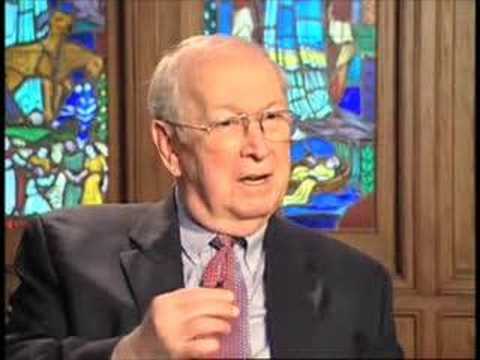
“Wait a minute!” – Tributes to Fred Craddock

Fred Craddock

Fred Craddock

Fred Craddock, one of America’s great preachers who died last Friday, was honored Sunday by CNN. Click HERE to see the CNN video and written tribute.

In this post on Views from the edge, two other preachers influenced by Fred Craddock share their stories.  The first came by email from McCormick Theological Seminary classmates and friend Harry Strong, recently retired, in Prescott, Arizona:

Fred may have been small in stature, but he was truly a homiletical giant! I still remember sitting with him and Barbara Brown Taylor in a preaching seminar back in 1985 at Kirkridge in eastern Pennsylvania. Fred was talking about the texts in Mark that made you want to interrupt Mark’s narrative and say, “Wait a minute … wait a minute! Mark, you can’t drop that sentence to the middle of the story and then move on!” One I especially remember was Mark 6:48  — “When (Jesus) saw that they were straining at the oars against an adverse wind, he came towards them early in the morning, walking on the sea. He intended to pass them by …” And Fred interjected: “Mark! Wait a minute! Wait a minute! ‘He saw them straining at oars … he came towards them, walking on the sea – and HE INTENDED TO PASS THEM BY???’  Where the heck was he GOING??!!

A second email arrived from Bob Young who once served as Pastor First Presbyterian Church in Enid, Oklahoma. Bob is no retired in Corsicana, Texas:

Fred Craddock lived a block away from me in Enid. I chaired the Fall Festival of Faith for the Council of Churches one year. Fred was our preacher. It was a treat to work with him. We met several times to prepare the liturgy for the services. He often preached at the chapel services of Phillips Theological Seminary where I was an adjunct. He ALWAYS — and I mean ALWAYS — left us as people who knew we had overheard the Gospel again. We laughed and cried and listened with wrapt attention. I hate to admit this, but one time, as he began to preach, I said to myself “I will not let him hook me today. I will just sit here and be stoic.” By the end of the sermon I had tears in my eyes. In my experience he simply could not be ignored. When he preached, barely visible behind a pulpit in that squeaky little voice, everyone listened. Amazing just amazing.

I was at the funeral he preached for a Phillips faculty member who had battled cancer for years. Still gives me goose bumps. A very fine, humble, amazingly gifted and faith-filled gentle man. I have been rereading Cherry Log Sermons and the book of his “parables.” Whew!

Quite independently of each other, Harry and Bob each ended his email by calling attention to Fred Craddock’s Cherry Log Sermons.

Thank you, Fred, for your long ministry of thoughtful humor and tears. “Well done, good and faithful servant….Enter into the joy of your Lord” [Matthew 25:23].

– Gordon C. Stewart, Chaska, MN, March 11, 2015.

The Church as Opium Den

Opium Den, Manila, Philippines

Opium Den, Manila, Philippines

In our previous post “Just a Bunch of Hypocrites” we promised further commentary on the American religious landscape. Randy Beckum’s sermon — posted earlier today as “American Sniper, Selma, and Jesus” — followed the courageous preaching examples of William Sloane Coffin and Martin Luther King, Jr. He turned the Chapel of MidAmerica Nazarene University into Annie Dillard’s kind of place where worshipers are learning they’d better bring their crash helmets to church.

Chaplain Beckum’s body language communicates that he knew his sermon wasn’t meeting the standard expectations of the worshipers. There are moments where his hands take the lapel of his sport coat to draw his coat like a shield around him against the arrows coming his way. “He will cover you with His pinions, And under His wings you may seek refuge; His faithfulness is a shield and bulwark. You will not be afraid of the terror by night, Or of the arrow that flies by day.” [Psalm 91:5]

So, one wonders, what might they, or other chapels and churches where a certain kind of American-Christian gospel, expect when they gather?

Imagine the Opium Den

The real world is hard. It’s disturbing, if you pay attention to all the bad news, and it’s often personally painful. Sorrowful. We need to be lifted up. Given a reprieve. Assured that all is as it should be, that “God’s in his heaven and all’s right with the world.”

In many evangelical Protestant churches the messages from the pulpit, the music, and the prayers put people into a Christian nationalist stupor. God, America, Christianity, and Capitalism are like strands of a ball of yarn, indivisibly entangled.

These are the forms of religion the exemplify Karl Marx description of religion as “the opiate of the people.” The opium dens are places folks went to smoke themselves into another world, the temporary illusory high manufactured by the human mind under the influence of opium. The Opium Den – the flights into another world – are escapes from real life that allow the systems and sources of human suffering to continue without conscious criticism and the actions necessary to overcome them.

Religious suffering is, at one and the same time, the expression of real suffering and a protest against real suffering. Religion is the sigh of the oppressed creature, the heart of a heartless world, and the soul of soulless conditions. It is the opium of the people.

The abolition of religion as the illusory happiness of the people is the demand for their real happiness. To call on them to give up their illusions about their condition is to call on them to give up a condition that requires illusions. The criticism of religion is, therefore, in embryo, the criticism of that vale of tears of which religion is the halo.

Criticism has plucked the imaginary flowers on the chain not in order that man shall continue to bear that chain without fantasy or consolation, but so that he shall throw off the chain and pluck the living flower. The criticism of religion disillusions man, so that he will think, act, and fashion his reality like a man who has discarded his illusions and regained his senses, so that he will move around himself as his own true Sun. Religion is only the illusory Sun which revolves around man as long as he does not revolve around himself.

It is, therefore, the task of history, once the other-world of truth has vanished, to establish the truth of this world. It is the immediate task of philosophy, which is in the service of history, to unmask self-estrangement in its unholy forms once the holy form of human self-estrangement has been unmasked. Thus, the criticism of Heaven turns into the criticism of Earth, the criticism of religion into the criticism of law, and the criticism of theology into the criticism of politics.

– Karl Marx, 1843, A Contribution to the Critique of Hegel’s Philosophy of Right

To the extent that a church serves as a relief valve for the suffering of its adherents and substitutes the amelioration of suffering through charitable programs for addressing the root causes of social suffering, it qualifies for Marx’s critique. Jesus and the Hebrew prophets didn’t fall for the opium den. They turned  to the criticism of Earth, of law, snd of politics…in the name of the God Who is beyond religion itself.  Like the psalmist,they rose above the fear of the terror of the night and the arrow that flies by day. They sound more like Marx than the sermons in the opium den, and they expect the same of their followers.

Just a bunch of hypocrites

“It is a poor sermon that gives no offense; that neither makes the hearer displeased with himself nor with the preacher.” – George Whitefield (1714-1770)

Many folks who remain in the churches have learned to live with poor sermons. Others have heard them and moved on.

William Sloane Coffin memorial photo

William Sloane Coffin memorial photo

One of those who had given up met one of America’s great preachers one day in a casual encounter.

“I don’t go to church any more.” he said, “They’re just a bunch of hypocrites!” To which William Sloane Coffin replied, “You bet. We are! And there’s always room for one more.”

William Sloan Coffin’s sermons always gave offense. As Chaplain at Yale, it was his pulpit that sparked and led the campus civil rights movement and protests against the Vietnam War. It was Coffin who presiding at the burning of draft cards. It was this offensive preacher who co-founded Clergy and Laity Concerned about Vietnam and served as leader of SANE/FREEZE, America’s largest movement for global nuclear disarmament. Coffin became Senior Minister of Riverside Church in NYC, one of the nation’s great preaching churches built for Harry Emerson Fosdick, the pacifist preacher thrown out of his previous congregation for sermons that status quo maintainers found offensive.

In the parlance of William Sloane Coffin, the well known statement that “the church is a hospital for sinners; not a museum for saints” [variously attributed to Augustine of Hippo, St. John Chrysostom, Abigail van Buren, and others] might be re-rendered “the church is a hospital for hypocrites; not a museum or a mutual congratulations society for the sinless.”

In a future post Views from the Edge will reflect on the American religious landscape in light of Whitefield’s observation and this retired preacher’s search for a new church home.

– Gordon C. Stewart, Chaska, MN, March 7, 2015.

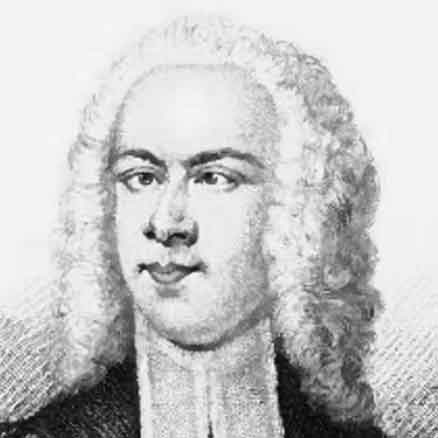
Slender, cross-eyed, and handsome

The Rev'd George Whitefield

The Rev’d George Whitefield

“It is a poor sermon that gives no offense; that neither makes the hearer displeased with himself nor with the preacher.” – George Whitefield (1714-1770)

A preacher’s search for a new church home following retirement is often an exercise in sin, a prolonged, prideful discontent with the state of the churches one visits.

George Whitefield seems to have spent his whole ministry offending and displeasing, although the huge crowds he drew outside the church walls lead me question how offensive or displeasing his sermons were.

An honest word from a real human being 

Perhaps the photograph of this heralded Anglican priest, “the Father of the Great Awakening,” and this PBS documentary description of him illuminate why the preacher who offended and made his hearers displeased with themselves drew the crowds.

“Slender, cross-eyed and handsome, George Whitefield was an Anglican priest and powerful orator with charismatic appeal.”

While others were reading their sermons from prepared manuscripts, George knew that good preaching is different from a public reading at the book store. He memorized his sermons or spoke extemporaneously with gestures considered too dramatic by the more stoic New England preachers. But one suspects there may have been something more to his success. Perhaps his eyes communicated a real human being, someone unable to hide behind being merely slender or handsome, a man whom frail and vulnerable human beings didn’t mind hearing an honest word that offended and or made them displeased with their own posturing games of pretense.

In honor of George Whitefield, a recently retired pretentious Presbyterian preacher worshiped at a nearby Episcopal Church. The word from the pulpit was deliciously real. He didn’t commit the preacher’s sin. He’s going back next Sunday.

The Man who Knew

He knows who he is! He is not ignorant; he’s smart. He knows the visiting rabbi is both “the Holy One of God” and the one who has “come to destroy us”.

It is because he knows this that he ends up shrieking. He knows better than those around him, all the others who have come at sundown to observe the Friday Shabbat and Torah study.

He takes his customary place among his neighbors in the Capernaum synogogue. He does not expect much to happen. Everyone, including he, knows that he’s a little strange. Off balance, as the kinder of them say.  Not the norm. Both they and he know his place. None of them yet knows Annie Dillard’s advice that worshipers “should wear crash helmets. Ushers should issue life preservers and signal flares; they should lash us to our pews. For the sleeping god may wake some day and take offense, or the waking god may draw us out to where we can never return.” [Teaching a Stone to Talk, Harper and Row, 1982, quoted here from Wikiquote.]

They have no need for crash helmets, life preservers, or signal flares. Like the ones who are better balanced, he likes his safety. He is safe in his customary place among the customary people expecting a customary teaching from a customary teacher who teaches like a copy-editor (a scribe). He expects to leave the same way he has come: bored and boring in the daily-ness of it all.

They look at him. He looks at them. They all yawn.  Until the guest rabbi takes his seat to teach and says nothing. Jesus just looks at them, reading their faces, reading their minds, looking into their hearts. They are uncomfortable with the long silence. He is reading them like a book he’s read too many times.

When finally the rabbi speaks, he astounds them. He reads the Torah and the prophets as living texts, not history. He is alive and expectant. He is not bored or boring. He teaches with authority. He commands the attention of everyone in the room. They want him, but do not want him. They haven’t brought crash helmets. They’ve come for safety.

He catches the eye of the man who’s a little off balance whose frequent uninvited outbursts   long ago placed him in the back row of the assigned seating.  Although the rabbi’s eyes are working the room from left to right and back again, seeing all the faces there, it is as though he is staring at him alone. They are all a bit on edge now, drawn to his voice and the content of his teaching, his unparalleled authority, but they are also becoming nervous that he is messing with them in ways they had not expected.

The man in the back senses this. He knows this, and he begins to twitch and make strange sounds. He is agitated, disturbed, out of his comfort zone, like everyone else.

His face twitching with the familiar tic, he struggles to his feet from his back row seat, shoving from his shoulders the hands of the ushers stationed on either side of him to prevent the man with Tourettes Syndrome from disturbing them and making a fool of himself.

He points at the rabbi and shrieks at him: “What have you to do with us, Jesus of Nazareth? Have you come to destroy us? I know who you are, the Holy One of God.”

Jesus moves from the center to the back row. He tells the body guards to leave him alone. He stands eye-to-eye with him. “Be silent,” he says, “Come out of him” as though speaking not to the man himself but to others who torment him from the inside.

The whole synagogue is on their feet watching. They know that the Tourettes man with the tic and uncontrollable speech has spoken for all of the normal ones as well. “Have you come to destroy us?”

The man screams and convulses, but it is not the man who is convulsing; it is the hostage-takers whose powers are being broken that are convulsing: the fear of losing one’s assigned place, the customary despair and despairing comfort that robs him and all of them of the joy of the extraordinary in ordinary life.

Perhaps the story of “the man with the evil spirit” comes so early in the Gospel of Mark because it is the story of us all. The Holy One of God does come to destroy us as well as heal us. The next time you go to the synagogue for Sabbath rest or to church on a Sunday morning, take a crash helmet and expect something great to happen!

Click Gospel of Mark 1:21-28 for the story on which this sermonic reflection is based.

– Gordon C. Stewart, St. Augustine, FL, February 2, 2015.


Preaching to Myself

The longer I live, the less I know. The less I have lived, the more I think I know.

“Knowledge puffs up; but love builds up.”(I Cor. 8:1b)

These words seem strange to those of us who value education. But peeking into the internal squabble within the First Century CE Corinthian church (First Corinthians 8:1-13) may also give us an unexpected peek into ourselves in 2015.

There is a tension between knowledge and love. The better educated among us see the relation between knowledge and love as complimentary. Love and knowledge grow together into ever expanding circles of freedom, like snakes shedding their skins and lobsters shedding their shells for bigger skins and shells that can hold their more mature selves.

Yet we are sometimes scornful of the less educated, the concrete thinkers, the legalists who are certain about what little knowledge they have. We are quick to join Paul’s opinion that “Anyone who claims to know something does not yet have the necessary knowledge ….” (I Corinthians 8:2). A little knowledge is a very dangerous thing. True education leads not only to increasing knowledge but to increasing awareness of one’s own vast ignorance.

We think of Copernicus and Galileo who challenged the prevailing knowledge, and those who judged them for their unbelief, a new “knowledge” that has changed the human view of our place in a vast, expanding universe. Or we think of Darwin and the Scopes Trial – the showdown between the knowledge of evolution and the ignorance of the creationists. We think of the difference between enlightened biblical scholarship that interprets Scripture through the eyes of love’s expansion and the biblical inerrantists who insist that the Bible be taken literally, such that the book is closed on matters of human sexuality.

“‘All of us possess knowledge.’ Knowledge puffs up; but love builds up.” 

Paul makes a masterful move here in the chess game of the knowers. He says that all the “knowers” know little, and that those who know more – the stronger in faith – are in greater danger than those who know less – the weaker in faith.

He is writing to the strong, the ones who are more advanced in the knowledge of the liberty to which Christ has set them free. “But take care that this liberty of yours does not somehow become a stumbling block to the weak.” Knowledge itself puts us on trial, the trial of humility, the trial of love. Paul calls for the stronger to be humble lest what they assume to know become the new idolatry that places Christ’s weaker followers on the cross of educated privilege.

The Christian claim of faith is not our knowledge, no matter how great or small. The claim of the disciples of Jesus is God’s knowledge of us. It is God’s knowing us that is the heart of faith for followers of the crucified, risen Christ. It is God’s knowledge -the wisdom of love – into which we are baptized as novices. One might even say, we die to every claim but love.

We are saved by grace through faith, not by works. For the likes of me and my progressive friends and colleagues in the Presbyterian Church (USA) and for members of the church who are choosing to leave the PC(USA) because of what they regard as excessive liberty, knowledge sometimes becomes the new “works” that substitute for justification by grace.

To be justified (i.e. made “right” with God) by grace through faith, as Paul understood it, represents a 180 degree repentance, a reversal of the direction and flow of the human-divine encounter from us to God to from God to us. Paul later speaks of the practical implications of love with respect to all claims of knowledge:

“And if I ….understand all mysteries and all knowledge, and if I have all faith, so as to remove mountains, but have not love, I am nothing.” (I. Co. 13:2)

“Love is patient and kind; love does not envy or boast; it his not arrogant or rude. It does not insist on its own way; it is not irritable or resentful; it does not rejoice at wrongdoing, but rejoices with the truth. Love bears all things, believes all things, hopes all things, endures all things.” (I Corinthians 4-7)

I am among those who remain puzzled by what to do. It’s far from simple. Paul’s description of the Christ-like life is centered, but it’s not simple. The patience and kindness come hard when faced with what I am sure are the weaker, more homophobic folks whose view of Scripture supports their opposition to the full inclusion of LGBTQ members. I boast of a greater knowledge based on love. In the name of love, I become arrogant. I am rude. I have a short fuse. I want to separate myself and the more enlightened from the less enlightened, the weaker, as Paul might say. In their presence I quickly become irritable, resentful of their presence in the Body of Christ. I do not bear all things. I do not believe all things, hope all things, endure all things. I do not believe that if I understand all mysteries and have all knowledge but have not love, I am nothing.

Though Paul was writing his letter to the tumultuous church at Corinth in the middle of the First Century CE, his words still speak. They arrive unexpectedly like a surgeon’s scalpel removing a cancer for the sake of the Body of Christ. The gospel cuts with a knife, but it is always for the sake of healing, a dying to ego for the sake of the resurrected Body of Christ.

Gracious Lord, by your healing mercy, keep me in the knowledge of Your love.

– Gordon C. Stewart, Sunday, Feb. 1, 2015.

The Angel Gabriel and Mary

A sermonic reflection for the Fourth Sunday of Advent, Dec. 21, 2014, Gordon C. Stewart.

Text: Luke 1:26-38

The Annunciation {El Greco]

The Annunciation {El Greco]

Mary has every reason to fear the appearance of Gabriel. Every demure depiction to the contrary, the Angel Gabriel’s “annunciation” to Mary is no private affair. It’s a public matter of the first order. Gabriel  is the archangel commissioned to destroy the offspring of the rebellious angels and human women. (see below). Mary shrinks back.

“Do not be afraid,” says Gabriel.

Why should she not be afraid? This is not just any angel.

This is the Angel Gabriel, whose trumpet will summon the people, sweep away the occupation forces that substitute their rule for the Kingdom of love and delight. This is an angel of revolution. The Archangel of conflict who inspires both hope and fear.

”Do not be afraid!”

El Greco’s painting of the Annunciation illustrates the problem of textual interpretation.
Gabriel’s appearance is not frightening. It’s very…how shall we say? Feminine. Even to the point of appearing perhaps pregnant himself. The great masters did not paint an angel messenger as male, even when his name is Gabriel or Michael, the only two angels named in Holy Scripture.

Gabriel in Hebrew means “God is my Warrior”. Gabriel is a warrior angel, announcing to Mary that she too is to become a warrior, a mother whose birth-giving will lead to conflict with the Empire and the religious authorities who collaborate with it.

As described by New Testament scholar Carol Newsom, any annunciation by Gabriel inspires fear.

In the Book of Daniel, Gabriel is preeminently an angel of eschatological revelation. He is sent to Daniel to explain a vision of ‘the time appointed for the end’ (Dan. 8:15-26)…. Gabriel’s functions are more varied in I Enoch. In the Book of the Watchers (I Enoch 1- 36) he is listed as ‘the one of the holy angels who is in charge of paradise and the dragons and the cherubim (20:2). He is commissioned to destroy the offspring of the rebellious angels and human women (10:9-10)….

In the War Scrolls from Qumran (IQM) the names of 4 archangels, Michael, Gabriel, Sariel, and Raphael, are written on the shields of the 4 towers of the army. The positioning of the 4 archangels around the throne of God or other sacred space has a long subsequent history in both Jewish and Christian tradition…. [Carol Newsom, “Gabriel.” The Anchor Bible Dictionary, Vol. 2]

So why does Gabriel look the way he does in the art museums and literature of Christian interpretation? Why does the original Gabriel look so benign? And why does Mary look so calm, perhaps even demure, as in El Greco’s Annunciation?

The Jesus story has been neutered. The End Time has been re-interpreted by the Constantinian Church as a paradise beyond time, a state of afterlife, not this life. In no way political. In no way economic. In no way conflictual. Peaceful. Serene. Calm. Quiet Passive. “Let it be to me according to your word.” Never disquieting. Never disrupting. Never revolutionary.

Gabriel has been transformed, neutered, emasculated, rendered harmless by the Constantine religion whose adherents can no longer see the conflict between Christ, or his mother, Mary, and his father, Joseph, with the systems of unbridled greed and poverty under which they live. The Gabriel spoken of in most pulpits is not the Angel Gabriel that came to Mary.

We’ve turned Gabriel into our own image. But though we may tame him in our hearts and minds, our paintings and our sermons, we can erase neither the need to be afraid nor his invitation to fear not. Gabriel’s finger points at us, asking whether we will rally to the trumpet sound, the sound of his coming. We can repaint the young girl Mary as an icon of passive obedience and tranquility. But it will be a different Mary than the courageous one painted by the Gospel of Luke.

Luke and his Mary know that “Do not be afraid!” makes no sense unless there really is something to fear, and that we cannot overcome fear unless we hear Gabriel’s word of favor, “Hail, O favored one! The LORD is with you. Blessed are you among women…You shall conceive….”Do not be afraid…. For with God nothing will be impossible.”

“Then Mary said, ‘Here am I, the servant of the Lord; let it be to me according to your word.’

“Then the angel departed from her” for parts unknown to make his visits down through the ages, making the impossible possible.  Word has it he appeared last week in Washington, D.C. and Havana, Cuba to turn the impossible into the possible, a new Order being born from the old.

If you listen with faith, you might hear him. If you look, you will see him.


Blogging RULE #1:

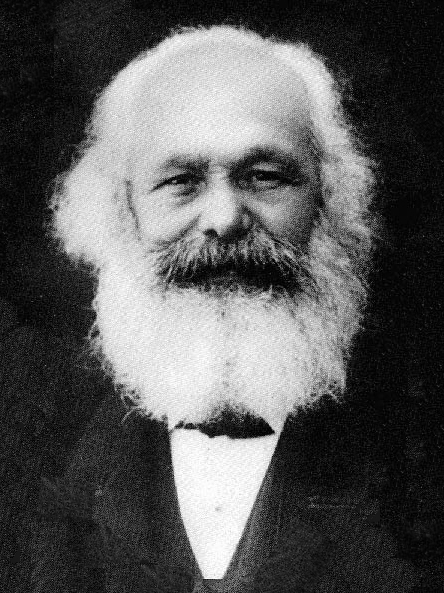
Karl Marx

Karl Marx

Never, ever, ever mention the name Marx! Americans hate that. Especially in a sermon. [See yesterdays’ “In the Footsteps of Mary“].

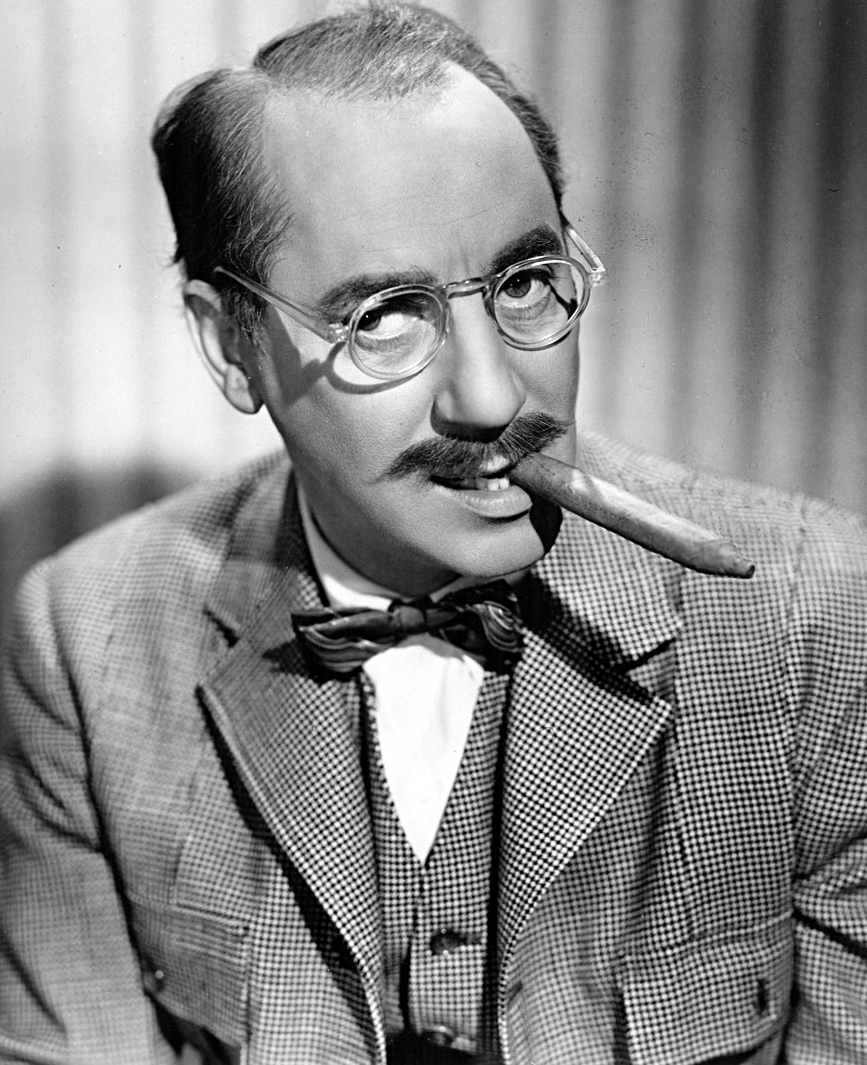
Unless it’s Groucho.

“All people are born alike – except Republicans and Democrats.” – Groucho Marx

Groucho Marx

Groucho Marx

In the Footsteps of Mary

A sermonic reflection on America today, Dec. 14, 2014.

Today’s texts speak indirectly to the national outrage over the deaths in Ferguson, Cleveland, and Staten Island and to the larger context of the economic Law – Capitalism – under which they’ve taken place.

The Spirit falls upon Isaiah

…to provide for those who mourn in Zion– to give them a garland instead of ashes, the oil of gladness instead of mourning, the mantle of praise instead of a faint spirit….They shall build up the ancient ruins, they shall raise up the former devastations; they shall repair the ruined cities, the devastations of many generations. (Is. 61:2-4)

I am in mourning. Even in the midst of Zion. Though I already taste the fruit of the Kingdom of God which is yet to come in fullness, I am in mourning. In ashes. Faint in spirit. Living among the ancient ruins, the former devastations, the ruined cities, the devastations brought on by many generations including my own.

There is anger out there. Lots of it. There are calls for justice out there. There are “die-ins” on Interstate Highways blocking traffic, interrupting business as usual. And it’s good. It’s right. It’s an American thing to do.

But, like most movements, this one will pass in a few weeks or maybe months. It will go the way of Occupy Wall Street.

For while protesters were were being hand-cuffed for “die-ins”, Congress was taking the hand-cuffs off Wall Street and the “too-big-to-fail” banks. The Dodd-Frank restrictions enacted following the 2008 meltdown were being quietly removed by hidden-away paragraphs in the down-to-the-wire spending bill. There will be no more hand-cuffs. No more probation. No more accountability to the American people. The legal limits on dealing in the “derivatives” market were being deleted on Capitol Hill, and, perhaps worse, the Dodd-Frank provision prohibiting a second government bailout was replaced by a commitment to bail them out again.

While on Capitol Hill the Law was being re-written to deliver automatic bail to Wall Street, individuals protesting law enforcement tyranny on the streets were hauled off to jail hoping a friend would bail them out.

Only within the larger economic puzzle do the various pieces begin to make sense.

For all of America’s national wealth, we are among the poorest of nations. We are a classist society bordering on a caste society. Class has always been the issue in America. Race and class have always gone hand-in-hand, but classism has other hands as well.

The wider context surrounding the law enforcement racial divide is the classism embedded in a global capitalist economic structure.

We are living still amid the “ancient” devastations brought on by rich white slave traders who captured Africans like animals for a zoo to work their plantations for profit. Racism is a class issue, an ownership issue, an issue of economic privilege, before it is anything else. The coupling of race and class is as clear now as it ever was, despite the Civil Rights Movement and the election of America’s first African American president.

Capitalism is the issue. The accumulation of wealth. The increasing concentration of wealth. The hoarding of wealth. Wealth disparity, power disparity, racial disparity, electoral disparity, legal disparity; what’s enforced and what’s not; who’s in handcuffs and who’s not; who’s bailed out and who’s not; who’s charged and who isn’t; who’s in prison for what and who’s not; who’s on probation or parole and who’s not; who’s elected to Congress and who’s not; who owns what and who doesn’t; who can pay for an election and who can’t – are all about class, the control of the means of production and capital and the expropriation of cheap labor and natural resources that can’t talk back.

Enter now into this world the psalmist of today’s readings who dared to dream of a great reversal of fortunes:

When the LORD restored the fortunes of Zion, we were like those who dream.

Then our mouth was filled with laughter, and our tongue with shouts of joy; then it was said among the nations, “The LORD has done great things for them.”

“The LORD has done great things for us, and we rejoiced.

Restore our fortunes, O LORD, like the watercourses in the Negeb.

May those who sow in tears reap with shouts of joy.

Those who go out weeping, bearing the seed for sowing, shall come home with shouts of joy, carrying their sheaves.”[Psalm 126:1-6]

The tears of weeping bear the seeds for sowing and reaping of the sheaves of the new economic order. It is no accident that the psalmist mixes the metaphors of weeping, seeds, sowing, and shouts of joy, and sheaves. It is, as it were, a vision for the Earth itself. Honest weeping is the beginning – the sowing – that leads to earthly transformation and shouts of joy.

Mary, the newly pregnant peasant girl, becomes the representative, singing her song amid the ancient devastations, announcing the hope that will engage the powers of class “to provide for those who mourn” [Is.61:1]:

My soul magnifies the Lord, and my spirit rejoices in God my Savior, for he has looked with favor on the lowliness of his servant. Surely, from now on all generations will call me blessed; for the Mighty One has done great things for me, and holy is his name. His mercy is for those who fear him from generation to generation. He has shown strength with his arm; he has scattered the proud in the thoughts of their hearts. He has brought down the powerful from their thrones, and lifted up the lowly; he has filled the hungry with good things, and sent the rich away empty. He has helped his servant Israel, in remembrance of his mercy, according to the promise he made to our ancestors, to Abraham and to his descendants forever.” [Luke 1:46b-55]

Put differently by Philip Clayton, Ingraham Professor of Theology at Claremont School of Theology, we are living

“…at the dawn of a new form of human civilization. Individuals, societies, and nations are now deciding whether to keep fighting to preserve the dying order, or whether to take leadership in building the new. It’s not a matter of waiting for more data; we already know what the old practices are doing to our planet, and we know what it takes to build a global society that is socially, economically, and environmentally sustainable. The ones who make the greatest difference are those who work and live with wisdom, with diplomacy, and with restraint, placing the good of the whole planet first.” [Philip Clayton and Justin Heinzekehr, Organic Marxism: An Alternative to Capitalism and Ecological Catastrophe, Process Century Press, 2014]

I’m still mourning. But I feel better. I know that the mourning is a holy thing, the hint of a coming “garland instead of ashes, the oil of gladness instead of mourning, the mantle of praise instead of a faint spirit” and so, I write. I pray. I sing. I mourn to the tune of Isaiah. I march to the dream of the Psalmist. I walk in the footsteps of Mary.

– Rev. Gordon C. Stewart, Honorably Retired, Views from the Edge, Third Sunday of Advent, Dec. 14, 2014.