
Wilderness – Carl Sandburg, Jesus, and Us

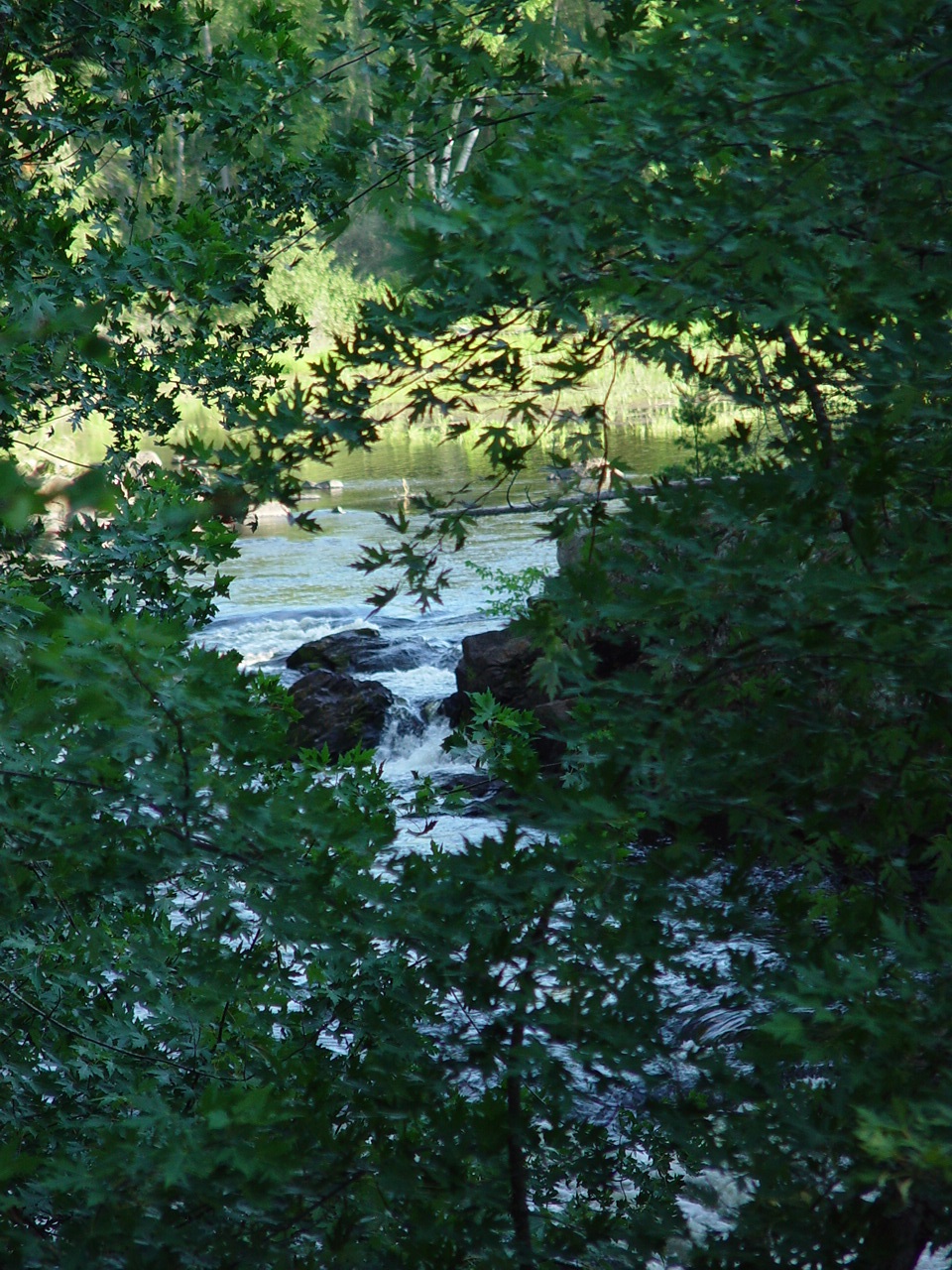
Boundary Waters Canoe Areas Wilderness, Minnesota

Boundary Waters Canoe Area Wilderness, Minnesota

Once upon a time a pompous nobleman paid a call to the English Embassy in St. Petersburg, Russia. He walked into the office and demanded to see the ambassador immediately. “Pray, take a chair,” said the young attaché, “the ambassador will be here soon.”

The visitor took exception to the off-hand way he had been treated. “Young man, do you know who I am?” he demanded, and recited a list of his many titles and appointments.

The lowly attaché listened, paused and said, “Well then take two chairs.”

Pride, vanity, greed, self-deception, and illusions of grandiosity are part of the human condition.

We are creatures of the wilderness, wanderers and sojourners in time who have here no lasting city to dwell in. And so, as in the legend of the Tower of Babel in The Book of Genesis (chapter 11), we (humankind) come upon the Plain of Shinar . . . or some other version of it. . . and settle down to rid ourselves of anxiety . . . and we settle there as though we could build something permanent that would be a fortress against the uncertainties of the wilderness and the knowledge of ultimate vulnerability and ultimate dependence. We build our own societies and towers of Babel.

Yet there is something about us that still loves a wilderness. Something in us that knows that refusing the nomadic wilderness – “and as they journeyed, they came upon the Plain of Shinar, and settled there” – is fraught with greater danger and social peril. Something in us knows better than to settle down on the Plain of Shinar to build something impervious to the dangers of the wilderness and time. Something in us knows that the brick and mortar will crumble, that the projects of pride, vanity, and greed will fall of their own weight, and that the high towers we build with the little boxes at the top that presume to house and control Ultimate Reality (G-d) are little more than signs of a vast illusion, the vain act of species grandiosity. For in the Hebrew tale of the tower of Babel with its “top in the heavens,” the joke’s on us. The narrator speaks truth with humor: God has to come down to see this high tower.

Every society and culture has its own version of the city and the tower of Babel. Equally so, in every society there is at least the memory of the wilderness, a sense of call to recover our deeper selves as mortals whose destiny is only found by traveling beyond the politics and religiosity of pride, vanity, greed, self-deception, and grandiose illusions.

Perhaps that is why John the Baptist heads out to the wilderness – “the voice of one crying in the wilderness” – away from delusions and distractions of the city of Babel. Perhaps that is also why, as scripture tells it, the masses also went out to the wilderness and the Jordan River to go under the muddy Jordan waters to rise to the hope of a fresh beginning on the other side of the formative influences of Babel-ing nonsense.

After the authorities imprison John, Jesus asks the crowds what had drawn them to John in the wilderness. “What did you go out to see? A reed shaken by the wind? A man clothed in soft raiment? No. Those who wear soft clothing live in kings’ houses. What then, did you go out to see?”

Jesus begins his ministry in the wilderness. He partakes of John’s baptism, and when he did, the Spirit grasped him and called him further into the wilderness, “drove him into the wilderness” – away and apart from all distractions and illusion – back to the place where humankind lives before it “settles” to build the political-economic-religious tower, the impervious fortress and monuments to itself in the Plain of Shinar.

Those who would learn from the Genesis legend and those who wish to follow Jesus are called into the wilderness to restart the long spiritual journey that stopped too early.
For the fact we deny is that underneath all our steel, glass, and technology, we are still animals – mortals subject to the most primitive yearnings, vulnerable creatures who possess nothing.

In his poem “The Wilderness” American poet laureate Carl Sandberg realized a great truth long before it came into vogue.

There is a wolf in me . . . fangs pointed for tearing gashes . . . a red tongue for raw meat . . . and the hot lapping of blood—I keep this wolf because the wilderness gave it to me and the wilderness will not let it go.

There is a fox in me . . . a silver-gray fox . . . I sniff and guess . . . I pick things out of the wind and air . . . I nose in the dark night and take sleepers and eat them and hide the feathers . . . I circle and loop and double-cross.

There is a hog in me . . . a snout and a belly . . . a machinery for eating and grunting . . . a machinery for sleeping satisfied in the sun—I got this too from the wilderness and the wilderness will not let it go.

There is a fish in me . . . I know I came from salt-blue water-gates . . . I scurried with shoals of herring . . . I blew waterspouts with porpoises . . . before land was . . . before the water went down . . . before Noah . . . before the first chapter of Genesis.

There is a baboon in me . . . clambering-clawed . . . dog-faced . . . yawping a galoot’s hunger . . . hairy under the armpits . . . here are the hawk-eyed hankering men . . . here are the blonde and blue-eyed women . . . here they hide curled asleep waiting . . . ready to snarl and kill . . . ready to sing and give milk . . . waiting—I keep the baboon because the wilderness says so.

There is an eagle in me and a mockingbird . . . and the eagle flies among the Rocky Mountains of my dreams and fights among the Sierra crags of what I want . . . and the mockingbird warbles in the early forenoon before the dew is gone, warbles in the underbrush of my Chattanoogas of hope, gushes over the blue Ozark foothills of my wishes—And I got the eagle and the mockingbird from the wilderness.

O, I got a zoo, I got a menagerie, inside my ribs, under my bony head, under my red-valve heart—and I got something else: it is a man-child heart, a woman-child heart: it is a father and mother and lover: it came from God-Knows-Where: it is going to God-Knows-Where—For I am the keeper of the zoo: I say yes and no: I sing and kill and work: I am a pal of the world: I came from the wilderness.

Jesus of Nazareth, whom Christians call The Christ, walked in our wilderness to live authentically and faithfully as a human being among all the beasts of the menagerie that were part of his nature and are part of our nature. Immediately after he had gone down into the waters to die to the worlds that would fool and twist him, and just as quickly as the voice from heaven declared him “my beloved Son in whom I take pleasure,” the spirit immediately drove him into the wilderness. As the Gospel of Mark narrates the story, he was there for forty days among the wild beasts, and angels ministered to him.

By God’s grace and power, may it be so also with us.

Sermon preached by Gordon C. Stewart, Shepherd of the Hill Presbyterian Church in Chaska, MN.

Of Falls, Bungalows, Castles, and Fawns

This sermon was preached at Shepherd of the Hill Presbyterian Church in Chaska May 12, 2013 following a trip to Cambria, CA that began with Kay breaking her ankle on the way down the stairs as we were leaving for the airport. The rest is story of William Randolph Hearst desire for a bungalow that ended up as a castle, and an encounter with Mr. Excellent. The fawn story never made it into the sermon because of a forgetful preacher.

The story of the fawn is this. The morning Kay and I were preparing to leave Cambria for the trip home, I noticed a deer in the backyard pacing. There was a fawn lying on the lawn. Examining the fawn, it appeared to be alive, but was not moving, injured perhaps. The next time I looked, its eyes were closed. After examining it, I called the owner of the home we had rented to suggest that she call animal rescue. I thought there was a dead fawn in her back yard.

When we arrived home in Minnesota there was a voicemail that Animal Rescue had come and taken away the fawn only to realize that it was very much alive. It had just been born that morning. Point of the story for a Mother’s Day sermon: God is like that mother, staying nearby waiting for her newborn baby to get up.

The Way to Love Jesus

A sermon three years after Deep Water Horizon on love, freedom, and caring for each other, the oysters and the crabs in the Gulf of Mexico.

The Deeper Silence of Boston

Video

This sermon was preached at Shepherd of the Hill Presbyterian Church in Chaska, MN the Sunday following the bombings at the finish line of the Boston Marathon. It draws on Red Sox player David Ortiz’s nationally televised statement “This is our (expletive) city!”; Richard Rohr’s “Finding God in the Depths of Silence” (Sojourners, March, 2013), and the Epistle of James’ insight that the “tongue” (i.e., speech) is “a restless evil” ready to curse others even while it blesses “the God and Father of us all.” “Brothers and sisters,” writes James, “this should not be so!”

The sermon calls for engagement in the inner silence that moves down into the undivided reality that words so easily and quickly divide and destroy. It ends with the Pie Jesu from Gabriel Faure’s Requiem and the invitation “Be still, and know that I am God.”

A prescription for spiritual health

Video

A sermon on forgiveness as releasing or letting go preached at Shepherd of the Hill Presbyterian Church in Chaska, MN April 7, 2013. The sermon is indebted to Professor Robert Kegan, neo-Piagetian psychologist at Harvard University and Professor Mona Gustafson Affinito, Southern Connecticut State University Professor Emerita and author of Forgiving One Page at a Time and other books on the theology and psychology of forgiveness.

Sojourners publishes Pleasantville Sermon

Yesterday Sojourners’ blog God’s Politics: a blog with Jim Wallis and friends published “The Garden Outside Pleasantville.” Thanks to Jim Wallis and the Sojourners staff for republishing.

Click HERE for the piece on Sojourners.

The Garden Outside Pleasantville

This is the manuscript of the Easter sermon yesterday at Shepherd of the Hill Presbyterian Church in Chaska, MN. The sermon was an exploration into the contemporary meaning of the text: The Gospel According to John 20:1-18.

In some way or other, I think it’s safe to say that we all have a kind of nostalgia for the innocence and purity of the Garden of Eden…before what we call “the fall.” We have a sense that we are not supposed to be outside the gates of the Garden…out here. At the expulsion of the man and the woman in the story from Genesis, .the cherubim (angels) are posted at the gate to be sure that those who have been expelled cannot get back in. The cherubim and a twirling, flaming sword keep Adam, Eve – you, me, all of us – on this side of the gate, outside the Garden of Eden.

Well it’s a story, of course, but isn’t it our story? Nostalgic for a world where nothing ever goes wrong But illness comes, a marriage goes bad, a relationship with someone you love falls apart just when you think it’s to lead to something more permanent, you lose a job, you suffer depression, you suffer from an illness, you’re left alone in grief over the loss of a loved one. Or you yourself are dying, and there are wars and rumors of wars. We watch the children and wish that we could protect them, but we can’t, even though we are parents and grandchildren, aunts and uncles. Out here…outside the Garden…it’s rough sometimes.

In this morning’s Gospel (John 20:1-18), the Risen Christ’s appearance to Mary takes place in a garden The garden is outside the empty tomb. Until Mary turns and sees the One she supposes to be “the gardener”, the text has said nothing about Jesus being laid to rest in a garden. It says only that Jesus was laid in a tomb in which no one had yet been buried.

Mary has already been there by herself in the early morning darkness. When she sees, to her great horror, that the tomb is empty, she runs to tell “the other disciple” and Peter.

What do they do? Well…these are guys, you know. They race each other to the tomb.

We don’t ever compete, do we, guys!? And Peter loses! The other disciple gets there first, and then Peter follows, huffing and puffing. Peter, bold man that he is, goes in. Peter in this story is like detective Joe Friday in the old Dragnet series: “Just the facts, Ma’am; just the facts!” He sees the facts. The burial cloths are lying there as though the body had evaporated out of them, but the napkin that had covered Jesus’ face, was neatly rolled up in a place by itself. Then the other disciple goes in, sees the same thing. He believes…and then…they just…go home.

Well…what happened to Mary? They leave Mary there? By herself? And it is Mary who gets it – because Mary continues to stand there, weeping. She’s feeling her grief, feeling her sorrow, and it is as she is feeling her sorrow and her grief. It is as she goes down into the horror of the cross, the horror of having stood helplessly at the foot of the cross that she experiences the Risen Christ.

It is there that there is suddenly a garden, a new garden of Paradise.

I don’t know how it is with you, but sometimes I want to live in a perfect world. I want everything to be in its place. I don’t want any problems. I don’t want to feel anything. Someone I love much once said, “I hate feelings!” This is about feelings, brothers and sisters.
There is a certain kind of Christianity that says “No, no, no!” to every “negative” feeling. It wants everything to be happy. Like Steve Martin dancing around with happy feet. All we want is happy feet. But you don’t get happy unless you know sadness. You don’t get to laughter unless you know what it is to cry real tears of sorrow.
—————————————————-

This distorted kind of Christianity, this preference for the perfect world without any negative feelings or experience is humorously by the film Pleasantville.

David, who is played by Toby McGuire, and his sister Jennifer (Reese Witherspoon) lead very different high-school social lives. Jennifer is popular and shallow. David is introverted, keeps to himself, and spends most of his time watching television. David’s favorite show is Pleasantville, a nostalgic throw-back black and white television series about the idyllic Parker family in the late 1950s. The little imaginary town of Pleasantville is, for David, a kind of Garden of Eden in which nothing ever goes wrong. Everyone is nice. No one ever feels pain. They are just, well… so nice.

One evening David and Jennifer fight over the TV. Jennifer wants a concert. David wants to watch Pleasantville. As they fight, the remote control breaks.

A mysterious TV repairman, played by Don Knotts, shows up, quizzes David about Pleasantville, and replaces the remote control with a strange new one. When the TV repairman leave, David and Jennifer resume their fighting, and are sucked through the television set into the black white gray, colorless world of the Parkers’ Pleasantville living room.

They are no longer David and Jennifer. They must pretend to be Bud and Mary Sue Parker, the son and daughter of the Parker family of Pleasantville.

David and Jennifer witness the wholesome nature of the town, such as a group of firemen rescuing a cat from a tree. David has to remind Jennifer that they must stay in character and not disrupt the lives of the town’s citizens, who don’t even notice the difference between the show’s original characters of Bud and Mary Sue, and their role replacements, David and Jennifer. In keeping with the show’s plot, Jennifer dates a boy from high school, but when she has sex with him, a concept unknown to the boy and to everyone else in town, the spell of colorless innocence is broken.

Slowly, Pleasantville begins to change from black and white and grayness to color. Flowers and the faces of people who have experienced bursts of emotion begin to have some color.

David becomes friends with Mr. Johnson, who owns Pleasantville’s cheeseburger and soda fountain. He introduces Mr. Johnson to colorful modern art via a book from the library, sparking in him an interest in painting. Mr. Johnson and Betty Parker fall in love, causing her to leave home, throwing George Parker, Bud and Mary Sue’s father, into confusion. The only people who remain unchanged are the city fathers, led by Big Bob, the mayor who sees the changes eating away at the values of Pleasantville. The city fathers resolve to do something about their increasingly independent wives and their rebellious children.

As the townsfolk become more colorful, a ban on “colored” people is instituted in public places. A riot begins when a nude painting of Betty, painted by Mr. Johnson, appears on the window of Mr. Johnson’s soda fountain. The soda fountain is destroyed, books are burned, and people who are “colored” are harassed in the street. As a reaction, the city fathers announce new rules preventing people from visiting the library, playing loud music, or using paint other than black, white, or gray.

When David and Mr. Johnson protest by painting a colorful mural on a brick wall, depicting their world, they are arrested. Brought to trial in front of the town, David and Mr. Johnson defend their actions, arousing enough anger and indignation in Big Bob, the mayor, that Big Bob becomes colored as well.

Having seen Pleasantville change irrevocably, Jennifer stays to finish her education, but David finally manages to return to the real world by use of his magical remote control.
———————————————————-

Easter is about a full color world. FULL of color. Full of emotion. Ups and downs. It has nothing to do with this imaginary, utopian Garden of Eden that never was and never will be, in which we no longer have to feel much of anything. “I hate feelings!”

There is no return to the Garden in which the man and the woman live in unconscious innocence, no way back into the black and white and gray world of the Garden of Eden from which humankind is expelled.

But this morning we see a colorful woman. She is a colorful woman, this Mary of Magdala, who stays with Jesus all the way through.

According to one tradition in the Church, this Mary was a prostitute. Mary Magdalene comes to Jesus, stays by Jesus, is healed by Jesus. Now she is in deep grief on this morning when, so far as she knows, her Lord was still buried in that tomb following a Roman crucifixion, dead and gone.

It is this Mary who goes out early in the morning, “while it was still dark.” Women don’t go out in the night; they don’t go out unescorted in the dark. But Mary does! And when the other disciple and Peter, the two heroes to whom she had gone for help, abandon her, she is there by herself.

“Why are you weeping?” ask the two angels, one where Jesus’ feet and been and one where his head had been. The cherubim!

These cherubim, who guard the way back into the lost paradise of the Garden of Eden, are there in the tomb. “Why are you weeping?”

Mary’s voice breaks into a stammering primal cry of horror. “They have taken away my Lord, and I do not know where they have laid him! Tell me where he is! Let me hold him!”

She turns around. The gardener greets her. The Risen Christ greets her, but she does know that it is Jesus. She supposes him to “the gardener”. She is in a garden where only the gardener would be early in the morning. The One she assumes to be the gardener greets her. She doesn’t recognize him. He asks the same question, “Woman, why are you weeping? Whom do you seek?” Mary gives the same answer.

Then he calls her name. “Mary!”

Rabboni (Teacher)!!! It’s YOU!!! Is it really YOU?”

How about you? Why are you weeping? ask the Cherubim and Jesus.

“Mary, Mary, Mary!’ Her name is called. Your name is called, the name of the real you. Not some black-and-white-and gray, colorless character in a Pleasantville world, but the real flesh-and-blood, colorful you, the real Mary. The real Bob. The real Jane. The real you in living color.

“Do not hold me,” he says, “for I have not yet ascended to the Father. But go to my brothers and sisters and tell them I am ascending to my Father and your Father, to my God and your God.”

”Go! Go! Go now!”

Tell each other. Tell each other it’s not over. Tell each other you have seen me. Tell each other that Caesar did not have the last word. Tell each other that life is greater than death, greater than might. Tell each other that you have heard the cherubim, standing guard from within an empty tomb, asking you why you are weeping. Tell them that you have heard the Gardener’s own voice in the New Garden outside my empty tomb!

Today the tears of sadness and the cries of horror are turned into the tears of gladness and shouts of exuberant joy:

“Christ is risen!” brothers and sisters, “Christ is risen! Christ is risen!” Alleluia! Alleluia! Alleluia!”

Easter Sermon: The garden outside Pleasantville

Easter Sermon preached yesterday at Shepherd of the Hill Presbyterian Church in Chaska, MN contrasting the illusion of Pleasantville, the ’50s black-and-white television gray utopia where nothing ever goes wrong (the Garden of Eden?), with the colorful encounter of Mary Magdalene with the Risen Christ in the garden outside the empty tomb.

Sermon: The Man of Silence

A sermon for Palm Sunday/ Passion Sunday at Shepherd of the Hill Presbyterian Church in Chaska, MN, reflecting on the passion of Jesus in light of the writings of Dietrich Bonhoeffer.

Sojourners publishes “Just Leave Me Alone”

This afternoon Sojourners published “Just Leave Me Alone” as a Lenten Reflection. Jim Wallis, founder and CEO of Sojourners, is one of the nation’s outstanding social justice theologians and best-selling author.

Click Just Leave Me Alone to read the piece on Sojourners and leave a comment there.