Faux reality on Maundy Thursday

Views from the Edge re-publishes this piece from March 24, 2010. In November 2016 the American people were sucker-punched by an alarmist apocalyptic spirituality underlying the alt-right politics of Rush Limbaugh, Steve Bannon, and the candidate for president who led and funded “the birther movement”.

Maundy Thursday and Good Friday call for sober reflection on the difference between faux-reality and reality. We republish it here without updates or edits – except for a new title – for the sake of historical perspective. – GCS

Ecce homo -  "Here is the man" Albrecht Durer

“Ecce Homo” (Behold the Man), Albrecht Durer

Something from the Christian tradition – the idea of ‘the Anti-Christ’ – is lifting its ugly head, a word and concept that could trigger unthinkable tragedy unless we clean up our civil discourse.

According to Harris Interactive Poll taken between March 1 and 8, “more than 20% believe [President Obama] was not born in the United States, that he is ‘the domestic enemy the U.S. Constitution speaks of,’ that he is racist and anti-American, and that he ‘wants to use an economic collapse or terrorist attack as an excuse to take dictatorial powers.’ Fully 20% think he is ‘doing many of the things that Hitler did,’ while 14% believe ‘he may be the anti-Christ’ and 13% think ‘he wants the terrorists to win.”

The poll reflects what we all know: our civic health as a nation is being poisoned by inflammatory rhetoric from both sides of the political aisle. This toxic disregard for truth lies behind the results of the Harris Poll. Trigger words like ‘socialist,’ ‘communist,’ ‘terrorist,’ ‘anti-American,’ and ‘the Anti-Christ’ and the allegation that America’s first black president is the nation’s chief domestic enemy take us beyond the McCarthyism of the ‘50s. This cocktail is lethal.

As a Christian pastor I rue the use of Christian scripture to stoke the fires of fear and hate. The Christian life – or spiritual life of any sort, for that matter – is a life of discernment about the powers that shape ordinary life. It is not blind to evil. But loud spirituality is an oxymoron. We need to be reminded that all the great religions hold some version of the essential tenet expressed in the First Letter of John. “Whoever says he is in the light and hates his brother is in the darkness still” and “If any one says, ‘I love God,’ and hates his brother, he is a liar, for he who does not love his brother whom he has seen cannot love God whom he has not seen. And this commandment we have from him, that he who loves God should love his brother also.”

Labeling the President of the United States ‘the Anti-Christ” gives deranged minds a license to kill . . . in the name of the non-violent, crucified Jesus. If some deranged American patriot like the Marine who plotted to assassinate the President should succeed . . . God forbid! . . . the blood will be on the hands of all who remained silent when the hate speech was being poured into the public stream of consciousness. And if you claim to be a disciple of Jesus, get yourself to church Maundy Thursday and Good Friday to ground yourself again in the love that conquers hate and fear.

  • Gordon C. Stewart, Chaska, MN, Maundy Thursday morning, Chaska, MN.

Toward a Deeper Self-Knowledge

In two days Christian churches will observe Maundy Thursday, focusing on Jesus’s last meal with this disciples, “the Last Supper”.

A QUESTION

Reading the Gospel texts afresh each year often raises new questions and, occasionally, yields fresh insight. This year it was a line in Matthew’s text.

Jesus and the twelve apostles are at table. They have all washed their hands before the meal, a ritual practice before the meal. They will all use their hands to eat and share the food in common. All hands must be clean. Or, perhaps, Matthew is referring to the bowl of herbs and spices into which they had all dipped their hands.

Jesus has been speaking of betrayal. “‘Truly, I tell you, one of you will betray me.’ And they were greatly distressed and they began to say him one after another, ‘Surely not I, Lord?’ He answered,

“‘the one who has dipped his hand into the bowl with me will betray me.'” – Matthew 26:21-23 NRSV.

ONE? Only ONE?

All of them – all 12 – had dipped their hands into the bowl.

Matthew does not say “One of you.” It says “the one.”

The reply “Surely not I, Lord,” assumes innocence. “Not I!”

THE WIDER MEANING OF ‘BETRAY’

The Greek word we translate into English as ‘betray’ has multiple meanings: hand over/arrest/betray. “The one who has dipped his hand into the bowl with me will hand me over” or “. . .  arrest me” are alternative translations to the “. . . betray me” preferred by Christian translators.

But, whereas Judas alone asks the question that begs a positive reply – “Is it I, Lord?” – the story that follows shows all the apostles handing him over. The possible exception is Peter who cuts off the ear of the High Priest’s servant at Jesus’s arrest, but following the arrest, Peter, like Judas, betrays him. “I do not know the man!” he says three times in the the High Priest’s courtyard.

Only Judas at the last supper responds in a way that indicates guilt. “Is it I, Lord?”

Jesus responds, “You have said so.”

A DEEPENING SELF-KNOWLEDGE

The dominant interpretations of Judas’s act of handing Jesus over to the authorities single him out as the one betrayer, the one who has dipped his hand into the bowl. But is it not worth considering that Matthew’s narrative offers every one of us a somber reflection on universal culpability and a window into one’s own denial and lack of self-knowledge?

Every person, therefore, on coming to the knowledge of himself, is not only urged to seek God, but is also led as by the hand to find him.” – John Calvin, The Institutes of the Christian Religion, Book I, Chapter 1.

“The one who has dipped his hand into the bowl with me will betray me.”

“Is it I, Lord? Is it I?”

  • Gordon C. Stewart, Chaska, MN, Tuesday of Holy Week, April 11, 2017.


John Doe, Judas, and a Secure Promise: Potter’s Field

Sermon on Judas’s Great Legacy

Text: Gospel of Matthew 27:3-8

Then Judas the traitor, seeing that Jesus had been condemned, repented and took the thirty silver pieces to the chief priests and elders of the people. “I have sinned by betraying an innocent man!” he said. But they replied, “How does that concern us? That is your affair.” Throwing down the silver pieces toward the Most Holy Place, he withdrew and went away and hanged himself. Picking up the silver pieces, the chief priests said, “It is unlawful to put this into the treasury, for it is blood money.” Therefore, after coming to an agreement about it, they used the money to buy Potter’s Field as a burying place for foreigners, and to this day that field is known as “The Field of Blood.” – Matthew 27:3-8, Anchor Bible translation by W.F. Albright and C.S. Mann

I have always felt that Judas got a bum rap.

The tradition has not treated him well, even according to its own standards. Yes, he bore responsibility for betraying his Lord with a kiss in exchange for 30 pieces of silver. And, yes, he committed suicide. But little or no attention has been paid to the small detail of Judas’ repentance or the depth of the sorrow that led to his suicide.

Matthew’s Judas is repentant. Listen:

When morning came, all the chief priests and the elders of the people took counsel against Jesus to put him to death; and they bound him and led him away and delivered him to Pilate the governor.

When Judas, his betrayer, saw that Jesus was condemned, Judas repented…and brought back the thirty pieces of silver to the chief priests and the elders, saying “I have sinned in betraying innocent blood.” But they said, “What is that to us? See to it yourself.” And throwing down the pieces of silver toward The Holy Place, Judas departed; and he went out and hanged himself. (Matthew 27:1-5)

Judas’ suicide, like most if not all suicides, issues from an irrecoverable despair.
He had changed his mind and had tried to turn back, but the dice had already been thrown, as they would be thrown again by the soldiers, rolling the dice over who would get to keep Jesus’ clothing. Not even throwing down the silver pieces at the feet of the religious authorities could change the course of events his betrayal had set in motion.

Some believe the deal Judas cut with the ruling religious authorities was a craps shoot. He had gambled that leading Jesus’s opponents to the secret place where Jesus gathered with his apostles would force Jesus to be the kind of violent revolutionary king he had wrongly supposed he would become. By arranging a face-to-face confrontation between Jesus and the Temple police, he imagined he could force Jesus’s hand toward a violent insurrection, and it appears he was not alone in that expectation. For, after Judas had led the temple police to him, Peter had drawn his dagger and cut off an ear of the high priest’s slave, only to hear Jesus rebuke the way of violence with an order to put away the sword. As a result, says Matthew, “all the disciples abandoned him and fled.” No one remained to stand with him as the witness to a different course than the way violence and terror. Jesus alone is innocent of the way of blood-taking.

By the time we see Judas throwing down the silver coins at the feet of the temple authorities his head was spinning. His expectation of a grand seizure of power – a kind of coup d’état that would overthrow the Roman colonizers and replace their temple collaborators – had crashed. What does one do when one’s great dream dies? What does one do when a grandiose scheme crumbles?

Either you revise the dream or you fall hopelessly into despair. We might wonder whether perhaps Judas’ biggest mistake was not the betrayal so much as it was not subsequently trusting a divine providence greater than his sin and more powerful than his ability to thwart it. Awash in guilt and sorrow, he threw down what Matthew calls “the blood money” toward the Most Holy Place – that is, the Holy of Holies, regarded as the most sacred of all places in the universe – and took his life.

The “blood money” never went back into the sacred treasury. It was dirty. So instead, the chief priests and the elders, not wanting to be sacrilegious, took the money that had secured Judas’s cooperation in the plot against Jesus – the “blood money” that purchased Jesus’s crucifixion – to buy “the potter’s field, to bury strangers in.” What is called the “Field of Blood “is also called “the Potter’s Field.” Why?

Why the Potter’s Field?

Matthew does a strange thing. He quotes a text found in the Book of  Zechariah (Zech. 10:12-13) but attributes its source to Jeremiah. Although the Book of Zechariah speaks of the Field of Blood which is also called the Potter’s Field, the text there never explains why it is called a potter’s field.

What would a potter’s field be? A potter uses clay to make pottery. The site referred to in Matthew is known traditionally as Akeldama, in the valley of Hinnom, which was a source of potters’ clay. It’s where the potter, the sculpting artist, gets the clay.  It’s an artist’s field. Jeremiah compares God to a potter and of us as the potter’s clay. So perhaps it is called Potter’s Field as a witness to the truth that the John and Mary Doe’s who eventually will land in the pauper’s cemetery belong to the Potter every bit as much as those society regards as worthy of burial in a more distinguished cemetery, a sacred place, if you will.

There is a great irony here in Matthew’s telling of the story: Judas returns the soiled holy money taken from the temple treasury, throws it back at the inner sanctum where only Oz was allowed to enter, the Holy of Holies from which the chief priests pulled the levers intended to keep Judas and Dorothy and every other mystified traveler in line with fear – and that soiled not-so-sacred money buys the Field of Blood for the less than holy, also known as “the Potter’s Field”.

Potter’s Field in New York City

In the City of New York there is a cemetery called Potter’s Field. It’s the place where the indigent are buried. It’s the place where the homeless and the unidentified, the John Doe’s and the Jane Doe’s , are buried by the City of New York. One might call it Pauper’s Cemetery, an act of charity for those who, at the end, like the Son of Man, had nowhere to lay their heads.

Potter’s Field has been moved four times since it was founded early the 19th century.
Today Potter’s Field is managed by the City of New York Department of Corrections. The Department’s website describes its history.

The City of New York has undertaken the responsibility of laying to rest the bodies of those in the City who died indigent or un-befriended, since the early part of the 19th century, when they were interred at Washington Square in Greenwich Village. In 1823, these remains were removed to Fifth Avenue and 40 – 42 Streets, Manhattan. When this site was selected for a reservoir, the remains were again removed to Fourth Avenue and 50th Street, this ground being later granted to the Women’s Hospital. In 1857, the remains of 100,000 paupers and strangers were transferred to Ward’s Island, 75 acres of which were allocated for this purpose.

Today Potter’s Field, the latest place for the internment of the un-befriended poor is on Hart’s Island where it has been since n 1869, next to a prison.

Thirty inmates from the N.Y.C. Reception and Classification Center for Men… are charged with burial and upkeep of the entire cemetery at present. They are carefully interviewed to ascertain that they can perform these services without becoming emotionally upset.

In 1948 the inmates of the prison next door to Potter’s Field on Hart Island, many of whom were without friends and families, appealed to the Warden and offered to build a monument to the un-befriended dead. In cooperation with the custodial staff, they erected a 30-foot high monument in the center of the burial site. On one side is engraved a simple cross, on the other is the word ‘Peace.'”

In my mind’s eye Judas is buried there – on the ground sanctified for the outcasts for whom Christ lived and died. He’s buried in some Potter’s Field where the Potter in mercy welcomes the broken pieces of the pottery He has made, gathers up the shards of broken schemes and grandiose schemes, and takes whatever is left to make something altogether beautiful.

“The word that came to Jeremiah from the Lord:  ‘Come, go down to the potter’s house, and there I will let you hear my words.’  So I went down to the potter’s house, and there he was working at his wheel.  The vessel he was making of clay was spoiled in the potter’s hand, and he reworked it into another vessel, as seemed good to him.

Then the word of the Lord came to me:  Can I not do with you . . . just as this potter has done? says the Lord. Just like the clay in the potter’s hand, so are you in my hand . . . . [Jeremiah 18:1-6].

Christ’s words – “Father, forgive them, for they know not what they do” – are a plea to the Father, the Potter, for his beloved, betraying friend, Judas, and for every other Judas to come down the pike through all the centuries since. By God’s strange providence alone the 30 silver pieces of “blood money” that Judas threw back down toward the Most Holy Place became the unwitting source of the witness to God’s unconditional love and mercy, “Potter’s Field.”

Judas made two mistaken bets. The first ended in Jesus’s execution, the end of a grandiose dream. The second was concluding too early that despair and guilt have the final word – that there was no mercy strong enough to re-claim him.

The learning for us latter-day Judases? Perhaps it is that, although life is full of risk-taking and tragedy, its meaning and destiny are more than a craps-shoot. The destiny of every broken dream and every broken soul is not determined by our gambling or our failures. It’s determined by a secure promise that now and at the end we are in the hands of the Potter Who owns all the clay of Potter’s Field.

  • Gordon C. Stewart, Chaska, MN, April 11, 2017

The Stubborn Donkey and the Asses

“[T]hey brought the donkey and the colt, and put their cloaks on them, and he sat on them.” – Matthew 21:7

In advance of today’s annual Palm Sunday parade through downtown Excelsior, Trinity Episcopal‘s e-newsletter issued the sad, tongue-in-cheek announcement:

Between services the Trinity community will come together in a joyful parade, with music, laughter, and bubbles! Unfortunately, the donkey that was going to lead us is being a bit stubborn so he will not be with us.

Jesus on two donkey’s – Jean de Limbourg (c. 1385-1416)

Perhaps today’s cancellation serves as a reminder that the donkey is stubborn by nature, and that, if you manage to tame one, there will always be another nearby waiting to take its place.

Some churches today celebrate only Palm Sunday – “the Triumphal Entry” into Jerusalem. It’s all about palm-waving and “Hosannas!” shouted and sung to the victorious King of kings and Lord of lords.

Other churches honor the paradox of palms and fists, stubborness and spears, appearance and reality: the king who refused to be King who rode an ass (or two) into the city that wanted something more than the mortal it could raise on a cross.

Today there will be no donkey on the streets of Excelsior. The donkey is just being stubborn. Or perhaps it refuses to participate in this year’s re-enactment when palms and hosannas take her rider to the cross again in a world where asses still rule.

  • Gordon C. Stewart, Chaska, MN, Passion/Palm Sunday, April 9, 2017.


The Outlier

Here I lie inside, peering painlessly through pane-glass window at the world of trees and paths, signs and pavement . . . and the cardinal’s and robin’s nests.

9781118143308.pdfI am, by nature itself, an outlier to the virtual sights and sounds of the iMac, phones, microwave, iPads, and ringtones of “messages” to and from other insiders.

I am an outlier, trained to lie to myself, peering in pain through pane-glass virtual Windows in search of the world outside my window.

  • Gordon C. Stewart, Chaska, MN, April 7, 2017. Written in reply to The Daily Prompt invitation to write a post on the word ‘outlier’.

Like a Mustard Seed

I needed John Buchanan’s commentary this morning. Maybe you do too.

Family of John M. Buchanan's avatarHold to the Good

I was in a pew with in the Kensington Community Church, United Church of Christ, with our San Diego family last Sunday. The preacher, the Rev. Darryl Kistler, reminded us that Jesus talked a lot about the Kingdom of God and that whenever he was asked about the Kingdom, when it was coming and what it would look like, his answers were enigmatic, not at all what people expected or wanted. “The Kingdom of God is among you,” he said once. On another occasion he said that the Kingdom would be quiet, almost invisible: like a tiny mustard seed or like the yeast that does its important work in bread baking without fanfare.

It was the reminder I needed this morning because I am worried about the particular kingdom I am currently living in. It has not been an easy, hopeful time since the presidential inauguration in January. Not long…

View original post 632 more words

Desmond Tutu on Goodness

On not becoming what I hate

These days I get pretty angry and it’s not pretty! I’m in need of a good meditation. Like this one.

“We have the wrong perception that we are separate from the other…. So in a way Trump is a product of a certain way of being in this world so it is very easy to have him as a scapegoat. But if we look closely, we have elements of Trump in us and it is helpful to have time to reflect on that.” – Brother Phap Dung, quoted in “A Zen Master’s Advice on Coping with Trump,” Huffington Post.

It gives reason for the likes of me (or is it “I?) to stop and look within as well as out.

Click Zen and the Art of Activism for a “good meditation”.

Peace,

Gordon

  • Gordon C. Stewart, Chaska, MN, March 30, 2017.

Climate Change has no boundaries

kosuke-koyama-2

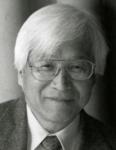
Kosuke Koyama (1929-2009)

“Climate change – global warming – has no boundaries. The light of the sun and the air that sustain all living beings know no boundaries. The Berlin Wall of 96 miles was there for 28 years up to 1989. The racial wall of the South African Apartheid existed for 46 years and ended in 1994. In their limited existence, these walls have done immeasurable damage to humanity on the both sides of the wall. The Orthodox Church of the East and the Catholic Church of the West did not speak to each other for 911 years from 1054 to 1965. The Great Wall of China and Checkpoint Charlie in Berlin are tourist spots today.

Mezzanine_924-2

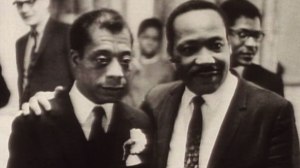
James Baldwin (L)  MLK, Jr.

“’One cannot dehumanize others without dehumanizing oneself,’ says James Baldwin. ‘Forgive us our debts as we forgive our debtors,’ we pray. It is this prayer that breaks the boundaries in a way that is pleasing to God.”

The church shoppers

According to recent polls the “nones” (people who indicate no religious preference) are growing quickly. It’s an interesting phenomenon explainable in many ways. The causes are many.

Protestant Christian churches once considered “mainline” or mainstream (e.g, Presbyterian, Episcopal, Lutheran, Methodist, Congregational) have fallen on hard times. Their numbers have decreased precipitously as the more conservative evangelical and fundamentalist churches and the nones have increased.

So what is church exactly in the shopping market of consumer capitalism?

This video offers a delightful, humorous look at a young couple looking for a church that fits their needs and tastes.


  • Gordon C. Stewart, snobby happily returned preacher with shirt still tucked in believer in women in ministry, lover of Bach, Buxtehude, John Rutter, and traditional liturgy.