Treasure in Earthen Vessels
Reply

The voice of Frederick Douglass:
Whether we turn to the declarations of the past, or to the professions of the present, the conduct of the nation seems equally hideous and revolting. America is false to the past, false to the present, and solemnly binds herself to be false in the future.
– Rochester, NY, July 4, 1852
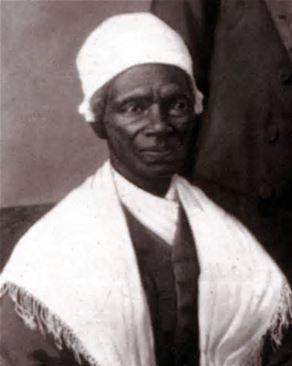
Sojourner Truth
The evening will begin with Odetta singing “I been ‘buked and I been scorned” and move into the spoken words of 101 year-old ex-slave Fountain Hughes, Sojourner Truth, Frederick Douglass, and Harriet Tubman (“Moses”), and Langston Hughes (“The Freedom Train”) portrayed by local residents Yvette Atkinson and Ray Pleasant in dramatic readings.
Group singing of the music that kept hope alive: There is a balm in Gilead, O Freedom, Swing Low, Sweet Chariot, and Go Down, Moses!
Questions to be discussed by participants:
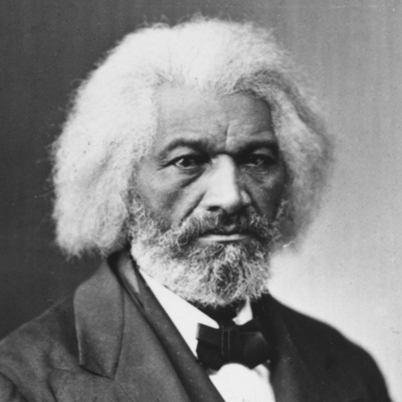
Frederick Douglass
Who/what are the new owners of human property?
Who are the new slaves?
Where is the spirit of emancipation moving today in the U.S.A.? Continue reading
“For 40 years,” writes Steve, “I had been a Pastor on college campuses where many students were of the marrying age, and perhaps because I would not accept money for weddings, was often asked to officiate.”
Verse -“Give Up Your Faith”
was what I told several Christians
who were wanting to marry
someone of another Faith.
“It’s the Christian thing to do,”
I said. “Give up what you love
for the person you love.”
(“Remember the Golden Rule?”)
Only a very few became Muslim,
or Buddhist, or Hindu or Jewish,
but I felt those who did were
showing clearly the love of Jesus…
I was glad to be an evangelist.
– Steve Shoemaker, Urbana, IL, October 11, 2013
Imagine there’s no heaven
It’s easy if you try
No hell below us
Above us only sky
Imagine all the people living for today
– John Lennon
The bombs were heard in my living room last night.
The echoes of last Sunday’s suicide bombing of a church in Pakistan that killed 80 people sounded in the voices of two Pakistani members of Shepherd of the Hill Presbyterian Church in Chaska, Minnesota where I serve as pastor. Twelve members of the church had gathered to talk about something totally unrelated to Pakistan, Afghanistan, or Christianity and Islam. We were there to share. The quiet horror of Samuel and Nasrin – “I was sad all day.” – was like a bomb going off in the living room. I ask myself, why? What is happening?
I am a Christian, a disciple of Jesus. Strange as it may seem, I often feel the way John Lennon did. I dream of a different kind of world where there are no more bombings or shootings in a Kenyan mall, in Peshawar and Lahore, Pakistan, in Baghdad, Damascus, or Boston in the name of God. I am tired of all claims to righteousness, whether professedly religious or professedly secular. I would like to wipe the human GPS of its magnetic field between due North heaven) and due South (hell) and re-orient us all toward the rising sun.
The voices that fight for heaven to erase hell do not all sound the same. They speak Urdu, Parsi, Arabic, Hebrew, and English. They claim different names: Muslim, Jewish, Christian, and sometimes secular. They live in different parts of the planet in different time zones and different climates. But if you listen, they all sound alike and they do the same thing.
They do not look up at the sky. They look down. They march in lockstep rhythm because the Quran or the Bible or nationalism tells them to. They live for tomorrow – for heaven or some version of it – not for today. One doesn’t have to strain to see what’s happening, and, when anyone sees it, how can one help but imagine a different world, a different kind of humanity: one without religion?
The bombing in Peshawar last Sunday is said to have been a payback for American drone strikes that had killed innocent civilians in Pakistan. For the suicide bombers, the Cross was the emblem on the shields and helmets of Christian Crusaders. Back then the Knights Templar of Holy War killed with swords. Today the suicide bombers associate the Cross with the drone attacks of the Christian West.
Religion is with us and, depending on how one defines it, always will be. A wise elder statesman, Elliot Richardson, observed toward the end of his life that religion is the problem, but that if we erased all of the religions were erased from the face of the Earth, they would re-invent themselves in a heartbeat. Why? Because that’s how we’re made. As defined by the likes of Emile Durkheim, Margaret Meade and Paul Tillich, religion spans a much wider terrain than the belief systems for which heaven and hell are essential. Furthermore, whether or not we are professedly religious, each of us has some kind of inner GPS, some version of a societal ideal (heaven) and a social and personal horror (hell).
What’s happening across the world is profoundly and earth-shakingly religious. Though our languages are as different as Arabic is from English, and as far from each other as Peshawar and a mall in Kenya are from a Quran-burning church in Florida, the voices of Abraham’s three children (Judaism, Christianity, and Islam) all sound the same whenever we create hell on Earth in the name of heaven.
For the Pakistani friends in my living room last night the Cross stands for a divine interruption of the cycle of violence and all claims to righteousness. In the crucifixion of a Palestinian Jew of the First Century C.E. what we see is anything but the excuse for a crusade to eliminate hell in the name of heaven.
The Jesus we seek to follow threw his life into the spokes of the wheel of violence to stop it, and we must do the same.
Every Sunday worship service concludes with a “Charge” – an instruction in how to live.
Go forth into the world in peace.
Have courage.
Hold on to that which is good.
Return no one evil for evil.Support the weak.
When the bombs tear through a church or a mosque or a neighborhood in the name of our imagined heaven for the righteous, we need to remember that there are Muslims, Jews, secularists, and other religious practitioners who seek to practice the way of peace…”living for today” throwing themselves into the spokes of the wheel of violence.
A sermon at Shepherd of the Hill Presbyterian Church in Chaska, Minnesota.
Why Atlas, Samson, Hercules, Paul Bunyan
and Superman aren’t with us anymore…
and why the latest SuperHero won’t last.
He was strong. Unlike some men his size
power pulsed, constrained–there was no fat.
He stood tall. His eyes looked down on those
passing by who turned and stared, impressed.
He would smile. He joked when asked his height,
Five feet…twenty!” Childhood awe returned
(big is best, is boss.) Authority
is imposed. The strong do what they want.
He had never been a little child–
young, but never small. Assumed adult,
he was proud to grapple, fight and hold,
lift and shoulder, carry, guard, protect.
Work was good, but work was never done.
Satisfaction was postponed. Trials like
cancer cells dividing, unrestrained,
overwhelmed him. Tasks enough to make
gods despair. Then buildings built decayed,
bridges fell, and wars blazed in the land
he had calmed before. He went to bed.
The world’s weight will break the strongest man.
-Steve Shoemaker
[Published in Response, Journal of the Lutheran
Society for Worship, Music and the Arts, No. 3,
1976.]
EDITOR’S NOTE: Apologies to Steve for the formatting. The first three lines were originally centered. The blog hasn’t cooperated this morning. Art fell victim to technology. BUT without te3chnology “Tower of Strength” would not have come your way.
Join Steve at Shepherd of the Hill Presbyterian Church in Chaska, MN Tuesday, October 1 at 7:00 p.m. for a Tuesday Dialogues program featuring Steve’s poetry.

Atlas and St. Patrick Cathedral
Matthew’s Gospel has two asses (donkeys), not one, in its Palm Sunday narrative. “They brought the ass and the colt, and put their garments on them, and he sat thereon.” Steve Shoemaker’s versed ponders the scene from the standpoint of the colt.
Verse – The Donkey’s Questions on Palm Sunday,
according to St. Matthew
He searched for just the right stick…
but then he never hit me? Why
go to all that trouble? Pick
the answer: 1. that he would try
directing the singing? 2.
to lean on when the day was through?
Why does he ride on my mom
while I’m just trotting alongside?
What does “Halleluja” mean?
Who’ll pick up clothes after the ride?
Now he shifts and rides on me–
he breaks the stick and makes a “T.”
His face looks like he’s had a loss…
Is he thinking of that cross?
– Steve Shoemaker, Urbana, IL,
This sermon connects the interruption of Paul’s journey to Syria with the recent U.S. threat to bomb Syria to destroy evil in the name of goodness.
A Sermon at Shepherd of the Hill Presbyterian Church in Chaska, Minnesota.
EXCERPTS
“I have always been bemused by time and place. I am a toddler on a train listening in the night to the eerie sound of the train whistle and the constant click-clacking of the wheels. Where were we? Where are we going – and why, just my mother and I?”
“We are all in transit. But from where to where and from when to when have become less and less my questions.”
“Our ideals and principles, as well as our national security, are at stake in Syria, along with our leadership of a world where we seek to ensure that the worst weapons will never be used. America is not the world’s policeman. Terrible things happen across the globe, and it is beyond our means to right every wrong. But when, with modest effort and risk, we can stop children from being gassed to death and thereby make our own children safer over the long run, I believe we should act. That’s what makes America different. That’s what makes us exceptional.”
– Conclusion of President Obama’s Sept. 10 national address on Syria.

Kosuke Koyama
By the end of his life in 2009, Kosuke Koyama had concluded that there is only one sin: exceptionalism.
I wish President Obama had been able to consult with Kosuke Koyama (1929 – 2009) before delivering this speech. He might have chosen his words more carefully. Koyama was a world-renowned Japanese Christian theologian and leader in inter-religious dialogue, author of Waterbuffalo Theology, Mount Fuji and Mount Sinai: a Critique of Idols, among other books.
Koyama first heard the claim of national exceptionalism in the Japan of his childhood. Japan was exceptional. The best. Number one. The Empire of the Rising Sun. The Emperor, supported by the religion of the imperial cult, could do no wrong. He was divine. So was Japan.
Dr. Koyama and his wife Lois moved to Minneapolis following his retirement. He shared with his friends his deep sadness that the old Japanese imperial claim had become the American claim.
America’s “leadership of a world where we seek to ensure that the worst weapons will never be used” is at stake.
Fact: the worse weapons ever used (nuclear and chemical) have already been used. We used them. We are the only nation on the planet to have dropped the atomic bomb. We dropped on Hiroshima and Nagasaki, Japan. We used chemical weapons in Vietnam. Agent Orange is a chemical weapon. Napalm is a chemical weapon.
America is not the world’s policeman. Terrible things happen across the globe, and it is beyond our means to right every wrong.
We have thought of ourselves as the world’s policeman and we still do. A policeman insures that the law of the land is enforced. The law that causes such resentment in the Middle East is the law of American exceptionalism and prerogatives. For the Arab world, this is what makes America different: the presumption of American exceptionalism expressed by re-arranging the economic-political-cultural landscape to advance Western interests, as in the case of Saudi Arabia, or by imposing and disposing, as in the CIA assassination of the legitimate President of Iran and the installation of the Shah, or our support for Saddam Hussein and Iraq in the Iraq-Iran War.
Very clearly, the U.S. has not sought to right every wrong. Nor should we. But our language is hollow at best and jingoistic at worst when one surveys the history of American intervention into the internal affairs of other sovereign states as the heir of British colonialism. The arrangements in the Middle East have their genesis in deals made by wealthy British and American elites with elite Arab Sheiks and strong men like Hosni Mubarak and Muammar Gaddafi until they no longer were useful.
“But when, with modest effort and risk, we can stop children from being gassed to death and thereby make our own children safer over the long run, I believe we should act.”
International scenes of human suffering and terror abound. In some cases we have chosen to act. In others, like Darfur, we chose not to act based largely on the principle of American self-interest. If American national interests were not threatened or affected, we did not act militarily. We acted humanely with humanitarian aid, but we did not act militarily to stop the horror of genocide in Darfur.
The principle of American national security and self-interest is clear in the President’s speech where he ties together the long-term safety of American children here at home with the short-term safety of children being gassed in Syria. That is, arguably, the way it should be. The use of chemical weapons and the threat of them in the hands of those who hate us is an ominous prospect.
Whether we should act is not, however, the question. The question is how America should act? Furthermore, how we decide to act should be informed and guided by the lessons of our own historic use of weapons of mass destruction and our own involvement in the supply of chemical weapons to Saddam Hussein, used in the Iraq-Iran War and allegedly used against his own people in Iraq.
It is an essentially moral position to condemn the use of weapons of mass destruction (chemical, nuclear, or biological. It is immoral to use them –an offense against humanity, and offense against all nature, and, for religious people, an offense against God.
Unfortunately there is not an equivalent of confession for nation states when they themselves have acted against their own declared moral principles. President Obama did not drop the bombs on Japan. Nor did he or his Administration supply the chemical weapons that did in Iraq what has happened to the mothers and children in Damascus. He might wish he could wash the blood from America’s hands or erase these chapters of American history, but he cannot. He cannot because the facts are facts, and the rest of the world remembers.
<
em>“That’s what makes America different. That’s what makes us exceptional.”
“There is only one sin,” said Kosuke Koyama,.“Exceptionalism.”
The myth of American exceptionalism dates back to a great hope as the new nation was about to be born. It was spoken in a sermon by Puritan John Winthrop on the Arbella sailing the high seas from the Old World of England to the New World of America. The biblical text of John Winthrop’s sermon was the Sermon on the Mount in the Gospel of Matthew applied to the adventure of establishing an exceptional nation, “the city set upon a hill” (Matthew 5:14) to give light to the world.
Although the word ‘exceptionalism’ is foreign to most Americans except those in academia or those who are especially attuned to American politics, it is the controlling myth of American life and the ground to which succeeding American Administrations and Congresses have turned to justify American ventures – economic, spiritual, political, cultural, and military.
In some way or another it falls to each Administration to uphold the myth, even and perhaps especially, when the myth appears to be false. The aspiration of a city set upon a hill was etched in mind of the Church, not a nation-state. It was and is a call to a different way, and its original spokesman saw that city quite differently from the American military-industrial-technological-corporate complex. This Jesus, a Jewish rabbi living under the Roman occupation of the First Century C.E., was not a warrior or a policeman. He saw to the heart of the human condition and the tragedy of high moral claims that justify all forms of violence.
“Why do you see the speck in your neighbor’s eye, but do not notice the log in your own eye? Or how can you say to your neighbor, ‘Let me take the speck out of your eye’, while the log is in your own eye? You hypocrite, first take the log out of your own eye, and then you will see clearly to take the speck out of your neighbor’s eye” (Gospel of Matthew 7:3-5, NRSV).
There is only one sin.
Koyama’s last work was Theology and Violence: Towards a Theology of Nonviolent Love, published in Japanese in 2009 in Tokyo. There is, as yet, no American translation.
 Views from the Edge