Ordinary people, Socrates, and the Psalmist

Last Sunday was my first experience with the Adult Forum at Trinity Episcopal Church. It was a brainstorming session for the church’s adult faith formation program.

A woman introduced herself as “the octogenarian in the group” to lots of laughter since a number of them were well on their way to their 80s. She proposed “living well in anticipation of dying and death” as her topic of interest. The group’s response was immediate. They were hungry for it.

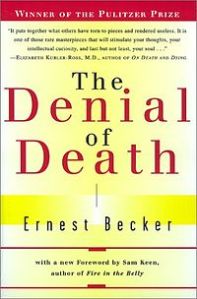
DenialofdeathcoverThey went immediately to the practical considerations like Living Wills, leaving clear instructions for children. But the discussion soon moved to the deeper matter of mortality itself, our culture’s juvenile denial of death (a la Ernest Becker), and the desire to go deeper into the philosophy and theology of wellness, death, and dying.

Two days later at last night’s Republican presidential debate, when Senator Marco Rubio drew roaring applause for his put down of philosophers – “We need more welders, less philosophers” – I wanted to invite the senator and everyone in the auditorium to join the 20 people  next Sunday in the Fireside Room where ordinary people will heed the wisdom of Socrates to “apply themselves in the right way to philosophy”:

“Ordinary people seem not to realize that those who really apply themselves in the right way to philosophy are directly and of their own accord preparing themselves for dying and death”

Death is always the elephant in the living room. So is philosophy when it is scorned. It’s easy to be glib about it, to knock it, ignore it, or mock it. Not so easy to face it “of [our] own accord”, as Socrates and the psalmist urge those who would live well – with gladness and and mercy – in anticipation of dying and death.

“So teach us to number our days, that we may apply our hearts unto wisdom. … O satisfy us early with thy mercy; that we may rejoice and be glad all our days.” – Psalm 90:12,14, KJV

Gordon C. Stewart, Chaska, MN, November 11, 2015.

Senator Rubio, Welders and Philosophers

“Welders make more money than philosophers,” said Mr. Rubio during last night’s Republican presidential debate. “We need more welders and less philosophers.”

No one on the stage seemed to remember John Adams, one of the Founding Fathers, who observed,

“I must study politics and war [in order] that my sons may study mathematics and philosophy.”

Instead of raising the minimum wage, Mr. Rubio calls for re-tooling America’s educational system to prepare people for jobs so they’ll make more money. Education would become training for a specific job.

His contrast between welders and philosophers is more about liberal arts education than about wages. Classical liberal arts programs teach people how to think. Philosophers are thinkers.

There is an anti-intellectual streak in American culture. When a skilled debater scratches that itch, there is loud applause, as there was last night in Milwaukee.

In the search for simplicity, those who applauded Mr. Rubio’s swipe at philosophers ignored philosopher Bertrand Russell’s observation.

“To teach how to live without certainty and yet without being paralyzed by hesitation is perhaps the chief thing that philosophy, in our age, can do for those who study it.”

The stereotype of the philosopher as aloof and beside the point makes for an easy target and an immediate laugh. But governing is not like welding.  We need need good philosophers and good welders.

“The society which scorns excellence in plumbing as a humble activity and tolerates shoddiness in philosophy because it is an exalted activity will have neither good plumbing nor good philosophy; neither its pipes nor its theories will hold water.” – John W. Gardner

  • Gordon C. Stewart, Chaska, MN, November 11, 2015


Donald Trump and the Presbyterians

Donald Trump and Ben Carson

Candidate for President Donald Trump’s sideswipe at fellow Republican candidate Ben Carson’s Seventh Day Adventist faith calls for a response from those who are what Mr. Trump is not – a Presbyterian.

Although Mr. Trump attended Sunday School and was confirmed at the First Presbyterian Church of Jamaica in Queens, NY, he is not a member of a Presbyterian Church. His church of choice on Easter and Christmas is Marble Collegiate Church, the historic Reformed Church in America congregation in midtown Manhattan best known for the Rev. Dr. Norman Vincent Peale, author of The Power of Positive Thinking.

“I am Presbyterian Protestant. I go to Marble Collegiate Church,” he told reporters in Greenville, S.C.  Two funny thing about that: 1) Marble Collegiate Church is not a Presbyterian church, and 2) even if it were,  Mr. Trump is not a member there, according to the church itself.

Why does it matter?

Who cares?  UNTIL Mr. Trump presents himself as a Presbyterian in contrast to another candidate’s Seventh Day Adventist faith in a way that is typically very un-presbyterian.

“I’m a Presbyterian. I’m a Presbyterian. I’m a Presbyterian!” he proclaimed with pride, insinuating that he is in the mainstream while Dr. Carson’s Seventh Day Adventism (SDA) is a fringe group outside the mainstream of American religious life. He seemed unaware that 1) Seventh Day Adventists are one of the fastest growing churches both in the U.S. and the world with a worldwide membership of 18.1 million, and 2) unlike the overwhelmingly white Presbyterian Church to which he claims to belong, the SDA is full of color and immigrants.

As to his own faith, Trump’s answer to Frank Luntz’ question of whether he’s ever asked for forgiveness offers further insight:

“I am not sure I have. I just go on and try to do a better job from there. I don’t think so,” he said. “I think if I do something wrong, I think, I just try and make it right. I don’t bring God into that picture. I don’t.”

Trump said that while he hasn’t asked God for forgiveness, he does participate in Holy Communion.

“When I drink my little wine — which is about the only wine I drink — and have my little cracker, I guess that is a form of asking for forgiveness, and I do that as often as possible because I feel cleansed,” he said. “I think in terms of ‘let’s go on and let’s make it right.'”

The Presbyterian-Reformed Tradition

There are a few things about the Presbyterian-Reformed tradition of the Christian faith that Mr. Trump seems not to know or has forgotten:

  1. The Reformed-Presbyterian faith shuns ostentation.
  2. Simplicity is a characteristic of the Christian life.
  3. “The sins forbidden by the First Commandment” include “self-seeking, and all other inordinate and immoderate setting of our mind, will, and affections upon other things;…hardness of heart, pride, presumption, carnal security” (Larger Catechism, Q 1).
  4. Confession of sin – both in private prayer and in the “Confession of Sin” in every Sunday service of worship – is a daily spiritual discipline of Christian life and practice.
  5. Divine grace and the forgiveness are the sources of personal and communal renewal and reconciliation.
  6. Respect for other religions -“Christians find parallels between other religions and their own and must approach all religions with openness and respect” (Confessions of 1967 IIB3) – and humility about one’s own religious claims are called for before God.

Local Presbyterians and Seventh Day Adventists

Momoh Freeman

Momoh Freeman

Every Sunday for seven years Momoh Freeman, a gifted Liberian refugee musician, served as Director of Music at Shepherd of the Hill Presbyterian Church in Chaska; on Saturdays he served in the same capacity at a Seventh Day Adventist Church in Minneapolis. The beliefs and practices of the two congregations are distinctly different in many respects, but we became fast friends.

The SDA Choir, comprised of Liberian-Americans, Liberian refugees, and African Americans, performed in concert at Shepherd of the Hill at our invitation, singing both African hymns and Handel’s Hallelujah Chorus a cappella!

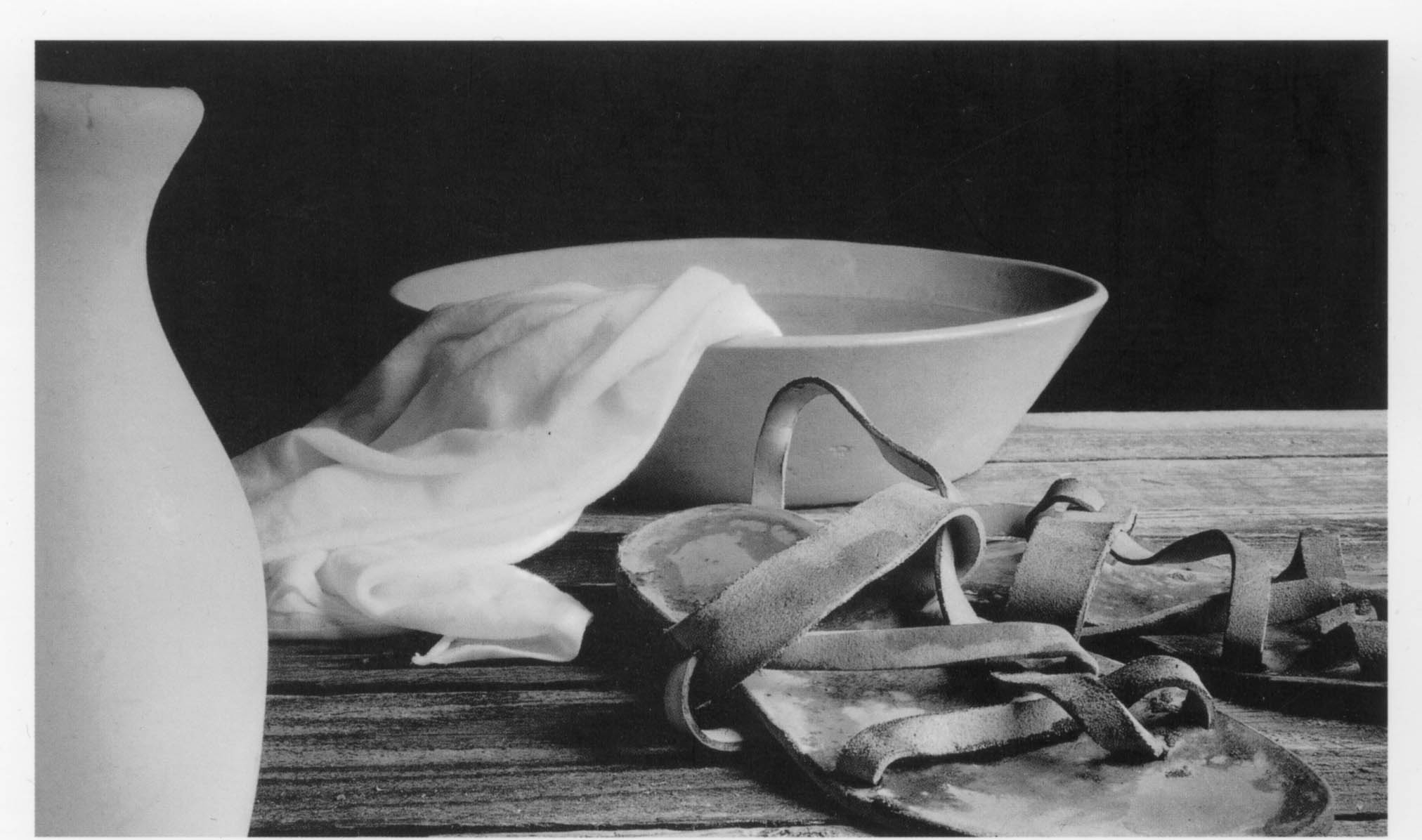
We Presbyterians joined our SDA friends in Minneapolis for Saturday worship, including the foot-washing ritual that preceded the Sacrament of Holy Communion to which we were also welcome. None of us went to the table “drink my little wine…and have my little cracker.”

A remedy of humble faith

Considering the disrespect in the run up to a presidential nomination, a good foot-washing seems in order.

When Jesus washed Peter’s feet, Peter replied, “Lord, not my feet only but also my hands and my head!” (John 13.9)

  • Gordon C. Stewart, Presbyterian Teaching Elder (i.e., Minister of Word and Sacrament) H.R., Chaska, Minnesota, October 28, 2015


Shabbat Bereishit – The Sound of Your Brothers’ Bloods Cry Out to Me From the Earth

Rabbi Eric Gurvis’s post on Cain and Abel and the debate about guns and mental health came to our attention this morning after posting “Non-Verbal Communication: Cain Looking at Us”.

Source: Shabbat Bereishit – The Sound of Your Brothers’ Bloods Cry Out to Me From the Earth

The Presidential Debate

The pundits focused on Hillary and Bernie. They ignored a third candidate on the stage who fared well. His name is Martin O’Malley. He didn’t hit the home run the gurus said was required to bring him into the race, but he represented his record clearly with poise and with the dignity the American people have a right to expect of the person in the Oval Office. He had the stature of a President.

The Bernie-Hillary show was a media creation, a script which, to his great credit, Moderator Anderson Cooper did not follow. Cooper asked hard questions to every candidate with the first questions of the evening. Cooper was a professional journalist, working for the American people to flush out the inconsistencies and push for the truth of what a candidate really stands for. Bernie danced a jig on his poor record on gun control and his votes on the Brady Bill; Hillary danced on the email controversy, her Iraq War vote, and her change of opinion on the TPP trade agreement. Cooper was the consummate moderator, insisting that candidates answer the question they were asked, but respectful and fair.

Jim Webb and Lincoln Chafee were like minor leaguers on a Major League field in the early playoffs. There were five candidates on stage but only three major leaguers.

Webb performed poorly as the most conservative candidate who suffered from a shirt collar that made him look tight as a tic. He looked like the kid whose parents dressed him in a tux for the senior prom – very unnatural, ill at ease, unable to be his winsome self.  Chafee  stood by his progressive voting record and admirable credentials as a former U.S. Senator and Governor of Rhode Island, but his facial eccentricities and persona do not help his candidacy. Although he might make a great president, he’d be very hard to watch for four full years.

O’Malley, on the other hand, looked and sounded the part of a presidential candidate. Or, perhaps, Vice-Presidential. Like Joe Biden, O’Malley is both smart and tough, seasoned and fresh, just the kind of running mate Hillary or Bernie might choose, if either of them wins the Democratic Party nomination. The problem, of course, is that O’Malley is another Easterner, which all but eliminates him according to the prevailing wisdom that the best ticket is geographically balanced.

But, if in the debates ahead, Bernie and Hillary should falter, Martin O’Malley is someone to watch. If I were Bernie or Hillary, I’d sleep with one eye open. Remember the tortoise and the hare.

  • Gordon C. Stewart (Bernie supporter), Chaska, MN, October 14, 2015.


Pope Francis and Speaker Boehner

Is it a coincidence that Speaker John Boehner announced his resignation the morning after his invited guest, Pope Francis, spoke to a joint session of Congress?

Pope Francis and John Boehner - Joint Session of Congress

Pope Francis and John Boehner – Joint Session of Congress

Before his address to Congress yesterday Pope Francis turned to the two former altar boys behind him on the dais.  He looked quickly at Vice President Joe Biden; he looked much longer into the eyes of his host, Speaker John Boehner. It was warm but it also seemed like something else – a moment between a priest and penitent?

The Speaker wiped his eyes, as any faithful Catholic would be prone to do.  He cried, as he often does, but this time as if to ask in humility, “Who am I, John Boehner, a mere altar boy, to share this powerful platform with the Holy Father? I am not worthy that you should come under my roof.”

One had to ponder Mr. Boehner’s inner turmoil listening to the Pope’s words gently reprimand leaders who forget the Golden Rule, push aside the poor, ignore or criminalize immigrants and migrants, prefer aggression to dialogue, ignore the common good for private gain, put people on death row, and refuse to act responsibly on climate change.

What do you do sitting behind the Pope?

You take out your handkerchief at the great privilege of hosting the Pontiff and the honor of being in his presence, but perhaps also because you recognize the prevalence of sin, as in Francis’ quotation from Thomas Merton (see quotation below) or his choice of the socialist Dorothy Day of the Catholic Worker Movement as one of four Americans to emulate.  And, if you haven’t already done so in your private time with the merciful Pope Francis, you might go to confession, repent, and do penance.

This morning John Boehner announced his resignation as Speaker of the House at the end of October. Preparing to speak to the United Nations in New York, one can imagine Pope Francis blessing John while lamenting Boehner’s colleagues’ loud cheering, wondering whether anyone but Joe and Johnny was paying attention the day before.

  • Gordon C. Stewart, Chaska, MN, Sept. 25, 2015

Quote from Pope Francis commendation of Thomas Merton as an American example to follow:

A century ago, at the beginning of the Great War, which Pope Benedict XV termed a “pointless slaughter”, another notable American was born: the Cistercian monk Thomas Merton. He remains a source of spiritual inspiration and a guide for many people. In his autobiography he wrote: “I came into the world. Free by nature, in the image of God, I was nevertheless the prisoner of my own violence and my own selfishness, in the image of the world into which I was born. That world was the picture of Hell, full of men like myself, loving God, and yet hating him; born to love him, living instead in fear of hopeless self-contradictory hungers”. Merton was above all a man of prayer, a thinker who challenged the certitudes of his time and opened new horizons for souls and for the Church. He was also a man of dialogue, a promoter of peace between peoples and religions.

[Bold print added for emphasis by Views from the Edge]

Bernie Sanders at Liberty University

The very thought of Democratic Socialist candidate Senator Bernie Sanders (I-VT) speaking at a compulsory convocation at Liberty University, founded by the late Rev. Jerry Falwell who also founded the Moral Majority, seemed far-fetched until it happened. What happened is an example to follow: a genuine, face-to-face, civil discussion about America, the meaning of morality, and what the Bible has to say about justice in our time.

C-Span’s coverage of the complete 1 hr. 5 min. convocation, including Christian evangelical praise music, and prayer before and after Sanders’ presentation, is all the more remarkable.

  • Gordon C. Stewart, Chaska, MN 55318

I’m Sorry

Remember Love Story’s line: “Love means never having to say you’re sorry”?

It was mistaken then, and it’s mistaken now. Love often means saying your sorry. Repeatedly. It means some sadness. It means taking responsibility.

Watching and listening to Hillary Clinton over these last weeks and months leads me to another version of the Love Story line, created by the increasing perception of entitlement.

“Haughtiness means never having to say you’re sorry”… except when it becomes necessary to rescue one’s own ambitions. The smirk, the tilt of the head, the rolling of the eyes speak louder than “I’m sorry”.

http://www.cnn.com/2015/09/08/politics/hillary-clinton-private-email-abc-news-apology/

Sorry (kinda/sorta) for being so political!

  • Gordon C. Stewart, Chaska, MN, September 10, 2015

Who Is Emily Hedges?

Emily Hedges

Emily Hedges

Emily’s not just any writer. She’s a good one!  Emily’s review of Go Set a Watchman, Harper Lee’s controversial sequel to To Kill a Mockingbird, appeared on Views from the Edge on Thursday.

Parenting three adopted children with husband Joe, she carries a history of courageously outgrowing herself. Today she’s thriving at Dartmouth College, earning her master’s degree in creative writing and student-teaching basic writing to undergrads. Kay and I became friends the Hedges during their time here in Minnesota.

New Hampshire is politically hot right now in the run-up to the New Hampshire Presidential Primaries. Donald Trump is making it big.  So what happens when conservative parents from Oklahoma take over the television during a family visit in New Hampshire?

You may recognize yourself in this highly personal piece. She’s sensitive to her parents, although she no longer agrees with their conservative, apocalyptic view of the world. She constantly struggles with when to bite her tongue and when to speak up. Now that her children are old enough to be influenced by their beliefs, the stakes have never been higher.

Check back with Views from the Edge for her story Trumped.

  • Gordon C. Stewart, Chaska, MN, September 5, 2015.

A Deeper Look @ the “Migrant” Crisis in Europe

This morning as the BBC reports on Hungarian migrants’ “Walk to the Border” of Austria, this report offers a different picture of the crisis’s origins and meaning for the future. Views from the Edge has added Maroon to draw attention to the humane impulse and to the too easily ignored question of who’s responsible for the crisis.
Victor GrossmanIMMIGRANTS, WELCOME AND UNWELCOME

by Victor Grossman – Berlin Bulletin No. 98, September 5 2015

After finishing off this bulletin late last night – actually early this morning – I sent off a first batch and finally went to bed after 2 AM. But in the morning I found it was already outdated on one important point: the Hungarian government, facing growing violence and the “Walk to the Border” mentioned below, gave in and agreed to the offer by the Austrian and German governments to skip strict rules and let the migrants cross the border into either country. Skeptical at first, fearing new tricks, the refugees, after waiting a few hours until the news proved genuine, have since been moving out of Hungary by the thousand, arriving exhausted but grateful in their hoped-for new Gardens of Eden, getting for a start a bottle of water, a banana and a new registration number. It all seemed a ragged replay of the journey of jolly, well-nourished GDR emigrants – or “freedom seekers” – along much the same border-crossing route in 1989, leading to major changes in all Europe. Will this also have seismic effects? Who knows?

Otherwise I think my bulletin is still valid.
+++++++

A silent three-year-old, lying drowned on a Turkish beach, the tearful protest of a Syrian man as he, his wife and baby are torn from the tracks next to a locomotive by Hungarian police, desperate families jammed into tiny, leaky vessels boats hoping to reach Europe alive or, if they do, facing ever new obstacles from weather, hunger and thirst to barbed wire fences and pepper spray – these pictures hammer at emotions here for one tragic week after another.

In truth, for many months and years such scenes caused those in power more irritation than dismay. British PM Cameron complained of immigrant swarms as if a nasty foreign ant species was threatening his island. He and French President Hollande viewed the miserable “Jungle” of asylum-seekers in Calais, icy-cold, as a problem for truck insurers and police squads. The officialdom of Germany and a largely obedient European Union focused on squelching hopes for true sovereignty, jobs and an endurable existence of the Greek people – or any others daring to follow their example.

But as more and more human beings fled the bloody fighting, the air raids and ruins in the Middle East or hopeless poverty in their homelands, events in Europe escalated. Far-right organizers, always present in Germany, took advantage of the growing numbers of refugees to denounce even planless, weak measures to help them and turn citizens’ dissatisfaction and fears for the future into hatred toward anyone weaker than they, suspected rivals for any improvement or assistance. Thousands marched with ugly signs and banners, at first aimed at “Islamists” but soon at anyone with a different culture or skin color. This was officially disapproved of but often tolerated, even protected.

Older buildings or container structures, renovated to house the growing numbers of arrivals, were often faced with mob protests, even riots. When buildings were set ablaze, usually but not always empty, Germany’s reputation demanded a response. Leaders like Vice-Chancellor Gabriel visited and denounced the “mob”. At last, on August 25th, Frau Merkel also visited Heidenau near Dresden, where xenophobia had reached fever heat. Quite horribly for Germany’s so very respected, calm and collected leader, she was confronted with posters and shouts calling her a “Traitor”. Some intoned a slogan, greatly admired in 1989 when directed against East German leaders, but now less welcome: “We are the people”.

It was ironic that Saxony’s police, so numerous and arrest-happy when leftists block Nazi march routes, were too pitifully understaffed to do much; despite barrages of rocks, bottles and fireworks they made only one paltry arrest. Saxony, the only East German state run by Christian Democrats ever since West Germany took over the GDR in 1990, is known for its lax attitude towards far-right forces, despite pious disclaimers – and that is where there are the most mobs and fires.

But then a change became apparent. The discovery of a truck on an Austrian highway with a hardly conceivable number of 71 corpses inside, refugee men, women and children suffocated and deserted by the “people-smugglers”, was a shock and one key element in much new thinking. Instead of a courageous but limited number of mostly young anti-fascists, large numbers of often less political Germans discovered their humane impulses – and increasingly acted on them. While most government officials on local, state and federal levels dillied and dallied, tied up with matters like officially registering people and always understaffed, more and more citizens moved in to help, bringing blankets, clothes, diapers, food, water and toys. They cooked, teachers organized German classes, some simply stood guard against the racists – with posters saying “Refugees Welcome!”

What has occurred is a real split in the German population, somewhere near the middle, with many people taking not only a humane position but often a courageous one, for nationalist grumbling about immigrants, at least as common as in some regions in the USA or elsewhere, has in Germany especially disturbing reverberations from the past and some potentially very violent elements.

It is unexpectedly interesting that German leaders, with open ears to all factors, began to welcome this huge wave, which may reach 800,000 this year, at least in words and with often hesitant steps.

Some media recalled that after World War II Germany, in ruins and reduced in size, absorbed 12 to 14 million refugees from Eastern Europe, especially Poland and Czechoslovakia. Of course, they were Germans who spoke the same language. Then, from 1969 to 1972, millions of so-called “guest workers” were taken in, originally to do the rough, dirty work and then leave. But a large number, especially Turks, stayed and settled down, although this time the integration has been far more problematic. But it was possible, and after the Berlin Wall went down there was another big wave, East German and Eastern European, with 700,000 arriving in 1992 alone. None of the waves ruined the economy! Economists point out that the demographic facts of life, with ethnic Germans having ever fewer children, demand many immigrants, especially young people with growing families.

Now, surprisingly, and despite rightist terror and foot-dragging politicians, Germany has become the main defender of the refugees in the European Union and a Mecca for the majority of them, like those in Budapest’s Main Station chanting “Germany, Germany”. Indeed, the Hungarian government had to trick them into thinking the trains they were crammed into were headed for Germany; instead they were soon halted so their misled passengers could be bussed off to a caged-in tent camp and registered. As I write, hundreds, probably thousands are defying this trick with a hunger strike or by trying to walk, with their elderly and their babies, to the Austrian border 150 miles away. The violence of a xenophobic Hungarian officialdom, at a total loss for any solutions, seems to be worsening, while the barbed wire fence built by Hungary to stop the refugees may recall to some the pageantry involved when it cut its fence to Austria in 1989, setting in motion the downfall of any form of socialism in Eastern Europe.

A few countries, led by Germany and the unwilling hosts to the arriving boats, Italy and Greece, now demand that the refugees be shared out through Europe, with quotas based on size and economic strength. Cameron responded with a vague hint at limited approval, Denmark, the Netherlands and above all Eastern Europe reject any such plan. At first Slovakia had said “We’ll take a few hundred – but only Catholics!” Now it and the Czech Republic, with Hungary and big Poland, are so stubbornly opposed that the whole wobbly structure of the European Union is trembling alarmingly.

To complicate matters even more, official Germany’s welcome smiles vanish when it comes to so-called “economic refugees”; many Africans but mostly discriminated Roma people of Eastern Europe and poverty-stricken people from Albania and all of former Yugoslavia – most of all Kosovo.

Cleo, the muse of history, must again turn to irony. It was the German government (all top parties) which was most active in splitting Yugoslavia into national slivers. Germany hotly encouraged the war to “liberate Kosovo”, joining in the merciless bombing of Serbia and leaving the “western Balkans” in wrecked, chaotic disarray. It promised Kosovo freedom and prosperity; what now reigns, in the presence of German and other UN soldiers, is described as “corruption, gang crime, poverty and discrimination against the Roma”. Wages average about 300 euro, youth unemployment is at 60 %, the health service hardly functions. But desperate attempts to reach the promised and once so grandly promising land in the north are almost hopelessly doomed to fail.

This raises a key question, almost agonizingly avoided in the media, which angrily denounces vicious, greedy “people-smugglers” but not those who caused this misery in the first place. Who provoked the wars in ex-Yugoslavia? Who unleashed “shock and awe” in Iraq, killing hundreds of thousands and driving millions from their homes? Who invaded Afghanistan, as vengeance for September 11th, with a “war on terror” unleashing fourteen years of killing and destruction and forcing thousands upon thousands to flee? Who wrecked Libya – to “protect its down-trodden” – opening the way for anarchy and a fleet of deadly cutters and rubber dinghies? And who massively armed the destructive hordes in Syria, in part via billion-euro contracts with Saudi Arabia, the United Emirates, Qatar and Turkey, all to fight Assad, all trying to hold or grab a bigger slice of that tragic land? True, one of those involved, Turkey, is filled with perhaps two million who fled from Syria. Another, the USA, agreed to welcome about 1000. The Saudis, Qatar and the UAE, so far as known, have taken none.

These forces, in different countries but all obscenely wealthy, are the real guilty ones, guilty in the long run for the rubble of Palmyra and for little Aylan Kurdi, now interred with his brother and mother in Cobane, another city destroyed by the highly profitable weapons of the fanatical, oil-rich ISIS while its erstwhile friend and customer, our NATO ally Recep Erdogan of Turkey, stood by. Aylan and his family were not allowed to enter Canada where their relatives had hoped to welcome them.

What is ahead? Let us hope the world is spared from more such blessed freedom battles against “Islamic terror” – and more unimaginable heartbreak! Iran has 75 million citizens. If some current people’s wishes and plans are not prevented we may yet be welcoming many of them, too – or as many as survive!