America Compromised: the Budget Bill of 2014

The Congressional omnibus budget bill is a compromise – a BIG compromise. It turns the clock back on regulations put in place after the financial market meltdown in 2008 had taken us to the brink of another Great Depression. It undoes the core provision of Dodd-Frank and increases the limit for wealthy giving to political campaigns.

Cover on John Irving's The Hotel New Hampshire in which "Sorrow" the family dog floats to the surface after the plane crash.

Cover on John Irving’s The Hotel New Hampshire in which “Sorrow” the family dog floats to the surface after the plane crash.

The dog we hoped we’d buried still floats, as Views from the Edge published on MinnPost a year after the 2008 crisis.

Click Sorrow Floats: the Healthy-Deregulated-Capitalism Myth Just Keeps Resurfacing.

Sorrowfully, memory is short, and, because the American electorate chooses amnesia to consciousness, the old dog still haunts us.


Isaiah and Elizabeth Warren

After news about the “spending bill” came out yesterday, I took the liberty of re-writing scripture. Readers unfamiliar with Jewish and Christian Scripture may not have heard of Isaiah’s vision in the Temple (Isaiah 6:1-8) that began his campaign to reform his nation in the year that King Uzziah died. Here’s the re-write for December 10, 2014:

In the year that [Speaker John Boehner and Senate Majority Leader Harry Reid proposed a “spending bill” that overturns banking regulations put in place after the near financial meltdown 0f 2008 and raises the cap on individual campaign contributions], I saw the LORD sitting upon a throne, high and lifted up; and the train of his robe filled the temple. Above him stood the seraphim. Each had six wings: with two he covered his face, and with two he covered his feet, and with two he flew. And one called to another and said:

“Holy, holy, holy is the Lord of hosts;
vthe whole earth is full of his glory!

And the foundations of the [nation’s] thresholds shook at the voice of him who called, and the house was filled with smoke. And I said:

“Woe is me! For I am lost; for I am a man of unclean lips, and I dwell in the midst of a people of unclean lips; for my eyes have seen the King, the Lord of hosts!”

Then one of the seraphim flew to me, having in his hand a burning coal that he had taken with tongs from the altar. And he touched my mouth and said: “Behold, this has touched your lips; your guilt is taken away, and your sin atoned for.”

And I heard the voice of the Lord saying, “Whom shall I send, and who will go for us?” Then I said, “Here I am! Send me.”

Where’s Isaiah when we need him? Then I read Elizabeth Warren’s objection to the bill. Click HERE for the story. Then call your Representative and Senators.  When they ask your name, just say “Isaiah!” When they ask how you happened to call, tell ’em God sent ya.

Wall Street and Washington

Click HERE to read what’s in the detail of the bipartisan compromise spending bill announced yesterday. A spending bill is necessary to prevent another government shutdown. This one will make your teeth itch.

The unregulated derivatives trading that led to the bailout of the “too-big-to-fail” banks and investment firms are back. Wall Street wins. The American people lose, again. Do I hear a veto coming from the White House? Or is every house in the Wall Street pocket?

Sen. Mitch McConnell, Sen. Harry Reid (with the turned-in left foot), and Speaker of the House John Boehner.

Sen. Mitch McConnell, Sen. Harry Reid (with the turned-in left foot), and Speaker of the House John Boehner.

Good News and Hard News – Nature and Capitalism

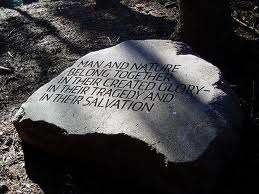
Paul Tillich quote in Tillich Park, New Harmony, IN: "Man and nature belong together in their created glory - in their tragedy and in their salvation."

Paul Tillich quote in Tillich Park, New Harmony, IN: “Man and nature belong together in their created glory – in their tragedy and in their salvation.”

A spiritual reflection for the Second Sunday of Advent, December 7, 2014.

The beginning of the GOOD news is HARD news, according to John the Baptist, calling people out into the wilderness. “We must change,” he said.  “Repent” by which the Judeo-Christian tradition means a 180 degree turn. “About face!” Only by turning will we be delivered from the consequences of the actions that have led us here.

For John the Baptist and the writer of the Gospel of Mark’s opening paragraph (Mark 1:1-8) the system at issue was Roman imperialism, an economic system centered in Rome, expanding out, and enforced by, military invasions, subjugation, religious tolerance (so long as the religious practice did not interfere with Roman prerogatives) and occupation.

One could repeat the sentence in 2014 with little change: “the system at issue [is [American] imperialism, an economic system centered in [Washington] expanding out, and enforced by, military invasions, subjugation, religious tolerance (so long as the local religious practice [does] not interfere with [American] prerogatives) and occupation.”

It is our spiritual, moral, economic, cultural and political captivity to a global system that cannot satisfy our real needs or the world’s that produces a longing in our hearts, a readiness to make the lonely trip to the wilderness.

We’re a weary people in 2014. Wearied and still disheartened 11 years after the “Shock and Awe” that took down Saddam Hussein on the pretense that he had weapons of mass destruction (WMDs) that threatened us, the Administration’s manufactured association of Saddam Hussein as the cause of 9/11. We’re wearied of lies and misrepresentations. Weary from budget fights that barely reference 10 years of un-budgeted military expenses, the loss of thousands of American soldiers’ lives and as many as 100,000 Iraqi civilians, a military venture undertaken on the assumption that the Iraqi people would welcome our presence as the beginning of democracy and a “free market” economy that would lift them all up.

That belief in the goodness of American intentions hit the rocks as quickly as Saddam’s statue hit the pavement in Baghdad. All the while we were wearied by the earlier invasion of Afghanistan, whose original justification was a quick elimination Osama bin Ladin and Al-Qaida untempered by realistic knowledge of the long history of the military interventions that mired the invaders in quagmires such as the Soviet Union found itself before leaving in defeat. To the Afghans it didn’t matter whether the troops were Soviet or American. They were the same. They were the occupation forces of an imperial power destined to fail.

In the midst of the weariness about what was happening abroad, the financial system at home took the American economy to the brink of disaster in 2008. Occupy Wall Street rose to the top of the news cycles. Although the movement fizzled over time, as such movements inevitably do, it caught the attention of television viewers, internet surfers, and newspaper and magazine readers. Occupy Wall Street and the spot light it placed on “crony capitalism” became a hot topic around water coolers at work and the table in the coffee shops.

For the first time in recent memory, capitalism was no longer sacred, no longer off limits. Time’s front cover asked the question whether Capitalism was dead. But, as with Occupy, public attention is short-lived. Amnesia sets in when people are weary. How soon we forget…until some new John the Baptist issues the cry for a 180 degree turn for the sake of something better.

Maybe Naomi Klein is edition of John the Baptist. This Changes Everything: Capitalism vs. the Climate, reviewed by the New York Times – places the over-riding systemic issue squarely before the general public again. Senator Bernie Sanders, America’s only socialist Senator who names climate action as among his four top priorities, is gaining attention as a possible presidential candidate. Elizabeth Warren, the Senate’s bulldog on holding Wall Street accountable is creating a wave of populist momentum. Put them with Bill McKibbon and 350.org and you begin to hear the echo of John’s all to the hard truth that is the beginning of the good news.

The hard truth that precedes good news is the discovery of the myth that has coupled democracy with capitalism in the American psyche, while demonizing socialism as democracy’s opposite. Ideological blinders are to nations and peoples what blinders are to horses on a race track: they limit vision to the straight-ahead narrow limits of the track. Ideological blinders prevent the owners’ horses from thoughts of anything but the track on which they’ve been placed to race each other.

But when the climate is changing our track in ways that compel our attention, and when we ask how we will make it through the changes together, the bigger question of the economic system – the race track itself – comes into view by virtue of necessity. It calls us off the track into the wilderness of Nature.

The words ‘economy’ and ‘economics’ derive from the Greek words for ‘house’ and ‘the management of the household’.  Economics not about markets, free or otherwise, or about the technicians and pundits who monitor investments and predict quarterly outcomes. It is not an academic discipline, the exclusive province of experts on Wall Street or in university Economics departments who understand how the free market works.

Economics is a spiritual perspective like the one on Paul Tillich’s marker in Tillich Park in New Harmony, Indiana. “Man and nature,” he said, “belong together in their created glory – in their tragedy and in their salvation.” There is no humanity with nature; the human calling of our time is to reshape our lives for the wellbeing of the one house in which all life lives.

During this Advent season of longing expectation, John the Baptist with his axe aimed at the root of the tree reminds us that economics is the spiritual issue of the first order. The good news is what the Hebrew Bible calls “the Day of the Lord” and John the Baptist and Jesus of Nazareth called “The Kingdom [i.e. Society] of God”. The hard news is we’ve been running on the wrong track, or, you might say, barking up the wrong tree.

The planet – this home we call “nature”, without which no person, society or form of life exists – is an economy that requires different management. The economy for which our hearts long is the one house imagined by the psalmist and announced by John in the wilderness beyond the Pax Romana: the good news awaiting our longing hearts to embrace it, a planetary home where “righteousness and peace will kiss each other” (Psalm 85:10) and wars will be no more.

The beginning of the GOOD news is HARD news. “Repent, for the kingdom of heaven is at hand.”

– Gordon C. Stewart, Chaska, MN, December 7, 2014

Capitalism, Socialism, and the Earth

The online Oxford Dictionary defines democracy as “a system of government by the whole population or all the eligible members of a state, typically through elected representatives….”

But it immediately biases the discussion with the following sentence to illustrate the word democracy: “capitalism and democracy are ascendant in the third world.” That is, capitalism and democracy go together. Wherever capitalism goes, democracy goes. The ascend together as was imagined to be the case in the Arab Spring.

To the contrary, the online Oxford Dictionary defines capitalism as “an economic and political system in which a country’s trade and industry are controlled by private owners for profit, rather than by the state.”

The Oxford Dictionary identifies what we are coming to realize in America. We do not live in a democracy. We live under “the economic and political system in which a country’s trade and industry are controlled by private owners for profit rather than by the state.” Neither are they controlled by the people of the state, the body politic.

The presumed ideological kinship between capitalism and democracy has existed in America culture as long as most of us can remember. It wasn’t always so in the 1920s and ‘30s, but, as we are beginning to understand again by virtue of circumstance, democracy does not depend upon a capitalist economy. In fact, democracy and capitalism are contradictions in terms. They are philosophically incompatible.

The more natural kin of democracy is socialism, as defined by the online Oxford Dictionary: “A political and economic theory of social organization that advocates that the means of production, distribution, and exchange should be owned or regulated by the community as a whole.”

Democracy is the rule of the people, “a system of government by the whole population….” or, “the community as a whole.”

Finally in America an intelligent discussion is afoot about democratic rule and economics. Naomi Klein’s This Changes Everything: Capitalism vs. the Climate takes the discussion to a new level that views global capitalism as “the most profound threat humanity has ever faced: the war our economic model is waging against life on earth.”

The Streets of Ferguson, Cleveland, NYC, Minneapolis

A 19 year-old African American walks into the Legal Rights Center (LRC). He insists on seeing the Executive Director.

He’s a large man, his speech is fast, his eyes are angry. He pulls up his shirt to show the swastika he alleges the police carved on his back while he lay on the street in North Minneapolis.

There are witnesses. Three women and a man who saw it happen  during another man’s arrest. “Raymond”, we’ll call him, was objecting to the arrest when two officers took him down to the pavement, face down, while one of the officers used his key to etch the Swastika into his flesh. He was not arrested.

Police abuse of power, racial profiling, the use of unreasonable force, shootings, and prosecutors and grand juries looking the other way always have been the way it is in America.  What’s new is the public outcry, the jarring of consciousness and conscience among those who do not live in places like North Minneapolis, Ferguson, or one of the poorer African-American neighborhoods in Cleveland or New York City.

After several years of the LRC Executive Director referring complainants to the Minneapolis Police Civilian Review Board without satisfaction of remedy, I proposed something out of the ordinary. We went directly to the commanding officer of the 4th Precinct of the Minneapolis Police Department.

The Commander’s attention seemed to wander as I introduced myself and Raymond until Raymond pulled up his shirt. The Commander asked if Raymond got the number of the squad car or remembered the badges of the officers. He didn’t. The Commander then, to my great surprise, named a number of officers, asking if Raymond recognized any of the names. Those officers were well-known for terrorizing the North Minneapolis African-American community.

“This is way beyond Internal Investigation,” he said. “You need to take this to the F.B.I.”

Raymond didn’t trust the F.B.I. any more than he trusted the Minneapolis Police Department. He decided to let it go.

Lots of people like Raymond have decided over the years to let it go. Until Michael Brown was shot and killed in Ferguson and a grand jury decided not to indict him. Until 12-year old Tamir Rice was killed by a police officer in Cleveland. Until Eric Garner died of a police officer’s choke hold saying, “I can’t breath!” The inferno of anger boiling over across the streets of America is new only in the breadth of consciousness and conscience.

It will take time. It will take a change of heart and mind. But, mostly, it will NOT change until America gets it straight that for most African-Americans being black is also an issue of class. Class is about power and powerlessness. Only when what we call “the middle class” understands that its interests lie with African-Americans in Ferguson, Cleveland, NYC, and Minneapolis will thing change in America.

Attorney General Eric Holder just released a Department of Justice Investigation report. Click HERE for the story.

It’s all about the economics: up or down. There really is no middle. “Hands up!” “I can’t breath!”

The Politics of Vision

Voter turnout in the November election was the lowest since 1942. Many folks have given up on the political establishment. The know that Citizens United baptized the privilege and power of the billionaire class.

Very few candidates stood up against the pejorative, demagogic ad campaigns that painted progressive candidates with a red brush. Most campaign ads focused on what the candidate opposed. Very few put forward what they stood for, as well as against.

But what if…. What if a candidate answered the question “What do you stand for?” very clearly? Something like this:

YES to raising the minimum wage.

YES to a massive jobs program rebuilding our crumbling infrastructure.

YES to transforming our energy system away from fossil fuels.

YES to pay equity for women workers. YES to overturning Citizens United.

NO to cuts in Social Security.

NO to cuts in Medicaid.

NO to converting Medicare into a voucher program.

NO to new trade legislation that sends our jobs overseas and hammers our middle-class workers.

NO to cuts to nutrition programs, education, or environmental protection.”

Someone did say this. Senator Bernie Sanders, (I), Vermont. How does America’s only socialist Senator from the small state of Vermont manage to get elected? How does it happen that conservative Vermont farmers and small business owners support him?

His “Yes” means “YES” and his “No” means “NO”. He is honest. He has a message. He doesn’t fudge the way Mitch McConnell’s Democratic opponent did in Kentucky when she re-made herself to sound tougher than Sen. McConnell on immigration enforcement.

Clarity of message is everything. So is honesty. Boldness. “Where there is no vision the people perish” [Proverbs 29:18]. Where there is (a good) vision, the people follow and thrive.

Traditional American values were not up for debate in 2014. Disgust was the issue. Anger was the issue. Distrust was the issue. Cynicism took over. Between now and 2016 we can expect more of the same. But there is also a national debate brewing about the vision.

“Write the vision and make it plain, so he may run who reads it.” [Habakkuk 2:2]

Thanks you, Bernie Sanders, for writing yours so clearly. I look forward to hearing others’ plain Yeses and No’s, such that might inspire us to run to the polls next time.

← Back

Thank you for your response. ✨


Prayer in Public Schools – Letter to the Editor

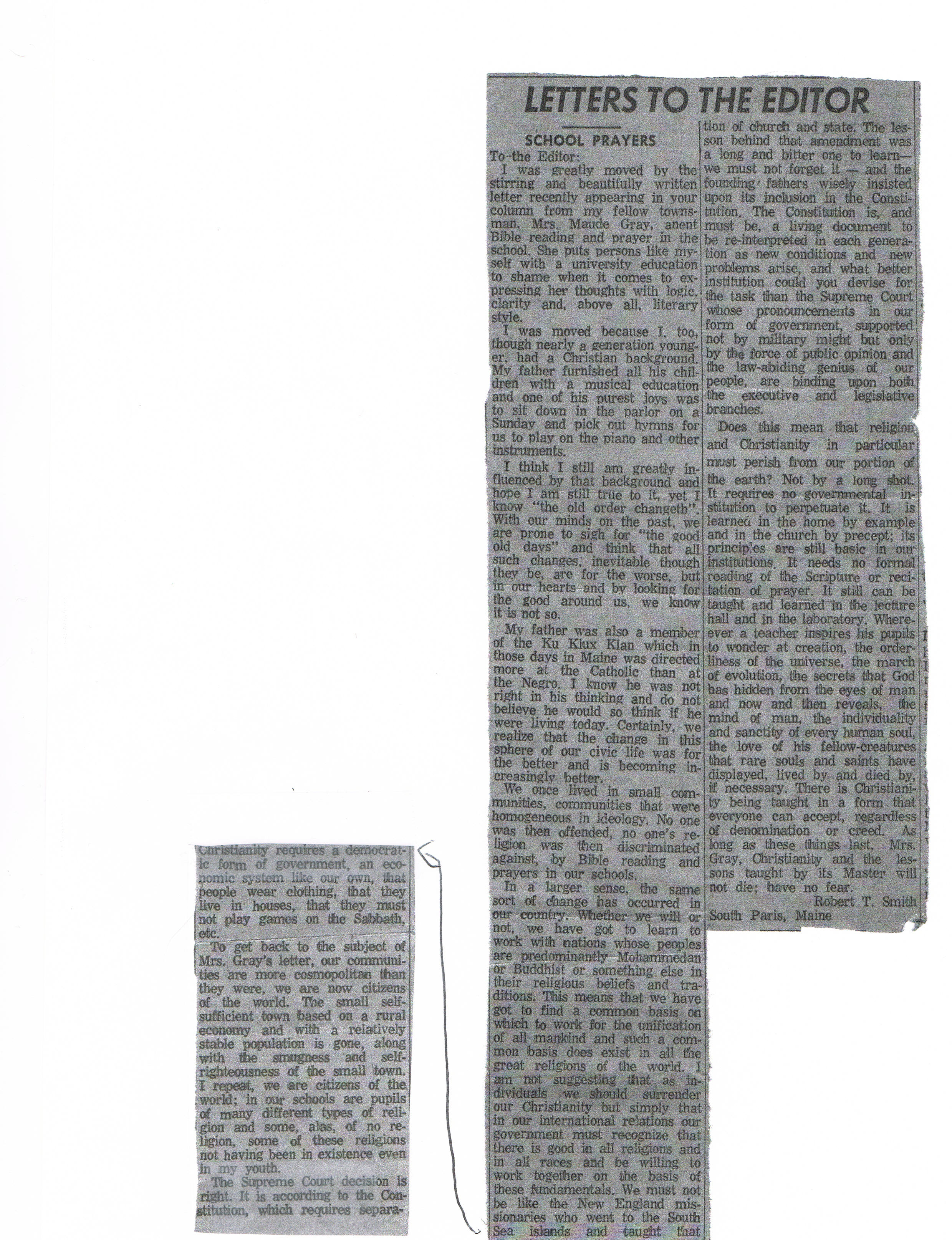
Uncle Bob's letter to the Editor - 1963

Uncle Bob’s Letter to the Editor – 1963

Does this look old? It is. Typed on a manual typewriter in 1963. Some things are worth their weight in gold. This Letter to the Editor is one of them.

Robert Smith, my Uncle Bob, sent this Letter to the Editor of the local paper in South Paris in Oxford County, the poorest county in the State of Maine.  A native of Kennebunk, Maine, he was a relative of John Smith of the legendary tale of Pocahontas, who  married my mother’s sister, Gertrude, after graduating first in his class at Harvard Law. He opened a law office in South Paris, met the love of his life and courageously raise a family: my first cousins Alan (who never spoke a word because of Cerebral Palsy), Dennis, and Gwen.

He became the District Attorney and then the Probate Judge in Oxford County. A Republican of the Nelson Rockefeller brand, he wrote his Letter to the Editor after the U.S. Supeme Court ruled that prayer in the public schools was unconstitutional. To the chagrin of many of his neighbors, he supported the Supreme Court decision.

His daughter, my cousin, Gwen, sent this to me. with a note:

“I am amazed at how ‘global’ his thinking was, especially when you think of South Paris! I couldn’t wait to get out as I saw it as being so insulated from the real world…knew there was something better out there. Dad would be drummed out of the Republican party he so strongly supported with this thinking, but all politicians could take a lesson in civility from this!”

Bob Smith died of a cerebral hemorrhage leading a congregational meeting of the First Congregational Church of South Paris where he was the President of the Congregation, Choir Master and Organist. He died the way he lived – with the courage of his convictions and a faith in Divine providence that does not depend upon or favor the tyranny of the majority.

Keep Awake – Undelivered sermon #1

KEEP AWAKE!

First Sunday in Advent, 2014
Texts: Isaiah 64:1-9
Mark 13:24-37

“And what I say to you I say to all: Keep awake.” [attributed to Jesus, Gospel of Mark 13:37].

It’s hard to stay awake in times like these. To be conscious means grief, helplessness, anger at the state of the world.

“Heaven and earth will pass away, but my words will not pass away” is supposed to bring comfort but it doesn’t, unless the heaven and earth of which Jesus speaks are the ones our pride has created. The imaginary ones. The heavenly and earthly projects that rise out of human insecurity as in the Genesis story of Babel, the story of what never was but always is, according to which the building of the ideal city is interrupted and the tower “with its top in the heavens” is “left off”.

But the word – the story about it – has not passed away. It endures. As fresh today as it was when first shared around a campfire as a way of telling each generation the respective places of God and man (humankind).

The Tower of Babel by Pieter Bruegel.

The Tower of Babel by Pieter Bruegel.

Fourteen years after the World Trade Towers collapsed in NYC, a new tower, “One World Trade Center” – taller, stronger, bolder – stands where the old towers fell on 9/11.

One World Trade Center, symbolizes a resurrection of the crashed myth. Standing a few blocks from Wall Street, where the global economy is reconstructed every day, One World Trade Center re-erects the myth of national supremacy, benign goodness, and the virtue of the American economic system. Which is different from a resurrection.

We could have left Ground Zero empty, void of monoliths and phallic symbols. We could have turned it into a plaza, a memorial to the error of pride, a turning away from global arrogance. A repentance from the economic-military-religious complex that expropriated the oil fields in the Middle East, assassinated the elected President of Iran in 1958, installed the Shah in his place, ignored the human rights of Palestinians, supported and installed western-friendly oligarchies and strong men in Saudi Arabia, Iraq (Saddam Hussein), Libya (Muammar Gaddafi), and Egypt (Hosni Mubarak) until, except for Saudi Arabia, they turned against us.

Instead of listening to the word that does not pass away, we Americans, to the sorrow of New Yorkers like Michael Kimmelman (” A Soaring Emblem of New York, and Its Upside-Down Priorities, NY Times, Nov. 29, 2014), opted for the old words and worn-out scripts that have failed us.

The Arab Spring in Libya, Egypt, and Tunisia did not do what the NeoCon exporters of Western democracy had imagined. It unleashed a seething volcano of anti-American resentment. Meanwhile, Afghanistan, Iraq, and now Syria, have become desert quagmires – Vietnams without jungles.

One World Trade Center

One World Trade Center

Eisenhower’s last speech to the nation warning of an emerging military-industrial complex is all but forgotten as One World Trade Center stands like a phoenix raised up…and up…and up from the ashes, the world’s tallest building, symbol of global dominance re-erected from the horrifying deadly collapse of 9/11.

Words and symbols are everything in this world.

As Mr. Kimmelman put,

“…[The World Trade Center Twin Towers] never really connected with the rest of Lower Manhattan. There had been talk after Sept. 11 about the World Trade Center re-development including housing, culture and retail, capitalizing on urban trends and the growing desire for a truer neighborhood, at a human scale, where the windswept plaza at the foot of the twin towers had been.”

It’s all about human scale. A plaza. Not a tower with its top in the heavens.

Staying awake is hard. Being attuned to what is not passing away takes faith. It takes hope. I takes courage. Maybe even love.

“From the fig tree learn its lesson: as soon as its branch becomes tender and puts forth its leaves, you know that summer is near.” [Mark 13:28]

Jesus often seems to have said that the word we need to hear is spoken by nature. Learn from the fig tree. It waits through the dormant season to become tender again, to put forth its leaves toward summer when it produces its sweet figs.

Nature is calling. Nature is our home. Nature is what is – the real heaven and earth – the word that will not pass away, the word that will survive when we are gone. We need to love nature again. Awaken to nature. Re-imagine ourselves as part of nature, “creatures” like all the other creatures. Our words will pass away, even the best of them. Our Creator’s word will not.

During Advent – this most puzzling of seasons, the season of wakeful, wait-ful anticipation of a Coming in fullness – I find myself crying out like Isaiah. “You have hidden your face from us, and have delivered us into the hand of our iniquity.” [Isaiah 64:7]

“O that you would tear open the heavens and come down, so that the mountains would quake at your presence—as when fire kindles brushwood and the fire causes water to boil– to make your name known to your adversaries, so that the nations [the ‘ethnoi’ in New Testament Greek, i.e.” the peoples”] might tremble at your presence!” [Isaiah 64:1-2]

The “nations” have always been God’s adversaries, closed in on themselves, puffed up, defensive against intruders foreign and domestic, plunderers of nature and other nations, hostile to the foreigner, both human and Divine.

In this season of “economic recovery” when the poor continue to get poorer, the rich get richer, and the middle class shrinks, I pray “Good Lord, deliver us, from ‘the hand of our own iniquity’. Remember, ‘O LORD, you are our Father; we are the clay, and you are our potter; we are all the work of your hand.’ [Isaiah 64:8]”

This word is the only word that lasts.

Stay awake, my soul. Stay awake to the whole of it, all of it – the sorrow and the grief of it, the loneliness of it, the anger in it, the guilt of it, the finger pointing out and away and the finger pointing back at me, a nation to myself, and the presence of the Potter – and my soul will be well.

You might not believe this

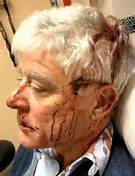
Mark Andrew after shopping at the Mall of America

Mark Andrew after shopping at the Mall of America

A year ago Mark Andrew was beaten within an inch of his life. We commented on the assault at the Mall of America at the time and are moved to comment now on the unusual sentence handed down yesterday in the case of his primary assailant.

Click “Young woman who beat Mark Andrews receives no jail time – at his request” – for the story aired yesterday by All Things Considered on Minnesota Public Radio.

Mark Andrew, man of compassionate wisdom

Mark Andrew, man of compassionate wisdom

There is judgment and there is mercy. Mark Andrew is a man of faith. He was taught and he believes that God’s judgment is always a function of God’s love, and, as Cornel West puts it, that “justice is what love looks like in public.”