Monday, after we’d read aloud Psalm 52, Kay proposed we create T-shirts with a simple message: ‘Psalm 52’. She was joking, of course. We’re not the sort to wear our religion on our chests! She had in mind the following lines.
You tyrant, why do you boast of wickedness
…all day long?
You plot ruin;
your tongue is like a sharpened razor,
O worker of deception.
You love evil more than good
and lying more than speaking the truth.
You love all words that hurt,
O you deceitful tongue.
O that God would demolish you utterly,
topple you, and snatch you from your dwelling…!
Yesterday we picked up a copy of the latest Star Tribune. The editorial, “Trump practices art of deception,” called Sunday night’s sharpened razor tweet from the White House to Iranian President Rouhani “another alarming distraction to take the spotlight from other news, such as the fiasco in Helsinki…” (Star Tribune, July 24, 2018).
Ancient wisdom is called ‘ancient’ because it’s old. It’s called ‘wisdom’ because it speaks plainly to things that never seem to go away. But you can’t put a whole psalm or an editorial on a T-shirt! The above picture of President Lincoln and Sojourner Truth would get the truth part. But a simple psalm # points to the ongoing tension between truth and the practiced art of deception.
The day a former Director of the CIA publicly declares that a U. S. president’s behavior constitutes “high crimes and misdemeanors” and calls it “treasonous” is not just another day in American politics.John Brennan’s tweet ended with the question for those who continue to support the president: “Where are you?”
It is a question for every U. S. Senator and Congressional Representative who assumed their positions after taking the Congressional oath of office to “support and defend the Constitution of the United States of America against all enemies, foreign and domestic.” The president’s oath is a bit different. I do solemnly swear…. to preserve, protect, and defend the Constitution of the United States of America.”
Although it seems unlikely that Thomas Jefferson or James Madison imagined a future president of the new constitutional republic acting as the nation’s domestic enemy, the framers of the U. S. Constitution were cautious about human nature. They were neither optimistic nor pessimistic. They were realists. They included provisions for Congress to remove a president from office.
Which is why John Brennan asks members of Congress, “Where are you?” It’s one thing to wait for the report of the Special Counsel on Russian interference in a U. S. election; it’s another to ignore the president’s joint press conference with the leader of the country accused of interfering in the 2016 election.
Following a private two hour one-on-one meeting with Vladimir Putin, Donald J. Trump preferred Mr. Putin’s denial of Russian interference to his own Department of Justice latest indictments of twelve Russian intelligence officers for covert operations to influence the 2016 election. The president who took the oath of office to defend and protect the U. S. Constitution from enemies, foreign and domestic, had chosen to take his stand against his own government.
For a former CIA director to take the spotlight runs counter to the low-profile culture of the CIA.John Brennan is not a partisan. His question “Where are you?” will be answered in the weeks to come, as will the other questions: “What will you call it?” and “What — or whom — will you faithfully support and defend?”
Thomas Jefferson,James Madison, and Betsy Ross are listening.
Dennis Aubrey’s writing is as fine as his photography, fathoming the depth and height of the human experience. This Via Lucis piece on the power and complexity of memory shouted out to be shared on Views from the Edge.
Recognizing truth is a matter of experience because it involves distinguishing the real from the illusory. Experience itself is a product of memory. And memory is even more complex than truth. And so the pattern gets more multi-faceted the deeper we look, like one of Mandlebrot’s mathematical phantasms. What appears at first simple becomes infinitely complicated and intricate.
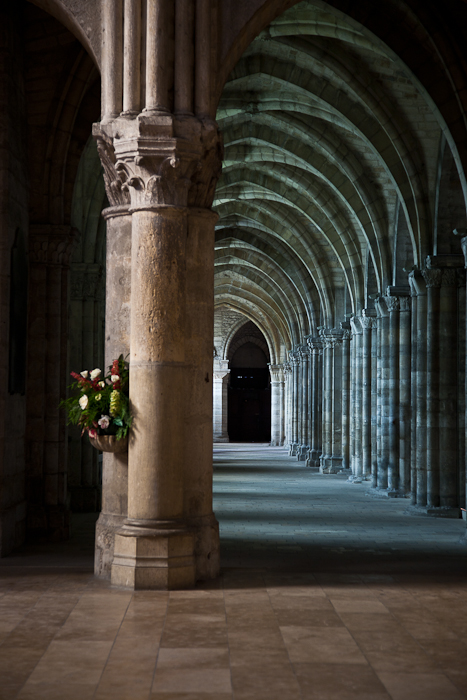
Side aisle, Basilique Saint Remi, Reims (Marne) Photo by PJ Aubrey
Some memories we remember as dreams, in the present tense; others as historical phenomena that stay safely in the past. Some memories carry their meaning with them. Others mean something because of their relationship with something that occurred in the past. Others depend on the future to reveal their significance. This is the web that is woven back and forth, across and through time.
North side aisle, Eglise Saint-Étienne, Vignory (Haute-Marne) Photo by Dennis Aubrey
A friendly young man at the Burger King — I don’t eat Whoppers; I drive to the Burger King in rural Minnesota for the free WiFi — draws my attention. “What’s going on?” he asks, staring at the television monitor behind me and my MacBook Air. I assume he is responding to the breaking news I’d heard moments before on the drive from the cabin to the Burger King — the shooting of journalists in the office of an Annapolis newspaper. He is. He shakes his head; I shake mine. Then the words spill out. “I guess this is what happens when the press is targeted as public enemy number one.” He shakes his head again and walks away.
A few minutes later he returns to speak his support for the Second Amendment and the president. “All this gun stuff . . . we’ve always had guns in school and stuff, only now the media’s making a big deal of it. They’re blowing it up.”
We’re coming up on July 4th weekend. Celebrating the nation’s independence feels different this year. America is different. It’s the First Amendment that is at risk, not the Second.
An Independent Press: the Fourth Estate
The free press, sometimes called “The Fourth Estate” — the people’s independent watchdog of government — has saved us from our worst selves many times. It was the Fourth Estate that brought into our living rooms Edward R. Murrow’s news broadcast that stopped Senator Joseph McCarthy’s pernicious attacks on the integrity of American citizens whose political stripe wasn’t his. It was the Fourth Estate’s publishing of the Pentagon Papers that exposed the dirty secrets behind the Vietnam War, leading Lyndon Baines Johnson to become a one-term president. It was the Washington Post’s publication of Woodward and Burnstein’s investigative report on the Nixon administration’s break-in of Democratic headquarters at the Watergate Hotel that led to the impeachment and resignation of Richard Nixon.
The Fourth Estate exists as the instrument of the people to hold accountable those we elect, and the government agencies they are responsible to oversee on our behalf. The First Estate (the executive branch) and the Second Estate (the legislative branch) have often been critical of the Fourth Estate. Because the U.S. Constitution’s First Amendment guarantees freedom of the press from state control, the Third Estate (the judicial branch) has protected it from the other two branches of government. The Supreme Court has been the court of last resort to protect free speech from Presidents and other elected officials who have been wary of it.
Weary and Wary
There is a world of difference between wariness and assault. The current occupant of the Oval Office has used the nation’s Bully Pulpit to stir up good people like the guy at the Burger King to believe the minority party, once referred to as the “loyal opposition,” is out to destroy their freedom under the Second Amendment. Public perception has been altered. The public enemy no longer is communism, as it was in the McCarthy period. The target is much more in clear public view: the Washington Post, the New York Times, CNN, NBC, CBS, PBS. Every member of the Fourth Estate except FOX News and — who would ever have imagined it? — The National Enquirer. Joe McCarthy is smiling.
A civil society has quickly become less civil. The Bully Pulpit we once expected to give voice to the unity that underlies our pluralism (e pluribus unum); appeal to “the better angels of our nature” (Lincoln); respect the public and private institutions that make us who we are; and mourn tragic events such as today’s shooting in Annapolis, is used to create the public perception that the president’s critics are America’s enemies. This is an abrupt departure from the commonly accepted norms and expectations for civil discourse on which I being raised.
Increasingly, we tend to shout in anger or fall silent. Between the anger and the silence stands a chasm of despair. To some, America is becoming great again. To others, America in 2018, feels more like the aftermath of a coup d’état than a moment of celebration.
The Birth-er Movement: Black Lives Can’t Be President
The young man at the Burger King was an adolescent when Donald Trump funded the Birther movement alleging that Barack Obama, America’s first black president, was illegitimate, a charge not based in fact, “faux” news that stirred the latent fear of poor white Americans to believe President Obama was out to take away their rights. Long before the Electoral College elected him President, Donald Trump had a bully pulpit of his own, and he bullied many into believing the lies about the need to rescue the country from the alleged black Muslim socialist who wanted to take away our guns —until the day he suddenly declared, without apology for his error, that President Obama had been born in the U.S.A, as though the Oracle of truth had spoken definitively — years after his false claim movement had accomplished its aim.
The Third Leg of the Stool
Earlier today, before news of the shooting of journalists in Annapolis, the free press informed the American public of U. S. Supreme Court Associate Justice Anthony Kennedy’s decision to retire, leaving the vacancy on the Court for the President to nominate and the Republican Congress to give, or withhold, its consent and confirmation. The Founders’ intention of a nonpartisan, independent Third Estate — the third leg of the stool of checks and balances that keeps the American democratic republic from falling — was idealistic, to be sure, but an independent judiciary is essential to the architecture of the U.S. Constitution.
As we prepare for this Fourth of July observance, we do well to remember the architecture meant to preserve the nation by means of legislative and judicial boundaries that constrain a bully from running away with the country. Doing my best to be hopeful, I still wonder: can a Whopper accomplish a coup d’état without bloodshed — within the architecture of the American democratic republic?
The Fourth of July 2018 celebration goes down hard. Hold the onions!
Gordon C. Stewart at the Burger King, July 2, 2018.
We Americans are living in the face of evil. I do not speak easily of ‘evil’. Even now, I hesitate using the word.
But I can find no better word to describe what I hear in the tone of voice and the language that distorts truth, idolizes the nation, insults neighbors and allies, reveres the strong men of North Korea and Russia, presents himself as superior to all his predecessors, withdraws from multinational peacemaking and climate accords, divides the world into winners and losers, refuses to criticize white supremacists, separates poor children of color from their parents at the border, demonizes his adversaries, puts an anti-Semitic preacher from the farthest edge of the religious right on the world stage to represent the American people at the dedication of the U. S. embassy’s re-location to Jerusalem, and does it all in the name of making America secure and great again.
In Christian theology, evil has no standing of its own. It is the twisting of the good, the warping of truth, the abandonment of self-knowledge, the rebellion against accountability, the transfer of free-floating anxiety onto an object of fear that can be defeated, and the illusion of the power of the strong man’s to rescue the good.
Th strong man is the opposite of the preacher from Nazareth who lifted up the poor, the meek, the mourning, the leper, the alien, the foreigner, the religiously different (the ‘good’ Samaritan), declaring that the kingdom of God belongs to them, not to the rich, the proud, the well, the patriots, the people of his religion.
How a disciple of Jesus hears the voice of Jesus in the voice of the strong man is a puzzle whose pieces remain hidden until they are exposed for review. Promotion of the good includes the unmasking of evil, the wisdom to discern when the good is turned upside down, and when truth is twisted by the serpent’s trickery.
“Lead us not into temptation, but deliver us from evil” is the cry from the pews of most every Christian church across the world, the echo of the prayer the soon to be crucified Jesus taught his disciples. Tempted to surrender better selves into the hands of evil, how does a disciple of Jesus manage to salute the strong man in the Oval Office and the party that obeys his will? Every day, I scratch my head, but also try to remember.
“Blessed are those who hunger and thirst for righteousness, for they shall be satisfied.”
He will look with favor on the prayers of the homeless;
he will not despise their plea. (Ps. 102:17)
It was the psalmist who said it (Psalm 102:17). Not the New York Times or the Washington Post. Long before the children were separated from their parents at the Mexican border.
I lie awake and groan:
I am like a sparrow, lonely on a house-top. (Ps. 102:7)
The loneliness is known. Expressed. Likened to a small bird alone on some else’s house-top. The plight is seen from the place above every house-top. The groans of the captive are heard on high.
The LORD looked down from his holy place on high;
from the heavens he beheld the earth;
that he might hear the groan of the captive,
and set free those condemned to die… (Ps. 102:19-20)
The voice from the holy place on high echoes among the people who had forgotten who they are. The partisan and the complacent hear the children crying in the Pit of cruelty. They remember their better selves. Because of a national outcry across party lines the separation policy that began six weeks ago comes to a sudden end with an overdue stroke of a pen.
He redeems your life from the Pit;
and crowns you with mercy and loving-kindness. (Ps. 103:4)
The LORD is full of compassion and mercy,
slow to anger and of great mercy. (Ps. 103:8)
Families will no longer be separated at the Mexican border. But 2,300-plus children who have been separated from their parents remain at-large, their identities and whereabouts unknown. Their plight makes America less again.
“Not only is it cruel and unAmerican – the federal policy of separating children from their immigrant, asylum seeking parents — it’s a basic cause of future mental disorders that affect not only the victim. It’s the perfect situation to create attachment disorder.
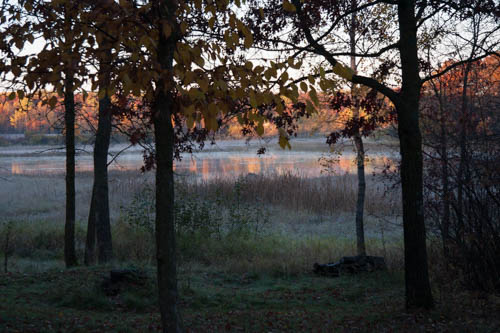
Ralph Waldo Emerson’s essays offer the perfect complement to the sights and sounds of the marsh at dawn. Like his contemporary Henry David Thoreau, Emerson expressed a profound reverence for Nature. His eyes and ears were tuned differently.Emerson’s essay “Nature” helps interpret my experience by the marsh here in northern Minnesota. It provides spiritual context to the breaking of the day.
He who knows the most, he who knows what sweets and virtues are in the ground, the waters, the plants, the heavens, and how to come at these enchantments, is the rich and royal man. Only as far as the masters of the world have called in nature to their aid, can they reach the height of magnificence. This is the meaning of their hanging-gardens, villas, garden-houses, islands, parks, and preserves, to back their faulty personality with these strong accessories.
Like Thoreau writing at Walden Pond, Emerson invites the common man and woman to rouse from our confusion of wealth with royalty. Emerson wrote, “When the rich tax the poor with servility and obsequiousness, they should consider the effect of men reputed to be the possessors of nature, on imaginative minds. Ah! If the rich were rich as the poor fancy riches!”
The public mind does a very strange thing. While despising the one percent who disdain the poor and steal the worker’s wages, something in us aspires to be among them. We envy their Mara-Largo’s and penthouses. We want to be the ones who hire and fire. Emerson stripped away the illusion that the rich are truly rich.
Yet, despite his praise of Nature, Emerson continued to believe that we humans stand atop Nature’s pyramid as the exceptional species. In this time of climate departure, I part ways with him and turn more toward Thoreau.
Thoreau gets closer to how I feel at the Walden Pond-like site next to the wetland. I’m glad to get away awhile to be among the trumpeter swans, wood ducks, loons, hooded mergansers, great blue herons, and redwing blackbirds.
I love Nature partly because she is not man, but a retreat from him. None of his institutions control or pervade her. There a different kind of right prevails. In her midst I can be glad with an entire gladness. If this world were all man, I could not stretch myself, I should lose all hope. He is constraint, she is freedom to me. He makes me wish for another world. She makes me content with this.
Narcissus has no place here. No “faulty personality” but my own. The trumpets are the swans’. I think I just saw a daffodil bloom where Narcissus once knelt! “[Nature] makes me content.”
Views from the Edge has been silent for awhile. Given my state of mind, it probably should stay quiet longer. But Memorial Day gives the dumb a hook on which to hang some of what’s been banging around my weary head.
Flags are everywhere today. American flags. They decorate the graves of the fallen in our national cemeteries and wave in front yards across America. But things are different this year.
While driving to the cabin by the wetland here in Minnesota, I see a different flag — a blue one with the name of the current president — waving from a homeowner’s flagpole where the red, white, and blue stars-and-stripes rippled stood before 2017. The dead we honor on Memorial Day didn’t die for this substitution. They fought against it.
The dead are unable to see the American flags posted at their graves or hear the sobering “Taps” that honors their sacrifice. Nor can they see the other flag that has taken its place on the flag pole where Old Glory once waved on Memorial Day. They didn’t die for this.
Like the dead, Memorial Day 2018 leaves me speechless.
Gordon C. Stewart, Chaska, MN, May 28 (Memorial Day), 2018.
“At the gates of the forest, the surprised man of the world is forced to leave his city estimates of great and small, wise and foolish.” — Ralph Waldo Emerson, “Nature” (1836)
What do I know?
Is what I know back in the city — outside the gates of the forest — more “knowledgeable” than the knowledge of the forest and the farm? Is knowing different from imagining? What is the relation between knowledge and imagination? Are they opposites, kin, companions, enemies? Is one kind of knowledge superior to another? Is one more civilized than the other? Are they of equal value, each in its own right? Or is it all relative, a fool’s question in this world of relativity where one person’s perspective and opinion is as good as another’s, one person’s truth and wisdom another person’s fanciful imagination and foolishness?
Publishing “The Bovine Chorus” yesterday brought the questions to mind. After a day seeking knowledge about the loud mooing that overwhelmed the bird calls on the wetland, I realize my imagination got the better of me. The last conversation was with a retired dairy farmer. “Probably needed to be milked,” he said. “They’ll let you know! Or the farmer was taking a calf away. They can be really loud!” Memory flashed back to my dairy farmer friend Bruce, who showed up on Sunday with a broken hand from having punched a cow. What does a city slicker know about cows and the life of a dairy farmer!
I wasn’t always a city slicker and I’m not much of one now. If I were, I wouldn’t prefer this remote cabin on the wetland. It’s less civilized here. Some would say it’s less knowledgable. Others might say, more given to faulty imagination. Like imagining a bovine herd singing Friedrich Handel’s Magnificat to celebrate a cow birth in Bethlehem only to learn from my old musicologist friend Carolyn that Handel never composed a Magnificat, so far as she could recall, and from my new retired dairy farmer friend that the mooing was probably a protest by cows whose udders ached or who lamented a calf being kidnapped from the holy family.
“Woe am I!” say I, like Isaiah overwhelmed by the smoke that filled the Temple. “I am a man of unclean [stupid] lips!” [Isaiah 6:5a]. I know nothing worth knowing. My imagination has deceived me. Remember Carolyn back in the city, and the retired dairy farmer. And then there are the books I’ve brought here from the city. Birds of Minnesota and Wisconsin and Colin’s Birds of North America and Greenland with pictures that help identify the Brown Thrasher feeding on the ground and train the eye to distinguish the Trumpeter Swans here from the Tundra Swans, and Mute Swans. Ralph Waldo Emerson’s essays on history, nature, experience, politics, et al., and The Book of Common Prayer bring the wisdom of the ages that ground me in both nature and tradition, knowledge and a better imagination, a pair of spectacles alongside the binoculars next to the wetland in the time of climate change. I read Emerson again.
“We nestle in nature, and draw our living as parasites from her fruits and grains, and we receive glances from the heavenly bodies, which call us to solitude, and foretell the remotest future. … Literature, poetry, science, are the homage of man to this unfathomed secret, concerning which no sane man can affect an indifference or incuriosity. Nature is loved by what is best in us. It is loved as the city of God, although, or rather because there is no citizen.”






 The dead are unable to see the American flags posted at their graves or hear the sobering “Taps” that honors their sacrifice. Nor can they see the other flag that has taken its place on the flag pole where Old Glory once waved on Memorial Day. They didn’t die for this.
 Views from the Edge