Verse – The Ubiquiphone

The Ubiquiphone

The thermometer outside would tell
The temperature, heaven or hell.
The paper brought news.
The neighbors shared views,
But now I just look at my cell.

The mobile that I use instead
Of books that I often had read
Has also replaced,
Has simply erased
The facts that I had in my head.

My computer I never go near–
I’ve not seen my desk for a year.
The next phone that I buy
I’m afraid it will try
To make even my spouse disappear!

  • Steve Shoemaker, Urbana, IL, Sept. 13, 2015

Freed from the leash on 9/11

Yesterday, on the anniversary of  9/11, Kay and I hiked on the Echo Trail near Ely, MN with 2 year-old Cavalier King Charles Spaniel Barclay. Barclay knows nothing about airplanes, falling buildings, religion, economics, terror, or war. He makes friends with everyone. He rejoices in the present, leaping in the air, joyful for no particular reason.

On the hike we set him free from his leash and watch him romp along the trail, out and away from us – but not too far – and then galloping back like a race horse when called. Unfortunately, Kay’s slow motion video wouldn’t load for viewing.

Freed of his leash

he runs and leaps

his feathery coat

and flopping ears

fill the stale air

with the breeze

of joy unleashed.

  • Gordon C. Stewart, Chaska, MN, September 12, 2015

Since we couldn’t upload yesterday’s slo-mo video, here’s a different view of Barclay’s playful spirit.

I’m Sorry

Remember Love Story’s line: “Love means never having to say you’re sorry”?

It was mistaken then, and it’s mistaken now. Love often means saying your sorry. Repeatedly. It means some sadness. It means taking responsibility.

Watching and listening to Hillary Clinton over these last weeks and months leads me to another version of the Love Story line, created by the increasing perception of entitlement.

“Haughtiness means never having to say you’re sorry”… except when it becomes necessary to rescue one’s own ambitions. The smirk, the tilt of the head, the rolling of the eyes speak louder than “I’m sorry”.

http://www.cnn.com/2015/09/08/politics/hillary-clinton-private-email-abc-news-apology/

Sorry (kinda/sorta) for being so political!

  • Gordon C. Stewart, Chaska, MN, September 10, 2015

An American Paradox

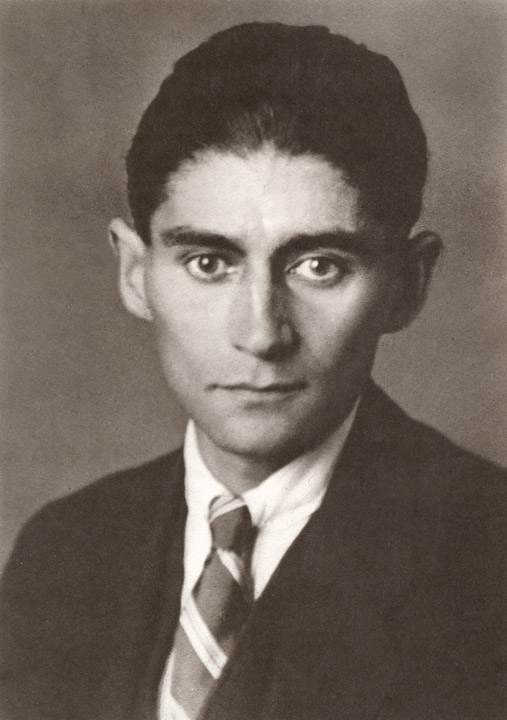
“Our laws are not generally known; they are kept secret by the small number of nobles who rule us.”

[Franz Kafka, “The Problem of Our Laws,” Parables and Paradoxes, Schocken Books, New York.]

Franz Kafka

Franz Kafka

The laws of which Kafka wrote in the early 20th Century are not the ones peculiar to his time. They are not written in legislation. They are not acts of Congress. They are not the federal, state, or local statutes and ordinances lawyers argue in courts of law. The laws of which he speaks are not visible to the masses. They are the secret of the nobles. They are laws of a different order.

“The laws were made to the advantage of the nobles from the very beginning; they themselves stand above the laws.”

According to Kafka, the nobles themselves have inherited the Law as a mystery whose origins are hidden in antiquity. The nobles believe in this Law, but, in fact the Law is whatever the nobles do.

We, the populace who live under the Law of the nobles, dream of a time “when everything will have become clear, the law will belong to the people, and the nobility will vanish. This is not maintained in any spirit of hatred against the nobility; not at all, and by no one. We are more inclined to hate ourselves, because we have not yet shown ourselves worthy of being entrusted with the laws.”

Franz Kafka knew nothing of Donald Trump, the noble who knows the Law is whatever the nobles do and convinces the masses that we, too, can become nobles.

“Actually,” wrote Kafka, “we can express the problem only in a sort of paradox: Any party that would repudiate, not only all belief in the laws, but the nobility as well, would have the whole people behind it; yet no such party can come into existence, for nobody would dare to repudiate the nobility. We live on this razor’s edge. A writer summed the matter up in this way: the whole visible and indubitable law that is imposed upon us is the nobility, and must we ourselves deprive ourselves of this one law?”

  • Gordon C. Stewart, writing from the shoreline of Lake Shagawa, Ely, MN, September 9, 2015.

“Trumped”

Emily Hedges

Emily Hedges

by Emily Hedges

My parents’ annual visit from Oklahoma falls during Shark Week this year. The July Discovery Channel tradition captivates my Dad. He sent a text a month ago reminding me to set a DVR recording. Since arriving, they spend time with my three kids—nine, eight and seven—gathered around the television in the downstairs living room watching glass-eyed, roving predators take chucks out of human thighs and sides. I allow it against my better judgement. I have already said no to Dad’s dosing my kids with home-brewed colloidal silver and the show River Monsters. I feel I can’t say no to everything, so I say yes to this with my silence.

“It’s not just a great white. It’s a rogue monster with a taste for people,” Dad tells us over coffee. In a show he watched the night before, three boaters encountered a megalodon—a super shark—which dragged their craft underwater.

“Naturally the two women were panicking, but the man stayed calm. This guy in the boat next to theirs volunteers to go down and try to bring them up,” Dad says. “He was just some guy willing to go down there knowing what was waiting. Now that’s courage.”

“You know Dad, there’s nothing ‘natural’ about women panicking,” I say. He just cuts a glance at Mom, frustrated that once again I’ve missed the point. I’m curious about the word “megalodon” so I Google the name. I learn it’s an extinct, ancient shark scientists believe once measured 40 to 70 feet in length, compared to the average great white that is from 15 to 20 feet.

Later that day I’m sitting in the living room reading. Mom and Dad come in with my nine-year-old, Scout, and sit down. The television screensaver is scrolling stock landscape photos with news headlines. I see the name Hillary Clinton out of the corner of my eye. Dad sees it too because he says, “Okay Emily. The election is tomorrow. Who do you vote for, Hillary or Trump?”

“Hillary!” Scout responds with a fist pump in the air. I love her innocent, uncalculating honesty. If only it was so easy to be an adult child. I feel my parents’ eyes on me and hope perhaps this is a rhetorical question, meant as a comment on the impossible state of American politics, like when I proclaimed myself a conscientious objector in the 2004 Bush/Kerry election. But their silent, challenging expressions make it clear they’re waiting for a response.

“Hillary,” I say, knowing how my parents feel about her. Just the day before, my Dad detailed what he refers to as the “Clinton body count”—White Water, Ruby Ridge, Waco, and “all the others” strewn along their path to the top. But surely they couldn’t support Trump either. I remember how Bill’s presidency inspired an almost daily discussion of the necessity of character in an American president? Would they consider Trump as having character?

“Why?” Mom asks me in an accusing tone. Then she catches herself, forcing her body to relax against the arm of the couch. The corners of her mouth soften into a half smile. She’s trying to look calm, but it only gives her face a smirk.

“What do you know about him? Has he broken the law?” she challenges. Unformed sentences catch in my throat. I don’t know whether I should let them out or keep them trapped. Paralyzed, I feel myself bobbing in open water about to be bitten. Then a memory surfaces from their last visit. While drinking coffee on the deck, Mom made a statement about global warming that I challenged. Her face flushed; her lips trembled; and her eyes turned shiny. She apologized each time she reached up to wipe away a tear with the back of her hand, weathered and brown from daily work in her garden.

“I’m sorry. I don’t know why I’m crying,” she kept saying over and over.

I look down at her hand and remember how when I was little, I used to wrap it up in a wash cloth and pretend it was my baby. Now those gentle fingers are curled inward, clinched together with anger.

“It wouldn’t surprise me if he’s broken the law given his business, but of course I don’t know that and I’m not going to bear false witness against him,” I say, hoping this might discourage them from doing the same about Hillary in front of Scout. Unlike yesterday when I was able to smile and walk away, in front of my children I don’t have that option.
“Really Emily. What do you think you know about him?” Mom presses.

I see gold-plated Trump Tower near Columbus Circle in New York; his Atlantic City casino, in bankruptcy when I was there in 1999 on business. I see the arrogant sneer, the hair.

“I don’t really think you want my opinion, so I’d rather not say.” I am careful not to appear upset. Then I go upstairs for a soda. As I disappear around the corner, I hear her say, “For someone who doesn’t pay attention to the news, you seem to think you know a lot.” Her tone was low, meant only for Dad. My parents think I don’t follow the news because I don’t watch Fox, and I never bring up current events. My pride makes me want to correct her, but instead I say loud enough for her to hear: “I pay attention to more than you think Mom.”

It occurs to me—why Trump over all the other Republican candidates who seem a more logical fit for my parents’ conservative Christian worldview? I’ve never heard them mention him before. Why now? I hear the TV roar back to life downstairs, and the answer comes to me: for the same reason Trump is trending—for his recent comments describing Mexican immigrants as criminals, rapists, roving predators. I turn, ready to go downstairs and tell them there is no research that supports the claim that illegal immigrants are more likely to commit crimes (except relating to immigration of course) than the rest of the population. In fact, statistically they are less likely, which makes sense given their fear of deportation. But then I stop. What good would it do? I look over at my two younger children sitting at the kitchen table coloring, both adopted from Mexican American birth parents, and puzzle over my parents’ logic.

After a time I return to the living room and all appears to be forgotten. In this episode a man in a cage is lowered into shark-infested water. The scientists hope to tag one of the great whites so they can better understand their movements and protect the nearby beach full of unsuspecting innocents swimming only a few hundred feet from a seal breeding ground. Then the scientist hazards an opinion as to why shark attacks have increased so dramatically over the last decade in this one beach off the coast of South America. His theory is that increased dumping of toxic waste into waterways is constricting the great white’s domain.

“The victim is always at fault,” my Dad says sarcastically. The suggestion that man could play a role in shark attacks offends him. He explains to Scout that it’s in the nature of a shark to look for new territory and to kill. To try to attribute that nature to something man causes or deserves is to deny observable fact. His words feel like the dark ocean, and I notice his arms forming a protective cage around her. She snuggles into them the way I did when I was little and I’m jealous. From where I sit on the opposite couch, it’s obvious there’s only enough room in them for a child. I watch his eyes watch the flickering images. His face seems content, the threatening, disintegrating world contained within the borders of the 48-inch television screen.

“When you’re rich, they think you really know”

Video

A song for Labor Day from Fiddler on the Roof helps explain the rise of You-Know-Who who seems to really know. When ordinary folks are losing their heads momentarily, a little humor’s good for the soul. Keep an eye out here for Emily Hedges Trumped.

  • Gordon C. Stewart, Chaska, MN, September 6, 2015


Who Is Emily Hedges?

Emily Hedges

Emily Hedges

Emily’s not just any writer. She’s a good one!  Emily’s review of Go Set a Watchman, Harper Lee’s controversial sequel to To Kill a Mockingbird, appeared on Views from the Edge on Thursday.

Parenting three adopted children with husband Joe, she carries a history of courageously outgrowing herself. Today she’s thriving at Dartmouth College, earning her master’s degree in creative writing and student-teaching basic writing to undergrads. Kay and I became friends the Hedges during their time here in Minnesota.

New Hampshire is politically hot right now in the run-up to the New Hampshire Presidential Primaries. Donald Trump is making it big.  So what happens when conservative parents from Oklahoma take over the television during a family visit in New Hampshire?

You may recognize yourself in this highly personal piece. She’s sensitive to her parents, although she no longer agrees with their conservative, apocalyptic view of the world. She constantly struggles with when to bite her tongue and when to speak up. Now that her children are old enough to be influenced by their beliefs, the stakes have never been higher.

Check back with Views from the Edge for her story Trumped.

  • Gordon C. Stewart, Chaska, MN, September 5, 2015.

From Labor Day to Shopping Day

Remember Labor Day?

Violence against labor

Violence against labor – 1938 strike

There was a time when the nation closed down on Labor Day as a tribute to America’s working people.

Then something happened. The Labor Movement which brought about the end of child labor, the 40 hour work week, and won workplace safety laws, lost its steam. “Unions” became a four-letter word. Free market economists convinced the country that unions were responsible for America’s economic problems. The auto industry vacated Detroit for “Right to work” states or Mexico or outsourced parts production, as did other industries, to places where management would have free reign setting wages, benefits, pensions, and work conditions for employees.

This morning I asked a store clerk whether she’ll be working on Monday. “No,” she said, “We’re closed.” “Good,” I said, “you should be. Good for [name of the company]. Everyone should be off unless they’re working somewhere where  an essential public interest at stake.”

Then I came home and searched “Labor Day”.  9 Best Sales of Labor Day 2015 – US News popped up. It’s a shopper’s holiday in the free-market consumer society. Tenty-three percent of American workers work in retail. Amnesia reigns. But, in case you’re wondering, Costco will honor its workers Monday. Walmart invites you to “celebrate hard work with huge savings”.

Click HERE for the heart of Labor Day and why Labor Day is important in the year 2015 when America’s 1%, the class of J.P. Morgan, have succeeded in turning Labor Day into a shopping event when the laborers have to work.

  • Gordon C. Stewart, Chaska, MN, September 5, 2015

A Deeper Look @ the “Migrant” Crisis in Europe

This morning as the BBC reports on Hungarian migrants’ “Walk to the Border” of Austria, this report offers a different picture of the crisis’s origins and meaning for the future. Views from the Edge has added Maroon to draw attention to the humane impulse and to the too easily ignored question of who’s responsible for the crisis.

Victor GrossmanIMMIGRANTS, WELCOME AND UNWELCOME

by Victor Grossman – Berlin Bulletin No. 98, September 5 2015

After finishing off this bulletin late last night – actually early this morning – I sent off a first batch and finally went to bed after 2 AM. But in the morning I found it was already outdated on one important point: the Hungarian government, facing growing violence and the “Walk to the Border” mentioned below, gave in and agreed to the offer by the Austrian and German governments to skip strict rules and let the migrants cross the border into either country. Skeptical at first, fearing new tricks, the refugees, after waiting a few hours until the news proved genuine, have since been moving out of Hungary by the thousand, arriving exhausted but grateful in their hoped-for new Gardens of Eden, getting for a start a bottle of water, a banana and a new registration number. It all seemed a ragged replay of the journey of jolly, well-nourished GDR emigrants – or “freedom seekers” – along much the same border-crossing route in 1989, leading to major changes in all Europe. Will this also have seismic effects? Who knows?

Otherwise I think my bulletin is still valid.
+++++++

A silent three-year-old, lying drowned on a Turkish beach, the tearful protest of a Syrian man as he, his wife and baby are torn from the tracks next to a locomotive by Hungarian police, desperate families jammed into tiny, leaky vessels boats hoping to reach Europe alive or, if they do, facing ever new obstacles from weather, hunger and thirst to barbed wire fences and pepper spray – these pictures hammer at emotions here for one tragic week after another.

In truth, for many months and years such scenes caused those in power more irritation than dismay. British PM Cameron complained of immigrant swarms as if a nasty foreign ant species was threatening his island. He and French President Hollande viewed the miserable “Jungle” of asylum-seekers in Calais, icy-cold, as a problem for truck insurers and police squads. The officialdom of Germany and a largely obedient European Union focused on squelching hopes for true sovereignty, jobs and an endurable existence of the Greek people – or any others daring to follow their example.

But as more and more human beings fled the bloody fighting, the air raids and ruins in the Middle East or hopeless poverty in their homelands, events in Europe escalated. Far-right organizers, always present in Germany, took advantage of the growing numbers of refugees to denounce even planless, weak measures to help them and turn citizens’ dissatisfaction and fears for the future into hatred toward anyone weaker than they, suspected rivals for any improvement or assistance. Thousands marched with ugly signs and banners, at first aimed at “Islamists” but soon at anyone with a different culture or skin color. This was officially disapproved of but often tolerated, even protected.

Older buildings or container structures, renovated to house the growing numbers of arrivals, were often faced with mob protests, even riots. When buildings were set ablaze, usually but not always empty, Germany’s reputation demanded a response. Leaders like Vice-Chancellor Gabriel visited and denounced the “mob”. At last, on August 25th, Frau Merkel also visited Heidenau near Dresden, where xenophobia had reached fever heat. Quite horribly for Germany’s so very respected, calm and collected leader, she was confronted with posters and shouts calling her a “Traitor”. Some intoned a slogan, greatly admired in 1989 when directed against East German leaders, but now less welcome: “We are the people”.

It was ironic that Saxony’s police, so numerous and arrest-happy when leftists block Nazi march routes, were too pitifully understaffed to do much; despite barrages of rocks, bottles and fireworks they made only one paltry arrest. Saxony, the only East German state run by Christian Democrats ever since West Germany took over the GDR in 1990, is known for its lax attitude towards far-right forces, despite pious disclaimers – and that is where there are the most mobs and fires.

But then a change became apparent. The discovery of a truck on an Austrian highway with a hardly conceivable number of 71 corpses inside, refugee men, women and children suffocated and deserted by the “people-smugglers”, was a shock and one key element in much new thinking. Instead of a courageous but limited number of mostly young anti-fascists, large numbers of often less political Germans discovered their humane impulses – and increasingly acted on them. While most government officials on local, state and federal levels dillied and dallied, tied up with matters like officially registering people and always understaffed, more and more citizens moved in to help, bringing blankets, clothes, diapers, food, water and toys. They cooked, teachers organized German classes, some simply stood guard against the racists – with posters saying “Refugees Welcome!”

What has occurred is a real split in the German population, somewhere near the middle, with many people taking not only a humane position but often a courageous one, for nationalist grumbling about immigrants, at least as common as in some regions in the USA or elsewhere, has in Germany especially disturbing reverberations from the past and some potentially very violent elements.

It is unexpectedly interesting that German leaders, with open ears to all factors, began to welcome this huge wave, which may reach 800,000 this year, at least in words and with often hesitant steps.

Some media recalled that after World War II Germany, in ruins and reduced in size, absorbed 12 to 14 million refugees from Eastern Europe, especially Poland and Czechoslovakia. Of course, they were Germans who spoke the same language. Then, from 1969 to 1972, millions of so-called “guest workers” were taken in, originally to do the rough, dirty work and then leave. But a large number, especially Turks, stayed and settled down, although this time the integration has been far more problematic. But it was possible, and after the Berlin Wall went down there was another big wave, East German and Eastern European, with 700,000 arriving in 1992 alone. None of the waves ruined the economy! Economists point out that the demographic facts of life, with ethnic Germans having ever fewer children, demand many immigrants, especially young people with growing families.

Now, surprisingly, and despite rightist terror and foot-dragging politicians, Germany has become the main defender of the refugees in the European Union and a Mecca for the majority of them, like those in Budapest’s Main Station chanting “Germany, Germany”. Indeed, the Hungarian government had to trick them into thinking the trains they were crammed into were headed for Germany; instead they were soon halted so their misled passengers could be bussed off to a caged-in tent camp and registered. As I write, hundreds, probably thousands are defying this trick with a hunger strike or by trying to walk, with their elderly and their babies, to the Austrian border 150 miles away. The violence of a xenophobic Hungarian officialdom, at a total loss for any solutions, seems to be worsening, while the barbed wire fence built by Hungary to stop the refugees may recall to some the pageantry involved when it cut its fence to Austria in 1989, setting in motion the downfall of any form of socialism in Eastern Europe.

A few countries, led by Germany and the unwilling hosts to the arriving boats, Italy and Greece, now demand that the refugees be shared out through Europe, with quotas based on size and economic strength. Cameron responded with a vague hint at limited approval, Denmark, the Netherlands and above all Eastern Europe reject any such plan. At first Slovakia had said “We’ll take a few hundred – but only Catholics!” Now it and the Czech Republic, with Hungary and big Poland, are so stubbornly opposed that the whole wobbly structure of the European Union is trembling alarmingly.

To complicate matters even more, official Germany’s welcome smiles vanish when it comes to so-called “economic refugees”; many Africans but mostly discriminated Roma people of Eastern Europe and poverty-stricken people from Albania and all of former Yugoslavia – most of all Kosovo.

Cleo, the muse of history, must again turn to irony. It was the German government (all top parties) which was most active in splitting Yugoslavia into national slivers. Germany hotly encouraged the war to “liberate Kosovo”, joining in the merciless bombing of Serbia and leaving the “western Balkans” in wrecked, chaotic disarray. It promised Kosovo freedom and prosperity; what now reigns, in the presence of German and other UN soldiers, is described as “corruption, gang crime, poverty and discrimination against the Roma”. Wages average about 300 euro, youth unemployment is at 60 %, the health service hardly functions. But desperate attempts to reach the promised and once so grandly promising land in the north are almost hopelessly doomed to fail.

This raises a key question, almost agonizingly avoided in the media, which angrily denounces vicious, greedy “people-smugglers” but not those who caused this misery in the first place. Who provoked the wars in ex-Yugoslavia? Who unleashed “shock and awe” in Iraq, killing hundreds of thousands and driving millions from their homes? Who invaded Afghanistan, as vengeance for September 11th, with a “war on terror” unleashing fourteen years of killing and destruction and forcing thousands upon thousands to flee? Who wrecked Libya – to “protect its down-trodden” – opening the way for anarchy and a fleet of deadly cutters and rubber dinghies? And who massively armed the destructive hordes in Syria, in part via billion-euro contracts with Saudi Arabia, the United Emirates, Qatar and Turkey, all to fight Assad, all trying to hold or grab a bigger slice of that tragic land? True, one of those involved, Turkey, is filled with perhaps two million who fled from Syria. Another, the USA, agreed to welcome about 1000. The Saudis, Qatar and the UAE, so far as known, have taken none.

These forces, in different countries but all obscenely wealthy, are the real guilty ones, guilty in the long run for the rubble of Palmyra and for little Aylan Kurdi, now interred with his brother and mother in Cobane, another city destroyed by the highly profitable weapons of the fanatical, oil-rich ISIS while its erstwhile friend and customer, our NATO ally Recep Erdogan of Turkey, stood by. Aylan and his family were not allowed to enter Canada where their relatives had hoped to welcome them.

What is ahead? Let us hope the world is spared from more such blessed freedom battles against “Islamic terror” – and more unimaginable heartbreak! Iran has 75 million citizens. If some current people’s wishes and plans are not prevented we may yet be welcoming many of them, too – or as many as survive!

Daily Riches: Cutting Through Political and Religious Illusions (Vernon Howard, Thomas Merton and Dietrich Bonhoeffer)

Bill Britton's avatarRicher By Far

“Every day that you attempt to see things as they are in truth is a supremely successful day.” Vernon Howard

“It seems to me that the most basic problem is not political, it is apolitical and human. One of the most important things to do is to keep cutting deliberately through political lines and barriers and emphasizing the fact that these are largely fabrications and that there is another dimension, a genuine reality, totally opposed to the fictions of politics…. My own peculiar task in my Church and in my world has been that of the solitary explorer who, instead of jumping on all the latest bandwagons at once, is bound to search the existential depths of faith in its silences, its ambiguities, and in those certainties which lie deeper than the bottom of anxiety. In those depths there are no easy answers, no pat solutions to anything. It is…

View original post 297 more words