Seeing different things and common sense

Not only do we see things differently; we see different things.

Minnpost.com republished Views from the Edge’s “Reframing the Gun Conversation.” The commentary encourged a more thoughtful conversation among rural, urban, and suburban Americans by placing the issue of gun violence within the philosophical context of “Life, Liberty, and the pursuit of Happiness” (American Declaration of Independence).

Fifty-nine response were mostly respectful, sometimes contentious, frequently like ships crossing in the night. The differences seemed grounded in something else much more foundational than the rural, urban, suburb settings that contribute to our perceptions.
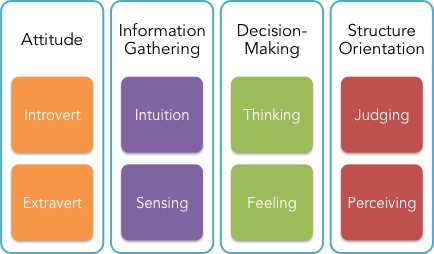
MBTI Chart

MBTI Chart

On later reflection, the comments struck me as a poster child for the Myers-Briggs Type Inventory  (MBTI), which identifies 16 different ways individuals put their worlds together.

Mr. A, for example, could not understand Mr. Y’s preoccupation with statistical information. To Mr. A’s way of putting his world together, Mr. Y’s facts and statistics alleging to prove that gun violence in America is decreasing are an attempt to dismiss any serious discussion of gun violence in America.

For Mr. Y’s way of putting the world together, hard data are the baseline for any reasonable discussion. Phrases describing “a tidal wave of mass shootings” and “an endless parade of mass shootings” misrepsent the facts. In his view, Mr. A is clearly biased from the beginning. There can be no discussion if the premise is biased by emotion.

According to the MBTI profiles of different types of cognition, Mr. A and Mr. Y demonstrate contrasting extremes of perception and decision making, very different ways of putting their worlds together. “ST” types (Mr. Y) “know” by collecting information and analyzing it; “NF” types know” by intuiting a situation and approach an issue based on values.  Sometimes never the twain shall meet.

Despite all their differences, the majority of comments and exchanges made one thing clear. The word ‘gun’ is a trigger word. For gun rights advocates, it triggers a defense in fear that “they’re coming to take away our guns” or an outcry in fear that”they’re going to keep and us their guns no matter what.”

Most interesting was the comment by a gun-owner and Second Amendment rights advocate who seemed to bridge the gap in search for “common sense” solutions to gun violence in America.  We’ll call her Ms. Q. She wrote:

I am one who grew up in a rural area. I own guns. It may surprise some, but not others, that it wasn’t uncommon to find student vehicles (pickups, mostly) with guns openly stored in them. That has probably changed…it’s been a while. But I would venture to guess that guns can still be found in the vehicles of students, just not so openly.

My dad was a member of the NRA. One day, I realized (or maybe Dad mentioned it) that there was a junior membership. Well, being a daddy’s girl, I considered it. I enjoyed hunting, I enjoyed spending time with Dad, I respected what Dad thought and did. So, I read some of the NRA literature. Being somewhat precocious, I realized that the NRA wasn’t about hunting or hanging out with Dad. It was about guns. Guns Guns Guns Guns. Even back then (as I said, it’s been a while), it wasn’t about freedom or happiness, the NRA was about guns. I realized that I didn’t want to join the NRA because my gun ownership wasn’t about guns. I didn’t love guns. I loved being an American kid who had the freedom to be happy doing things like hunting with my dad. There were better organizations that more perfectly captured that feeling for me.

As I’ve aged, I am still a defender of Second Amendment rights. But not the NRA way, which seems to be the dominant position among the loudest gun rights advocates. We need to think practically about the problem. Sure, we law abiding gun owners are doing the right thing. Right? I own 3 guns and have never sold those 3 guns. However, only 1 of those guns was new when I got it. The others were purchased…well…without any safeguard at all. Friends of friends type of deal. Yeah, it’s been a while, but I guarantee you that those types of sales haven’t stopped and they are certainly not subject to background checks. How do you suppose people who commit crimes with guns get them? All of those guns were likely sold legally at some point, but eventually ended up in the wrong hands. How do we stop that?

I agree that certain restrictions will have absolutely no effect. But I also submit that many legitimate gun owners are failing to see how they contribute to the problem. What do you do with a gun you no longer want? How about this: in 2010, about 4 million babies were born in the US…but 5.5 million new guns were manufactured in the US and another nearly 3 million were imported. How many guns does each baby need? Seriously, the pace of gun manufacture has outstripped the growth of the country, which means that there are a significant number of people who are buying multiple new guns and either accumulating them (most gun collectors are harmless) or selling some. Once a gun leaves the hands of the original owner, it is harder and harder to make sure that the next owner is not one of those “inner city criminals.” That is, if you’ve ever sold a gun, you’ve contributed to the problem.

Further, I submit that keeping a gun in such a way that results in harm to someone else, particularly children, is a criminal act. Which suggests that even some law abiding gun owners are actually not law abiding. At the very least, every gun owner should be properly trained in gun use and storage. And, if gun owners oppose that measure, then for the sake of their unfortunate children, laws should be allowed to physically restrict who can use the gun. A dead child isn’t a good way to learn that lesson.

Finally, not everyone is a hero. No, not everyone should have a gun on them to “protect themselves.” Half of all people are of average intelligence or less. Combine that with the fact that common sense isn’t so common, and disaster is waiting to happen. Case in point: the woman who decided to fire upon a SHOPLIFTER leaving a home improvements store while they were driving away in a parking lot that had other people in it. She had not been threatened and none of the stolen items were hers. That woman showed all the intelligence and common sense of a dead slug. Fortunately, her Second Amendment right didn’t kill anyone, but not for lack of trying.

Can we agree that we should consider applying real common sense to the problem?

Thank you, all, but special thanks to Ms. Q for the final question.

  • Gordon C. Stewart, Chaska, MN, Nov. 2, 2015

A funny thing happened at the doctor’s office

A funny thing happened yesterday during my annual physical.

The physician was excited to share something she’s very proud of: a policy statement on “Firearm-Related Injury and Death in the United States: A Call to Action from 8 Health Professional Organizations and the American Bar Association“. Click HERE to read the entire text.

It begins with an Abstract that reads, in part, “Deaths and injuries related to firearms constitute a major public health problem in the United States.

The document provides findings and recommendations based on the separate policies of the 7 health professional societies that represent most physicians in the United States – American Academy of Family Physicians, American Academy of Pediatrics, American College of Emergency Physicians, American College of Obstetricians and Gynecologists, American College of Physicians, American College of Surgeons, and American Psychiatric Association and the American Bar Association.

She noted how rarely doctors and lawyers join together on public policy positions, let alone an issue as contentious as this one. This was a victory of common sense among doctors and lawyers.She was pleased that her medical society is part of this Call to Action.

“The specific recommendations include universal background checks on gun purchases, elimination of physician ‘gag laws’, restricting the manufacturing and sale of military-style assault weapons and large capacity magazines for civilian use, and research to support strategies for reducing firearm-related injuries and deaths. … The American Bar Association through its Standing Committee on Gun Violence, confirms that none of these recommendations conflicts with the Second Amendment or the rulings of the U.S. Supreme Court.

“Across the United States, physicians have first-hand experience with the effects of firearm injuries and deaths and the impact of such events on their patients and families. Many physicians and other health professionals recognize that this is not just a criminal violence issue but also a public health problem.”

This year’s annual physical enlightened more than the state of my health. Like clergy, physicians hear stories that confidentiality keeps between sealed lips, but the doctors know the sorrow from the inside out in ways to which most do not have access. Congratulations for speaking out to frame the questions in terms of public health.

  • Gordon C. Stewart, Chaska, MN, October 27, 2015

Flip Saunders and the Media

Yesterday morning Minnesota media announced the untimely death of Flip Saunders, one of Minnesota’s most beloved public figures.

Cheered long ago as the diminutive starting point guard of the University of Minnesota Gophers basketball team, Flip worked his way through the ranks of the CBA to become a successful NBA Head Coach with Minnesota, Detroit, and Washington before returning “home” to Minnesota as both President and Head Coach of the Minnesota Timberwolves.

There is a deep sadness over his loss. At 60 years old, he was looking forward to the fruits of his labor, the makings of a future world championship team developed by Flip’s extraordinary draft picks, trades, and the return to Minnesota of Kevin Garnett, the NBA star who credits Flip with his development when Kevin was fresh out of high school.

Like Garnett himself, Flip Saunders was not a native Minnesotan. But he, and Garnett, came to see this as home, as do many out-of-state transplants once they taste the beauty and culture of Minnesota.

Today it’s that culture that should be lifted up along with the love for Flip: the respectful silence kept by the media in response to the Saunders family request for privacy during the long hospitalization that began in early September.

Readers and sports pundits who feed on sensationalism might have misinterpreted the absence of detailed coverage as meaning the sports writers and the media didn’t give a flip about Flip. It’s rare that the need for privacy is honored, even when a family requests it.

Team owner Glenn Taylor and the Minnesota Timberwolves were a class act from the first announcement of his diagnosis and encouraging prognosis to the heartbreak of his long hospitalization and death.

Flip’s illness and death were handled with the rare discretion that represents the very best of Minnesota Nice. Minnesotans don’t like prying into each others’ business unless invited, and quiet respectfulness is a Scandinavian characteristic that held back the pens of sports writers and voyeurs until there was something to share.

The StarTribune headline, quoting the NBA Commissioner, reads “Flip Saunders ‘leaves gaping hole in the fabric of the NBA”.  In the fabric of NBA culture of bigger-than-life heroes, Flip Saunders brought something smaller, more private, and all too rare.

Verse – the Decline of Western Civilization

What we called “Jewels”
are now called “Junk.”

And what we straight guys called “Heaven”
is now called a “Hoohaw.”

[Nota bene: if one clicks “like” on this post, it does NOT mean one approves of this degradation of nomenclature. Rather, a “like” indicates gratitude to the author for pointing out yet another sign of impending disaster. 😇]

  • Steve Shoemaker, Urbana, IL, October 23, 2015

Happiness

What is this searched after state we Americans pursue, one of only three “unalienable rights” specifically named as worthy of praise in the American Declaration of Independence – “the pursuit of happiness”?

Did the writers of the Declaration mean what we mean? Or was it something different? Why was such a subjective term as ‘happiness’ listed with Life, and Liberty?  Was there a reason why the pursuit of Happiness was listed as the last of the three? What it considered least important, of equal importance, or, perhaps, as most important?

Thomas Jefferson and John Adams, the principal writers of the Declaration, were well-schools in the Classics – the ancient Greek and Roman philosophers, novelists, playrites and poets; Democritus, Plato, Aristotle, Homer, Cicero and Diogenes. They read Plato’s Republic, Cicero’s Disputations, Aristotle’s Nicomachean Ethics, Metaphysics, and Politics; Virgil’s The Aeneid, and Sophocles’ Oedipus Rex in their original Greek or Latin language. They translated the New Testament Gospel of John from its original Greek into Latin and into English.

What did happiness mean to these classical writers? How did it inform Jefferson, Adams, Franklin, and the rest?

The word εὐδαιμονία’ (eudaimonia) expressed the Greek philosopher’s understanding of what Jefferson and Adams called happiness.

The term “eudaimonia” is a classical Greek word, commonly translated as “happiness“, but perhaps better described as “well-being” or “human flourishing” or “good life“. More literally it means “having a good guardian spirit”. Eudaimonia as the ultimate goal is an objective, not a subjective, state, and it characterizes the well-lived life, irrespective of the emotional state of the person experiencing it. ….

Socrates, as represented in Plato‘s early dialogues, held that virtue is a sort of knowledge (the knowledge of good and evil) that is required to reach the ultimate good, or eudaimonia, which is what all human desires and actions aim to achieve.

The Basics of Philosophy

Happiness, as understood in Aristotle’s Nicomachean Ethics, is the full human flourishing which is the highest of all good according to Nature.

The Committee of Five that wrote the final draft approved by the Second Continental Congress had something like that in mind.

One researcher claims the following:

“Actually, happiness was defined by the Continental Congress in the original May 1776 declaration of independence as “internal peace, virtue, and good order,” closely following Cicero’s Tusculan Disputations; the definition of happiness was drafted by John Adams, not Jefferson.” [Link inserted by VFTE]

[Unidentified source within longer article on the origins of “the pursuit of happiness in the American Declaration of Independence.] -Other Choices (talk) 00:14, 16 June 2012 (UTC)

Whether we are happy in America is a matter of perspective and definition. Some of us would say we are; others would say not. But a fresh look at the Declaration of Independence’s original meaning of the word as human flourishing might lead us to the discussion of “the full human flourishing which is the highest of all good according to Nature” in a consumer society intoxicated with distraction and superficial definitions of happiness.

  • Gordon C. Stewart, Chaska, MN, October 28, 2015

A Picture of God

A Kindergarten teacher observed the children drawing pictures in her classroom. As she walked around the room, one little girl was totally absorbed in her drawing when the teacher asked what she was drawing.

“I’m drawing God!”

“But no one knows what God looks like,” said the teacher.

The girl kept drawing. Without a hitch and without looking up, she replied, “They will in a minute.”

As part of their research, psychologists have asked children to draw pictures of God looking for correspondences between the children see their parents and how they imagine God.

“God the Father” of trinitarian Christian theology was of particular interest. The children’s drawings turn out to be vastly different, depending upon positive or negative experiences with their fathers. Some drew God as kind and loving; others drew God as fearful and violent.

Sigmund Freud, Karl Marx, and Ludwig Feuerbach would not be surprised. Each in his own way saw ‘God’ as a human projection, not a Divine reality. Yet there is something about even the most disbelieving of us that is still drawn to try to draw God.

Maybe the little girl in the kindergarten class had heard in church the line that “No one has ever seen God, but if we love one another, God lives in us and his love is made complete in us” (I John 4:12). Maybe she was drawing Love.

  • Gordon C. Stewart, Chaska, MN, Nov. 5, 2015.

Verse – “He was just a railroad man”

Trains are steel and men are flesh–
When they meet some men will die.
He lay crushed, those passing by,
“He was just a railroad man.”

The dispatcher heard them talk–
He told his friends down at the Y.
Cleveland built a Railroad Y
Welcomed all the working men.

Nineteen hundred eleven
Saw two hundred railroad Y’s
Eat some chow, get some shut-eye,
Read a book–a healthy man.

Railroads paid for about half–
Workers gave to help their life.
Dignity, respect, human:
Yes, he was a railroad MAN.

  • Steve Shoemaker, Urbana, IL, Oct. 19, 2015
St. Louis Railroad YMCA, now a Drury Inn

St. Louis Railroad YMCA, now a Drury Inn

Life, Liberty, and the Pursuit of Happiness

Vivinfrance’s Blog posts interesting thoughts of a writer named Viv who lives in France. Today’s post is about weapons and creativity.

How could I write a poem about weapons
without swearing or weeping?
It is my deeply held view that
makers, sellers, buyers of weapons
are as guilty of murder
as those who use them.

***
Transform the energy from good food
into breathing, walking, running.
Transform scraps of this and that
into a meal, a sculpture, a quilt, a poem.
Practise living a healthy, creative life
in kindness and beauty.

Here in the U.S. we’re fighting over who’s responsible for all the violence. “It’s people who kill, not guns,” say some opponents of gun control, defenders of a skewed rendering of the Second Amendment. But it’s also the guns, the bombs, the drones, the land mines, the missiles – the weapons manufacturers who kill and maim.  There’s nothing in the Second Amendment about the right to kill and maim.

More importantly and too often missing from the public discussion, the Preamble of the Declaration of Independence starts with certain “unalienable Rights, among which are the Right to “Life, Liberty, and the pursuit of Happiness.”

In that trinity of unalienable rights and values liberty means nothing unless it supports the right to life and the pursuit of happiness. Otherwise, it serves the purposes of death and sorrow. As Viv reminds us from France,

makers, sellers, buyers of weapons
are as guilty of murder
as those who use them.

Until we the people demand that liberty be returned to its rightful place, the weapons manufacturers will continue to make a killing on killing at home a abroad.

  • Gordon C. Stewart, Sunday morning, reflection, Chaska, MN, October 18, 2015.

Verse – The Memorial Service

The day we remember
at the Memorial Service
a friend of 55 years, some
will say he was a human
having a spiritual experience,
looking to the skies for the
one who’s “passed on”.

Others of us remember
the face, the smile, the stride,
the fitness, the speech
and mannerisms during
walks in the mountain woods
of a real human having a
spiritual experience.

Are we flesh and blood,
living on the eternal’s shore
turned back to dust?
Or are we stardust that
never dies, immortals
experiencing mortality
before returning to the sky?

Has he died or passed on?
Are the ashes and memories
of Phil what remain of him
or were his smile, his walk
and talk just time-bound
expressions of a spiritual
being locked in a cage?

I hear no bird singing but
the funeral dirge and hymn
reminding us to think
less of ourselves and our
not-so exceptional species
of flesh and blood, dust and
ashes left in cemetery urns.

“O God, our help in ages
past, our hope for years to
come, we fly forgotten as
a dream dies at the opening
day. Be Thou our guide
while life shall last and
our eternal home.”

Today our tears again will
fall, as do all creatures
great and small when
time’s short river returns
to the eternal ebb and flow
whence we came and to
which all soon return, with
sobs of humility and praise.

  • Gordon C. Stewart, Chaska, MN, October 17, 2015, written in anticipation of today’s Memorial Service for college and seminary classmate and friend Philip Conner Brown. At the same time as the Memorial Service today at White Bear Lake United Methodist Church, he will be remembered in a Chapel service for Maryville College alumni who died during the last year.


Non-verbal Communication: Cain looking at us

Cain and Abel – the mythical story of the first two children of humanity – in the Book of Genesis (Genesis 4:1-16) is about something that never happened way back when but about what is always happening with us: the inexplicable violence to which humankind turns against itself. It’s about the yawning abyss of violence into which we plunge when we can’t make sense out of life or when things don’t go our way.

Yesterday’s brief post on Via Lucis Photography of Religious Architecture focuses on a capital of Cain and Abel in a Romanesque church.

Photograph by Dennis Aubrey of Via Lucis Photography of Religious Architecture

Photograph by Dennis Aubrey of Via Lucis Photography of Religious Architecture

Like the Genesis writer, the Medieval artist whose hand crafted the story in stone many centuries later was doing theology and anthropology. The biblical author told the story with words; the Medieval sculptor told it with non-verbal communication.

The face of Cain on Via Lucis held my attention long after I’d gone on with the day. It kept returning to mind.

Cain’s head isn’t turned toward Abel whom he is pummeling to death with his stave. He’s looking away from Cain at someone or something else, as if to say the viewer, “So, you think I’m cruel. You think I’m different. You’re looking in the mirror.”

In the biblical story God tells Cain, “sin is crouching at the door; its desire is for you, but you must master it.” The Medieval sculptor’s art seems to be saying it in stone. Cain’s head is cocked, his eyes looking at us. At you. At me.  And, perhaps, at God, to whose failure to rescue Abel he shifts responsibility: “Am I my brother’s keeper?”  The capital seems to say Cain knows he owns us and the endless history of violence in which the blood of the silent victims cries out from the ground, unless and until we – persons, groups, religions, races, cultures, nations, a species – master the sin that’s forever crouching at our door.

  • Gordon C. Stewart, Chaska, MN, October 16, 2015