Elijah: Grandpa, what’s surreal mean?

The_Elephant_Celebes

The Elephant Celebes by Max Ernst. Oil on canvas. 125.4 x 107.9 cm. Tate Gallery, London.

Grandpa, what’s surreal?

Where’d you get that word? You’re only five months old!

I heard it on the news. Some flake from Arizona said it.

1200px-Jeff_Flake_official_Senate_photo_(cropped)

Senator Jeff Flake (R-AZ)

Well, it wasn’t “some flake,” Elijah! It was Senator Jeff Flake, and he’s not a flake. Flakes are like snowflakes. You haven’t seen snowflakes yet but it’s supposed to snow tomorrow. You’ll see. Snowflakes fall from the sky, turn everything white, and then they disappear.

Did Jeff Flake disappear? He’s white. Is he surreal?

No, Elijah, he hasn’t disappeared and he’s not about to disappear.

So…what are you talking about? You’re not making sense, Grandpa!

Well, Jeff Flake was saying what thinking people know: what’s happening in the world right now is surreal.

That’s what I asked you!!! What’s ‘surreal’?

Life is, Elijah! You’re only five months old.  You’ve never known anything but the surreal world. It’s the world that has “the disorienting, hallucinatory quality of dream; unreal; fantastic” (Dictionary.com). Life itself has become surreal.

Grandpa, are elephants real?

Yes, why?

‘Cause Marissa doesn’t’ like elephants. She says they’re mean and out of touch with reality. Are elephants like snowflakes?

No, Elijah. Elephants are real. But some elephants, like the one Marissa is talking about, are . . .  well . . .  surreal and deranged. They want the whole world to be white. They’re snowflakes.

Yeah, but not like Jeff Flake. Jeff Flake’s no flake!

Right, Elijah. He’s like Max Ernst and the Surrealists who exposed the underlying insanity by painting it. Jeff Flake painted it with words.

IMG_1779 E 5 monthsThanks, Grandpa. This whole conversation has been surreal. I love words!

  • Grandpa Gordon, Chaska, MN, Oct. 26, 2017.


Elijah and his sitter’s text

Grandpa, my babysitter was crying today.

IMG_1779 E 5 months

Elijah (five months old)

I’m sorry, Elijah. Why was she crying?

Marissa’s cousin in Puerto Rico sent a text five days ago but Marissa didn’t get it until this morning. She was crying hard, Grandpa! It was really sad.

What did the text say, Elijah?

I thought you’d ask, so I asked Marissa to print it out ’cause you’re old. You don’t text so good.

‘Well’, Elijah, I want you to learn to speak proper English. You should say, “You don’t text so well” — not “you don’t text so good.”

Yeah, well, you say ‘well’ a lot. That’s not good. Well, here’s what Marissa’s text from Puerto Rico said. It’s not good.

Month 2. Day 1.

No power

We have running water

Telecommunications are fair on the best of days. I consider it successful if I can consistently get 2mb down. Today it’s about 0.13mb.

Traffic is insane

Fuel lines are better

Shopping takes hours

We are the lucky ones, the privileged ones. It’s not better, progress is slow, medical care is impossible for many.

We are here. We need your help. Keep pressure on news organizations, on elected officials, and aid organizations. Use your voice for people who have been silenced.

Grandpa! We’re gonna help, right? Are we ‘privileged’?

  • Grandpa Gordon, Chaska, MN, October 24, 2017

Open Letter to NFL Owners

To: Mark and Zygi Wilf, owners, Minnesota Vikings
Cc: NFL Commissioner Roger Goodell

October 17, 2017

Today’s NFL owners meeting is a watershed moment. The agenda item  that would change the NFL’s rules limiting player behavior during the national anthem requires a courage stance informed by history.

As the sons of parents who were survivors of the Holocaust in Nazi occupied Poland, you are in a unique position to lead this discussion as owners of the Minnesota Vikings.

I applaud your initial response to the issue of taking a knee during the national anthem. By linking arms with Vikings management and players, and by your official statement on the matter, you supported players’ First Amendment right to free speech. You refused to buckle to the White House demagoguery that confuses taking a knee on behalf of racial justice with disrespect for the country.

I was pleased that you and the NFL stood up for a bedrock American principle. Principle trumped profits . . . momentarily. Now filling pockets threatens to empty the initial commitment to the U.S. Constitution.

If the NFL owners today accede to the president’s bullying, I, for one, will take a knee. I will turn off the television Sundays, Mondays, and Thursdays . . . as a matter of principle . . . and will invite everyone I know to do the same. Some things are more important than football. They learned that in Germany. I thought we had, too.

Perish the thought, but . . . if the national anthem pre-game ritual requires the equivalent of a “Sieg Heil!” salute that abrogates the right to free speech, maybe it’s time to end the pre-game ritual and just play football.

I hope and pray this morning that our Jewish friends lead the way today to honor the dead from the history we dare not forget and to stand up for the principle of First Amendment rights to freedom of speech.

And, while you have the floor, I hope you will bring to the league’s attention the duplicity of having defended the league against the president’s criticism of taking the knee while, at the same time, the owners appear to collude to exclude the original kneeler, Colin Kaeppernick, from taking the practice field.

Sincerely,

Gordon C. Stewart
Chaska, Minnesota

Neighborly Economics

Mindfulness —the latest topic around the water coolers — helps in times like these. While some use Yoga or some other eastern meditation to become more mindful, my practice is to contemplate the poetry of the Book of Psalms. I open Psalm 146 in hopes of putting my anxious soul at ease from this moment of history.

Praise the LORD, O my soul,
I will praise the LORD as long as I live;
I will sing praises to my God as long as I have my being.

Put not your trust in rulers, nor in any child of earth,
for there is no help in them.

When they breathe their last, they return to the earth,
and in that day their thoughts perish. (Ps. 146:1-3)

The psalmist assures me that this moment will not last forever. The elevation of the rich and the assault on the poor, the game of matches lit near the fuses of nuclear devices on two sides of a vast ocean, the name calling between the two narcissists whose Echoes sound the same despite the differences in language, the scenes from Puerto Rico in the aftermath of Maria, the burned-out forests, homes, and vineyards in northern California, the undermining of the hope for universal health care, and the disregard for the Paris Accord addressing climate change have ground me down. There is no help in the White House or Capitol Hill. But, their time, the psalmist declares, is but a breath, a moment. Their thoughts will perish.

IMG_8484

cabin by the wetland

In the solace of the cabin by the wetland far from the news, I am breathing easier. Away from the rulers in whom the psalm urges me to place no trust, my mind is calmer. I am in need of no great thing.

But, after lighting the fire in the wood stove, it dawns on me that we’ve forgotten some supplies for the weekend. We have no bread. Or ice cream!

I remember a sign for “DON & DAVE’S: Groceries and Gas — 4 Miles.”

IMG_8514Don & Dave’s is a throw-back to the day Don founded it 70 years ago. From the looks of the exterior, although it is well-kept, I imagine little except for the “ATM Inside” sign has changed since 1947.

“You must be Don or Dave,” I say to the man inside. “I’m Dave,” he says with a smile. I’m Don’s son.” Dave is in his late ‘60s. Don was his father, killed in a car accident years ago. Dave joined his father in the business in 1977. I introduce myself as the owner of the A-frame by the wetland, but he already knows from Shirley, our only neighbor within a quarter of a mile of the cabin.

I take a look around the store, pick up a $1.59 loaf of locally made wheat bread, notice the ice cream freezer, pick up a large tub of Neopolitan ice cream, notice a Hershey milk chocolate with almonds bar, and take them to the check-out counter where Don meets me.

I take out my credit card. “We don’t take plastic,” says Don. “Just cash or check.” I tell him I don’t have either. “Well, we have an ATM,” he says. “I don’t do ATM’s,” I say. You need a PIN for that. I have no idea what the PIN is; Kay does that. I don’t have a clue.” He laughs and invites me to take the bread, ice cream, and Hershey bar without paying. “No problem. Please take it. You can pay me when you come back.”

He takes out a slip of scrap paper, writes down my name, the amount I owe, and the date, and wishes me a good weekend.

Four hours later I return with the cash just before 6:00 P.M., hoping Don and Dave’s is still open on a Saturday night. Turns out they open at 8:00 A.M. and closes at 10:00 P.M. seven day a week! I learn from the young woman who greets me that Don has left for the day, and explain that I’m here to pay my bill. She asks my name, and fetches the piece of paper from a shelf below the cash register. “What should I do with this? Tear it up?”

“No,” I say, “I want Don to know I came back and I want to say thanks. Just write ‘paid’ with today’s date and let me add a word of thanks.”

I had learned earlier from Don that there are four Walmarts with a 60 mile radius of Don & Dave’s. I wonder when the last time was Walmart sent an empty-handed customer away with so much as a loaf of bread, a tub of ice cream, and a candy bar.

I’m very mindful. In the moment. 1947 never looked better!

The Fly that Would not Flee

In the pre-dawn pastel glow

Outside the lakeside window,

The fly inside is very still.

pre-sunrise glow

Lake Superior pre-dawn pastel glow.


For the half hour before the sun

Pokes its yellow head over

The brim of Superior’s horizon,

The fly does not move.


Perhaps the fly is dead, I think,

And gently touch it from below.

It does not fly away.

200px-Simulium_trifasciatum_adult_(British_Entomology_by_John_Curtis-_765)

It takes a few steps forward,

An inch or two higher on the window —

This oratory the intruder has disturbed

In the hour of morning prayer.


Only after the sun has risen

Does it leave the window

But not before completing


Its sun-dance: turning from east

To south, to west, to north, and

Back to East again to greet the day.


The observing intruder from whose

Finger the fly did not flee reads

from The Book of Common Prayer:


“Deliver me, O Lord, from evil-doers;

Protect me from the violent,

Who desire evil in their hearts

And stir up strife all day long.”

[Psalm 140:1-2]


A fly lands on the prayer book.

I swat the fly away.

  • Gordon C. Stewart, the intruder, Encampment Forest, Lake Superior, MN, October 6, 2017


Things too hard for me

Momentary access to the world-wide-web leads away from many words toward reflection on an ancient text.

O Lord, I am not proud;

I have no haughty looks.

I do not occupy myself with great matters

or with things that are too hard for me.

But I still my soul and make it quiet,

like a child on its mother’s breast;

my soul is quieted within me.

O Israel, wait for the Lord,

from this time forth and for evermore. 

[Psalm 33, Book of Common Prayer psalm for the morning]

sunrise-over-lake-superior

I wake before dawn to see the sun rise over the far horizon beyond Lake Superior, shining its rays across the waves, a beauty beyond compare. I do not occupy myself with “great things” that matter less and things too hard for me. I am not proud.

— Gordon C. Stewart, Encampment Forest, Two Harbors, MN, October 5, 2017.

Elijah: “Dear Mr. President”

Elijah’s Letter to the President

September 30 , 2017

Dear Mr. President,

I’m in my carseat for my first road trip to the cabin up north, but Grandpa shared with me the letter he just sent you. I’m proud of my grandpa and I want to be proud of you. Grandpa says you’re sort of like an uncle because you went through Presbyterian confirmation class like grandpa.

But my babysitter doesn’t like you. She speaks Spanish. During the day with Marissa, we’ve been watching CNN for news from Puerto Rico, and she’s said a lot of bad words about you.

She clapped when Mayor of San Juan Carmen Yulín Cruz called you out. Then, this morning, she cursed again after you admonished the Carmen. Marissa’s with Carmen.

I’m only 18 weeks old. I’m still trying to understand what’s real and what’s not. Right now I’m not sure of much of anything. I trust Grandpa and I trust Marissa. They both love me and take care of me. Both Grandpa and Marissa are as upset with you as the Mayor of San Juan in Puerto Rico.

I see the pictures from Puerto Rico and think you must, too, because you watch a lot of television, even if you consider CNN fake news. I’m little and don’t know much yet, but the pictures don’t look fake to me. And it’s not just pictures. It’s all over the radio. Marissa listens to NPR.

NPR’s Manadalit del Barco spoke to 8-year-old Yan Anthony Hernandez who is staying at a shelter in the city of Aguadilla on Puerto Ruco’s northwestern coast. The boy had a message for Trump.

“Stop tweeting and come help the people.”

Marissa wants to know whether you really care about Yan, the Mayor, and the rest of the people of Puerto Rico or just want them to go away like the undocumented workers you’re sending back to Mexico.

Sometimes Marissa sings to me. “Jesus loves the little children, all the children of the world — red and yellow, black and white — all are precious in his sight. Jesus loves the little children of the wold.” Grandpa says maybe your babysitter sang that song for you when you were little like me, but I wonder.

If you have time to write back, I’ll share your response with Marissa and Grandpa and have them make another copy to send to Carmen in Puerto Rico.

Respectfully,

Elijah (18 weeks old)

Grandson of Grandpa Stewart


In stillness I wait

fd102fe612128b9da9857f58e5286d30I see things in the wilderness I do not notice at home.

Last night the sky was lit by lightning on every side —north and south, east and west— but the lightning was flashing from far away. There was no sound. There was no thunderstorm within miles of the A-frame under the stars.

The cabin by the wetland is like that — a place apart for a news-weary soul. A humble shelter of rough-cut pine without electronic devices among the crows, owls, white-tailed deer, skunks, and swans. Yes, the skunks are here, digging for grubs at night, but the skunks here don’t stink up the place like humans do back home, and, like the crows, owls, deer, and swans, they know nothing of the world I’m trying to leave behind.

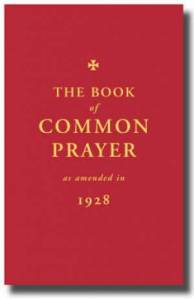
1928_bcpThis morning’s Psalm from the Daily Office of The Book of Common Prayer brings its own kind of light from afar.

We give you thank, O God, we give you thanks,
calling upon your Name and declaring your wonderful deeds.

“I will appoint a time,” says God,
“I will judge with equity.

“Though the earth and all its inhabitants are quaking,
I will make its pillars fast.

“I will say to the boasters, ‘Boast no more,’
and to the wicked, ‘Do not toss your horns;

“‘Do not toss your horns so high,
nor speak with a proud neck.’”

[Psalm 75:1-5, Book of Common Prayer]

The lightning flashes from ages ago, calling me to hope for such a time.

In the morning stillness of the wilderness, I wait.

  • Gordon C. Stewart, uploading at the truck stop 12 miles away, September 23, 2017.


Grandpa, did the president say that?

Elijah and HarveyElijah and I were watching the President’s speech to the United Nations General Assembly when suddenly Elijah sat bolt upright.

Grandpa, did he really say that?

Say what, Elijah? He’s said a lot of things.

Trump at United NationsDid he just call Kim Jung Un “Rocket Man”?

Yes, he did, Elijah.

That’s not right! You told me never to call people names. Then he said he would destroy his country! He sounds like a bully. You taught me bullying’s bad, right Grandpa?

Right. Bullying is bad. It’s always bad. The president just embarrassed every American.

And then he insulted all our allies whose countries are socialist. All our European allies are socialist, right Grandpa? Israel’s socialist, right Grandpa?

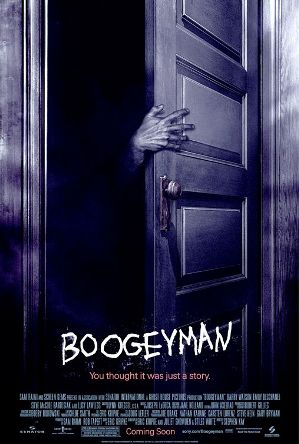
That’s right, Elijah. He doesn’t know what he’s talking about. He still believes in the Boogeyman.

Boogeyman_posterWell, I think he’s acting like the Boogeyman. Don’t ever leave me in the same room with the president, Grandpa. He’s mean. He’s scary!

Don’t worry, Elijah, President Trump will never take care of you. Mom will. Grandma and I will. Your baby sitter will. And the world leaders will babysit Mr. Trump.

  • Grandpa Gordon, Chaska, MN, September 21, 2017.


That would Ted do?

Conversations with a best friend newly diagnosed with pancreatic cancer led to me back this morning to Ted Gill, whose obituary we republish here.

Why? Because my friend, like Ted Gill, served as president of an institution of theological education, participated in the civil rights movement, and is finding fresh meaning in the communion of saints, that strange article of the Christian creed that connects the living and the dead as we have never been gathered in time.

People in Minnesota often ask “What would Wellstone do?” Paul Wellstone was a child of the Iron Range. So was Ted Gill who was born in the town where the Wellstone’s plane crashed.

In light of Ted Gill’s obituary — “Late in his life, Ted Gill remarked that ‘the high point of my career in the ministry was the week that I cost my seminary five million dollars’” — we might well ask, “What would Ted do?”

Theodore A. Gill, Sr.
Presbyterian Pastor, Theologian, and Educator

Rev. Dr. Theodore Alexander GillThe Rev. Dr. Theodore Alexander Gill, a former president of San Francisco Theological Seminary and later provost of John Jay College of Criminal Justice in the City University of New York (CUNY), died at the age of 85 on Friday, June 10 following a lengthy illness, in Princeton, New Jersey.

Born in Eveleth, Minnesota on January 7, 1920, Ted Gill was educated at the University of Wisconsin-Madison, Princeton Theological Seminary, Union Seminary in New York City, and the University of Zurich where he wrote his doctoral dissertation on “Recent Protestant Political Theory.” His teachers included Emil Brunner, Karl Barth, Josef Hromadka, Reinhold Niebuhr, and Paul Tillich. He was awarded six honorary doctorates during his career. In his time at the San Francisco seminary, he became one of the founders of the Graduate Theological Union based in Berkeley.

After serving Presbyterian parishes in New Rochelle, New York and West End Presbyterian church in New York City, he became professor of religion and dean of the chapel at Lindenwood College in St. Charles, Missouri, and subsequently managing editor of The Christian Century magazine in Chicago and editor of its sister publication The Pulpit. He was president of San Francisco Theological Seminary from 1958 to 1966, leaving that position to occupy the higher education desk of the World Council of Churches in Geneva, Switzerland. Following a return to the parish in Detroit, he joined the faculty of John Jay College of Criminal Justice, a CUNY college in midtown Manhattan, where he remained from 1971 through 1989. In retirement, he served as theologian in residence at Nassau Presbyterian Church in Princeton, New Jersey.

Ted Gill’s passion was for the link between religion and the arts, and over the years he served as a part-time leader of such organizations as Art, Religion, and Contemporary Culture – founded by Paul Tillich – and American Summer Institutes, a series of annual seminars on theology and the arts in locations that included Rome, Berlin, Budapest, and St. Andrews. As president of the San Francisco seminary, he organized a ground-breaking program on theology and theatrical arts. He also served on Presbyterian judicial commissions in the northeast and on national church committees that produced The Worshipbook of 1970 and commissioned the seal or logo of the Presbyterian Church (U.S.A.) in 1985. At the time of his death, he was a retired member of the Presbytery of New York City.

From the early days of the US civil rights struggle, Ted Gill publicly supported equal rights for all and openly opposed segregationist practices in both southern and northern states. In 1963-64, he was regional chair of California’s “No on Proposition 14” campaign against discriminatory housing legislation, and in 1965 he marched with Martin Luther King from Selma to Montgomery, Alabama in support of voting rights. As he and dozens of students and faculty members from San Francisco Theological Seminary participated in the Selma to Montgomery civil rights march of 1965, promises of millions of dollars in endowments to the institution he led were withdrawn in protest by potential donors. Late in his life, Ted Gill remarked that “the high point of my career in the ministry was the week that I cost my seminary five million dollars.” In later years, he voiced support for the full participation of gays and lesbians in church and society.

51N4rqkX+bL._AC_UL320_SR240,320_He was the author or editor of numerous books, journals, and articles. Among his books were The Sermons of John Donne (1958), Memo for a Movie: A Short Life of Dietrich Bonhoeffer (1971), and, with Robert Bellah and Krister Stendahl, Religion and the Academic Scene (1975).

He was noted for editorial columns and sermons that were featured in church magazines and on radio’s “The Protestant Hour.” Preaching in a sermon series titled “Christian Clichés,” Ted Gill told his listeners:

“I have known and loved too many of the victims of the old-fashioned version of the ‘Christian’ life: wonderful, juicy human beings who were persuaded by a misguided church that they had to veil their vividness, bank their fires, dehydrate their interest, denature their enthusiasms, if they wanted to be Christian. No, the old idea will not do… The Christian life is not the life that is made to fit the legalistic box, that is forced to fit into the pattern. The Christian life is life lived in a certain direction – in, through, around, above whatever temperamental, physical, psychological obstacles any of us may have. But always in that direction – the direction which is assigned to us by what we know of God, by what we know in Jesus Christ of the character and nature of the realest real, by what we know in Jesus of God and the love of God. The Christian life is life lived in appropriate reaction to God’s action for us. The Christian life will be described in terms of the direction we are headed, and of how well we keep going in that direction, no matter how often we trip and fall.”

At the 1968 assembly of the World Council of Churches, Ted Gill gave a speech on “The Great Convergence” of education and the churches. Reflecting on student demonstrations in universities that spring, he revealed his discomfort with patterns of conformity in higher education:

“On the campuses, a generation erupted, an important piece of society let fly. The protest might have begun on the field of general education, but it was a wild shout, a rough rejection of education-in-general, of everything taken for granted by all the elements now molding people, coercing society, determining the future. The real adversary was not this or that administrator or this or that teacher or this or that course. The real adversaries were that rigid vice-chancellor, the status quo; those sternly directive professors, government and industry; that intolerable bore, academic tradition; those long courses in accommodation… Some of the brightest and best of our youth flame now in revolutionary dissatisfaction with the goals they see accepted by those who teach them, affect them, direct them. They distrust the values commonly invoked. They defy the system which ever more efficiently instructs the new generation in means that they see leading straight to inhuman ends: unendurable inequities, intolerable narrowing of human possibilities, blasphemous vulgarizations of spirit.” (“The Great Convergence,” The Ecumenical Review 20.4 [Oct. 1968], 385-94.)

In the April 1958 issue of The Pulpit, editor Gill reflected on the intricacies of theology in light of his father’s recent death: “We squabble and we rant about all the picayune details we assign to mysteries completely beyond our assessing, when all we really have to tell the world, all we really have to live on is the good news that God is love… But now, the love of God that gets us through our hard days is for more than funerals. It is for living along. When you know in your bones that the most real knows you and loves you, that beyond the vicissitudes of experience and the catastrophes of existence the ground of all being has declared itself for you, there should be a relief and a release in your living, a new inventiveness and zest in your living, a new pleasure, a more confident participation in life and its precious fascinations.”

Due to a blockage of his carotid artery in May 1994, he lost the capacity for speech and began a gradual decline in health. His wife of 57 years, Katherine Yonker Gill, died in July 2002. He is survived by a daughter, Laurie Melissa Keeran of Brewster, Massachusetts; a son, the Rev. Theodore A. Gill, Jr. of Geneva, Switzerland; a grand-daughter, Elizabeth Katherine Gill of Durham, North Carolina; and longtime caregiver Ben Mensah of New York City. A memorial service will be held at Nassau Presbyterian Church in Princeton, New Jersey and is being planned for Monday, June 20.

Click HERE to read the NYT obituary.

  • Gordon C. Stewart, Chaska, MN, September 20, 2017.