Prayer in Public Schools – Letter to the Editor

Uncle Bob's letter to the Editor - 1963

Uncle Bob’s Letter to the Editor – 1963

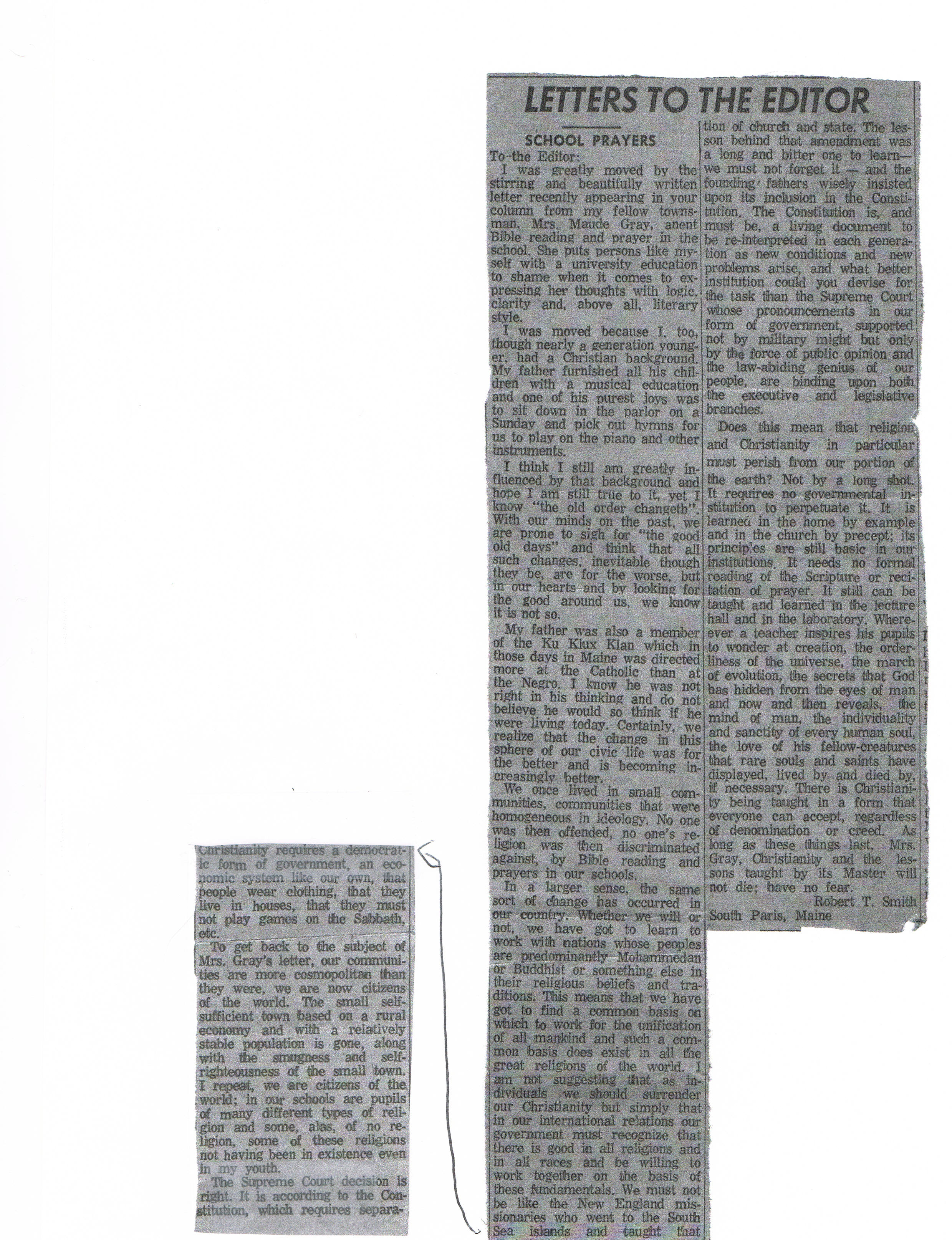
Does this look old? It is. Typed on a manual typewriter in 1963. Some things are worth their weight in gold. This Letter to the Editor is one of them.

Robert Smith, my Uncle Bob, sent this Letter to the Editor of the local paper in South Paris in Oxford County, the poorest county in the State of Maine.  A native of Kennebunk, Maine, he was a relative of John Smith of the legendary tale of Pocahontas, who  married my mother’s sister, Gertrude, after graduating first in his class at Harvard Law. He opened a law office in South Paris, met the love of his life and courageously raise a family: my first cousins Alan (who never spoke a word because of Cerebral Palsy), Dennis, and Gwen.

He became the District Attorney and then the Probate Judge in Oxford County. A Republican of the Nelson Rockefeller brand, he wrote his Letter to the Editor after the U.S. Supeme Court ruled that prayer in the public schools was unconstitutional. To the chagrin of many of his neighbors, he supported the Supreme Court decision.

His daughter, my cousin, Gwen, sent this to me. with a note:

“I am amazed at how ‘global’ his thinking was, especially when you think of South Paris! I couldn’t wait to get out as I saw it as being so insulated from the real world…knew there was something better out there. Dad would be drummed out of the Republican party he so strongly supported with this thinking, but all politicians could take a lesson in civility from this!”

Bob Smith died of a cerebral hemorrhage leading a congregational meeting of the First Congregational Church of South Paris where he was the President of the Congregation, Choir Master and Organist. He died the way he lived – with the courage of his convictions and a faith in Divine providence that does not depend upon or favor the tyranny of the majority.

Keep Awake – Undelivered sermon #1

KEEP AWAKE!

First Sunday in Advent, 2014
Texts: Isaiah 64:1-9
Mark 13:24-37

“And what I say to you I say to all: Keep awake.” [attributed to Jesus, Gospel of Mark 13:37].

It’s hard to stay awake in times like these. To be conscious means grief, helplessness, anger at the state of the world.

“Heaven and earth will pass away, but my words will not pass away” is supposed to bring comfort but it doesn’t, unless the heaven and earth of which Jesus speaks are the ones our pride has created. The imaginary ones. The heavenly and earthly projects that rise out of human insecurity as in the Genesis story of Babel, the story of what never was but always is, according to which the building of the ideal city is interrupted and the tower “with its top in the heavens” is “left off”.

But the word – the story about it – has not passed away. It endures. As fresh today as it was when first shared around a campfire as a way of telling each generation the respective places of God and man (humankind).

The Tower of Babel by Pieter Bruegel.

The Tower of Babel by Pieter Bruegel.

Fourteen years after the World Trade Towers collapsed in NYC, a new tower, “One World Trade Center” – taller, stronger, bolder – stands where the old towers fell on 9/11.

One World Trade Center, symbolizes a resurrection of the crashed myth. Standing a few blocks from Wall Street, where the global economy is reconstructed every day, One World Trade Center re-erects the myth of national supremacy, benign goodness, and the virtue of the American economic system. Which is different from a resurrection.

We could have left Ground Zero empty, void of monoliths and phallic symbols. We could have turned it into a plaza, a memorial to the error of pride, a turning away from global arrogance. A repentance from the economic-military-religious complex that expropriated the oil fields in the Middle East, assassinated the elected President of Iran in 1958, installed the Shah in his place, ignored the human rights of Palestinians, supported and installed western-friendly oligarchies and strong men in Saudi Arabia, Iraq (Saddam Hussein), Libya (Muammar Gaddafi), and Egypt (Hosni Mubarak) until, except for Saudi Arabia, they turned against us.

Instead of listening to the word that does not pass away, we Americans, to the sorrow of New Yorkers like Michael Kimmelman (” A Soaring Emblem of New York, and Its Upside-Down Priorities, NY Times, Nov. 29, 2014), opted for the old words and worn-out scripts that have failed us.

The Arab Spring in Libya, Egypt, and Tunisia did not do what the NeoCon exporters of Western democracy had imagined. It unleashed a seething volcano of anti-American resentment. Meanwhile, Afghanistan, Iraq, and now Syria, have become desert quagmires – Vietnams without jungles.

One World Trade Center

One World Trade Center

Eisenhower’s last speech to the nation warning of an emerging military-industrial complex is all but forgotten as One World Trade Center stands like a phoenix raised up…and up…and up from the ashes, the world’s tallest building, symbol of global dominance re-erected from the horrifying deadly collapse of 9/11.

Words and symbols are everything in this world.

As Mr. Kimmelman put,

“…[The World Trade Center Twin Towers] never really connected with the rest of Lower Manhattan. There had been talk after Sept. 11 about the World Trade Center re-development including housing, culture and retail, capitalizing on urban trends and the growing desire for a truer neighborhood, at a human scale, where the windswept plaza at the foot of the twin towers had been.”

It’s all about human scale. A plaza. Not a tower with its top in the heavens.

Staying awake is hard. Being attuned to what is not passing away takes faith. It takes hope. I takes courage. Maybe even love.

“From the fig tree learn its lesson: as soon as its branch becomes tender and puts forth its leaves, you know that summer is near.” [Mark 13:28]

Jesus often seems to have said that the word we need to hear is spoken by nature. Learn from the fig tree. It waits through the dormant season to become tender again, to put forth its leaves toward summer when it produces its sweet figs.

Nature is calling. Nature is our home. Nature is what is – the real heaven and earth – the word that will not pass away, the word that will survive when we are gone. We need to love nature again. Awaken to nature. Re-imagine ourselves as part of nature, “creatures” like all the other creatures. Our words will pass away, even the best of them. Our Creator’s word will not.

During Advent – this most puzzling of seasons, the season of wakeful, wait-ful anticipation of a Coming in fullness – I find myself crying out like Isaiah. “You have hidden your face from us, and have delivered us into the hand of our iniquity.” [Isaiah 64:7]

“O that you would tear open the heavens and come down, so that the mountains would quake at your presence—as when fire kindles brushwood and the fire causes water to boil– to make your name known to your adversaries, so that the nations [the ‘ethnoi’ in New Testament Greek, i.e.” the peoples”] might tremble at your presence!” [Isaiah 64:1-2]

The “nations” have always been God’s adversaries, closed in on themselves, puffed up, defensive against intruders foreign and domestic, plunderers of nature and other nations, hostile to the foreigner, both human and Divine.

In this season of “economic recovery” when the poor continue to get poorer, the rich get richer, and the middle class shrinks, I pray “Good Lord, deliver us, from ‘the hand of our own iniquity’. Remember, ‘O LORD, you are our Father; we are the clay, and you are our potter; we are all the work of your hand.’ [Isaiah 64:8]”

This word is the only word that lasts.

Stay awake, my soul. Stay awake to the whole of it, all of it – the sorrow and the grief of it, the loneliness of it, the anger in it, the guilt of it, the finger pointing out and away and the finger pointing back at me, a nation to myself, and the presence of the Potter – and my soul will be well.

The World according to Ruby

You gotta be kidding!

You gotta be kidding!

This is the picture of my lovely grand-daughter Ruby hearing the shocking news from the grand jury in the Ferguson case.

That’s not right. That prosecutor was naughty!

Father and Son – the Audi

2005 Audio A4 2.0 AWD Quattro Wago

2005 Audio A4 2.0 AWD Quattro Wagon

Anxiety wears many masks. Sometimes it looks like a car shopper. Sometimes the car shopper is like his Dad.

I’m at a new stage in life. Our income will be cut by 40% in 27 days when we are both retired. We are excited by the freedom to enjoy life together without the obligations and distractions but are also anxious about finances and the unknown.

So what am I doing at a car dealership, trading the 11 year old Toyota Avalon for a nine year old Audi?

I rationalize laying out $9,000 with reasoning that I “know” is convoluted and self-defeating. It goes like this.

We’ll be on the road for two months. The Avalon has 120,000 miles on it. Can we trust it?

The Avalon needs $1,000 worth of body work to repair the damage done when it’s getting-older driver swiped the side of the garage.

But… we could leave the scrape the way it is and save the $1,000. After all, it’s 11 years old, and we don’t even know whether we will need two cars in retirement. We could sell the Avalon and pocket the $7,500 to add to our small nest egg.

The Audi has only 83,000 miles on it. It’s All Wheel Drive, great for driving in winter conditions. It gets better gas mileage. Sure it takes Premium fuel, but that’s only 30 – 40 cents more than regular.

But it is an Audi. I’ve never owned an Audi.

It’s confusing for a guy who loves cars, a guy addicted to car shopping. My brother does it too. It runs in the family.

Dad's 1983 Buick Skylark

Dad’s 1983 Buick Skylark

When my father could no longer walk without a walker and long after my mother had (sort of) prevailed to stop him from getting behind the wheel of the 12 year-old Buick Skylark, Dad continued to insist he could still drive. He suffered increasing dementia as the Parkinson’s wore on. He also continued to insist he could still play golf. “Ken,” Mom would say, “You can’t even stand up. How are you going to swing a golf club?” “Just take me over. I can still hit the ball.” He also never gave up his role as a Minister of Word and Sacrament, wanting to preach until a few months before he died.

Despite the very limited financial resources which my mother managed like a cookie-baker who hides the cookie jar from kids on sugar highs, Dad always wanted to buy a new car. “Skip, let’s run over and look at that new Buick. I saw it on TV. It’s a beauty!”

Dad dropped by car dealerships as naturally as a sex addict drops by the adult store. Maybe there’s a relationship. The both sell toys.

Tom, the Audi dealer, is a very nice guy. No pressure. “Take it home and show Kay. She’s going to love it. It’ll be the perfect fit for your retirement road trips. Keep it overnight. Just bring it back tomorrow. We can finish up the paper work in the morning.” I leave the Avalon with Tom and leave with the Audi.

Driving the Audi home I begin to notice that the suspension is sportier, which makes for a great driving machine – the Germans make the best – but also means that the ride is stiffer. I remember how I’ve always come back to an Avalon because of the seat and the soft ride. But this is an Audi. I’ve never owned an Audi, and it has all at the bells and whistles. Like the Audi guy says, “You’re retired; you deserve a great car! You goin’ to feel really good in this.”

On the way home, it dawns on me: “So…that’s what this is about.

As of November 10 I no longer have a position. I no longer have a public roll. I am no longer capable of confusing public standing with personhood. I’m anxious, unconsciously fearful. “Retirement” means old age. Loss. Hearing loss. Teeth in a cup. Memory loss. The road to the loss of everything.

The next morning, I take the Audi back to Tom.

Buying an Audi has its own kind of logic, but it makes no good sense, given our finances.  Even with an extended warranty. Because we, the drivers, don’t have “extended warranties”. Getting older can also mean getting wiser. Getting more comfortable being ourselves without status or position and their sex symbols. It’s time to practice what I’ve always preached: We don’t own a thing. We wear out beyond repairs and maintenance. It’s all about anxiety.

I chuckle and imagine a smile on Dad’s face. God doesn’t need an Audi or a Buick. Neither did Dad. Neither do I! I’ll ease on down the road in the Avalon.

– Gordon C. Stewart, Thanksgiving Day, Nov. 27, 2014

Verse – the Latest Thing

One holiday, my granddaughter
found the old, black, Royal typewriter
that was used by my grandfather
to write his first successful book.

She had learned how to hunt-and-peck
on her Mom’s and Dad’s computer,
so I found her some white paper,
and pushed the sliding carriage back

and forth for her. A fifth-grader,
she typed notes to her “Dear Mother,”
and, of course, to her “Dumb Brother.”
She did not seem to mind the lack

of some electrical power:
“It’s got its own built-in printer!”

– Steve Shoemaker, Urbana, IL, Nov. 25, 2914

You might not believe this

Mark Andrew after shopping at the Mall of America

Mark Andrew after shopping at the Mall of America

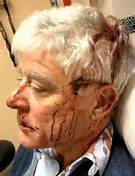
A year ago Mark Andrew was beaten within an inch of his life. We commented on the assault at the Mall of America at the time and are moved to comment now on the unusual sentence handed down yesterday in the case of his primary assailant.

Click “Young woman who beat Mark Andrews receives no jail time – at his request” – for the story aired yesterday by All Things Considered on Minnesota Public Radio.

Mark Andrew, man of compassionate wisdom

Mark Andrew, man of compassionate wisdom

There is judgment and there is mercy. Mark Andrew is a man of faith. He was taught and he believes that God’s judgment is always a function of God’s love, and, as Cornel West puts it, that “justice is what love looks like in public.”


Every head was bowed

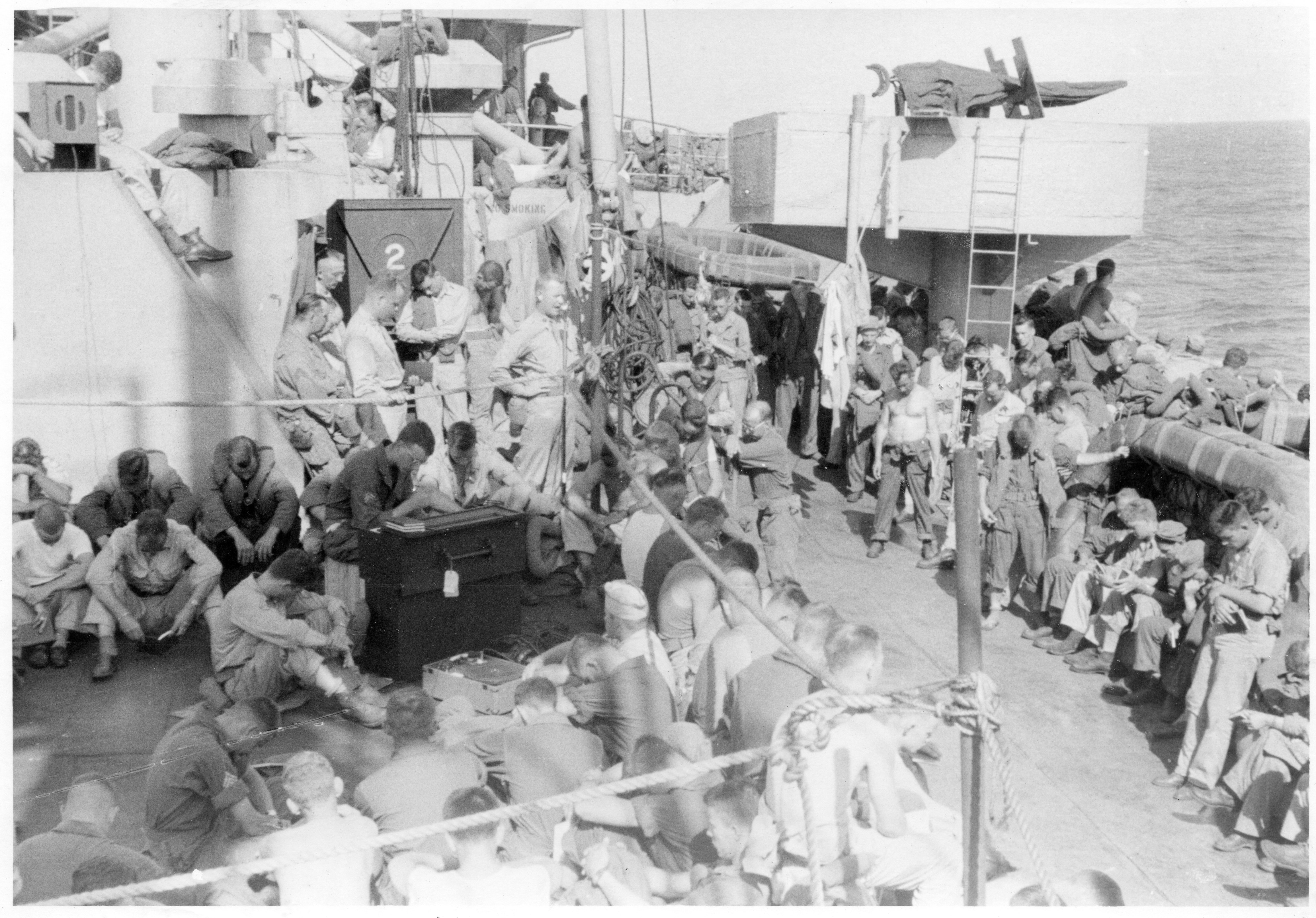
A reader of yesterday’s “On the Ship and on the Train” left a comment. The post featured this photograph of my father and his Army Air Force unit on board ship on the high seas on their way to Saipan in World War II.

My father, the Chaplain, on board ship to Saipan, WW!!.

My father, the Chaplain, on board ship to Saipan, WW!!.

Karin wrote:

“I clicked on the picture which made it large enough to fill my screen… I was amazed. Every man’s head was bowed. That brought a realization that they all knew what they were headed towards. Profound.”

My father was the Chaplain leading the prayer. Indeed, EVERY HEAD WAS BOWED.

Prayer came naturally to him. My brothers and I were blessed by his prayers every night at the dinner table. His head would bow. My mother’s head would bow. Our heads would bowed. There was a short, reverent silence – a time for centering, as we would call it today – followed by words. He addressed the Divine as “Thou”, not the familiar “you”. Antiquarian by contemporary standards, there was never any question that the “Thees” and “Thous” were not spoken to another one of us.

A remnant of his prayers – a sample of the kind of prayer by which he led the soldiers on the ship – was left in my possession in his old Bible.

God our Father, who hath commended thy love for us in that while we were yet sinners, Christ died for us: worthy was the Lamb that was slain to receive honor and glory and blessing.

Remembering once again him again whom we have pierced by our selfishness and folly, we acknowledge our sins and beseech thy forgiveness. We would learn of thee to forgive,  with thee to suffer, and in thee to overcome. Lord, in thy great mercy we ask that thou remember us now in thy kingdom – confirm our faith.

Forbid that we forget among our earthly comforts the mortal anguish our Lord Jesus endured for our salvation. As we behold him following the way of faith and duty even to the crown of thorns and the cross, grant us grace that we may learn the sterner lessons of life.

So endue us with power from on high that taking up our cross and following our Savior in his patience and humility we may enter in the fellowship of his sufferings and come at last to dwell with him in his eternal Kingdom.

I learned to pray at my father and mother’s table. Over time his theology changed in many ways, but his faith in Divine Goodness never waned.

In my last conversation with him before he died, I asked, “How are you doing with your faith?”

“Good,” he said with the heartiest smile his Parkinson’s would allow. He died two days later. His head was bowed.

Father and Son – the Pasternaks

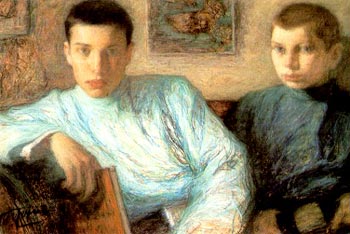
Leonid Pasternak painting of his sons Boris and Alex

Leonid Pasternak painting of his sons Boris and Alex

Thinking about father – son relationships led me to the Pasternaks, starting with the son, Boris.  Boris is seated to the left in this painting, done by his father. One wonders whether Boris and Alex were as angry as the father has painted them, or whether the father only imagined them to be resentful about sitting for the portrait. Father-son relationships are often hard to figure out. They’re about perceptions.

The name Boris Leonidovich Pasternak (1890-1960), the Nobel Laureate who declined the award in 1958, is etched in the annals of Russian literature.

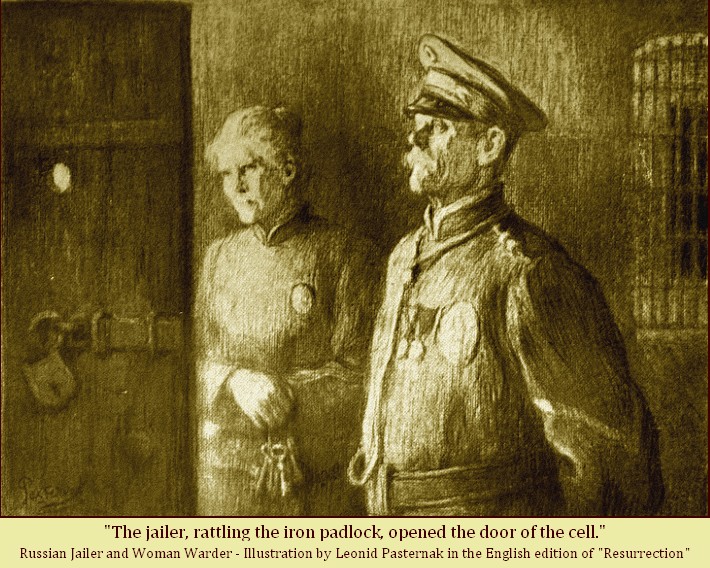
So is the name of his father, Leonid (1865-1945), the revered Russian painter and illustrator, friend of Rainer Maria Rilke and Leo Tolstoy, among others. Leonid’s drawings illustrated Tolstoy’s War and Peace and Resurrection.  

Can you see the father in the sons, and the sons in the father who painted them?

Photo of Leonid Pasternak, Russian painter.

Photo of Leonid Pasternak, Russian painter.

Why, then, would the sons’ father leave them behind?

In 1921 when Leonid Pasternak left Russia for eye surgery in Berlin, he took his wife and two daughters, Lydia and Josephine, leaving Boris and Alex behind in Russia. He never returned. He, his wife, and the girls remained in Berlin until 1938 when he fled from the Nazis to England. The sons remained in Russia.

According to the Pasternak Trust, “Leonid Pasternak was the friend and illustrator of Tolstoy.

Leonid Pasternak illustration in Tolstoy's Resurrection.

Leonid Pasternak illustration in Tolstoy’s Resurrection.

His portraits include studies from life of writers (Tolstoy, Gorky, Rilke, Remizov, Hauptmann); musicians in performance (Scriabin, Chaliapin, Busoni, Rachmaninov); other distinguished contemporaries including Einstein, Hoffman, Gordon Craig and Lenin.

“Sketches of family scenes – his wife at the piano, and their four children reading and playing – are among his most intimate and charming works. His landscapes stretch from the Black Sea to the Bavarian Alps and Palestine.” – Excerpt from The Pasternak Trust.

Although Leonid never returned to Russia, it was his brush that painted Boris into life as a painter whose brush was words, and one can imagine it was his mother’s music that lulled him to sleep even as an adult His mother was a concert pianist.

“‘What is history?” wrote Boris in Doctor Zhivago.

“Its beginning is that of the centuries of systematic work devoted to the solution of the enigma of death, so that death itself may eventually be overcome. That is why people write symphonies, and why they discover mathematical infinity and electromagnetic waves.”


Boris Pasternak, Doctor Zhivago (English translation by Nikolay Nicholayevich, 1957), Chapter 1, Section 5.

On the Ship and on the Train

I was 18 months old when my father shipped out for Saipan in the Mariana Islands of the South Pacific in WW II.

My father, the Chaplain, on board ship to Saipan, WW!!.

My father, the Chaplain, leading worship on board ship to Saipan, WW!!.

I don’t remember the ship. But I remember the emotional wake its departure left behind: the memory of my mother crying on a train. The sounds of the clicketty-clack of the wheels rolling down the track and the whistle blowing like a lost child in the night still plunge me into existential loneliness.

Late in her life, I shared with my mother the memory or her crying on the train.

Because I was so young when it happened, she was surprised that I remembered it, She confirmed it in great detail.

Dad felt “a call” to stand with the brave men who were risking their lives in the war against fascism and imperialism. With my mother’s blessing, he resigned his pastorate in Mechanicsburg, PA to enlist as an Army Air Force Chaplain. After six-months in the States, he left my mother and me behind.

While he was preaching on board ship, my mother and I were on a train from Los Angeles, his point of departure, to Boston, the home of my paternal grandparents.

I never saw the photo or thought of him aboard ship until a phone call and subsequent picture arrived by email from a researcher of my father’s unit on Saipan last month.  Dad was tending his “flock” on board ship. I never knew. Some things, like wine, take time.

Not everything is as it seems or feels. We do the best we can and pray it’s good enough.

The Reign of Christ

I’ve often wondered
why he included
me

in parables of goat
and sheep, of tare and
wheat

of a woman on a floor
to find her one
lost coin

of a manly crowd
with stones to throw at
“her”

of ramming rams and
bleating ewes and one
little lamb

of pride and loathing
of specks and logs in
eyes

of sight and light
of day and sleepless
nights

of father running to
greet his son from
empty sty

of water and wine
and miracles that healed
the sick and

called forth Lazarus
from the tomb, unwrapping
him and me

– GCS, Nov. 24, 2014 – early Monday morning the day following Christ the King (Reign of Christ) Sunday.