In Russia, Vladimir Putin denies responsibility for the death of Alexei Navalny. In the U.S.A, Donald Trump serpentine mind twists Navalny’s assassination into a fun house mirror, portraying himself as America’s Navalny — a victim of state power. When words fail me, I often turn to the Hebrew prophets. Finding Isaiah’s rebuke of Assyrian King Sennacherib in the Seventh Century BCE gives me the words. Isaiah speaks in the name of God (“I AM”) who cannot be mocked.
Isaiah’s rebuke
But I know your sitting down and your going out and coming in, and your raging against Me. Isaiah 37:28
ISaiah 37:28
A personal reflection
You cannot hide. You plot and scheme as though unseen, not noticed, secure in the dark places of public life. You rise. You sit. You go out among the shadows, declaring innocence and impunity. You mislead. You cheat. You lie. You bear false witness and concoct stories to assail your neighbors. You connive, conspire, and assassinate.
You poison your opponents and flood the public with fear and hate. You threaten your critics, and pay legal fees for sycophants who have placed their trust in you. You rant and rage and rouse the people with a voice that feigns righteous indignation.
Isaiah’s rebuke continued
Because you have raged against Me and your insolence has come to My ears, I will put My hook in your nose and My bit in your mouth; I will turn you back on the way by which you came.
Isaiah 37:29
A hook in the nose
Personale reflection
Uncivil, insolent, resistant, unhinged, kicking up dust on everyone around you, you mock whatever would restrict you, restrain you, expose you to the light of day, but darkness is not dark to Me. I hear you snorting, braying and bellowing. I see you bucking against the bit and bridal that will break you of your whims and schemes, your defamations and slander, your arrogance and threats, your schemes of terror, your treasonous justifications of insurrection and assassination.
I AM. You cannot hide from Me.
A call for prophets
The biblical prophets Isaiah, Amos, Micah, Ezekiel et.al. were not, as is commonly supposed, fortune tellers. They were not palm readers. Isaiah confronted Sennacherib, king of an empire, while he called his countrymen to re-claim the souls they had almost lost.
Eugene Peterson paraphrases the rebuke of Sennacherib in his masterpiece rendering of the Bible, The Message:
I know all about your pretentious poses,

  your self-important comings and goings,

 and, yes, the tantrums you throw against me.

Because of all your wild raging against me,

 your unbridled arrogance that I keep hearing of,

I’ll put my hook in your nose and my bit in your mouth.

I’ll show you who’s boss. I’ll turn you around

 and take you back to where you came from.

Isaiah 37:28-29
Gordon C. Stewart, public theologian, author of Be Still!: Departure from Collective Madness (2017, Wipf and Stock), 49 brief (two to four page) reflections on faith and public madness; Brooklyn Park. MN, Feb. 22, 2024.
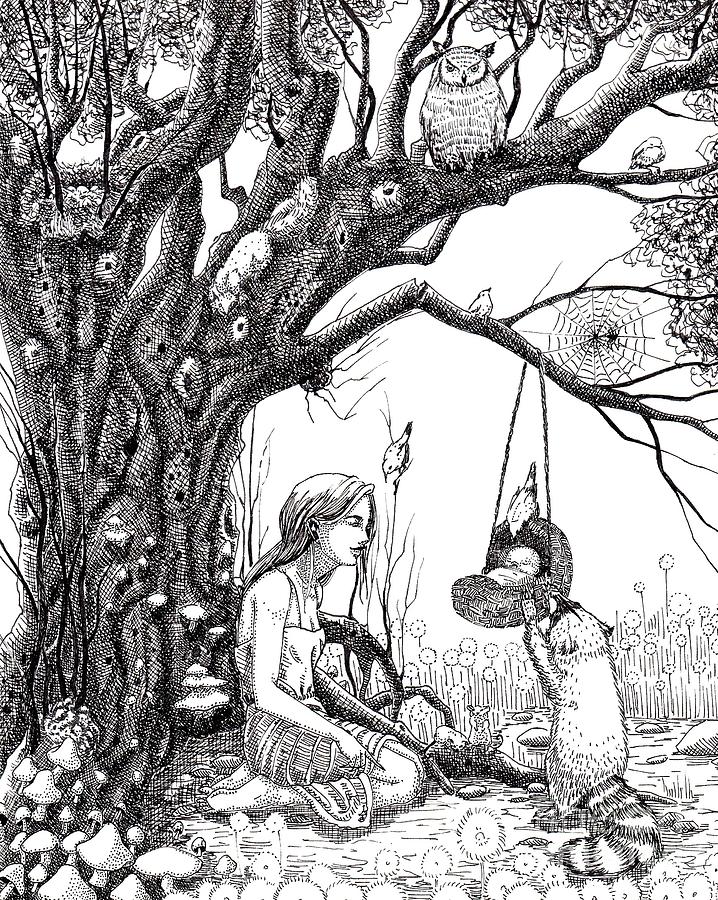
Rock a bye baby on the tree top, When the wind blows the cradle will rock, When the bough breaks the cradle will fall, And down will come baby, cradle and all.
Rock a bye baby on the tree top, When the wind blows the cradle will rock, When the bough breaks the cradle will fall, And down will come baby, cradle and all.
Multiple drafts of a reflection on “Rock a reflection on the Baby” missed the mark. I was aiming at humor, but I’m no Andy Borowitz. None of them was funny. Some I ripped up. They’re on the floor of my office.
The drafts had been attempts to take “Rock a Bye Baby” as the template for a commentary on American public life in February, 2022. When the baby on the tree top is rocked by gale force winds, we hear the boughs of the old oak tree creaking. If and when the bough breaks and Baby and cradle do fall, we can only hope the chain-saw rescue crew doesn’t cut down the tree and turn it into sawdust.
The Origins of “Rock a Bye Baby”
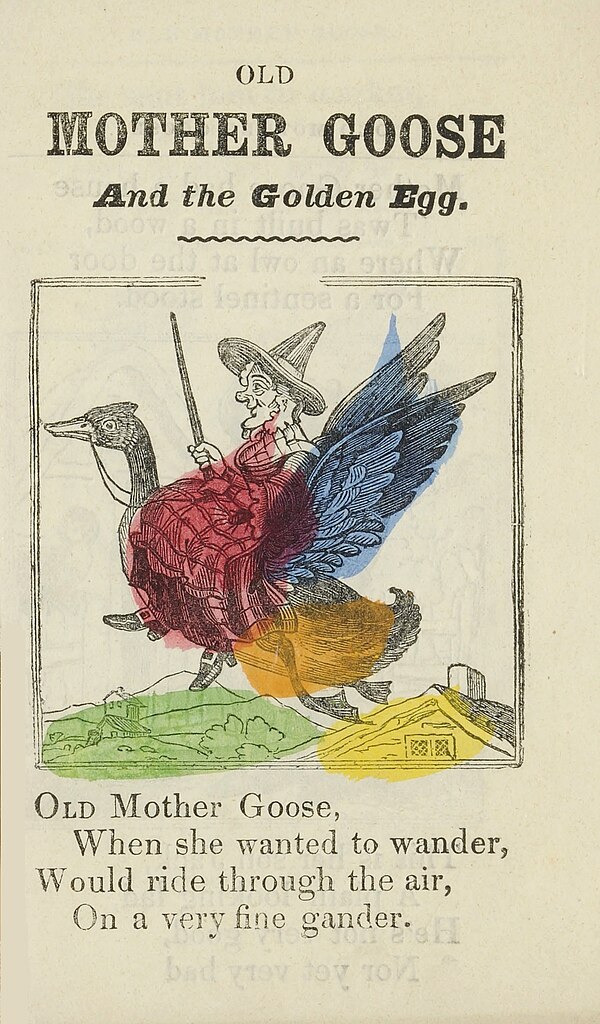
The oldest copy of “Rock a Bye Baby” is found in “Mother Goose’s Melody” in London in 1765. One story of origins locates it in a London pub on the occasion of the birth of King George II’s son, the prince who would continue the royal line they detested. The first known copy of “Rock a Bye Baby” has a hand-written note:
The oldest copy of “Rock a Bye Baby” is found in “Mother Goose’s Melody” in London in 1765. One story of origins locates it in a London pub on the occasion of the birth of King George II’s son, the prince who would continue the royal line they detested. The first known copy of “Rock a Bye Baby” has a hand-written note:
"This may serve as a warning to the proud and ambitious, who climb so high that they generally fall at last."
That hope feels farther away after a perplexing presidential debate and the Supreme Court’s 6-3 ruling interpretation of the meaning and boundaries of the U.S. Constitution’s provision of Presidential Immunity. Drip by drip, bucket after bucket, I shudder at the erosion of democracy. I scream, watching a Narcissistic entertainer move closer to the White House, and ask again whose shoulders lifted him to the tree, and why they have. Then I remember Daniel Boorstin who now seems like the Greek seers of classical Greece and the Greek.
The Reign of the Image
Daniel Boorstin’s book, The Image: A Guide to Pseudo-events in America (1662), was a ground-breaker. Historian and Librarian of the Library of Congress. Here are a few excerpts from Daniel Boorstin’s The Image in 1962.
“We [Americans] suffer primarily not from our vices or our weaknesses, but from our illusions. We are haunted, not by reality, but by those images we have put in their place.”
“Celebrity-worship and hero-worship should not be confused. Yet we confuse them every day, and by doing so we come dangerously close to depriving ourselves of all real models. We lose sight of the men and women who do not simply seem great because they are famous but are famous because they are great. We come closer and closer to degrading all fame into notoriety.”
“A sign of a celebrity is often that his name is worth more than his services.“
“The image, more interesting than its original, has become the original. The shadow has become the substance.“
“The American citizen thus lives in a world where fantasy is more real than reality, where the image has more dignity than its original. We hardly dare face our bewilderment, because our ambiguous experience is so pleasantly iridescent, and the solace of belief in contrived reality is so thoroughly real. We have become eager accessories to the great hoaxes of the age. These are the hoaxes we play on ourselves.“
“By a diabolical irony the very facsimiles of the world which we make on purpose to bring it within our grasp, to make it less elusive, have transported us into a new world of blurs.“
Thanks for coming by.
Have courage; hold to the good; refuse to return evil for evil; love your enemies,
Gordon
Gordon C. Stewart, public theologian, author of Be Still! Departure from Collective Madness (2017 Wipf and Stock), Brooklyn Park, MN, July 1, 2024. Originally published on VFTE, February 12, 2022.
Last night’s documentary of Congressman Jamie Raskin before and after the tragic loss of his beloved son, showed qualities of character in short supply: personal integrity, moral-spiritual courage, a playful spirit, and faithfulness to his oath of office to uphold the Constitution. Those qualities were evident before and after the tragic death of his son “Tommy” whose funeral was the day before the January 6 attempted coup at the U.S. Capitol.
Thomas (“Tommy”) was 25 when he took his life. Thomas fell within the 18 – 29 year-old age range of the Harvard-Kennedy Center Youth Poll taken in the autumn of 2021. The poll’s findings are staggering.
When one in four young adults between ages18 and 29 think of doing harm to themselves more than once in a two-week period (Oct. 26- Nov. 8, 2021) something is terribly wrong.
More than half (51%) of young Americans report having felt down, depressed, and hopeless — and 25% have had thoughts of self-harm — at least several times in the last two weeks.
The youngest participants in the poll were one year-olds when the Twin Towers fell in 9/11, 2001. Tommy was four. The oldest were eight years old, old enough to be terrorized and fearful of the world around them. Even the children at the lower end of the poll’s range would not have escaped sensing their parents’ emotions — shock, fear, panic, despair, anger, dread.
Thomas Raskin and His Peers
No stranger can know what broke in Tommy on New Years Eve. But we do know this. Whatever mixture of clinical depression and despair over a dark world he could not repair, we know from the Harvard-Kennedy Center Youth Poll that Tommy lived and died as one of a host of young adults struggling to make it through the day.
Tom Raskin’s generation has been served an omelet of violence, fear, distrust, and hatred for breakfast. Every day. They have never known a time of peace. Terror has broken into their homes and schools, synagogues, churches, mosques, malls, supermarkets, music concerts with a frequency and rapidity unknown to my generation.
The events of their lifetime blow the hinges off my generation’s prevailing sense of innocence. The America they experience is the scene of madness, splintered into camps of trust or distrust in one another and the institutions on which democracy depends. They encounter a world of cruel absurdity. Election to office is not public service. Partisanship is more about power and greed than about governing wisely. Driving Black or walking Black puts target on your back, and the man with the badge puts his knee on your neck until you can’t breathe. A president of the United States of America sweeps a peaceful Black Lives Matter protest off the plaza for a photo op, proudly holding up a Bible he doesn’t read. This generation knows that White’s not right. White privilege weighs on people like Tommy, as it always has on African Americans and America’s First People for whom Whiteness meant slave-ownership and genocide.
On top of all that, there is Donald Trump, and there is QAnon
Any pastor who visits congregants in psychiatric hospitals or hospitals for the criminally insane is not shocked when religion becomes the host of insanity. Often the patient suffered illusions of grandeur. Some think of themselves as Jesus Christ, or feel the burden of saving people from a cruel world. Some hear voices. Some live in a endless nightmare of conspiracy. I would like to say I’ve never seen anything close to QAnon, but I can’t say that.
Many of the patients I’ve visited know where they are; some know why there are there. But the years of my pastoral visits ended before Donald Trump and QAnon. I’ve met the likes of Donald several times in a hospital for the criminally insane, but I never met anyone who imagined a satanic conspiracy of a cabal of child-kidnapping, child-molesting, sex-trafficking cannibals intent on destroying a president.
Why would it surprise us that 51% of young adults in the poll feel “down, depressed, and hopeless” or that 25% of them have had “thoughts of self-harm — at least several times in the last two weeks?” Twenty-five year old Thomas Raskin was one them.
There is a Yearning for Meaning, Integrity, and Courage in the Storm
Rep. Raskin speaking at the 2020 AFGE Leadership Conference
Thomas’s father writes in Unthinkable: Trauma, Truth, and the Trials of Democracy reflects on how January 6, 2021 would have affected Tommy. That “stomach-churning, violent insurrection; that desecration of American democracy would have wrecked Tommy Raskin.
“So as a congressman and a father of a lost son and two living daughters, I would take a stand, with everything I had left, against that violent catastrophe in the memory and spirit of Tommy Raskin, a person I have, alas, not even begun to properly render in words.”
Rep. jamie raskin, unthinkable: trauma, truth, and trials
While a criminally insane former president remains free, Tommy’s father and every prosecutor who can hold him to account have bull’s eyes on their backs. Perhaps, by the grace of God and the stand of a grieving father, the Constitution will continue and the Oath of Office be honored.
Gordon C. Stewart, author of Be Still! Departure from Collective Madness (2017, Wipf and Stock), Brooklyn Park, MN, Feb. 7, 2022
A crowd of students gathers on the university plaza at 11:00 p.m. for a parade to a bonfire. They walk by torch-light with drums drumming through the streets of the city, followed by a truck, on their way to the Opera House where a huge pile of wood is waiting. By the time they arrive, the crowd has grown to 30,000, eager for the match to be struck.
A voice thunders across the plaza:
The age of arrogant Jewish intellectualism is now at an end! . . . You are doing the right thing at this midnight hour — to consign to the flames the unclean spirit of the past. This is a great, powerful, and symbolic act. . . . Out of these ashes the phoenix will rise. . . . O Century! O Science! It is a joy to be alive!
The date was May 10 of 1933. The speaker was newly appointed Reich Ministry of Public Enlightenment and Propaganda, Joseph Goebbels. The event was part of “Action Against the un-German Spirit,” a program developed in April by the German Student Union’s Office of Press and Propaganda. At midnight of May 10, 1933, the sights, sounds, and scent of bonfires filled the air of every university town in Germany.
A member of the SA throws confiscated books into the bonfire during the public burning of “un-German” books on the Opernplatz in Berlin.” — United States Holocaust Museum.
The Twelve Theses
“Action against the un-German Spirit” was accompanied by another product of the Student Union leader gathering on April 8. “Twelve Theses,” 12 short statements designed to appeal to German Lutherans’ celebration of Martin Luther’s posting of 95 thesis on the Wittenburg Church door. The “Twelve Theses” were published and posted everywhere. In spirit and tone the “Twelve Theses” was the fitting companion of “Action Against the un-German Spirit.”
The students described their action as a “response to a worldwide Jewish smear campaign against Germany and an affirmation of traditional German values.” The following excerpts illustrate the tone.
"Language and literature have their roots in the people. It is the German people’s responsibility to assure that its language and literature are the pure and unadulterated expression of its Folk traditions.” “Purity of language is your responsibility!” “Our most dangerous enemy is the Jew and those who are his slaves…. "A Jew can only think Jewish. If he writes in German, he is lying. The German who writes in German, but thinks un-German, is a traitor!”
“We want to regard the Jew as alien… The unGerman spirit is to be eradicated from public libraries.” "At present there is a chasm between literature and German tradition. This situation is a disgrace." “We demand of German students the desire and capability to overcome Jewish intellectualism and the resulting liberal decay in the German spirit.”
On the List
The list of “unclean spirit”…”un-German”… or “anti-German” literature was long. Among the 4,000 books to be purged were the works of Albert Einstein and Thomas Mann, Hellen Keller, Jack London, H.G. Wells, Karl Marx, Erich Maria Remarque, Sigmund Freud, and Heinrich Heine.
Heinrich Heine was a widely-read 19th Century German poet, journalist and essayist whose prescient line in Almansor: A Tragedy, published a century before in 1823, hit too close for comfort in 1933.
“Where they have burned books, they will, in the end, burn people, too.”
–Poet Heinrich Heine, 1823
February 1, 2022, Brooklyn Park, Minnesota in the U.S.A.
At dawn I take the dog out and bring in the paper. “Campaign to ban books spreads across the U.S.” leaps from the front page, as had a report two days ago —“School Board in Tennessee Bans Teaching of Holocaust Novel ‘Maus’” NYT, Jan. 27.” The Tennessee school board had voted to remove the novel “Maus” by Pulitzer Prize-winning author Art Spiegelman because it contains swear words, according to the board minutes. The vote was unanimous.
When Art Spiegelman learned that “Maus” — his Pulitzer Prize-winning graphic novel about his family’s experience during the Holocaust — had been banned by a Tennessee school board, he told the Washington Post exactly what he thought of the antisemitic decision:
“It’s part of a continuum, and just a harbinger of things to come. This is a red alert.”
Art Spiegelman to Washington post re: censorship
Book burnings, censorship and purging have a history. Most often the books are judged as unclean, not pure, unpatriotic, unChristian, un-this and anti-that, un-American and anti-American, etc. Yesterday’s NYTimes article (Jan. 31, 2022) on book-banning cites a poignant quote by Lauri Halsi Anderson, contemporary author of young adult books.
"By attacking these books, by attacking these authors, by attacking the subject matter, what they are doing is removing the possibility for conversation. You are laying the groundwork for increasing bullying, disrespect, violence and attacks."
Letter to Benjamin Franklin, September 24, 1765
Correspondence between “Founding Fathers” Charles Thomson and Benjamin Franklin is preserved in the National Archives. Thomson’s letter to Franklin now feels as prescient in the U.S.A. as Heinrich Heine’s line was for Germany.
“The Sun of Liberty is indeed fast setting, if not down already, in the American colonies: But I much fear instead of the candles you mention being lighted, you will hear of the works of darkness.” — Charles Thomson: letter to Benjamin Franklin, September 24, 1765 .
At the time of Thompson’s letter, “the Sons of Liberty” were turning to violence and intimidation in response to the Stamp Act. Franklin was a principled Quaker committed to reason, civility and non-violence. Franklin would likely have chuckled at Thomson’s play on words, but not at the warning of the works of darkness.
Conroe, Texas, U.S.A – January 30, 2022
“If I run and if I win,” declares Donald Trump to a cheering crowd in Conroe Texas,”we will treat those people from January 6 fairly. And if it requires pardons, we will give them pardons because they are being treated so unfairly.”
He accuses Black prosecutors of racism. “These prosecutors are vicious, horrible people. They’re racists and they’re very sick, they’re mentally sick. They’re going after me without any protection of my rights from the Supreme Court or most other courts. In reality, they’re not after me, they’re after you…. If these radical, vicious, racist prosecutors do anything wrong or illegal, I hope we are going to have in this country the biggest protest we have ever had in Washington, D.C, in New York, in Atlanta and elsewhere.”
A little gray Maus who’d been shooed off the stage quivers and squeals to the audience, “This is a red alert!”
Gordon C. Stewart, public theologian, author of “Be Still! Departure from Collective Madness” (2017 Wipf and Stock), Brooklyn Park, MN, Feb. 3, 2022.
“Better to trip with the feet than with the tongue."
— Zeno of Citium (c. 300 BCE)
About stumbling and slipping
We all stumble occasionally. Who hasn’t slipped while trying to say what we mean? But some slips aren’t slips. Those slips reveal what we mean.
After last night’s Senate blocked the voting right bill from moving forward to debate, Senate Minority Leader Mitch McConnell’s tongue slipped when trying to tamp down any concern about Black voter suppression.
The concerns are misplaced, he demurred. Why? Because “African American voters are voting in just as high a percentage as Americans.”
About Speech
“I hate all bungling like sin, but most of all bungling in state affairs, which produces nothing but mischief to thousands and millions.”
GOETHE, quoted in Peter Eckermann’s Conversations with Goethe, March 1832.
“We all stumble in many ways,” wrote the James of The Epistle of James. “Anyone who is never at fault in what they say is perfect, able to keep the whole body in check.” (James 3:2 NIV). There is no such person, he writes, for no human being can tame the tongue. The tongue’s small size is disproportionate to it power. It’s like the rudder of a ship. It guides the ship in whatever direction the pilot directs. In yet another metaphor, the tongue is a little member of the body, “and boasts of great things. How great a forest is set ablaze by a small spark!”
A restless evil
With the tongue we praise God and curse others created in God’s image; “it is a restless evil, full of deadly poison.”
“Can both fresh water and salt water flow from the same spring? Can a fig tree bear olives, or a grapevine bear figs? Neither can a salt spring produce fresh water….”
Wisdom and hypocrisy
“Let those who desire wisdom show it by their good life, by deeds done in the humility that comes from wisdom. But if you harbor bitter envy and selfish ambition in your hearts, do not boast about it or deny the truth. Such ‘wisdom’ is not wisdom. It does not come down from heaven but is earthly, unspiritual, demonic. For where you have envy and selfish ambition, there you find disorder and every evil practice.”
A Life’s project on the tip of the tongue
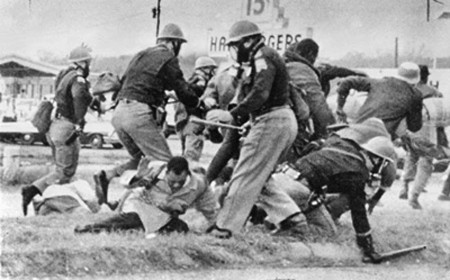
John Lewis being beaten at Edmund Pettis Bridge2013 MLK: “What happened?”A young John Lewis, Southern Nonviolent Coordinating Committee
Martin Luther King, Jr. is dead. John Lewis is dead. Their life project is not. It will sit on the tip of my tongue long after the slip that wasn’t a slip, however long it takes.
O, yet we trust that somehow good Will be the final goal of ill.
— Alfred, Lord Tennyson, In Memoriam A.H. H. (1850)
“Truth has stumbled in the streets, honesty cannot enter. Truth is nowhere to be found, and whoever shuns evil becomes a prey.” — Book of Isaiah 59: 14b-15a
The Press Conference
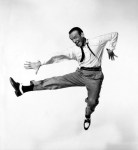
Moments ago House Minority Leader Kevin McCarthy performed a Fred Astaire song-and- dance act, after which a “press corp” composed of theater critics, ballet dancers, singers, and actors from Broadway had time to asked embarrassing questions. The Minority Leader was frequently off-key. Every other step was a diversion. Some taps were an About-Face. It’s hard to tap dance in hip-boot waders.
Tap dancing in hip-boots
Mr. McCarthy offered no explanations for his well-documented changes of mind, reversals and U-Turns. If you were listening carefully, you might have heard an off-stage prompter’s cue from an unhappy puppeteer: “A b o u t Face!” But the tap dancer didn’t know which way to face. Without a moral compass it’s easy to get lost.
"No one calls for justice; no one pleads his case with integrity." -- Isaiah 59:4a
I watched it live on C-Span. No pundit told me what I was seeing and hearing, and no “Breaking News!” announcements made my heart race.
Truth is not an artifact
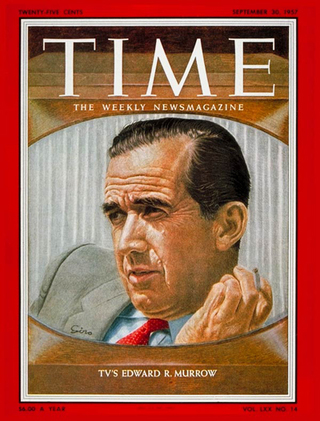
Truth-telling never was popular. Yet it was a founding virtue in American culture. “We hold these truths to be self-evident….” We didn’t, of course, but we said we did. Truth was the premise of all that followed in the Declaration of Independence. In 2022 truth is a relic, a dead virtue like Latin, rolling in the dust; nothing is self-evident. Or could it be that truth abides in America; you just have to hunt for it? Yet, even hunting for truth for the sake of goodness can be a u-turn toward evil, as it did seven decades ago until a truth-teller named Welsh and a truth-seeking reporter named Murrow confronted the demonic crusading behind the pretense of goodness.
"They rely on empty arguments and speak lies; they conceive trouble and give birth to evil." -- Isaiah 59:4
A sense of decency
When Senator Joseph McCarthy (R-WI) attacked a young attorney in Mr. Welsh’s law firm as a suspected communist or communist sympathizer, Welsh had had enough, and said so: “Let us not assassinate this lad further, Senator. You’ve done enough. Have you no sense of decency, sir, at long last? Have you left no sense of decency?“
“See It Now”
March 9, 1954 Murrow’s “Report on Sen. Joseph McCarthy” aired on his popular CBS program “See It Now” featuring excerpts in which the junior Senator from Wisconsin repeatedly contradicted himself. Joseph Welsh’s rebuke — “Let us not … Have you left no sense of decency”— swept across the country. Viewer letters to CBS ran 15-1 in favor of Murrow’s report.
Attack on the Press as “a Jackal Pack”
When Murrow offered the senator a full half-hour on “See It Now” to respond to the report in any way he might choose, McCarthy delayed his appearance until April 6. McCarthy did not appear in person. Instead, he provided CBS with a filmed response, accusing Murrow of being a communist-sympathizer, or worse. The transcript of McCarthy’s defense included an attack on the press as “jackal pack”:
Ordinarily, I would not take time out from the important work at hand to answer Murrow. However, in this case I feel justified in doing so because Murrow is a symbol, a leader, and the cleverest of the jackal pack which is always found at the throat of anyone who dares to expose individual Communists and traitors.
Excerpt, Sen. Joseph McCarthy rebuttal on “See It Now” (April 6, 1953)
"They hatch the eggs of vipers, and spin a spider's web." -- Isaiah 59:5a
Murrow later noted that McCarthy “made no reference to any statements of fact that we made” and addressed McCarthy’s accusations against himself. If the best defense is a good offense, McCarthy’s single-note smear strategy was no match for truth. Senator McCarthy was censured by the Senate, but his spirit and appeal to fear never left.
Common Decency
This sordid history is embedded in American culture. We’ve become a culture of distrust, suspicion, accusation, and division. There is no Edward R. Murrow, and if there is one or many, the multiplicity of news sources insures that the American public will no longer see or hear the same things across the political divide.
"So justice is far from us, and righteousness does not reach us. We look for light, but all is darkness; for brightness, but we walk in deep shadows. Like the blind we grope along the wall, feeling our way like those without eyes." -- Isaiah 59:10a
The descendants of Joseph McCarthy are feeding truth, decency, and the Constitution through the shredder. If you want to see reality with your own eyes and hear it with your own ears, tune in to C-Span and C-Span 2 to discern truth from falsehood, good from evil, transparency from obfuscation, a ballet from a tap dance in hip boots.
— Gordon C. Stewart, Brooklyn Park, MN, Jan. 12, 2022.
“The most beautiful thing we can experience is the mysterious,” wrote Albert Einstein. “It is the source of all true art and all science. He to whom this emotion is a stranger, who can no longer pause to wonder and stand rapt in awe, is as good as dead: his eyes are closed.”
Albert Einstein
Isabell’s Wonder and her Grandfather’s Wondering
Christmas felt different this year. Until four-month-old granddaughter Isabell smiled, gurgled, and giggled back from the blanket on the floor. Before that I had been stuck in the soul-wrecking kind of wonder, not the wondrous kind of wonder Einstein described. No sugar plums danced in my head.
Four-month-old Isabell, Christmas day, 2021
Events of the past year were tumbling over each other. I hear the sound of a paper shredder and wonder whether any copies of the Constitution will survive the shredders. I see the Mother of Exiles, her lamp still held high, but dimming, while the torches of hate grow bright to erase Emma Lazarus’s poem welcoming “the poor, huddled masses, and tempest-tost, yearning to be free.” I hear the torch-bearers chanting in Charlottesville “You will not replace us! Jews will not replace us!” and hear the Munich Beer Hall Putsch in my language. I see the party of Lincoln riding the wave of the Big Lie and wonder when patriotism became treasonous and “open carry” the closest synonym of freedom. I see the gallows outside the Capitol, hear the shouts “Hang Mike Pence” and “Execute Nancy,” and wonder how individual freedom was severed from responsibility, and who decided only whites neighbor. I wonder what happened to the Golden Rule and the parable of the Good Samaritan. I wonder whether the demons of national exceptionalism and white supremacy can be exorcized, and if and when the 100-year fires, hurricanes, tornadoes, droughts, and floods will knock sense into climate change-deniers before the murder-suicide pact leaves no one to be replaced. I wonder what will become of us. I have to wonder.
Bethlehem and an Empty Chair for Elijah
We are no closer to Isaiah’s vision of the peaceable kingdom than the day Jesus was born in Bethlehem. The Hebrew prophets’ “Day of the Lord” or its New Testament equivalent, “the Kingdom of God” is harder to imagine when Herod seems closer than the wisdom of the Wise. Elijah’s empty chair at the annual Seder meal is kept empty as a sign of hope against hope that the Messianic kingdom of Isaiah’s vision and Jesus’ preaching are more than pipe dreams.
Isabell knows nothing about any of this. She does not wonder the way I do. Shel smiles back at her grumpy grandfather, wiggling, gurgling, and giggling with joy. Isabell is no stranger to Einstein’s “beautiful thing” — the ‘thing’ that is not a ‘thing’.
The Experience of the Sacred
Fred and Jo never met Isabell. They were in their mid-90s and mid-80s when she first opened her eyes. She never saw Jo and Fred walking hand-in-hand around the retirement center. If it weren’t for the gray hair and hint of a limp, on onlooker might mistake them for teenagers. Their love was as fresh as the morning dew. The luster of love’s delight had not dimmed or faded until Jo’s daily greeting —“Good morning, Dear. How are you today?”— stopped. Two years later, her heart stopped also.
When the funeral home attendants arrived at the Memory Care Center, Fred had settled himself in the chair at the foot of the bed. Respecting his grief and wanting to protect him from viewing their work, the attendants invited him to leave the room until they were finished. Fred declined their invitation. He stayed in the room to watch each step of the process of preparing the deceased’s body, and followed the attendants and the body down the elevator and out to the hearse.
When asked later what his experience had been watching the whole process while deep in grief, Fred looked at me and paused. . . for a long time. The look on his face was quizzical. “I’m looking for the right words,” he said. “I can’t explain it. “‘Wondrous’ is the only word that comes to mind.” “I can’t explain it.” “It was ‘wondrous’!”
In that moment 90-year-old Fred and four-month-old Isabell were on the same page, alive and pausing in wonder at the beauty of it all.
“There are in life a few moments so beautiful that even words are a sort of profanity.” (Diana Palmer)
Diana Palmer
Gordon C. Stewart, public theologian, author of Be Still! Departure from Collective Madness (217 Wipf & Stock), Brooklyn Park, MN, Dec. 29, 2021.
No fence divided the neighboring properties on Church Lane the day my family arrived in Broomall. The little girl next door and I quickly became playmates. We went back-and-forth with no thought of things like property lines. My yard was her yard; her yard was mine. Until the day the Singletons bought the property and she was gone.
Buddy Singleton was five years-old. So was I. Buddy and I soon became playmates. We played freely in each other’s yards. No one owns a tree. Buddy climbed our Red Maple, I climbed Buddy’s old Oak tree. Until the day the fence went up. Buddy could no longer get to me; I could not get to him. The gate locked Buddy in and kept me out.
Every day we talked through the chain link fence with the barbed wire at the top. “C’mon over,” said Buddy. The only way to “come over” was to climb the fence. So I did! Until my foot slipped near the top. The barbed wire punctured my left hand and left me hanging like a banana nor yet ripe for falling. My mother heard the screaming and lifted me from the fence. I still have the scar to prove it happened.
The fence that separates neighbors is higher now. Rarely do we we talk through the fence that separates us. We’ve learned to stay on our side of the fence. I no longer climb your Oak tree. You no longer climb my Red Maple. Neither of us invites the other to “c’mon over” and, if they do, we decline. Once you’ve hung from the barbed wire, you learn not to try it again. But the fence is not all barbed wire. It’s a chain-link fence. We can talk with each other through the fence without impaling ourselves,if we have the will to engage with the other. “The time for talking is past,” said an old friend. “I’m done! The time for thinking is over. You can’t talk to these people. It’s time for the barricades.”
The Barricades?
I know the feeling. But the time for talking is never over. The time for thinking is never over. However strongly I disagree with or despise the neighbor on the other side of the fence, however deeply I agree with Eugene Robinson’s question — “How dumb can a nation get and still survive?”(Washington Post, October 7, 2021) — as much as I want to back away from the fence to the club house in my Maple tree, something nags me to remember the commandment I prefer to ignore: to love my neighbor as myself. If I dare to look, I will find the enemy I despise inside myself.
Talking through the Chain-Links of the Barbed-Wire Fence
The time for contemplation and self-criticism is always now. It’s always time for thinking. It’s still the time for talking through the fence and trying to understand how and why people on opposite sides of the fence think, feel, and act as we do. Barbed-wire fences do not make good neighbors! “Something there is that doesn’t love a [fence].”
Brian Maclaren offers a way to talk through the openings if the chain-links fence.
People can’t see what they can’t see. Their biases get in the way, surrounding them like a high wall, trapping them in ignorance, deception, and illusion. No amount of reasoning and argument will get through to them, unless we first learn how to break down the walls of bias. . . .
Brian Mclaren, Why Don’t They Get It? Overcoming Bias in Others (and Yourself) (Self-published: 2019), e-book.
To be continued with a look at Brian McLaren’s 13 walls of bias that shape how and why we see ourselves, each other, and the world at the barbed-wire fence.
I’m not ready for this. I’m not wired for a world gone haywire. Like the psalmist, I am “old and gray” (Ps. 71:18), living in a frantic world that makes no sense, knowing that speaking what little I think I have come to know will not reach beyond what remains of a shrinking circle of influence. Even so, I continue to write in the vain hope it may make a difference.
Aerial view of doctor stethoscope and computer laptop
Listening through the stethoscope
Sitting in front of a blank sheet of paper/blank computer screen is the morning exercise to find my deeper self again. Writing is like a stethoscope to hear what’s inside my chest. Writing taps into the deeper stream of consciousness — sighs and groans too deep for words.
Some days begin and end with a blank page. Other mornings the groaning and sighing summon me to write. Not just for myself, but for others as well. That’s what publictheologians do.
Reality and illusion
The Psalter is always close by. The psalms take me deeper. Only then can I go wider. The Psalms are poetry. They are not prescriptions. They are the naked, honest, unfiltered, uncensored expressions of what the psalmist feels and thinks in that moment. The psalmist is exposed. No secret is hidden. No pride left unmasked. Every Illusion of grandeur blown away by the wind.
The three year-old and the-man-in-the-radio
The poet of Psalm 71 is old and gray. So am I. Listening through the stethoscope, I hear unresolved sighing and groaning from early childhood.
I am three years-old, sitting around the dining room table with my grandparents and my mother. My mother and I are living with Grandpa and Grandma Stewart in Chestnut Hill, MA. My father is in the big war somewhere far, far away. Every night, Grandpa looks at his watch, stops eating, leaves the table, and walks over to the big brown radio. He pushes a button to let the man-in the-radio talk to us. “Shhhhh,” says Grandpa, as I continue talking. “We need to be real quiet so we can hear the news.” The man-in-the-radio begins to talk. He’s serious. He’s not fun, but no one is afraid of him. Everyone listens carefully.
Some nights the man-in-the-radio stops to let another man in the radio talk. The other man is not nice. He’s not kind. He’s mean. He’s angry. He’s scary. Even for Grandpa! I watch the faces of my mother, grandpa and grandma as they listen for news about the big war far, far away where my father is the Army Chaplain. My father is the only one on Saipan who doesn’t have a gun. He may not make it home or he might come home dead.
Protestant Service on Saipan, end of WWII.
Honoring a promise
I am old and gray and hard of hearing, but I have a stethoscope. I still hear the groaning and sighing in my chest and I still hear the madman in the radio. I determined early in life that if Adolf Hitler won the war and came to Chestnut Hill, I would not be silent. I would not stay seated. I would stand up. I would speak up! I would tell what I know and not let go, for the sake of generations yet to come.
 And now that I am old and grey-headed, O God, do not forsake me,
     til I make known Your strength to this generation
     and Your power to all who are to come. (Ps. 71:18 BCP).
Gordon C. Stewart, public theologian, author of Be Still! Departure from Collective Madness (2017 Wipf & Stock), Brooklyn Park, MN, October 3, 2021.
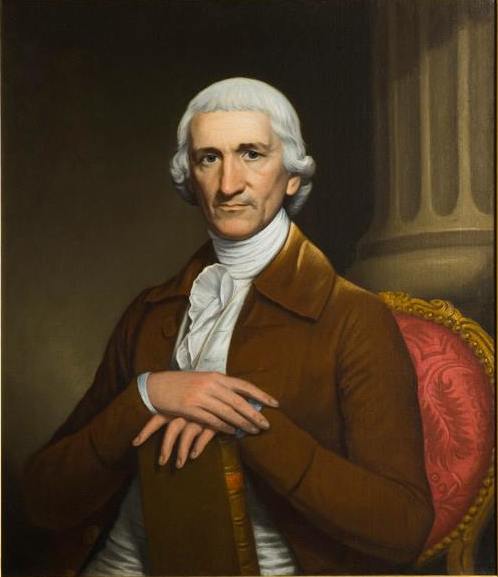
The Founders Archives of the National Archives preserves a letter to Ben Franklin eighteen months before the Declaration of Independence was issued. Ben Franklin, the Philadelphia “Quaker,” became a household name. Charles Thomson (1729-1824), the Philadelphia Presbyterian, did not, and that’s a shame.
Charles Thomson was the Secretary of the First and Second Continental Congress, a quiet Founder on the road from colonial rule to an independent democratic republic. The official Declaration of Independence had only two signatures, the President and the Secretary of First Continental Congress: John Witherspoon and Charles Thomson.
He held the office of Secretary from 1774 throughout the American Revolution until the adoption of the Constitution. Thomson’s correspondence with his friend Benjamin Franklin is learned and passionate. His translation of the Bible and the Septuagint from Greek into English is the first English Bible published in America. Thomson’s love of language and range of literature is evident in his letter to Franklin.
Charles Thomson Letter to Benjamin Franklin
“When I look back,” wrote Thomson to Franklin in London, “and consider the warm affection which the colonists had for Great Britain till the present reign, the untainted loyalty unshaken fidelity and cheerful confidence that universally prevailed till that time, and then view the present heartburnings, Jealousies, gloom and despair, I am ready to ask, with the poet, ‘Are there not some chosen thunders in the stores of heaven armed with uncommon wrath to blast those Men,’ who by their cursed schemes of policy are dragging friends and brothers into the horrors of civil War and involving their country in ruin?” — Thomson Letter to Franklin, Nov. 1, 1774
Charles Thomson and Cato, A Tragedy
The poet whose words Thomson cited were from James Addison, the anti-royalist English poet-playwright, whose play, “Cato, a Tragedy” was widely read and often quoted by the Founders of the new nation. Whether intentionally or inadvertently, Thomson changed the “Cato” text from singular to plural to suit the circumstances that enraged him. “Blast the Man” (the king) became “Blast those Men” (i.e. Parliament) who had violated the rights and freedoms of the American colonies’ rights and freedoms under British law.
Dragging their Country into Ruin
The circumstances of November 1, 1774 have changed, but Charles Thomson’s unusual outburst is as fresh today as the day he wrote to Franklin. The longing for a king exceeds the bounds of time. The anxiety that hangs over us makes our heads spin; we long for solid ground, something solid that does not change. So it is that a political party and a portion of the American public have come to mistake treason for patriotism, a bully with a savior, a quack with a swan, and have followed the strong man’s quackery into the halls and offices of the Congress that makes America a democratic republic. When we confuse patriotism with terrorism, Charles Thomson’s letter from the Founders Archives is more than archival.
Teetering on the Edge of the Precipice
When a hollow man and hollow party hollow out the core of what we have thought we valued, the question from Cato’s tragedy rumbles like thunder from the heavens. Charles Thomson’s renderings from Cato fit the eve of a threatened sequel to January 6, when the democratic republic once again “teeters on the very edge of the precipice.”
Toward Healing the Wounds
Will we in 2022 share the hope and prayer with which Charles Thomson ended his letter of November 1, 1774: “Even yet,” he wrote, “the wounds may be healed and peace and love restored; But we are on the very edge of the precipice. I am sir your affectionate Friend and humble Servant.– Chas Thomson”


















 Views from the Edge