Moderator questions for tonight’s debate

If we could whisper in the ears of tonight’s Democratic Presidential Primary Debate moderators, we suggest a few questions. Since we don’t have their ear, we print the questions here for the millions who read Views from the Edge.

Question for both Sen. Sanders and Secretary Clinton:

You both support action on climate change. Tuesday the U.S. Supreme Court put a halt to President Obama’s climate change regulation, an action that places the Paris Agreement on Climate Change in jeopardy. If you were President today, what actions would you take?

Question for Secretary Clinton:

Senator Sanders’ campaign announced it has raised 6 million dollars following Monday’s win in New Hampshire, all from small donations. During this same period your campaign has sent fundraisers to Mexico City. After all the discussion about campaign finance reform and Senator Sanders’ refusal to accept such money, doesn’t the Mexico fundraising trip substantiate the criticism that your campaign depends upon, and is beholden to, big money?

Question for Senator Sanders:

This week you met with Rev. Al Sharpton in New York. Meanwhile, John Lewis was belittling your claim to involvement in the civil rights movement and announced that the Congressional Black Caucus PAC has endorsed Secretary Clinton. Rep. Keith Ellison, one of Congress’s most progressive African American leaders serving as Vice President of the Congressional Black Caucus, sent out a tweet explaining that the Caucus has NOT endorsed a candidate, and that the action was taken by a PAC separate from the Congressional Black Caucus. What will it take for you to win the votes of African Americans?

Question for Secretary Clinton:

Secretary Clinton, you say that Senator Sanders would undo the Affordable Care Act and start all over to implement a program of universal health care. But Senator Sanders has argued to replace the Affordable Care Act by expanding Medicare to cover all people regardless of age. Medicare already exists. Do you stand by your statement, and if so, why?

Question for both candidates:

Nicholas Kristof’s op-ed piece in the New York Times cites a Gallop Poll from a year ago measuring American biases as they affect electability. According to the poll,  50% said they would not vote for a socialist. Only 60% said they could support an atheist. It’s now one year later and Senator Sanders came from 50 points down in Iowa to a virtual tie, and won the New Hampshire primary by 21 points. How do you explain these results – was the poll mistaken or have we changed that much in one year?

  • Gordon C. Stewart, Moderator, Nobody’s Listening Broadcasting System (NLBS), Chaska, MN, Feb. 11, 2016.


The Green Man

Every generation tends to think of itself as superior to its predecessors. Ours is no different. Sometimes we’re right. Often, we’re wrong. We ignore or don’t know history.

Take, for example, the consciousness of green and climate change – the discovery, or is it the re-discovery, of nature as the context of human life. We tend to think it’s a new consciousness that sets aside the longer consciousness by which the human race justified ravaging the earth.

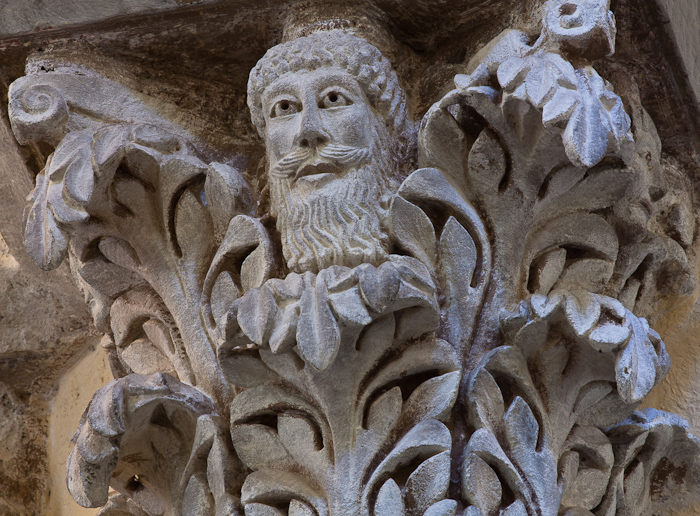
The Green Man in Clermont-Ferrant, Photo by Dennis Aubrey, Via Lucis Photography

The Green Man in Clermont-Ferrant, Photo by Dennis Aubrey, Via Lucis Photography

But, then, along comes the forgotten Green Man of Romanesque churches build in the Medieval Period, one version of which is featured in Dennis Aubrey’s post “A Green Man in Clermont-Ferrand” on Via Lucis Photography of Religious Architecture.

I turn to Via Lucis whenever I feel the need to get out of my skin, to shed the ignorant arrogance of the 21st Century presumption of progress and superiority.

The whole human story is captured in the various Medieval renderings of The Green Man, the human race fatally mis-perceived as “man over nature” and properly conceived as “man within nature”. 

Gordon C. Stewart, Chaska, MN, January 13, 2016

Four Big Questions – I don’t “get” it

I don’t get it. Or maybe I do, but don’t want to.

Some things jade a person’s spirit.  Like the poisonous, partisan punditry that made a lot of noise responding to last night’s State of the Union Address. Blah, blah, blah; blah, blah, blah!

“I don’t get” why, or how, a thoughtful listener could disparage the FOUR BIG QUESTIONS that framed the President’s speech. 

► “How do we give everyone a fair shot at opportunity and security in this new economy?”

► “How do we make technology work for us, and not against us – especially when it comes to solving urgent challenges like climate change?”

► “How do we keep America safe and lead the world without becoming its policeman?”

► “How can we make our politics reflect what’s best in us, and not what’s worst?”

In the run up to the 2016 Presidential Election, President Obama’s last State of the Union Address spelled out the philosophical-ethical questions that every candidate should be asking and answering. Will we, the citizens – the voters – take the cue? Will we test every candidate for President, the Senate, and House of Representatives to assure ourselves that they “get it”: governing in the United States of America requires thoughtful reflection on complex matters that do not lend themselves to simple solutions or demonizing an opponent.

If we, the people,  don’t “get that”, it won’t be because we can’t. It will be because we prefer the poison of partisan blah, blah, blah.

  • Gordon C. Stewart, Jan. 13, 2016.


Grandpa’s letter to Ruby

Dear Ruby,

Barclay and I loved playing with you yesterday. I think you enjoyed it too!

You and Barclay aren’t old enough to understand all the things I know. Both of you are only two-and-a-half years old. But, from the looks of yesterday’s play time, you both enjoy life more than Grandpa. Watching you and Barclay do his tricks was such fun!  “Barclay, sit!” “Barclay, down.” “Leave it.” “Roll over.”

You were the alpha dog, the commander-in-chief, Chairwoman of the Joint Chiefs of Staff. To this day, no woman has ever held any of those positions.

But I’m getting ahead of myself. You don’t know all that stuff. You don’t know what an alpha dog is, or a Commander-in-Chief, or Chairwoman of the Joint Chiefs of Staff or President. You’ll learn all that stuff soon enough, and, if this were the world I would like for you, there wouldn’t be any Commanders-in-Chiefs, or Joint Chiefs of Staff. There would be grandchildren like you and Cavalier King Charles Spaniels like Barclay who play together with moms and dads, grandmas and grandpas without worrying about the reasons we have Commanders-in-Chief and Chairwomen of the Joint Chiefs of Staff.

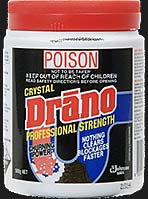
Watching the two of you yesterday made me think about how much of what I know I wish I could un-learn. My head and heart are crammed full of things that don’t belong there, like the time your Great Uncle Bob drank the Drano and had to be rushed to the hospital to have his stomach pumped.

Drano container - POISON

Drano container – POISON

Older people your Uncle Bob and me have drunk the poison of thinking we’re smarter and better than dogs and cats, and trees and birds and blue skies and clouds and rivers and ponds and oceans. We drank the poison. I hope you’ll grow up remembering your play time with Barclay whenever the can of Drano sits on the back of the toilet.

I go to the toilet a lot more these days. You’re still wearing diapers. If you’re lucky you’ll learn from Barclay what my generation never learned: never poop in your own kennel. The world, the planet, is your kennel, Ruby! This whole wide world. We need to take care of it. Enjoy it. Not be mean to it or hurt it.

As you get older, remember how you and Barclay looked right in each other’s eyes and smiled. Remember the love. If you do, the world will be a better place than the one I’m passing on to you. And, when I pass on, remember that our big wonderful kennel doesn’t go anywhere. It just keeps going long after we’ve been here. Be nice to it. Be nice to yourself. Keep playing, and, please, don’t swallow the Drano!

Love you,

Grandpa Stewart

THE QUESTION – to be or not to be?

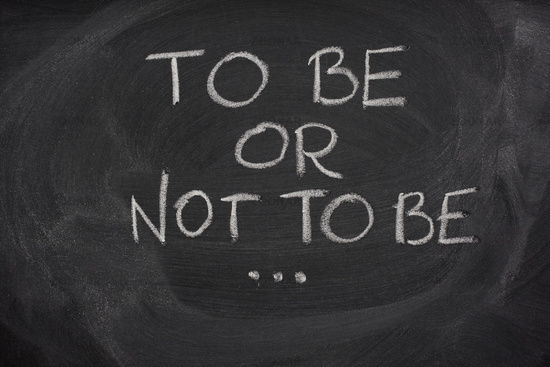
Hamlet, William Shakespeare

Hamlet, William Shakespeare

The questions “Who am I?” and “Why is Views from the Edge still here in 2016?” share a bit of Hamlet’s question whether “to be or not to be?”

We’re no Shakespeare! But writing is what we do. To not write would be not to be, a kind of denial of consciousness and the need to speak. So I’ve written and aired commentaries on MPR’s All Things Considered and anywhere else that has provided an opportunity to think and feel out loud.

Speaking from a pulpit is what I did most of my professional life along with some publishing on the side. Words matter. They deserve to be handled with care and thought. Which is why I go back and forth between days when I dare to think I have something worth saying and days when my words and thoughts feel like sending more pollution into cyberspace.

Not everyone cares about Views from the Edge, nor should they. But if you’re interested in a different viewing point on the news that searches out the hidden, taken-for-granted convictions, beliefs, and ideas that underlie life in the 21st century, you might find a second or third home here.

The edge from which my colleague Steve Shoemaker and I view the world is the margin, the place of an outsider peering in, the way an anthropologist looks at an ancient civilization to find out what it was really about. Steve and I cut our eye teeth on two stories that likely never happened but are always happening: Cain slaying his brother Abel, and the building and crumbling of the Tower of Babel. Both stories concern human anxiety and a refusal to live within the limits of meaningful time.

Hamlet’s “to be or not to be?” is the question in 2016 as climate change exposes the folly of the prideful, unspoken western philosophical conviction that the human species is superior to or exceptional to nature. We’re learning the hard way that we are not, and perhaps, just perhaps, we will also rediscover in the deepest core of the western tradition itself a wisdom and virtue akin to aboriginal traditions: a humbler human calling and way to be our neighbor’s and our planet’s keeper.

  • Gordon C. Stewart, Chaska, MN, Jan. 4, 2016

President Obama – 10 Hours Ago

I’m heading to Paris today to join nearly 200 countries for a global conference on climate change. It’s an opportunity to stand in solidarity with our oldest ally, just two weeks removed from the barbaric attacks there, and reaffirm our commitment to protect our people and our way of life from terrorist threats. It’s also an opportunity for the world to stand as one and show that we will not be deterred from building a better future for our children.

What makes this gathering different is that more than 180 nations have already submitted plans to reduce the harmful emissions that help cause climate change. And America’s leadership is helping to drive this progress. In fact, our businesses and workers have shown that it’s possible to make progress towards a low-carbon future while creating new jobs and growing the economy. Our economic output is at all-time highs, but our greenhouse gas emissions are down towards 20-year lows.
So what we’re trying to do in Paris is put in place a long-term framework for further emissions reductions – targets set by each nation, but transparent enough to be verified by other nations. And we’ll work to mobilize support to help the most vulnerable countries expand clean energy and adapt to the effects of climate change we can no longer avoid.
I’m optimistic about what we can achieve – because I’ve already seen America take incredible strides these past seven years. And with that – I’ll see you in Paris.

  • Gordon C. Stewart, Chaska, MN, Nov. 29, 2015. Makes me proud of my President today.

Eve of the Climate Summit

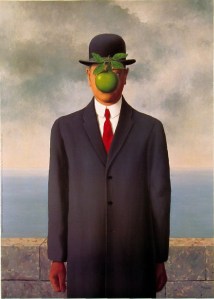
Son of Man, René Magritte (1898-1967)

Son of Man, René Magritte (1898-1967)

Son of Man, René Magritte’s self-portrait with the green apple in front of his face, seems equally appropriate for the First Sunday of Advent and the opening of the United Nations Climate Summit in Paris.

What Magritte meant by hiding his face (except for one eye) with the apple is left to the imagination.

To this viewer the apple’s presence in front of a man of civilized sophistication – bolo hat, buttoned-up dark suit, fitted white shirt, and perfectly knotted red tie – moves imagination in two directions.

The first is often discussed by art critics: the Genesis story of the Fall and the forbidden fruit – the serpent’s whisper that the creatures in the garden could “be like God” by stepping over the one limit imposed on their behavior by a paradisiacal ecosystem.

On this eve of the World Climate Summit, a second interpretation comes to mind – the primacy of nature – the green apple. For all our sophistication, we are nothing without the green planet whose green-ness climate change places at risk.

Magritte’s Son of Man opened me to hear today’s assigned Hebrew Scripture from the Revised Common Lectionary with different ears.

The days are surely coming, says the LORD, when I will fulfill the promise I made to the house of Israel and the house of Judah.

In those days and at that time I will cause a righteous Branch to spring up for David; and he shall execute justice and righteousness in the earth. [Jeremiah 33:12-14]

A righteous branch yet may spring up in Paris. If it does, it will be green. One can pray that the Climate Summit representatives arrive in Paris without their bolo hats, starched white shirts, buttoned-up suits, and power ties, ready to concede finally that, despite all appearances to the contrary, all is nothing without green.

  • Gordon C. Stewart, Chaska, MN, Nov. 29, 2015

Pope Francis, Climate Change, and Literacy

Long-time friend Dan Wagner attended the Vatican consultation on climate change at Pope Francis’s invitation in recognition of Dan’s work in global adult literacy education.

Click A Papal Education to learn more about the   link between, poverty, literacy, and action on climate change.

Daniel A. Wagner is UNESCO Chair in Learning and Literacy, Professor of Education at the University of Pennsylvania, and Director of the International Literacy Institute.

  • Gordon C. Stewart, Chaska, IL, 2015.

Message to World Leaders in Paris

Video

Attention on Paris soon shifts to Climate Change. Join Robert Redford who invites ordinary folks like us to demand bold action by world leader.

TEXT:

“As a husband, father, and grandfather, I worry about the devastating effects of climate change.

“Climate change is contaminating our air and water, making us sick, and poisoning the planet we’ll be leaving for future generations.

“But I do have hope. This December, leaders from every nation in the world will meet for the Paris Climate Summit — COP21 — to work towards an international commitment to climate action.

“We’ve all contributed to this problem — and we can all be part of the solution. Watch my video — then stand with me and tell world leaders meeting in Paris: We Demand Climate Action.

“We can work together to do something different — and these past few months have given us many reasons to be hopeful that the world is ready.

“The U.S. is going to Paris with its own blueprint for action — the groundbreaking Clean Power Plan, our country’s first-ever limits on climate-wrecking carbon pollution from power plants.

“And the U.S. is not acting alone. China announced its own national plan to cut carbon pollution. India is committing to dramatically expand its growing renewable energy sector. In fact, over 150 countries are coming to Paris with new national climate action plans.

“From every part of our world, in our own way, we can do something to act on climate. But we need our world leaders to do the same.

“This is our moment. Join me and sign the petition to demand global climate action.

“We’ll be partnering with organizations from across America — and around the world — to deliver your petitions to world leaders when they meet in Paris.

“If we want to leave our children, grandchildren and future generations a healthy planet, now is the time to act.”

Thank you.
Robert Redford
Trustee, NRDC

Planetary Economics

The beginning of the GOOD news is HARD news, according to John the Baptist calling people out into the wilderness of Nature (Gospel of Mark 1:1-8).

“We must change,” he cries. Only a 180 degree turn can deliver us from the consequences of the actions that have led us here. He sounds like Bill McKibbon.

For John the Baptist the system at issue was Roman imperialism, an economic-political system centered in Rome expanding out, enforced by military invasions, subjugation, occupation, buffered by generous religious tolerance so long as the religious practices did not interfere with Roman prerogatives.

One could repeat the sentence in 2015 with little change: “the system at issue is [American] imperialism, an economic system centered in [Washington] expanding out, enforced by military invasions, subjugation, occupation, and religious tolerance so long as the local religious practice does not interfere with [American] prerogatives.”

It is this spiritual, moral, economic, cultural and political captivity to a global system that cannot satisfy our real needs or the world’s that produces a longing in our hearts, a readiness to make the trip to the wilderness. We are being called to abandon the house built on the quicksands of greed, manifest destiny, national exceptionalism, and the illusion of unsustainable growth.

We’re a weary people in 2015. Wearied and still disheartened 14 years after “Shock and Awe” took down Saddam Hussein on the pretense that he had weapons of mass destruction (WMDs) that threatened us and the Bush Administration’s persistent mis-association of 9/11 with Saddam Hussein. We’re wearied of lies and 11 years of un-budgeted military expenses, the loss of thousands of American soldiers’ lives and as many as 100,000 Iraqi civilians, a military venture undertaken on the assumption that the Iraqi people would welcome our presence as the onset of a new representative democracy and “free market” economy.

That belief in the goodness of American intentions hit the rocks almost as quickly as Saddam’s statue hit the pavement in Baghdad. All the while we were wearied by the earlier invasion of Afghanistan, whose original justification was a quick elimination of Osama bin Ladin and Al-Qaida untempered by realistic knowledge of the long history of the military interventions that mired the invaders in quagmires such as the Soviet Union found itself before leaving in defeat. To the Afghans it didn’t matter whether the troops were Soviet or American. They were the same. They were the occupation forces of an imperial power destined to fail.

In the midst of the weariness about what was happening abroad, the financial system at home took the American economy to the brink of disaster in 2008. Occupy Wall Street rose to the top of the news cycles. Although the movement fizzled over time, as such movements inevitably do, it caught the attention of television viewers, internet surfers, and newspaper and magazine readers. Occupy Wall Street and the spot light it placed on “crony capitalism” became a hot topic around water coolers at work and the table in the coffee shops.

For the first time in recent memory, capitalism was no longer sacred, no longer off limits. Time’s front cover asked the question whether Capitalism was dead. But, as with Occupy, public attention is short-lived. Amnesia sets in when people are weary. How soon we forget…until some new John the Baptist issues the cry for a 180 degree turn for the sake of something better.

Maybe Naomi Klein is a new kind of John the Baptist. This Changes Everything: Capitalism vs. the Climate, reviewed here by the New York Times, places the over-riding systemic issue squarely before the general public again. Senator Bernie Sanders, America’s only socialist Senator who names climate action as among his four top priorities, is gaining attention as a presidential candidate. Elizabeth Warren, the Senate’s strongest voice on holding Wall Street accountable, is a bulldog who won’t let go. Put them with Bill McKibbon and 350.org and you begin to hear the echo of John’s recognition of the prophetic hard truth-telling that is the forerunner of good news.

The hard truth that precedes good news is the discovery of the myth that couples democracy with capitalism while viewing socialism as democracy’s opposite. Ideological myopia is to nations and cultures what horse blinders are to horses on a race track: they limit vision to the narrow path of the track they’re on. They prevent their adherents from seeing beyond the track.

When the climate is changing in ways that have begun to compel our attention, and when we ask how we will make it through the changes together, the bigger question of the economic system (the track itself) comes into view by virtue of necessity. It calls us off the track of species supremacy and “man over nature” into the wilderness of Nature itself.

The words ‘economy’ and ‘economics’ derive from the Greek words for ‘house’ and ‘the management of the household’. Their real subject is not about markets, free or otherwise. The issue is what and how the managers manage and why we let them. Economics is every citizen’s business because we all live together in the one house. No exceptions. Economics in the original sense is a spiritual-ethical perspective before it creates systems that support (or contradict) its premise of shared life and responsibility for the planet.

John the Baptist with his axe laid to the root of the tree, reminds us that economics is a spiritual matter of the first order. It is what the Hebrew Bible calls “the Day of the Lord” and John the Baptist and Jesus of Nazareth called “The Kingdom [i.e. Society] of God”. Economics is not an academic discipline, or the exclusive province of Wall Street traders who understand how the free market works. Genuine economics begins and ends with the philosophical commitment to the wellbeing of the entire household of Nature and its inhabitants.

The planet — this home within Nature without which no person, society or form of life exists — requires different management. The economy for which our hearts long is the one house imagined by the psalmist and announced by John in the wilderness beyond the track of the Pax Romana: the good news waiting for longing hearts to embrace it, an economy where “righteousness and peace will kiss each other” (Psalm 85:10) and wars will be no more.

The beginning of the GOOD news is HARD news. “Repent, for the kingdom of heaven is at hand.”

– Gordon C. Stewart, Chaska, MN, June 16, 2015