The Man who Knew

He knows who he is! He is not ignorant; he’s smart. He knows the visiting rabbi is both “the Holy One of God” and the one who has “come to destroy us”.

It is because he knows this that he ends up shrieking. He knows better than those around him, all the others who have come at sundown to observe the Friday Shabbat and Torah study.

He takes his customary place among his neighbors in the Capernaum synogogue. He does not expect much to happen. Everyone, including he, knows that he’s a little strange. Off balance, as the kinder of them say.  Not the norm. Both they and he know his place. None of them yet knows Annie Dillard’s advice that worshipers “should wear crash helmets. Ushers should issue life preservers and signal flares; they should lash us to our pews. For the sleeping god may wake some day and take offense, or the waking god may draw us out to where we can never return.” [Teaching a Stone to Talk, Harper and Row, 1982, quoted here from Wikiquote.]

They have no need for crash helmets, life preservers, or signal flares. Like the ones who are better balanced, he likes his safety. He is safe in his customary place among the customary people expecting a customary teaching from a customary teacher who teaches like a copy-editor (a scribe). He expects to leave the same way he has come: bored and boring in the daily-ness of it all.

They look at him. He looks at them. They all yawn.  Until the guest rabbi takes his seat to teach and says nothing. Jesus just looks at them, reading their faces, reading their minds, looking into their hearts. They are uncomfortable with the long silence. He is reading them like a book he’s read too many times.

When finally the rabbi speaks, he astounds them. He reads the Torah and the prophets as living texts, not history. He is alive and expectant. He is not bored or boring. He teaches with authority. He commands the attention of everyone in the room. They want him, but do not want him. They haven’t brought crash helmets. They’ve come for safety.

He catches the eye of the man who’s a little off balance whose frequent uninvited outbursts   long ago placed him in the back row of the assigned seating.  Although the rabbi’s eyes are working the room from left to right and back again, seeing all the faces there, it is as though he is staring at him alone. They are all a bit on edge now, drawn to his voice and the content of his teaching, his unparalleled authority, but they are also becoming nervous that he is messing with them in ways they had not expected.

The man in the back senses this. He knows this, and he begins to twitch and make strange sounds. He is agitated, disturbed, out of his comfort zone, like everyone else.

His face twitching with the familiar tic, he struggles to his feet from his back row seat, shoving from his shoulders the hands of the ushers stationed on either side of him to prevent the man with Tourettes Syndrome from disturbing them and making a fool of himself.

He points at the rabbi and shrieks at him: “What have you to do with us, Jesus of Nazareth? Have you come to destroy us? I know who you are, the Holy One of God.”

Jesus moves from the center to the back row. He tells the body guards to leave him alone. He stands eye-to-eye with him. “Be silent,” he says, “Come out of him” as though speaking not to the man himself but to others who torment him from the inside.

The whole synagogue is on their feet watching. They know that the Tourettes man with the tic and uncontrollable speech has spoken for all of the normal ones as well. “Have you come to destroy us?”

The man screams and convulses, but it is not the man who is convulsing; it is the hostage-takers whose powers are being broken that are convulsing: the fear of losing one’s assigned place, the customary despair and despairing comfort that robs him and all of them of the joy of the extraordinary in ordinary life.

Perhaps the story of “the man with the evil spirit” comes so early in the Gospel of Mark because it is the story of us all. The Holy One of God does come to destroy us as well as heal us. The next time you go to the synagogue for Sabbath rest or to church on a Sunday morning, take a crash helmet and expect something great to happen!

Click Gospel of Mark 1:21-28 for the story on which this sermonic reflection is based.

– Gordon C. Stewart, St. Augustine, FL, February 2, 2015.


Verse — Chicago’s Southside, 1965

The First Presbyterian Church
and the Blackstone Rangers

All stores and resturants must serve all
after the Civil Rights law passed
in 1964. But real
change comes, that has a chance to last,
as power shifts. Our Church began
to work with gangs to help get blacks
to vote. When Stones said everyone
should register, they did! Then folks
began to see that City Hall
responded to their needs: new trucks
to fix the streets appeared, to haul
away the piles of garbage. Police
still threw around their white might, but
some liberal lawyers, black and white,
were found to fight for the release
of innocent poor folks. Some peace
between gangs even came at night…

The Reverend John Fry, ex-Marine,
on Sunday could inspire wood pews
to organize for holy fights.
On Monday words that were not clean
scorched any sinners who refused
to honor all black civil rights.

– Steve Shoemaker, Urbana, IL, Jan. 26, 2015

NOTE: This is a memoir of Steve’s years at McCormick Theological Seminary in Chicago when Steve and Nadja Shoemaker sat in the inspired wood pews listening to the Rev. Dr. John Fry’s preaching at First Presbyterian Church. Click HERE for information on the Reverend John Fry, First Presbyterian Church of Chicago, the Blackstone Rangers, and the Chicago Police Department. John Fry was an inspiration to us at McCormick, a bold preacher in the social gospel tradition who put his life where his mouth was.

Marcus Borg Up Close and Personal

Marcus Borg

Marcus Borg

Marcus Borg (1942-2015), renowned scholar, teacher, and theologian of progressive Christianity, died January 21, 2015. (Click HERE for information on Dr. Borg.) When Don Dempsey learned of his death, he wrote to six close friends. Views from the Edge publishes it here with permission:

This morning I received notice of Marcus Borg’s death.

Marcus was one of my favorites – he spoke to me.  His “The Heart of Christianity” was one of the most meaningful books I’ve ever read!  I also used his book “Speaking Christian” for several adult ed classes.

When I served as an interim pastor at the First Presbyterian Church of Lake Forest, I coordinated and arranged for Marcus to be present for a weekend visit.  It began with a Friday night presentation, followed by a Saturday workshop, and preaching at both services on Sunday.  He was controversial to some, but I loved it all.  Saturday was standing room only with the majority who were present not from FPC.  He had quite a Chicagoland following. 

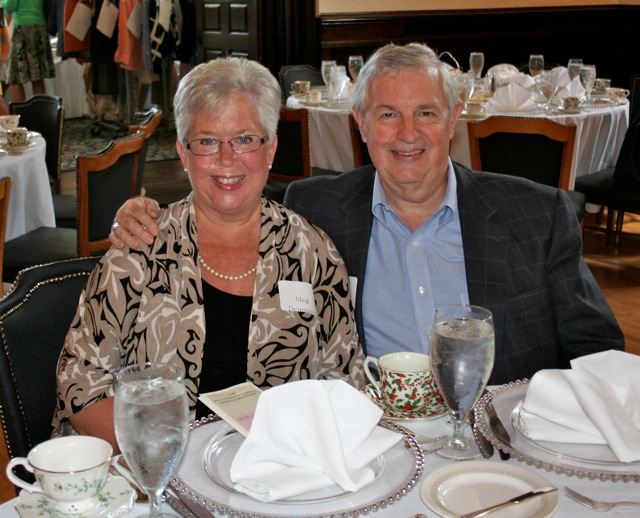
It was my honor and privilege to be his guide and host the whole weekend.  It began on Thursday as Meg and I picked him up at O’Hare airport.  We told him we’d meet him at the baggage claim.  As Meg was getting out to go in and find Marcus, she asked, “how will I recognize him?”  She found him right away. 

After picking him up on Thursday we had a delightful conversation driving him to his hotel in Lake Forest.  As we dropped him off we asked, what are your dinner plans?

He said, “What do you suggest?”  We looked at each other and quickly said “Why don’t you get settled in and we’ll be back and pick you up for dinner at our house.”

What a great evening!  Marcus was such a warm and engaging person, he wanted to know all about us, he listened so intently to our stories.  That evening sitting on our deck sharing conversation, beaking bread, and sharing wine was indeed a celebration of communion that Meg and I shall never ever forget.

He inscribed my copy of “The Heart of Christianity” on 9/16/06:

To Don and Meg,
With rich memories, gratitude for your hospitality, and best wishes.
Marcus Borg

Rest in peace my friend, your voice and your presence will be greatly missed!

Don and Meg Dempsey

Don and Meg Dempsey, gracious hosts of Marcus Borg

Don and Meg Dempsey, gracious hosts of Marcus Borg

The Rev. Dr. Donald Dempsey and and Meg live in Fort Sheridan, Highland Park, IL. Don is one of six McCormick Theological Seminary friends who gather annually for renewal of friendship and theological inquiry.


“I don’t know that I’m right”

Marcus Borg‘s answer to the question “How do you know you’re right?” is spot on.

“I don’t. I don’t know that I ‘m right.”

Barkley Thompson reports the exchange in yesterday’s posting on God in the Midst of the City following Dr. Borg’s deathre-posted today on Views from the Edge as “Tribute to Marcus Borg (1942-2015)”.

I never met Marcus Borg. I wish I had. We were born in 1942 within a few months of each other. You might say we grew up next door to each other in different towns. There’s something about time that situates people in the same location, asking the same or similar questions, searching the same search, vexed, in our case, by the early horrors of World War II, German concentration camps, the Holocaust, and the American bombings of Hiroshima and Nagasaki. As children of faith we grew up asking how we could square a loving God with the stacked bodies of Auschwitz and Hiroshima, the economic disparities of poverty and injustice of racial segregation.  As happened to a lesser extent with some of his peers, Marcus developed a theology and Christology that rose out of these compelling questions about the real world that had shaped him, and the irrepressable hope for something better that drove him deeper and wider as he grew older and wiser.

Marcus’s humble response to the questioner who asked how he knew he was right -“I don’t know. I don’t know that I’m right” – is one for the ages. If only we could clone it to create a humbler humanity of neighborliness across all the terror our world is making, we might fetch the blessing from the curse of absolute religious certainty.

“God’s dream for us is not simply peace of mind, but peace on earth.”- Marcus J.Borg & John Dominic Crossan, The First Christmas, 2007, HarperOne.

– Gordon C. Stewart, Chaska, MN, January 22, 2015


Tribute to Marcus Borg (1942 – 2015)

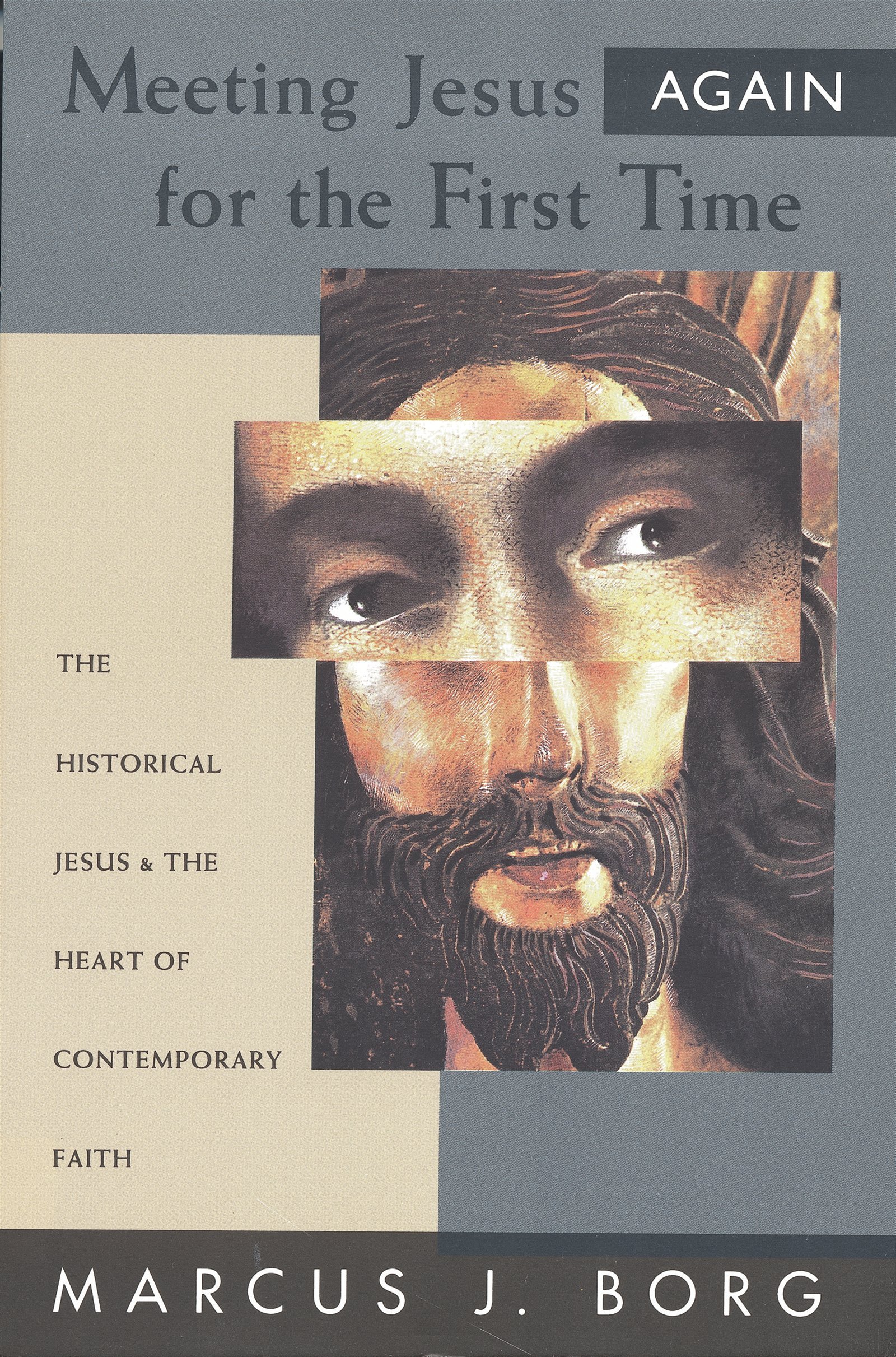
Cover of Marcus Borg book

Cover of Marcus Borg book

Marcus Borg’s writing and teaching affected millions.  Steve Shoemaker received an email of Marcus’s death yesterday from Barkley Thompson, who had quickly writtten the following tribute to Marcus on his blog “God in the Midst of the City“.

My friend, Marcus Borg
WEDNESDAY, JANUARY 21, 2015 / THE VERY REVEREND BARKLEY THOMPSON

Marcus Borg died this morning after a prolonged illness. I received a phone call this afternoon from a Cathedral parishioner and friend of Marcus, relaying the news to me.

I first became aware of Marcus Borg when I was a sophomore at Hendrix College. His landmark book, Jesus: A New Vision had just been released. It hit me at exactly the right time. I was a philosophy & religion major who knew God and increasingly knew about God, but I had little room or need for Jesus. Marcus’ book gave me an entirely new access point: to consider Jesus as Jesus had been historically, as a wisdom teacher, a healer, a social prophet, and more.

Marcus Borg

Marcus Borg

I first heard Marcus speak at Hendrix. He was the epitome of a college professor, right down to the cardigan sweater and pipe. He spoke calmly and with passion, and the first time I heard him in person was also the first time I understood how those tho things–calm and passion–could coincide.

I heard Marcus speak several other times over the years, but it was after I’d become a priest that I came to know him personally. When he was the annual Dodson Lecturer at St. John’s-Roanoke, he and I went to dinner. I was starstruck and wanted to quiz him about his research and his approach to Christianity. He’d have none of it. Marcus wanted only to talk about me, about St. John’s, about our ministry, and about my experience as a young priest in the Episcopal Church. He was solely interested in me, and I’ve never forgotten it.

Several shared meals and opportunities for fellowship later, my Christology has become higher and higher as the years have gone by. In ways I could not have done all those years ago in college, I now attest without hesitation that Jesus the Christ is God Incarnate, the hinge of history, the defeater of death, and the fulfillment in a single human life of God’s hopes for the whole world. And yet, my approach to Holy Scripture, my social convictions, and my love for the Episcopal Church mirror Marcus’ own perspectives quite closely. I once introduced Marcus to a church audience by saying, “I agree with roughly 75% of what Marcus will say to you this evening.” When he stepped into the pulpit, Marcus quipped, “I’m tempted to forego my notes and discuss with Barkley the other 25%!”

Unlike so many other writers in the field of religion (on both ends of the spectrum), Marcus was humble. Once one of my parishioners asked him during Q&A, “But how do you know that you’re right?” He paused, looked at her thoughtfully, and said, “I don’t know. I don’t know that I’m right.”

Very many people who had left the Christian faith have returned to it through Marcus’ evangelism (though he would grimace at my use of the word, I suspect). Marcus was a Christian, a follower of Jesus Christ in word and in deed. He understood Jesus (and especially the Resurrection) differently than I do. But the veracity of his faith was clear. And calm. And passionate.

Marcus and I last corresponded in late November. I’d asked how he was doing, and he responded, “I may have ten years left. Not sure I want more. There comes a time to let go. And I could, with gratitude, sooner than that. My life has been very blessed.”

Like Abraham, Marcus was blessed so that he could be a blessing. He blessed my life, and I am grateful.

NOTE: Since February 2013, Barkley serves as the eighth dean and twentieth rector of historic Christ Church Cathedral in Houston, Texas.  Click HERE for more information about the him.


God wounded in Paris

Today’s news from Paris is chilling. Still reeling from the Charlie Hebdo attack, hostages are taken in a Kosher (Jewish) market in Paris. Fear of extremist Islamic terrorism spreads across France.

During a gathering of twelve of us at The Reformed Roundtable in Indianapolis two days ago, South African anti-Apartheid leader  the Rev. Dr. Allan Boesak quoted none other than John Calvin, according to whom whenever a human being wounds another, God is wounded.

The killers and hostage-takers in Paris claim the name of Allah. Their abuse of the name is an affront to faithful Muslims who reject violence and terror as much as adherents of Judaism, Christianity, Hinduism, and Buddhism. Religion itself, whatever its form and doctrine, is to be measured by its compassion.

Events in Paris remind me of Dr. Boesak’s statement and the Very Rev. James A. Whyte‘s sermon at the January 9, 1989 memorial service after Pan Am flight 103 carrying 259 passengers exploded over Lockerbie December 22, 1988. Eleven more were killed on the ground in the small town of Lockerbie.  The Church of Scotland reluctantly called it’s Moderator, James Whyte, out of mourning his wife’s death for his to preach at the memorial service for the victims of the terror at Lockerbie.

In that sermon he proposed a vexing answer to the vexing question: Where was God when the plane went down? “God,” he said, “was on the plane.” 

“Justice, yes; retaliation no,” he declared. “For if we move in the way of retaliation we move right outside of the fellowship of Christ’s suffering, outside of the Divine consolation. There is nothing that way but bitterness and the destruction of our own humanity.”

Four hundred years after Calvin’s statement and decades before James Whyte’s sermon at Lockerbie, Dietrich Bonhoeffer wrote the following from his prison cell before he was hanged by the Nazi’s whose “God” was without compassion. Bonhoeffer wrote as a disciple of Jesus, the Crucified, but his picture of God as suffering and the call to stand with God in God’s suffering int he world of human cruelty represents the compassionate faith shared by compassionate people of every stripe.

Christians range themselves with God in his suffering; that is what distinguishes them…. As Jesus asked in Gethsemane, “Could ye not watch with me one hour?” That is the exact opposite of what the religious man expects from God. Man is challenged to participate in the sufferings of God at the hands of a godless world. He must therefore plunge himself into the life of a godless world, without attempting to gloss over its ungodliness with a veneer of religion or try to transfigure it. He must live a ‘worldly” life and so participate in the suffering of God. He may live a worldly life as one emancipated from all false religions and obligations. To be a Christian does not mean to be religious in a particular way, to cultivate some particular form of asceticism (as a sinner, a penitent or a saint), but to he a man. It is not some religious act which makes a Christian what he is, but participation in the suffering of God in the life of the world.  [Bolded type added]

Dietrich Bonhoeffer, Letters and Papers from Prison

Today God is wounded again…in Paris, and we participate in the suffering of God at the hands of a cruel world.


God as Policeman or Lover

Sebastian Moore, OSB

Sebastian Moore, OSB

In the eyes of Views from the Edge, the  late Dom Sebastian Moore, O.S.B. (12.17.1917 – 02.21-2014) of Downside Abbey, England, is one of our time’s more interesting thinkers.

Steeped in the psychology of Carl Jung, the spiritual discipline of the Benedictine Order, the theology of Bernard Lonergan, S.J., and the mimetic theory of Rene Girard, his eyes were penetrating, his vision both deep and far-reaching. During a long life os spiritual searching, he wrote in his book The Inner Loneliness:

[O]nce you see the self as naturally self-centered, you deny that the self wants God above all things, and you degrade God from being the fulfiller, the lover, into being the policeman. Paul’s conversion, through the stunning vision of Jesus he had on the road to Damascus, was from God the policeman to God the lover.

[The Inner Loneliness, Crossroads Press, 1982, p.49]

We met briefly in 1971 at a meeting of campus ministers in Milwaukee. He was chaplain at Marquette University at the same time I served as campus minister at the University of Wisconsin-Whitewater. Gathered at the Episcopal Campus Ministry Center at UW-Milwaukee, I wondered who this strange monk was who seemed to observe everyone very closely without saying more than a word or two. I’m not sure I even knew his name. I just knew he was unusual.

Twenty-six years later, during a period of personal and professional turmoil, a therapist mentioned the name Sebastian Moore. I purchased The Crucified Jesus Is No Stranger and saw his picture on the jacket. His perspective left me in awe and anchors me still. I’ve been knocked off my horse on the way to way to Damascus. Every real conversion is the turning from God the policeman to God the Lover.

Joseph the Widower – Christmas Eve

Steve’s poems and verses often capture something very large in a few short lines. His “In the Stable” manages to keep the earthly and the heavenly together: an iconic smile at the end offered to a grief-stricken Joseph in the shame-filled, smelly stable. We publish “In the Stable” again for those of you who, like Steve’s Joseph, are dealing at the same time with grief and hope on Christmas Eve:

The shame that old man Joseph felt
in taking Mary to the barn
was mainly that, of course, it smelt:
it reeked with sheep shit, donkey dung,
and cattle plops. The widower
knew wives who whelped were never clean
themselves until the midwives pour
the well water over their loins
and legs, wash front and back. His first
young wife had died in giving birth
to their third child. He shook his fist
at heaven as she lay in filth
and breathed no more. Sweet Mary mild
step-mother, virgin, pushed and smiled…

– Verse by Steve Shoemaker; introduction by Gordon.

CLICK “Festival of Nine Lessons and Carols” to hear today’s live BBC broadcast (10:00 a.m. EST) from King’s College, Cambridge England.  Merry Christmas to all our readers.

Verse – In the Stable

The shame that old man Joseph felt
in taking Mary to the barn
was mainly that, of course, it smelt:
it reeked with sheep shit, donkey dung,
and cattle plops. The widower
knew wives who whelped were never clean
themselves until the midwives pour
the well water over their loins
and legs, wash front and back. His first
young wife had died in giving birth
to their third child. He shook his fist
at heaven as she lay in filth
and breathed no more. Sweet Mary mild,
step-mother, virgin, pushed and smiled…

– Steve Shoemaker, Urbana, IL, Dec. 24, 2014

Pope Francis on Spiritual Alzheimer’s

Click HERE for Pope Francis’s December 22, 2014 message. God bless Pope Francis! Let all the people – and the Curia – say “Amen!”