Hangman

The lynching tree?

The lynching tree?

Every few days a silhouette of a tree and the invitation to play Hangman appear on my iPad. It’s a real tree with limbs and branches with a kind of Halloween orange sky behind the black silhouette and the noose.

In America there are TWO hangman histories. One seems harmless enough: Hangman, the English word game of British origin some of us played as children. The other is deadly.

As one who’d never heard of the game until it appeared on my iPad, the image is grotesque. It called up America’s long history of the lynching tree when the people who played hangman hid their identity with white hoods over their heads, walking in the dark with torches ablaze, erecting and setting afire crosses on the properties of blacks and whites who hadn’t shown proper respect for their doctrine of white supremacy.

Advertisers are experts in cultural anthropology. They prey on a people’s cultural history and belief systems. Commercials like the one for Hangman are created as a result of research into the fears and hungers of a people. Their ads hold out the bait to attract the quick click to the ap.  I didn’t click, but, if I were a gambler, I’d wager that many who did weren’t thinking about an innocuous word game when they clicked. They may have been seeing what the advertisers meant them to see: a symbol of “the good old days” when white men were in control.  In 2015  America the old racist hanging tree and its hangman are still soliciting successfully, especially when we choose not to remember.

  • Gordon C. Stewart, Chaska, MN, September 29, 2015.

A prisoner of my own violence

Pope Francis quoted the American Cistercian monk Thomas Merton in his address to Congress.

“I came into the world. Free by nature, in the image of God, I was nevertheless the prisoner of my own violence and my own selfishness, in the image of the world into which I was born. That world was the picture of Hell, full of men like myself, loving God, and yet hating him; born to love him, living instead in fear of hopeless self-contradictory hungers.”

Perhaps Mark had something like that in mind when he attributed to Jesus a grotesque instruction about following in the way of Christ. The images of Mark 9 are ludicrous, violent, grotesque.  Cut off a foot or a hand. Tear out your eye if it causes you to “stumble” — if it causes you to lead a child toward the fire of hell.  It is better to enter the Kingdom of God with one eye than to enter hell with two.

Author Flannery O’Connor seems to have known the genius of these jarring metaphors.

“I use the grotesque the way I do because people are deaf and dumb and need help to see and hear.”

Watching the news of grotesque crimes against humanity, we ask how anyone could behead another human being. How, indeed? And always in the name of God, in the name of righteousness, the children of light against the children of darkness.

Jesus’ words from Mark 9 were read aloud last Sunday in many churches around the world. They are as off-putting now as they were spoken into an earlier violent time, a world that was for Jesus and for Mark what Merton’s was for him: a picture of hell.

But for Jesus, the word we translate “hell” was not a place of divine punishment. It was the name of a place outside of Jerusalem. Paul Nuechterlein writes in last week’s Girardian Reflections:

‘Gehenna’ in Mark’s Greek rendering would have been ‘Ben Hinnom’ in Jesus’ own Hebrew/Aramaic. It’s the valley referred to in Jeremiah 7:30-33:

For the people of Judah have done evil in my sight, says the LORD; they have set their abominations in the house that is called by my name, defiling it. And they go on building the high place of Topheth, which is in the valley of the son of Hinnom, to burn their sons and their daughters in the fire — which I did not command, nor did it come into my mind. Therefore, the days are surely coming, says the LORD, when it will no more be called Topheth, or the valley of the son of Hinnom, but the valley of Slaughter: for they will bury in Topheth until there is no more room. The corpses of this people will be food for the birds of the air, and for the animals of the earth; and no one will frighten them away.

‘Hell,’ ‘Gehenna,’ ‘ben Hinnom’ is the place of human sacred violence that has never even come into God’s mind. It is our violence that we need to fear, not God’s. Jesus is speaking grotesquely of lesser sacrificial violence like cutting off one’s hand, as being better than amped-up sacrificial violence like the child sacrifice of Jeremiah’s day — or the Nazi Holocaust of our day. [bold print added by VFTE]

Self-criticism, prayerful introspection, the opening of one’s own divided heart to Divine judgment and mercy are the stuff of which heaven is made; hell would be when we remain prisoners of our own selfish violence, a place filled with people just like me.

  • Gordon C. Stewart, Chaska, MN, September 28, 2015.

Pope Francis and Speaker Boehner

Is it a coincidence that Speaker John Boehner announced his resignation the morning after his invited guest, Pope Francis, spoke to a joint session of Congress?

Pope Francis and John Boehner - Joint Session of Congress

Pope Francis and John Boehner – Joint Session of Congress

Before his address to Congress yesterday Pope Francis turned to the two former altar boys behind him on the dais.  He looked quickly at Vice President Joe Biden; he looked much longer into the eyes of his host, Speaker John Boehner. It was warm but it also seemed like something else – a moment between a priest and penitent?

The Speaker wiped his eyes, as any faithful Catholic would be prone to do.  He cried, as he often does, but this time as if to ask in humility, “Who am I, John Boehner, a mere altar boy, to share this powerful platform with the Holy Father? I am not worthy that you should come under my roof.”

One had to ponder Mr. Boehner’s inner turmoil listening to the Pope’s words gently reprimand leaders who forget the Golden Rule, push aside the poor, ignore or criminalize immigrants and migrants, prefer aggression to dialogue, ignore the common good for private gain, put people on death row, and refuse to act responsibly on climate change.

What do you do sitting behind the Pope?

You take out your handkerchief at the great privilege of hosting the Pontiff and the honor of being in his presence, but perhaps also because you recognize the prevalence of sin, as in Francis’ quotation from Thomas Merton (see quotation below) or his choice of the socialist Dorothy Day of the Catholic Worker Movement as one of four Americans to emulate.  And, if you haven’t already done so in your private time with the merciful Pope Francis, you might go to confession, repent, and do penance.

This morning John Boehner announced his resignation as Speaker of the House at the end of October. Preparing to speak to the United Nations in New York, one can imagine Pope Francis blessing John while lamenting Boehner’s colleagues’ loud cheering, wondering whether anyone but Joe and Johnny was paying attention the day before.

  • Gordon C. Stewart, Chaska, MN, Sept. 25, 2015

Quote from Pope Francis commendation of Thomas Merton as an American example to follow:

A century ago, at the beginning of the Great War, which Pope Benedict XV termed a “pointless slaughter”, another notable American was born: the Cistercian monk Thomas Merton. He remains a source of spiritual inspiration and a guide for many people. In his autobiography he wrote: “I came into the world. Free by nature, in the image of God, I was nevertheless the prisoner of my own violence and my own selfishness, in the image of the world into which I was born. That world was the picture of Hell, full of men like myself, loving God, and yet hating him; born to love him, living instead in fear of hopeless self-contradictory hungers”. Merton was above all a man of prayer, a thinker who challenged the certitudes of his time and opened new horizons for souls and for the Church. He was also a man of dialogue, a promoter of peace between peoples and religions.

[Bold print added for emphasis by Views from the Edge]

Bernie Sanders at Liberty University

The very thought of Democratic Socialist candidate Senator Bernie Sanders (I-VT) speaking at a compulsory convocation at Liberty University, founded by the late Rev. Jerry Falwell who also founded the Moral Majority, seemed far-fetched until it happened. What happened is an example to follow: a genuine, face-to-face, civil discussion about America, the meaning of morality, and what the Bible has to say about justice in our time.

C-Span’s coverage of the complete 1 hr. 5 min. convocation, including Christian evangelical praise music, and prayer before and after Sanders’ presentation, is all the more remarkable.

  • Gordon C. Stewart, Chaska, MN 55318

Freed from the leash on 9/11

Yesterday, on the anniversary of  9/11, Kay and I hiked on the Echo Trail near Ely, MN with 2 year-old Cavalier King Charles Spaniel Barclay. Barclay knows nothing about airplanes, falling buildings, religion, economics, terror, or war. He makes friends with everyone. He rejoices in the present, leaping in the air, joyful for no particular reason.

On the hike we set him free from his leash and watch him romp along the trail, out and away from us – but not too far – and then galloping back like a race horse when called. Unfortunately, Kay’s slow motion video wouldn’t load for viewing.

Freed of his leash

he runs and leaps

his feathery coat

and flopping ears

fill the stale air

with the breeze

of joy unleashed.

  • Gordon C. Stewart, Chaska, MN, September 12, 2015

Since we couldn’t upload yesterday’s slo-mo video, here’s a different view of Barclay’s playful spirit.

An American Paradox

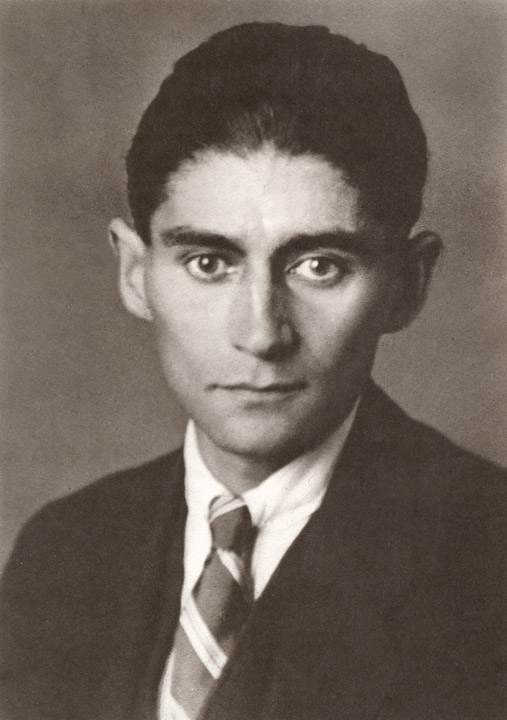
“Our laws are not generally known; they are kept secret by the small number of nobles who rule us.”

[Franz Kafka, “The Problem of Our Laws,” Parables and Paradoxes, Schocken Books, New York.]

Franz Kafka

Franz Kafka

The laws of which Kafka wrote in the early 20th Century are not the ones peculiar to his time. They are not written in legislation. They are not acts of Congress. They are not the federal, state, or local statutes and ordinances lawyers argue in courts of law. The laws of which he speaks are not visible to the masses. They are the secret of the nobles. They are laws of a different order.

“The laws were made to the advantage of the nobles from the very beginning; they themselves stand above the laws.”

According to Kafka, the nobles themselves have inherited the Law as a mystery whose origins are hidden in antiquity. The nobles believe in this Law, but, in fact the Law is whatever the nobles do.

We, the populace who live under the Law of the nobles, dream of a time “when everything will have become clear, the law will belong to the people, and the nobility will vanish. This is not maintained in any spirit of hatred against the nobility; not at all, and by no one. We are more inclined to hate ourselves, because we have not yet shown ourselves worthy of being entrusted with the laws.”

Franz Kafka knew nothing of Donald Trump, the noble who knows the Law is whatever the nobles do and convinces the masses that we, too, can become nobles.

“Actually,” wrote Kafka, “we can express the problem only in a sort of paradox: Any party that would repudiate, not only all belief in the laws, but the nobility as well, would have the whole people behind it; yet no such party can come into existence, for nobody would dare to repudiate the nobility. We live on this razor’s edge. A writer summed the matter up in this way: the whole visible and indubitable law that is imposed upon us is the nobility, and must we ourselves deprive ourselves of this one law?”

  • Gordon C. Stewart, writing from the shoreline of Lake Shagawa, Ely, MN, September 9, 2015.

“Trumped”

Emily Hedges

Emily Hedges

by Emily Hedges

My parents’ annual visit from Oklahoma falls during Shark Week this year. The July Discovery Channel tradition captivates my Dad. He sent a text a month ago reminding me to set a DVR recording. Since arriving, they spend time with my three kids—nine, eight and seven—gathered around the television in the downstairs living room watching glass-eyed, roving predators take chucks out of human thighs and sides. I allow it against my better judgement. I have already said no to Dad’s dosing my kids with home-brewed colloidal silver and the show River Monsters. I feel I can’t say no to everything, so I say yes to this with my silence.

“It’s not just a great white. It’s a rogue monster with a taste for people,” Dad tells us over coffee. In a show he watched the night before, three boaters encountered a megalodon—a super shark—which dragged their craft underwater.

“Naturally the two women were panicking, but the man stayed calm. This guy in the boat next to theirs volunteers to go down and try to bring them up,” Dad says. “He was just some guy willing to go down there knowing what was waiting. Now that’s courage.”

“You know Dad, there’s nothing ‘natural’ about women panicking,” I say. He just cuts a glance at Mom, frustrated that once again I’ve missed the point. I’m curious about the word “megalodon” so I Google the name. I learn it’s an extinct, ancient shark scientists believe once measured 40 to 70 feet in length, compared to the average great white that is from 15 to 20 feet.

Later that day I’m sitting in the living room reading. Mom and Dad come in with my nine-year-old, Scout, and sit down. The television screensaver is scrolling stock landscape photos with news headlines. I see the name Hillary Clinton out of the corner of my eye. Dad sees it too because he says, “Okay Emily. The election is tomorrow. Who do you vote for, Hillary or Trump?”

“Hillary!” Scout responds with a fist pump in the air. I love her innocent, uncalculating honesty. If only it was so easy to be an adult child. I feel my parents’ eyes on me and hope perhaps this is a rhetorical question, meant as a comment on the impossible state of American politics, like when I proclaimed myself a conscientious objector in the 2004 Bush/Kerry election. But their silent, challenging expressions make it clear they’re waiting for a response.

“Hillary,” I say, knowing how my parents feel about her. Just the day before, my Dad detailed what he refers to as the “Clinton body count”—White Water, Ruby Ridge, Waco, and “all the others” strewn along their path to the top. But surely they couldn’t support Trump either. I remember how Bill’s presidency inspired an almost daily discussion of the necessity of character in an American president? Would they consider Trump as having character?

“Why?” Mom asks me in an accusing tone. Then she catches herself, forcing her body to relax against the arm of the couch. The corners of her mouth soften into a half smile. She’s trying to look calm, but it only gives her face a smirk.

“What do you know about him? Has he broken the law?” she challenges. Unformed sentences catch in my throat. I don’t know whether I should let them out or keep them trapped. Paralyzed, I feel myself bobbing in open water about to be bitten. Then a memory surfaces from their last visit. While drinking coffee on the deck, Mom made a statement about global warming that I challenged. Her face flushed; her lips trembled; and her eyes turned shiny. She apologized each time she reached up to wipe away a tear with the back of her hand, weathered and brown from daily work in her garden.

“I’m sorry. I don’t know why I’m crying,” she kept saying over and over.

I look down at her hand and remember how when I was little, I used to wrap it up in a wash cloth and pretend it was my baby. Now those gentle fingers are curled inward, clinched together with anger.

“It wouldn’t surprise me if he’s broken the law given his business, but of course I don’t know that and I’m not going to bear false witness against him,” I say, hoping this might discourage them from doing the same about Hillary in front of Scout. Unlike yesterday when I was able to smile and walk away, in front of my children I don’t have that option.
“Really Emily. What do you think you know about him?” Mom presses.

I see gold-plated Trump Tower near Columbus Circle in New York; his Atlantic City casino, in bankruptcy when I was there in 1999 on business. I see the arrogant sneer, the hair.

“I don’t really think you want my opinion, so I’d rather not say.” I am careful not to appear upset. Then I go upstairs for a soda. As I disappear around the corner, I hear her say, “For someone who doesn’t pay attention to the news, you seem to think you know a lot.” Her tone was low, meant only for Dad. My parents think I don’t follow the news because I don’t watch Fox, and I never bring up current events. My pride makes me want to correct her, but instead I say loud enough for her to hear: “I pay attention to more than you think Mom.”

It occurs to me—why Trump over all the other Republican candidates who seem a more logical fit for my parents’ conservative Christian worldview? I’ve never heard them mention him before. Why now? I hear the TV roar back to life downstairs, and the answer comes to me: for the same reason Trump is trending—for his recent comments describing Mexican immigrants as criminals, rapists, roving predators. I turn, ready to go downstairs and tell them there is no research that supports the claim that illegal immigrants are more likely to commit crimes (except relating to immigration of course) than the rest of the population. In fact, statistically they are less likely, which makes sense given their fear of deportation. But then I stop. What good would it do? I look over at my two younger children sitting at the kitchen table coloring, both adopted from Mexican American birth parents, and puzzle over my parents’ logic.

After a time I return to the living room and all appears to be forgotten. In this episode a man in a cage is lowered into shark-infested water. The scientists hope to tag one of the great whites so they can better understand their movements and protect the nearby beach full of unsuspecting innocents swimming only a few hundred feet from a seal breeding ground. Then the scientist hazards an opinion as to why shark attacks have increased so dramatically over the last decade in this one beach off the coast of South America. His theory is that increased dumping of toxic waste into waterways is constricting the great white’s domain.

“The victim is always at fault,” my Dad says sarcastically. The suggestion that man could play a role in shark attacks offends him. He explains to Scout that it’s in the nature of a shark to look for new territory and to kill. To try to attribute that nature to something man causes or deserves is to deny observable fact. His words feel like the dark ocean, and I notice his arms forming a protective cage around her. She snuggles into them the way I did when I was little and I’m jealous. From where I sit on the opposite couch, it’s obvious there’s only enough room in them for a child. I watch his eyes watch the flickering images. His face seems content, the threatening, disintegrating world contained within the borders of the 48-inch television screen.

Who Is Emily Hedges?

Emily Hedges

Emily Hedges

Emily’s not just any writer. She’s a good one!  Emily’s review of Go Set a Watchman, Harper Lee’s controversial sequel to To Kill a Mockingbird, appeared on Views from the Edge on Thursday.

Parenting three adopted children with husband Joe, she carries a history of courageously outgrowing herself. Today she’s thriving at Dartmouth College, earning her master’s degree in creative writing and student-teaching basic writing to undergrads. Kay and I became friends the Hedges during their time here in Minnesota.

New Hampshire is politically hot right now in the run-up to the New Hampshire Presidential Primaries. Donald Trump is making it big.  So what happens when conservative parents from Oklahoma take over the television during a family visit in New Hampshire?

You may recognize yourself in this highly personal piece. She’s sensitive to her parents, although she no longer agrees with their conservative, apocalyptic view of the world. She constantly struggles with when to bite her tongue and when to speak up. Now that her children are old enough to be influenced by their beliefs, the stakes have never been higher.

Check back with Views from the Edge for her story Trumped.

  • Gordon C. Stewart, Chaska, MN, September 5, 2015.

If I were a rich man…Labor Day Sunday 2015

Once there was a rich man with gold rings and fine clothes who was applauded by television viewers. “You’re fired!” he’d say with a smirk.  He showed no mercy. He took no prisoners.  He took no guff. Judgment triumphed over mercy, and the people lapped it up. It came from someone just like them, or so they thought, a true-blue American who stands up against intruders from Mexico.

Then some of those who followed him went to church on Labor Day Sunday where they had to square their enthusiasm for the man with the gold rings and fine clothes with the assigned Epistle for the day from New Testament’s Letter of James.

My brothers and sisters, do you with your acts of favoritism really believe in our glorious Lord Jesus Christ?  For if a person with gold rings and in fine clothes comes into your assembly, and if a poor person in dirty clothes also comes in, and if you take notice of the one wearing the fine clothes and say, ‘Have a seat here, please’, while to the one who is poor you say, ‘Stand there’, or, ‘Sit at my feet’, have you not made distinctions among yourselves, and become judges with evil thoughts? Listen, my beloved brothers and sisters. Has not God chosen the poor in the world to be rich in faith and to be heirs of the kingdom that he has promised to those who love him? But you have dishonored the poor. Is it not the rich who oppress you? Is it not they who drag you into court? Is it not they who blaspheme the excellent name that was invoked over you?

You do well if you really fulfil the royal law according to the scripture, ‘You shall love your neighbour as yourself.’ But if you show partiality, you commit sin and are convicted by the law as transgressors. For whoever keeps the whole law but fails in one point has become accountable for all of it. 11For the one who said, ‘You shall not commit adultery’, also said, ‘You shall not murder.’ Now if you do not commit adultery but if you murder, you have become a transgressor of the law. So speak and so act as those who are to be judged by the law of liberty. For judgment will be without mercy to anyone who has shown no mercy; mercy triumphs over judgement.

What good is it, my brothers and sisters, if you say you have faith but do not have works? Can faith save you? If a brother or sister is naked and lacks daily food, and one of you says to them, ‘Go in peace; keep warm and eat your fill’, and yet you do not supply their bodily needs, what is the good of that? So faith by itself, if it has no works, is dead.

[Letter of James 2:1-17, NRSV]

And the people left church thinking the preacher was being political and went back to their television sets imbibing the illusion that one day they, too, might be like The Donald.

  • Gordon C. Stewart, Chaska, MN, Labor Day Sunday, Sept. 6, 2015.

From Labor Day to Shopping Day

Remember Labor Day?

Violence against labor

Violence against labor – 1938 strike

There was a time when the nation closed down on Labor Day as a tribute to America’s working people.

Then something happened. The Labor Movement which brought about the end of child labor, the 40 hour work week, and won workplace safety laws, lost its steam. “Unions” became a four-letter word. Free market economists convinced the country that unions were responsible for America’s economic problems. The auto industry vacated Detroit for “Right to work” states or Mexico or outsourced parts production, as did other industries, to places where management would have free reign setting wages, benefits, pensions, and work conditions for employees.

This morning I asked a store clerk whether she’ll be working on Monday. “No,” she said, “We’re closed.” “Good,” I said, “you should be. Good for [name of the company]. Everyone should be off unless they’re working somewhere where  an essential public interest at stake.”

Then I came home and searched “Labor Day”.  9 Best Sales of Labor Day 2015 – US News popped up. It’s a shopper’s holiday in the free-market consumer society. Tenty-three percent of American workers work in retail. Amnesia reigns. But, in case you’re wondering, Costco will honor its workers Monday. Walmart invites you to “celebrate hard work with huge savings”.

Click HERE for the heart of Labor Day and why Labor Day is important in the year 2015 when America’s 1%, the class of J.P. Morgan, have succeeded in turning Labor Day into a shopping event when the laborers have to work.

  • Gordon C. Stewart, Chaska, MN, September 5, 2015