
Sorrow Floats: the Healthy Deregulated Capitalism Myth Just Keeps Re-surfacing

Gordon C. Stewart | Thursday, Sept. 10, 2009MinnPost.com

“Sorrow floats.” Perhaps the line from a John Irving novel — in which “Sorrow,” the stuffed family dog preserved by a taxidermist, floats to the surface of the lake after a plane crash — helps explain what is happening in America.

Something dear to the American family died one year ago last September-October. Prior to the series of chilling events of that period, most of us had lived with the illusion of relative economic and financial health. Then Sorrow was rushed to the emergency room for government resuscitation.

Since then our memories of that pre-September 2008 world have taken a turn that families often take at funerals when the eulogies bear little resemblance to the reality of the deceased. We’re quarreling over what was real and what is mythical reconstruction.

Following the plane wreck that takes the lives of the Berry family parents in Irving’s “The Hotel New Hampshire,” the stuffed family pet bobs to the surface of the lake, floating among the wreckage. Sorrow floats. So does the thing we lost last fall.

What died? A ruling assumption

What died last year was the ruling assumption that an unregulated free-market system was the best way to organize an economy and that laissez-faire capitalism is democracy’s natural ally. The market almost crashed. It didn’t crash only because the federal government intervened to prevent a repeat of the crash of 1929. Sometime between mid-September and Oct. 7, when Congress passed its bill to stabilize the financial markets, the myth of the virtue of deregulated capitalism died. It was stuffed by the taxidermy of government intervention, but it still floats.

When a conviction or a myth dies, it doesn’t go away. It continues to bob to the surface. Sometimes, as in the case of the Berry family, the old dog is much easier to love after it is dead. Sorrow — obese, lethargic, and persistently flatulent in its old age — no longer waddles through the dining room to foul the air and ruin everyone’s dinner. In the public psyche, the unpleasant memories of the real life Sorrow give way to the stuffed Sorrow, a thing of nostalgia that lives on … even after it’s dead, and long after the plane has crashed.

Over and over, we forget

Sorrow and its old illusions float every time the reconstructed memory, forgetting the real Sorrow, barks about “socialism.” Sorrow floats every time we shout each other down in town-hall meetings. Sorrow floats every time nostalgia forgets that it was only by government intervention that Sorrow is still around. Sorrow floats every time we forget the voracious appetite, unscrupulous predatory practices, insatiable greed, and the obesity that led to the deaths of Lehmann Brothers, Merrill Lynch and Bear Stearns, not to mention insurance giant AIG and all the banks that had taken the plunge into a market of deregulated derivatives and mortgages that led to the epidemic of home foreclosures, bankruptcies, pension-fund collapses and job losses. Sorrow, the old dog that failed us, still floats and still barks a year after the crash when the mind forgets and nostalgically remembers a system we thought was working in our interest.

Old ideas and convictions die hard. The powerful economic forces that grew fat during the years when government was viewed as the people’s enemy will stoke the fires of public anxiety and anger, taking advantage of the floating Sorrow that reminds us of something that we love more in retrospect than we did the day it died of its own obesity.

The Rev. Gordon C. Stewart is pastor of Shepherd of the Hill Presbyterian Church in Chaska. He is the moderator of Shepherd of the Hill Dialogues and former executive director of the Legal Rights Center. The views expressed in this article are his own and do not represent the views of anyone else.

Deadly Political Rhetoric

When Political Rhetoric Brings Out the Worst in Us

by Gordon C. Stewart, March 29, 2010

Click the title for full commentary published by Minnesota Public Radio) Here are some Excerpts (Opening and closing paragraphs):

Our nation is being poisoned by inflammatory rhetoric from both sides of the political aisle. How else does one explain the sending of a used condom to a Minnesota congresswoman, or the phone message left on  Rep. Keith Ellison’s answering machine: “Timothy McVeigh said dead government workers are good government workers.  Goodbye, Sambo”? And that’s just here in Minnesota….


 Where are the likes of Edward R. Murrow and Joseph Welsh now? We need them again.

Dust to Dust, Muscles to Mush

Ash Wednesday: Muscles to Mush

Gordon C. Stewart. MPR commentary. Feb. 17, 2010. (The family had vacationed in theKatie in Costa Rica jungle of Costa Rica at step-daughter Katherine’s request after a diagnosis of terminal cancer.)

Dust to dust, ashes to ashes.  It’s an Ash Wednesday kind of week. It puts me in mind of another Ash Wednesday, two years ago:

“You want to go down to the waterfall?  Come on – I’ll show you a shortcut!”  The invitation comes from Ryan somebody-or-other, who lives next to Las Aguas, our home deep in the jungle ofCosta Rica.  We’re having fun now.  We’re on vacation!  At 65, shortcuts sound good.

Ryan leads the way to a steep and narrow jungle trail.  “Hang onto the rope with your left hand. The railing on your right is only there in case you lose your balance.”  The blue rope is thin and slack.  The railing is two inch round bamboo.  Ryan – in his mid-30s and fit as a fiddle – leads the way down the steep ravine, followed by Chris, Kay and Katherine.  I bring up the rear. I tell myself that I’m last because this way I get to protect Katherine in case she falls or needs me.  Everyone else knows that I’m last in line because I’m like an old tortoise trying to climb down stairs.

The “shortcut” — this great adventure we’re all enjoying — is steep, 60 degrees or so.  My legs, whose only regular exercise is climbing the stairs in our house or the one step up into the chancel on Sunday mornings, are turning to jelly.  By the time we climb down 75 jungle steps,  Katherine, whose fingers are either numb or painful these days because of her chemo, declares something uncharacteristic of her: “I don’t think I can do this.”  I don’t think I can either.

Dust to dust, ashes to ashes, muscles to mush.

I’m thinking that we’re going to have to go back up this trail.  I’m thinking that we should turn around now while we can.  I’m thinking about Katherine’s hands, her cancer, her exhaustion, and how badly she wants to do everything that has brought us here, to this trail.   “It’s not far,” Ryan assures us.  But like George Bush, Ryan is from Texas.  “Sure!” I mutter to myself.  “Sure it’s just a little farther.  Even if it was a mistake, we have to stay the course.”  There’s no turning back now.  I wonder if everyone fromTexas stretches the truth.

Sure enough, it turns out we are only halfway there. But we trust Ryan and keep climbing down to the falls, Katherine ahead of me, the helper tortoise, sliding and slipping downward and sideways, leaving several cracked bamboo railings as a reminder that I’d been there.

At the falls Ryan and Chris, both as agile as the Costa Rican howler monkeys that swing in the trees, scale the falls to perch on a ledge with the waterfall cascading over their bodies.  “Just one little slip of the foot from death” is what I’m thinking, trying to remember when my body was well-toned.  Kay takes her camera and has a field day.  Katherine and I hang out, breathe, and agree that it’s beautiful — and that it would be a lot more beautiful if someone sent a helicopter or just beamed us up.

The way back to Las Aguas is easier, perhaps because it isn’t a shortcut.  This other trail takes no more time than the shortcut, and it’s much easier on the thighs, the hands and the brain.

I conclude that shortcuts aren’t all they’re cracked up to be – like stimulating the economy by depleting the national bank account. Like giving ourselves quick fix tax rebates so we can spend the receipts and leave the long-term debt for our grandchildren.

By the time we get home, our legs have turned to mush.  It reminds me of Ash Wednesday, when the sign of the cross is made on one’s forehead with ashes.  Dust to dust.  Ashes to ashes.  Muscle to mush. For us Christians, there is no shortcut through this season, no Easter without Lent.

In the hours following our return to Las Aguas, Kay assures me that some soreness is a good thing.  I’m tired, woefully out of shape, sore, and a likely candidate for a heart attack, which, as Kay reminds me, means … I’m not dead.  While the dust and ashes that I am still have some muscle left, the soreness reminds me that I’m alive.

Someday everything that I now claim to be my self will turn to mush.  The pain will go away.  On the jungle floor below the falls, the waterfall will wash over us and carry what’s left downriver to wherever the river goes. Then there’ll be no shortcuts and no illusions of time.  Just the long river into eternity.

Opening a Vein- a reflection on grief

Keep Me in the Light

Gordon C. Stewart  –  Tuesday, 15 March 2011 21:28
This piece grew out of the experience of grief – the loss of step-daughter Katherine following a four year courageous battle with cancer.   was down, way down. I had to preach the following Sunday. I had nothing to say…only a swamp of feelings. I had connected the grief over Katie’s death with the sense of homelessness I had walking the streets iof Minneapolis. I decided to sit down and write. 

What does a preacher or writer do when the well runs dry? For well over a month my well has been dry as a bone. I have nothing to say.

I watch the news. I listen. I am lonely and confused, like a street person hearing the garbled voices of the public address system blaring over the loudspeaker and the thunderous cheers and jeers from the sports stadium blocks away from where I live under the bridge.

When the well runs dry, you sit down at your typewriter “staring at a blank sheet of paper,” said journalist Gene Fowler, “until drops of blood form on your forehead.” Fowler, like famed sportswriter Red Smith, knew that “There’s nothing to writing. All you do is sit down at a typewriter and open a vein.”

Opening a vein is hard when what’s in the vein is grief. It’s even harder when you’re alone and silent on the street, bombarded by all the noise from the stadium.
Only as I begin to write again do I realize the grief. I don’t recognize the world in which I live. I live under the bridge with a cheap bottle of wine. I hear the shouts from the stadium and recognize the passion in their voices, like fans from Green Bay and Minnesota rooting for the Packers and the Vikings: loud cheers and boos from the spectators, shouting the old platitudes, participating vicariously in what’s really happening between the two professional teams down on the playing field.
I don’t know this world. All the rules that favor the middle class and the poor are up for grabs. I’m not sure I want to learn this new game.

I am a man of faith informed by the Hebrew prophets, Jesus of Nazareth and the faith and labor movements of the 20th century that ended child labor; stopped employers from working their employees 12 hours a day, seven days a week; closed the sweat shops that were taking advantage of immigrants from Italy, Poland and Ireland; bridled the horses of runaway greed—the banks, the robber barons and corporations— that profiteered at public expense; won the right of collective bargaining; demanded basic financial security for retirees (Social Security); established a woman’s right to vote; enacted the Civil Rights Act; ended the war in Vietnam; and called for ecological sense, the protection of our natural habitat, the air and the water on which life on the planet depends. I grieve that Jesus’ and the prophets’ vision of turning the upside down world right-side up is gasping for air.

Like Gene Flower, the journalist who described writing with drops of blood forming on his forehead, I’m losing it the way he did when a stranger who claimed to be a healer suddenly appeared at the hospital room of his dear friend John Barrymore. “Just give me three minutes with Mr. Barrymore,” said the charlatan, and I will cure him!” Fowler grabbed him by the collar and threw him down the stairs, calling after him, “Physician, heal thyself!”

I want to throw the impostor healers who have suddenly appeared outside the national hospital room down the stairs, which is not a good thing for one who claims to follow Jesus and the prophets. I’m mildly comforted that Jesus lost it when he threw over the money-changing tables of the financial establishment of his time. But then, I’m not Jesus.

Opening a vein may not change the world. I’m still walking the street three blocks from the stadium. But as I think about where I come from and wipe the beads of blood that are forming on my forehead, a hymn that was ripped from the Presbyterian hymnal rises from deep wells of childhood memory:

God of the prophets, bless the prophets’ heirs; Elijah’s mantle o’er Elisha cast; Each age its solemn task may claim but once; Make each one nobler, stronger, than the last.
Anoint them prophets! Make their ears attent To Thy divinest speech; their hearts awake To human need; their lips make eloquent To gird the right and every evil break. I am strangely consoled.

The vision and the call are still alive and well in my soul. I pass the homeless shelter near the bridge and hear the faint sound of other street people singing another old familiar hymn.

Be Thou my vision, O Lord of my heart; Naught be all else to me, save that Thou art – Thou my best thought, by day or by night, Waking or sleeping, Thy presence my light.

I’m bleeding. But warm blood is a sign of life. Lord, keep me in the light.

A Journey of Faith into Economics

 – Gordon C. Stewart Feb. 12, 2012

North Philadelphia street scene

Where I grew up Karl Marx was the enemy of all that was good and true. The United States and the Soviet Union were in a dead heat in the Cold War between the Christian and capitalist West, and the atheistic, Communist East. In elementary school we dove under our desks during air raid drills to prepare us for the atomic bomb that would be dropped on Broomall, Pennsylvania, population 1,000. We began the school day reciting the Pledge of Allegiance – “one nation under God” – and a prayer that asked for God’s blessing. In World War II our fathers had beaten back the evil of Nazism. Now, evil was threatening once again from fascism’s opposite, godless Communism. It was either us or them.

It took a while before I asked about the coupling of Christian faith and capitalism or read Marx himself. To read him or to entertain the idea of a classless society was heretical treason, or treasonable heresy. Church and nation were two sides of the same thing. But the more I recited the Pledge of Allegiance, went to worship and youth group,  and became acquainted with the poverty of north Philadelphia, I began to realize that “freedom and justice for all” was, at best, an aspiration, not a fact.  At worst, it was a compelling myth that allowed us to think of ourselves as the chosen whose job was to eliminate evil from a fallen world.

Two summers working as a street worker for the Presbytery of Philadelphia in the poorest neighborhoods rattled my world and shook me to my knees. Every Monday through Friday during the summers of 1961 and ’62, I traveled an hour-and-a-half by bus and subway from my suburban home in Broomall to north Philadelphia and back trying to make some sense of these two very different worlds. How and why did they exist – one white; one black? One materially satisfied; one not? Martin Luther King, Jr. and the civil rights movement were answering that it was because of  the politics and economics of white privilege.

When I read the work of Willem Zuurdeeg, a Dutch philosopher of religion who grew up as part of the underground resistance during World War II, I found the philosophical mind that looked below the surface to the deeper convictions that hold our hearts and minds captive. The rest of the story is too long to tell.

Capitalism, like Communism, is an idol manufactured by the human heart, one of the convictions, often unexamined, that vie for our worship and allegiance. No economic system is now, or ever will be, perfect. Its efficacy and utility are to be judged by what it does to the people who live under its mindset and institutions.  Today, I hear strident voices that sound like the voice of the late Senator Joe McCarthy who turned over the tables looking for America’s internal enemies. I would like it to be said when I am gone that I honored the memories of Edward R. Murrow whose courageous reporting exposed McCarthyism, and of Joseph Walsh, the attorney for the Army who spoke aloud the words that brought an end to the power of the McCarthy Hearings to destroy decent, dissenting American citizens: “Have you no decency, Sir? Have you no decency left?”

Ours is a later time. The issues of our day are complex. But underneath the debates, the “us against them” mindset of World War II and the Cold War is no less alive than it was then. However and wherever McCarthy’s eyes flash while his finger points and his voice rises again, those of us who hear a Deeper Voice must not be silent. The Deeper Voice is the “still small Voice” of conscience and dissent.

The Gospel and the Chicken Coop

The Gospel and the Chicken Coop – The Chaska Herald, March  06, 2009

Gordon C. Stewart

For too long the foxes have run the chicken coop, and, when the rightful  owner decides to take back the chicken coop, the foxes aren’t happy.

The warning came in President Dwight D. Eisenhower Final Address to the nation  way back in 1961. Add the rapacious practices of financial institutions to his  military-industrial complex, and his words hold up a mirror for where we are  today: “The total influence [of the new military-industrial complex] – economic, political, even spiritual – is felt in every city, every state house,  every office of the federal government.

Read more:  Chaska Herald – Perspectives The gospel and the chicken coop

How a single voice threatened to set the world on fire

Minnestota Public Radio (MPR, 91.1 FM) published this commentary after a Florida pastor threatened to burn the Quran. Some things don’t seem to change.

– Gordon C. Stewart, September 28, 2010

Everyone from time to time feels insignificant. As I did, while watching fires burn across the world, lit by the words of one pastor in Florida. I felt like a spectator in the stands watching the game I care about go terribly wrong, a hostage of verbal terrorism uttered in the name of Christ.

I would imagine that the Rev. Terry Jones and his small congregation also had felt insignificant before they announced the 9/11 Quran burning, and that they were stunned when their pastor’s voice, although terribly misguided, lit the forest on fire without ever burning a Quran.  One of their own, one who had felt insignificant, had raised his voice and now had the ear of a commanding general, the secretary of defense and the president of the United States.

The difference between the Rev. Jones and most people is that he has a pulpit.  On any given Sunday he speaks and a few people actually listen.  Most of us do our ranting and raving in the shower, at the water cooler or with like-minded people at the coffee shop, but we don’t much expect anyone to listen.

But as the Jones story developed, those of us with pulpits were feeling no less beside the point.  Then, as I prepared for worship, I was drawn by some old lines about spiritual arson. “Consider what a great forest is set on fire by a small spark. The tongue is a fire … a restless evil, full of deadly poison” and “the seeds of righteousness are sown in peace by those who make peace” (Letter of James 3).

The thought crossed my mind: We could invite a Muslim friend to join me in the pulpit, perhaps my neighbor Muhammad or Abdi or one of their children, whom I meet daily while walking the dogs.  I decided to invite Ghafar Lakanwal, a Pashtun Afghan-American cultural diversity trainer, a Muslim and naturalized U.S. citizen, to bring greetings of peace and share some passages about peacemaking from the Quran in our Sunday worship on 9/12.

Our little church in Chaska welcomed Ghafar, and his words about the spiritual “obligation to learn, not burn” still ring in our ears. Our service drew media attention, and Ghafar’s words were heard on the evening news  and noticed by a stranger in Australia, who sent a message through the church website. “I was touched,” he wrote, “when I read about your recent Sunday service in the news. …  I for one can testify that it has certainly comforted a far away Muslim to know that there are neighbors who will stand together in difficult times.  My salaam [to you].  May we all grow together to attain Allah’s pleasure.”

“Ah!” someone will say. How can any Christian rejoice when the author uses the name “Allah” for God?  But the reaction to the “name” is misbegotten.  It is not the name of God; it’s the Arabic word for what we in English call God.   The forest fire lit in defense of “God” in advance of the anniversary of 9/11 reminds us that two kinds of religion potentially exist everywhere people gather to practice their faith. One kind burns. The other kind learns.  One hates; the other loves.

As James, writing to those who would follow Jesus, put it: “With [the tongue] we bless the Lord and Father, and with it we curse those who are made in the likeness of God. From the same mouth come blessing and cursing. My brothers and sisters, this ought not to be so” (James 3:9-10).  We can set the forest ablaze with our small spark or we can use it to light a candle of hope and peace. But, after the events of this month, none of us can again think that what we say is insignificant.

I would imagine that the Rev. Terry Jones and his small congregation also had felt insignificant before they announced the 9/11 Quran burning, and that they were stunned when their pastor’s voice, although terribly misguided, lit the forest on fire without ever burning a Quran.  One of their own, one who had felt insignificant, had raised his voice and now had the ear of a commanding general, the secretary of defense and the president of the United States.

The difference between the Rev. Jones and most people is that he has a pulpit.  On any given Sunday he speaks and a few people actually listen.  Most of us do our ranting and raving in the shower, at the water cooler or with like-minded people at the coffee shop, but we don’t much expect anyone to listen.

But as the Jones story developed, those of us with pulpits were feeling no less beside the point.  Then, as I prepared for worship, I was drawn by some old lines about spiritual arson. “Consider what a great forest is set on fire by a small spark. The tongue is a fire … a restless evil, full of deadly poison” and “the seeds of righteousness are sown in peace by those who make peace” (Letter of James 3).

The thought crossed my mind: We could invite a Muslim friend to join me in the pulpit, perhaps my neighbor Muhammad or Abdi or one of their children, whom I meet daily while walking the dogs.  I decided to invite Ghafar Lakanwal, a Pashtun Afghan-American cultural diversity trainer, a Muslim and naturalized U.S. citizen, to bring greetings of peace and share some passages about peacemaking from the Quran in our Sunday worship on 9/12.

Our little church in Chaska welcomed Ghafar, and his words about the spiritual “obligation to learn, not burn” still ring in our ears. Our service drew media attention, and Ghafar’s words were aired on the evening news and heard by a stranger in Australia, who sent a message through the church website. “I was touched,” he wrote, “when I read about your recent Sunday service in the news. …  I for one can testify that it has certainly comforted a far away Muslim to know that there are neighbors who will stand together in difficult times.  My salaam [to you].  May we all grow together to attain Allah’s pleasure.”

“Ah!” someone will say. How can any Christian rejoice when the author uses the name “Allah” for God?  But the reaction to the “name” is misbegotten.  It is not the name of God; it’s the Arabic word for what we in English call God.   The forest fire lit in defense of “God” in advance of the anniversary of 9/11 reminds us that two kinds of religion potentially exist everywhere people gather to practice their faith. One kind burns. The other kind learns.  One hates; the other loves.

As James, writing to those who would follow Jesus, put it: “With [the tongue] we bless the Lord and Father, and with it we curse those who are made in the likeness of God. From the same mouth come blessing and cursing. My brothers and sisters, this ought not to be so” (James 3:9-10).  We can set the forest ablaze with our small spark or we can use it to light a candle of hope and peace. But, after the events of this month, none of us can again think that what we say is insignificant.

The Jesus Beyond Our Categories

Steve Shoemaker, host of “Keepin the Faith” (WILL/AM, Illinois Public Media) emailed this morning asking for thoughts about a post on “Protestants for the Common Good: ‘People of Faith Advancing Justice in Public Life'”: Can Christians Be Conservative? – an insiders’ academic debate among contemporary Christian theologian-ethicists. It’s worth a read. Tell me what you think.

Here’s what I wrote:

I’m not sure quite how to respond to the piece or the discussion. Off the top, I would say that Jesus himself didn’t neatly fit any of the four polar categories: conservative/liberal; reactionary/revolutionary. Even more, if the question whether the “authentic Christian” can be a conservative is more than a rhetorical question, it should be immediately dismissed – the question itself means that the answer has already been decided in the negative. Sort of like the question “Can anything good come out of Nazareth?!”

Greenfield’s take on Mark 1 is interesting, but, on first reading, it seems to me to miss the point that John the Baptist’s wilderness movement involved all four dimensions. It was conservative, liberal, reactionary, and revolutionary all at the same time. The trek to the Jordean wilderness was a reaction to the collusion between the local religious and political authorities (e.g. Vichy France?) and their Roman (e.g. Third Reich) occupiers. It was also a revolutionary call for a new social order, “the Kingdom of God is at hand; repent and believe the good news.” The grounds for that claim sprang out of the tradition that John and Jesus were conserving, while liberating it from captivity to the spirit of self-serving gains, idolatrous collaboration, self-righteousness and ethnocentrism. In short, the John-Jesus movement doesn’t fit nicely in any one or two categories.

Everywhere I look in the Gospels, I see a Jesus who doesn’t fit our categories. I still don’t know what to do with him.  “Can a Christian be conservative?” assumes from that outset that to be conservative is to be an “inauthentic” Christian. But even if one believes that conservative views and practices are inimical to the way of Jesus, there is the deeper question that puts that question in proper perspective: “Can a sinner be a Christian?” Only a sinner can be a disciple of Jesus. Some of the sinners and sins are primarily conservative, some liberal, some reactionary, and some revolutionary by disposition and by political persuasion. Most of us are some strange mixture of the four. So I would answer Larry’s question “Can Christian be conservative?” with “You betcha!”  How do I know?  Because it’s the wrong question. I don’t get to choose who is “authentically” Christian anymore than Jesus let his detractors decide.  Moreover, I know conservatives who call themselves Christian who put my stewardship and hands-on work with the poorest of the poor to shame. While I’m calling for the revolution, the conservatives I have in mind spend every Saturday preparing and serving meals at the homeless shelter and every Sunday afternoon after putting up with my sermons visiting people they know in town who are down and out – slipping them $100 bills so the utilities don’t get turned off – while I, having preached the revolution, go out for lunch and then go home for a nap.

William Stringfellow stops us all cold in our tracks with his criticism of the church:

Christ’s is a ministry of great extravagance – of a reckless, scandalous expenditure of his life for the sake of the world’s life. Christ gives away his life. The world finds new life in His life and in His gift of His life to the world. His is not a very prudential life, not a very conservative life, not a very cautious life, not – by ordinary standards – a very successful life. He shunned no one, not even adulterers, not even tax collectors, not even neurotics and psychotics…not even poor people, not even beggars, not even lepers, not even those who ridiculed him, not even those who betrayed him, not even his own enemies. He shunned no one. The words that [describe] the ministry of Christ are…sorrow, poverty, rejection, radical, unpopularity. They are the words of agony. It seems ridiculous to apply such words to the ministry of churches nowadays. Yet where these words cannot be truthfully applied to the ministry of churches today they must then be spoken against the churches to show how far the churches are from being the body of Christ engaged in the ministry of Christ in the world.

For Stringfellow the gospel was the vitality of the Word-made-flesh among the principalities and powers of death in this world. None of us has a corner on that Word. One might say that for Stringfellow there is a fifth category that describes the authentic following of Jesus: the life of ‘resistance’ as articulated in An Ethic for Christians and Other Aliens in a Strange Land and The Politics of Spirituality, books uniquely addressed to the church in the American situation.

The question, it seems to me, is beyond ethics, and it is certainly beyond the false choice between the polar opposites: conservative/liberal; reactionary/revolutionary: Can or should a Christian be conservative, liberal, a reactionary, or a revolutionary? The ethics question rises from the theological-faith question: “Where today do we encounter the vitality of th e Word Made Flesh,and, in that encounter, who and how does God call us to be among the principalities and powers as the sinful, timid, confused, forgiven and redeemed disciples of Jesus

In terms of Christian ethics, as I see it, the answer, depending on the situation, involves all four dimensions supplemented by Stringfellow’s fifth descriptor.

I see elements of all five, for example, in Dietrich Bonhoeffer, who boldly conserved the tradition against the false interpretation of the German Third Reich and its ecclesiastical collaborators and paid the price with bodily resistance. Yes?  No? Maybe?

Look forward to hearing your comments.

How I See the World

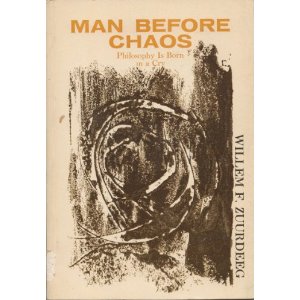
My way of listening and seeing is profoundly shaped by Willem Frederik Zuurdeeg, the late Professor of the Philosophy of Religion and author of An Analytical Philosophy of Religion, and Man Before Chaos: Philosophy Is Born in a Cry, completed following Zuurdeeg’s untimely death by his colleague and friend, Esther Cornelius Swenson, my undergraduate college professor.

They were those rare Christian philosopher-theologians whose work crossed the solid line between the philosophical rigors of empiricism and linguistic analysis, on the one hand, and the depths of existentialists Sartre, Heidegger, Camus, and Marcel and their precursors Dostoevsky and Kierkegaard.

Every day I start out with a fresh-brewed cup of coffee and read the newspaper. What a way to start a day!!! “Don’t give me no bad news, no bad news, no bad news!” But most of the news that’s printed is just that: bad news.

But good news reporting is a thing of joy and a call for celebration. My heroes include muckrakers like A.J. Muste, reporters like Edward R. Murrow, Harrison Salisbury, Daniel Schorr, Bill Moyers, Paul Krugman, and the comedians whose irreverent and sometimes coarse humor exposes the absurd and helps us laugh when we would cry: Jon Stuart, Bill Maher, Lewis Black, Steven Colbert.

I come at the news from a different angle than professional journalism or comedy. My ears are tuned by Willem Zuurdeeg, Esther Swenson, other beloved teachers at Maryville College, McCormick Theological Seminary, and Harvard Divinity School; the people of the congregations and campuses where I have been privileged to minister, and the criminal defense clients of the Legal Rights Center, Inc. where Dostoevsky’s world of Crime and Punishment, Dom Sebastian Moore’s The Crucified Jesus Is No Stranger, and Jesus’ Beatitudes and parables helped me to hear a deeper Voice than the cries that sometimes drove them and their defense lawyers to despair.

I have always had the sense of living at the edge of existence. From the edge I listen for the spoken and unspoken convictions “where ignorant armies clash by night” (Matthew Arnold, “Dover Beach“) to win our minds and hearts, the wars between and among ideologies, ideals, prejudices, states, nations, political parties, religions, economic convictions that shape us for good or for ill.

Lately I have been drawn back to Gabriel Marcel’s The Mystery of Being and Homo Viator to which Dr. Swenson introduced me in college but which were then beyond my experience or interest. Many years later, I find myself more and more at home in the mystery of being itself. I resonate with William Sloane Coffin’s reflection in his last years of life following a stroke.

There is a Zen paradox whereby we may lack everything yet want for nothing. the reason is that peace, that is, deep inner peace, comes not with meeting our desires but in releasing ourselves from their power.  I find such peace is increasingly mine. It’s not that I feel I’m withdrawing from the world, only that I am present in a different way. I’m less intentional than “attentional.” I’m more and more attentive to family and friends and to nature’s beauty. Although still outraged by callous behavior, particularly in high places, I feel more serene, grateful for God’s gift of life. For the compassions that fail not, I find myself saying daily to my loving Maker, “I can no other answer make than thanks, thanks, and ever thanks.”

– William Sloane Coffin, Credo

The Deeper Memory

“At New Year’s, a Visit with the Deeper Memory”

by Gordon C. Stewart – January  1, 2012

At the end of a year and the beginning a new one, I visit a memory care center.


I walk into Red’s room — the room where he has been now for more than a year. His short-term memory is gone. He doesn’t know his wife or his children. He doesn’t know me. He doesn’t recognize anyone.