I've always liked quiet. And, like most people, I've experienced the world's madness. "Be Still! Departure from Collective Madness" (Wipf and Stock Publishers, Jan. 2017) distills 47 years of experiencing stillness and madness as a campus minister and Presbyterian pastor (IL, WI, NY, OH, and MN), poverty criminal law firm executive director, and social commentator. Our cat Lady Barclay reminds me to calm down and be much more still than I would be without her.
Just another day. Another mass shooting. Funerals for young children who left home with homemade sandwiches in their backpacks on their way to school in Uvalde. Another day of partisan hide-’n-seek for who is to blame. Just one more day of jabbering and cross-fire when the NRA sheds tears and offers prayers for the kids and families of Uvalde, and then applaud the former president and Texas senator talking about the need for more good guys with guns to stop the bad guys with guns. Just another day in the land of the free, the home of the bullies.
Just another day 100+ days after mass graves began to be dug in Ukraine for children and parents as innocent as the children mowed down in Uvalde. Another day in far-away Ukraine and close-by in neighbors in Uvalde, Buffalo, Tulsa. Another day when Members of Congress ignore the oath to the Constitution they solemnly swore. Another day when patriotism falls prey to partisan propaganda insisting, though they know better, that “guns don’t kill; people do.” A day like any other when nothing happens to stop the power of the gun lobby, dark money, PACS, and the belief, without evidence, that the election was stolen.
Just another day when the monsters of lies and fear turn us against each other.
Gordon C. Stewart, public theologian, author of Be Still! Departure from Collective Madness (2017 Wipf and Stock), Brooklyn Park, MN, June 5, 2022.
This podcast is the second in a series of autobiographical reflection on life as a theological pilgrimage.
Gordon C. Stewart, public theologian, author of Be Still! Departure from Collective Madness (2017 Wipf and Stock), 49 brief (two to four page) essays on faith and life; host of Views from the Edge; Brooklyn Park, MN.
Robb Elementary School, Uvalde, Texas, May 26, 2022
The anguish keeps coming. Ukraine, Buffalo, Uvalde. There are no words. Only screams, gasps and tears in a Good Friday world. The crucifixion, then and now, stops the chatter, the distractions, and the illusion that positive thinking will save us.
On Good Friday hope is gone. There are no empty tombs, no resurrections, no hosannas, no palms, no lilies, no chocolate bunnies, no jelly beans, no Easter egg hunts, no Fabergé Easter eggs from Russia or Ukraine. Goodness has been nailed to a cross.
God-forsaken
The good man who hangs there screams a desperate cry religious people do not expect to hear: Eloi, Eloi, lama sabachtani?— “My God, my God, why have you forsaken me?” — the cry of the forlorn psalmist of Psalm 22. The lament is heard in our living rooms on TV, our androids and iPhones. Although the New Testament Gospels do not complete the first verse of Psalm 22, the sense of the words would have pounded the ears of the three Mary’s who stayed at the foot of the cross: “Why are You so far from helping me, from the words of my groaning?”
On Good Friday we come face-to-face with god-forsakenness. Not just the fear of it, the loneliness of it or the terror of it. The body on the cross bursts every bubble of denial, illusion, suppression, fancy, or flight.
The Hydra and the Savages
It’s a huge leap from John Calvin to Franz Kafka, but they saw the same thing hiding in every bubble. Calvin used the metaphor of the hydra. There is a hydra, said Calvin, lurking in the breast of every human being. Lop off the head of the hydra? Two new heads grow in its place. Lop off two? Two will become four and four will be replaced by eight. “We acknowledge and confess before You our sinful nature — prone to evil and slothful in good,” I remember praying as a child, wondering what it meant. Now I know.
Franz Kafka spoke of our nature in parables like The Savages:
The savages of whom it is recounted that
they have no other longing than to die,
or rather, they no longer have even that
longing, but death has a longing for them,
and they abandon themselves to it, or rather
they do not even abandon themselves,
but fall into the sand on the shore
and never get up again -- those savages
I much resemble, and indeed I have fellow
clansmen round about, but the confusion
in these territories  is so great,
the tumult is like waves rising and falling
by day and by night, and the brothers
let themselves be borne upon it . . .
. . . . .

And yet the fear! How people do carry their own enemy,
however powerless he is, within themselves.
Becoming children again
The public enemy hanging from the cross had spoken in ways that had offended:
He called a little child to him, and placed the child among them. And he said: “Truly I tell you, unless you change and become like little children, you will never enter the kingdom of heaven. Therefore, whoever takes the lowly position of this child is the greatest in the kingdom of heaven. -- Gospel According to Matthew 18:2-4 NIV.
When Easter eggs break in Uvalde, Ukraine, and Buffalo, the god-forsaken cry from Golgotha (“the Hill of Skulls”) echoes in our hearts. The broken eggs and burst bubbles of 2022 reveal what we prefer not to see: the enemy we carry in ourselves, the hydra that lurks in every breast.
Gordon C. Stewart, public theologian, author of Be Still! Departure from Collective Madness (2017 Wipf and Stock), Brooklyn Park, MN, May 29, 2022.
Moments ago Andrew Long gave Views from the Edge permission to re-publish his pastoral letter to the people of First Presbyterian Church of Watertown, NY. If you read nothing else, I call attention to the fourth and fifth paragraphs that offer a peek into the new world of his five year old son and his peers.
Dear Friends in Christ,
I had a hard time getting out of bed this morning. I didn’t sleep very well last night. The smallest sound in the cool evening air through our open bedroom widows roused me. And these words from Scripture kept circling my mind:
A voice is heard in Ramah, lamentation and bitter weeping. Rachel is weeping for her children; she refuses to be comforted for her children, because they are no more.–Jeremiah 31:15
We wept last night watching the news from Uvalde, Texas. We wept at the sight of parents frantically searching for their children. We wept for the dead. We wept over the immediate shenanigans coming from the talking heads.
And we wept because we have an elementary-aged son who has told us about the shelter-in-place, active-shooter drills they routinely have at school.
I wish I was exaggerating. God, I wish I was exaggerating. It almost sounds comical. I had fire drills when I was in school and was told not to pick the paint off the radiator because it likely had lead in it. Our son has had to learn, before age five, how to hide and keep silent so that an active shooter in his school won’t find him.
Are you OK with that? I’m not.
Frankly, I don’t think God is OK with it either. I know Jesus isn’t. He nearly excommunicated one his disciples when that disciple tried to keep children from coming to him. And in a society where laws are made and/or reversed to ‘protect’ the unborn, but only ‘thoughts and prayers’ are given to the families of children who are gunned-down at school, we must look at ourselves deeply and question what we truly value in life. Right now, sadly, life for every one of God’s children does not seem to be at the top of the list.
Right now I’m thinking of the statue of Jesus that stands across the street from the Oklahoma City Bombing Memorial. Jesus has his head in his hands and his back turned to the site of the bombing. He stands on a pedestal made from the same number of polished marble stones as the number of children who were murdered in the bombing. Jesus weeps.
We should, too.
Feel deeply the intense sadness of this moment. As people of faith, we do not have the luxury of turning away. Our faith is founded on the truth that all people are created equally in the sacred image of God. When one of those beloved image-bearers is taken from this earth, all of us are diminished. It is no longer ‘out there’ or ‘somewhere else’; it is right here, right now. We must not turn away.
And in our weeping, maybe the Lord will fill us with just the right amount of righteous anger to truly work for a more just and peaceful world.
A world where children can learn their ABC’s before they learn about active shooters.
A world where thoughts and prayers are followed by action and policy.
A world where idolatry gives way to true, robust faith in God.
A world where every person can fully access the abundant life Jesus Christ came to give us all.
Come, Lord Jesus. Make it so! +andrew
P.S.–Secondary Traumatic Stress is a real concern in times such as these. STS happens when we witness the first-hand trauma of others. Please know that I stand ready to pray with you, visit with you, even sit with you in silence if you are struggling right now. Please reach out to me at (Phone numbers and emails deleted by Views from the Edge) if I can be of assistance.
Bumpa (Grandpa): Tomorrow’s your birthday, Elijah!
Elijah: Yeah, tomorrow I’m gonna to be five! I’m gonna be a BIG boy tomorrow!!!
I remember when you walked with your hands behind your back, like Grandpa. You don’t remember because you were little. I don’t think you’ve seen this video Grandma took.
Elijah at 15 month
You were only 15 months back then. You’re much bigger now, but you’ve always been big in my eyes. Tomorrow you’ll be another year older.
Yeah! I’ll be five! I won’t be four anymore. I’ll be big a big boy!
Great expectations
Elijah opens his eyes with great expectations, checks out his hands, his feet, his arms and legs, and bursts into tears. Hearing his sobbing, Mommy does what good mothers do. She comes to console him.
Mommy: What’s wrong, honey? It’s your birthday. Did you have a bad dream?
No.
Does your tummy hurt this morning?
No.
Does your throat hurt?
No. Don’t ya know? You know!!!
I don’t, honey. I won’t know unless you tell me.
Uh-uh!!! You know everything. Mommies always know.
Well, I don’t unless you tell me. Today’s a happy day. It’s your birthday. You’re not four anymore. Today you’re five! You’re a big boy now!
I’m not! Bumpa lied!!! I’m just the same. I’m not bigger! I’m still four!
Honey, Grandpa wouldn’t lie to you. Did he tell you your arms and legs would get bigger over night?
He did. He said I’d be bigger on my birthday. Bumpa lied!!!
Did he say you’d wake up bigger on did he say you’d wake up older today?
Whatever! Bumpa’s confused and confusing. I’m not walking like him anymore!
Elijah 5th Birthday
Gordon C. Stewart, Public Theologian, author of Be Still! Departure from Collective Madness (2017 Wipf and Stock), 49 two to four page social commentaries on faith and life. Writing from Brooklyn Park, MN, May 23, 2022.
Some memories blur over time. Others, like the hospital visit with Nee-gon-we-way-we-dun (Clyde Bellecourt, Jr), still ring the fire alarm.
I had come to visit Clyde — Nee-gon-we-way-we-dun (“Thunder Before the Storm”) — in the cardiac care unit after he had suffered a minor heart attack. It had been Clyde and the Legal Rights Center (LRC) Board who invited me to step in as LRC’s interim executive director. LRC and I were in the same boat: our boats were sinking. I stayed at LRC for the next seven years.
LRC is the creation of Black and American Indian community civil right leaders as an “outside the system” community-based public defense corporation belonging to, managed by, and serving low-income African-American and American Indian defendants in the courts of Hennepin County.
I had been in Clyde’s room in the cardiac care unit no more than 10 minutes when an Anishinabe Midew arrived to offer prayers for healing to Gitche Manitou (the Great Spirit). She brought sage and sweetgrass, the herbs for ‘smudging’ in preparation for prayer. Smudging serves the purposes of cleansing, keeping evil away, and providing a spirit of calm and peacefulness.
The Midew had, of course, come with matches to bring the herbs to a smolder to create the smoke for smudging. She lit the match, and the smoke triggered the hospital fire alarm throughout Hennepin County Medical Center. The alarm stopped a few minutes later when an attending nurse smelled the sweet smell of smudging, and sent the word that stopped the alarms. We never did get to the prayers.
If we had gotten beyond the preparation for prayer, the Midew would have offered something like this Ojibwe prayer for the healing of each other and the healing of the planet:
Grandfather,
 look at our brokenness.
 We know that in all creation
 only the human family
 has strayed from the Sacred Way.
 We know that we are the ones
 who are divided
 and we are the ones
 who must come back together
 to walk the Sacred Way.
 Grandfather,
 Sacred One,
 teach us love, compassion, and honor
 that we may heal the earth
 and heal each other.
 (Ojibwe prayer)
The Legacy of Thunder Before the Storm
Clyde is gone now (RIP), but his legacy will live on. Though he could not end the racism or heal America of the trail of broken promises, he did what a human being is called to do. Because he did, his thunder is still heard. Professional sports teams no longer bear the names or wear the logos that dehumanize America’s first peoples. Although fans of the Cleveland ‘Guardians’ (MLB) and the Washington ‘Commanders’ (NFL) may not know or care why, when, and how their teams took their names, those who know will not forget the persistence that blew away the insults. Soon no one will remember, with a chuckle, the day preparation for prayer set off the fire alarms. No one will know that security systems can’t be smudged.
Gordon C. Stewart, public theologian, host of Views from the Edge, Author of Be Still! Departure from Collective Madness (2017 Wipf and Stock), writing from Brooklyn Park, Minnesota, December 19, 2022.
When I first heard anyone speak of “the moral power of death,” I thought I must have been mistaken. Morality is one thing; moral power might describe the morally responsible use of power; death is something else altogether.
“Death is not a power,” I said to myself. “Death has no power. Death is the total absence of power. Death is what happens at the end; it is passive — an outcome of death-dealing powers in life. It has no morality. Death makes no distinctions among the powers that delivers every one of us all into its final keeping — e.g., a cardiac arrest, a traffic accident, cancer, ALS, old age, a gun shot, a murder, a war, or suicide — death doesn’t know the difference. The variety of means that deliver us to the end are varied, but death is always the same. It takes us when life is gone. It has no power of its own. Why, then, speak of death as a moral power? Who would talk like that?”
A Strange Man Named Stringfellow
William Stringfellow saw things differently. Forgoing Wall Street law firms’ lucrative offers, he rented a small tenement apartment in East Harlem after graduation from Harvard Law School. “The stairway smelled of piss,” he write.
“The smells inside the tenement — number 18, 342 East 100th Street, Manhattan — were somewhat more ambiguous. They were a suffocating mixture of rotting food, rancid mattresses, dead rodents, dirt, and the stale odors of human life.”
William Stringfellow, My People Is the Enemy: An Autobiographical Polemic (1964, Holt, Rinehart, and Winston).
Though I never had lived in a place like East Harlem, Stringfellow’s autobiographical polemic read like a personal letter. During the summers of 1961 and 1962, the hour-long daily commute between my suburban home and my summer internship on the streets of north Philadelphia put me in a dense fog between two different realities that had once seemed a world apart. The commutes became cognitive pauses that begged the fog to lift, but it didn’t . . . until three years later.
My People Is the Enemy became the text for the small group of seminarians engaged in bar ministry at Poor Richard’s in Chicago’s Old Town. Each Wednesday morning the seven of us convened at 6:00 a.m. to reflect on our experience at Poor Richard’s in light of Stringfellow’s book and to share a bare-bones Agape Meal.
My People Is the Enemy was transformative. I began to understand the title of Stringfellow’s book. Corinthian Avenue and Opal Street were not an accident. My people, not theirs, was the enemy. My people owned the tenements, evicted tenants, bribed the cops, provided the drugs, and red-lined property in Philadelphia, Broomall, and most everywhere else. My people, not the poor folks welfare, was the leach sucking blood from the ghetto we created and maintained. “My people” were the spillers and the sponges dependent on keeping the milk and hope spilling.
Stay tuned
Thanks for coming by.
Gordon C. Stewart, public theologian, author of Be Still! Departure from Collective Madness (2017 Wipf and Stock), 49 brief social commentaries on the news of the day, writing from Brooklyn Park, Minnesota, April 27, 2022.
“The Democracy of the Dead,” a podcast by Gordon Stewart, Brooklyn Park, MN.
Gordon C. Stewart is author of Be Still! Departure from Collective Madness (2017 Wipf and Stock), and host of Views from the Edge (gordoncstewart.com). He writes and publishes from Brooklyn Park, Minnesota.
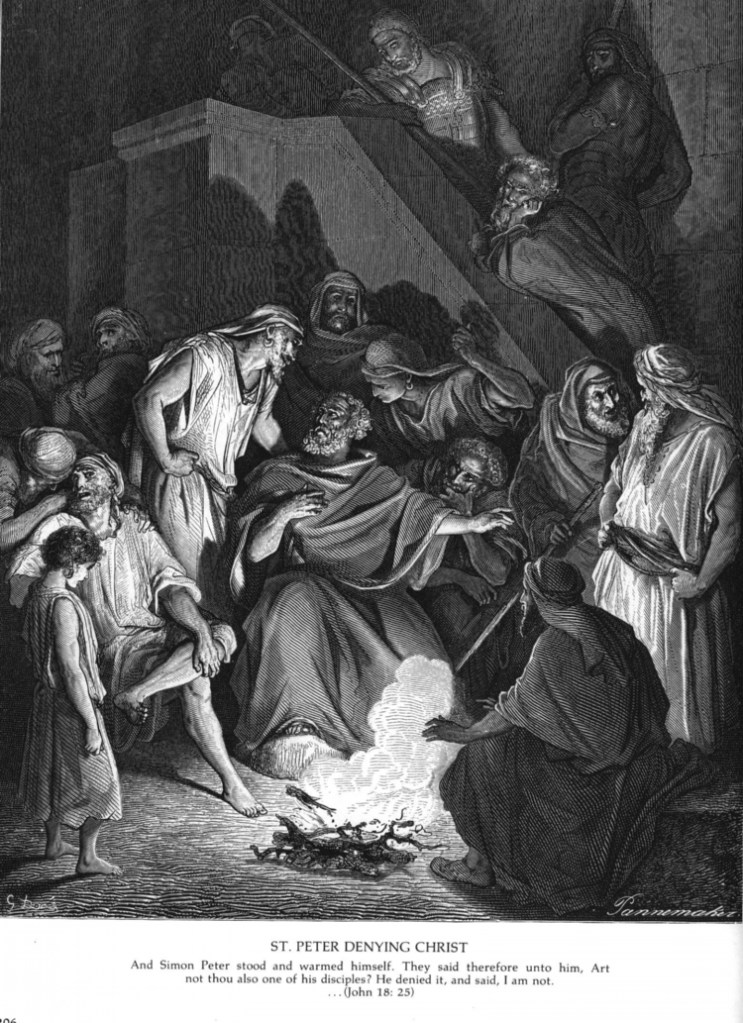
As the sun rose this [Easter] morning, a few of us warmed ourselves around a fire outside the church. Two charcoal fires were recalled, involving Peter, “the Rock” who crumbled like a piece of shale, and the risen Christ, who would re-create the scene to change the story from denial to welcome, forgiveness, and a commissioning to love.
Steve Shoemaker Verse, “The Charcoal Fire”
THE CHARCOAL FIRE

Charcoal Fire
Three times
Denial:

I do not know the man
I do not know the man
I do not know the man

Charcoal Fire
Three times
Forgiveness:

Do you love me?
Do you love me?
Do you love me?

Charcoal Fire
Three Times
Commission:

Feed my sheep
Feed my sheep
Feed my sheep

Steve Shoemaker
Urbana, IL
April 8, 2012
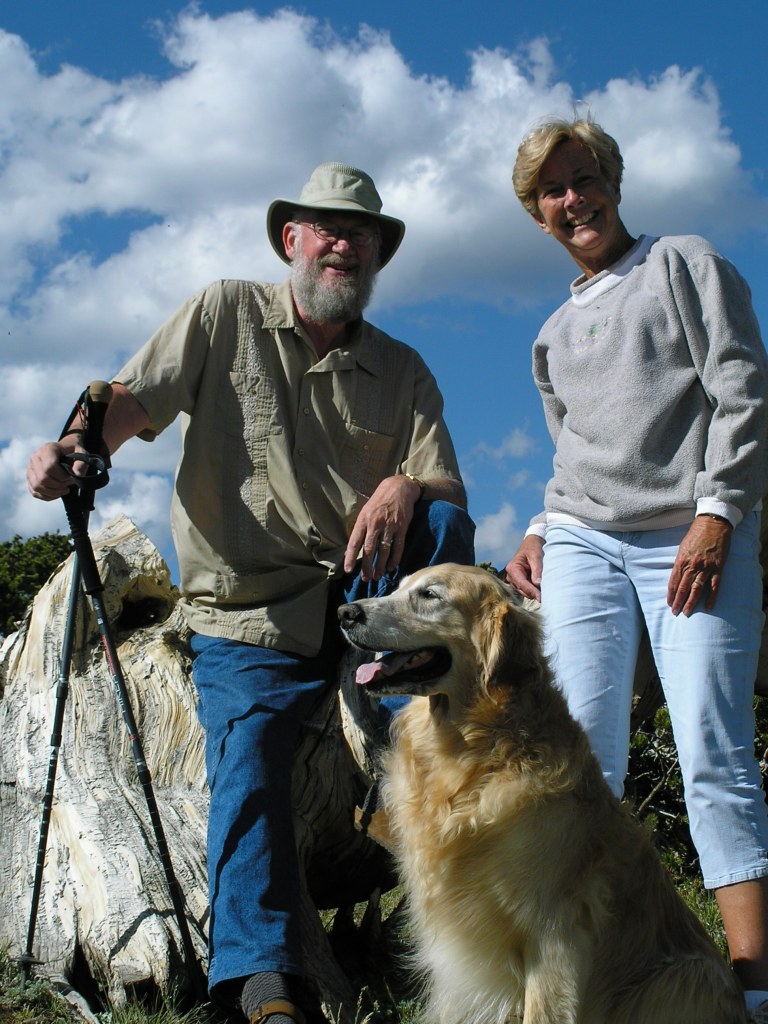
Gordon C. Stewart, author of Be Still! Departure from Collective Madness (2017 Wipf and Stock), April 23, 2022. This piece from 2012 is edited and republished in memory of Steve Shoemaker. Steve is sitting on a Bristlecone Pine stump above the tree line in Colorado during a gathering of seminary friends. Mutual friend Anna Strong and canine companion stand by him.
Easter was hard this year. I couldn’t bring myself to put my body in a pew. Imagining the shiny brass trumpets heralding Christ’s victory over sin and death had no more appeal than the silly silky banners waving up and down the aisle to make Easter more festive. Whether Easter felt like a fraud orI felt like the fraud didn’t matter yesterday.
A Ghost named Gus
If we’re honest about the resurrection, many, if not most, of us have some difficulty with one or another of the post-crucifixion stories of Jesus’ resurrection. Although my grandmother swore that our 120 year-old home was haunted by a friendly ghost named Gus, I’ve never gotten into ghostly apparitions.
Hamlet and his father’s ghost — Henry Fuseli
Years ago an eccentric older congregant, long since deceased, claimed her deceased husband regularly visited her, standing at the foot of her bed. Even without this claim, there were multiple grounds for concluding that she would have been institutionalized in a previous generation. I never could get into her story, or the story about Gus’s footsteps creaking the steps of my childhood home. They were outside my experience. Like the Apostle Thomas, my faith is suspicious of such claims. “Unless I see for myself…” is second nature to me.
Unless I See
One person’s experience, however, is not the measure of all things, especially in matters that cannot be confirmed by objective verification. The world is full of experiences that are enigmas to my little piece of reality. My slice is not the whole pie, although, come to think of it, if my slice tastes like blueberries, chances are good the pie is blueberry. “To thine own self be true,” Shakespeare’s Polonius advises Laertes.
“And it must follow, as the night the day thou canst not then be false to any man . . . ” (Shakespeare, Hamlet, Act 1, Scene III). Being true to oneself leads some honest people to leave the faith. Think Jean-Paul Sartre. Think Albert Camus. It leads others to stay and dig deeper. Though I was once almost one of the former, I am still one of the latter.
An Honest Conversation
Nowhere is the challenge of good faith greater than the resurrection. “Seeing for ourselves” like the Apostle Thomas is a hard way to live; it can be tricky. Sometimes we see things that aren’t there; other times we don’t see what stares us in the face. In a year like this, I rub my eyes in hopes of a clearer view of what is true. Honesty is slipping away in America. So is hope for the nation. The dark clouds of willful ignorance and unabashed dishonesty leave me looking for the light that faith tells me cannot be overcome.
Honesty, or the attempt at it, was what I had, but not much more. Although I could not say, with James Russell Lowell, “I do not fear to follow out the truth,” I know that the search for truth takes place “along the precipice’s edge.”
A Jarring Juxtaposition Between Two Fires
For the likes of those of us who stay, Easter is less accessible in the garden outside an empty tomb than in the encounters with the skeptical Thomas, and with Peter, who has gone back to his fishing nets after the crucifixion. Staying home on Easter for the first time reading the Gospels’ passion narratives, portrayals of Peter caused me to stop and ponder the jarring juxtaposition between two scenes around a fire.
The first fire is set in the courtyard of the High Priest’s residence where Peter “The Rock” crumbles like shale. Warming himself by the courtyard fire, two domestic workers identify Peter as Jesus’ disciple. His Galilean accent betrays him. Three times Peter denies it. “I do not know the man!” “I do not know the man!” “I do not know the man!” The rock crumbles.
The Second Fire
The second fire is lit on the shoreline to which Peter, the fisherman, returns after what would have been a bad night without the miracle shouted by the stranger on the shore. Peter has not become a fisher of fellow-humans; he is a fisher of fish again, not different from before Jesus had called him, except for the guilt he now carries from his denial before the fire in the courtyard. That I understand. That reversal I know by experience. I wasn’t Peter, but the dead, crucified, and buried Jesus whom the Creed claims “descended into hell” reached down into the hell of my own making to blow the remaining embers of the first fire into the charcoal fire of the second. The risen Christ is not an apparition. Christ comes as the stranger we forgot we knew, the host who serves us breakfast on the shoreline.
Gordon C. Stewart, public theologian, author of Be Still! Departure from Collective Madness (2017 Wipf and Stock), writing from Brooklyn Park, Minnesota, April 20, 2022.










 Views from the Edge