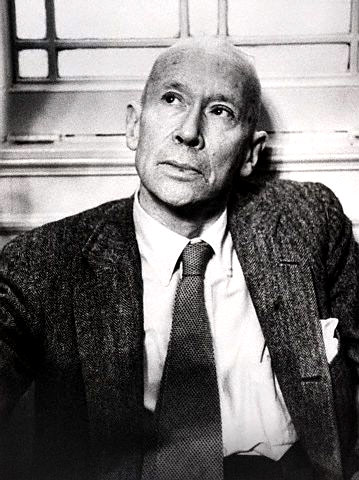
e. e. cummings
Tomorrow six old friends meet in Chicago for “the Gathering, 2013”. This is the 12th such gathering.
“2”
to
(y
ou
and
i)
ge
th
er
ne
ss– ss (steve shoemaker)


e. e. cummings
Tomorrow six old friends meet in Chicago for “the Gathering, 2013”. This is the 12th such gathering.
“2”
to
(y
ou
and
i)
ge
th
er
ne
ss– ss (steve shoemaker)

New grand daughter Ruby

Fetal position Ruby, born early, 5 lbs. 7 ounces
 The above letter appeared publicly online today, Saturday, May 25 2013.
Usually our sins are less egregious and are such that we never do anything to make right our wrong. Which is what prompts this post.
Apologies to my friend Steve, the author of the poem in the Views from the Edge’s most recent post (“Beyond Fundamentalism”) for misprinting the title of his poem. Strange how our eyes are conditioned to see what we expect to read. Knowing Steve’s background, I didn’t expect to see the word ‘conversion’, so my eyes read it as ‘conversATion’. Here it is again under the correct title. And, Steve, this is the last I want to hear about this! 🙂 What are friends for if not to forgive by the wider, deeper, more than fact truth that knocked the Apostle Paul off his horse?
CONVERSION AT SEMINARY
Four years Wheaton College tried
to make a fundamentalist
Christianity the first
and last thought on my searching mind.
Then a liberal McCormick
Dean Filson took a chance on me–
I learned Bible truth could be
much wider, deeper, than mere fact:
changing this world was our call!
From civil rights to stopping war,
social justice cried for more
of faithful love, that holy force
learned by the Apostle Paul
when Jesus knocked him off his horse.
– Steve Shoemaker, Urbana, IL, May 25, 2013
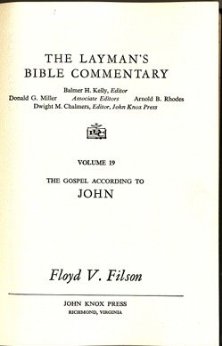
The influence of New Testament scholar Floyd Filson
Four years Wheaton College tried
to make a fundamentalist
Christianity the first
and last thought on my searching mind.
Then a liberal McCormick
Dean Filson took a chance on me–
I learned Bible truth could be
much wider, deeper, than mere fact:
changing this world was our call!
From civil rights to stopping war,
social justice cried for more
of faithful love, that holy force
learned by the Apostle Paul
when Jesus knocked him off his horse.
– Steve Shoemaker, Urbana, IL, May 25, 2013
Dean Floyd V. Filson was an internationally renowned New Testament scholar. A prolific writer, Filson published his own original New Testament commentaries and articles in scholarly journal, but he did not operate in a silo. He collaborated with co-authors and co-editors Oscar Cullman, G. Ernest Wright, and other world-class scholars. He also translated Rudolph Otto’s The Kingdom of God and the Son of Man, a book which, like Otto’s The Idea of the Holy represented a landmark shift in the understanding of God and of Jesus’s own consciousness. But more than a scholar, at least for the likes of Steve, was his unfailing kindness and belief in us. If he was aware of his stature in the world of academia, it was never apparent in the classroom or in his office. He was the definition of Christian humility. A ready smile, gentleness, respect for others, and a hearty “Good Morning!” were his signatures.
Monday six McCormick grads on whom Dean Filson took a chance will gather at the seminary for our annual Gathering. Steve and Don Dempsey were Class of ’68; Wayne Boulton, Harry Strong, Bob Young and I were the Class of ’67.

The Gathering minus Steve
Years ago four of us cut Professor Boling’s Hebrew class to take our homiletics (i.e., preaching) professor, Herb King, to the Opening Day Cubs game at Wrigley Field. We were VERY serious students!
In preparation for this year’s annual gathering, we’ve been reading John Sexton’s marvelous book, Baseball as a Road to God: Seeing Beyond the Game, and we’ll return to Wrigley Field where two of the Old Dogs’ hearts are perpetually broken. Steve Shoemaker, one of the Old Dogs, sent this to us this morning.
Seminary Reunion
Here we would each learn to preach
a sermon–going from the Greek,
Hebrew, to the common speech
of folks today. Here we would seek
answers to all questions: old,
or new, conundrums from a child,
screams of pain from a grey head
that’s waiting for a grave. Reviled
scorned, by former college friends
who now run businesses, our mild
Biblical response pretends
to follow One who like a lamb
went to the slaughter. We damn
ourselves in not forgiving them.
This year we lost one of the original seven old friends, Dale Hartwig, who grew old too soon and faster than the rest of us. John Sexton reminds us of the difference between beginnings and endings, and the need for a vantage point:
“While the teams and players on the field may change each autumn, the game’s evocative power is continuous. Opening Day in the spring and the World Series in the fall are the bookends of baseball’s liturgical time…. Vantage point is critical.”
– Baseball as a Road to God: Seeing Beyond the Game, Penguin Group, NY, NY, 2013.
Everyone should be so blessed as to have friends like these and a vantage point of continuing thanksgiving.

Akim Camara
“Pie Jesu” means “Merciful/kind Jesus”; in its context in the Latin Requiem Mass, it calls on “the Lamb of God” to show mercy to the suffering. Kindness and mercy are at the heart of spirituality.
The text has an interesting history. The “Pie Jesu” is an ancient motet based on the last couplet of the “Dies Irae” (“Day of Wrath”) that was part of the old Latin Requiem Mass. The Vatican II liturgical reforms removed the “Dies Irae” from the Mass in order to emphasize Christian hope. A number of composers, among them Andrew Lloyd Webber – influenced by Gabriel Faure’s “Pie Jesu” – gave new musical expression to the prayer: “Kind/merciful Lord Jesus, grant them rest. Kind/merciful Lord Jesus, grant them rest eternal.” BTW, Faure’s Requiem includes the “Dies Irae” which has become part of the Good Friday period of meditation at Shepherd of the Hill, not because God is wrathful, but because we so often have reason to cry out “Libera Me!” from the depths of terror and desolation.

The Church of the Good Thief, Clinton Correctional Facility, Dannemora, NY

Dannemora, New York, home of Clinton Correctional Facility
Within the forbiddingly high walls of the NY State Prison in the village of Dannemora stands a remarkable structure: The Church of St. Dismas (the Good Thief).
The prison is now known as “Clinton Correctional Facility,” but to the inmates across the state of New York it is known as “the Hell Hole” of the New York prison system – “New York’s Siberia” – because it is cold in the northeast corner of New York. The inmates of Attica think of Dannemora the way people outside the system think of Attica – the most dreaded place in the New York prison system.
The Church of St. Dismas was built by the prisoners between the years of 1939 and 1941 as a witness to God’s presence within the walls of the prison. Its name pays homage to the thief next to Jesus of Nazareth, the political criminal who was pardoned and promised Paradise.
On the Wednesday evenings between 1974 and 1977 I drove across the Adirondacks from our home in Canton, New York to Dennemora where a group of church members, college students, and university faculty put on programs and visited with prisoners. The times with the inmates confirmed what I had read in Kai Erickson’s incisive book Wayward Puritans: a Study in the Sociology of Deviance in which he argued that society creates and maintains deviance as a means to identifying itself as the opposite of “the other”.
Leaving Dannemora those Wednesday nights, the sound of the iron prison gates clanging shut marked the clear difference between inside and outside the walls. I drove back across the mountains, remembering the conversations with “Blue” and other men I’d just left inside. Like those who built the Church of St. Dismas with their own hands, I remembered the criminal crucified with Jesus, and drove home from the prison “yard” to the yards we mowed back home in Canton where the walls were invisible.
Later I learned the Taize Community (France) chanted prayer of “the penitent thief’ set to music: “Jesus, remember me when you come into your Kingdom”.
April 16, 2012
In times of great tragedy and sorrow, I often turn to the “Pie Jesu” of Gabriel Faure’s Requiem. Our hearts are broken with you.

Social reformers Frank Mason North in foreground, Walter Rauschenbusch behind.
But an old prayer for Passion Sunday from the Riverside Church in New York City came to mind. It was the prayer of The Rev’d Dr. Ernest (“Ernie”) Campbell for the workers most of us take for granted daily in good times. Today it applies to all the first responders who labor to care for the people of Moore.
Bless with Thy power and presence, gracious God, those who do the menial chores and thankless tasks behind our city’s bright façade:
those who rise early to bring fresh food and produce from the marketplace;
those who clean our halls and offices through the night;
those who work our switchboards and see that messages get through;
those who load and unload trucks;
those who stock the shelves and work the back rooms of our stores;
those who fire boilers and provide maintenance in the heat and noise of basements that we seldom visit;
those who clean our windows and mend our masonry and keep our flagpoles in repair;
those who set tables, bus dishes, and work in our many kitchens.In following our several callings, make us aware of what we owe to unnamed thousands whose work is indispensable to our well-being. And give them to know, O God, that in Thy sight, if not in ours, the least of the earth are very big indeed.
– Ernest Campbell (Click HERE for Ernest Campbell’s obituary.)
The hymn “Where Cross the Crowded Ways of Life” (music by Ludwig von Beethoven; lyrics by Frank Mason North, pictured above) meant so much to him that he used it for the title of one of his three books. Below are the lyrics. Click HERE for an organist’s rendition of “Where Cross the Crowded Ways of Life”.
Where cross the crowded ways of life,
Where sound the cries of race and clan
Above the noise of selfish strife,
We hear your voice, O Son of man.
In haunts of wretchedness and need,
On shadowed thresholds dark with fears,
From paths where hide the lures of greed,
We catch the vision of Your tears.
From tender childhood’s helplessness,
From woman’s grief, man’s burdened toil,
From famished souls, from sorrow’s stress,
Your heart has never known recoil.
The cup of water given for You,
Still holds the freshness of Your grace;
Yet long these multitudes to view
The sweet compassion of Your face.
O Master, from the mountainside
Make haste to heal these hearts of pain;
Among these restless throngs abide;
O tread the city’s streets again.
Till all the world shall learn Your love
And follow where Your feet have trod,
Till, glorious from Your Heaven above,
Shall come the city of our God!
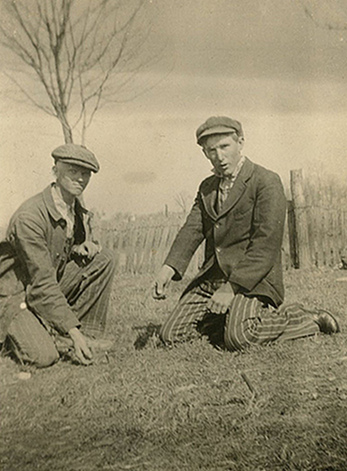 Steve Shoemaker’s friends call him “Shoe” to this day. Shoe is 6’8″ with huge feet and shoes.
Mumblety-peg
When we played “Stretch” we used our feet,
and not some “candy” wooden stick
stuck in the ground. From my pocket
the folded Barlow knife I’d pick
up by the blade and spin into
the ground. My grade school friend would yell
if it would land anywhere too
close to his tenny-runner shoe,
“Shoe, you can go straight down to hell!”
Then I would have to stand while he
taught me strict reciprocity.
– Steve (“Shoe”) Shoemaker, Urbana, IL, May 19., 2013
You say you’ve never heard of Mumblety-peg? Click HERE for a “manly” definition on “The Art of Manliness” website :-).

