Unknown's avatar

About Gordon C. Stewart

I've always liked quiet. And, like most people, I've experienced the world's madness. "Be Still! Departure from Collective Madness" (Wipf and Stock Publishers, Jan. 2017) distills 47 years of experiencing stillness and madness as a campus minister and Presbyterian pastor (IL, WI, NY, OH, and MN), poverty criminal law firm executive director, and social commentator. Our cat Lady Barclay reminds me to calm down and be much more still than I would be without her.

Uninhibited

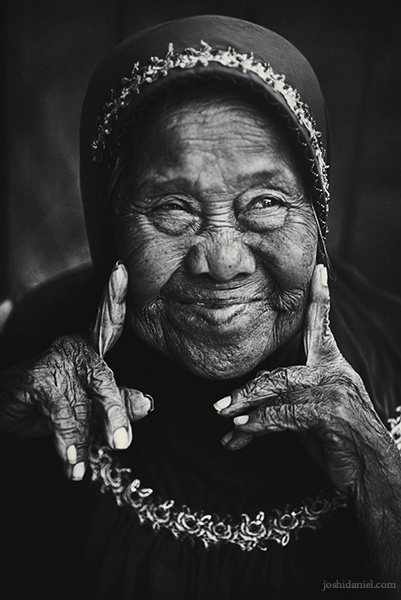
Joshi Daniel took this wonderful picture of a woman who posed for him. The eyes and the wrinkles combine for an invitation to joyful wisdom.  I’m proud to say I knew Joshi when he was a student at The College of Wooster years ago. His photography provides windows into the unseen beyond words.

joshi daniel's avatarJoshi Daniel Photography

Black and white portrait of an old lady in Beringharjo market, Yogyakarta, Indonesia An old lady posing | Beringharjo market, Yogyakarta, Indonesia

I met this lovely cute lady on my early morning visit to Beringharjo market in Yogyakarta, Indonesia with Windy. This is how she posed for us.

Thankful to Wonderful Indonesia and the Indonesian Ministry of Tourism for a great opportunity to see Indonesia.

View original post

Église Saint-Étienne de Lubersac (Dennis Aubrey)

Thanks to Dennis Aubrey and PJ McKey for introducing beloved and me to this beautiful. I didn’t even need to kill the wolf to save my beloved! 😂

Dennis Aubrey's avatar

It always astonishes me how little we remember of all the churches that we shoot. Today’s example is the Église Saint-Étienne de Lubersac in the Limousin, part of a group of eleven churches that we photographed last June. This was an incredibly rich area of exploration with eleven major churches including the Collégiale Saint-Pierre-ès-Liens in Le Dorat, the Collégiale Saint-Junien de Saint-Junien, and the Abbatiale Saint Pierre et Saint Paul in Solignac. Somehow PJ and I had both forgotten this church in Lubersac until a few weeks ago when we were looking for a subject on which to post. Both of us were immediately struck by the excellence both of the architecture and especially the sculpture. Today we make amends for this oversight.

I started shooting the exterior, especially the sculptures on the life of Saint-Etienne. But the south portal is also quite a fine piece of work…

View original post 561 more words

The History of Saint Etienne in Lubersac (Dennis Aubrey)

We are here today after evening at vineyard hotel. Visiting this church today. Then on to Beynac-et-Cazenac on the Dordogne for a week.

Dennis Aubrey's avatar

Our recent rediscovery of our photos of the Église Saint-Étienne in Lubersac has been very fruitful. Today’s post is about a series about the life of the eponymous patron of the church, Saint Etienne, or Stephen. The exterior is distinguished by three excellent capitals telling the story of his martyrdom – the stoning, the discovery of the body, and the translation of the relics. Stephen is known as the Protomartyr, the first martyr of the Christian church. When he berated the Jewish authorities, he used the strongest language:

Which of the prophets have not your fathers persecuted? and they have slain them which shewed before of the coming of the Just One; of whom ye have been now the betrayers and murderers: Who have received the law by the disposition of angels, and have not kept it. Acts 7:52-53)

For this speech he was stoned to death and his body…

View original post 281 more words

Verse – Night Vision

The rotating blades make the red lights
appear to blink atop the windfarm
electrical generators far in the distance, while In the back yard the lightening bugs flash their need for love.
All our chargers need charging, too.
Electronic lives have been drained
by machines powered by dinosaurs.
Coal miners and oil rig workers
die to supply the energy we covet.
Piles of nuclear wastes surround us
glowing unblinking in the dark.

  • Steve Shoemaker, Urbana, IL, June 6, 2016

Impressions of Paris 4

Six degrees of separation and Holy Ground

When Steve learned that Kay and I are staying in the apartment of  Abdelwahab Meddeb, he wrote that he had interviewed Meddeb’s translator, Jane Kurtz, on his weekly radio interview program, Keepin’ the Faith (WILL-AM at the University of Illinois). Sure enough. Steve contacted Jane. Jane Kurtz emailed me. And voila! Six degrees of separation.

Jane wrote that she translated two of his books into English, including Talismano, and that they corresponded quite a bit during their work. She listened to his weekly radio program, “Cultures d’Islam,” thanks to the internet and Radio France-Culture (one of the most remarkable radio stations in the world). They were supposed to meet in Palo Alto, and teach a class together at Stanford, but that semester corresponded with his onset of the cancer that took his life in a short time.

“His writings can be very esoteric, since his interest in Islam spanned so many continents and cultures (hence the title of his radio program, “cultures” with an “s”.

“…. I almost think it was a good thing he didn’t live to see the terrible violence that struck his beloved Paris these recent years. It would have broken his heart to see the evil done in the name of Islam in the city he so loved.”

Abdalwahab Meddeb practiced his Muslim faith “though he also believed strongly in the secular values of France —he was of that generation—and in the possibility of an Islamic reform coming out of the communities of European Muslims. How sad that exactly the opposite is happening, French Muslims are being radicalized and are filling mosques and prisons.

“Anyway, a few of his books are available in English, if you are not a reader of French (and believe me, many readers of French still don’t understand his writings), so I would recommend starting with The Malady of Islam.
——–

The old saying “wherever you go, there you are,” is worth heeding. The intent of the saying is to remind us that we take ourselves wherever we go. But it occurs to me there’s another dimension to the adage. Wherever you go, be there – really be present to the place and see it for what it is. This apartment in France has turned out to be a kind of holy ground.

  • Gordon C. Stewart, Paris, France, June 7, 2016.

Impressions of Paris 3

From Day 2, Saturday, June 4, 2016
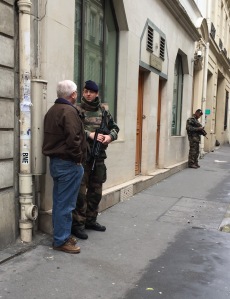
French soldier & GIt’s Saturday morning. We’re standing in front of our apartment complex, waiting for arrival of an Uber car. Twenty feet to our left, two soldiers holding machine guns across their chests stand on either side of the entrance to the building next door. I decide to speak to the nearer soldier.

“Bonjour.”

“Bonjour,” he replies.

“Military, oui?” I ask.

“Oui. Jews,” he says, pointing to the building behind him.

“Synagogue?” I ask. “Jews,” he says.

“Ummm, synagogue?” I try again. He doesn’t understand. I continue: “Eglise pour Jews?”

“Yes, a church for Jews,” he says. “Terrorists.” They’re protecting Jewish worshipers from a potential Islamist extremist attack on the synagogue on Shabbat.

A man walks by talking loudly to the air. He is obviously mentally disturbed and maybe into his cups or on something as well. “Crazy man!” says the soldier says, showing me the taser gun, which he carries in case “the crazy man causes trouble.”

He asks where I am from. “U.S.A.”

“I like U.S.A.,” he says.

I ask whether he has been to the U.S.A. He has not but says, “I like U.S.A. Patriotic.!” I wonder what he means.

What goes through the mind of a 20-something French soldier on a Paris street protecting the Jewish minority from Islamic extremists who have successfully attacked Paris? Why does he think America is patriotic? Is he thinking of an American businessman who has captured the news in Europe by promising to make America great again by closing the borders to Muslims and building a wall against immigrants, returning America to the real Americans?

Anti-immigrant sentiment is not new to France. It has fed the political right in recent years. No one knows what the young soldier thinks. I like him. He seems to like me. Whatever the answer may be to what goes on in his head and heart, we’re dealing with the same world and the same issues. But I do wonder whether he might think that French patriotism would mean taking his country back from those who are not really French?

And who might the really French or the real Americans be?

American Indians?

Wóablakela, Paix, Shalom, Salaam, Peace!

  • Gordon C. Stewart, Paris, France.

Impressions of Paris 2

Walking into the apartment in Paris, we were immediately struck by its beauty. It was obvious that the owner of the  apartment we’d rented through Air B&B was well educated.  The walls of the hallway, living room, and bedrooms are lined with floor-to-ceiling bookshelves. Though most books are in French, the most beautiful are sets of red leather-bound books with gold Arabic writing on the bindings. Clearly the owner is an Islamic scholar. It belonged to Abdelwahab Meddeb to a well-known poet, novelist, and translator whose weekly radio program “Civilizations of Islam” invited listeners to thoughtful criticism and appreciation of islam by looking historically at the development of Islam over the centuries.

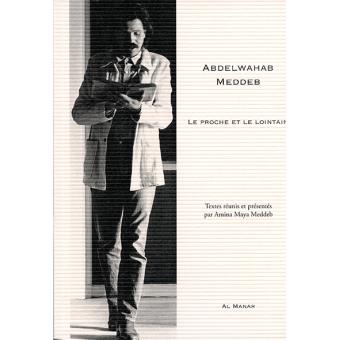
Meddeb 1540-1Abdelwahab Meddeb was born in Tunis in 1946. He died here in Paris November 16, 2014.  Abdelwahabe Meddeb: Le Proche et Le Lointain, written in his honor pays him tribute as “among the greatest Maghrebi poets, scholars, writers and translators of his generation.” — Pierre Joris, poet, translator and essayist, Professor at the University of Albany.

Click Abdelwahab Meddeb to learn more on this amazing Professor who devoted his life after 9/11 countering the extremist misinterpretations of the Koran.

As irony would have it, on Saturday morning two French soldiers stood guard 20 feet to the left of Dr. Meddeb’s apartment building. The soldiers, with machine guns held against their chests, were guarding the synagogue next door against a terrorist attack on Shabbat.

  • Gordon C. Stewart, Abdelwahab Meddeb’s apartment, Paris, France, June 6, 2016.


Impressions of Paris 1

We arrived @ Charles de Gaulle Airport (CDG) Friday morning @8:30 a.m. Paris time. These are some first impressions.

Unlike the airports in Germany re-built out of the rubble of WWII, CDG is showing wear. It has none of the aesthetic pizzazz one expects from French culture. The driver we’ve hired through a Paris travel agent is nowhere to be found. An hour later we connect. What would we do without Tim’s cellphone and saved phone numbers?

Our driver is very professional, kind, and courteous. He’s dressed in a business suit. Transportation is his business.

Traffic is nuts! Like bumper cars. Motorcycles and scooters zip between the lanes of traffic ignoring the lines between lanes — and it’s legal! Traffic is bumper-to-bumper or slow, except for the motorcycles and motorbikes who speed past us in the small spaces between the cars in the traffic lanes. Good thing we haven’t rented a car in Paris! I can see the headline, “Conducteur de la voiture Américaine stupide tue cycliste Français! Chauffeur parlant non- Français arrêté pour conduite imprudente et d’homicide.”  [Stupid American driver kills French cyclist. Non-French-speaking driver arrested for reckless driving and homicide.]

As we come to a complete stop on a busy highway into Paris, an Arab woman carrying a screaming child approaches our van. She comes to the front passenger window, looks at Sasha, our driver, and begs for money. Sasha gently shakes his head no. The woman persists; the child screams louder. Sasha shakes his head again and looks away from the woman. “Syrian?” I ask. “No,”  he says,“Gypsy, from Romania.”

Liberté, égalité, fraternité

Within the city bicycles go every which way, cutting and turning in front of cars, and cars in front of them. Traffic feels like anarchy. Fraternité is absent on the streets. Liberté is everywhere.

Walking to a restaurant Friday afternoon, soldiers carrying machine guns across their chests patrol the avenue in threes. In the doorways, families sit or lie with bedrolls. Are these gypsies to whom Europe is accustomed or are they newly arrived Syrian refugees?

We enjoy dinner at a small local restaurant known as a non-tourist neighborhood fixture with great food. Wonderful experience in every way – so accommodating to the butchers of the French language, explaining the menu to us as best he can in our native tongue.

Fraternité and égalité fill the the restaurants, cafes, and brasseries. Laughter and easy conversations are shared over wine and food. Faces smile. Joi de vivre lives indoors in Paris.

  • Gordon C. Stewart, Paris, France, posted June 6, 2016, D-Day.


The Baseball Cap on Memorial Day

I’m a baseball fan. I love baseball. I  turn on the TV.

It’s Memorial Day. My team, the Minnesota Twins, is wearing visitor’s gray. The Oakland As are wearing white. That’s tradition.

But today something’s different. Both teams are wearing the same baseball cap: military camouflage.

Why?

Memorial Day is not a salute to the military. It’s a day to remember the dead who have fallen in the service to their country. The Twins and the As are not soldiers, sailors, Marines, or special forces. They’re baseball players in different uniforms and different caps with different logos. They throw. They catch. They swing. They hit. They walk. They strike out. Nobody kills. Nobody dies. But Major League Baseball is big business that knows how to strike up the band and confuse civilian and military life. Not good. But it’s become the new normal.

A moment of silence followed by Taps would better fit the occasion – and the removal of all caps.

  • Gordon C. Stewart, Chaska, MN, May 30, 2016.


Memorial Day – The Silenced