The Fanatical Situation

Under the Fence: Everything Is Shaking

Everything is shaking. And it’s not because of the fence that now divides us. No matter how high the fence between Trump-ers and Never-Tump-ers, the earth shakes under the fence and on both sides of the fence. The ground itself is quivering, seizing, lurching, caving in on itself, like a sinkhole that stops traffic on a street we assumed to be secure. Everything is up-for-grabs.

Deeper and Wider than Politics

What haunts us across America is not primarily political. All politics rise from something deeper. Like oak trees and poison ivy, the shape and substance of what we see spring from depths we cannot see.
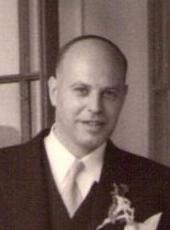
Photograph of Willem Zuurdeeg.

Dutch philosopher Willem Zuurdeeg, author of Man Before Chaos: Philosophy Is Born of a Cry, and An Analytical Philosophy of Religion (APR), uses a phrase that may seem strange.

Until we pause to think about it.

Search for solid ground

”The establishment of one’s existence is the background against which imperialistic and fanatical claims have to be understood.”

Zuurdeeg, An Analytical philosophy of religion, p. 89

To ‘establish’ one’s existence is to ‘secure’ it, to keep it from blowing away. We become fanatical and aggressive because we are insecure. We grab for something solid. When we feel the ground shaking, anxiety grabs for something solid. Something that will stay still. Everything is soul-sized. Something in us gasps at the knowledge of human frailty, our mortality, the inevitability of death. The gasps turn into grasps for a secure foothold.

Fanatical Zeal from Hidden Anxieties and Insecurity

Professor Zuurdeeg proposes that we speak of “fanatical claims” rather than “fanatics.” Like most books published in 1958, An Analytical Philosophy of Religion‘s speaks in the gender specific male pronouns. We cite the following paragraphs from page 81:

We have to say: The 'fanatical claimer' sees his own group as more than just a group. It is a fanum. The word "fanatic" is derived from the Latin fanaticus, and this word is related to fanum, a temple, a sanctuary. Fanaticus meant: first, pertaining to a temple; second, inspired by a divinity, especially with the meaning of a frantic zeal for such a divinity. We can say that for the fanatical claimer his group is such a fanum, a sanctuary, a privileged domain which relieves him of his hidden anxieties and insecurity. 

The fanatical Nazi is "the victorious German nation" (his fanum); the Orthodox Dutch Calvinist of the war against Spain (1568-1648) is the Chosen Nation, and is his God of Old Testament wrath. The fanatical claimer cannot permit his basic presuppositions to be questioned because such questioning would imply a doubting not only of these convictions but of the whole structure (his own person, his fanum, his God) cemented together by the process of identification.

-- An Analytical Philosophy of Religion, p.81

It is through the lens crafted in Zuurdeeg’s workshop that I have come to see the world. In the days following the 2020 election, stunned by the “alternative fact” alleging that the election was rigged and stolen, watching the mob storm the Capitol January 6, and hearing the deadly silence of the President of the United States of America betraying his oath of office to enjoy the show, I saw the frantic zeal of a fanum.

The Focus

But there is more. Drawing from French existentialist philosopher-playwright Gabriel Marcel‘s Man Against Mass Society (1952), Zuurdeeg expanded his analysis:

“Marcel justly points out that there is still another element in the convictional situation of the fanatical claimer, the focus. Marcel suggests that such a focus is an individual; and that is sometimes the case, as with Hitler or Stalin.” (APR, p. 81-2)

Photo of Gabriel Marcel (c. 1951)

America 2021

Everything is up-for grabs. The ground is shaking under our feet. We look for someplace solid, a sure foothold against the chaos. I see the world — or try to — in these terms. But the wise professor and the playwright-philosopher urge us to go deeper than what can be seen and managed, for we are “complex and ambiguous being(s)” who only know ourselves partially. “We are therefore not allowed to speak of a non-fanatical person.” (APR, 84). Although I think I know what Zuurdeeg and Marcel would say if they could see us now, they caution me that only a “fanatical claimer” is without doubt.

Gordon C. Stewart, public theologian, author of Be Still! Departure from Collective Madness (2017 Wipf and Stock), 49 brief commentaries on faith and public life, Brooklyn Park, MN, October 20, 2021.

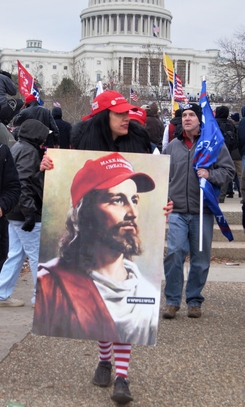
The Barbed-Wire Fence

A Childhood Memory: Buddy and I

No fence divided the neighboring properties on Church Lane the day my family arrived in Broomall. The little girl next door and I quickly became playmates. We went back-and-forth with no thought of things like property lines. My yard was her yard; her yard was mine. Until the day the Singletons bought the property and she was gone.

Buddy Singleton was five years-old. So was I. Buddy and I soon became playmates. We played freely in each other’s yards. No one owns a tree. Buddy climbed our Red Maple, I climbed Buddy’s old Oak tree. Until the day the fence went up. Buddy could no longer get to me; I could not get to him. The gate locked Buddy in and kept me out.

Every day we talked through the chain link fence with the barbed wire at the top. “C’mon over,” said Buddy. The only way to “come over” was to climb the fence. So I did! Until my foot slipped near the top. The barbed wire punctured my left hand and left me hanging like a banana nor yet ripe for falling. My mother heard the screaming and lifted me from the fence. I still have the scar to prove it happened.

Photo by Kaique Rocha on Pexels.com

Then and Now

The fence that separates neighbors is higher now. Rarely do we we talk through the fence that separates us. We’ve learned to stay on our side of the fence. I no longer climb your Oak tree. You no longer climb my Red Maple. Neither of us invites the other to “c’mon over” and, if they do, we decline. Once you’ve hung from the barbed wire, you learn not to try it again. But the fence is not all barbed wire. It’s a chain-link fence. We can talk with each other through the fence without impaling ourselves, if we have the will to engage with the other. “The time for talking is past,” said an old friend. “I’m done! The time for thinking is over. You can’t talk to these people. It’s time for the barricades.”

The Barricades?

I know the feeling. But the time for talking is never over. The time for thinking is never over. However strongly I disagree with or despise the neighbor on the other side of the fence, however deeply I agree with Eugene Robinson’s question — “How dumb can a nation get and still survive?”(Washington Post, October 7, 2021) — as much as I want to back away from the fence to the club house in my Maple tree, something nags me to remember the commandment I prefer to ignore: to love my neighbor as myself. If I dare to look, I will find the enemy I despise inside myself.

Talking through the Chain-Links of the Barbed-Wire Fence

The time for contemplation and self-criticism is always now. It’s always time for thinking. It’s still the time for talking through the fence and trying to understand how and why people on opposite sides of the fence think, feel, and act as we do. Barbed-wire fences do not make good neighbors! “Something there is that doesn’t love a [fence].”

Brian Maclaren offers a way to talk through the openings if the chain-links fence.

People can’t see what they can’t see. Their biases get in the way, surrounding them like a high wall, trapping them in ignorance, deception, and illusion. No amount of reasoning and argument will get through to them, unless we first learn how to break down the walls of bias. . . .

Brian Mclaren, Why Don’t They Get It? Overcoming Bias in Others (and Yourself)
(Self-published: 2019), e-book.

To be continued with a look at Brian McLaren’s 13 walls of bias that shape how and why we see ourselves, each other, and the world at the barbed-wire fence.

Gordon C. Stewart, author of Be Still! Departure from Collective Madness (2017 Wipf and Stock), Brooklyn Park, MN, October 18, 2021.

What I was and am not; what I am and wasn’t

This reflection is dated, but it still speaks for me with one huge exception. The 2020 election was still to come. There had been no “Stop the Steal,” no refusal to concede, no attempt to stop the peaceful transfer of power, no January 6 attempted coup d’etat, no widespread threats and assaults against local school board members, etc.

TO SEE MORE CLEARLY

Seeing more clearly takes time. It takes experience. It demands patience — with myself and with others — and it takes courage. Courage to let go of ideas we took for granted: who we are, what we aspired to become, our place in the cosmos.

Paul Tillich knew about courage and patience. The first professor to be dismissed from his teaching position during the rise of the Third Reich, Tillich came to see faith as “the courage to be” — and “to be” means being in motion, growing, changing, dying, leaving parts of ourselves behind. Neither courage alone nor patience alone is the courage to be.

Which leads me back to where we began. If you now see homophobia, anti-Semitism, white nationalism, and climate change-denial as offensive, what do you do in relation to a homophobic anti-Semitic white nationalist climate change-denier?

SELF-KNOWLEDGE AND SELF-CRITICISM

I have never been a white nationalist. Neither have you, I suspect. But, looking back, I see that my classmates and I drank from the well of white nationalism. Every school day began with our hands over our hearts, facing the flag.

Photo of school children reciting the American Pledge of Allegiance.

“I pledge allegiance to the flag of the United States of America and to the Republic for which it stands, one Nation, under God, indivisible, with liberty and justice for all.”

Although we might have wondered why we were pledging allegiance to a piece of cloth, we didn’t give it much thought. We took it less as a statement of national aspiration than as a statement of national exceptionalism, a statement of fact.

But it wasn’t a fact. We learned that America was deeply divisible — between white western slave traders and the African men, women, and children they kidnapped, bought, and sold on the slave blocks; between the European settlers and the North American continent’s first people, cheated of their treaty rights, stripped of their land, religious practices, sovereignty, and civil rights; between professing Puritan Christians and the “witches” of Salem, burned at the stake as people “unfit for our society”; between the real Americans — the Christians — and the Christ-killers; between the straight majority and the LGBTQ minority who suffered alone in silence; between the landed aristocracy of the founding fathers and the laborers who bled picking cotton in the cotton fields in the south and worked without labor bargaining power and protections in the factories of the industrial north.

That was the “world” in which I lived, and that was the world that lived in me. As I continued through the years, I did my best to replace naïveté with consciousness, challenging the myth of American exceptionalism as a reformer, social critic, and activist.

I learned in time that unless I wanted to be a pompous ass, patience was required with others and with myself. “The sins of the fathers are visited upon the children to the third and fourth generation” is the Bible’s version of Plutonium-239’s half-life of 24,000 years. It describes the toxic waste passed down river from one generation to the next.

BALANCING COURAGE AND PATIENCE

Nuclear waste doesn’t disappear. Neither does the sin of exceptionalism in its racial, economic, gender, religious, and national manifestations. The toxic waste of exceptionalism — the conviction that one’s nation, race, culture, creed, gender, class . . . or species . . . is the exception to history and nature — is the unacknowledged original sin we manage to make original every day by exalting ourselves over others and over nature itself.

FEMA photograph of helicopter fighting California forest fire.
FEMA photograph of helicopter over California forest fire.

CLIMATE CHANGE AND THE REPUBLIC

As the climate change clock ticks toward midnight, patience seems less of a virtue than courage acting now. We who pledged allegiance to the flag “and to the Republic for which it stands” are losing patience with each other. We are ‘indivisible’ only if we decide we are. If we and those we elect place our flawed understandings of our personal interests above our responsibility to honor and maintain the Republic, our not-so original original sin may be our last.

It takes courage to confess one’s participation in the evils we deplore. And it takes patience with those who seem to have logs in their eyes. “If we say we have no sin,” declared the minister Sunday mornings in the church of my childhood, “we deceive ourselves, and the truth is not in us, but if we confess our sin, God is faithful and just to forgive us our sins, and to cleanse us from all unrighteousness.”

The minister who invited us to own up to sins of omission and commission was the man I knew at home as Dad. I wonder what Dad would do if he could see us now.

Gordon C. Stewart, Chaska, MN, Nov. 30, 2019.

Sermon — Touching the Light

A singular moment between 7 year-old Ben and his school bus driver, landscape artist J.R Hopkins (John), during the Sower Gallery‘s opening of John’s exhibit in Chaska, MN inspired Touching the Light.

Pre-Conditioned Perception: How do we see the world?

Thanks for dropping by Views from the Edge,

Gordon

Gordon C. Stewart, former pastor of Shepherd of the Hill in Chaska. MN and MPR guest commentator, author of Be Still! Departure from Collective Madness (2017 Wipf and Stock), Brooklyn Park, MN, October 8, 2021.

Listening through the Stethoscope

I’m not ready for this. I’m not wired for a world gone haywire. Like the psalmist, I am “old and gray” (Ps. 71:18), living in a frantic world that makes no sense, knowing that speaking what little I think I have come to know will not reach beyond what remains of a shrinking circle of influence. Even so, I continue to write in the vain hope it may make a difference.

Photo of doctor's stethoscope, laptop, and pair of eye glasses
Aerial view of doctor stethoscope and computer laptop

Listening through the stethoscope

Sitting in front of a blank sheet of paper/blank computer screen is the morning exercise to find my deeper self again. Writing is like a stethoscope to hear what’s inside my chest. Writing taps into the deeper stream of consciousness — sighs and groans too deep for words.

Some days begin and end with a blank page. Other mornings the groaning and sighing summon me to write. Not just for myself, but for others as well. That’s what public theologians do.

Reality and illusion

The Psalter is always close by. The psalms take me deeper. Only then can I go wider. The Psalms are poetry. They are not prescriptions. They are the naked, honest, unfiltered, uncensored expressions of what the psalmist feels and thinks in that moment. The psalmist is exposed. No secret is hidden. No pride left unmasked. Every Illusion of grandeur blown away by the wind.

The three year-old and the-man-in-the-radio

The poet of Psalm 71 is old and gray. So am I. Listening through the stethoscope, I hear unresolved sighing and groaning from early childhood.

I am three years-old, sitting around the dining room table with my grandparents and my mother. My mother and I are living with Grandpa and Grandma Stewart in Chestnut Hill, MA. My father is in the big war somewhere far, far away. Every night, Grandpa looks at his watch, stops eating, leaves the table, and walks over to the big brown radio. He pushes a button to let the man-in the-radio talk to us. “Shhhhh,” says Grandpa, as I continue talking. “We need to be real quiet so we can hear the news.” The man-in-the-radio begins to talk. He’s serious. He’s not fun, but no one is afraid of him. Everyone listens carefully.

Some nights the man-in-the-radio stops to let another man in the radio talk. The other man is not nice. He’s not kind. He’s mean. He’s angry. He’s scary. Even for Grandpa! I watch the faces of my mother, grandpa and grandma as they listen for news about the big war far, far away where my father is the Army Chaplain. My father is the only one on Saipan who doesn’t have a gun. He may not make it home or he might come home dead.

Photo of my father, the Chaplain, leading worship on Saipan.
Protestant Service on Saipan, end of WWII.

Honoring a promise

I am old and gray and hard of hearing, but I have a stethoscope. I still hear the groaning and sighing in my chest and I still hear the madman in the radio. I determined early in life that if Adolf Hitler won the war and came to Chestnut Hill, I would not be silent. I would not stay seated. I would stand up. I would speak up! I would tell what I know and not let go, for the sake of generations yet to come.

 And now that I am old and grey-headed, O God, do not forsake me,
     til I make known Your strength to this generation
     and Your power to all who are to come. (Ps. 71:18 BCP).

Gordon C. Stewart, public theologian, author of Be Still! Departure from Collective Madness (2017 Wipf & Stock), Brooklyn Park, MN, October 3, 2021.

Elijah asks Grandpa about facts

This “conversation” between Grandpa (Bumpa) and Elijah took place during the Senate’s first impeachment trial. It’s been buried in the draft file. Elijah was two-and-a-half at the time. But some things are still true when Elijah is four.

Elijah and Bumpa (Grandpa) in Elijah’s room

Elijah: I don’t get it, Bumpa! I have questions.

Grandpa: What questions, Elijah? Shoot!

I don’t want to! We don’t like guns at daycare!

I’m sorry, Elijah. I don’t mean shoot. I meant it as a “figure of speech”.

Yeah! We like figures. One, two, free, four, . . . l, m, n, o, p. . .

I’m so proud of you!, Elijah! You know your numbers and your ABCs! But “a figure of speech” is different, it’s an idiom.

Like what?

Like . . . you might say that somebody “lies like a rug.” So what are your question?

We hate lying, We like facts, right Bumpa?

Yes. We do, Elijah.

So we don’t like the Publicans. They lie like rugs, right?

Publicans?

Yeah, Publicans, like the ones on TV who hate facts and get all angry on TV.

I see.

We’re not Publicans! We like Jesus, right?

Well, yes, sort of. You’ll come to your own faith as you grow older. The Publicans collected taxes for the Romans. It would be like Americans working for a foreign government.

Okay. But we’re not publicans. We don’t like craters and creezin, right?

Creezin? Are you sure you have the right words?

Geez, Bumpa! Don’t ya know? C r e e z i n ! Like you and Grandma have for breakfast every morning.

Ah, now I get it. We eat Raisin Bran. R a i s i n B r a n. You mean treason! T r e a s o n.

Yeah! Are they going to de-peach you? Did you commit creezin? Are you and Gamma craters who should be de-peached? Publicancraters?

Those are big words you’ll learn about in school. No, we can’t be impeached, and we’re not Publicans. We try to stick with the facts, not lie like a rug. Any other questions?

Yeah. Ucranes. We have Ucranes at the cabin. Do Ucranes whistle?

  • Grandpa and Elijah, Dec. 4, 2019.

American Perception

Introduction

A recent Minnesota Poll sent me back to the “draft” file to retrieve John M. Miller’s one-page commentary reflecting on results of a Pew Research Center poll asking where people get their news in 2021. John is an old friend and colleague influenced by Dutch philosopher of religion Willem Zuurdeeg, Professor of the Philosophy of Religion at McCormick Theological Seminary in Chicago. John is a voracious reader who reads widely, but his writing makes clear that he listened more carefully than most to his old professor.

Reading too much — thinking too little

Each student is in danger of reading too much and thinking too little. If one section of this book should commend itself especially to the reader, he (sic) should not begin with reading more about this topic, but first of all reconsider his own thinking on the subject. A bibliography tempts the student to extend his reading and to postpone his own philosophizing.

— Willem Zuurdeeg, author of An Analytical Philosophy of Religion and Man Before Chaos: Philosophy Is Born of a Cry.


Some Highly Distressing Statistics re: “The News”

by John M. Miller

The Pew Research Center recently published the sources from which Americans prefer to receive the news. From the highest percentage to the lowest, here are the results:             

Television – 35%
News websites or apps – 26%;
Search engines – 12%;
Social media – 11%;
Radio – 7%;
Print publications – 5%;
Podcasts – 3%;
No news source – 1%.

This means that 87% of the respondents to the poll prefer to get their news on a screen, either a computerized screen or a TV screen. To me that is simply astonishing. For generations print publications were virtually the only source of news. Then radio, and then television, came along. But this poll says it is the Internet that is now the dominant source for news (news websites and apps, search engines, social media, and podcasts.)

Short and Simple

It also is painfully disheartening to me that only 5% of Americans prefer to read news in vetted written form: newspapers or news magazines. They are the only media that truly give thorough coverage of any news stories, yet 95% of the American public prefer brief, less detailed information about what is happening in the world. They want it kept simple.  

Liminal and Subliminal Biases: Talking without pause

Almost all news that is available on television or the Internet has a recognizable bias: Republican/Democrat; conservative/liberal; local/state; national/international. etc. That is true in many news publications as well, but the bias there is “liminal” as opposed to subliminal. The “hot medium” of a screen does more of a number on us than print does, because we can read at our own pace and reflect on what we are reading to whatever depth we choose. However, the faces on the screen just keep talking without pause. 

Little Time to Ponder

If we are watching news on a screen, subconsciously we are swept along at whatever pace the news is being reported, and either it does or does not fully register with us. In other words, we may or may not completely absorb what is said, but we have very little time to ponder it if we intend to hear and see what is next reported.

Deliberate Ignorance

One percentage number in this poll is a total sham. That is the one per cent of everyone who responded by saying they avail themselves of no news sources at all. Were that an accurate number, it would be highly encouraging, but surely it is untrue. Far more than 1% of Americans are deliberately ignorant of “the news.” Therefore the rest of the numbers are somewhat skewed. But the lowest poll number is highly suspect.

News Sources and American Perception

What happens when these news sources genuinely reflect the American perception of the news? Donald Trump: that’s what. It is not surprising that Trump won in 2016. On the other hand, it is therefore amazing that Joe Biden won in 2020. Maybe Americans have learned that it is imperative to pay more attention to real news. If so, what a wondrous advancement that is!  

        – March 16, 2021

John M. Miller, the OLD Philosopher, is Pastor of The Chapel Without Walls on Hilton Head Island, SC. More of his writings may be viewed at www.chapelwithoutwalls.org. Republished by Views from the Edge, Saturday, October 2, 2021.


Gordon

Gordon C. Stewart, Chaska, author of Be Still! Departure from Collective Madness (2017 Wipf and Stock), 49 brief reflections on faith and life, available from the publisher HERE and from Amazon HERE; Chaska, MN,