Donald Trump and the Presbyterians

Donald Trump and Ben Carson

Candidate for President Donald Trump’s sideswipe at fellow Republican candidate Ben Carson’s Seventh Day Adventist faith calls for a response from those who are what Mr. Trump is not – a Presbyterian.

Although Mr. Trump attended Sunday School and was confirmed at the First Presbyterian Church of Jamaica in Queens, NY, he is not a member of a Presbyterian Church. His church of choice on Easter and Christmas is Marble Collegiate Church, the historic Reformed Church in America congregation in midtown Manhattan best known for the Rev. Dr. Norman Vincent Peale, author of The Power of Positive Thinking.

“I am Presbyterian Protestant. I go to Marble Collegiate Church,” he told reporters in Greenville, S.C.  Two funny thing about that: 1) Marble Collegiate Church is not a Presbyterian church, and 2) even if it were,  Mr. Trump is not a member there, according to the church itself.

Why does it matter?

Who cares?  UNTIL Mr. Trump presents himself as a Presbyterian in contrast to another candidate’s Seventh Day Adventist faith in a way that is typically very un-presbyterian.

“I’m a Presbyterian. I’m a Presbyterian. I’m a Presbyterian!” he proclaimed with pride, insinuating that he is in the mainstream while Dr. Carson’s Seventh Day Adventism (SDA) is a fringe group outside the mainstream of American religious life. He seemed unaware that 1) Seventh Day Adventists are one of the fastest growing churches both in the U.S. and the world with a worldwide membership of 18.1 million, and 2) unlike the overwhelmingly white Presbyterian Church to which he claims to belong, the SDA is full of color and immigrants.

As to his own faith, Trump’s answer to Frank Luntz’ question of whether he’s ever asked for forgiveness offers further insight:

“I am not sure I have. I just go on and try to do a better job from there. I don’t think so,” he said. “I think if I do something wrong, I think, I just try and make it right. I don’t bring God into that picture. I don’t.”

Trump said that while he hasn’t asked God for forgiveness, he does participate in Holy Communion.

“When I drink my little wine — which is about the only wine I drink — and have my little cracker, I guess that is a form of asking for forgiveness, and I do that as often as possible because I feel cleansed,” he said. “I think in terms of ‘let’s go on and let’s make it right.'”

The Presbyterian-Reformed Tradition

There are a few things about the Presbyterian-Reformed tradition of the Christian faith that Mr. Trump seems not to know or has forgotten:

  1. The Reformed-Presbyterian faith shuns ostentation.
  2. Simplicity is a characteristic of the Christian life.
  3. “The sins forbidden by the First Commandment” include “self-seeking, and all other inordinate and immoderate setting of our mind, will, and affections upon other things;…hardness of heart, pride, presumption, carnal security” (Larger Catechism, Q 1).
  4. Confession of sin – both in private prayer and in the “Confession of Sin” in every Sunday service of worship – is a daily spiritual discipline of Christian life and practice.
  5. Divine grace and the forgiveness are the sources of personal and communal renewal and reconciliation.
  6. Respect for other religions -“Christians find parallels between other religions and their own and must approach all religions with openness and respect” (Confessions of 1967 IIB3) – and humility about one’s own religious claims are called for before God.

Local Presbyterians and Seventh Day Adventists

Momoh Freeman

Momoh Freeman

Every Sunday for seven years Momoh Freeman, a gifted Liberian refugee musician, served as Director of Music at Shepherd of the Hill Presbyterian Church in Chaska; on Saturdays he served in the same capacity at a Seventh Day Adventist Church in Minneapolis. The beliefs and practices of the two congregations are distinctly different in many respects, but we became fast friends.

The SDA Choir, comprised of Liberian-Americans, Liberian refugees, and African Americans, performed in concert at Shepherd of the Hill at our invitation, singing both African hymns and Handel’s Hallelujah Chorus a cappella!

We Presbyterians joined our SDA friends in Minneapolis for Saturday worship, including the foot-washing ritual that preceded the Sacrament of Holy Communion to which we were also welcome. None of us went to the table “drink my little wine…and have my little cracker.”

A remedy of humble faith
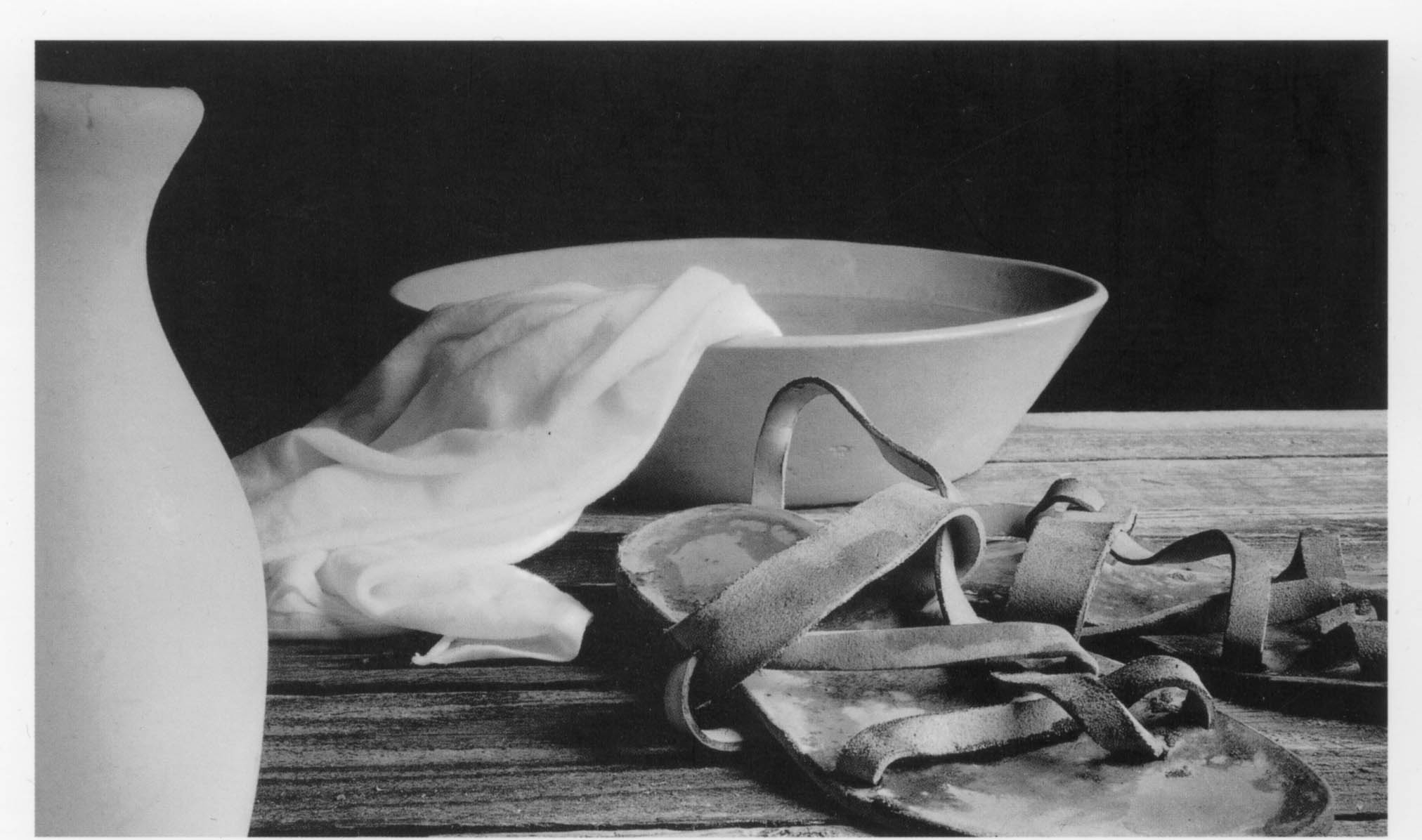
Considering the disrespect in the run up to a presidential nomination, a good foot-washing seems in order.

When Jesus washed Peter’s feet, Peter replied, “Lord, not my feet only but also my hands and my head!” (John 13.9)

  • Gordon C. Stewart, Presbyterian Teaching Elder (i.e., Minister of Word and Sacrament) H.R., Chaska, Minnesota, October 28, 2015



A funny thing happened at the doctor’s office

A funny thing happened yesterday during my annual physical.

The physician was excited to share something she’s very proud of: a policy statement on “Firearm-Related Injury and Death in the United States: A Call to Action from 8 Health Professional Organizations and the American Bar Association“. Click HERE to read the entire text.

It begins with an Abstract that reads, in part, “Deaths and injuries related to firearms constitute a major public health problem in the United States.

The document provides findings and recommendations based on the separate policies of the 7 health professional societies that represent most physicians in the United States – American Academy of Family Physicians, American Academy of Pediatrics, American College of Emergency Physicians, American College of Obstetricians and Gynecologists, American College of Physicians, American College of Surgeons, and American Psychiatric Association and the American Bar Association.

She noted how rarely doctors and lawyers join together on public policy positions, let alone an issue as contentious as this one. This was a victory of common sense among doctors and lawyers.She was pleased that her medical society is part of this Call to Action.

“The specific recommendations include universal background checks on gun purchases, elimination of physician ‘gag laws’, restricting the manufacturing and sale of military-style assault weapons and large capacity magazines for civilian use, and research to support strategies for reducing firearm-related injuries and deaths. … The American Bar Association through its Standing Committee on Gun Violence, confirms that none of these recommendations conflicts with the Second Amendment or the rulings of the U.S. Supreme Court.

“Across the United States, physicians have first-hand experience with the effects of firearm injuries and deaths and the impact of such events on their patients and families. Many physicians and other health professionals recognize that this is not just a criminal violence issue but also a public health problem.”

This year’s annual physical enlightened more than the state of my health. Like clergy, physicians hear stories that confidentiality keeps between sealed lips, but the doctors know the sorrow from the inside out in ways to which most do not have access. Congratulations for speaking out to frame the questions in terms of public health.

  • Gordon C. Stewart, Chaska, MN, October 27, 2015

Flip Saunders and the Media

Yesterday morning Minnesota media announced the untimely death of Flip Saunders, one of Minnesota’s most beloved public figures.

Cheered long ago as the diminutive starting point guard of the University of Minnesota Gophers basketball team, Flip worked his way through the ranks of the CBA to become a successful NBA Head Coach with Minnesota, Detroit, and Washington before returning “home” to Minnesota as both President and Head Coach of the Minnesota Timberwolves.

There is a deep sadness over his loss. At 60 years old, he was looking forward to the fruits of his labor, the makings of a future world championship team developed by Flip’s extraordinary draft picks, trades, and the return to Minnesota of Kevin Garnett, the NBA star who credits Flip with his development when Kevin was fresh out of high school.

Like Garnett himself, Flip Saunders was not a native Minnesotan. But he, and Garnett, came to see this as home, as do many out-of-state transplants once they taste the beauty and culture of Minnesota.

Today it’s that culture that should be lifted up along with the love for Flip: the respectful silence kept by the media in response to the Saunders family request for privacy during the long hospitalization that began in early September.

Readers and sports pundits who feed on sensationalism might have misinterpreted the absence of detailed coverage as meaning the sports writers and the media didn’t give a flip about Flip. It’s rare that the need for privacy is honored, even when a family requests it.

Team owner Glenn Taylor and the Minnesota Timberwolves were a class act from the first announcement of his diagnosis and encouraging prognosis to the heartbreak of his long hospitalization and death.

Flip’s illness and death were handled with the rare discretion that represents the very best of Minnesota Nice. Minnesotans don’t like prying into each others’ business unless invited, and quiet respectfulness is a Scandinavian characteristic that held back the pens of sports writers and voyeurs until there was something to share.

The StarTribune headline, quoting the NBA Commissioner, reads “Flip Saunders ‘leaves gaping hole in the fabric of the NBA”.  In the fabric of NBA culture of bigger-than-life heroes, Flip Saunders brought something smaller, more private, and all too rare.

Verse – the Decline of Western Civilization

What we called “Jewels”
are now called “Junk.”

And what we straight guys called “Heaven”
is now called a “Hoohaw.”

[Nota bene: if one clicks “like” on this post, it does NOT mean one approves of this degradation of nomenclature. Rather, a “like” indicates gratitude to the author for pointing out yet another sign of impending disaster. 😇]

  • Steve Shoemaker, Urbana, IL, October 23, 2015

Views from the Edge republished today

Click Reframing the Gun Conversation for today’s republication (with some fine editing) by MinnPost.com, one of Minnesota’s best independent news sources.

  • Gordon Stewart, Chaska, MN, October 22, 2015

To Never Hurt A Fly

Click To Never Hurt A Fly for the poem by an author named Sandy who came to our attention when she “liked” Steve’s poem today. Since Views from the Edge stands with those at the edge, calling for an end to gross income and wealth disparity, both here and worldwide, “To Never Hurt a Fly” posted on The Disappearing Island struck a chord.

Verse – Saints in Saint Louis


The Gateway Arch is higher than
a building sixty stories tall.
Foundations underground, unseen,
go down for sixty feet. In all,
concrete and steel above, below,
weigh almost 40,000 tons.

But we see air, for Eero
Saarinen drew the leaping lines
into the sky, and stainless steel
reflects the clouds, and frames the sun.
The brave will ride a tram and feel
at apex angel-like, heaven-
residing happy holy beings,
although with very nervous bellies…

  • Steve Shoemaker, Urbana, IL, Oct. 21, 2015

Golden Arch

Happiness

What is this searched after state we Americans pursue, one of only three “unalienable rights” specifically named as worthy of praise in the American Declaration of Independence – “the pursuit of happiness”?

Did the writers of the Declaration mean what we mean? Or was it something different? Why was such a subjective term as ‘happiness’ listed with Life, and Liberty?  Was there a reason why the pursuit of Happiness was listed as the last of the three? What it considered least important, of equal importance, or, perhaps, as most important?

Thomas Jefferson and John Adams, the principal writers of the Declaration, were well-schools in the Classics – the ancient Greek and Roman philosophers, novelists, playrites and poets; Democritus, Plato, Aristotle, Homer, Cicero and Diogenes. They read Plato’s Republic, Cicero’s Disputations, Aristotle’s Nicomachean Ethics, Metaphysics, and Politics; Virgil’s The Aeneid, and Sophocles’ Oedipus Rex in their original Greek or Latin language. They translated the New Testament Gospel of John from its original Greek into Latin and into English.

What did happiness mean to these classical writers? How did it inform Jefferson, Adams, Franklin, and the rest?

The word εὐδαιμονία’ (eudaimonia) expressed the Greek philosopher’s understanding of what Jefferson and Adams called happiness.

The term “eudaimonia” is a classical Greek word, commonly translated as “happiness“, but perhaps better described as “well-being” or “human flourishing” or “good life“. More literally it means “having a good guardian spirit”. Eudaimonia as the ultimate goal is an objective, not a subjective, state, and it characterizes the well-lived life, irrespective of the emotional state of the person experiencing it. ….

Socrates, as represented in Plato‘s early dialogues, held that virtue is a sort of knowledge (the knowledge of good and evil) that is required to reach the ultimate good, or eudaimonia, which is what all human desires and actions aim to achieve.

The Basics of Philosophy

Happiness, as understood in Aristotle’s Nicomachean Ethics, is the full human flourishing which is the highest of all good according to Nature.

The Committee of Five that wrote the final draft approved by the Second Continental Congress had something like that in mind.

One researcher claims the following:

“Actually, happiness was defined by the Continental Congress in the original May 1776 declaration of independence as “internal peace, virtue, and good order,” closely following Cicero’s Tusculan Disputations; the definition of happiness was drafted by John Adams, not Jefferson.” [Link inserted by VFTE]

[Unidentified source within longer article on the origins of “the pursuit of happiness in the American Declaration of Independence.] -Other Choices (talk) 00:14, 16 June 2012 (UTC)

Whether we are happy in America is a matter of perspective and definition. Some of us would say we are; others would say not. But a fresh look at the Declaration of Independence’s original meaning of the word as human flourishing might lead us to the discussion of “the full human flourishing which is the highest of all good according to Nature” in a consumer society intoxicated with distraction and superficial definitions of happiness.

  • Gordon C. Stewart, Chaska, MN, October 28, 2015

Re-Framing the Gun Conversation

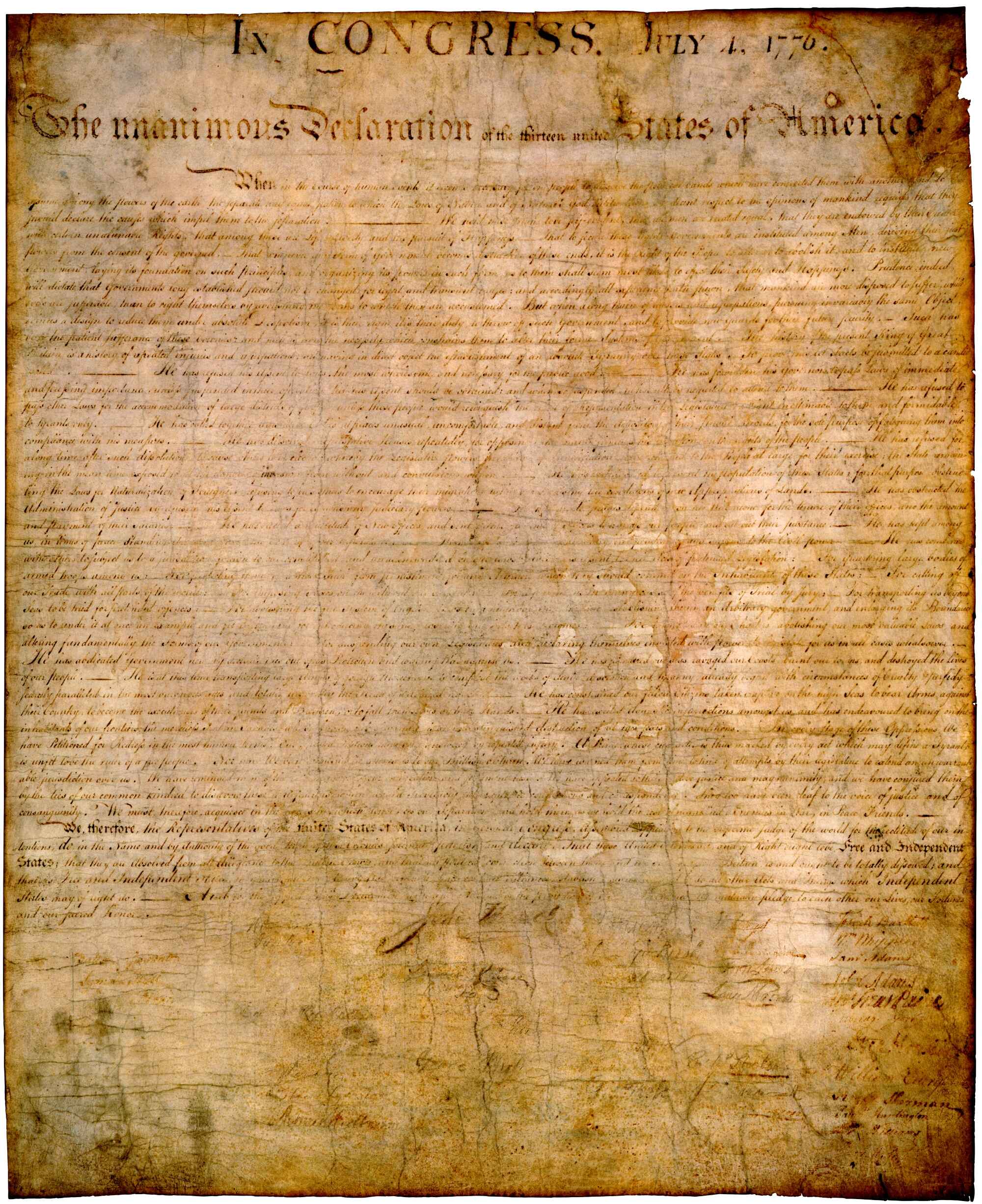
“We hold these truths to be self-evident, that all men are created equal, that they are endowed by their Creator with certain unalienable Rights, that among these are Life, Liberty and the pursuit of Happiness.” – American Declaration of Independence, July 4, 1776.

Today in America we continue to define, weigh, and measure these three “unalienable Rights”.

Original American Declaration of Independence

Original American Declaration of Independence

No matter whether the Declaration’s principal author, Thomas Jefferson, and the Committee of Five of the Second Continental Congress assumed these three Rights to be mutually compatible or whether they saw them in tension with each other, today in America there is little agreement about the meaning of, or the relations among, Life, Liberty, and the pursuit of Happiness. Instead we are locked in a heated debate about one of the three – Liberty – focused  on the Second Amendment to the U.S. Constitution, adopted in 1791.

Lost in the debate is the more reflective philosophical, moral, and religious pondering of the “unalienable Rights” which, in the eyes of Jefferson and the Second Continental Congress were essential virtues of a new republic. Then, as now, the way we understand life, liberty, and the pursuit of happiness is shaped, to some extent, by different cultural experiences. At the time of the Declaration of Independence, the differences were often between northern and southern colonies. Today the differences are still sectional, but perhaps even more, they are between rural and small town, urban, and suburban cultures and settings.

Rural and small town populations, especially those who plow the fields and grow our food, tend to view guns as instruments that support life and the pursuit of happiness. A gun is used for hunting, protecting the animals from coyotes, or for skeet shooting. The rifle by the back door is part of rural life, not meant to be used on another human being, except in the unlikely event of a burglary. The right to own and use a gun is a matter not only of liberty but of life and the ability to pursue happiness. The gun is a family friend.

Urban populations, especially those living in densely populated centers with the high crime rates that accompany economic deprivation, see guns differently. Guns in their neighborhoods are not for hunting, protecting animals, or shooting coyotes. They are threats to Life and the pursuit of Happiness. The cities are divided between very wealthy, middle class, and the economically impoverished neighborhoods where gun shots are heard while putting children to bed. Residents who can afford to leave for the suburbs to pursue Happiness sometimes do.

Suburban populations are a blend of former rural and urban dwellers with native suburbanites. Some grew up on the farm or in small towns where there was little or no tension among the three unalienable rights. Some left the city in pursuit of happiness or in search of a safe place to live. Some, born and raised in the suburb, can imagine neither the farm, small town, nor the city as a preferred place to live. In the suburbs it is a matter of some confusion and debate whether Liberty, as in gun rights, supports or conflicts with, Life and the pursuit of Happiness.

The National Sheriffs Association, serving rural and small town America, takes a conservative position on gun rights and gun control, while the National Association Chiefs of Police and International Association of Chiefs of Police, serving urban, small cities, and large suburban communities, call for improved gun control legislation.

Although informed debate about the origins and intent of the Second Amendment is good and necessary, a preoccupation with the Second Amendment all but insures the demise of a productive national conversation.

We would do better to look earlier in our history to the Declaration of Independence which defined the goals of a soon-to-be-born American republic. To this writer’s knowledge, there has been little if any discussion of gun rights and regulation in the context of the three unalienable rights explicitly lifted up in the document we all celebrate on July 4th.

Those who declared American independence from Great Britain in 1776 could not have imagined that one of the three named unalienable Rights — Liberty — would stand as the sole Right without reference to Life and the pursuit of Happiness.

Few venues lend themselves to a mature discussion among rural/small town, urban, and suburban American experiences. In theory, the 50 state legislatures and the United States Congress provide the forums for thoughtful discussion and the search for solutions by representatives of rural, urban, and suburban constituents. But in today’s America where representative government itself is often viewed with distrust and even fear, the likelihood of success is far less than the Founders might have hoped.

Where and how, then, do we, the people — rural and small town, urban, and suburban — citizens of the diverse country we all love, come together to discuss our life in light of the creative tension of the rights to Life, Liberty, and the pursuit of Happiness in 2015?

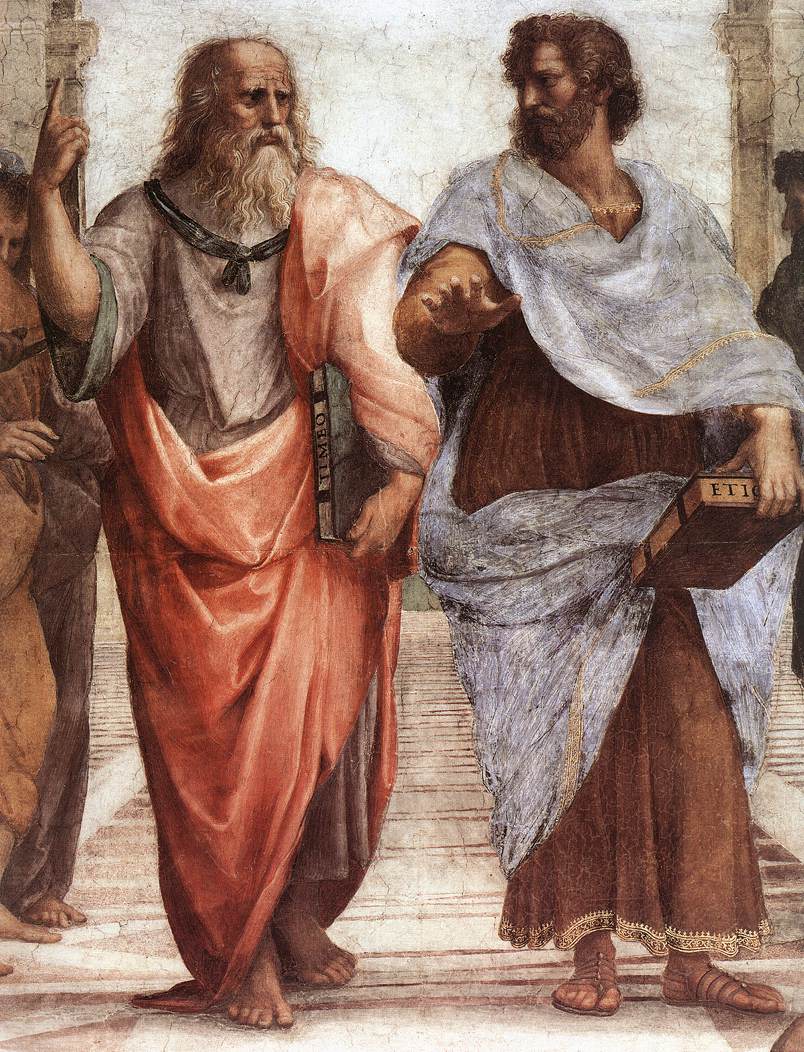
Aristotle (right) talking with Plato in The School of Athens by Raphael

Aristotle (right) talking with Plato in The School of Athens by Raphael

In 2015 one could hardly say we in America are happy. In the light of current tragedies of gun violence and our socio-poliictal history, we might do well to remember the wisdom of Aristotle (384—322 B.C.E) to help guide citizens of a constitutional republic:

Happiness depends upon ourselves.

  • Gordon C. Stewart, Chaska, MN, October 20, 2015

A Picture of God

A Kindergarten teacher observed the children drawing pictures in her classroom. As she walked around the room, one little girl was totally absorbed in her drawing when the teacher asked what she was drawing.

“I’m drawing God!”

“But no one knows what God looks like,” said the teacher.

The girl kept drawing. Without a hitch and without looking up, she replied, “They will in a minute.”

As part of their research, psychologists have asked children to draw pictures of God looking for correspondences between the children see their parents and how they imagine God.

“God the Father” of trinitarian Christian theology was of particular interest. The children’s drawings turn out to be vastly different, depending upon positive or negative experiences with their fathers. Some drew God as kind and loving; others drew God as fearful and violent.

Sigmund Freud, Karl Marx, and Ludwig Feuerbach would not be surprised. Each in his own way saw ‘God’ as a human projection, not a Divine reality. Yet there is something about even the most disbelieving of us that is still drawn to try to draw God.

Maybe the little girl in the kindergarten class had heard in church the line that “No one has ever seen God, but if we love one another, God lives in us and his love is made complete in us” (I John 4:12). Maybe she was drawing Love.

  • Gordon C. Stewart, Chaska, MN, Nov. 5, 2015.