Our home for four weeks is 14 miles west of Anaconda, Montana. Last Friday evening we go to Barclay II for dinner (the restaurant, not the dog).
Like lots of things in these parts, exterior facades count for little. Barclay II doesn’t look like much from the outside but it has a great reputation for steak and seafood. Behind the scruffy door is an upscale restaurant.
The proprietor, Tammy, comes to the table to greet us. We ask what they’re known for. “The tenderloin is the most popular,” she says. “I see from the menu it comes with crab legs. Are they Snow Crab or King Crab?” I’m not so big on Snow Crab; I love King Crab. She answers, “King Crab.”
When the wait person comes to take our orders, I order the tenderloin “between medium-rare and medium”. The waitress notes exactly what I say. When she returns, the tenderloin is precisely as requested. In downtown Minneapolis, Murray’s Steak House is famous for its Silver Butter Knife Steak, so named because you can cut it with a butter knife. Murray’s is good. Barclay’s, in downtown Anaconda, is better. The tender-est, most flavor-ful steak I’ve every eaten anywhere in the world.
THE WORST-HAIRCUT EVER
The next morning we’re again in downtown Anaconda in The Coffee Corral coffee shop when Kay reminds me I need a haircut before stepping into the pulpit the next morning at St. Timothy’s Memorial Chapel where I’m privileged to preach the next three weeks. It’s Saturday.
I leave Kay in search of the barber shop. The barber pole is not spinning; the sign on the door posts the hours: Monday-Friday. It’s closed. Next door is a beauty salon. I really need a haircut. I go in to the scene of six women seated in a semicircle having their nails done.
“Good morning,” I say, “Do you do men?” Several of the woman roar with laughter. “I mean…do you cut men’s hair?” Again they laugh. “My wife says I need a haircut; wadda ya all think?” Three of them nod Yes; three nod No. The stylist answers Yes and says she can do me at 1:00.
I return at 1:00. The stylist and I exchange a few pleasantries, ignoring the young bridesmaid who’s all dressed for an afternoon wedding, waiting to have her hair done. I take a seat in the stylist’s chair. She asks me what I want. I answer, just “a trim,” meaning leave it the way it is but take maybe a quarter of an inch, at most. I tell her that once I take out my hearing aids I won’t be able to hear a thing. She smiles, laughs, and says, “No problem. That’s great!” I take it she’s not a big talker, or maybe, God for bid, she doesn’t like men.
I set the hearing aids on the counter. She asks a question I can’t hear. As hearing-impaired people often do when we can’t hear something, I smile and nod my head. I should have reached for the hearing aids.
Within seconds I’m back in Vince’s Barber Shop in Broomall, Pennsylvania at the age of five. Vince’s old electric clippers are shearing the sides of my head like a sheep shearer shears wool from a sheep. At age 72 I don’t have much left, but I’m told I have beautiful hair, even if it’s white. The clippers are clipping; the hair is flying in one-inch clumps. This is not a trim! I’m being led to the slaughter. I close my eyes, as though in prayer, pretending it’s not as bad as I expect.
I should have prayed!
Mortimer Snerd and Edgar Bergen
She finishes “the trim” with scissors and holds up the mirror to show me her handiwork. I pretend I’m an actor, looking at the unrecognizable head staring back at me. It’s Mortimer Snerd, ventriloquest Edgar Bergen’s dummy who made me laugh as a kid, and, as Mortimer often did, I smile a stupid smile, and say, “Yup”. There is nothing else to do.
ALWAYS CARRY CASH
“How much do I owe you?” “Ten dollars,” she says. “Do you take American Express?” “No,” she says, “we only take cash.”
Oops! I take out my wallet. No cash. I go into my pockets and find three one crumpled dollar bills. She agrees to let me go up the street to the coffee shop where Kay is using the internet. “I’ll be back,” I say, assuring her I’m not skipping town. I don’t tell her that her haircut is only worth three dollars.
Kay also has no cash. But she remembers the cylinder of quarters she keeps in the Prius. We count them out, 38 quarters, just enough with my three ones to cover the cost and leave a $1.50 tip, and return to the Beauty Salon.
She’s doing the hair of the teenage girl dressed in her bridesmaid uniform. I think of bridesmaids’ dresses as uniforms ‘cause, like Army recruits, the poor bridesmaids have to wear what their recruiter makes them wear. There is no freedom on wedding day. I just hope the poor soul sitting in the stylist’s chair doesn’t open her eyes to see Mortimer staring back from her bridesmaid uniform.
LESSONS FOR LIFE
Thirteen (13) little hours offered the best and the worst, the joys and, as the old hymn “Beneath the Cross of Jesus” puts it, “the burdens of the day.”
I’ll take back to Minneapolis three life lessons learned in Anaconda:
Pay no attention to the exterior appearance of anything, especially a restaurant. It may hide the best tenderloin steak you’ve ever tasted anywhere.
Carry cash!
If you’re a guy who ventures into a beauty salon next door to the closed barber shop and some women laugh loudly when you ask if they do men, run for your life. You may turn into Mortimer Snerd!
“Yup!” Life is like that. I smile and remember the tenderloin. Kay tells me my hair will grow out again.
I was born in Urbana on Orchard Street,
The hospital, Carle, was then quite small:
A three-story building of yellow brick,
The first of four brothers, and that was all.
My Mother was Char, my Dad was Bob
away at war, though a Pacifist he.
In ’42, to avoid the Draft,
He joined the SeaBees, the Navy
Guys who built the docks, airfields–
Alaska, even Hawaii.
After the war they lived in town
From house to house, till number three
Was 1306 South Orchard Street.
My happy high school years were there,
My first fast car, my first slow girl…
My friends were from the band or choir,
Although I grew to six foot eight
And stumbled playing basketball.
I started writing poems then:
Love yelps, or sonnets for the school
Assignments Mrs. Hewett gave.
Now decades past, I still will write
My last request in doggerel.
V-mails from Dad to Mom would cite
His love for us in poetry.
So if the cost is not too great,
Send me to die on Orchard Street.
Carle Hospital has grown to eight
Or ten or 12 facilities.
Perhaps they’ll have a room for me
To breathe my last in my home town.
Like poetry, it’s symmetry.
It takes only a moment to see oneself in the experience of Andy Catlett in Wendell Berry’s story, “Fly Away, Breath!” Our experience is of time flown away and flying away.
Most of us, most of the time, think mostly of the past. Even when we say, “We are living now,” we can only mean that we were living a moment ago.
Nevertheless, in this sometimes horrifying, sometimes satisfying, never-sufficiently-noticed present, between a past mostly forgotten and a future that we deserve to fear but cannot predict, some few things can be recalled.
— Wendell Berry, “Fly Away, Breath (1907),” A Place in Time: Twenty Stories of the Port Williams Membership,” Counterpoint Press, 2012.
We are creatures of a specific time and place — and relationships with loved ones, friends, and enemies, a plot of land, a town or city we call home, a state, a nation, a world in time sandwiched between past and future that we call the present.
A ghost town is a reminder of time. Southern Cross stands on the mountain high above Georgetown Lake, Montana, where the vistas are breathtaking, and the past is barely remembered except for the abandoned miners’ quarters and mine shafts below the surface of the place that remind the visitor of the fickleness of time.
“All flesh is grass” and yet, despite our intuitive awareness of it, we unconsciously pretend most days it is not true that “the grass withers, the flower fades….” [Isaiah 40:8].
“Nevertheless,” says Wendell Berry, “… between a past mostly forgotten and a future that we deserve to fear but cannot predict, some few things can be recalled” — things like my friendship with Phil, now ended unexpectedly by a rare nearly undiagnosable lymphoma in his spleen. Hours before his death, the interventionist ICU doctor described Phil’s case and his 10 days in the ICU as “a real shit storm” because of the many ongoing complications that mystified the medical staff. In all of medical history only 10-15 cases have been reported where lymphoma originated in the spleen. By the time it was discovered in Phil, other organs had begun to shut down. The first organ to go was the gallbladder, which was already abscessed when they operated to remove the spleen.
Medical professionals are no different from the rest of us, except for their skill and training in how to treat illness and preserve life. Despite every effort to keep the present from slipping into the past, against every attempt to retain some kind of future, the breath always flies away.
Phil’s death, as I had come to see it days before he passed, came as an act of mercy, a release from the torturous interventions of advanced medical technology that asks the question ‘How?’ without first asking ‘Why?”
I’m increasingly convinced that the denial of death (mortality) and the search for immorality are the opposites of the Christian faith in God – on Hebrew YHWH (“I am Who I Am/ I will Be Who I will be”) who alone is Eternal. All else is species hubris, the refusal to live thankfully, graciously and peacefully within the limits of finite, mortal goodness.
We are all standing in line, not knowing at what time or place our time will come. We’re all headed for the ghost town, thinking of the past or dreading the future we deserve, but also, in moments of grace, remembering with thanksgiving the tender mercies along the way that cannot be denied.
I do not know what of Phil or any of us may lie beyond the grave, an odd thing to say for a minister of the gospel whose faith lives out of the life, death, and resurrection of Jesus. Knowing my unknowing, my best friend reminded me of “Jesus’s question to Nicodemus at night about the not entirely unrelated matter of being born of the Spirit: ‘You are the teacher of God’s people, and don’t know these things?’”
I confess to knowing very little, especially when what Chaim Potok calls the four-o’clock-in-the-morning-questions wake me in the middle of the night between a present now gone and a future that remains inscrutable. However that may be, what I do know is that bodily life — mortal life in space and time in the midst of Eternity — is what we have and it is to be cherished. Bound to the limits of time and place, it is God’s good creation. Yet only God is the Eternal One.
Whatever lies on the other side of my years is beyond my mortal knowing. But I can and do affirm the Eternity of God and the scriptural point of view that whether we live or whether we die, we belong to the Lord. “All flesh is grass. The grass withers, the flower fades, but the Word of our God [YHWH, the Eternal] shall last forever.” Right now, in good conscience, that’s enough bread to live on today as I recall the blessing of Phil to our lives and pray for all who loved him.
– Gordon C. Stewart, written at Georgetown Lake, Montana, July 26, 2015.
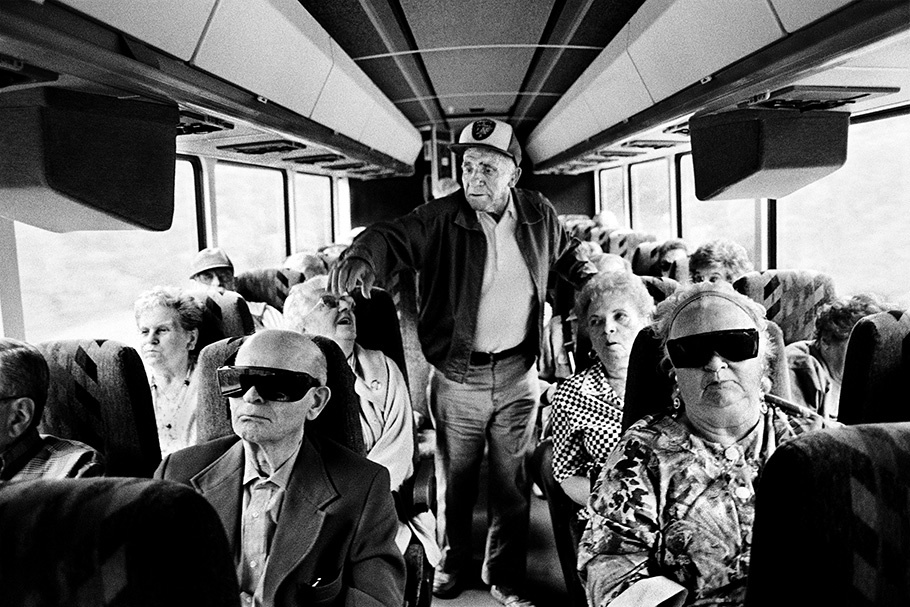
The bus carries seniors, yes, 50 or more.
To see the Cubs play, to see the Cubs score!
We ride for 3 hours,
But then come the showers,
And thunder and lightning–it’s starting to pour!
Some start in to pray, and the ones who have doubt,
They cross all their fingers, and begin to shout
“The Cubs are now winning!”
“We haven’t been sinning!”
(But one woman singing:
“You win some, you lose some, and some
are rained out.”)
Chicago hot dog
We walk into Wrigley–be careful don’t slip!
Our ponchos, our rain hats, our jerseys all drip…
But we drink some good beer,
And are of good cheer,
The Chicago hotdogs make this a good trip!
“The living God is related to the categories and formal arguments of our abstract thinking as fire is related to paper.” Arthus Bogel
“Great science, which we once considered an ‘enemy’ of religion, is now helping us see that we’re standing in the middle of awesome Mystery, and the only response before that Mystery is immense humility. Astrophysicists are much more comfortable with darkness, emptiness, non-explainability (dark matter, black holes), and living with hypotheses than most Christians I know. Who could have imagined this?” Richard Rohr
“I am … reminded of the humility of those early theologians who knew that when we seek to speak of God we do so only out of the glimmers of understanding that sparkle amid the vast background of uncomprehended mystery….” Robert J. Russell
“In a recent sermon [Rev. John Buchanan] writes that the science that many Christians had felt over the centuries to be…
It’s not true every day is Children’s Day.
Some kids have lost their parents to disease,
or fatal accidents, or violence,
or war, or drugs, or worse, indifference.
And Hanukkah or Christmas does not count,
or ending Ramadan with giving gifts
and Sugar Feast, because each Holy Day
kids must be near perfect–it gives them fits!
So I propose a Children’s Day each year
when parents, mentors, friends each take the time
to say YES to a child’s request, then hear
a rhyme, and play a foolish children’s game.
What will abide is sitting side by side:
for then you’ll know you’ve helped a child to grow.
Sunday, June 21, the text from Faith in Minneapolis reached us in Montana.
“6:15 p.m. – A great soul has passed.”
Phil Brown and I go back 55 years when we met as freshmen at Maryville College in Maryville, Tennessee. Within two weeks we were doing something entirely juvenile. We were running for President of the best class the college had ever admitted or would ever see again. J 😇
From the day I met Phil, I knew him as a person of dignity and stature. He carried himself with an outward confidence that belied an inner self-doubt. His posture was erect, shoulders back with a disgustingly athletic physique and stride, a classically chiseled face, and the brains to go with it. He was a Big Man on Campus from the day he set foot on campus to the day he left it for Law School at Indiana University in 1964. When he left law school to prepare for a vocation in ministry, we again became classmates at McCormick Theological Seminary in Chicago.
In ways we only later came to understand and celebrate, in spite of the early competition, we were tied by similar family histories and destinies, although anyone who knows us well could easily call us the Odd Couple, one of us like Felix Unger, the always well-groomed, meticulously tidy maintainer of order and propriety played in the film by Jack Lemon; the other more like the unpredictable, care-free, disorganized, careless slob named Oscar Madison, played by Walter Matthau. Can there be any doubt who was whom?
At Phil’s retirement party as Synod Executive of the Synod of Lakes and Prairies, his beloved sons, Ian and Jess, delivered a comical roast of their Dad who, they said, had taught them many things, not the least memorable of which had to do with tools from Phil’s workshop. “If you took it, put it back where you got it!” was his consistent teaching. I always wondered, though, why Phil didn’t put the special microbrewery beers that Ian mailed him back in the refrigerator where we’d gotten them.
Phil and Faith are Kay and my best friends in the Twin Cities. Our tears have fallen for more than two months, as we have watched with Faith the inexplicable, undiagnosed loss of energy that came on like an sudden thunderstorm that drenched him in night sweats the evening he returned from a North Oaks Association Board Meeting.
Always the most gracious of hosts, he and Faith hosted newcomers to North Oaks in their home a few weeks later with the understanding that if Phil grew weary, he should retire early. He did. It was not like Phil to call attention to himself or to bow out on a promise, a duty, or a commitment. He had to be restrained from overdoing, but restraining a race horse committed to doing the right thing takes a trainer with strength not even the strongest life partner or lifelong friend could muster.
At Maryville Phil chose Economics for his major. His academic advisor and mentor, Bob Lynn, was a professor known equally for his brilliance and his demands for academic excellence. At McCormick Theological Seminary, Phil again chose to study with the very best, Jack Stotts, Professor of Christian Ethics. Phil was always drawn to the highest standards of excellence.
As Presbytery Executive with Blackhawk and Milwaukee presbyteries and as Synod Executive of the Synod of Lakes and Prairies, he embodied that combination of ardor and order, grace and discipline that is the signature of the Presbyterian theological and ecclesiastical tradition where all things are to be done “decently and in order”. In that respect Phil and I each followed in our father’s footsteps. Phil succeeded at it much better than I.
But, if our friendship began as student competitors and friends wandering in the night through the foothills of the Smokey Mountains around Maryville, my last memories will be of Phil as the patient at Abbott Northwestern Hospital in Minneapolis. Though so weak that he could barely speak aloud, he unexpectedly joined me in saying the 23rd Psalm. His faith was on his lips, bubbling up from a deep, trusting heart, the secret place of the son of Victor and Francis Brown. I’m sure he noticed, as did his son Jess, my omission of the line “He leadeth me in the paths of righteousness for his Name’s sake” — an omission made, whether consciously or unconsciously, I suppose in retrospect, because I wanted him to give up the struggle for righteousness in order to rest peacefully beside the still waters there beside the valley of the shadow of death.
There are no still waters here in Montana where I am committed to serve as summer minister at St. Timothy’s Memorial Chapel in the ghost town of Silver Cross where we prayed for Phil, Faith, and the Brown family this morning. After receiving Faith’s message this evening, Kay walked to the backyard of the Manse and returned with a bouquet of wild purple irises and other wild flowers in honor of Phil. We read the Psalms and prayers from The Book of Common Prayer and found some solace there in the company of the saints in light.
Good friendships last a lifetime. Over time, the tears of loss and mourning will be turned, by God’s grace, into the tears of great thanksgiving.
– Gordon C. Stewart, Georgetown Lake, MT, June 23, 2015
My clergy colleague, Mike Murray, recommended a new book that builds bridges between right and left-wingers, between those who are conservative/fundamentalist and liberal/progressives. Have started it, The Righteous Mind by Jonathan Haidt.
But was interrupted this morning when reading a Huffington Post article about someone with whom I have next to nothing in common theologically, Evangelist Pat Robertson. I’m pretty sure a bridge between the two of can never be built—especially on his version of the purpose for God to kill children. Even the more general indictment that God “kills children.”
I’m pretty sure clergy, no matter their tilt theologically, would find it reprehensible that “God takes the life of a child.” Yes, I’ve had grieving parents and relatives tell me about a young girl’s death, “God needs her for God’s Children’s Choir in heaven.” Or, “All death is God’s Will.” Or, “This is the fault of the parents for…
Ever have one of those days when you wonder what in the world you were thinking?
After eating at The India Spice House, I stopped in at the adjoining grocery store. A box of Bourbon-flavored biscuits made in Oran caught my eye. They looked good. I confused Oran (in Algeria) with Oromo, the identity of the Ethiopian Muslim men who had prayed for my friend Phil in the ICU Waiting Room two nights before. “That’s great,” I thought to myself. “The biscuits will make a nice gift.”
Gift to Muslim prayers
At the hospital I handed the box to two Oromo brothers holding vigil in the ICU Waiting Room. No words were exchanged. They accepted the gift, smiled, and nodded.
Only on my way to visit Phil in the ICU did it dawn on me. Muslims don’t drink! Even if the biscuits were made in Oromo instead of Oran, Bourbon-flavored anything is unacceptable, even disrespectful, however unintentional.
I returned to the Waiting Room. They smiled broadly. “Good!” said the one who speaks English. The other repeated his word with raised eyebrows. “Good!” We shook hands the way brothers do on the street in the hood. All was well! Salaam, Shalom, Peace was everywhere in the room.






 Views from the Edge