The Donkey: a Kid’s Verse

“The Donkey” has been waiting for the right occasion. Dennis Aubrey’s photographs and commentary “The Ineffable” on Via Lucis Photography linking suffering and beauty led me fetch “The Donkey” from the “draft” file today for reasons hard to explain.

What I love about Dennis’s commentaries is that he refuses to engage in simplicities that reduce ambiguity to something manageable.

It led me this morning to The Passion (“suffering”) of Jesus, which begins Palm Sunday with a mistaken public perception: the Redeemer is a King who will vanquish the Roman “King” and who, perhaps, by his “Triumphal” Entry, will triumph over suffering.

The wish to escape suffering is, in some way, the kiss of death. There are Christian theologians today who argue that we should remove the cross as the central Christian faith symbol because it glorifies suffering, shifts the focus away from Jesus’ life, and contributes to the perpetuation of violence. But to do so would be to run and hide from the peculiar mystery of the human condition described by Dennis Aubrey’s piece – the ineffable and the beautiful in the face of suffering. The truth is in the paradox and the contradiction.

Steve’s poem brings all of that to mind. Jesus sets his face toward Jerusalem to free it from its military-economic occupiers and from its own violent self. The Passion continues to arrest our deepest soul in the mystery of life in the face of suffering and the abyss of nothingness. As Dom Sebastian Moore observed, “the crucified Jesus is no stranger” – we put him there…and we are he.

A Poem for Palm Sunday: “The Donkey: a Kid’s Verse…”

The coats the folks are throwing down

sure make it hard for me to walk

especially carrying this clown

whose feet are almost to the ground.

“Hosannah King!” is all the talk,

but this guy seems to be as poor

as I am–no one could mistake

him for a Royal–he’s just a fake!

They wave palm branches, and they roar,

but my long ears can hear the real

parade across the city square:

the General, the Priests, the score

of war horses–the whole grand deal.

This pitiful parade will fail

to save a soul, and soon the yell

will change from “Hail!” to…”Kill!”

– Verse by Steve Shoemaker, Urbana, IL, March 28, 2012

Two kinds of prayer :-)

Verse — Sanky Reed

Standing in the center aisle
of the small church, she told her friend
about a thief the night before
(while she was sleeping) broke into
her shed and stole her new chainsaw.

Agnes said, “Well, we should pray
for him–we are in church.” Sanky
said, “Let’s pray he cuts off his leg!”

– Steve Shoemaker, Urbana, IL

Out of the Mouth of Woodbine Willie

“Woodbine Willie” is a strange name for an Anglican priest. The nickname was given to

G. A. Studdert Kennedy (18813 - 1929)

G. A. Studdert Kennedy (1883 – 1929)

G. A. Studdert Kennedy (1883-1929) by the battered troops of the British forces to whom he ministered in World War I.

The name came from the “Woodbine” cigarettes he gave to the troops. Woodbine Willie grew up among the desperately poor. He had two great passions: the church and social reform. He never winced and, oh, how he was loved by what were then known as “the common people.” He was a fighter for social justice and human rights, but he also advocated civil conversation, what he called “a plane” upon which people of differing views and good conscience would come together to resolve a problem.  Think about the current national debate in the wake of the tragedy at Newtown.

There is, and there must be, a plane upon which we can think and reason together upon questions arising out of our wider human relations, social questions, that is, apart from and above party prejudice and sectional interest. If it is not so, and there is no such plane, and we can not think of these big questions outside the prejudices and passions that arise in party strife, then it is safe to assert that there will never be any solution of the problems whatsoever. The idea that politics in the true sense – that is, the art of managing our human relationships on a large scale – must remain a separate department of life, distinct from morals and religion, is ultimately irrational and absurd, and is an idea with which no  responsible teacher ought to have anything to do. – Sermon, “The Church in Politics: a Defense”

Tomorrow night, Tuesday, Feb. 5, Shepherd of the Hill Presbyterian Church in Chaska will do its best to provide “a plane” for reasonable discussion of the epidemic of gun violence in America. 7:00 – 8:30 PM. Hope and pray that it be an evening where we step back to discuss “the big questions outside the prejudices and passions that arise in party strife.”

Is gun control pro-life?

An interesting debate on gun control is developing among Roman Catholics that might be called “How shall Christians be pro-life?”

Click “Catholics raise issue of guns amid calls to end abortion” (New York Times), and leave your comment on “Views from the Edge” to promote discussion.

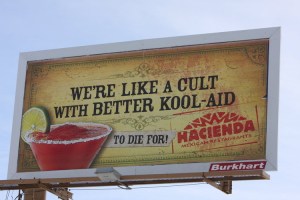
Grover Norquist: High Priest of Purple Kool-Aid

Grover Norquist is quoted in Mallory Simon’s “GOP Resistance to Anti-Tax Pledge Grows” as saying:

“You’ve had some people discussing impure thoughts on national television.”

“Impure”?…  Is The Taxpayer Protection Pledge a religion? With its own “elect”? And its own high priest and Lord High Executioner: Grover Norquist? Thank God for the former cult members who have had “impure” thoughts and are going on national television to either repent or to “weasel out” of their pledges.

No elected representative should take any other pledge than to uphold the Constitution of the United States of America and to faithfully exercise the duties of their office. The Norquist pledge, while it has rallied support for candidates’ election to office, limits their ability to exercise of the duties of office, as many former signers are discovering while standing at the edge of “the fiscal cliff”.

The Taxpayer Protection Pledge (“Anti-Tax Pledge”) was always bad religion. It asked candidates, and the whole country, to follow the example of another religious high priest, Jim Jones, who led this flock into the jungle where they frank the purple Kool-Aid of mass suicide.

We’re not in the jungle of Guyana with Jim Jones. We’re in the United States of America. Time to dump the purple Kool-Aid religion. Time for some fresh orange juice, a bowl of nutritious oatmeal with raisins, and lots of conversation over coffee in the Congress and the White House.

Of Tide Pools and the Ocean

“Wisdom cries out in the street; in the squares she raises her voice. At the busiest corner she cries out; at the entrance of the city gates, she speaks:

‘How long, O simple ones, will you love being simple? How long will scoffers delight in their scoffing and fools hate knowledge?’” (Proverbs 1:20-22)

We come here this morning in mourning, seeking light in the midst of a great darkness created by religious hatred.

Listening to and watching the news from the Middle East and the viral videos that call the founder of Islam “Mo” is deeply disturbing. Once again, religious fanaticism betrays its claim to bear witness to the One who remains shrouded in mystery. The fires that were set by a flame-throwing video raise the question “Will religious fanaticism prevail?

“There are only kinds of religion: one burns, the other learns.”

Those words were spoken from this pulpit two years ago. They came not from the preacher. They came from Ghafar Lackanwal, a Muslim Afghani-American, who came at our invitation after the Christian pastor in Florida threatened to burn the Quran. Ghafar accepted our invitation. He opened his Quran, read from his Book, and brought greetings peace to this congregation.

The two kinds of religion are not Christianity and Islam, or Islam and Judaism. The two kinds of religion are intransigent fundamentalism, on the one hand, and the humble search for wisdom’s guidance, on the other.

Ninety years ago a great preacher lost his pulpit for asking the question “Shall the fundamentalist win?” Harry Emerson Fosdick asked the question in 1922. He was subsequently removed from his pulpit, but he John D. Rockefeller built a church called “Riverside” where Fosdick would become one of America’s best known and most loved preachers. Some called him “America’s counselor” because of the radio broadcasts of his sermon across the country. “Shall the fundamentalists win?” By fundamentalists he meant those who claim absolute truth, denying all other claims to truth or wisdom.

Ninety years later I’m asking myself the same question.

Like Fosdick, I spent my boyhood summers on the coast of the Atlantic Ocean. The ocean became my teacher. It became, you might say, my enduring metaphor for God.

As a boy I would spend hours lost in the magnificence of the tide pools that dotted the coast of Rockport, Massachusetts.  Wading in the tide pools is still my favorite thing to do. I did it again last month with my grandchildren at Coquille Point on the Pacific Coast of Oregon.

The tide pools are filled with fresh sea water. They are the temporary homes that give shelter to the starfish, crabs, periwinkles, sea anemones left there for a few hours at low tide. They are not the ocean itself.

Perhaps religion is like a tide pool, a small pool of ocean water that tastes the Ocean while pointing to the vast mystery of the Ocean on which its life depends. The tide pools hold a few drops of a vast sea. They are filled with the Ocean, but they are not the Ocean. Their health depends on the eternal rolling of the tides to refresh them.

Wading in a tide pools, it’s easy to lose track of time.

But there are other tide pools far back from the water’s edge, created by the unusually high waves of a storm. Unreachable by the normal daily tides that would refresh them, they are cut off from the Ocean that gave them life. They are without oxygen, yellow, and covered by green-yellow slime. Their original beauty has left them to the flies.

Perhaps the human soul or, a religious tradition, is like a tide pool.

“Since when has the Pacific Ocean been poured into a pint cup,” asked Fosdick, “that the God of this vast universe should be fully comprehended in human words?” One tea-cup will reveal the quality of the whole ocean. Yet it will not reveal all the truth about the ocean.

“When one considers the reach of the sea over the rim of the world; thinks of the depths that no eye can pierce…, one dare not try to put these into a tea-cup. So God sweeps out beyond the reach of human symbols. At once so true and so inadequate are all our words….”

As a Christian pastor, I can only take responsibility from within the tide pool of my Christian faith tradition.  Muslim Imams like Minneapolis Imam Makram El-Amin, are doing the same in theirs.  “We will stand,” he said, “in unity against these attacks and the appalling killing of the diplomat who was there on a peaceful mission” (“State Muslims denounce attacks,” Star Tribune, Sept. 13). Every Christian pastor is called to do the same in the wake of the viral film that poisoned the Ocean from a yellow tide pool in Florida.

This morning I ask you to listen to three prayers. Ask yourself who spoke them. A rabbi, an imam, or a Christian pastor.

1) O God Source of Life, Creator of Peace. . .
Help Your children, anguished and confused,
To understand the futility of hatred and violence
And grant them the ability to stretch across
Political, religious and national boundaries
So they may confront horror and fear
By continuing together
In the search for justice, peace and truth. . . .
With every fiber of our being
We beg You, O God,
To help us not to fail nor falter. Amen

2) In the Name of God, The Everlasting Merciful, The Cherisher
Of the Worlds and Worthy of all Praise,
Our Lord: You have created us from a single (pair) of a male
And a female and made us into Nations and Tribes that we may
Know one another (not that we may despise each other) so
Help us to love each other and take the hatred and anger from our
Hearts so that the People of The Book (Christians, Jews and Muslims)
In the Middle East may live in Peace and Justice. Amen

3)Two peoples, one land,
Three faiths, one root,
One earth, one mother,
One sky, one beginning, one future, one destiny,
One broken heart,
One God.
We pray to You:
Grant us a vision of unity.
May we see the many in the one and the one in the many.
May you, Life of All the Worlds, Source of All Amazing Differences
Help us to see clearly.
Guide us gently and firmly toward each other,
Toward peace. Amen.

The first prayer comes from the lips of Rabbi H. Rolando Matalon from Congregation B’nai Jeshurunin  New York, NY. The second comes from Dawud Ahmad Assad of the Council of Mosques here in the USA. The third comes from the National Council of Churches of Christ.

Each of them is humble. Each of them looks to the larger Ocean to refresh us. Each begs for wisdom to guide us. Each honors the God and Creator of all.

There are only two kinds of religion. One burns; the other learns. “How long will you love being simple? How long will scoffers delight in their scoffing and fools hate knowledge?”

When any religious tradition mistakes its pool for the Ocean itself, denying the existence of neighboring tide pools along the edges of Eternity, fundamentalism wins. Things turn yellow and nasty. For those of us who are disciples of Jesus, there is only one enduring question by which our tide pool can remain open and fresh: “How shall we love the Lord our God with all our mind, hearts, soul, and strength and our neighbor as ourselves?”

Only the daily refreshment of the tides can keep the tide pools fresh. Otherwise we watch the news, asking Fosdick’s old question, and hope and pray that fundamentalism and fanaticism will not win.

– Sermon preached by Gordon C. Stewart at Shepherd of the Hill Presbyterian Church, Chaska, MN Sunday, September 16, 2012.

Alaskan tide pool photo by Susan Linz

Critique of American Exceptionalism published today by MinnPost

MINNPOST published “In the 2012 race for the White House, Is religion fair game?” this morning. Click THIS LINK to read the piece on MinnPost.com.

The first commenter on MinnPost didn’t like it. Here’s the comment:

September 5, 2012 – 8:21am.

but you’ve overlooked the obvious.

This nation was founded on the principle of religious liberty.  The Declaration of Independence mentions God four times and describes the uniqueness of America in that, unlike Europe, where power flows from God to the Throne to the People, in America “we are endowed by our Creator” … power flows from God to the people and then to government.

The issue of religion in this campaign hasn’t been about whether the Mormon practice of tithing is one this society should consider adopting (“If 10% is good enough for God it should be good enough for government.”  –  Romney gave $4 million to the church last year) or whether Obama’s connection to black liberation theology and its demand for “social justice” is compatible with a free society.  No, it’s been more basic than that.

When Paul Ryan reminded us in his acceptance speech that “our rights come from God,” leftwing websites and TV talking heads took issue with that.  Some even expressed outrage as if they’ve never read the Declaration.  They insisted that our rights come not from God but from Government!

And as if to formalize their party’s transition to secular humanism this week, we’ve learned that the democrats have removed any mention of God from their party platform.

So the discussion of religion IS fair game in this election, but not in the minutiae that you suggest, but whether the majority of the citizenry even understands that our founding was based on religious liberty and inalienable rights and is codified in the Constitution that exists to protect them, because frankly, Reverand, I’m beginning to doubt it.

Leave your own comment on the MINNPOST site or here on Views from the Edge. See previously published commentaries on the intersection of religioin and politics, and American exceptionalism on Views from the Edge for more on the subject

Is religion fair game this campaign season?

Is religion fair game in the campaign for the White House and in American electoral politics generally?

The question put to John Fitzgerald Kennedy in 1960 about his Roman Catholic faith led to a long period when a line was drawn between religion and politics. Religion was a private matter; politics was a public matter. Aside from the  occasional story about church attendance and Jimmy Carter’s statement about lusting in his heart, religion in the White House and in American public life was considered off the table of public scrutiny.

Questions about candidate Barack Obama’s religion in the campaign leading to the 2008 election changed that. The attacks came from two sides. One attack alleged that Sen. Obama was a secret Muslim; the other doubted the genuineness of his Christian faith and insinuating that he was a secret Marxist. After the one-minute excerpt from one of Rev. Wright’s long sermons went viral on the internet and on the evening news, the question was whether Sen. Obama agreed with Mr. Wright that on 9/11 “the chickens had come home to roost.” Religion had suddenly re-appeared from the shadows of American public life. The Obama campaign stumbled at the development but quickly recovered when the candidate himself dissociated himself from Rev. Wright’s views and effectively articulated his own to the satisfaction of the American people, followed by a masterful speech in Philadelphia about race in America.

In the 2012 campaign for the White House, do we consider religion as fair game for the public’s right to know, or are we better advised to return to the 48 year hiatus between 1960 and 2008?

Mr. Romney is a Mormon, a leader in The Church of Jesus Christ of the Latter Day Saints (LDS). One can argue that his religion should not be a factor in voter decision-making. The distaste of the impugning of John Fitzgerald Kennedy’s fitness for office led, in part, to a hands-off position. Religion in American public life is regarded as a question of one’s preference of cuisine. It’s a matter of personal taste. Religion is about opinion, not truth or reality itself; one person’s opinion is as good as another. For some of us, all that matters is that a person be “religious,” while, for others, religious adherence represents a failure of intelligence. But for all of us in America, tolerance is the virtue that glues together a pluralistic democratic republic. We are not a theocracy. We are a pluralist society where personal freedom is honored, especially in religion.

Is there not, however, something missing in a complete divorce between religion and politics? More than that, the idea of the divorce is based on a shallow definition of religion as professed creed rather than beliefs one practices daily in personal and public life.

There is an underlying “civil religion,” as Robert Bellah described it, which binds Americans together. At the core of it is the conviction, spoken and unspoken, that the United States of America is the exception to the way of history: the rising and falling of nations. America is the exception. We are proud people. We love our country. Whether or not it is spoken aloud, the ideas of the chosen people and the city set on a hill –a peculiar nation with a manifest destiny to bring light to the rest of the world – is the central belief of American civil religion. It is a peculiar unexamined and mostly un-articulated rip off of the biblical call to Abraham. The allusions to it are mostly between the lines. Sometimes, as in electoral campaigns, it is actually said out loud, and in such times we get to ask whether that is what we Americans really believe…about ourselves, about other nations, and about God.

Listen to the speeches. The idea of American exceptionalism (the idea of singular “election”) runs like the mighty Mississippi through the justifications and rationales for American religious, economic, and military expansionism from the earliest days of westward expansion to the “pre-emptive war” in Iraq and the crusade to bring democracy to the Middle East. Anyone who disagrees is a pagan, part of an Axis of Evil.

The subtle and not so-subtle synthesis of religion and politics that comprises American civil religion has always been a fact of the American ethos. In that sense, religion is always at work in American public life. The only question is whether we are willing to re-examine what we believe as a people.

It is not just agnostics or atheists who take offense at this marriage between religion and politics, the divine and the human, the divine and the chosen people. For Jews, Christians, and Muslims the idea of national exceptionalism lifts the nation to the place of an idol of worship that usurps the mystery and majesty of God and the universality of the Creator’s love

Institutional religion and the American civil religion alike inform, shape, and sometimes determine how a candidate will exercise the duties of elected office.

Gov. Romney, a Mormon, and President Obama, a Christian, will represent their parties on the November ballot. The question for the American electorate is not whether the candidate is Mormon, Christian, Jewish, Muslim, or none of the above. The question is how the candidate’s religious beliefs inform how he will conduct domestic and foreign policy in a world increasingly suspicious of America’s belief in its unique divine call and destiny. The Oval office is where those dreaded decisions are often made.

On the road to the White House, President Obama has discussed publicly how his faith plays itself out in public policy. Governor Romney has yet to discuss with the American people how his deepest beliefs will inform the exercise of his duties of office, should he be elected President in November.

The closest one gets to hearing or seeing his core beliefs are the frequent moments when Governor Romney deflects a question by proclaiming how great a country this is and telling us how much he loves it. Which may be a clue to what he most deeply believes. We won’t know until we ask.

Nothing better fits the ideology of American exceptionalism than Mormonism, an American-centric religion that sees the Americas as the geographical center of history itself: the location of humanity’s origin in a real Garden of Eden alleged to have been in the State of Missouri and the place where Christ will come again at the Second Coming.  Human history – from the beginning to the end – is a peculiarly American story.  America is Alpha and Omega, holy ground in a profane world. Such a view explains, in part, why the Church of Jesus Christ of the Latter Day Saints is the fastest growing religion in the United States. It puts in the open the unspoken doctrine of America civil religion that sees America as God’s chosen people.

A great fear of people from other nations and cultures is whether the American people will elect whichever candidate for the U.S. Presidency shouts “Yes” the loudest. Galileo challenged the anthropocentric belief that the sun revolved around the Earth. The church found him guilty of heresy. The question now is whether we will continue to believe the myth that the world and the universe itself revolve around America. Every four years we Americans have the opportunity to reflect critically on what we do and do not want to say about ourselves, our neighbors, and the Divine.

A thoughtful, vigorous debate, led by a dogged free press, offers the best hope for an electorate prepared to meet the complex challenges of the world in the 21st Century. The world is watching, and the planet itself is waiting to see what we do.

Religion, in the broadest sense, is not only fair game. It is the game.

Terrorism, Jesus, and “the Dove”

The Dove World Outreach Center (DWOC) is in the news again. Scroll down to the bottom to click the link to the Huffington Post story. Or, you’ve time, read this piece that was published by MPR following the DWOC’s threat to burn the Quran.

How a  single voice threatened to spark a forest fire

by Gordon C. Stewart

September 28, 2010

Everyone from time to time feels insignificant. As I did, while watching fires burn across the world, lit by the words of one pastor in Florida. I felt like a spectator in the stands watching the game I care about go terribly wrong, a hostage of verbal terrorism uttered in the name of Christ.

I would imagine that the Rev. Terry Jones and his small congregation also had felt insignificant before they announced the 9/11 Quran burning, and that they were stunned when their pastor’s voice, although terribly misguided, lit the forest on fire without ever burning a Quran.  One of their own, one who had felt insignificant, had raised his voice and now had the ear of a commanding general, the secretary of defense and the president of the United States.

The difference between the Rev. Jones and most people is that he has a pulpit.  On any given Sunday he speaks and a few people actually listen.  Most of us do our ranting and raving in the shower, at the water cooler or with like-minded people at the coffee shop, but we don’t much expect anyone to listen.

But as the Jones story developed, those of us with pulpits were feeling no less beside the point.  Then, as I prepared for worship, I was drawn by some old lines about spiritual arson. “Consider what a great forest is set on fire by a small spark. The tongue is a fire … a restless evil, full of deadly poison” and “the seeds of righteousness are sown in peace by those who make peace” (Letter of James 3).

The thought crossed my mind: We could invite a Muslim friend to join me in the pulpit, perhaps my neighbor Muhammad or Abdi or one of their children, whom I meet daily while walking the dogs.  I decided to invite Ghafar Lakanwal, a Pashtun Afghan-American cultural diversity trainer, a Muslim and naturalized U.S. citizen, to bring greetings of peace and share some passages about peacemaking from the Quran in our Sunday worship on 9/12.

Our little church in Chaska welcomed Ghafar, and his words about the spiritual “obligation to learn, not burn” still ring in our ears. Our service drew media attention, and Ghafar’s words were heard on the evening news  and noticed by a stranger in Australia, who sent a message through the church website. “I was touched,” he wrote, “when I read about your recent Sunday service in the news. …  I for one can testify that it has certainly comforted a far away Muslim to know that there are neighbors who will stand together in difficult times.  My salaam [to you].  May we all grow together to attain Allah’s pleasure.”

“Ah!” someone will say. How can any Christian rejoice when the author uses the name “Allah” for God?  But the reaction to the “name” is misbegotten.  It is not the name of God; it’s the Arabic word for what we in English call God.   The forest fire lit in defense of “God” in advance of the anniversary of 9/11 reminds us that two kinds of religion potentially exist everywhere people gather to practice their faith. One kind burns. The other kind learns.  One hates; the other loves.

As James, writing to those who would follow Jesus, put it: “With [the tongue] we bless the Lord and Father, and with it we curse those who are made in the likeness of God. From the same mouth come blessing and cursing. My brothers and sisters, this ought not to be so” (James 3:9-10).  We can set the forest ablaze with our small spark or we can use it to light a candle of hope and peace. But, after the events of this month, none of us can again think that what we say is insignificant.—-

When will we ever learn?  Click HERE for the whole story and leave your comment.

God above God

A visit to Tillich Park in New Harmony, Indiana, inspired these lyrics. Unfortunately, the blog editing continues to erase the stanza divisions. Each stanza is four lines.

God above God, Source of all Be-ing,

You Whose Name is above all our names:

Help us to kneel; Break down our fences;

Shine through the dark clouds religion has made.

Source of all life, Ground of all Be-ing,

God of the a-corn, the seed and the rain –

Send now your grace, seasons and har-vest,

Circle of life that our hearts have disdained.

Mother of nat-ions, Father of pe-oples,

Known as Allah, Adonai, El-o-him ~

Known, yet not known, Be-yond all perception

But for your grace in all cultures revealed

God of the cross, Life to the pla-net,

You Whom we cross with our gods and our ways –

Raise us to life, breathe now Your Spirit,

Restore us to life as the kin to all Life.

God above God, Source of all Be-ing,

You Whose Name is above all our names:

Help us to kneel; Break down our fences;

Dispel the dark clouds our religions have made.

– Gordon C. Stewart, November 4, 2005

Sung to tune “Dexter”  4.5.7 D with Refrain

http://www.youtube.com/watch?v=aYmXDCTbdak

“God above God” is the language of Paul Tillich for whom God is not a being among others – an object of finitude – but the Ground of Being Itself, the Ground that remains when all of our concepts and idea collapse.

The source of this affirmation of meaning within meaninglessness, of certitude within doubt, is not the God of traditional theism but the “God above God,” the power of being, which works through those who have no name for it, not even the name God.

PAUL TILLICH, SYSTEMATIC THEOLOGY, VOL. 2, P.12

“Man and nature belong together in their created glory – in their tragedy and in their salvation.” – Paul Tillich monument, Tillich Park, New Harmony, Indiana.