
The Angel Gabriel and Mary

A sermonic reflection for the Fourth Sunday of Advent, Dec. 21, 2014, Gordon C. Stewart.

Text: Luke 1:26-38

The Annunciation {El Greco]

The Annunciation {El Greco]

Mary has every reason to fear the appearance of Gabriel. Every demure depiction to the contrary, the Angel Gabriel’s “annunciation” to Mary is no private affair. It’s a public matter of the first order. Gabriel  is the archangel commissioned to destroy the offspring of the rebellious angels and human women. (see below). Mary shrinks back.

“Do not be afraid,” says Gabriel.

Why should she not be afraid? This is not just any angel.

This is the Angel Gabriel, whose trumpet will summon the people, sweep away the occupation forces that substitute their rule for the Kingdom of love and delight. This is an angel of revolution. The Archangel of conflict who inspires both hope and fear.

”Do not be afraid!”

El Greco’s painting of the Annunciation illustrates the problem of textual interpretation.
Gabriel’s appearance is not frightening. It’s very…how shall we say? Feminine. Even to the point of appearing perhaps pregnant himself. The great masters did not paint an angel messenger as male, even when his name is Gabriel or Michael, the only two angels named in Holy Scripture.

Gabriel in Hebrew means “God is my Warrior”. Gabriel is a warrior angel, announcing to Mary that she too is to become a warrior, a mother whose birth-giving will lead to conflict with the Empire and the religious authorities who collaborate with it.

As described by New Testament scholar Carol Newsom, any annunciation by Gabriel inspires fear.

In the Book of Daniel, Gabriel is preeminently an angel of eschatological revelation. He is sent to Daniel to explain a vision of ‘the time appointed for the end’ (Dan. 8:15-26)…. Gabriel’s functions are more varied in I Enoch. In the Book of the Watchers (I Enoch 1- 36) he is listed as ‘the one of the holy angels who is in charge of paradise and the dragons and the cherubim (20:2). He is commissioned to destroy the offspring of the rebellious angels and human women (10:9-10)….

In the War Scrolls from Qumran (IQM) the names of 4 archangels, Michael, Gabriel, Sariel, and Raphael, are written on the shields of the 4 towers of the army. The positioning of the 4 archangels around the throne of God or other sacred space has a long subsequent history in both Jewish and Christian tradition…. [Carol Newsom, “Gabriel.” The Anchor Bible Dictionary, Vol. 2]

So why does Gabriel look the way he does in the art museums and literature of Christian interpretation? Why does the original Gabriel look so benign? And why does Mary look so calm, perhaps even demure, as in El Greco’s Annunciation?

The Jesus story has been neutered. The End Time has been re-interpreted by the Constantinian Church as a paradise beyond time, a state of afterlife, not this life. In no way political. In no way economic. In no way conflictual. Peaceful. Serene. Calm. Quiet Passive. “Let it be to me according to your word.” Never disquieting. Never disrupting. Never revolutionary.

Gabriel has been transformed, neutered, emasculated, rendered harmless by the Constantine religion whose adherents can no longer see the conflict between Christ, or his mother, Mary, and his father, Joseph, with the systems of unbridled greed and poverty under which they live. The Gabriel spoken of in most pulpits is not the Angel Gabriel that came to Mary.

We’ve turned Gabriel into our own image. But though we may tame him in our hearts and minds, our paintings and our sermons, we can erase neither the need to be afraid nor his invitation to fear not. Gabriel’s finger points at us, asking whether we will rally to the trumpet sound, the sound of his coming. We can repaint the young girl Mary as an icon of passive obedience and tranquility. But it will be a different Mary than the courageous one painted by the Gospel of Luke.

Luke and his Mary know that “Do not be afraid!” makes no sense unless there really is something to fear, and that we cannot overcome fear unless we hear Gabriel’s word of favor, “Hail, O favored one! The LORD is with you. Blessed are you among women…You shall conceive….”Do not be afraid…. For with God nothing will be impossible.”

“Then Mary said, ‘Here am I, the servant of the Lord; let it be to me according to your word.’

“Then the angel departed from her” for parts unknown to make his visits down through the ages, making the impossible possible.  Word has it he appeared last week in Washington, D.C. and Havana, Cuba to turn the impossible into the possible, a new Order being born from the old.

If you listen with faith, you might hear him. If you look, you will see him.
 

Jacob’s Dream: the Great Reversal

This sermon at Shepherd of the Hill Presbyterian Church in Chaska, Minnesota focuses on what is commonly known as Jacob’s Ladder, Jacob’s dream of a ladder set up between heaven and earth, ending with his exclamation “Surely God was in this place and I did not know it.”

Do not forget! We ARE Nature – Nature Is Us

Text of sermon on sanity and madness visa a vis ourselves (homo sapiens) and the rest of nature preached at Shepherd of the Hill Presbyterian Church in Chaska, MN.

We need stories to keep us sane in a culture whose sanity is madness.

In Souls on Fire Elie Wiesel, the Nobel Peace Prize concentration camp survivor, tells the story of “prophetic madness” that challenges the collective madness of a people who ignore the coming calamity of impending crop failure. “Good people…What is at stake,” says the prophetic messenger, “is your life, your survival! The summons falls on deaf ears and the calamity of starvation is not averted.”

Wiesel concludes, “God loves madmen. They’re the only ones he allows near him.

Late in the year of 1964 a young geography student working toward his doctorate came upon a grove of Bristlecone Pines while doing research searching on Ice Age glaciers.

Wheeler Peak, on Nevada’s eastern border with Utah, reaches an altitude of 13,063 feet with a spectacular glacial cirque on its northeast side. Wheeler Peak cycles through five life zones, from the hot stony desert to alpine tundra, all within a five mile line. Along the edge of this cirque is the home of colossal bristlecone pines. Standing as they have for millennia, in their fields of stone, they overlook the desert far below.

When this student and his associate came upon the bristlecones at the timberline, they began to take core samples from several trees, discovering one to be over 4,000 years old! Needless to say they were excited, and at some point, their only coring tool broke. The end of the field season was nearing. They asked for, and were granted permission, by the U.S. Forest Service to cut the tree down.

They had just cut down one of the oldest living organism on the planet. An earlier group of researchers at Wheeler Peak and given names to the these ancient creatures whose lives reach back to the third century before Christ. They had named some of these trees. Ancient names like Socrates and Buddha. And then there was Prometheus, named after the god in Greek mythology who was punished for stealing fire from the gods and giving it to humankind. Zeus has Prometheus chained to a rock for an eternity of perpetual torment.

It was the tree named after Prometheus that the geology students had killed. They had cut down a tree that was 4,844 year old.

What happened that day on Wheeler Peak is now viewed as a kind of martyrdom by some of the Bristlecone Pine researchers – in inexplicable horror of Prometheus’ death served to save the other Bristlecone Pines from extinction at human hands. You might even say it is to the Bristlecone Pines what the cross of Jesus is to the human species, a death that brings life to the rest of us.

The death of a 4,844 year-old tree and the death of Christ are two sides of a single coin. The death of Prometheus at the tree line on Wheeler Peak is the death of nature at human hands. The death of Jesus on The Hill of Skulls is the death of humankind itself, and out of both deaths, by God’s grace alone, a new human awareness – a new humanity within nature – is awakened.

In the death of that old Bristlecone Pine the other researches came to a new appreciation of nature itself. Not only its magnificence. Not only our dependence upon nature. But our oneness with nature. Homo sapiens do not stand above nature; we stand within it. We are nature; nature is us.

Elie Wiesel reminds us that there are two kinds of madness. There is the societal madness that continues business as usual but is actually insane; the other is what he calls “prophetic” madness that challenges the madness which sees the Earth as a landfill or playground with no value in itself apart from its use to us. Prophetic madmen cry out, “Good people, do not forget! What is at stake is your life, your survival! Do not forget!”

As we remember that story out of which our faith awareness is born around the Lord’s Table, I close with another story from Elie Wiesel.

When the great Rabbi Israel Baal Shem-Tov saw misfortune threatening the Jews it was his custom to go into a certain part of the forest to meditate. There he would light a fire, say a special prayer, and the miracle would be accomplished and the misfortune averted.

Later, when his disciple, the celebrated Magid of Mezritch, had occasion, for the same reason, to intercede with heaven, he would go to the same place in the forest and say, “Master of the Universe, listen! I do not know how to light the fire, but I am still able to say the prayer.” And again the miracle would be accomplished.

Still later, Rabbi Moshe-Leib of Sasov, in order to save his people once more, would go into the forest and say, “I do not know how to light the fire, I do not know the prayer, but I know the place ad this must be sufficient.” It was sufficient and the miracle was accomplished.

Then it fell to Rabbi Israel of Rizhyn to overcome misfortune.

Sitting his his armchair, his head in his hands, he spoke to God: “I am unable to light the fire and I do not know the prayer; I cannot even find the place in the forest. All I can do is to tell the story, and this must be sufficient. And it was sufficient.

God made man because he loves stories.

Remember, Good people. Do not forget. God loves “prophetic madmen” who challenge the madness. Remember Prometheus. Remember the Hill of Skulls. Do not forget. We are not above nature. We are part of nature; nature is us. Thanks be to God.


Still Cookin’

Video

A Sermon by Rev. Gordon C. Stewart at Shepherd of the Hill Presbyterian Church in Chaska, MN inspired by Jesus serving breakfast, Martin the kitchen manager, and Stanley Gordon West’s novel Blind Your Ponies.

A Lesson in Interfaith Dialogue

Video

Sermon at Shepherd of the Hill Presbyterian Church in Chaska, MN.

To Whom the Good News Comes

Video

Easter sermon by Gordon C. Stewart at Shepherd of the Hill Presbyterian Church in Chaska, MN tying together Chris Hedges’ remarks about Friedrich Nietzsche, the women at the tomb, and a fourth century monk.

Sermon: Creating a Picture from a Whirlamajig

Sermon – Like a Lamp in a Dark Place

Video

Sermon at Shepherd of the Hill Presbyterian Church in Chaska, MN, Sunday of the Transfiguration, March 4, 2014.

The Right and Left Hand of God

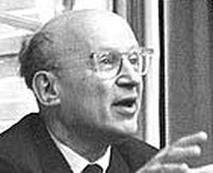
The Rev. Dr. Paul Louis Lehmann

The Rev. Dr. Paul Louis Lehmann

Theologian-ethicist Paul Louis Lehmann (b.1906, d.1994) observed that the right hand of God is the left hand of the world. Paul Lehmann was a friend of Dietrich Bonhoeffer and one of the giants of his time who opposed McCarthyism and published books that influenced subsequent generations.

Pondering his statement over the years led to an alteration of Dr. Lehmann’s statement to the effect that it is as though God ties the right hand (the hand of power) behind God’s own back and invites us to do the same. The left hand, the non-dominant hand, the hand of weakness, you might say, is the way the world enters into its own salvation from its own tyranny.

Costly Grace

The previous week’s sermon at Shepherd of the Hill had addressed the question “What must I do to be saved?” with “You already are! God is not wrathful. God is loving. Now start to live into that gift. Stop living so anxiously. Live more joyfully. Take more risks….”

“Costly Grace” is a follow-up anchored in a clear, though impossible, ethic where Jesus instructs his disciples on how to live as children of God.

“Love your enemies and pray for those who persecute you, so that you may be children of your Father in heaven, for he makes his sun rise on the evil and on the good, and sends rain on the just and on the unjust…. You, therefore, must be perfect, as your heavenly Father is perfect.” (Sermon on the Mount, Gospel of Matthew 5:44-48.)