The Seagull and a double rainbow

seagull in ScarboroughA double rainbow appeared last evening over the tidal river beyond the house where five seminary classmates and our spouses are staying this week on the coast of Maine.

It happened after a full day feasting with our seminary Old Testament professor, Edward F. (Ted) Campbell, Jr. and poet J. Barrie Shepherd on William Greenway’s For the Love of All Creatures: the Story of Grace in Genesis in this time of climate departure. The five seminary friends, once seven, who call ourselves “The Old Dogs” or “The Gathering” have convened annually from Texas, Indiana, Illinois, Arizona, and Minnesota for study and fellowship for the past 20 years.

pepperidge-farm-goldfish-cheddar-DbXv3l-clipartJust moments before the rainbows appeared, we were entertained by two seagulls begging for treats. One of them ate a Pepperidge Farm “goldfish” our of my hand – twice. Snatch! The goldfish was gone. Down the seagull’s gullet. My hand was fine.

Then the first rainbow appeared. Followed by another. Almost as beautiful was the reflection of the sun from the yellow grasses on the far shore of the tidal river at the foot of the rainbows. The seagull and the rainbows were like exclamation points to Greenway’s case that we are seized by the love of all creatures.

“Maybe there really IS a God 😂!” I said to my seminary roommate. “You know there is,” Mr. Stewart,” said Wayne.

Early this morning at dawn there is a very aggressive seagull incessantly banging on the sliding glass door between my living room chair and the deck demanding more cheddar goldfish!

  • Gordon C. Stewart, Scarborough, Maine, May 2, 2017.


The 101st Day – What to do?

Today, following the first 100 days of President Trump’s inauguration, we offer a non-partisan invitation to focus on a phrase from a familiar prayer:

deliver us from evil“and lead us not into temptation,

but deliver us from evil.” 

Most days we pray the prayer without much reflection. Like many other things we repeat by rote memory, we give little thought to temptation or the need to be delivered from evil. But today the phrase calls out for deeper self-examination and reflection about the world in which we live.

“This was the most divisive speech I’ve ever heard from a sitting American president,” said Republican former advisor to four presidents David Gergen in response to President Trump’s speech celebrating his first 100 days in office in Harrisburg, Pennsylvania.

“He treated [those who are disturbed about him or oppose him] basically as ‘I don’t care, I don’t give a damn what you think, because you’re frankly like the enemy,'” said Gergen. “I think it was a deeply disturbing speech.”

The Lord’s Prayer (aka “the Our Father” and “the Jesus Prayer”) will be prayed in churches throughout the world today.

“Thy will be done on Earth as it is in heaven…”

“Forgive us our sins (the acts and states of mind that separate/divide us from/ hurt others) as we forgive those who sin against us.” 

“Lead us not into temptation (or “the time of testing”/”time of trial”), but deliver us from evil.”

Amen. May it be so! Lord, save us, and the world You love, from our worst selves.

  • Gordon C. Stewart, Chaska, MN, April 30, 2017.


Last TGIF of April – Day One

day1 logo

Day1.org logo

The best advertisements are the ones that aren’t paid for. Thanks to Day1 for featuring a chapter from “Be Still!” Departure from Collective Madness” today. Click THIS LINK to read “Homeland Militarization” on Day1.

spare-change-lg-300x199Then, If you like it . . . . buy it and let me know. I’ll gladly send a rebate of 99 cents to complete the purchase of the kindle edition, or 98 for the paperback.

coffeeBetter yet, next time we see each other, I’ll spring for a cheap cup of coffee and a rich conversation.

Wishing you a happy Day1 this last Friday of April!

Gordon C. Stewart, Chaska, MN, April 28, 2017.

This incessant business

John MuirJohn Muir, father of America’s National Park System, wrote:

God has cared for these trees,
Saved them from drought, disease,
and a thousand tempests and floods,
but he cannot save them from fools.
[John Muir, Our National Parks, 1903]

President Donald Trump spoke at the U.S. Department of Interior yesterday and signed an executive order freeing up use of public lands, land “which belongs to the people, which truly belongs to us.”

Henry David ThoreauHenry David Thoreau wrote in 1863:

I think there is nothing, not even crime,
more opposed to poetry, to philosophy, ay, to ay, to life itself, than this incessant business.

[Henry David Thoreau, Life Without Principle, 1863]


The Muir and Thoreau quotes lead the chapters  “A Joyful Resting Place in Time” and “The Bristlecone Pines” of Be Still! Departure from Collective Madness. God bless the memory of John Muir and Henry David Thoreau. We are increasingly without principle. They’d turn over in their graves. It’s up to us to honor their principles.

  • Gordon C. Stewart, April 27, 2017,


Reviews as a dating service

Reviews and re-republication do for books what dating services do. They match books and readers who might like each other.

Thanks to James A. Cox, publisher of Midwest Book Review and MBR reviewer Able Greenspan for this review in the April 2017 edition:

Synopsis: “Be Still! Departure from Collective Madness” by Gordon C. Stewart (a public theologian and an ordained minister of the Presbyterian Church USA) echoes the call of the Navajo sage and the psalmist who invited their hearers to stop — “If we keep going this way, we’re going to get where we’re going” — and be still — “Be still, and know. . . .”

Like pictures in a photo album taken from a unique lens, these essays zoom in on singular moments of time where the world is making headlines, drawing attention to the sin of exceptionalism in its national, racial, religious, cultural, and species manifestations. Informed by Japanese Christian theologian Kosuke Koyama, Elie Wiesel, Wendell Berry, and others, Stewart invites the reader to slow down, be still, and depart from “collective madness” before the Navajo sage is right.

Told in the voice familiar to listeners of All Things Considered and Minnesota Public Radio, these poetic essays sometimes feel as familiar as an old family photo album, but the pictures themselves are taken from a thought-provoking angle.

Critique: Informed and informative, thoughtful and thought-provoking, inspired and inspiring, “Be Still!: Departure from Collective Madness” is a consistently engaging and impressively memorable read from cover to cover. Thoroughly ‘reader friendly’ in organization and presentation, “Be Still!: Departure from Collective Madness” is unreservedly recommended and will prove to be an enduringly popular addition to community and academic library Religion/Spirituality collections and supplemental studies reading lists. It should be noted for seminary students and the general reading public with an interest in the subject that “Be Still!: Departure from Collective Madness” is also available in a paperback edition (9781532600654, $20.98) and in a Kindle format ($9.99).

This Friday, April 28, Day1 will feature “Homeland Militarization,” a chapter from the book.

Day1 describes itself as “the voice of the mainline Protestant churches, presenting outstanding preachers from the mainline Protestant denominations, including the Cooperative Baptist Fellowship, the Episcopal Church, Evangelical Lutheran Church in America, Presbyterian Church (U.S.A.), United Church of Christ, United Methodist Church, Christian Church (Disciples of Christ), American Baptist Churches, and others.” It began as “The Protestant Hour” in 1945.

Thanks to Peter Wallace, Day1’s executive producer and host, for introducing “Be Still! to a new audience. And thanks to Bob Todd of Bob Todd Publicity for making the connections.

And, if you haven’t yet dated “Be Still!” . . . . make a lonely author happy over steak with the paperback for $20.98 or over an expensive cup of coffee with the Kindle/eNook, only $9.99 on AmazonBarnes & Noble or your local bookstore.

Grace and Peace,

Gordon C. Stewart, Chaska, MN, April 25, 2017.

Christopher Smart was Smart

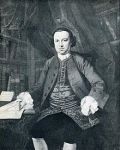
Christopher_Smart_Pembroke_portraitChristopher Smart (1722-1771) was an English incurable pauper poet institutionalized in Saint Luke’s Hospital for Lunatics whose poetry, like Vincent Van Gogh’s art, continues long after his death in spite of, or perhaps because of, what we now call mental illness.

Smart’s poetry is not as widely known as Van Gogh’s Starry, Starry Night. But it is well-known among other poets, musicians like Benjamin Britten, and worshipers who sing from the Episcopal Church Hymnal, as I did yesterday on the Second Sunday of Easter.

The fourth stanza of “Awake, Arise, Lift up your Voice” leaped from the page, as fresh today as it was the day Smart wrote it:

His [Christ’s] enemies had sealed the stone as Pilate gave them leave,

lest dead and friendless and alone he should their skill deceive.

Smart sees Christ as “dead and friendless and alone” under his enemies’ lock and key as the authorities of collective madness had given them leave, lest Christ – locked away dead and friendless and alone – should deceive their power to seal shut the tomb (or asylum cell).

And then the fifth stanza:

O Dead, arise! O Friendless stand by seraphim adored!

O Solitude again command your host from heaven restored!

At the very moment Christopher Smart was coming to my attention, the French were casting their votes, confused and fearful in the wake of England’s Brexit, wailing sirens on the Champs-Élysées, and candidates loudly debating whether sanity demands sealing the nation’s borders.

St_Lukes_Hospital_for_Lunatics,_LondonChristopher Smart’s biographers suggest that today Christopher would be diagnosed as bi-polar. He was committed to the Saint Luke’s Hospital for Lunatics after episodes when, it is said, Christopher would suddenly drop to his knees on the street in prayer, loudly inviting by-standers to join him, a different kind of street preacher who causes saner people to cross to the other side of the street.

But sometimes “the lunatics” are smarter than we. They see what those of us who avoid them often fail to see: the Dead and Friendless One meeting us, like Christopher and Vincent, in times of lock-down madness, until we sing Smart’s hymn two-and-a-half centuries later on the Second Sunday of Easter.

Christopher Smart was smart.

Gordon C. Stewart, Chaska, MN, April 24, 2017.

Vive la France?

French soldier & GOne year ago the French soldier in Paris said, “I love America. Very patriotic!” I wondered what he meant. You Americans love your country? Or something else?

Today’s French election offers a moment to reflect more philosophically about the social, cultural and political dynamics that divide the French and Americans alike.

For starters, there is the age old question of the relation of the part to the whole. In this case, the part is a particular, and often unique, culture: French! French culture shares many similarities with its European neighbors, but the old joke about Hell – “Hell is a place where the police are German, the chefs are English, the car mechanics are French, the lovers are Swiss and it’s all organized by the Italians” – has some grounding in the real differences in the distinctive history and culture of each national culture.

The European Union is the sum of its distinctive parts; the parts make up the whole. The European Union created a common currency, relaxed the borders, and eliminated trade barriers among the member states of the E.U., a thing to celebrate in a world where it becomes increasingly clear that the planet itself is our home.

But what happens when the distinctiveness of the parts – the French in this case – are morphing quickly into something unrecognizable? What happens to the psyche of the traditional French citizen when the languages in the cafe, on the Metro, and in the apartment next door are not French – or the visiting German, Italian, English, and Spanish of tourists on holiday at the Louvre or on the beaches of Nice – but Arabic, Parsi, or Urdu spoken by Syrians, Moroccans, Indians, or Pakistanis?

A culture is a home, a kind of safe nesting place. A cardinal is not a robin, a wren, or flicker, and it’s not easy for any of them when they perceive their nests as under threat by the European Starling that would rousts them from their nests.

“I love America. Very patriotic!” said the Parisian French soldier guarding the Jewish synagogue against a terrorist attack while the headlines from America featured Donald Trump’s rise in the polls in May 2016. “Make America great again!” was the word from the  across the pond. “Which America?” I wondered then, as I wonder now what “Make France great again” means today in the French election.

Was the patriotic America in the mind of the French soldier the America that speaks Spanish, Parsi, Urdu, and Arabic as well as English or the one that speaks only English? The one that is white European in origin? The one where African-Americans take their seats again in the back of the bus? The America where there are no mosques; no sombreros; no anti-American leftists or immigrants – only starlings?  The America where being “very patriotic” means returning the U.S.A. to what it was before the starlings raided its nest?

Philosophically, the issues are not as simple as they sometimes seem. The question of the relation of the parts to the whole is as vexing today as at time in the course of human development. A year ago the world celebrated the signing of the Paris Accord on climate change in recognition that the whole is bigger than its parts and that every part depends on the well-being of the whole.

A parable of Jesus holds together the relation between the part and the whole: distinctive nests (cultures) in the the branches same shrub (world):

“The kingdom of heaven [the whole] is like a mustard seed that someone took and sowed in his field; it is the smallest of all the seeds, but when it has grown it is the greatest of shrubs and becomes a tree, so that the birds of the air come and make nests in its branches.” – Gospel of Matthew 13: 31-32.

Gordon C. Stewart, Chaska, MN, April 23, 2017.

Earth Day 2017 in France and the USA

Today on Earth Day 2017 it’s hard to believe it was just one year ago today (April 22, 2016) that the world celebrated 195 nations signing of the Paris Accord on climate change.

Marine Le PenExactly one year later to the day, it is both Earth Day and Election Day in Paris, where the French go to the polls following another chilling terrorist attack that boosts the candidacy of far right nationalist candidate Marine Le Pen who would “Make France great again!”

Here on the other side of the Atlantic and across the world, scientists and supporters of science are casting their votes with their feet, signs, and speeches in the wake of the 2016 American election of a climate change-denying President and Congress unravelling the Paris Accord while concentrating of erection of a border wall.

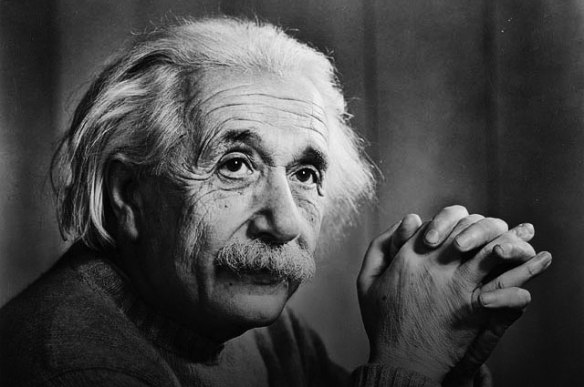
March for ScienceThe March for Science stands with Albert Einstein. “We cannot,” said Einstein, “solve our problems with the same thinking by which we created them.”

The thinking that has led to our problems includes bad religion, fake science, bad politics, and bad economics that ignore reality, shrink reality to the size of the human will to power, and sacrifice creative imagination beyond the boundaries of worn out thinking.

Today it will take prayerful people on both sides of the Atlantic to vote for the Earth in whatever way we can. Good science, good religion, good politics, and good economics go hand-in-hand.

On Earth Day 2017 pray for the Earth. Pray for yourself, for others, and for all creatures great and small. The Planet has no borders. It’s all the same house.

Albert Einstein

  • Gordon C. Stewart, Chaska, MN, Earth Day 2017.

The woman outside the window

She paces the sidewalk a few feet beyond our kitchen window, talking loudly to someone who’s not there, smoking a joint to calm her down, moving in sudden jolts as though someone has driven a spike through her less than cogent mind.

I watch and wonder who she is, this neighbor who lives behind us still three weeks after being served by the authorities with an eviction notice following the psychic “break” when she tore loose two towel bars and poked holes in the bathroom wall as uninvited as the screams of rage that harmonized with the spikes in the wall.

The police at the time of the incident told the owners there was little they could do without pressing charges, which they declined to do. She is a guest in their house, the girlfriend “of sorts” of their 35-year old son, a young man of consummate compassionate who had taken pity on her homelessness and invited her in.

Responding to the 911 call, the police had been greeted by an altogether sane young woman who presented a calm, cool, and collected self who came downstairs wondering what the fuss was all about. The 50-something year-old homeowners and the police agreed to call it a night on the “domestic dispute,” the young woman in question going peacefully upstairs to lock herself in her room, the three squad cars driving back to the police station where the officers would write up their incident reports, the husband and wife homeowners sitting in the living room staring past each other into blank space, and their generous adult son who lives in denial stepping outside for a much-needed smoke of something.

His invited houseguest had been institutionalized a number of times but he doesn’t know why or for what. Her father, he says, is some sort of pentecostal preacher. She’s badly scarred by her home experience – the “black sheep” of the family of Christian sheep wounded by the ram who rules the household.

A lamb spiked by the ram in her old sheep-fold, she looks for other pastures and sheep-folds where her damaged soul might find repose beyond a 911 call. But the spikes of terror keep coming, as they will, until, by some process of grace and merciful intervention, her reality breaks open the self that now wanders in torment outside our kitchen window.

Until then, she walks in the valley of the shadow of her own kind of death, as do the members of the family which has given her temporary shelter, crying out for green pastures and still waters that would restore their wounded souls.

  • Gordon C. Stewart, Chaska, MN, April 21, 2017.


The Make-Up Artist

Make-up artists in show business are the cosmeticians in the off-stage dressing rooms who paint the performers. In plays and films they make sure the actors look their parts. In television they apply make-up to the likes of Chuck Todd and Megyn Kelly.

Donald TrumpBut today ‘make-up artist’ takes on different meaning: “one who makes stuff up.” Like a Commander-in-Chief whose administration tells the world the USS Carl Vinson and its Navy fleet are headed for the coast of North Korea, knowing full well they’re still headed toward Australia. When the crews heard the news from news outlets, they must have wondered. Who or what was lying: their compasses or their Commander-in-Chief and his administration?

Make-up artists serve a purpose in stage productions and television programs like “The Apprentice”; they have a role to play behind the scenes of make-believe.

DI-Chicken-Little-9But when a made-up president makes stuff up that causes the armed forces he commands to choose between their compasses and their commander, the Commander-in-Chief becomes the Liar-in-Chief who commands as much credibility as did Chicken Little after announcing too many times that the sky was falling.

I wish to Heaven this was all made up.

  • Gordon C. Stewart, Chaska, MN, April 19, 2017.